
Home Blog Page 202

Indian Parliamentary Delegation to Visit Sierra Leone Parliament in May

The Speaker of the Sixth Parliament of the Second Republic of Sierra Leone, Rt. Hon. Segepoh Solomon Thomas, on Monday, May 19, 2025 received a formal diplomatic note from the Indian High Commissioner to Sierra Leone, His Excellency B.C. Pradhan, announcing the upcoming visit of a delegation of Indian Members of Parliament.

The announcement was made during a courtesy visit by High Commissioner B.C. Pradhan to the Speaker’s office, where he disclosed that the Indian parliamentary delegation is scheduled to arrive in Sierra Leone on May 28, 2025 and will visit the Parliament of Sierra Leone on May 29, 2025.

According to the High Commissioner, the visit forms part of India’s strategic effort to collaborate with other nations in addressing the growing threat of global terrorism. He strongly condemned recent terrorist attacks around the world, citing one particularly devastating incident in India that claimed numerous innocent lives. He emphasized that India is committed to working with select partner countries to confront the menace of terrorism through shared knowledge, policy dialogue and mutual security cooperation.

“India believes that through global solidarity and collaboration, we can effectively address terrorism and promote sustainable peace,” B.C. Pradhan stated.

Beyond the primary focus on counter-terrorism, the High Commissioner highlighted the longstanding bilateral relations between Sierra Leone and India. He spoke about India’s ongoing support for Sierra Leone’s development, particularly in areas such as education (including scholarship programs), infrastructure development, renewable energy, technology transfer, healthcare, science, water provision and financial assistance.

Reflecting on historical ties, B.C Pradhan noted similarities between the Indian and Sierra Leonean parliamentary systems, particularly their shared colonial heritage, legislative processes, committee structures and governance frameworks. He added that those commonalities, coupled with Sierra Leone’s strong diplomatic relationship with India, made the country a natural choice for the parliamentary engagement.

The Indian envoy also discussed broader global economic and financial transformation and reaffirmed India’s commitment to supporting Sierra Leone’s development aspirations.

In his remarks, Speaker Segepoh Solomon Thomas expressed appreciation for the planned visit and described it as a testament to the deepening ties between the two nations. He pledged Parliament’s readiness to host the Indian delegation and assured that preparations are already underway to ensure a successful engagement.

“The Indian political system mirrors that of Sierra Leone in many ways, especially with our shared colonial background. India has been a steadfast friend to Sierra Leone and we are proud of the strong partnership that exists between our countries,” the Speaker said.

He further noted that the parliamentary leadership would be fully briefed and involved in welcoming the delegation, underscoring the importance of strengthening inter-parliamentary dialogue and cooperation.

The visit is expected to deepen the partnership between the two nations and explore new avenues for collaboration on key global and regional challenges.


President Bio Unveils Solar Power Milestone, Empowering Over 3,000 Households in Moyamba

In a historic milestone for Sierra Leone, President Dr. Julius Maada Bio officially commissioned the 1-Megawatt Solar Plant in Moyamba Township on Saturday May 17, 2025, restoring 24-hour electricity to the town for the first time in four decades. The new solar facility will provide reliable power to over 3,000 households, marking a transformative moment for the Southern Region district.

Speaking at the commissioning ceremony, President Bio expressed profound pride in the achievement, calling it a crucial step toward the country’s goal of sustainable and affordable energy access. He emphasized that economic growth and human capital development hinge on dependable electricity.

“This project is yet another shining example of effective collaboration between my Government and our development partners,” the President said. “While my administration funded the construction of the distribution network, our partners financed the installation of the solar PV generation plant and battery storage.”

President Bio extended special thanks to key contributors, including the World Bank and the United Nations Office for Project Services (UNOPS). He also acknowledged the support of the African Development Bank and the Japan International Cooperation Agency (JICA), highlighting the importance of continued partnerships in future energy projects.

The Moyamba Solar Plant serves as a pilot initiative designed to be replicated in other district headquarters across Sierra Leone. “Access to energy is a human right and a critical enabler of human development, especially in the 21st century,” he declared.

Highlighting the far-reaching benefits of reliable electricity, President Bio explained, “It can catalyze business growth, foster entrepreneurship, enhance education and healthcare services and improve the overall quality of life. For too long, rural communities like Moyamba have been left behind.”

He stressed the impact on local farmers, traders, students and healthcare workers. “Farmers will now process and preserve produce efficiently, traders can operate longer hours and students , medical staff will have better resources to perform their duties. If we can achieve this in Moyamba, we can certainly replicate it nationwide.”

Reflecting on the long-standing energy challenges faced by Moyamba since the civil war, President Bio noted that the lack of stable electricity had hindered development and forced reliance on costly, unsustainable power sources.

Reaffirming his Government’s dedication to expanding energy access, he called on Moyamba residents to use the new electricity productively to build businesses, create jobs and uplift their communities.

UNOPS West Africa Director Silvia Gallo praised President Bio’s leadership, stating, “The commissioning of the Moyamba Solar Plant is a clear testament that change is happening. UNOPS is proud to support your vision of energy access for all citizens.”

Similarly, Kagaba Paul Mukibi, Senior Energy Specialist at the World Bank, described the project as a major milestone in Sierra Leone’s electricity expansion efforts. He confirmed the World Bank’s ongoing commitment to supporting off-grid solar systems in schools and healthcare facilities across the country.

Dr. Kandeh Kolleh Yumkella, Chairman of the Presidential Initiative on Climate Change, Renewable Energy and Food Security, applauded the achievement, noting that President Bio’s energy agenda targets all major sector barriers. He reminded the public, “There is no quick fix to energy challenges anywhere in the world,” and characterized the Moyamba plant as a pilot phase for a broader plan to electrify seven towns by replacing diesel power with clean solar energy.

With the Moyamba Solar Plant now operational, Sierra Leone takes a bold step forward in its journey toward universal, sustainable electricity access, empowering communities and fueling national progress.

NP (SL) Champions Qualitative Service Delivery that Brings Utmost Satisfaction to Customers

NP (SL) Ltd

By Amin Kef (Ranger)

NP (SL) Ltd is today proudly recognized as the leading petroleum marketing company in Sierra Leone. For years, it has consistently proven itself as a reliable, customer-focused business that not only delivers fuel but also plays a major role in supporting communities and driving national development.

Across the country, NP (SL) has built a strong network of Filling Stations that serve thousands of customers daily. These stations are fitted with modern, digital pumping machines that show the exact quantity of fuel and the price at the same time. This gives customers full confidence that they are getting what they pay for, helping to make every transaction transparent and fair.

But NP (SL) is not just about selling fuel. The company also markets high-quality petroleum products, including the well-known Castrol Oil, trusted by drivers and mechanics for keeping engines running smoothly and extending vehicle life.

For cooking, NP Gas has become a favorite in many homes. It is clean, fast, safe and certified by the Environment Protection Agency, making it a great choice for modern, environmentally friendly cooking.

Adding to its modern solutions, NP (SL) introduced the NP Energy Pass Card; a smart innovation that lets customers buy fuel without using physical cash. The card can be reloaded and used at select Filling Stations, allowing for easier budgeting, better security and faster service. Businesses, private vehicle owners and families all benefit from this convenient and efficient payment method.

One of the company’s strongest values is its support for Sierra Leonean workers. NP (SL) gives top priority to employing Sierra Leoneans, helping to reduce unemployment and build local expertise. It only brings in foreign workers when absolutely necessary, showing its deep belief in the potential of its own people.

NP (SL) is also a company that gives back. It built a specialized Burns Unit at Connaught Hospital in Freetown to treat victims of burns; a service that has saved many lives. To support sports and youth development, the company constructed squash courts at some secondary schools and colleges. In education, it continues to help schools near its Terminal in Kissy and other places by building infrastructure and supplying learning materials.

The petroleum marketing company has grown beyond Sierra Leone’s borders with successful branches in Guinea, Liberia, Ivory Coast and The Gambia. In each of these countries, the company is thriving, offering the same high standards of service and care that it is known for at home.

Known proudly says “1st for Customer Care,” NP (SL) continues to live up to its name. Through innovation, trust and a strong sense of national duty, the company has become more than just a fuel provider; it is a driving force behind progress in Sierra Leone.

Calls Mount for Overhaul of Mining Contracts Amid Labor Crisis at Koidu Limited

President Bio
President Maada Bio

The ongoing industrial standoff between Koidu Limited, a subsidiary of the Octea Group, and its workforce has reignited public calls for a comprehensive review of all mining agreements in Sierra Leone. The situation, which recently drew national attention due to the involvement of the country’s First Lady, Dr. Fatima Maada Bio has shifted focus away from long-standing grievances concerning labor rights and socio-economic inequalities in mining communities.

Koidu Limited, the country’s largest diamond mining company, continues to generate millions of dollars in revenue from Sierra Leone’s natural resources. However, local communities and workers remain in dire economic conditions, struggling to secure fair labor practices and basic amenities.

Workers at Koidu Limited are not demanding new privileges; rather, they are calling for the enforcement of existing contractual agreements. These include the adjustment of their dollar-denominated salaries to reflect the current exchange rate, rather than the outdated 2016 rate, access to clean drinking water, proper sanitation facilities and rightful overtime payments.

Despite the legitimacy of these demands, the company has opted to halt operations while simultaneously laying off over 1,000 Sierra Leonean workers, leaving Koidu Town in a state of distress. This move has sparked outrage and prompted renewed scrutiny of the broader mining landscape in the country.

According to data from the Sierra Leone Labour Force Survey (2023), unemployment rates in major mining towns such as Koidu, Tongo and Bumbuna stand at over 37%, significantly higher than the national average of 22%. Youth unemployment in these areas is even more alarming, estimated at 52%, driven largely by unstable mining operations and lack of alternative industries. These statistics underscore the vulnerability of communities that are heavily dependent on extractive industries, especially when those industries fail to deliver on employment promises.

Mining operations in Sierra Leone are governed by the Mines and Minerals Development Act of 2022, which replaced the 2009 version. The new law introduces forward-looking provisions for exploration, development, sales and exports aimed at delivering tangible socio-economic benefits to Sierra Leoneans. It emphasizes transparency, accountability and environmental protection, while promoting community welfare and improved labor practices.

However, critics argue that the Act falls short in empowering Sierra Leoneans to own and manage mining operations. The growing demand for more “pro-country” policies, similar to recent reforms in Guinea and Burkina Faso where dozens of mining licenses were revoked and new nationalistic mining frameworks introduced, has gained momentum.

“Foreign investors come into Sierra Leone with little to nothing and leave with millions, even owning private jets, while our people remain impoverished,” said a local civil society activist. “It’s time to reverse that narrative.”

Examples from the region and beyond have shown that prioritizing local ownership and value retention can yield national benefits. Even former U.S. President Donald Trump championed pro-country business policies to ensure American interests were placed first.

In Sierra Leone’s mining sector, the absence of local participation has led to frustration. Foreign companies often sideline capable Sierra Leonean businesses in favor of foreign contractors from China, the UK or the U.S., draining opportunities away from the domestic economy.

The impasse at Koidu Limited serves as a stark reminder of the urgent need to reevaluate the current model. Observers point to past local empowerment successes, such as the late Moseray Fadika’s partnership with British-Austrian investor Frank Timis and John Bonor Sisay’s tenure at Sierra Rutile, where Sierra Leonean companies were actively engaged and benefited substantially.

As the Government of Sierra Leone continues negotiations over the lucrative Tonkolili North iron ore deposits, reportedly richer than the southern deposits currently operated by a Chinese firm, there are also growing calls to reconsider the role of foreign advisors managing key national resources, such as the Mineral Wealth Fund currently overseen by a Russian national.

Stakeholders insist that the time has come for Sierra Leone to assert full control over its natural resources and ensure that Sierra Leoneans are not only beneficiaries but also key players in the mining sector.

The Government is now being urged to initiate a comprehensive review of all existing mining agreements, with the aim of restructuring them in line with national interests. This includes provisions for local equity participation, stronger labor protections, environmental safeguards and a transparent framework for resource governance.

The people of Sierra Leone deserve better and a reformed mining sector could be a major step toward achieving economic justice and national prosperity.


Tuma Gento-Kamara Named Among 100 Most Reputable Africans

Tuma Adama Gento-Kamara, President of the Sierra Leone Bar Association (SLBA)
Tuma Adama Gento-Kamara, President of the Sierra Leone Bar Association (SLBA) Receiving the Award

By Amin Kef-Ranger

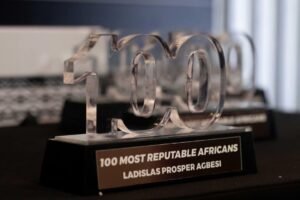
In a proud moment for Sierra Leone, Tuma Adama Gento-Kamara, President of the Sierra Leone Bar Association (SLBA), was honored as one of the 100 Most Reputable Africans for 2024/2025 during a prestigious ceremony held at the Jaguar Land Rover Experience on May 15, 2025 in Sandton, South Africa.

The event, organized by Reputation Poll International in collaboration with the Global Reputation Forum and the New York African Chamber of Commerce, brought together some of the most influential personalities from across the continent. It was a night that celebrated integrity, leadership and positive impact in various sectors including governance, law, education, entrepreneurship, entertainment and advocacy.

Tuma Adama Gento-Kamara, the only Sierra Leonean honoree on the 2024/2025 list, was recognized for her unwavering dedication to justice, ethical leadership and her relentless efforts in advancing legal reform and human rights. She joins a distinguished group of change-makers, humanitarians, entrepreneurs, academics and public servants whose work continues to elevate Africa’s global reputation.

Delivering a moving acceptance speech, Tuma Adama Gento-Kamara paid homage to South Africa’s historical significance and the enduring legacy of Nelson Mandela:

“If you have missed out on this, may I simply announce that this is the land of Madiba; a land that has experienced the anguish of chains and the triumph of liberation,” she said. “It is a deep honor and a humbling privilege to be counted among the 100 Most Reputable Africans. I accept this recognition not just in my name, but in the name of every woman and girl who dares to lead, every young man who refuses to quit and every African who rises each morning with nothing but a dream and the will to pursue it.”

Her Excellency Phumzile Mlambo-Ngcuka, former Deputy President of South Africa and founder of the Umlambo Foundation, delivered the keynote address, further elevating the occasion with powerful words on integrity and service.

As President of the Sierra Leone Bar Association, Tuma Adama Gento-Kamara has emerged as a formidable voice in legal advocacy, the promotion of gender equality and access to justice. Her leadership continues to inspire a new generation of African professionals committed to excellence and service.

A statement from the Sierra Leone Bar Association expressed immense pride:

“This award is not just a personal triumph for Tuma Adama Gento-Kamara but a victory for the legal profession and the people of Sierra Leone. Her inclusion in this elite group is a testament to her outstanding integrity, visibility and transformative impact.”

The 100 Most Reputable Africans award is conferred based on three key criteria: Integrity, Visibility and Impact. Honorees are carefully selected for their influence in shaping the narrative of Africa’s growth, progress and global relevance.

Tuma Adama Gento-Kamara’s track record speaks volumes. With academic credentials including an LLB, LLM and an MSc in Public Administration earned from renowned institutions around the world, she has distinguished herself as one of the most educated and competent legal minds in Sierra Leone. Her work across both the public and private sectors reflects a life committed to service and excellence.

In her speech, she encouraged fellow honorees and Africans watching from across the globe to view the moment not as a culmination, but as a call to deeper service:

“Let this recognition be fuel. Let it sharpen your vision, deepen your resolve and renew your commitment to serve with an even greater purpose. Because the spotlight isn’t the end of the work, it’s the beginning of the responsibility,” she said.

“May our reputations outlive our applause. May our legacy outshine our accolades. And may our Africa, our beautiful, boundless, beloved Africa finally stand, whole and free, in the radiant dawn of her destiny.”

Tuma Adama Gento-Kamara’s recognition is not only a personal achievement but also a national honor that underscores Sierra Leone’s growing contribution to the African renaissance. Her life and legacy stand as a beacon of hope, particularly for young women and girls aspiring to lead.

As Sierra Leone and Africa celebrate this achievement, Tuma Adama Gento-Kamara remains a symbol of ethical leadership, intellectual excellence and unstoppable courage.


NCRA, Ministry of Agriculture Partner to Digitally Link Farmer Registry with National ID System

To strengthen agricultural data systems and support the Government’s Feed Salone flagship initiative, the National Civil Registration Authority (NCRA) has partnered with the Ministry of Agriculture and Food Security (MAFS) to integrate the National Digital Farmer Registry with NCRA’s Biometric Digital ID system, using the National Identification Number (NIN) as a key link.

The meeting, held at the NCRA headquarters, brought together key stakeholders including representatives from the Food Systems Resilience Project (FSRP), the Ministry of Communications, Technology and Innovation (MoCTI) and the implementing technology firm Tiwai Memory Masters. Discussions focused on leveraging the NIN to ensure each farmer in Sierra Leone has a unique, verifiable digital identity, effectively eliminating duplication and inconsistencies in agricultural records.

According to officials, the initiative is in line with the National Civil Registration Act of 2016 and the 2022 Parliamentary Ratification, which mandate the use of the NIN as a unique identifier in the delivery of public services. It also aligns with President Julius Maada Bio’s broader digital transformation agenda aimed at improving governance, service delivery and accountability.

“The integration of the NIN with the Farmer Registry is not just a technical upgrade; it’s a transformation of how we identify and serve our farmers,” stated Mohamed Mubashir Massaquoi, Director General of the NCRA. “This collaboration is essential for the success of the Feed Salone project and NCRA stands ready to support MAFS in every way necessary.”

Dr. Kepri, Project Coordinator of FSRP and  Dominic Bao, Head of ICT at MAFS, acknowledged the persistent challenges caused by fragmented and unreliable farmer data, which have undermined past agricultural initiatives. They noted that the upcoming Farmer Registry will serve as the primary database for all digital agricultural platforms including e-extension services and agtech systems.

The proposed integration will also explore the possibility of hosting the Farmer Registry on the NCRA’s state-of-the-art Tier 3 Data Centre, which currently manages the country’s civil registration and national ID systems. Dr. Sankoh, Director of Technology at MoCTI, emphasized the importance of infrastructure sharing among Government agencies, noting that the NCRA has taken the lead in promoting shared services to drive digital transformation across the public sector.

During the session, DG Mohamed Mubashir Massaquoi established a joint technical team comprising experts from the NCRA ICT Directorate, MAFS, MoCTI and Tiwai Memory Masters to chart the way forward for the implementation of the NIN-Farmer Linkage Project.

This partnership is expected to improve transparency, eliminate duplication and ensure effective targeting of support and services to genuine farmers nationwide. It is also designed to create a foundation for interoperability across agriculture and identity management systems in Sierra Leone.

With the NCRA’s robust civil registration and identification infrastructure in place, including its high-capacity data center, Sierra Leone is well positioned to roll out a unified, secure and reliable digital farmer database; with Digital ID at its core.

The NCRA reaffirmed its commitment to providing Civil Registration, Vital Statistics (CRVS) and ID services nationwide, contributing to a more accountable, efficient and inclusive public service landscape.


Mines Minister Advocates for Integrity in Diamond Trade Regulation at KPCS Meeting

Minister of Mines and Mineral Resources, Julius Daniel Mattai, has called for the Kimberley Process Certification Scheme (KPCS) to remain free from political interference. Speaking in his capacity as Chairman of the African Diamond Producers Association (ADPA), the Minister delivered the keynote address at the ADPA Pre-KPCS Intersessional Meeting held on Sunday May 18, 2025 in Dubai.

Leading Sierra Leone’s delegation to the high-level event, Julius Daniel Mattai emphasized the need to uphold the founding principles of the KPCS, which was established to curb the trade in conflict diamonds and promote peace and development. He reminded participants that the scheme’s mandate, as outlined in the United Nations Resolution and the Interlaken Declaration, is to ensure a credible and transparent regulatory framework for the global rough diamond trade.

“The Kimberley Process must not be used as a platform for settling geopolitical scores,” the Mines and Mineral Resources Minister cautioned. “It is imperative that we remain focused on the core vision and objectives behind its formation. Any deviation threatens the unity, credibility and effectiveness of the scheme in combating the trade in conflict diamonds.”

Julius Daniel Mattai underlined the critical importance of global peace and stability, noting that the diamond industry, when properly regulated, can serve as a powerful catalyst for sustainable development. He reiterated the commitment of Sierra Leone and ADPA member states to a depoliticized, transparent and inclusive Kimberley Process.

On the sidelines of the meeting, the Minister held bilateral discussions with the KPCS Chairperson, H.E. Ahmed Bin Sulayem. The discussions covered a wide range of issues, including Sierra Leone’s contribution to the KPCS, the evolution of the global diamond industry and recent developments in the country’s mining sector.

Highlighting Sierra Leone’s efforts to expand its mineral portfolio, Mines and Mineral Resources Minister disclosed that the country is now focusing on critical minerals such as lithium in addition to traditional commodities like diamonds and gold. “We are committed to diversifying our mineral resources to support long-term economic growth,” he said.

Sierra Leone continues to play a vital role in several key committees within the Kimberley Process, including the Working Group on Monitoring (WGM), the Working Group of Diamond Experts (WGDE) and the Working Group on Artisanal and Alluvial Production (WGAAP). The country also remains an active and influential member of the African Diamond Producers Association.

The Minister was accompanied by Sierra Leone’s Ambassador to the United Arab Emirates, Rashid Sesay, who joined the delegation in engaging with key stakeholders and partners during the Dubai meetings.

The Kimberley Process Certification Scheme remains a crucial global initiative aimed at preventing the trade in conflict diamonds while fostering peace, accountability and sustainable development in diamond-producing nations.

From War to Silence: Sierra Leone’s Forgotten Child Soldiers and the Unfinished Promise of Justice

By Alvin Lansana Kargbo

More than two decades after the guns fell silent in Sierra Leone, the legacy of its 11-years brutal civil war still casts a long shadow especially on those who were forced into battle as children. Despite early strides through the Truth and Reconciliation Commission (TRC) and the Special Court for Sierra Leone (SCSL), many former child soldiers say justice has faded into silence.

While some, like Ishmael Alfred Charles, have emerged from the horrors of war to become powerful humanitarians and advocates, others remain trapped by the very past the country seems eager to forget.

Ishmael Alfred Charles, who was abducted at the age of nine by the Revolutionary United Front (RUF) in Kono District, narrowly escaped death multiple times before returning to Freetown.

“There was no counseling, no reintegration support. We were left to figure life out on our own,” he recalls. His eventual rise as a humanitarian is remarkable; he now leads major health and development initiatives through Caritas Freetown and the Sick Pikin Project. But he is quick to point out that his case is an exception.

“I’ve done well, but what about the others?” Ishmael Alfred Charles asks. “Most of us were just dumped back into society. No support. No healing. No future.”

One of those “others” is Osman Kawuta Turay, known during the war as “Colonel Kawuta.” Now 33 years old, he is a father of three and struggling to make ends meet. His story is harrowing: he was abducted around the age of nine while on an errand to buy pepper in Tonko Limba Chiefdom, Kambia District. Trained to kill under the command of a rebel leader named Major Lamin Jalloh, he narrowly escaped what he believes would have been his death and fled to Freetown to be disarmed.

“We came to Government Wharf and were taken to State House to the ECOMOG,” he recalls. “The ECOMOG troops suspected we were spies. We were terrified. Later, the Government promised reintegration, but it never really happened.”

Now, decades later, Osman Kawuta Turay is still labeled a “rebel” in the eyes of society. “We were children. We didn’t choose this. But we’re still judged,” he says. He struggles with stigma, poverty and lack of access to education. He dreams of continuing his studies and being a role model in his community but feels trapped by the past and ignored by the present.

“We were promised support. They started it then they forgot us,” he says, calling on the Government to revisit their pledge to former child soldiers. “We need help, education, housing. We want to live like people, not shadows.”

Sierra Leone’s post-conflict justice mechanisms had initially held global promise. The Truth and Reconciliation Commission, which concluded its work in 2004, issued clear recommendations: reparations, psychosocial support, memorialization of the war and inclusive governance reforms. The Special Court for Sierra Leone, meanwhile, tried those most responsible for atrocities.

As the TRC stated in Volume 2, Chapter 4 of its 2004 comprehensive report:

“Children who were forcibly conscripted, indoctrinated and used as combatants must be provided with appropriate rehabilitation and reintegration programmes, including education, skills training and psychosocial support.”

But according to Ishmael Alfred Charles and Osman Kawuta Turay, those steps were only the beginning and far from enough.

“Most people today don’t even know why the war happened,” Ishmael Alfred Charles says. “That’s dangerous. If we don’t talk about it, if we don’t learn from it, we’ll repeat it.”

Senior officials seem to agree, at least in principle. Former Chief Justice Desmond Babatunde Edwards noted in a 2023 meeting that “access to justice, judicial independence and integrity are integral to transitional justice.” He praised the legal frameworks established by the 1991 Constitution but admitted that implementation remains incomplete.

In March 2025, Attorney General and Minister of Justice, Alpha Sesay, reaffirmed the Government’s commitment to justice reforms and constitutional review. He emphasized inclusivity, fairness and eradicating discrimination.

Still, civil society remains skeptical. A 2023 report by Campaign for Good Governance noted that “while legal reforms are welcome, they often overlook the grassroots needs of war-affected populations, particularly former child soldiers, who remain marginalized and excluded from development programs.”

For Ishmael Alfred Charles, healing must go beyond formal institutions. He points to Fambul Tok, a community-led reconciliation project in Kailahun, as a model for inclusive healing. “It should have been expanded nationwide,” he says. “Healing needs time, space and national will.”

Both Ishmael Alfred Charles and Osman Kawuta Turay argue that transitional justice must include real psychosocial support, public education and a commitment to recognizing lived experiences. “Those who lived it should be the ones to teach it,” Ishmael Alfred Charles says. “Ignoring our stories doesn’t erase the past. It only buries it deeper.”

Sierra Leone stands at a pivotal moment in shaping its future, yet the unfinished business of transitional justice still calls for renewed attention. Survivors like Osman Kawuta Turay remain in search of more than just support; they seek recognition, dignity and justice.

“We don’t want pity,” Turay says. “We want a chance to be whole again.”

This story is brought to you with support from the Africa Transitional Justice Legacy Fund (ATJLF) through the Media Reform Coordinating Group (MRCG), under the project: ‘Engaging Media and Communities to Change the Narrative on Transitional Justice Issues in Sierra Leone.’

MR Distilleries Donates to SLRSA in Support of Ongoing Public Road Safety Initiatives

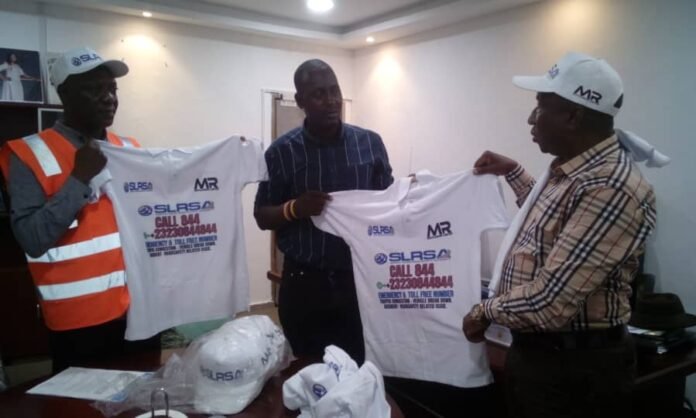
In a show of Corporate Social Responsibility and support for national road safety efforts, M.R. Distilleries has donated branded T-shirts and caps to the Sierra Leone Road Safety Authority (SLRSA) to assist with ongoing public awareness campaigns aimed at reducing road accidents across the country.

The symbolic handover ceremony took place on 16 May 2025 at the SLRSA Headquarters on Kissy Road in Freetown, where the items were formally presented by Mohamed Kamara, Public Relations Officer of M.R. Distilleries.

Speaking during the presentation, Mohamed Kamara underscored the company’s commitment to national development and its concern for the safety of all road users. “We recognize the critical role the SLRSA plays in safeguarding lives on our roads,” he said. “This donation is a modest but meaningful way of amplifying visibility around road safety messages and demonstrating our solidarity with the Authority’s efforts to reduce traffic accidents.”

Officials from the SLRSA expressed sincere appreciation for the gesture and commended M.R. Distilleries for stepping forward to support such an important national cause. They confirmed that the donated T-shirts and caps will be utilized in upcoming outreach programs and road safety awareness campaigns across the country.

The donation highlights the growing collaboration between Government institutions and private sector actors in addressing key national challenges. By contributing to this initiative, M.R. Distilleries joins a broader movement focused on promoting responsible behavior on the roads and reducing the high incidence of road traffic collisions in Sierra Leone.

The SLRSA continues to call on other corporate and civil society partners to join in bolstering its mission of achieving safer roads for all.

US Embassy Launches First EducationUSA College Fair in Freetown Introducing Pupils to US Study Opportunities

By Ibrahim Sesay

The United States Embassy in Freetown on Wednesday May 20 2025 launched its inaugural EducationUSA College Fair in Sierra Leone introducing hundreds of secondary school pupils to opportunities for undergraduate study in the United States. Held at the Freetown City Council building the groundbreaking event brought together pupils from 30 secondary schools across the capital to explore academic possibilities beyond their borders.

The fair featured over 15 informational booths where pupils engaged directly with alumni of American colleges and universities asking questions about application processes, scholarship options, campus life and the broader U.S. education system. The atmosphere was vibrant and full of curiosity as eager pupils interacted with university representatives and discovered new academic horizons.

Addressing attendees U.S. Ambassador to Sierra Leone, Bryan David Hunt, described education as a pillar of progress emphasizing its central role in economic growth, national security and cross-cultural understanding. He encouraged pupils to view study abroad not just as a personal journey but as a bridge between nations. “When you study in the United States you do not only learn about American culture you also share yours and that exchange of ideas is key to building trade partnerships and lasting international relationships” he said.

Ambassador Bryan David Hunt also cautioned pupils on the importance of adhering to visa regulations. He noted that a troubling 35 percent overstay rate among student visa holders from previous years has led to more rigorous interview processes. “Unfortunately this high rate means that many of you may face intensive questioning and some may not receive a visa” he warned. “We want international students in the U.S. but only those who are committed to abiding by our immigration laws.”

He encouraged prospective pupils to be responsible ambassadors of their country and urged them to return home upon completion of their studies to contribute to Sierra Leone’s development.

Representing the Government of Sierra Leone, Deputy Minister 1 of the Ministry of Basic and Senior Secondary Education, Emily Gogra, praised the fair as a critical extension of President Julius Maada Bio’s Free Quality Education initiative which she called a transformative national policy. “Education is the most powerful tool we can use to break the shackles of poverty” she stated. “It is not just a policy it is a right.”

Madam Emily Gogra reiterated the Government’s willingness to collaborate with the U.S. Embassy in expanding the reach of such programs especially to underserved regions of the country. “We applaud this initiative but we also hope it will reach students beyond Freetown” she urged. “The provinces must also have access to this kind of exposure and opportunity.”

Among the many inspired pupils at the event was, Joseph Boima, from Sierra Leone Grammar School who shared how the fair reshaped his outlook on higher education abroad. “I’ve learned that a well-rounded profile including extracurricular activities and good grades increases my chances” he said. “I was also encouraged to explore a range of schools rather than focusing on just one.”

EducationUSA operates as a global network of more than 430 international student advising centers across 175 countries supported by the U.S. Department of State. It provides accurate and up-to-date information about studying at accredited U.S. colleges and universities helping students make informed decisions while promoting mutual understanding between nations.

With its debut in Sierra Leone the EducationUSA College Fair marks a new chapter in U.S.–Sierra Leone educational cooperation planting seeds of aspiration in the hearts of young learners and creating new academic bridges between the two nations.

U.S. Ambassador to Sierra Leone, Bryan David Hunt