
Home Blog Page 205

Caritas Freetown Concludes Transformative Training to Strengthen Youth Participation in Governance

By Foday Moriba Conteh

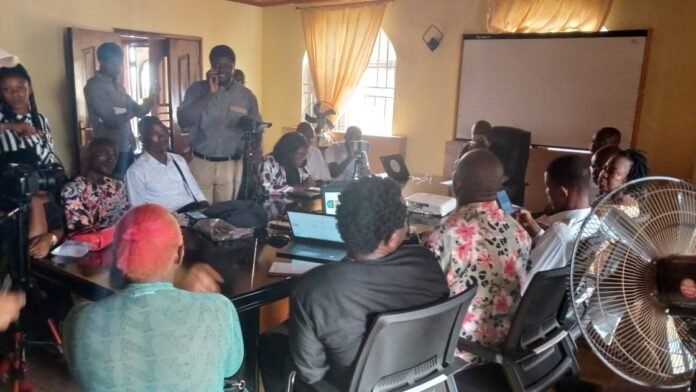
Caritas Freetown, with support from the United Nations Peacebuilding Fund and in partnership with Catholic Relief Services (CRS), has concluded a three-day training and policy engagement session under the “Youth in Politics and Peacebuilding” project. The event brought together youth-focused groups and advocacy networks across the Western Urban Area to strengthen Peacebuilding efforts and civic engagement at the community level.

The initiative, which took place from May 6-8, 2025, is part of a broader two-year project launched in 2023, aimed at building the capacity of young people and community structures to promote peace, prevent conflict and encourage youth participation in governance. The project also operates in Kenema, Bombali and Port Loko districts through sister Caritas organizations.

Speaking at the conclusion of the training, Eliza Sillah, Programme Coordinator of the Youth in Politics and Peacebuilding Project, emphasized the project’s transformative impact. “This project has empowered young people to actively participate in decision-making processes and lead community initiatives. Through our work, we have built a network between youth groups, local authorities, service providers and key Government Ministries such as the Ministry of Youth, Ministry of Gender, National Youth Commission and the Peace Commission,” she said.

Eliza Sillah noted that the project initially focused on supporting peaceful elections by deploying trained youth groups to disseminate peace messages and monitor conduct. Post-election, the focus shifted to capacity building in civic education, peaceful masculinity, women’s empowerment and conflict resolution.

She revealed that key highlights of the project so far include youth Empowerment where over 100 young people completed skills training in areas such as tailoring and agriculture. Many have since launched small-scale businesses or community initiatives.

She added that the project has also established peace advocacy networks where youth-led CSOs, members of the Motorbike Riders and Kekeh Riders Unions and women’s groups participated in intensive workshops on leadership, advocacy and conflict mitigation, furthering that civic engagement where youth are now engaged in intergenerational dialogue and community decision-making processes, bridging the gap between generations and improving local governance is also a key highlight of the project.

She pointed out that policy engagement is also part of the highlight where participants developed a position paper highlighting key issues affecting young people and recommending policy actions to relevant institutions.

During the closing session, participants presented their position paper to policymakers and service providers. While the content of the paper was not disclosed ahead of the presentation, Eliza Sillah stated that it reflects urgent community needs and calls for a secure and inclusive urban environment for all, including women, girls and persons with disabilities.

She also highlighted the project’s focus on inclusive development, with specific interventions targeting vulnerable groups, including persons with disabilities, who are now receiving vocational training and will be supported with startup kits.

“The position paper will speak for itself,” Eliza Sillah concluded. “What matters most is that young people have taken the lead in shaping the future of their communities through advocacy and peaceful engagement.”

Reverend Father Peter Konteh, Executive Director of Caritas Freetown, described conclusion date of the 3-day training as symbolically significant due to its global recognition as the end of the Second World War. He emphasized that the timing reinforced the importance of the workshop’s peace-driven objectives.

“For quite some time now before, during and after the elections we have been working to promote peace,” said Reverend Father Peter Konteh. “We trained stakeholders, including bike riders, youth, women and persons with disabilities, to become ambassadors and advocates for peace within their communities.”

The training focused on key objectives such as enhancing leadership, communication and conflict resolution skills among participants; equipping them with knowledge in strategic planning and resource mobilization; strengthening coordination between grassroots advocacy groups and policymakers; and offering a platform for community members to engage with decision-makers through a formal position paper.

Anticipated outcomes of the initiative include the training of at least 60 youth and women leaders, the strengthening of community-based advocacy networks and improved coordination between local advocacy actors and Government institutions.

Reverend Father Peter Konteh stressed the relevance of the training to young people, noting that they are often the most vulnerable and easily manipulated during times of unrest. “When there is a crisis, it is often the youth who are used to perpetrate violence. This training equips them with the awareness and tools to resist such manipulation and instead become champions of peace,” he said.

Speaking on the position paper Reverend Father Peter Konteh highlighted that it would reflect genuine community concerns and recommendations, not imposed ideas. “We don’t want to spoon-feed the participants. The issues will emerge organically from discussions and experiences,” he explained.

Looking ahead, Caritas Freetown expects the position paper to lead to actionable change. “We are very familiar with great policies that remain unimplemented,” Reverend Father Peter Konteh remarked. “We want to ensure there is a follow-up on the recommendations. Implementation is key.”

Participants praised the initiative for fostering civic engagement, promoting local governance and empowering grassroots actors to meaningfully contribute to peace building and policy reforms in their communities.

The Youth in Politics and Peacebuilding project continues to be a beacon of inclusive development and Peacebuilding in Sierra Leone, fostering a new generation of civic-minded leaders.

Safiatu Kanu, the Ward Chairlady for Ward 416 in Constituency 119, described the training as a timely and empowering initiative for grassroots leaders like herself. She emphasized that the knowledge gained in leadership, communication and conflict resolution is crucial for community mobilizers, particularly in politically sensitive environments.

According to her, the training helped bridge the gap between grassroots realities and policy decision-making by equipping local leaders with the tools to advocate for peace and development effectively.

For Safiatu Kanu, the significance of the training lies in its inclusive approach, which brought together youth, women, bike riders and persons with disabilities. She noted that this diversity allowed for meaningful conversations and shared experiences that strengthened solidarity among community actors. “We often see Peacebuilding as something for elites or external organizations,” she said, “but this training showed us that we, as local leaders, have the power and responsibility to drive peace from within our communities.”

Abdul Mansaray, a youth leader from Constituency 125, expressed deep appreciation for the Peacebuilding training, describing it as a transformative experience for young leaders. He emphasized that the training came at a critical time when the country is still navigating post-election tensions and youth are often vulnerable to political manipulation. The knowledge and skills he acquired in leadership, conflict resolution and policy engagement, he said, have equipped him to play a more proactive role in fostering peace and stability within his community.

He noted that youth are frequently at the forefront of both conflict and change, making their involvement in peacebuilding initiatives not only strategic but essential. “Too often, we’re used as instruments of violence without understanding the bigger picture,” he remarked. “This training has helped us understand our value, our influence and our responsibility in shaping a peaceful Sierra Leone.”

Health Alert, Marie Stopes Call for Greater Domestic Investment to Sustain Reproductive Health Gains

By Ibrahim Sesay 

Health Alert Sierra Leone, in partnership with Marie Stopes Sierra Leone, has appealed for stronger domestic resource mobilization to safeguard and build upon the progress achieved through the Youth for Health Project. The call was made during a press briefing held on Thursday, May 8, 2025, at Health Alert’s newly relocated head office on Blackhall Road in Freetown, where officials shared both accomplishments and ongoing challenges surrounding adolescent sexual and reproductive health.

The Youth for Health Project, which commenced in 2022 with co-funding from the European Union, has been implemented in the districts of Port Loko, Kambia and Western Rural, reaching over 12,000 adolescents with education and services related to family planning and reproductive health. The initiative has prioritized awareness raising, service delivery and youth engagement, all aimed at empowering young people to make informed decisions about their sexual health.

Dalton John, Programme Manager at Health Alert, outlined the project’s key achievements, including the training of more than 20 psychosocial service providers, the establishment of health clubs in 15 schools and the significant contributions made toward preventing unsafe abortions and maternal deaths. He noted that the project met its initial target of reaching 12,000 adolescents, many of whom have gained vital knowledge and access to reproductive health services.

Despite these gains, Dalton John pointed out ongoing obstacles such as inadequate funding, persistent misinformation, limited knowledge about modern contraceptives and the inconsistent availability of family planning products. He described stock outs and misinformation as critical threats to the sustainability of the project’s impact.

Dalton John also revealed that authorities in all three project districts have made commitments to integrate Adolescent Sexual and Reproductive Health and Rights (ASRHR) into their respective annual budgets, a move he described as a promising sign of local ownership and long-term sustainability.

Victor L. Koroma, Executive Director of Health Alert Sierra Leone, emphasized the important role played by local organizations and development partners in driving down maternal mortality rates. He noted that the 70 percent reduction in maternal mortality is not to be taken lightly and stressed the need for continued investment in reproductive health services. Victor L. Koroma warned against complacency and dependency on external donor support, urging both national and local stakeholders to prioritize domestic investment to secure the future of youth health.

Sandy Massaquoi, Advocacy and External Relations Manager at Marie Stopes Sierra Leone, encouraged the media to use their platforms to promote sexual and reproductive health and family planning. He highlighted ongoing collaboration with the Ministry of Health, including key policy reviews and the recent establishment of the Teenage Pregnancy Secretariat, as critical advancements in strengthening national reproductive health systems.

He also expressed concern over the lack of robust engagement from women’s groups regarding the Safe Motherhood Bill, emphasizing that its passage is essential for protecting the health and rights of women across Sierra Leone.

As the Youth for Health Project approaches its conclusion in June 2025, Health Alert Sierra Leone and Marie Stopes Sierra Leone reiterated the need for continuous advocacy, enhanced community engagement and firm Government commitment. They emphasized that maintaining the progress made in adolescent sexual and reproductive health will require sustained funding, coordinated action and a collective determination to prioritize the wellbeing of Sierra Leone’s youth.

Parliament Approves Ibrahim Sannoh as Youth Minister Signaling a New Era of Empowerment

Minister of Youth Affairs, Ibrahim Sannoh

By Foday Moriba Conteh

The Parliament of Sierra Leone has unanimously approved Ibrahim Sannoh as the country’s new Minister of Youth Affairs, following his nomination by His Excellency President Dr. Julius Maada Bio on Tuesday, April 8, 2025.

Ibrahim Sannoh’s appointment signals a renewed commitment to youth empowerment, national inclusion and participatory development. As Minister, he will oversee policies and programmes designed to harness the energy, creativity and potential of Sierra Leone’s youth, promoting their active involvement in national decision-making processes.

Born in Bo City, Southern Province, to Mr. and Mrs. Alfred Sannoh, the new Youth Minister’s academic foundation was laid at Saint Francis Primary School, followed by Bo Government Secondary School (The Bo School), where he served as Senior Prefect and earned widespread respect among peers, earning the moniker “S.P. Sannoh.” He graduated in 2006 with distinction in the West African Senior School Certificate Examination (WASSCE).

Ibrahim Sannoh proceeded to Fourah Bay College, University of Sierra Leone, where he earned a Bachelor of Arts in Linguistics and Political Science. His passion for leadership was evident during his university years, as he actively engaged in student politics; most notably as Head of the Black Family and Campaign Manager during the 2010 Students’ Union elections.

He later pursued further studies and attained a Master’s degree in Public Administration from the Institute of Public Administration and Management (IPAM).

A committed member of the Sierra Leone People’s Party (SLPP), Ibrahim Sannoh gained prominence during the 2012 presidential election as Personal Assistant to then-running mate Dr. Kadie Sesay, supporting the SLPP’s national campaign strategy.

He also accumulated private sector experience as a Business Developer for Trans Sahara, working with the Peninsular Innovative Group and later served as CEO of Favour Investment, a private enterprise focused on youth-led entrepreneurship.

In 2017, Ibrahim Sannoh played a pivotal role as Outreach and Planning Coordinator during President Julius Maada Bio’s successful election campaign. His growing influence in public service was recognized in September 2018, when he was appointed Deputy Executive Director of the Sierra Leone Road Safety Authority (SLRSA). Within two years, he rose to become Executive Director, where he led significant reforms in road safety management.

He later served as Director of Programs in the Office of the President at State House, further deepening his experience in governance and youth engagement.

Following the 2023 General Elections, he was appointed Deputy Minister of Communications, Technology and Innovation, where he focused on advancing Sierra Leone’s digital transformation agenda laying the groundwork for tech-driven youth development.

Ibrahim Sannoh is married to Helena Suad Sannoh, a native of Mange Bureh in Northern Sierra Leone. The couples are proud parents of five children and are devout Christians, known for their commitment to faith, service and community values.

As Minister of Youth Affairs, Ibrahim Sannoh is expected to bring visionary leadership, rooted in a track record of competence, youthful dynamism and deep understanding of the aspirations of young Sierra Leoneans.

Education Minister Faces Parliamentary Summons Over WASSCE Exclusion Scandal

Minister of Basic and Senior Secondary Education Conrad Sackey

Under mounting national attention, Minister of Basic and Senior Secondary Education Conrad Sackey appeared before Parliament on Thursday, 8 May 2025, to explain the widespread exclusion of students from the 2025 West African Senior School Certificate Examination.

The issue, which has triggered public outrage and concern among parents and education stakeholders, was brought before Parliament under Section 107 of the 1991 Constitution, compelling the Minister to provide a full account of the circumstances and propose a path forward.

Standing before lawmakers, Conrad Sackey described the situation as a grave concern that strikes at the heart of quality assurance in the country’s education system. He explained that while the Ministry had issued clear deadlines and instructions for registering candidates through the WAEC portal, 82 schools failed to comply, even as 892 others followed the proper procedure. The Minister further revealed that some schools attempted to register unqualified students, with fraudulent examination results from the Basic Education Certificate Examination used to fabricate eligibility. He cited instances where students who should have entered Senior Secondary School in 2021 were only now appearing on the WASSCE register, raising serious questions about academic tracking and compliance.

Despite appeals to the West African Examinations Council to reopen the portal for Sierra Leonean students, the Minister confirmed that such requests were denied. He stressed that no member country possesses the authority to alter WAEC’s operational timelines and expressed disappointment that repeated administrative failings had now culminated in such a national embarrassment.

To cushion the impact, the Ministry has initiated discussions with WAEC and diplomatic missions in The Gambia and Nigeria to explore options for affected students. It has also committed to funding private WASSCE exams for students who genuinely qualified but were denied access through no fault of their own. The Minister was clear, however, that only students with verifiable eligibility will benefit from this measure.

In a bold move toward accountability, Conrad Sackey named schools implicated in malpractice and backed his statements with documented evidence. He informed Parliament that a new Education Reform Bill is in the works, aimed at resolving structural gaps, enforcing accountability and introducing a unique learner identity system to safeguard student data and progression.

Parliamentarians offered a mixture of support and critique. Hon. Abdul Karim Kamara lamented the emotional and financial toll on families and decried what he described as leadership failure in school management. Hon. Alpha Fode Madie Jabbie defended the Ministry, blaming non-compliant schools for the chaos. Hon. Daniel Koroma called for long-term administrative reforms, while Hon. Bashiru Silikie urged the Ministry to provide clear and practical solutions for affected students.

Concluding his remarks, the Minister assured the House of his commitment to seeing reforms through and ensuring that such systemic failures do not reoccur. He emphasized that the crisis, while regrettable, had exposed critical weaknesses that the nation must confront with urgency and resolve. Parliament is expected to deliberate on the proposed reforms once the Bill is formally tabled.

Sierra Leone Cracks Down on Tax Non-Compliance Amid Deepening Revenue Crisis

The Commissioner General of the National Revenue Authority (NRA), Jeneba Kpaka Bangura

By Abu Bakarr Kargbo

Sierra Leone’s government has launched an aggressive enforcement campaign against tax defaulters—both public and private—after revealing a deepening revenue shortfall driven by rampant non-compliance and illicit financial flows. As the country strives to strengthen its domestic finances, a wave of tax enforcement actions has targeted even prominent government agencies, signalling a more uncompromising stance from the National Revenue Authority (NRA).

On 24th April 2025, the NRA made headlines when it temporarily shut down the Electricity Distribution and Supply Authority (EDSA) operations and the Sierra Leone Roads Safety Authority (SLRSA). The move followed these institutions’ failure to utilise Electronic Cash Register (ECR) machines, which are key to the country’s digital tax collection system.

Conducted in accordance with statutory protocols, the enforcement operation saw staff and management evacuated from the Electricity Building in Freetown, which houses EDSA, and from SLRSA’s offices. The affected buildings were sealed pending resolution of the entities’ outstanding tax obligations.

“It is on record that EDSA owes NRA the sum of NLe 328,396,305.03 while SLRSA has a tax liability of NLe 15,336,611.76,” the NRA stated. Commissioner General Jeneba K. Bangura emphasised that such actions were not punitive but essential. “These measures are necessary steps in promoting transparency, accountability, and the responsible management of public revenue,” she said.

Non-Compliance Undermining Fiscal Targets

The government’s crackdown comes amid an alarming revenue crisis. More than 2,000 ECR machines—intended to improve tax compliance—were inactive in the first quarter of 2025, with many businesses, including multinationals and public institutions, deliberately refusing to use them. As a result, the government recorded a 25% shortfall in its projected first-quarter revenue, threatening its target of NLe 18.9 billion for the fiscal year. In 2024, the government collected NLe 14.5 billion.

Financial Secretary Matthew Dingie acknowledged the scale of the problem in an official interview, noting that “many businesses have bypassed ECR machines to avoid taxation,” which has contributed significantly to the country’s fiscal stress. “This trend is not just a setback—it jeopardises our ability to deliver essential services like healthcare, education, and infrastructure,” he said.

The failure to fully integrate digital systems into tax collection has worsened revenue losses. Commissioner General Bangura added that the underutilisation of ECRs has directly impacted the NRA’s revenue estimates and affected funding for critical national development programmes.

Systemic Issues and Technical Fixes

In response to the rampant non-compliance, the NRA, working with service providers, has reactivated all dormant ECR machines. While this technical fix has raised hopes for improved revenue collection in the coming months, experts caution that the problem runs deeper than just malfunctioning hardware.

Joe Stevens, a retired Revenue Collection Expert, noted: “The issue of inactive ECRs reflects a broader culture of evasion and reluctance to comply with fiscal obligations. Without a shift in business attitudes, these machines are just a stopgap.”

Sierra Leone’s challenges are not limited to weak enforcement or lack of technology. At the heart of the crisis is a fragile tax culture that spans across the formal and informal economy, as well as high-level institutional non-compliance.

A Culture of Evasion: High-Profile Defaulters

One of the most troubling examples of ongoing tax evasion is the case of Dingli Building Materials Company, a Chinese-owned firm operating in the Western Area. The company has faced public scrutiny for issuing handwritten receipts, violating Goods and Services Tax (GST) regulations.

Despite repeated customer complaints and media exposure, Dingli has failed to provide any proof of GST compliance. The company’s vague statements—asserting only that they “adhere to general government guidelines”—have raised serious concerns about its corporate accountability.

Internal sources at the NRA estimate that Dingli may have cost the country millions in lost tax revenue. “This is not just a case of oversight; it’s a clear example of how some foreign firms exploit regulatory weaknesses,” said one official who requested anonymity due to the sensitivity of the matter.

Illicit Financial Flows and Multinational Loopholes

The problem is compounded by IFFs, which have become a serious impediment to development across Africa. According to the UN Economic Commission for Africa (UNECA), Africa loses more than $50 billion annually through IFFs, including tax avoidance schemes, under-invoicing, and misreporting. Sierra Leone, with its limited regulatory infrastructure, remains particularly vulnerable.

The World Bank (2023) and IMF (2024) have repeatedly flagged weaknesses in the country’s tax system—particularly in sectors like mining and telecommunications, where multinationals dominate and oversight is limited.

“Illicit flows bleed the country dry,” noted Commissioner Bangura. “If we cannot hold large players accountable, no amount of petty tax collection will close the gap.”

Reform Agenda Meets Political Reality

The NRA is currently implementing 21 reform measures aimed at strengthening tax compliance. These include digitalisation, taxpayer education campaigns, and risk-based audits. But without broad political support and enforcement continuity, experts warn the reforms may falter.

“Reforms are only as strong as the will to enforce them,” said economist Alhaji Foday Muctar Kamara, a lecturer at a private university. “Corporations, government departments, and lawmakers must exemplify accountability and transparency in their dealings with tax obligations. Unless that top-down approach is realised, Sierra Leone risks not only losing billions of Leones in potential tax revenue but also jeopardising public trust—an essential element for fostering a stable and inclusive future.”

The Informal Sector and the Complexity of Compliance

The conversation around non-compliance often overlooks the complexities faced by informal traders, many of whom operate on razor-thin margins. Mamoud Bah of the Petty Traders Association argues that informal traders are frequently unfairly targeted in tax narratives.

“We support taxation, but we must also consider the realities faced by petty traders, who often work within limited margins and barely make ends meet,” Bah said. “Many want to comply with tax regulations but lack the understanding and resources to do so effectively.”

Bah’s comments underscore the need for tailored engagement and simplified compliance tools for the informal economy, which constitutes a significant portion of Sierra Leone’s GDP.

Restoring Trust and Reclaiming Revenue

The NRA has intensified its public outreach, urging citizens to demand GST-compliant receipts and report businesses that fail to meet tax obligations. The goal is to reframe taxation not just as a legal requirement, but as a civic responsibility.

Yet trust in the tax system remains low. Years of poor service delivery, coupled with high-profile cases of institutional evasion, have eroded public confidence. Experts believe rebuilding that trust is essential to long-term fiscal sustainability.

“If people believe their taxes are mismanaged or stolen, they will resist paying them,” said Kamara. “Transparency, accountability, and visible impact of tax revenue on everyday life must be prioritised.”

Commissioner General Bangura said, “Tax evasion is not just an administrative issue—it is a national crisis. Our development depends on everyone contributing their fair share.”

The project received support from the Thomson Reuters Foundation as part of its global work aiming to strengthen free, fair and informed societies. Any financial assistance or support provided to the journalist has no editorial influence.  The content of this article belongs solely to the author and is not endorsed by or associated with the Thomson Reuters Foundation, Thomson Reuters, Reuters, nor any other affiliates.

President Bio Commissions CTC Multi-Functional Seaport in Port Loko to Boost National Economy

President Bio Commissioning CTC Multi-Functional Seaport

By Amin Kef-Ranger

President Dr. Julius Maada Bio, on Friday 9 May 2025 in Maforki Chiefdom, Port Loko District officially commissioned the CTC Multi-Functional Seaport, a new export terminal developed by CTC Ports and Logistics Limited. The state-of-the-art facility, located in Maforki Chiefdom, Port Loko District, is 50% Sierra Leonean-owned and is set to play a pivotal role in connecting local producers, particularly in the mineral sector, to international markets, which will drive economic growth, create jobs and increase national revenue.

Speaking at the ceremony, attended by stakeholders, traditional leaders, investors and international partners, President Bio hailed the swift development of the port as a testament to successful private sector involvement under a supportive Government. He commended CTC Mining and CTC Ports and Logistics for their efficiency in completing the project in record time, emphasizing that the commissioning of the port reflects Sierra Leone’s readiness to welcome transformative investment.

“This seaport is more than just a national asset; it’s a strategic gateway linking Sierra Leone’s mineral wealth to global markets,” President Bio declared. “With CTC’s target to export five million tonnes of bauxite this year and increase this to 7.5 million tonnes next year, this port will provide a major boost to our economy.”

The new facility is expected to reduce export bottlenecks and enhance the competitiveness of Sierra Leone’s logistics and supply chain sector. President Bio reiterated his administration’s commitment to creating a secure, investment-friendly environment, urging local Paramount Chiefs and community leaders to safeguard and support the critical infrastructure.

He also highlighted the need for value addition, urging CTC Mining to explore options for local processing and refining of Sierra Leone’s resources. “We must move from merely feeding global industries to building our own,” the President asserted, reaffirming his Government’s commitment to local content, skills development and industrial transformation.

CTC Mining CEO, Hisham Mackie, praised President Bio’s leadership and described the seaport as a reflection of the President’s “Tok and Do” governance approach. He also provided an overview of the port’s infrastructure, which includes a 32-kilometre dedicated haul road, a fully equipped export terminal and an integrated logistics system designed to meet international standards and enhance Sierra Leone’s export capabilities.

The Chinese Ambassador to Sierra Leone, His Excellency Qing Wang, commended the commissioning as a key milestone in Sierra Leone’s development. He noted that the project exemplifies the tangible outcomes of President Bio’s diplomatic efforts with China, further strengthening bilateral cooperation and boosting Sierra Leone’s infrastructural growth.

The CTC Multi-Functional Seaport is a significant milestone in positioning Sierra Leone as a competitive player in regional and global trade. This project stands as a strong example of public-private partnership and reflects the Bio administration’s focus on sustainable infrastructure development and economic diversification, signaling a new era for Sierra Leone’s long-term prosperity.

VP Juldeh Jalloh Closes South-South Cooperation Forum, Calling for Collective Action

Vice President, Dr. Mohamed Juldeh Jalloh

By Amin Kef-Ranger

The Third Africa High-Level Forum on South-South and Triangular Cooperation for Sustainable Development came to a successful close, on Friday 9 May 2025, in Freetown as the Vice President, Dr. Mohamed Juldeh Jalloh, delivered a passionate address that underscored the power of regional solidarity in shaping Africa’s development trajectory. The forum, which spanned three days of robust dialogue and exchange of ideas, brought together African leaders, policymakers and development partners to explore innovative approaches for sustainable growth across the continent.

Addressing participants at the conclusion of the forum, the Vice President praised the collaborative spirit that defined the discussions and commended the shared determination to advance mutual progress. He emphasized that South-South cooperation is no longer an abstract ideal but a practical and necessary framework through which African nations can navigate global challenges and unlock their collective potential. He described the forum as a critical reminder of the importance of working together to drive inclusive development, deepen regional integration and respond effectively to the evolving needs of the continent.

Dr. Mohamed Juldeh Jalloh highlighted the urgent need to scale up partnerships that foster economic diversification, expand trade and generate opportunities for the continent’s growing youth population. He noted that African nations must act decisively to strengthen engagement and collaboration in order to build resilient economies that can withstand external shocks and thrive in an increasingly interconnected world. He also urged African leaders to embrace homegrown solutions that reflect the realities of their societies while maintaining strong links with global development partners.

In reaffirming President Julius Maada Bio’s commitment to multilateralism, the Vice President stressed the value of platforms such as the High-Level Forum in promoting unity, mutual support and shared prosperity. He described Sierra Leone’s role as host as a reflection of its dedication to the ideals of cooperation and its readiness to contribute meaningfully to the continent’s transformation.

Dr. Mohamed Juldeh Jalloh extended his heartfelt appreciation to the Minister of Planning and Economic Development, Dr. Amara Kallon, and the African Peer Review Mechanism (APRM) Continental Secretariat for their leadership in organizing the event. He recognized their efforts in assembling a diverse array of voices and perspectives, which enriched the forum and helped shape actionable outcomes that will inform the next steps in regional development efforts.

Throughout the three days, the forum served as a vital platform for sharing knowledge, building networks and identifying strategic avenues for collaboration in areas such as sustainable development, institutional reform and inclusive growth. The discussions reflected a strong commitment to translating policy into action and ensuring that the benefits of cooperation reach the lives of ordinary citizens.

As the event drew to a close, participants departed with a renewed sense of purpose and determination to advance the principles of South-South and Triangular Cooperation. The forum not only reinforced the value of African unity but also positioned Sierra Leone as a key voice in the movement to foster continental integration and innovation.

The outcomes of the forum are expected to shape future initiatives and drive measurable impact in the years ahead, signaling a new chapter of cooperation grounded in shared vision and responsibility.

India-Funded UNDP Project to Empower Persons with Disabilities in Sierra Leone

By Ibrahim Sesay

The Government of Sierra Leone, in collaboration with the United Nations Development Programme and UN Sierra Leone, has signed a landmark $990,000 agreement to support economic empowerment for persons with disabilities. The funding has been provided by the Government of India through the India-UN Development Partnership Fund initiative. While the Indian High Commission to Sierra Leone is not required to be a signatory to the agreement, the project reflects India’s enduring commitment to inclusive development through strategic partnerships.

Formalized during the 3rd Africa High-Level Forum on South-South and Triangular Cooperation for Sustainable Development at the Bintumani Conference Centre in Freetown, the project titled: “Enabling Economic Independence for Specially Abled Persons in Sierra Leone” will be implemented over the next three years. The Ministry of Social Welfare will lead national implementation efforts, with UNDP acting as the executing agency.

Minister of Social Welfare, Melrose Karminty, shared that the initiative took root during a high-level discussion last year in New York with India’s Permanent Representative to the United Nations. That dialogue, she said, sparked an opportunity to present the needs of persons with disabilities in Sierra Leone and attracted India’s interest in supporting economic empowerment for one of the country’s most vulnerable groups. “We raised the urgent challenges facing our disabled population and India responded with genuine commitment,” Melrose Karminty explained.

She highlighted the ongoing exclusion experienced by persons with disabilities and emphasized the project’s focus on rehabilitation, vocational training and equipping resource centers as part of a broader strategy to promote dignity and self-reliance. “Disability is not inability. We are determined to support persons with disabilities to become self-reliant and to contribute to their own sustainable development,” she affirmed.

The Minister also underscored that the initiative aligns directly with President Julius Maada Bio’s national vision to strengthen human capital development. She noted that no society can progress without unlocking the potential of  its people, particularly those who have been left behind. “By investing in the capacity of persons with disabilities, we are strengthening the foundation of a more inclusive and resilient nation,” she added.

Indian High Commissioner to Sierra Leone, Baisnab Charan Pradhan, described the project as a shining example of South-South cooperation and a model for other stakeholders committed to social equity. He pointed out that its real impact would be measured not only by the number of beneficiaries, but by the transformation it brings to lives, families and communities. “This project is not just about how many people it will benefit. It is about the deeper change we seek to create in society,” he stated.

The High Commissioner expressed confidence in the sustainability of the initiative, referencing more than thirty successful projects already supported by the India-UNDP Development Partnership Fund in various countries. He praised UNDP’s technical capacity and its proven track record in delivering results that are both measurable and lasting. “When UNDP implements a project, it brings extensive experience to ensure quality, sustainability and meaningful outcomes,” he noted.

A cornerstone of the initiative is the direct involvement of persons with disabilities in both the design and implementation of project activities. This participatory approach aims to promote a sense of ownership, ensure accountability and tailor interventions to the actual needs and aspirations of those the project intends to serve.

This partnership signals a bold step forward in advancing disability inclusion and economic empowerment in Sierra Leone. By placing dignity and opportunity at the heart of its approach, the initiative sets a precedent for development cooperation built on equity, responsiveness and long-term social transformation.

Africell Impact Foundation Sponsors 12th Street Child Marathon to Empower Vulnerable Children

Africell Impact Foundation

The Africell Impact Foundation has once again demonstrated its steadfast commitment to uplifting vulnerable children by sponsoring the 12th edition of the Street Child Marathon, which took place recently in Freetown. Organized as a powerful platform to raise awareness and funds for street-connected children, the annual event drew hundreds of participants from across Sierra Leone and beyond, reinforcing the urgent call for greater access to education and essential services for those most in need.

As the charitable arm of Africell Sierra Leone, the Foundation’s participation in the marathon served not only as a corporate gesture but also as a heartfelt expression of solidarity with disadvantaged youth. In a statement issued during the event, Africell underscored its belief in the power of collective action and its long-standing partnership with Street Child, declaring that it remains proud to support initiatives that invest in brighter futures for children across the country.

Employees from both Africell and Afrimoney turned out in impressive numbers, joining in the 5K, 10K and full marathon races. Donning Africell-branded attire, the staff ran with energy and purpose, helping to transform the day into a celebration of community, resilience and hope. Their enthusiastic involvement added vibrancy to the marathon while reflecting the company’s ethos of service and engagement.

Organizers of the event heaped praise on Africell for its unwavering dedication, describing the telecommunications company as a pillar of support that has helped elevate the Street Child Marathon into a national symbol of advocacy and empowerment. One lead organizer emphasized that Africell’s involvement has been instrumental in expanding the reach and impact of the initiative, turning it into more than just a fundraising event but a rallying call for meaningful social change.

The marathon concluded with moving reflections from beneficiaries and volunteers who spoke passionately about the life-changing opportunities made possible through such partnerships. Their stories illustrated the tangible benefits that come when corporate goodwill aligns with humanitarian goals.

Sierra Leone to Host Finish Line of 2026 Budapest Bamako Freetown Challenge, New Logo Unveiled

Budapest Bamako Freetown Challenge

By Amin Kef (Ranger)

Marking a major milestone in Sierra Leone’s rising global tourism profile, the Ministry of Tourism and Cultural Affairs announced on Friday, May 9, 2025 that the country will once again serve as the official finish line for the world-renowned Budapest Bamako Rally, now rebranded as the Budapest Bamako Freetown Challenge.

The announcement was made alongside the unveiling of the rally’s new name and logo, which now proudly features the Sierra Leonean flag, replacing the previous Malian flag. The redesign symbolizes a shifting route and reaffirms Sierra Leone’s rising status as a key destination for international adventure tourism.

Widely regarded as the largest amateur rally in the world, the 2026 edition is expected to attract its largest number of participants to date, with an estimated 1,500 adventurers from over 80 countries concluding their cross-continental journey in the heart of Freetown.

Sierra Leone has previously hosted four successful editions of the rally, welcoming nearly 2,500 participants and the country’s track record of hospitality and organization has once again earned it the distinction of being the rally’s final destination — not only in 2026 but also in 2028 and 2030.

“This milestone underscores Sierra Leone’s expanding footprint on the global tourism map,” the Ministry said in a press statement. “It aligns with our rebranding efforts and brings with it immense potential for social and economic gains, including increased tourism revenue, global media exposure and stronger international partnerships.”

Beyond its sporting spectacle, the 2026 Budapest Bamako Freetown Challenge will also carry a strong humanitarian and environmental focus. Rally organizers have committed to partnering with local organizations to implement charitable initiatives and sustainability programs, including tree-planting campaigns aimed at reducing the rally’s environmental impact.

Adding to the cultural significance of the event, one of Europe’s most celebrated rock bands is slated to perform in Sierra Leone as part of the festivities. The band will collaborate with local musicians and cultural groups to stage electrifying concerts at two of the country’s iconic beach locations, offering a vibrant celebration of Sierra Leone’s creative economy.

The rebranded rally will start in Budapest, Hungary wind through several European capitals, cross into Africa via Spain and Morocco and culminate in the vibrant streets of Freetown. Newly tailored tour packages will offer participants extended stays, providing further opportunity for tourism growth and local engagement.

As 2025 is celebrated as the “Year of Ecotourism” in Sierra Leone, the return of the rally underscores the Ministry’s continued efforts to spotlight the nation’s natural beauty, cultural richness and welcoming spirit.

The Ministry of Tourism and Cultural Affairs remains committed to leveraging high-profile international platforms such as the Budapest Bamako Freetown Challenge to promote Sierra Leone as a premier destination for adventure, culture and sustainable travel.