
Home Blog Page 221

From Imports to Self-Sufficiency: How Pee Cee Agriculture is Transforming Sierra Leone’s Food Sector

Pee Cee Agriculture Limited, a subsidiary of Pee Cee & Sons

By Amin Kef (Ranger)

Pee Cee Agriculture Limited, a subsidiary of Pee Cee & Sons, is making remarkable strides in promoting food security and economic growth in Sierra Leone. Renowned for its commitment to providing quality and affordable brands nationwide, the company is at the forefront of revolutionizing local agricultural production.

For over 50 years, Pee Cee & Sons (PCS) has been a leading distribution and marketing entity in Sierra Leone, Liberia and Guinea, representing globally recognized brands in frozen, chilled and dry food products. However, with its recent focus on local agricultural production through Pee Cee Agriculture Limited, the company is setting a new benchmark in the country’s drive for self-sufficiency.

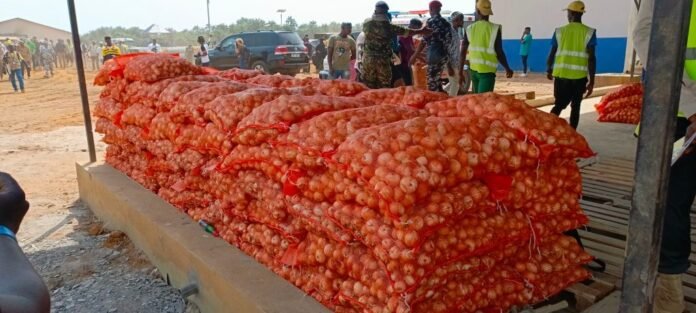
One of Pee Cee Agriculture’s most notable achievements is the successful cultivation of onions in Sierra Leone. The company offers its locally grown onions at NLe 280 per bag, compared to imported onions that retail at NLe 450. This significant price difference underscores the benefits of supporting locally produced food, reducing dependency on imports and strengthening Sierra Leone’s agricultural sector.

Sierra Leoneans are encouraged to embrace this initiative as a patriotic duty, ensuring the nation moves towards greater food independence. The widespread perception that imported goods are superior must be challenged, a sentiment echoed by the Government in recent statements.

Minister of Agriculture, Henry Musa Kpaka, recently highlighted Pee Cee Agriculture’s impact in a post on X (formerly Twitter). He recalled a time when onions were scarce and unaffordable in Sierra Leone, emphasizing how local production has dramatically improved access and affordability.

“Almost two years ago, there was a shortage of onions in Sierra Leone. If you could find one, it could cost you an arm and a leg,” the Minister stated. He credited President Julius Maada Bio for his direct involvement in supporting smallholder farmers and working with private sector players like Pee Cee Agriculture to enhance local production.

The Minister further noted that locally produced onions now sell for nearly half the price of imported ones, demonstrating that deliberate efforts in agricultural investment can yield tangible results.

President Julius Maada Bio has also praised Pee Cee Agriculture’s contributions, particularly its 400-hectare onion farm in Lokomasama Chiefdom, Port Loko District. During a visit to the farm, the President actively participated in the harvesting process, emphasizing the need to reduce Sierra Leone’s annual onion importation, which costs the country millions of dollars.

“Pee Cee & Sons has been one of the largest and most committed partners in the private sector, always aligning with Government policies. Their investment alone has saved Sierra Leone up to $30 million that would have otherwise been spent on imports,” President Bio remarked.

He urged other companies to follow Pee Cee Agriculture’s example, stressing the economic and employment benefits of local production. Additionally, he called on Paramount Chiefs and landowners across the country to facilitate agricultural investments that will enhance food security and create job opportunities.

The success of Pee Cee Agriculture aligns with broader national efforts to strengthen Sierra Leone’s agricultural sector. Some key benefits of increasing local production include:

1. Food Security & Reduced Reliance on Imports

• The “Feed Salone” initiative is enhancing local production of staple crops like rice, reducing dependency on foreign imports.
• Increased investment in livestock farming ensures a steady supply of meat for the domestic market.

2. Job Creation & Economic Growth

• Expanding local manufacturing and agricultural production generates employment and skill development opportunities.
• Smallholder farmers benefit from partnerships with companies like Pee Cee Agriculture, receiving inputs, mechanized plowing and training.

3. Increased Export Potential

• Sierra Leone can expand its export portfolio by focusing on high-value crops like cocoa, coffee and oil palm.
• Processing and value addition to local products will boost export revenues.

4. Other Economic & Social Benefits

• Increased agricultural productivity translates to higher incomes for farmers and rural communities.
• Sustainable agricultural practices promote environmental conservation and long-term economic growth.
• The “Made in Salone” initiative supports local businesses, encouraging citizens to buy locally produced goods.

Beyond onions, Pee Cee Agriculture has diversified in the production of other agricultural products, including edible oil and soap production. The company has also been instrumental in supporting 900 smallholder farmers with resources and technical expertise.

Pee Cee & Sons’ parent company, Pee Cee Holding Ltd (PCH), continues to invest in expanding the agricultural sector, with subsidiaries like Jolaks Manufacturing Limited, Pee Cee Industries, and Milla Group playing vital roles in strengthening local production.

Pee Cee Agriculture Limited has positioned itself as a key player in Sierra Leone’s agricultural transformation. Through its investments in onion farming and broader agricultural initiatives, the company is helping to reduce import dependency, create jobs and enhance food security.

With the support of the Government, private sector players and citizens, Sierra Leone is on a path toward self-sufficiency in food production. The call to action is clear: Sierra Leoneans must support local production, not just for economic reasons but as a matter of national pride and long-term sustainability.

SLCAA DG Extends Warm Welcome to President Bio During Official State Visit to Egypt

By Amin Kef (Ranger)

The Director General of the Sierra Leone Civil Aviation Authority (SLCAA), Madam Musayeroh Barrie, graciously welcomed His Excellency, President Julius Maada Bio, as he arrived in Cairo, Egypt, on March 26, 2025, for a pivotal three-day state visit. President Bio’s high-profile visit underscores the ongoing commitment to enhancing the robust diplomatic and economic ties between Sierra Leone and Egypt, heralding a new chapter of cooperation between the two nations.

President Bio, upon his arrival in Egypt, emphasized the significance of the visit, stating, “I have arrived in the Arab Republic of Egypt for a state visit. Our nations share a long history of strong ties and I eagerly anticipate a fruitful and constructive engagement during my stay.” The visit, made at the invitation of Egyptian President Abdel Fattah Al-Sisi, was poised to cement the bonds of collaboration, particularly in areas such as aviation, trade and cultural exchange.

Madam Musayeroh Barrie’s role in this strengthening of relations is notable. Appointed by President Bio to lead SLCAA, she has been at the forefront of transformative changes in the aviation sector, implementing critical reforms that have significantly enhanced Sierra Leone’s air transport infrastructure. Under her leadership, the Authority has seen the introduction of modernized systems designed to streamline operations, improve safety standards and ensure that the sector meets international norms. Noteworthy initiatives include the renovation of Sierra Leone’s airports, the improvement of air traffic control systems and the development of regulatory frameworks that have positioned the country as a competitive player in regional aviation.

Her efforts have also contributed to fostering stronger ties with international partners, including Egypt. The recent advancements in aviation cooperation between Sierra Leone and Egypt exemplify this growing relationship, marked by increased technical exchange, aviation training opportunities and joint air transport projects. This collaboration aligns with President Bio’s broader vision of utilizing Sierra Leone’s strategic position to attract international investment and enhance global connectivity.

Madam Musayeroh Barrie’s dedication to reforming the aviation sector has been a driving force behind these achievements, reflecting her unwavering commitment to modernizing and expanding the industry. The successful hosting of international aviation forums in Sierra Leone, with Egyptian experts playing key roles, further highlights the growing diplomatic and professional rapport between the two countries.

As President Bio’s visit will optimistically strengthen Sierra Leone-Egypt relations it stands as a testament to the transformative leadership of Madam Musayeroh Barrie, whose initiatives continue to elevate Sierra Leone’s profile on the global aviation stage.

Attorney General Unveils E-Justice Blueprint to Modernize Sierra Leone’s Legal System

In a landmark move towards digital transformation, Sierra Leone’s Attorney General and Minister of Justice, Alpha Sesay, alongside Deputy Minister of Justice, Madam Saptieu Elizabeth Saccoh, officially launched the development of the e-Justice Blueprint on Monday, March 24, 2025, at Guma Building in Freetown. This initiative is a significant milestone in the country’s efforts to modernize and digitize the justice system, enhancing efficiency, transparency and accessibility.

The e-Justice Blueprint is a key component of the Sierra Leone Digital Transformation Project, designed to bridge existing gaps in the judicial sector by leveraging technology to improve service delivery. The initiative aligns with the Government’s broader commitment to strengthening the rule of law and ensuring that justice is accessible to all citizens, regardless of their location.

Attorney General, Alpha Sesay, underscored the importance of the initiative, stating, “The e-Justice Blueprint marks a crucial step toward modernizing Sierra Leone’s justice system, making it more accessible, efficient and transparent. As a Government, we are committed to enhancing the rule of law and ensuring that justice is not only a privilege but a right for all citizens.”

The initiative will be spearheaded by the Canadian Academic and Industrial Network (CAAIN), a consulting firm renowned for its expertise in digital solutions and justice sector reforms. CAAIN’s extensive international experience is expected to guide Sierra Leone through the complexities of adopting an e-Justice framework, ensuring that best practices and cutting-edge technologies are integrated into the process.

Project Coordinator, Ms. Kumba Musa, emphasized the necessity of collaboration, stating, “This project is a collective effort. Every stakeholder, from Government officials to citizens, plays a crucial role in the success of the e-Justice Blueprint. Our shared goal is to create a system that serves everyone and we are committed to working closely with the Ministry of Justice, the legal community and international partners to achieve this vision.”

The launch of the e-Justice Blueprint is part of a broader Governmental initiative to ensure Sierra Leone’s justice system keeps pace with global technological advancements. The ultimate objective is to develop a more accessible, user-friendly and integrated justice system that improves service delivery, enhances accountability and reinforces the rule of law.

As work on the e-Justice Blueprint progresses, optimism is high regarding the future of the justice sector in Sierra Leone. With the leadership of the Ministry of Justice, support from international partners and active participation from stakeholders across various sectors, the country is poised to embrace a digital future in which justice is efficient, transparent and accessible to all.

50/50 Group Sierra Leone Hosts Government Engagement Meeting on Economic Inclusion and Civic Space

By Alvin Lansana Kargbo

In a bid to foster inclusive economic reforms and strengthen civic engagement, the 50/50 Group Sierra Leone, in collaboration with the Inter-Religious Council Sierra Leone and with support from Christian Aid, convened a Government Engagement Meeting on Wednesday, March 26, 2025. The meeting, held at the 50/50 Group Conference Hall on Tower Hill in Freetown, was part of the Inclusive Civic Action for Reforms on Economic Systems (ICARES) Project.

The high-level engagement brought together key stakeholders, including Government representatives, civil society actors and advocacy groups, to discuss critical issues affecting economic participation, particularly for women in the informal sector and the role of civic space in governance and policy-making.

Welcoming attendees, Professor Fredline M’Cormack-Hale, President of the 50/50 Group Sierra Leone, emphasized that the meeting was more than a routine gathering; it was a strategic dialogue aimed at fostering sustainable change. She underscored the importance of equity, transparency and collective action in addressing structural inequalities within Sierra Leone’s economic and governance systems.

“Our agenda is comprehensive, featuring a data-driven presentation to inform our discussions, insights from advocates of civic space and women’s economic inclusion and community-driven recommendations from Civic Hub members across the country,” Professor Fredline M’Cormack-Hale stated.

She noted that while legal reforms had been commendable, systemic inequalities persisted, particularly in integrating women into the formal financial system and improving financial literacy. She called for bold engagement and collective action to dismantle structural barriers and create an inclusive economy.

A major highlight of the meeting was a presentation by Naasu Fofanah-Susue, which focused on women’s financial empowerment and economic inclusion. She shed light on the struggles faced by women in the informal sector, particularly in accessing finance and introduced the Women’s Banking Initiative, a program designed to provide sustainable financial solutions for women entrepreneurs.

Naasu Fofanah-Susue, who serves as co-chair of the Bank of Sierra Leone’s Financial City Working Group, explained that her advocacy stemmed from observing the dominance of men in leadership roles within women’s business associations. Recognizing the vast amounts of money circulating outside the formal financial system, she saw an opportunity to integrate informal savings groups, often led by women, into the formal banking sector.

The Women’s Banking Initiative was developed through extensive consultations with the Black Women Association, Sierra Leone Commercial Bank and other stakeholders. The initiative aims to establish Sierra Leone’s first women-only commercial bank, offering tailored financial products, such as single-digit interest loans with short repayment terms, to support female entrepreneurs.

Her presentation underscored the challenges women face in trusting financial institutions, leading to low participation in the banking sector. However, she revealed that the initiative had already secured significant investment commitments from the commercial sector, demonstrating confidence in its potential to transform women’s economic participation.

Charles Keif-Kobai delivered an insightful presentation on the relationship between civic space and democratic participation. His discussion, titled: “Civic Space and Democratic Participation,” examined the role of civic engagement in governance, emphasizing that an open civic space enhances policy-making, fosters freedom of expression and strengthens democracy.

Charles Keif-Kobai highlighted that civic space, as defined by institutions such as the Organization for Economic Co-operation and Development (OECD), provides an avenue for citizens to influence political and social structures. However, he warned that restrictive environments hinder Government accountability and social progress.

“A shrinking civic space can limit public participation in governance, weaken policy implementation and reduce citizens’ ability to demand accountability,” he noted.

He called for the protection and expansion of civic spaces to ensure that citizens, especially marginalized groups, can engage meaningfully in decision-making processes.

Providing a policy and legal analysis, Madam Zainab, a consultant, explored key areas requiring reform.

She examined the Property and Asset Management, advocating for modernization efforts to maximize community benefits, Land Management Reforms, emphasizing the establishment of National and District Land Commissions to protect individual land rights and Policy and Community Engagement, urging stronger community relationships and gender-sensitive policies to challenge patriarchal systems.

While acknowledging some progress, she questioned why reforms had not translated into substantial improvements. “We must critically assess our strategic direction and expectations to ensure meaningful impact,” she stressed.

John Kelly Marah, from Civic Hub, presented a critical analysis of existing laws affecting civic engagement. He examined legal frameworks such as: The Cyber Security and Crime Act of 2021, which raises concerns about restrictions on free speech and online expression, The Cleaner of Social Act of 1965 and Public Order Amendment Act of 2020, which impact protest rights and civic mobilization.

John Kelly Marah warned that excessive regulation of digital and public spaces could stifle free expression and civil activism. He advocated for policy reforms that strike a balance between regulation and the protection of fundamental freedoms.

The meeting concluded with a call to action for Government representatives and civil society actors to collaboratively implement the proposed reforms.

The event marked a pivotal step towards inclusive economic and governance reforms in Sierra Leone, reinforcing the commitment of the 50/50 Group and its partners to bridging structural gaps and promoting social justice.

OFP Unveils €1.2M PIE Project for Disability Inclusion in Sierra Leone

By Foday Moriba Conteh

One Family People (OFP), with funding from the Liliane Foundation, officially launched its Programme for Inclusion & Empowerment (PIE) project on Thursday, March 25, 2025, at the Peace Museum Hall in New England Ville, Freetown. This €1.2 million multi-year initiative, under the Building Effective Networks trajectory, aims to improve the lives of children and young people with disabilities in Sierra Leone. The project will be implemented by eight partner organizations across five districts and aligns with the broader 2025–2027 Multi-Annual Plan, which focuses on strengthening disability inclusion and empowerment in education, healthcare, livelihoods and advocacy.

Addressing the gathering, Edward Emmanuel, Executive Director of One Family People, emphasized the importance of the initiative in advancing support systems for Persons with Disabilities (PwDs), particularly children and young people with special needs.

“This marks a new era of enlightenment through the Programme for Inclusion and Empowerment (PIE). Our goal is to create an inclusive society where all families with special needs enjoy equal rights and opportunities,” Edward Emmanuel stated.

He pointed out that the PIE project aligns with Sierra Leone’s commitment to the Sustainable Development Goals (SDGs), particularly the 2030 Agenda for inclusion and poverty reduction, adding that the project seeks to break systemic barriers that hinder the empowerment of PwDs, including legal restrictions, social norms and lack of access to resources.

Highlighting the UN Convention on the Rights of Persons with Disabilities (UNCRPD), Edward Emmanuel reiterated that inclusion must be at the core of national development efforts. He called for greater collaboration between the Government, civil society and international partners to ensure PwDs have access to education, employment and healthcare.

“The 17 SDGs are interconnected. If we are truly committed to ‘Leaving No One Behind,’ we must ensure that persons with disabilities are included in all aspects of social, economic and political life,” he added.

In his presentation, Samuel POV Macauley, Operations Director and National CBR Advisor at One Family People, emphasized the organization’s commitment to ensuring that all children and youth with disabilities are empowered, included and have access to the best possible living conditions.

He said that as part of the 2025 rollout of the PIE programme, the initiative will focus on multiple impact areas, including child support, capacity strengthening, lobbying and advocacy, education, health and economic empowerment. In child support, the project aims to establish a CBR Fund to cater to the needs of approximately 1,000 children with disabilities across 11 chiefdoms in five districts, while also providing individualized case management support for children requiring social protection services. Capacity strengthening efforts will involve training children, parents, service providers and policymakers on disability rights and inclusion, creating Parent Support Groups with regular meetings, and developing a mental health support package for families and caregivers.

He pointed out that the project also aims to enhance lobbying and advocacy efforts by establishing a national youth panel to advocate for policy improvements related to disability inclusion, conducting public education programs through five radio stations and two television channels featuring experts and parents discussing disability rights, and organizing annual community awareness campaigns in rural districts to educate 600 community members per year on disability laws and policies.

He added that the PIE project seeks to enhance educational opportunities by providing partial education support to approximately 500 students based on individual rehabilitation plans, establishing 15 inclusive school clubs, conducting teacher training workshops, and organizing mobile sign language clinics and online teaching programs targeting 2,500 students.

He expressed confidence that the PIE project would significantly contribute to strengthening disability inclusion and advocacy in Sierra Leone.

Dr. Ismail Kebbie, Program Manager at the National Rehabilitation Centre, Ministry of Health, commended One Family People for launching the Programme for Inclusion and Empowerment (PIE), stating that it will contribute tremendously towards the empowerment of children and youth with disabilities.

He noted that over the years, the Ministry has been seeking a network of partner organizations to complement the government’s efforts, particularly in the area of healthcare for persons with disabilities. From the project presentations, he expressed optimism that the initiative would address the concerns of children and youth with disabilities, as it has created the linkages that were previously missing. He urged partner organizations to work together as a team throughout the project’s implementation.

Speaking on behalf of the partner organizations implementing the project, Joseph Kamara, Executive Director of the Welfare Society for the Disabled Sierra Leone, described the Programme for Inclusion and Empowerment (PIE) as not only crucial but also a timely intervention by One Family People in addressing the challenges faced by children and youth with disabilities.

He highlighted the opportunities the project presents for partner organizations, including networking, technical expertise, and resource mobilization, which he believes will enable them to reach more children and youth with disabilities than they could individually. He assured that partner organizations would ensure the smooth implementation of the project and work towards reaching its targeted beneficiaries.

The One Family People’s PIE project presents a landmark initiative towards ensuring that children and youth with disabilities in Sierra Leone can access quality education, healthcare, economic opportunities, and social inclusion, thereby promoting their empowerment and overall well-being.

Indian High Commission Hosts Tourism Dialogue with Travel Agencies in Sierra Leone

By Foday Moriba Conteh

As part of their efforts toward enhancing travel opportunities between Sierra Leone and India, attracting investments in Sierra Leone’s hospitality industry and exploring avenues for sustainable tourism development between both countries, the High Commission of India in Freetown on Thursday, 25th March 2025, concluded a one-day dialogue on Travel & Tourism between the High Commission of India, tour and travel agencies in Sierra Leone to promote bilateral tourism and the hospitality sector.

The dialogue, which brought together key stakeholders, including representatives from the tourism industry, potential investors and media personnel, fostering discussions on the sector’s growth prospects in both India and Sierra Leone, was held at Lagoonda Hotel on Aberdeen in Freetown.

In his presentation, India’s High Commissioner to Sierra Leone, Shri Baisnab Charan Pradhan, underscored the tourism sector’s role in employment generation and economic expansion.

“Tourism is one of the most labor-intensive industries, creating employment opportunities in hotels, restaurants, transport services and cultural attractions,” Shri Pradhan stated. “Both India and Sierra Leone stand to benefit significantly from stronger ties in this sector.”

Discussions, during the event, revolved around several strategic areas, including strengthening bilateral travel links, attracting investment in Sierra Leone’s tourism infrastructure, fostering joint ventures in hospitality and eco-tourism, and facilitating knowledge-sharing to improve service quality in the industry.

Representatives from Invest India, the country’s national investment promotion agency, highlighted opportunities for foreign investors in India’s thriving hospitality sector. Key areas for foreign participation include acquiring existing hotels with advisory support for due diligence, developing new tourism infrastructure projects through greenfield investments, forming public-private partnerships (PPPs) with the Indian Government to modernize the tourism ecosystem and establishing franchise agreements and management contracts to connect Indian hotel owners with global operators.

Sierra Leone, with its pristine beaches, rich cultural heritage and unexplored eco-tourism sites, has the potential to become a top travel destination in West Africa. However, stakeholders emphasized that investment in infrastructure, hospitality services and marketing strategies is critical to attracting international tourists.

As part of the forum, India’s Mizoram state was presented as a case study in sustainable tourism development, providing insights into how Sierra Leone can leverage its natural and cultural assets for growth in the sector.

The High Commission of India announced plans to hold further targeted sessions with major investors, policymakers and tourism stakeholders to develop concrete action plans for advancing cooperation in the industry.

“The goal is not just to have discussions but to create real business opportunities that will strengthen both nations’ economies through tourism,” said Neeraj Kumar Saini, Head of Chancery at the High Commission.

With growing interest from Indian businesses and a strong commitment from the Sierra Leonean travel sector, this collaboration is expected to open new economic opportunities and position Sierra Leone as a competitive player in the global tourism industry.

Ministry of Information and Civic Education Engages Kambia in Transformative Civic Day Initiative

#image_title

Kambia town came alive on Monday, March 24th, and Tuesday, March 25th, as the Ministry of Information and Civic Education (MOICE) launched the first Civic Day activities in the district, bringing governance closer to the people. Normally bustling as a border crossing hub with Guinea at Gbalamuya, Kambia stood still as the MOICE team engaged residents in a dynamic and enlightening two-day event.

Under the theme: “Salone Big Pass We All,” Minister of Information and Civic Education, Chernor Bah, emphasized the significance of national unity as enshrined in the country’s National Pledge and Anthem. The initiative, he explained, aimed to bridge the gap between the Government and the people, fostering civic awareness and engagement.

The first day saw schoolchildren from primary and secondary schools across the district gathering at the Kambia District Council hall. They were joined by Paramount Chiefs, civil society activists and media representatives to gain firsthand insight into the roles of Government and the responsibilities of citizens in ensuring accountability and effective governance. The event provided a platform for residents to voice their perspectives on civic duties and their expectations of Government engagement.

A highlight of the day was an engaging quiz and debate competition, where pupils demonstrated their knowledge on national and international affairs. Pupils from Kolenten and Mortala schools captivated the audience with their intellectual depth, while female pupils, in particular, showcased exceptional prowess, reaffirming President Julius Maada Bio’s steadfast commitment to girls’ education. The debate centered on the merits of Free Quality Education versus the Feed Salone initiative, with compelling arguments presented on both sides. Ultimately, Fatmata Yansaneh emerged victorious for her persuasive advocacy on the benefits of free quality education.

Minister of Communications, Technology and Innovation, Salima Bah, delivered an inspiring address on her Ministry’s transformative efforts in expanding internet access and affordability. She highlighted investments in fiber optic infrastructure, underground cables and broadband expansion, underscoring the Government’s commitment to digital inclusivity. Meanwhile, Statistician General, Mr. Johnny, educated attendees on the civic importance of participating in the national census, setting the stage for a more in-depth discussion the following day.

The presentation of prizes and certificates to outstanding participants marked the culmination of a vibrant first day.

Day two saw a high-profile gathering of Government officials engaging in direct dialogue with citizens from all walks of life, including traditional leaders, civil society representatives and students. Ministers, Directors and Commissioners emphasized that governance is a shared responsibility and that citizens are integral to the decision-making process.

Minister Chernor Bah reiterated President Bio’s directive that officials must step beyond their desks in Freetown and connect with the people who entrusted them with leadership. Other speakers included Minister of Local Government and Community Affairs Tamba Lamina, Deputy Minister of Agriculture I Theresa Dicks, Chairman of the Presidential Initiative on Climate Change, Renewable Energy, and Food Security Alhaji Dr. Kandeh Yumkella, Attorney General and Minister of Justice Alpha Sesay Esq., Head of the National Public Health Agency Dr. Sahr Foday, Statistician General Mr. Johnny, Assistant Commissioner for Border Control Mr. Amara and Deputy Minister of Energy I Ing. Nuni, among others.

Each speaker addressed critical issues, from food security and energy to border control, public health, justice and national development. The audience listened attentively, absorbing insights on policies and governance. However, some residents expressed frustration, voicing their concerns with a mix of anxiety and urgency. Minister Chernor Bah, ever composed and engaging, skillfully transformed tension into constructive dialogue, ensuring that concerns were addressed with clarity and empathy.

By the end of the event, attendees departed with a sense of fulfillment, having engaged directly with Government officials, voiced their grievances and gained deeper insight into national policies. The Civic Day initiative proved to be an invaluable exercise in participatory democracy, reinforcing the Government’s commitment to transparency, inclusion and effective governance. It was a resounding success, leaving both officials and citizens with a renewed sense of collaboration and purpose.

Thomas Josephus Dixon Declares Candidacy for GUILD of Newspaper Editors (GoNE) Chairman

Thomas Josephus Dixon

In a statement of intent, seasoned journalist and media professional, Thomas Josephus Dixon, has officially declared his candidacy for the position of Chairman of the GUILD of Newspaper Editors (GoNE). Expressing his commitment to the media fraternity, Thomas Josephus Dixon emphasized his desire to serve rather than lead, pledging to revitalize and strengthen the Guild.

“It is an honor, punctuated with a deep sense of humility, that I solicit the support of all members of the GUILD of Newspaper Editors (GoNE) to serve as your Chairman,” he stated. “I deliberately use the word ‘SERVE’ rather than ‘LEAD’ because I believe it is always an opportunity to serve my colleagues in a professional entity. I am not embarking on this journey for self-serving purposes but to awaken the sleeping giant in the GUILD of NEWSPAPER EDITORS.”

Thomas Josephus Dixon is a prominent figure within Sierra Leone’s journalism sector, having risen through the ranks to become the Managing Editor of New Age Newspaper. His vast experience spans multiple editorial roles, including serving as Student Editor of Aureol Torch Newspaper, Consultant Editor of News Watch Newspaper, Editor of Salone Times and Managing Editor of New Age Newspaper. Additionally, he is a lecturer at the Journalism and Media Studies Department of the Faculty of Communication, Media and Information Studies at Fourah Bay College, University of Sierra Leone.

His previous involvement with the Guild includes serving as Acting Secretary-General, where he played a key role in organizing the first-ever successful Guild Annual General Meeting (AGM) in Tokeh. Despite stepping aside to allow others to contribute, he remains committed to the Guild’s progress.

Thomas Josephus Dixon’s candidacy is anchored on what he terms the GUILD Manifesto, an acronym that outlines his strategic vision for the Guild:

  • G – GREATNESS: He vows to make the Guild a formidable force within Sierra Leone’s media ecosystem, partnering with international journalism organizations to enhance its influence and credibility.
  • U – UNITY: Acknowledging the diverse perspectives among editors, he aims to foster unity, ensuring that differences strengthen rather than divide the Guild.
  • I – INCLUSIVITY: Committed to gender sensitivity, he pledges to encourage greater participation of women and disabled professionals in journalism, making the industry more inclusive.
  • L – LEADERSHIP: Dixon promises transparent, accountable and competent leadership that listens to critical views and respects all voices within the Guild.
  • D – DEVELOPMENT: Recognizing the challenges posed by new media, artificial intelligence and the rising costs of newspaper operations, he advocates for the empowerment of editors through digital transformation, modern management techniques and capacity-building initiatives both locally and internationally.

Thomas Josephus Dixon called on fellow editors to support his vision of a reinvigorated Guild that embraces greatness, unity, inclusivity, responsible leadership and sustainable development.

“Colleagues, we have the responsibility to make the GUILD of NEWSPAPER EDITORS (GoNE) a great institution that serves its purpose. By considering this request, we will bring out the GREATNESS in the Guild, promote UNITY, enhance INCLUSIVITY, ensure responsible LEADERSHIP and unleash DEVELOPMENT,” he urged.

As the election approaches, members of the Guild will have the opportunity to choose a leader who aims to reshape the future of journalism in Sierra Leone and elevate the role of editors in nation-building.

Thomas Josephus Dixon’s declaration has already generated discussions among media professionals, with many keenly observing how his vision aligns with the Guild’s broader objectives. As the campaign unfolds, stakeholders within the journalism sector will be looking to see how his manifesto translates into actionable strategies for the growth of the Guild and the industry at large.

Caritas Freetown Partners with ICPNC to Hold Dialogue on Peace and Social Cohesion 

By Ibrahim Sesay

As part of its effort to promote peace, Caritas Freetown in collaboration with the Independent Commission for Peace and National Cohesion has, on Thursday March 27th 2025, held a one-day regional dialogue on youth in peace building and social cohesion. The dialogue themed: “Youth Participation in Politics, Promoting Peace and Social Cohesion” brought together key stakeholders from ICPNC, National Youth Commission, political parties, tribal heads and civil society to deliberate on the significance of youth promoting peace and social cohesion.

The Resident Minister Western Area, Ambassador Adekunle King stressed the significance of young people to national development. “Young people under age 35 form 74% of our population, Government is not Government without the young people of Sierra Leone,” he stated.
Ambassador Adekunle King emphasized that any Government that discountenance its youthful population is destined for failure.

He acknowledged that the youth are still deprived in numerous ways also mentioning that his expectation for youth participation in peace building should influence decisions on education, employment, social justice and accountability adding that by doing so “youth will be able to lay the foundation for a society that prioritizes inclusivity, transparency and mutual respect.”

The Resident Minister further assured that Government will take measures to ensure that the youth become drivers of change in socio-economic development of our country and not the source of instability.

Dennis Momoh, a representative from Catholic Relief Service (CRS) dilated on the longstanding partnership between CRS and Caritas noting that engagements like this is essential to maintaining peace as young people are the major perpetrators of violence and defenders of peace efforts. “There’s no way development can occur without the involvement of young people and also development cannot be evident without peace,” he emphasized.

He urged young people to take the center stage stating that young people should speak on issues that drive change and development.

In his statement, the Deputy Executive Director of Caritas Freetown, Rev. Fr. Joseph Bangura stated that young people are torch bearers of tomorrow adding that they hold the power to shape the future of our society and to influence the world. He noted how young people around the world are on the trajectory of change and youth maintaining that the country is striving for change that will alter the status quo.

He added that Caritas recognizes the significant role young people play in peace building which is why they are focusing on empowering the youth to participate in governance and peace initiatives.

“This project creates the platform for engagement with decision makers as well as equipping young people with essential skills on advocacy,” Rev Bangura said.
He encouraged young people to utilize social media to “amplify their voices and mobilize support for peaceful initiatives.”

The dialogue was followed by a panel session with representatives from ICPNC, APC National Young Congress, Commission for Persons Living with Disability and a lecturer from the Peace and Conflict Department FBC. Critical topics on the barriers preventing young people from participating in governance, youth representation, execution of youth project and depoliticizing institutions were delved into.

Asked about execution of a project that involves young people, Adekalie Sheku Kamara, Deputy Director Research and Learning at ICPNC noted that the Commission has transparently executed their projects using national and regional structures. He disclosed that the Commission has secured funding from the World Bank which will target young people in business and those aspiring to engage in business. Adekalie Sheku Kamara added that 300 dollars will be given to deserving applicants from Freetown, Bo, Port Loko and Kenema.

On the inadequacy of youth representation, the Secretary General of APC National Young Congress, Ibrahim Bai Tarawally, stated age issue and lack of resources and network have affected adequate youth representation in governance and called for further dialogue to address those issues. He called on young people to strive to capacitate themselves in preparedness for critical positions.

All the speakers emphasized the need for more engagements like this as they are geared towards identifying the issues of young people and map out ways to address concerns.

From Imports to Self-Sufficiency: How Pee Cee Agriculture is Transforming Sierra Leone’s Food Sector

Pee Cee Agriculture Limited

By Amin Kef (Ranger)

Pee Cee Agriculture Limited, a subsidiary of Pee Cee & Sons, is making remarkable strides in promoting food security and economic growth in Sierra Leone. Renowned for its commitment to providing quality and affordable brands nationwide, the company is at the forefront of revolutionizing local agricultural production.

For over 50 years, Pee Cee & Sons (PCS) has been a leading distribution and marketing entity in Sierra Leone, Liberia and Guinea, representing globally recognized brands in frozen, chilled and dry food products. However, with its recent focus on local agricultural production through Pee Cee Agriculture Limited, the company is setting a new benchmark in the country’s drive for self-sufficiency.

One of Pee Cee Agriculture’s most notable achievements is the successful cultivation of onions in Sierra Leone. The company offers its locally grown onions at NLe 280 per bag, compared to imported onions that retail at NLe 450. This significant price difference underscores the benefits of supporting locally produced food, reducing dependency on imports and strengthening Sierra Leone’s agricultural sector.

Sierra Leoneans are encouraged to embrace this initiative as a patriotic duty, ensuring the nation moves towards greater food independence. The widespread perception that imported goods are superior must be challenged, a sentiment echoed by the Government in recent statements.

Minister of Agriculture, Henry Musa Kpaka, recently highlighted Pee Cee Agriculture’s impact in a post on X (formerly Twitter). He recalled a time when onions were scarce and unaffordable in Sierra Leone, emphasizing how local production has dramatically improved access and affordability.

“Almost two years ago, there was a shortage of onions in Sierra Leone. If you could find one, it could cost you an arm and a leg,” the Minister stated. He credited President Julius Maada Bio for his direct involvement in supporting smallholder farmers and working with private sector players like Pee Cee Agriculture to enhance local production.

The Minister further noted that locally produced onions now sell for nearly half the price of imported ones, demonstrating that deliberate efforts in agricultural investment can yield tangible results.

President Julius Maada Bio has also praised Pee Cee Agriculture’s contributions, particularly its 400-hectare onion farm in Lokomasama Chiefdom, Port Loko District. During a visit to the farm, the President actively participated in the harvesting process, emphasizing the need to reduce Sierra Leone’s annual onion importation, which costs the country millions of dollars.

“Pee Cee & Sons has been one of the largest and most committed partners in the private sector, always aligning with Government policies. Their investment alone has saved Sierra Leone up to $30 million that would have otherwise been spent on imports,” President Bio remarked.

He urged other companies to follow Pee Cee Agriculture’s example, stressing the economic and employment benefits of local production. Additionally, he called on Paramount Chiefs and landowners across the country to facilitate agricultural investments that will enhance food security and create job opportunities.

The success of Pee Cee Agriculture aligns with broader national efforts to strengthen Sierra Leone’s agricultural sector. Some key benefits of increasing local production include:

1. Food Security & Reduced Reliance on Imports

• The “Feed Salone” initiative is enhancing local production of staple crops like rice, reducing dependency on foreign imports.
• Increased investment in livestock farming ensures a steady supply of meat for the domestic market.

2. Job Creation & Economic Growth

• Expanding local manufacturing and agricultural production generates employment and skill development opportunities.
• Smallholder farmers benefit from partnerships with companies like Pee Cee Agriculture, receiving inputs, mechanized plowing and training.

3. Increased Export Potential

• Sierra Leone can expand its export portfolio by focusing on high-value crops like cocoa, coffee and oil palm.
• Processing and value addition to local products will boost export revenues.

4. Other Economic & Social Benefits

• Increased agricultural productivity translates to higher incomes for farmers and rural communities.
• Sustainable agricultural practices promote environmental conservation and long-term economic growth.
• The “Made in Salone” initiative supports local businesses, encouraging citizens to buy locally produced goods.

Beyond onions, Pee Cee Agriculture has diversified in the production of other agricultural products, including edible oil and soap production. The company has also been instrumental in supporting 900 smallholder farmers with resources and technical expertise.

Pee Cee & Sons’ parent company, Pee Cee Holding Ltd (PCH), continues to invest in expanding the agricultural sector, with subsidiaries like Jolaks Manufacturing Limited, Pee Cee Industries, and Milla Group playing vital roles in strengthening local production.

Pee Cee Agriculture Limited has positioned itself as a key player in Sierra Leone’s agricultural transformation. Through its investments in onion farming and broader agricultural initiatives, the company is helping to reduce import dependency, create jobs and enhance food security.

With the support of the Government, private sector players and citizens, Sierra Leone is on a path toward self-sufficiency in food production. The call to action is clear: Sierra Leoneans must support local production, not just for economic reasons but as a matter of national pride and long-term sustainability.


Pee Cee Agriculture Limited, a subsidiary of Pee Cee & Sons