Home Blog Page 222

Rokel Commercial Bank Gives Back: Food Aid for Ramadan and Lent Observers

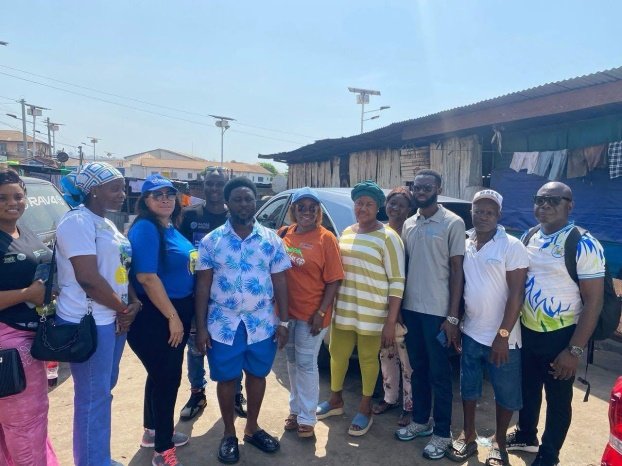
Rokel Commercial Bank (RCBank) has once again demonstrated its strong commitment to Corporate Social Responsibility with a generous donation of food items to both Muslims and Christians in Freetown.

The donation, made in Central Freetown, was aimed at supporting the Muslim community observing Ramadan and the Christian community observing the Lent season. It was warmly received by residents of Government Wharf and surrounding areas, reflecting the Bank’s dedication to the well-being of not just its customers but also the broader community.

As the afternoon sun dipped towards the Atlantic Ocean, members of the Government Wharf community eagerly gathered in anticipation of the representatives from Rokel Commercial Bank, led by the Bank’s Head of Marketing, Mariama Francess Jajua.

In her brief statement, Mariama Francess Jajua emphasized the Bank’s ongoing commitment to giving back to society. “We are here because we believe in giving back to society,” she said. “These donations, we hope, will strengthen the bond between us, as a bank, and you, the people of our community.”

Dr. Walton Ekundayo Gilpin, the Managing Director of Rokel Commercial Bank, also shared his thoughts with this medium, reiterating the institution’s dedication to improving the lives of its customers. “At RCBank, we believe that people are the backbone of our existence. That’s why we’ve always adopted policies that ensure a balance between achieving our profit-making goals, protecting the environment, and promoting the well-being of our people,” he explained.

Community stakeholders also expressed their gratitude. Chairman Baimba, a respected figure in the Government Wharf community, spoke of his admiration for the remarkable transformation of the Bank under Dr. Walton Ekundayo Gilpin’s leadership. He highlighted the Bank’s significant contributions to promoting financial inclusion and literacy in Sierra Leone. “On behalf of myself and my community, we thank Rokel Commercial Bank for this kind gesture,” Baimba stated.

This latest act of charity from Rokel Commercial Bank further cements its reputation as a key player in fostering social responsibility and community development in Sierra Leone.

NatCA DG, Amara Brewah, Advocates for Green Telecommunications in West Africa

By Amin Kef (Ranger)

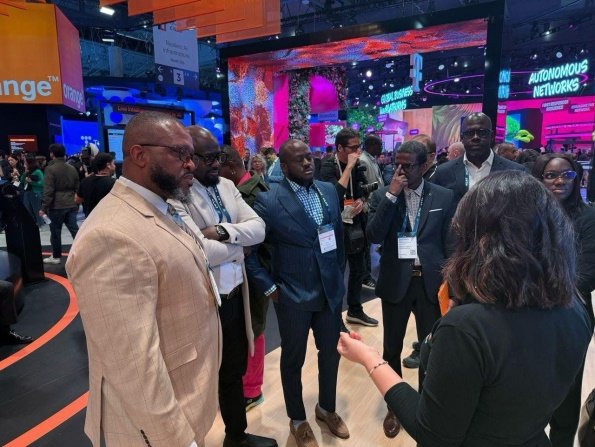
The Director General of Sierra Leone’s National Communications Authority (NatCA) and Chairman of the West African Telecommunications Regulators Assembly (WATRA), Amara Brewah, has called on regional policymakers, regulators and industry leaders to prioritize green telecommunications and affordable spectrum pricing to drive sustainable digital growth across West Africa. Speaking at the Mobile World Congress (MWC25) in Barcelona Spain, Amara Brewah emphasized the need for telecom practices that align with climate objectives while fostering economic and social transformation in the region.

Delivering a compelling address titled: “Green Telecommunications – Policies and Practices for More Sustainability,” Amara Brewah highlighted the rapid expansion of the telecommunications sector in West Africa and the opportunities it presents in areas such as commerce, education, healthcare and governance. However, he also warned that this growth comes with significant environmental consequences, including increasing energy consumption and electronic waste. To address these challenges, the Director General urged policymakers to adopt innovative reforms and technological advancements to ensure that telecommunications contribute to a more sustainable future.

“It is a great privilege to address you today on a topic that sits at the heart of our collective responsibility as regulators: building telecommunications networks that not only connect our people but also protect our environment,” Amara Brewah stated. “As Chairman of WATRA, I have seen firsthand how rapidly the telecom sector is expanding across West Africa, creating massive potential for advancements in commerce, education, health and governance. However, with this growth come clear environmental costs and opportunities.”

Amara Brewah underscored the role of efficient telecom networks in building sustainable economies. He noted that a well-developed telecom infrastructure supports digital transformation in key sectors such as agriculture, transportation and energy, enabling smarter systems that reduce waste, lower emissions and improve resource management.

“For instance, digital platforms that connect farmers directly to buyers reduce the need for physical travel, while smart logistics systems powered by telecom networks help optimize delivery routes and cut fuel consumption,” he explained. “At the same time, robust telecom networks facilitate the adoption of green technologies, such as remote monitoring of solar farms and smart grids that balance electricity supply and demand in real time.”

He called for greater energy efficiency across network infrastructure, advocating for the deployment of low-power base stations, intelligent cooling systems in data centers and the use of next-generation equipment designed to reduce energy consumption.

“As WATRA, we can lead by embedding energy efficiency requirements into licensing conditions, offering regulatory incentives for green upgrades and developing regional guidelines that promote efficient design across borders,” he stated.

The NatCA Director General stressed the urgent need to move away from diesel-powered telecom sites, particularly in off-grid and rural areas. He recommended promoting solar-powered and hybrid base stations as a standard industry practice rather than an afterthought.

“Through public-private partnerships (PPPs), we can unlock financing for clean energy solutions,” he noted. “Governments should also support operators by offering green financing, customs waivers on renewable energy equipment and preferential spectrum or infrastructure licensing for operators investing in low-carbon technologies.”

As telecom networks expand, the accumulation of outdated equipment and electronic waste (e-waste) poses serious environmental risks. Amara Brewah urged regional regulators to establish comprehensive e-waste management policies, including collection schemes, eco-friendly product designs and responsible recycling initiatives.

“WATRA can work with national regulators to develop a regional e-waste policy that mandates proper disposal and recycling of telecom equipment,” he suggested. “Creating regional e-waste recycling hubs will allow smaller nations to pool resources and establish efficient, sustainable recycling systems.”

The Director General emphasized the importance of harmonized policies across West Africa to facilitate sustainable telecom practices. He proposed regional standards for licensing, environmental reporting and carbon reduction targets, ensuring consistency across borders and reducing compliance costs for operators.

“No single country can transform this landscape alone,” he stressed. “A shared regional vision will give investors and operators the confidence to invest in green innovation at scale.”

To ensure accountability and progress in green telecommunications, Amara Brewah advocated for data-driven policies. He suggested making environmental impact assessments (EIAs) a requirement for major telecom projects and called on operators to publish annual sustainability reports disclosing energy consumption, renewable energy usage and emissions data.

“WATRA could develop a standardized reporting template to track progress at both national and regional levels,” he proposed. “This transparency will attract more green investments, strengthen public trust and hold stakeholders accountable for delivering on climate commitments.”

Concluding his address, Amara Brewah reiterated the need for environmental responsibility to be embedded in every aspect of telecom development. He expressed confidence that West Africa could emerge as a leader in green telecommunications through bold regulation, regional cooperation and private sector innovation.

“West Africa’s telecommunications future must be connected, innovative and sustainable,” he said. “By prioritizing green growth, we can create a resilient digital economy that not only fosters economic development but also protects our planet for future generations.”

As policymakers, regulators and industry leaders across West Africa deliberate on the next steps, Amara Brewah’s call to action underscores the urgent need to integrate sustainability into the region’s rapidly evolving digital landscape.


NCRA DG to Represent Sierra Leone at ID4Africa’s Prestigious 2025 Events

Director General of the National Civil Registration Authority (NCRA), Mohamed Mubashir Massaquoi

By Amin Kef (Ranger)

Sierra Leone’s strides in Civil Registration and Digital Identity continue to gain international acclaim, with the Director General of the National Civil Registration Authority (NCRA), Mohamed Mubashir Massaquoi, invited to speak at two prestigious ID4Africa events in 2025. His participation will highlight Sierra Leone’s leadership in Civil Registration, Vital Statistics and Identity Management, positioning the nation as a model for others across Africa.

Historically, Sierra Leone’s identity management system was fragmented, leading to inefficiencies, duplication and fraud. However, under DG Mohamed Mubashir Massaquoi’s leadership since 2018, the NCRA has revolutionized the sector. By harmonizing Civil Registration and Identity Management processes, Sierra Leone has successfully linked National Identification Numbers (NINs) to essential services such as education, banking, employment and social programs. Today, approximately 90% of citizens and residents possess biometric NINs, a milestone in the country’s history.

On March 26, 2025, Mohamed Mubashir Massaquoi will participate as an expert speaker in the ID4Africa Livecast, themed: “Civil Registration in Africa.” The event, to be hosted by globally renowned identity expert Dr. Joseph Atick, Executive Chairman of ID4Africa, will bring together Government representatives, industry experts and development partners to discuss best practices in Civil Registration and Identity Management.

Mohamed Mubashir Massaquoi will share insights on Sierra Leone’s journey, including the successful implementation of the APAI-CRVS framework—a system integrating Civil Registration, Vital Statistics and Identity Management. He will be joined by representatives from Ivory Coast, Tanzania, Kenya and UNICEF, showcasing Sierra Leone’s influence in shaping identity management policies across Africa.

In May 2025, Mohamed Mubashir Massaquoi will take the stage at the ID4Africa Annual General Meeting (AGM) in Addis Ababa, Ethiopia. Under the theme: “Digital Identity at Scale: Prioritizing Use, Accelerating Impact,” he will discuss the impact of Sierra Leone’s digital identity transformation. His presentation will highlight the NCRA Act of 2016, which mandates Civil Registration and NINs for Government services, emphasizing inclusivity and ensuring that no one is left behind.

Dr. Atick, in recognizing Sierra Leone’s achievements, remarked, “I am really proud of Sierra Leone and impressed with your progress. I am committed to making sure the world is aware of what you have accomplished and to give you the opportunity to teach our brothers and sisters in Africa how to achieve similar successes.”

Since assuming leadership, DG Mohamed Mubashir Massaquoi has spearheaded significant reforms with the support of President Julius Maada Bio, who has been instrumental in championing Civil Registration as a pillar of national development. The introduction of biometric NINs has not only enhanced identity security but has also streamlined Government services, making registration a requirement for accessing public benefits.

Sierra Leone’s transformation has attracted study visits from several African nations, including Nigeria, The Gambia, Liberia, Tanzania, Ethiopia, Zambia and Namibia, all seeking to learn from the country’s model.

Mohamed Mubashir Massaquoi’s expertise in identity management has made him a sought-after speaker at global events, including:

  • ID4Africa Annual Conferences
  • Annual TRUSTECH Conference in France
  • Digital Public Goods Conference in Rwanda

He also holds key global positions, such as:

  • Regional Vice-Chair, Bureau of Civil Registration and ID for West Africa
  • ID4Africa Ambassador (since 2019)
  • Member of the Global Advisory Committee on Secured Identity Alliance (SIA)

Sierra Leone’s approach to identity management is founded on the principle that “Civil Registration is a right and a must, leaving no one behind.” By linking identity to Government services, the country ensures that all citizens and residents can access essential services efficiently and securely.

With DG Mohamed Mubashir Massaquoi’s upcoming appearances at ID4Africa, Sierra Leone continues to cement its role as a leader in Africa’s digital identity landscape. As nations across the continent seek to build robust, inclusive identity systems, Sierra Leone’s success story offers invaluable lessons; proof that visionary leadership and policy coherence can transform challenges into opportunities.


NP (SL) Expands Operations with the Latest Ultra-Modern Filling Station in Masiaka

NP (SL) Ltd

By Amin Kef (Ranger)

As Sierra Leone’s leading petroleum marketing company, NP (SL) Ltd continues to demonstrate its commitment to nationwide service expansion, digital transformation and customer-centered innovations. Through strategic initiatives, the company ensures efficient service delivery while playing a vital role in economic growth, job creation and local content empowerment.

Recognizing the importance of accessibility, NP (SL) Ltd has expanded its operations across all regions of Sierra Leone, ensuring customers, regardless of their location, have uninterrupted access to high-quality petroleum products. The company has strategically established Filling Stations in both urban centers and remote areas, guaranteeing fuel availability even in underserved communities. This nationwide presence has significantly improved transportation, commerce and overall economic activities, solidifying NP (SL) Ltd’s position as a pillar of national development.

Embracing technological advancements, NP (SL) introduced the Energy Pass Card, a digital payment solution that enhances convenience, security and efficiency in fuel transactions. The cashless system allows individuals and businesses to pre-load funds onto the card for seamless use at NP fuel stations. This initiative reduces cash-handling risks, prevents fraud and ensures faster service delivery, ultimately enhancing the overall customer experience. By adopting smart payment solutions, NP (SL) Ltd reinforces its commitment to innovation and modernization.

The company prioritizes customer satisfaction by maintaining high product standards, employing well-trained personnel and ensuring a seamless service experience. Its dedication to quality assurance and efficient service delivery has earned it a reputation for reliability. Furthermore, NP (SL) Ltd consistently engages with customers to understand their needs, leading to the introduction of value-added services such as loyalty programs and fleet management solutions for corporate clients.

Beyond providing petroleum products, NP (SL) Ltd plays a crucial role in job creation and local content empowerment. The company employs a significant number of Sierra Leoneans across its various departments, contributing to reduced unemployment and improved livelihoods. Additionally, NP (SL) Ltd actively supports local businesses and contractors, ensuring that the country’s wealth remains within its economy. This commitment aligns with Sierra Leone’s vision for sustainable economic development.

As part of its ongoing commitment to enhancing accessibility, NP (SL) Ltd commissioned a state-of-the-art Filling Station in Masiaka on Saturday, March 22, 2025. The inauguration ceremony took place at the station’s premises along the Masiaka-Yonibama Highway.

Speaking at the event, NP (SL) Ltd’s Sales Manager, Vandy Bockarie, assured the residents of Masiaka that the newly commissioned station would put an end to fuel shortages in the area. He highlighted that the Masiaka station is the largest in the country, with a storage capacity of over 100,000 liters of petroleum products.

He emphasized NP (SL) Ltd’s unwavering commitment to customer satisfaction and optimization of services, noting that the company continues to lead in the petroleum market. The new Filling Station incorporates all key facilities available at NP’s other stations nationwide, including the widely used NP Energy Pass Card payment system, he underscored.

Vandy Bockarie assured residents of the availability of high-quality petroleum products, which NP (SL) Ltd has consistently provided over the years. He also stressed that the station’s pumping machines are certified by the Standard Bureau, guaranteeing that customers receive the correct quantity of fuel with every purchase.

He expressed gratitude to Suliaman Kalokoh, the Proprietor, for believing in NP (SL) Ltd’s mission and vision, which led to their partnership in this venture.

The new NP (SL) Ltd Filling Station stands as a testament to commitment and determination, reinforcing the company’s role as a driving force in Sierra Leone’s socio-economic advancement.


Oakwood Green Africa, Afreximbank & Trade Ministry Conclude 2025 IATF Stakeholder Engagement in Freetown

Intra-Africa Trade Fair (IATF) 2025

By Foday Moriba Conteh

Oakwood Green Africa, in collaboration with the Intra-Africa Trade Fair (IATF) Secretariat of Afreximbank and in partnership with Sierra Leone’s Ministry of Trade & Industry and Ministry of Finance, successfully concluded the 2025 IATF Stakeholder & Business Engagement Session on March 25, 2025, in Freetown. Themed: “Bridging the Last Mile: Unlocking Sierra Leone’s Intra-Africa Trade Potential,” the session aimed to enhance Sierra Leone’s participation in intra-African trade and investment ahead of IATF 2025 in Algiers, Algeria.

Gabriel Edgal, Afreximbank Intra-African Trade Ambassador and Group Chairman of Oakwood Green Africa, commended Sierra Leone’s resilience and entrepreneurial spirit while emphasizing the need for economic transformation. He noted that despite the country’s abundant natural resources, it remains a net importer of goods it could produce and export.

He called for a shift towards a production-driven economy through trade-enabling infrastructure and strategic partnerships. Edgal Gabriel highlighted Afreximbank’s role in supporting Sierra Leone’s trade development through financial products, trade finance and digital trade solutions such as the African Trade Gateway, PAPSS and the MANSA platform.

Gabriel Edgal encouraged Sierra Leonean businesses to take advantage of IATF 2025, which expects over 35,000 delegates, 2,000 exhibitors and projected trade deals exceeding $44 billion.

He stressed that participation in the fair would help Sierra Leone secure investments and foster regional trade partnerships reaffirming Oakwood Green Africa’s commitment to facilitating trade transactions, bridging capital gaps and connecting businesses to continental opportunities.

Minister of Trade, Alpha Sesay, highlighted the underutilization of African trade, with intra-Africa exports accounting for less than 20%, compared to over 60% in Asia and Europe. He noted that Sierra Leone trades less than 15% of its exports with AU member states, illustrating the challenges and opportunities for improvement. Alpha Sesay pointed to infrastructure deficits, high transaction costs and complex trade procedures as key obstacles to trade expansion.

He called for private sector mobilization to develop trade-enabling infrastructure, energy and digital platforms. The Trade Minister emphasized Sierra Leone’s rich natural resources, including iron ore, timber, cocoa, coffee, cassava and palm oil, which require strategic investments to unlock their full potential. He acknowledged challenges faced by SMEs, such as limited finance access and poor market linkages, which hinder their competitiveness in regional markets.

Alpha Sesay reaffirmed the Government’s commitment to addressing trade facilitation bottlenecks and modernizing Sierra Leone’s trade policies to align with AfCFTA objectives. He stressed the importance of leveraging platforms like IATF 2025 to attract investments, explore partnerships and drive sustainable economic growth further urging stakeholders to prioritize trade expansion, strengthen institutional collaborations and champion Sierra Leone’s participation in intra-African trade.

Governor of the Central Bank of Sierra Leone, Ibrahim Stevens, emphasized intra-African trade’s role in economic growth and highlighted the AfCFTA’s importance in trade liberalization. He noted that trade is central to economic transformation and urged businesses to leverage platforms like IATF to form strategic partnerships.

He outlined the Bank of Sierra Leone’s initiatives, including strengthening financial stability, expanding trade finance access and improving cross-border payment systems through digital solutions such as RTGS and PAPSS.

Ibrahim Stevens acknowledged Sierra Leone’s trade finance challenges, including limited credit access, currency volatility and payment bottlenecks. He reaffirmed the Central Bank’s commitment to financial inclusion, fintech promotion and regional cooperation under ECOWAS and AfCFTA frameworks. The Governor called for active participation in IATF 2025 to define national trade priorities and forge international partnerships.

Deputy Minister of Finance, Kadiatu Allie, reaffirmed Sierra Leone’s commitment to regional trade and economic integration under AfCFTA. She cited a World Bank report indicating that AfCFTA could connect 1.3 billion people and generate $3.4 trillion in economic output. She also emphasized that the agreement provides small economies like Sierra Leone with access to larger markets and growth opportunities.

Kadiatu Allie highlighted Sierra Leone’s economic transformation, noting GDP expansion from $4 billion to $8 billion, shifting contributions from agriculture (34%) to services (43%) and industry (21%).

She emphasized infrastructure development efforts, including national payment system upgrades, road network improvements and port investment. The Deputy Minister mentioned the Government’s $2.7 billion partnership with Gento Group for a port and railway project to enhance trade facilitation.

She encouraged SMEs to leverage financial support initiatives such as the MUNAFA Fund and a $10 million Agricultural Credit Facility through the Bank of Sierra Leone.

The 2025 IATF Stakeholder Engagement in Freetown served as a vital platform for trade discussions, policy alignment and business networking. With strong commitments from Government officials, financial institutions and private sector representatives, Sierra Leone aims to maximize its trade potential and actively engage in the continental market at IATF 2025 in Algeria.


Justice Momoh-Jah Stevens Sentences Alie Badara Kanu & Thaimu Bangura to 120 Years for Treason

Honorable Justice Momoh-Jah Stevens

By Amin Kef (Ranger)

In a landmark ruling at the High Court of Sierra Leone on Monday March 24, 2025, Honorable Justice Momoh-Jah Stevens sentenced two accused individuals, Alie Badara Kanu (alias Captain Makeni) and Thaimu Bangura, to 120 years each for treason and misprision of treason.

The 12-member jury unanimously returned a guilty verdict on both counts. Following the verdict, the court handed down consecutive sentences of 90 years for treason and 30 years for misprision of treason, totaling 120 years imprisonment for each accused.

During mitigation, Defense Counsel pleaded for leniency, highlighting that the first accused had served in the military diligently and had dependent children. It was also noted that he had been in detention for over a year. The second accused, a father of 17 children, had served in the army for 16 years. The defense urged the court to exercise mercy.

Despite the plea, Justice Momoh-Jah Stevens ruled that the severity of the crimes warranted the full weight of the law. The sentencing breakdown is as follows:

  • Alie Badara Kanu (Alias Captain Makeni)
    • Count 1 (Treason): 90 years imprisonment
    • Count 2 (Misprision of Treason): 30 years imprisonment
    • Total Sentence: 120 years (consecutive)
    • Thaimu Bangura
    • Count 1 (Treason): 90 years imprisonment
    • Count 2 (Misprision of Treason): 30 years imprisonment
    • Total Sentence: 120 years (consecutive)

    The case, tried under the Treason and State Offenses Act of 1963, accused Alie Badara Kanu and Thaimu Bangura of planning to overthrow the Government of Sierra Leone between June 24, 2023, and June 29, 2024. The prosecution presented evidence that the accused operated WhatsApp groups—“Movement for the Restoration of Democracy (MRD)”—to recruit military and police personnel and acquire arms for the alleged coup attempt.

    The state also alleged that the accused held meetings at Camp Junction, Waterloo and Newton to strategize their plans and devised coded communication, referring to weapons as “slings.”

    Furthermore, between January and April 2024, both men were accused of misprision of treason, having knowledge of a conspiracy involving other military officers, yet failing to report it.

    The case underscores the Government’s firm stance against acts of subversion. The sentencing sends a strong message that any attempts to undermine national security will be met with severe consequences.

    This ruling marks one of the most significant treason trials in recent Sierra Leonean history, reinforcing the judiciary’s role in upholding the rule of law and preserving democratic governance.


Saint Anthony Clinic for the Poor Hosts Second Annual Baby Show in Freetown

By Millicent Senava Mannah

The Saint Anthony Clinic for the Poor, located on Syke Street in Brookfields, Freetown, recently hosted its 2nd Annual Baby Show, a celebration dedicated to pregnant women, nursing mothers and their infants who benefit from the clinic’s services. The event, held at the Saint Anthony Hall, attracted a diverse gathering including beneficiaries, healthcare professionals and representatives from key sponsoring organizations such as Caritas Freetown, the Healey Foundation and Vitamin Angels. Fathers were also in attendance, underscoring the growing recognition of their role in maternal and infant healthcare.

Dr. Sylvia Yomba Fasuluku, the District Medical Officer for the Western Rural Area, delivered the keynote address, commending the unwavering commitment of the clinic’s donors and staff in supporting maternal and infant health. She underscored the critical role of fathers in accompanying their pregnant partners to medical appointments, emphasizing that their presence fosters emotional and physical well-being. Dr. Sylvia Yomba Fasuluku also urged expectant mothers to prioritize their health by adhering to scheduled medical check-ups and prescribed treatments to ensure safe deliveries and healthy newborns.

Highlighting the clinic’s enduring impact, Sister Anita A. Ganda, the Sister-in-Charge, reflected on its more than three decades of service. Since its establishment in 1994, the clinic has provided care to over 32,000 patients, maintaining an impressive record of zero maternal or neonatal fatalities. She attributed this success to the clinic’s unwavering commitment to ethical and quality healthcare, which has drawn patients from even the most remote areas of Freetown. Expressing gratitude to the sponsors, she encouraged expectant and nursing mothers to maximize the benefits of the clinic’s services, particularly the vital nutritional supplements provided by Vitamin Angels.

Victoria Middleton, Director for Development and Government Relations at the Healey Foundation, lauded the dedication of the clinic’s staff, reaffirming the Foundation’s commitment to supporting maternal and child healthcare. She encouraged mothers to remain diligent in attending medical visits, ensuring their children receive timely vaccinations and adhere to prescribed treatments.

Speaking on behalf of Vitamin Angels, founder ,Howard Schiffer, outlined the organization’s mission to combat malnutrition among pregnant women and children. He emphasized the importance of providing proven nutritional solutions to enhance maternal and child health, revealing the organization’s ambitious target of impacting 140 million women and children annually by 2033.

Caritas Freetown’s Executive Director, Fr. Peter Conteh, echoed the importance of male involvement in maternal healthcare. He urged men to actively support their partners by attending clinic visits and ensuring they receive necessary medical care. He also commended the contributions of the Healey Foundation and Vitamin Angels in sustaining the clinic’s operations and enhancing maternal and child health services.

Ishmeal Alfred Charles, the In-Country Manager for the Healey Foundation, acknowledged the exceptional dedication of the clinic’s healthcare providers. He also recognized the indispensable support of Vitamin Angels in supplying essential medications for pregnant women and children. Ishmeal Alfred Charles reiterated the Foundation’s continued commitment to improving maternal and child healthcare across Sierra Leone.

Among the beneficiaries, nursing mother Lucy Serri expressed profound appreciation for the sponsors and clinic staff. She praised the healthcare team for their professionalism and compassionate care, noting their unwavering dedication to patients.

A lively blend of educational and cultural activities was featured, including a short skit and musical performances by the clinic’s nursing staff. These performances illustrated the administration of Vitamin Angels’ supplements and highlighted the significance of proper maternal nutrition.

Additional remarks were delivered by representatives from the Ministry of Health and the District Health Sister, further reinforcing the importance of maternal and infant healthcare.

The event concluded with the distribution of gifts to pregnant women and nursing mothers in recognition of their commitment to attending scheduled medical visits. Fathers who actively supported their partners were also acknowledged for their role in ensuring maternal and infant well-being.

The 2nd Annual Baby Show reaffirmed the Saint Anthony Clinic for the Poor’s steadfast commitment to delivering essential healthcare services to pregnant women, nursing mothers  and their babies in Freetown, further solidifying its position as a pillar of maternal and child health in the community.

World Alliance for Mercury – Free Dentistry Sierra Leone Chapter Launched

By Alvin Lansana Kargbo

Sierra Leone has taken a significant step towards protecting public health and the environment by launching the Mercury-Free Dentistry, Sierra Leone Chapter under the World Alliance for Mercury-Free Dentistry (WAMFD) with the theme: “Phase out the Use of Dental Amalgam”. The event, held at the CCSL Hall on King Harman Road in Freetown, marks the country’s commitment to phasing out mercury use in dental practices and aligns with global efforts under the Minamata Convention on Mercury.

The launch brought together key stakeholders, including Government representatives, environmental advocates, healthcare professionals and Civil Society Organizations (CSOs), to discuss the dangers of mercury use in dentistry and the pathway toward sustainable, mercury-free alternatives.

The Minamata Convention on Mercury, a global treaty aimed at protecting human health and the environment from mercury emissions, came into force on August 16, 2017. Sierra Leone ratified the convention on November 1, 2016, obligating the country to adopt measures to reduce and eventually eliminate mercury usage.

Dental amalgam, a common filling material containing approximately 50% mercury, has been widely used for over 150 years. However, growing evidence suggests that mercury exposure poses serious health and environmental risks. Mercury contamination threatens aquatic life, food chains and ecosystems while also affecting human health, particularly among children, pregnant women and dental professionals.

The Mercury-Free Dentistry, Sierra Leone Chapter is part of a global movement advocating for safer alternatives, such as composite resins and glass ionomer materials. These materials are not only effective but also environmentally friendly, aligning with Sierra Leone’s commitment to sustainable development and public health protection.

Delivering the keynote address, Joseph Turay, a representative of the Environment Protection Agency-Sierra Leone (EPA-SL), emphasized the importance of coordination and collaboration in tackling environmental challenges.

“As you are aware, environmental issues are cross-cutting. That is why coordination and collaboration are core to EPA’s mandate as stated in Part III, Section 12(2)(e) of the EPA Act 2022. The Agency is collaborating with CSOs to establish such a brilliant alliance to Make Mercury History,” he stated.

He stressed that Sierra Leone’s membership in the Minamata Convention places a responsibility on the nation to ensure full compliance, including phasing down dental mercury use. He also urged stakeholders to adopt the Abuja Declaration, which encourages African nations to implement proven amalgam phase-down strategies.

“With great pride and optimism, we gather today to launch the Sierra Leone Chapter of the World Alliance for Mercury-Free Dentistry. This initiative is a firm step towards a safer and brighter future for all. It is not just about oral health but also about protecting public health, the environment and future generations from mercury exposure,” he added.

Charles Mambu, Country Lead and Chairman of WAMFD-SL, underscored the significance of Sierra Leone joining over 60 other countries in the global push to phase out mercury in dental care.

“The World Alliance for Mercury-Free Dentistry is a coalition of consumer, dental, health and environmental organizations working together to eliminate dental amalgam worldwide. Our mission includes setting national objectives to minimize and eliminate amalgam use, raising public awareness, updating dental school curricula and advocating for an end to mercury-based fillings in children and pregnant women,” Charles Mambu stated.

He highlighted that the decision to establish the Sierra Leone Chapter was reached after a series of consultations in September 2024 with representatives from the Global Alliance, the EPA-SL and key CSOs.

“As a chapter, we will accelerate efforts toward phasing out mercury in all forms through advocacy, partnerships with Government institutions, NGOs, communities, health bodies and the media. We will also work to ensure that mercury-free alternatives are affordable and accessible,” he asserted.

He concluded by saluting Charlie G. Brown, the Global President of the Alliance, for his dedication to the cause and for supporting Sierra Leone’s inclusion in the global campaign.

The discussion also featured key contributions from healthcare professionals and international organizations.

Idriss Kamara, Head of the Oral Health Department at the Ministry of Health, acknowledged that while dental amalgam has been widely used due to its durability, the mercury content makes it hazardous.

“Amalgam itself is not inherently bad, but the mercury in it is what poses risks. Over time, it can affect the teeth and bones, leading to complications such as fistula,” he explained.

He stressed that while transitioning away from amalgam is necessary, the Government and stakeholders must ensure that alternatives are cost-effective, affordable and widely accessible to all Sierra Leoneans. Idriss Kamara urged organizations to advocate for policies that make mercury-free materials available in both urban and rural areas.

Speaking on behalf of the National Public Health Agency (NPHA), Patrick Maada Bundu reaffirmed the agency’s commitment to working with the Government and stakeholders to mitigate the risks of mercury exposure.

“We are fully aware of the health and environmental threats posed by mercury. That is why we are working in close coordination with the Government, international partners and advocates to eliminate this hazard from our dental practices and other sectors,” Maada Bundu said.

He added that the NPHA is committed to ensuring that public awareness campaigns and regulatory measures are effectively implemented to phase out mercury use across all industries.

Bockarie Sesay, a representative of the World Health Organization (WHO), highlighted the global efforts to combat mercury exposure and emphasized the need for healthcare worker training.

“The WHO has been supporting the Minamata Convention since its adoption in 2013. We have played a key role in reducing mercury risks, not only in dentistry but also in mining, agriculture and consumer products,” he stated.

He urged the Government to invest in training healthcare workers to recognize, diagnose and treat mercury-related health conditions also emphasizing the need for increased surveillance and monitoring to track mercury exposure levels in communities.

The launch of Mercury-Free Dentistry, Sierra Leone Chapter, marks a significant milestone in the country’s journey toward a mercury-free future. With support from national and international stakeholders, Sierra Leone is now positioned to transition towards safer dental practices that protect both human health and the environment.

As the country moves forward, collaboration among Government agencies, healthcare institutions, civil society groups and the media will be crucial in ensuring the success of the initiative.

With a clear commitment to change, Sierra Leone is ready to stand as a leader in West Africa in eliminating dental mercury use and advocating for a cleaner, healthier future.


Chozen Generation Sierra Leone Unveils 4th Edition of the National Debating Championship for Girls 2025

By Alvin Lansana Kargbo

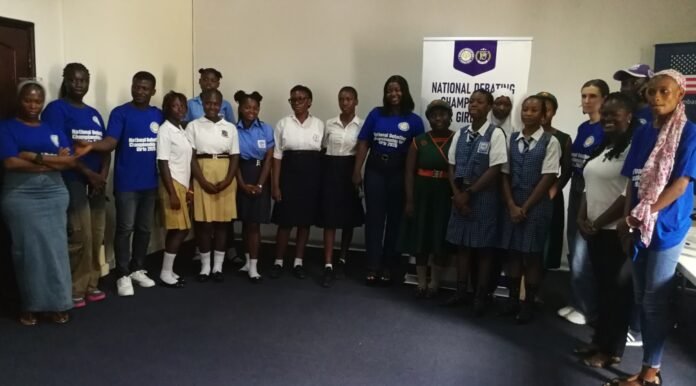
The Chozen Generation Sierra Leone officially launched the 4th Edition of the National Debating Championship for Girls 2025 at the Africell American Corner on Bathurst Street, in Freetown. Under the theme: “For All Women and Girls: Rights, Equality, Empowerment,” the event aims to equip young women with the skills and confidence to engage in public discourse, fostering leadership and advocacy in gender-related matters.

The launch event brought together students, teachers, debate coaches and key stakeholders together, all united by the vision of empowering young women through debate.

Delivering the opening remarks, a representative of Chozen Generation Sierra Leone, Alfreda Koroma emphasized the importance of the competition in bridging gender gaps in leadership and public speaking. He noted that past editions had already produced remarkable young women who have excelled in various leadership roles and platforms, making a strong case for continued investment in the initiative.

The highlight of the event was an inspiring keynote speech by Ellis Louise De Rooi, who passionately spoke about the power of words and the necessity of women’s voices in leadership and societal development.

Expressing her excitement about the championship, Ellis Louise De Rooi reflected on her own school experience, regretting not having participated in debates and admiring those who did for their ability to express their views with confidence and logic.

She underscored the importance of thoughtful and intelligent voices in today’s world, rather than simply loud ones. Drawing inspiration from Martin Luther King Jr.’s iconic “I Have a Dream” speech, she illustrated how words can drive change and shape history.

Ellis Louise De Rooi also warned against the dangers of a single narrative where power is viewed as exclusively male, stressing that women bring unique leadership qualities such as empathy and a focus on human-centered solutions. She praised the First Lady, Dr. Fatima Maada Bio and all strong women for their fearless advocacies in promoting women’s rights and education.

Encouraging participants to see mistakes as stepping stones to growth, she urged them to use their voices boldly and responsibly. She concluded by commending the organizers for creating a platform that goes beyond competition, fostering leadership, empowerment and meaningful change.

Tracy Jac-During, the lead organizer, provided an overview of the championship’s journey since its inception in 2016. Despite challenges such as financial constraints and logistical difficulties, the initiative has continued to expand, she informed. “This year, the competition will see participation from 24 schools and 48 students, marking its first-ever expansion into Bo and Makeni to ensure a broader national representation,” Tracy Jac-During further disclosed.

According to her, the championship will follow the British parliamentary debate format, fostering critical thinking and constructive argumentation. She continued by maintaining how in a unique step, the debates will not be restricted to polished English alone underscoring that articulate arguments in Creole will also be encouraged, ensuring inclusivity and accessibility.

Tracy Jac-During revealed that key recommendations from the debates will be compiled into policy documents and shared with Government officials and policymakers, amplifying the voices of young women in governance discussions. The championship is scheduled for May 2025, with workshops and training set for April to adequately prepare participants.

To ensure a smooth experience for participants, the organizers will provide transportation, meals and mentorship support for pupils and accompanying teachers. The competition will focus on challenging ideas rather than individuals, fostering a spirit of intellectual exchange and mutual learning.

The prizes include:

-Winner: NLe 15,000 for the school

-Runner-up: NLe 10,000 for the school

– Outstanding Individual Awards for exceptional debaters

Additionally, this year’s event will introduce a digital skills training program for girls, a long-anticipated initiative aimed at equipping young women with technology-driven knowledge to complement their debating skills.

Tracy Jac-During called for financial and institutional support from corporate organizations, philanthropists and educational institutions to sustain the initiative and enable wider participation.

At the launch event, Kijana Morgan, winner of the 2023 and 2024 editions of the championship, shared her experience in competitive debating. She expressed immense pride in her journey, recalling how nervousness and self-doubt initially held her back. However, through perseverance, guidance from judges and encouragement from peers, she developed confidence in public speaking and advocacy.

Kijana Morgan emphasized key lessons she learned:

– Never underestimate an opponent

– Confidence should be balanced with humility

– Research is the backbone of a strong argument

Beyond the competition, debating ignited her passion for women’s rights advocacy, reinforcing the importance of informed and fearless voices in national conversations. She encouraged this year’s participants to embrace challenges, step out of their comfort zones and enjoy the journey, assuring them that their efforts would be rewarding and life-changing.

With the championship set to kick off in May and workshops and training scheduled for April, the National Debating Championship for Girls 2025 is poised to be an impactful and transformative event. Participants will challenge societal norms, propose solutions to pressing gender issues, and refine their leadership skills—all while competing for top honors.

The event serves as a call to action for organizations and stakeholders to support young women in public discourse, ensuring that their voices are heard and their potentials realized.

Caritas SL Engages Stakeholders on Peace Building Efforts

By Ibrahim Sesay

Caritas Sierra Leone, through its Youth in Politics and Peacebuilding Project, convened a one-day engagement session bringing together key stakeholders from the National Youth Commission, Ministry of Gender and Children’s Affairs, Freetown City Council, community leaders and youth representatives. The event, held on March 25, 2025, at the St. Anthony Parish Hall, aimed to strengthen community structures, including district youth councils, chiefdom development committess and mother support groups, while fostering advocacy and peacebuilding at the grassroots level.

Moses Blake, Youth Empowerment Officer at the National Youth Commission and facilitator of the session, underscored the critical role of community structures in promoting stability and social cohesion. He emphasized that engagements of this nature provide a platform to identify gaps within those structures and devise strategic interventions to enhance their effectiveness. Moses Blake highlighted the challenges confronting young people, including unemployment, political marginalization and limited access to resources. He also pointed to the opportunities available through partnerships with Government agencies and Non-Governmental Organizations, advocating for improved coordination among youth groups to amplify their voices in decision-making processes.

As part of the interactive session, participants were divided into working groups tasked with mapping out existing community structures, identifying challenges and proposing viable solutions. These deliberations culminated in presentations where participants outlined the issues affecting their respective communities and recommended strategies to address them.

Lumley Ward Councilor, Unisa Kamara, underscored the pivotal role of local Government in supporting youth-led peacebuilding initiatives. He reaffirmed Freetown City Council’s commitment to youth empowerment, stating that the Council has prioritized initiatives aimed at capacitating young people through innovation and entrepreneurship. He further revealed that the Council had secured a $50,000 grant through Bloomberg, with youth groups eligible to apply for up to $5,000 to support community-driven projects.

Unisa Kamara acknowledged that youth engagement in peacebuilding remains a significant challenge, citing the rising prevalence of drug abuse among young people as a key concern. Despite the creation of learning platforms and skills development programs, he lamented that many youths remain disengaged. He urged greater participation, stressing that youth involvement is crucial in ensuring sustainable community transformation.

Kadiatu Yusuf Bangura, a youth representative, expressed her enthusiasm for the initiative and her determination to serve as a peace ambassador in her community. She stressed the importance of advocacy and active participation, calling on her peers to seize similar opportunities to have their voices heard in governance and peacebuilding processes. She noted that youth engagement in such forums is instrumental in addressing their challenges and shaping solutions that reflect their aspirations.

Esther Yatta Kallon, representing Freetown City Council, commended participants for their contributions in identifying community structures and the obstacles they face. She presented key points from the action plan formulated during the discussions, which included enhancing youth participation in governance, establishing long-term funding strategies and strengthening mentorship and networking opportunities. She reiterated the Council’s commitment to reviewing and finalizing the action plan, assigning responsibilities to community leaders and ensuring sustained engagement in youth development initiatives.

The engagement concluded on a note of optimism, with stakeholders reaffirming their dedication to fostering youth participation, strengthening community structures and advancing peacebuilding efforts across Sierra Leone.