
Home Blog Page 224

Jeety Trading & Shri Gurudwara Sahib Support Mosques with Rice for Ramadan Iftar

By Alvin Lansana Kargbo

In the spirit of generosity and interfaith harmony, Jeety Trading Company and Shri Gurudwara Sahib Sierra Leone Limited have once again demonstrated their commitment to supporting communities by distributing 170 bags of rice (25kg) to 15 mosques in Lumley and surrounding areas. The distribution, which took place on Saturday, March 22, 2025, at the Shri Gurudwara Sahib premises in Lumley, Freetown aimed to provide much-needed food assistance to Muslim families during the Holy Month of Ramadan.

This marks the third of such a distribution by the company and its partners this Ramadan. The first distribution on March 5 saw 100 bags of rice shared, followed by 160 bags on March 15. In total, 430 bags of rice have been distributed to mosques and communities, underscoring the organization’s unwavering commitment to social welfare.

Speaking during the distribution event, Mohinder Bir Singh Sachdeva, known as Pa Jetty, CEO of Jetty Trading Company emphasized the importance of charity and unity, particularly during sacred periods such as Ramadan.

He highlighted that although he is Sikh by faith, the values upheld during Ramadan from compassion, patience to generosity align closely with the teachings of Sikhism, which emphasize “Sarat Da Bhala”, meaning wishing well for all.

“This is our way of standing with you during this Holy Month, ensuring that families have enough to break their fast in comfort and dignity,” he stated.

He further expressed gratitude to Manoj Rajwani of M.K Store on Saini Abacha Street, who has played a crucial role in making the aforementioned distributions possible. Despite not being physically present, Pa Jeety intimated how his contributions have been instrumental in ensuring the success of the initiative.

Hon. Mamoud Kamara (Mr Nice Guy), Member of Parliament for the Western Area Urban, commended Jeety Trading Company for consistently supporting community development. He pointed out that while many businesses focus on profit-making, few actively engage in initiatives that uplift the lives of ordinary citizens.

“As a politician and representative of the people, I wholeheartedly support Jeety Trading Company because their work goes beyond business—they are actively improving communities,” he said.

Hon. Mamoud Kamara also stressed the vital role of the private sector in national development, stating that while the Government provides around 30% of employment, the private sector contributes about 70%. In that regard, he praised Jeety Trading Company for not only providing jobs but also directly enhancing social welfare through charity and educational support.

He assured the gathering that the Government acknowledges and values such initiatives, emphasizing that partnerships between the public and private sectors are crucial for addressing pressing community challenges.

While the distribution coincided with Ramadan, Sheik Abdulai Turay, Public Relations Officer of Jeety Trading Company clarified that the initiative is part of a broader effort that extends beyond the Islamic Holy Month.

“This is something we have been doing for a long time. Ramadan simply presents an opportunity to reach more people because fasting families need food for Iftar,” he explained.

He further noted that since the beginning of Ramadan, Jeety Trading Company has been actively supporting communities by providing meals for evening Iftar.

Speaking on behalf of the 15 mosques that benefited, Abdulaziz Fofanah, a representative of the Imams, expressed deep appreciation for the initiative.

“Many families are struggling to meet their daily needs and this donation comes at a crucial time,” he said. “The support provided by Jeety Trading Company and their partners will bring relief to many households, ensuring that they can break their fast with dignity.”

He emphasized that such acts of kindness strengthen community bonds and interfaith relationships, demonstrating that humanity transcends religious boundaries.

The event underscored the importance of Corporate Social Responsibility, with Jeety Trading Company leading by example in demonstrating how businesses can play an active role in improving the lives of communities. Their efforts have not only provided food assistance but also reinforced the message of unity, generosity and mutual respect among different religious groups.

As Ramadan continues, the impact of the initiative or gesture will be felt across Lumley and beyond, bringing hope and relief to countless families. Jeety Trading Company and Shri Gurudwara Sahib Lumley have once again proven that true prosperity is measured not only in business success but in the well-being of the communities they serve.

Sierra Leone Civil Aviation Authority Hosts Security Equipment Inspection Training

By Amin Kef (Ranger)

The Sierra Leone Civil Aviation Authority (SLCAA), in collaboration with the European Civil Aviation Conference (ECAC), has successfully conducted a four-day training program on Best Practices for Security Equipment Inspection (BPSE) at the SLCAA Training Hall, Freetown International Airport, Lungi. The training, held from March 17-20, 2025, was aimed at enhancing the capabilities of SLCAA personnel and Freetown International Airport staff in maintaining and inspecting security screening equipment to ensure optimal performance.

The BPSE training is part of the Civil Aviation Security in Africa, the Middle East and Asia (CASE II) Project, which is funded and implemented by ECAC. It focused on imparting essential skills and best practices to ensure that security equipment functions effectively, detecting potential threats while minimizing operational disruptions. The training also emphasized adherence to national and international aviation security regulations.

Through this initiative, participants gained practical insights and hands-on experience in equipment inspection, ensuring that security devices are maintained at peak performance levels. The training program was designed to:

  • Ensure thorough inspection and maintenance of security equipment to enhance airport security.
  • Support compliance with aviation security regulations to mitigate risks of non-compliance.
  • Reduce equipment failures and ensure seamless security operations.
  • Foster public confidence in airport security measures, contributing to a safer travel environment.

Speaking at the event, the Director-General of the Sierra Leone Civil Aviation Authority (SLCAA), Madam Musayeroh Barrie, emphasized the importance of equipping personnel with the necessary expertise to maintain and inspect security systems efficiently.

“I am pleased to announce the successful completion of the BPSE Training at Freetown International Airport, which strengthens airport security through best practices in equipment inspection. This initiative ensures optimal performance, regulatory compliance and uninterrupted operations at our airport,” she stated.

Her remarks underscored SLCAA’s commitment to enhancing aviation security through capacity-building initiatives and international collaboration.

The BPSE training has significantly bolstered the capabilities of SLCAA and airport personnel, ensuring that security screening equipment operates reliably. This initiative is expected to improve overall aviation security, benefiting passengers and stakeholders in the aviation industry.

The SLCAA remains steadfast in its mission to uphold the highest aviation security standards and will continue working with international partners to advance security infrastructure at Freetown International Airport.


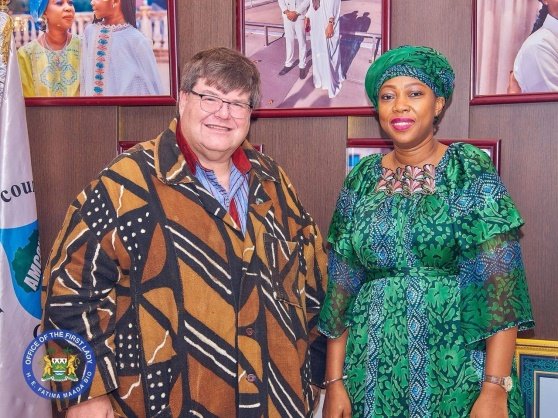
First Lady Engages U.S. Ambassador in High-Level Talks

First Lady, Dr. Fatima Maada Bio and Ambassador Bryan Hunt

Sierra Leone’s First Lady, Dr. Fatima Maada Bio, hosted Ambassador Bryan Hunt at her office in Goderich, Freetown, on Thursday March 20, 2025, during a diplomatic courtesy visit aimed at strengthening bilateral relations between Sierra Leone and the United States. The discussions centered on mutual areas of interest, with a particular focus on social development, gender equality and economic cooperation.

First Lady, Dr. Fatima Maada Bio, provided insights into her ongoing initiatives, particularly the Hands Off Our Girls campaign, which aims to protect and empower young women and girls across Sierra Leone. She emphasized the importance of international partnerships in driving sustainable progress and expressed appreciation for the support of the United States in advancing those initiatives.

Ambassador Bryan Hunt reaffirmed his country’s commitment to supporting programs that enhance gender equality, education and healthcare. He praised the First Lady’s dedication to social change and acknowledged the significant impact of her initiatives in improving the lives of vulnerable groups.

Beyond social development, the discussions extended to other key sectors, including education and economic collaboration. The First Lady underscored the need for continued cooperation in those areas to create more opportunities for Sierra Leonean youth and to improve healthcare services nationwide. Both parties recognized the importance of sustained diplomatic engagement in fostering economic growth and strengthening institutional frameworks.

The meeting concluded on a positive note, with Ambassador Bryan Hunt commending the First Lady’s leadership in advocating for women and children’s rights. Dr. Fatima Maada Bio expressed gratitude for the enduring friendship between Sierra Leone and the United States, emphasizing the need for ongoing dialogue and collaboration to achieve shared development goals.

The visit served as another milestone in deepening diplomatic relations between the two nations, paving the way for future engagements that will benefit the people of Sierra Leone.

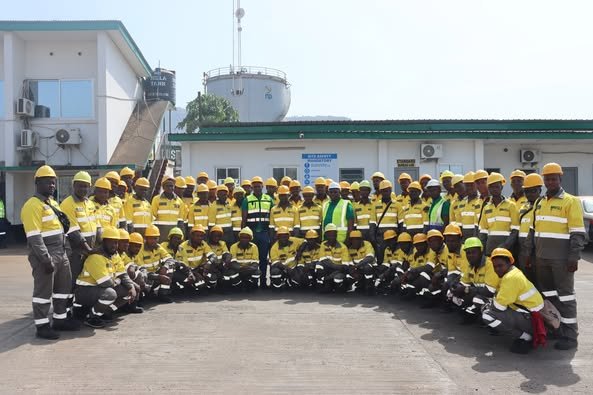
Koidu Workers to Return to Work as Labour Ministry & Koidu Ltd Agree on Key Labor Solutions

Koidu Limited

By Amin Kef (Ranger)

In response to the peaceful protest and subsequent discussions with the leadership of Koidu Limited, the Ministry of Employment, Labour and Social Security (MELSS) and Koidu Limited have on Thursday, March 20, 2025 issued a joint statement regarding the resolution framework and agreement to resolve outstanding issues between both parties.

Following extensive consultations, the Ministry of Employment, Labour and Social Security and Koidu Limited called on Koidu’s national workforce to return to work immediately. The two parties are confident that, upon the workforce’s return, all concerns raised will be addressed within 48 hours.

Both MELSS and Koidu Limited have agreed to implement solutions to the recommendations outlined in MELSS’s letter to Koidu’s General Manager on February 28, 2025. The Key Recommendations were: Reinstatement of all workers suspended, terminated or dismissed from August 22, 2024, onward, with all rescinded letters submitted to MELSS, Payment of all backlog salaries and benefits to affected staff, A 30% increase in existing salaries, effective April 1, 2025, to address historical injustices, Provision of risk allowances for employees working in high-risk areas as per risk assessments, Introduction of bus services for staff to improve transportation to and from work, Establishment of a medical facility in compliance with Labour Laws, Freedom for employees to select their preferred bank for salary payments, Introduction of inducement allowances for employee motivation, Provision of safe drinking water for all staff, Improvements to housing, meal and education allowances, Establishment of a salary advance scheme for all national staff, Payment of overtime where applicable as per Section 65(1) of the Employment Act, Addition of a cost-of-living allowance to basic salaries, Recognition of trade union rights in accordance with Part III, Section 12 of the Employment Act No. 15 – 2023.

The agreement between the two parties includes the introduction of a quarterly bonus scheme based on diamond export pricing, which is monitored by the Government of Sierra Leone (GoSL). This bonus system will come into effect on April 2, 2025, with specific parameters to be negotiated between Koidu and MELSS.

Despite ongoing discussions, Koidu Limited has maintained its position not to re-employ dismissed workers. However, recognizing the constructive dialogue and at the specific request of the Government of Sierra Leone, Koidu Limited will provide full end-of-service benefits to dismissed employees. Any employee who remains dissatisfied is encouraged to seek recourse through the avenues provided by the Employment Act of 2023.

Koidu Limited reaffirms its commitment to operating in full compliance with Sierra Leone’s laws, with diamond production and exports being supervised and controlled by Government officials.

In the spirit of fostering long-term industrial peace and stability, MELSS and Koidu Limited will jointly establish the Koidu Workers Forum (KWF), chaired by the Honourable Minister of Employment, Labour and Social Security. The KWF will aim to develop initiatives that align with international best practices, benefitting both the national workforce and other stakeholders.

Both MELSS and Koidu Limited, it was stated, are committed to ensuring that the national workforce is supported and valued, as both parties continue to work together to address the interests of all stakeholders.

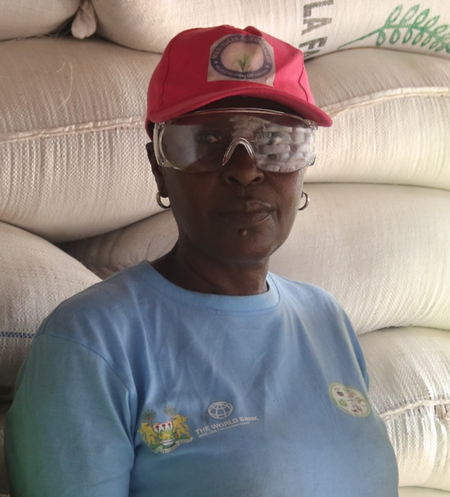
FSRP: A Lifeline for Haja B. Koroma, Enabling Her to Support Her Children and Achieve Independence

FSRP: A Lifeline for Haja B. Koroma, Enabling Her to Support Her Children and Achieve Independence

Haja B. Koroma, a single mother, relocated from Freetown to Makeni after her marriage. However, her husband abandoned her with two children, both enrolled in university, leaving her stranded in Makeni without any relatives nearby. Faced with mounting responsibilities, Haja resorted to breaking stones to provide for her children.

Her turning point came the following year when she met Med-Tula Agro Rice Processing Center, an agro-dealer who introduced her to farming. Med-Tula, later contracted by the Food Systems Resilience Program (FSRP), provided agricultural inputs and mechanization services to farmers under the program.

Through FSRP’s support, Haja received seeds, fertilizer and mechanized services, including ploughing, harrowing and harvesting; all at no cost. This intervention transformed her life. Before receiving this assistance, Haja relied on unproductive loans to finance her farming, often struggling to pay her children’s university fees. But last year, for the first time, she didn’t need a loan and was able to pay their fees with ease.

Reflecting on her journey, Haja said, “I felt like I was living dead when my husband left me. Being a single mother in a town without relatives, with two children in university, was overwhelming. But meeting FSRP gave me hope again. The smiles I wore when I realized I could repay my loans and still have enough were priceless.”

One of Haja’s children graduated last year, marking a proud moment for her. She now supports her family independently through agriculture, which she has embraced as a business. With enough seeds to plant for the current season, Haja plans to expand her cultivation and increase her rice production. Her vision is to generate more income and build a stable future for her family.

Haja’s story is a testament to the transformative impact of FSRP and the power of resilience in the face of adversity.

Welthungerhilfe Joins Ministry of Water Resources to Commemorate World Water Day

By Alvin Lansana Kargbo

Welthungerhilfe Sierra Leone partnered with the Ministry of Water Resources and Sanitation, alongside various stakeholders, to commemorate World Water Day with a float parade from Congo Cross to Youyi Building in Freetown. This year’s global theme: “Glacier Preservation,” was complemented by Sierra Leone’s national theme: “Water Ecosystem Preservation.” The event brought together key Government officials, international organizations, civil society groups and community representatives to reflect on the importance of water conservation and sustainable management.

World Water Day is an annual event observed worldwide on March 22 to highlight the importance of water and advocate for the sustainable management of water resources. In Sierra Leone, where access to safe and clean water remains a challenge, the event served as a platform for discussions on climate change, water scarcity, pollution and governance in the sector. The country’s increasing focus on water ecosystem preservation aligns with efforts to ensure water security and combat environmental degradation.

As one of the leading international NGOs addressing food security, sanitation and environmental sustainability, Welthungerhilfe has been a committed partner in Sierra Leone’s water and sanitation sector. Their support for World Water Day 2025 underscores their dedication to strengthening water governance, promoting sustainable water usage and enhancing public awareness on water ecosystem conservation. By backing the initiative, Welthungerhilfe aims to foster policy improvements, infrastructure development and community-driven solutions to water challenges.

In the keynote address that was to be delivered by the Minister of Water Resources and Sanitation, Dr. Sao-Kpato Hannah Isatta Max-Kyne, who was unable to attend but was read out by Ing. George Lamin Vandi, Managing Director of SALWACO she emphasized the significance of World Water Day as a time for reflection and commitment to safeguarding water systems.

Her speech highlighted the interconnectedness of water ecosystems, which are crucial for agriculture, industries and community well-being. Climate change, pollution and overuse of water resources were cited as major threats, requiring urgent interventions to protect natural infrastructure such as wetlands, forests and watersheds.

Dr. Sao-Kpato Hannah Isatta Max-Kyne called for a holistic approach integrating water management, biodiversity conservation and sustainable land use. She urged investment in water governance, institutional strengthening and community empowerment to drive conservation efforts. The address also emphasized regional and international cooperation to prevent a future water crisis.

Madam Kenyeh Ballay, Minister of Planning and Economic Development, echoed the importance of World Water Day in securing the country’s future. She linked water ecosystem preservation to Sierra Leone’s Medium-Term National Development Plan (2024-2030) and the Government’s Big Five Game Changers, particularly the Feed Salone program, which relies on irrigation, fisheries and marine resource preservation.

She stressed the role of oceans, wetlands and groundwater in maintaining ecological balance also highlighting how the Atlantic Ocean helps absorb carbon dioxide and stabilize climate patterns, while wetlands and mangroves act as natural carbon sinks. She further discussed Government policies such as seasonal fishing bans aimed at protecting marine biodiversity.

Representing the Chairman of the Parliamentary Committee on Water Resources, Hon. Adama Bangura of Kambia District underscored that access to fresh water is a fundamental human right. She warned that water scarcity, pollution and unequal distribution could lead to conflicts, while sustainable management could promote peace and development.

She noted that over 2 billion people worldwide lack access to safe drinking water, with many affected by water-related disasters. Investment in conservation, infrastructure and public awareness was emphasized as critical to achieving equitable water access. Hon. Adama Bangura urged individuals to reduce water waste, support sustainable practices and educate others on water conservation.

Bioye Ogunjobi, WASH Specialist at UNICEF represented the UNICEF Country Office at the event. He highlighted UNICEF’s contributions to improving water supply and infrastructure in Sierra Leone, noting that over 300,000 people have gained access to safe water since 2020.

Despite these efforts, significant gaps remain. Bioye Ogunjobi pointed out the lack of a climate-resilient WASH policy and emphasized the need for increased funding and investment in water infrastructure for schools, healthcare facilities and rural communities.

He called for stronger coordination among stakeholders to prevent duplication of efforts, stressing that sanitation and water quality measures are vital to prevent waterborne diseases. The UNICEF representative reaffirmed its commitment to working with the Government to achieve Sustainable Development Goal (SDG) 6, which aims for universal access to clean water and sanitation.

Peter Senesie, Head of Programs at WashNet Sierra Leone, emphasized that water ecosystem preservation is a national concern that directly impacts public health, agriculture and economic activities. He highlighted the effects of climate change on sea level rise, unpredictable rainfall and coastal vulnerabilities.

According to him, WashNet has been advocating for policy reforms, community-driven solutions and Government accountability in the water sector further urging the Government to prioritize climate-resilient water infrastructure and called on international partners to provide financial and technical support.

He also encouraged communities to practice sustainable water management and individuals to conserve water and reduce waste. “WashNet reaffirms its commitment to working with state and non-state actors to ensure Sierra Leone’s water resources remain protected for future generations,” he assured.

The commemoration of World Water Day 2025 in Sierra Leone brought together key stakeholders to address pressing water-related challenges. Discussions highlighted the importance of protecting water ecosystems, investing in water infrastructure and ensuring sustainable management.

With organizations like Welthungerhilfe, UNICEF, WashNet and Government Ministries playing active roles, the event reinforced the need for collaboration in securing Sierra Leone’s water future. Stakeholders reaffirmed their commitment to preserving water ecosystems, ensuring that clean water remains accessible to all while mitigating the effects of climate change and environmental degradation.


Health Alert & Partners Launch Immunization and Primary Healthcare Financing Advocacy Project

By Foday Moriba Conteh

In a bid to boost domestic resource mobilization and strengthen transparency and accountability in immunization and primary healthcare financing in the country, Health Alert Sierra Leone, in collaboration with WASHNet, GHAI and the Government of Sierra Leone, officially launched the Advocacy to Increase Financing for Immunization and Primary Healthcare Project on Wednesday, March 19, 2025. The initiative, which will cover six districts across all five regions of Sierra Leone, aims to engage key stakeholders in addressing financial gaps in immunization and healthcare services. The launch event took place at the Freetown City Council Hall.

In his address, Victor Lansana Koroma, Executive Director of Health Alert Sierra Leone, emphasized the project’s focus on expanding immunization coverage and strengthening primary healthcare across six targeted districts Bombali, Kenema, Western Area Rural, Karene and Falaba.

He added that the project will engage a broad network of stakeholders, including national and district Government officials, healthcare providers, civil society organizations (CSOs), community leaders and the media.

He informed the gathering that the advocacy project aims to drive policy change by working closely with the Finance and Budget Committees responsible for decision-making and fund allocation at the national level adding that the district level engagement will involve District Health Management Teams (DHMTs), District Budget Oversight Committees (DBOCs), local Government officials, public health workers and community health workers who play a critical role in healthcare delivery. CSOs and media outlets will also be key partners in advocacy, awareness-raising and accountability efforts.

He pointed out that the project’s core objectives include increasing domestic resource mobilization at national and sub-national levels for primary healthcare and immunization services, ensuring efficient execution of domestic funds to facilitate timely disbursement to frontline healthcare providers and guaranteeing timely payment of Gavi co-financing obligations to support immunization efforts.

He concluded by stating that mobilizing resources and ensuring sustainable healthcare financing, the project seeks to reduce preventable diseases, strengthen Sierra Leone’s immunization programs and enhance overall public health outcomes.

According to Nathaniel Soloku, Project Consultant for the Advocacy to Increase Financing for Immunization and Primary Healthcare Project  as a lower-middle-income country (LMIC) with a GDP of $854 per capita, Sierra Leone’s health sector financing falls short of the Abuja Declaration’s recommended allocation of 15% of Government expenditure. While budgetary allocations to health have increased over the past five years, they remain insufficient to meet national healthcare needs, with out-of-pocket healthcare spending reaching 50.4% (NHA 2021) and heavy dependence on donor funding, he maintained.

Nathaniel Soloku emphasized that immunization is a crucial pillar of the Ministry of Health’s (MOH) service delivery, with rising demand for funding in recent years. Although immunization financing in Sierra Leone has seen significant progress, driven by both domestic and international support, challenges persist, he pointed out.

He also highlighted several challenges in domestic immunization financing, including weak domestic revenue mobilization, limited fiscal space, inadequate budget allocations and a lack of innovative financing mechanisms such as public-private partnerships and health insurance schemes. He further noted that the absence of pre-financing mechanisms has made the sector overly reliant on external donors.

To address those issues, Nathaniel Soloku called for an increase in Government budget allocations for immunization and overall health system strengthening. He urged policymakers to develop stronger domestic resource mobilization strategies, such as earmarking taxes for health financing and establishing innovative financing mechanisms to reduce reliance on external donors.

Hon. Tamba S. Johnny, Chairman of the Parliamentary Health Committee, Parliament of Sierra Leone emphasized the need for domestic resource mobilization, urging the Government to allocate more funds to primary health care (PHC). He advocated for funding policy dialogues and technical assistance, including drafting legislation to support PHC.

“Increasing the Government’s budget for primary health care is essential. This should involve structured funding policy dialogues and technical assistance to create effective legislative frameworks,” he stated.

He called on the Government to explore social health insurance, community-based health insurance and public-private partnerships as ways to diversify funding sources.

Additionally, Hon. Tamba S. Johnny stressed the need for efficient resource allocation. He proposed that the Government collaborate with civil society organizations, such as Health Alert, to utilize tools like resource mapping and expenditure tracking. These measures, he noted, would ensure that funds are directed to frontline services, including Government hospitals, ambulance services, and community health centers.

On the issue of immunization, Hon.Tamba Johnny called for strengthening supply chains to ensure vaccines are available in the right quantities and stored under appropriate conditions before distribution.

In his keynote address, Dr. Desmond Maada Kanghai, Program Manager of the Expanded Program on Immunization at the Ministry of Health, emphasized the need for increased domestic financing to sustain immunization and primary healthcare initiatives, highlighting the challenges in securing adequate funding, noting that donor contributions have played a critical role but are not a long-term solution. “We cannot keep counting on donors. We must ensure that we mobilize resources within the country to respond to emerging health issues effectively,” he stated.

He noted that substantial progress has been made in reducing the number of zero-dose children those who have never received any vaccines. In 2022, there were approximately 42,000 zero-dose children in Sierra Leone; however, that number has now fallen below 10,000. Despite this progress, Dr. Desmond Maada Kanghai stressed that continuous efforts are needed to sustain and further improve immunization coverage.

Dr. Desmond Maada Kanghai also underscored the importance of timely disbursement of funds to frontline healthcare services. “Delays in fund transfers lead to vaccine shortages and essential supply stock outs, severely impacting immunization coverage, particularly in remote areas,” he explained. He urged for improved financial management to ensure that funds reach healthcare providers without unnecessary delays.

Reaffirming the Government’s commitment to achieving universal health coverage, Dr. Desmond Maada Kanghai emphasized that immunization must remain free and accessible to all citizens. He pointed out the interconnected nature of public health, noting that infectious diseases know no boundaries. “If we fail to vaccinate a segment of the population, the entire country remains at risk,” he warned.

To address those challenges, he advocated for expanded vaccine distribution in private healthcare facilities, faith-based institutions and schools, ensuring equal access across different sectors of society.

Concluding his address, Dr. Desmond Maada Kanghai reiterated the necessity of developing sustainable funding mechanisms. He urged stakeholders including the Ministry of Finance, private sector players and development partners to collaborate in creating a basket fund that guarantees consistent financial support for immunization and primary healthcare services.

St. Joseph’s Alumnae Association USA Donates 20KVA Solar System & Streetlights to Alma Mater

By Foday Moriba Conteh

In a major step toward sustainable energy solutions at the school, the St. Joseph Secondary School Alumnae Association, Southeastern Chapter (USA), has officially donated a 20KVA solar power system and four streetlights including  two security lights equipped with cameras to their alma mater. The official handing-over ceremony, aimed at improving learning conditions and ensuring uninterrupted electricity, was held on Thursday, March 20, 2025, at the school premises on Brookfields in Freetown.

In her declaration of purpose, Emelia Lawson, Vice President II of the Association, underscored the initiative’s importance, describing it as a symbol of unity, commitment and dedication from former pupils to their alma mater.

“This donation is more than an act of generosity; it is a profound expression of love and loyalty that ex-pupils hold for St. Joseph Secondary School. It ensures that current and future students have a safe and conducive learning environment,” Emelia Lawson stated.

The project was spearheaded by the Southeastern Chapter of the alumni association in the United States, whose contributions played a pivotal role in its success. According to Emelia Lawson, the solar-powered streetlights will enhance security on campus, allowing pupils and staff to move safely even after dark.

“As we officially hand over these solar lights today, let this moment remind us of what we can achieve when we come together with a shared purpose. May St. Joseph Secondary School continue to shine bright, just as this light will illuminate its pathways,” Emelia Lawson concluded.

June Driscol, President of the St. Joseph Alumnae Association, Southeastern Chapter USA, emphasized the significance of the project in fostering academic excellence.

“This solar project demonstrates our strong desire to improve the quality of education and teaching at our alma mater. Access to electricity is a crucial factor in the success and development of any school community. By equipping St. Joseph Secondary School with a reliable solar energy system, we are laying the foundation for quality education, digital learning and a more conducive environment for pupils and teachers,” she stated.

The 20KVA solar system comprises four all-in-one 5KVA solar generators, capable of powering the entire school, including classrooms, laboratories, the library and administrative offices. In addition, four solar streetlights, two of which are equipped with security cameras, were installed to enhance safety and security on the school premises.

The project was fully funded by the Southeastern Chapter USA, with funds raised through extensive alumni contributions and sponsorships. The implementation was carried out by Mimi Solar, LLC, a Sierra Leonean-owned solar technology company. June Driscol acknowledged the contributions of Francis Thomas, Co-founder and CFO of Mimi Solar and his team for their expertise in installing the system.

Addressing the school’s pupils and staff, June Driscol urged them to take ownership of the project and ensure its proper maintenance. “We want you to take care of the system as if it is your own. While our alumnae association will continue to provide financial support for maintenance, it is your responsibility to protect and preserve this invaluable asset,” she said.

She further stressed that the solar system has eliminated the school’s dependence on the national power grid, ensuring uninterrupted power supply. “The frequent power cuts have hindered the school’s progress. As former students, we are determined to see St. Joseph’s rise again as a beacon of education in Sierra Leone,” June Driscol added.

On his part, Minister of Basic and Senior Secondary Education, Conrad Sackey, reiterated the Government’s commitment to creating a safe and conducive learning environment for pupils.

He commended the Ex-Pupils Association for their unwavering support in enhancing the school’s infrastructure, emphasizing that quality education extends beyond access to learning, stating that a secure school environment fosters confidence among pupils, encourages attendance and ensures that teaching and learning take place without disruption.

“This initiative aligns with the Government’s vision for education, where schools are not only centers of academic excellence but also safe spaces for every child,” he said. “By providing solar-powered security lights, the Ex-Pupils Association is not just illuminating the physical environment of St. Joseph’s Secondary School but also lighting the path for future generations to learn in safety and security.”

Francis Thomas, Co-Founder and Chief Financial Officer of Mimi Solar, underscored the company’s commitment to combating energy poverty. “Our goal is simple: cure energy poverty. When you cure energy poverty, you have gone a long way in curing overall poverty,” Francis Thomas underscored.

Founded and operated by Sierra Leoneans both locally and in the diaspora, Mimi Solar has been a leader in developing tailored solar energy solutions. Francis Thomas shared the personal story behind the company’s name, explaining that it was inspired by Miata, nicknamed Mimi, the niece of Mimi Solar’s CEO and Co-Founder. He recounted how a power outage during a visit to Pujehun in 2010 inspired the CEO to develop a solar generator prototype, which later became the foundation for Mimi Solar’s mission.

“Mimi’s cry for her father to fix the power issue stuck with us,” Francis Thomas said. “That experience led to the design of a solar generator prototype, which we later developed into a full-fledged solar power solution.”

Since its establishment, Mimi Solar has expanded its reach, manufacturing its own products and installing systems in various locations, including Sierra Leone, Nigeria, Liberia and Guinea etc. “All Mimi Solar products must have our name on them. We design, manufacture, install and, most importantly, we maintain. Maintenance is key to ensuring that valuable assets do not dwindle,” Francis Thomas revealed.

The newly installed streetlights at St. Joseph Secondary School include two security lights equipped with cameras, strategically placed to monitor high-risk areas on campus. “Bad people do not like light,” Francis Thomas remarked, emphasizing the role of lighting in enhancing security.

His Grace Bishop Edward Jamba Charles, the Archbishop of Freetown, commended the St. Joseph Ex-Pupils Association for their commitment to the development of their alma mater.

“This is a moment of grace that I cannot thank God enough for,” said Archbishop Charles. “On behalf of the Archdiocese of Freetown and the Board of Governors, I extend my sincere gratitude to June Driscol, President of the Southeastern Chapter of the St. Joseph Ex-Pupils Alumni Association and her entire membership for this invaluable contribution.”

The Archbishop acknowledged the pressing issue of power outages in Freetown and beyond, emphasizing how this solar installation will provide security and a reliable electricity supply for pupils and teachers.

“This project could not have come at a better time when our city is experiencing power outages,” he noted. “With this complete solar energy system, St. Joseph Secondary School now has 24-hour uninterrupted lighting, setting a positive example for other institutions.”

The event concluded with the formal handover of the solar system to Archbishop Edward Tamba Charles, marking a new milestone in the school’s transition to sustainable energy.

Choithram Hospital Commences Free Pediatric Surgery Today as Lifesaving Cataract Camp Transforms Lives

By Amin Kef (Ranger)

A major humanitarian initiative is set to commence today, March 21, 2025, at Choithram Memorial Hospital, where a free pediatric surgery camp will provide life-changing medical interventions for children under fifteen suffering from treatable conditions. This transformative program, organized in collaboration with the Bintumani Association and supported by a distinguished team of German surgeons, will run until April 4, 2025. It offers a vital opportunity for families who otherwise could not afford the necessary surgeries to restore their children’s health and well-being.

The initiative will cover surgical procedures for conditions such as neck fistulas, cysts, soft tissue tumors, hernias, undescended testes and congenital urogenital and gastrointestinal abnormalities, offering a new lease on life to affected children. Registration for the program began on February 24, 2025 and has witnessed an overwhelming response from parents and guardians eager to secure treatment for their children. Screenings were conducted at designated centers and eligible cases referred to Choithram Memorial Hospital for surgery. However, conditions such as hydrocephalus, myelomeningoceles, clubfoot and cleft lip and palate will not be covered under this year’s program.

The initiative’s success has been made possible through the tireless efforts of Sierra Leone’s Ambassador to Germany, H.E. Dr. M. L. Baryoh, whose pivotal role in securing the partnership with the German medical team has been widely acknowledged.

Meanwhile, another groundbreaking medical outreach program continues to change lives at Choithram Memorial Hospital, where a free cataract surgery camp has been in full operation since March 15, 2025. This initiative, spearheaded in collaboration with the Ministry of Health and esteemed international medical organizations, is dedicated to restoring vision to thousands of visually impaired individuals across Sierra Leone. Scheduled to run until July 15, 2025, the program is providing world-class ophthalmic care at no cost, significantly reducing the burden of preventable blindness in the country.

Extensive planning has ensured that the initiative remains accessible to communities across Sierra Leone, with the country divided into four operational zones and screenings conducted at district hospitals. With support from Choithram Netralaya in India, Noor Dubai under the Mohammed Bin Rashid Al Maktoum Global Initiatives and the Choithram International Foundation, the program guarantees surgical interventions of the highest quality. Supervised by the National Eye Health Program Manager, the initiative integrates a three-stage screening process, which includes preliminary assessments by district eye specialists, remote telemedicine evaluations by ophthalmologists at Choithram Memorial Hospital and final selections for surgeries conducted by expert ophthalmic surgeons in Freetown.

To eliminate logistical barriers, Choithram Memorial Hospital has ensured that all patients traveling from the provinces receive full coverage for transportation, accommodation and daily allowances during their three-day stay. A structured post-operative care system has been established at district hospitals, where free medication is provided to support full recovery. Beyond direct patient care, the initiative is enhancing Sierra Leone’s medical infrastructure by training local healthcare professionals in advanced ophthalmic techniques and acquiring state-of-the-art surgical equipment, including high-precision operating microscopes and Phacoemulsification machines.

Harish Agnani, Chief Administrator of the Choithram Group, reaffirmed the hospital’s unwavering commitment to making quality healthcare accessible to all. Highlighting the significance of these initiatives, he emphasized their role in bridging the gap in medical accessibility and serving as a beacon of hope for underserved communities.

These humanitarian healthcare initiatives stand as a testament to the power of strategic collaboration and compassionate outreach. They mark a defining moment in Sierra Leone’s healthcare landscape, paving the way for a future where quality medical services are accessible to those who need them most.

NP (SL) Strengthens Road Safety Standards through Specialized Training for Bulk Road Vehicle Drivers

By Amin Kef (Ranger)

NP (SL) Ltd has once again reinforced its unwavering commitment to safety and operational excellence by successfully conducting a comprehensive Defensive Driving Training for its Bulk Road Vehicle drivers from March 13 to March 18, 2025, equipping them with advanced skills to enhance road safety and ensure the secure transportation of petroleum products across the country.

The initiative, held at the company’s terminal recently, was designed to enhance the driving skills of the company’s fleet operators, ensuring they remain vigilant and proficient while transporting petroleum products across Sierra Leone. By prioritizing hazard awareness, vehicle control, accident prevention strategies NP (SL) continues to set the benchmark for safety in the industry.

The training brought together BRV drivers and senior operational personnel, creating an interactive platform for knowledge-sharing on best practices in defensive driving, vehicle maintenance and emergency response protocols. Recognizing that petroleum transportation carries inherent risks the company has taken a proactive approach to mitigating potential hazards thereby safeguarding both its workforce and the public. This strategic investment in driver education underscores NP (SL) Ltd’s philosophy that safety is not just a regulatory requirement but an essential pillar of its corporate responsibility.

Beyond its commitment to road safety, NP (SL) Ltd remains a champion of fair and transparent pricing in the petroleum sector. The company adheres strictly to the Petroleum Regulatory Agency’s Pricing Formula, ensuring that consumers receive petroleum products at rates that are both justifiable and reflective of prevailing market dynamics.

Unlike certain new entrants in the sector that operate with minimal overheads, NP (SL) Ltd maintains a well-established infrastructure, including a fleet of Bulk Road Vehicles that facilitate the timely and efficient transportation of petroleum products nationwide. These operational costs, while necessary, do not translate into exploitative pricing but rather serve to sustain the company’s ability to meet the country’s fuel demands reliably and ethically.

NP (SL) Ltd has built its success on a foundation of integrity, transparency and innovation. The company’s reputation for ethical business practices is evident in its unwavering commitment to providing high-quality petroleum products that meet international standards. By safeguarding vehicles and machinery from the damaging effects of substandard fuel, NP (SL) Ltd ensures that its customers receive nothing but the best, reinforcing consumer trust and industry credibility.

Transparency is another hallmark of NP (SL) Ltd’s operations. The installation of ultra-modern calibrated pumping machines at its Filling Stations guarantees that customers receive the exact quantity of fuel they pay for, eliminating concerns about discrepancies and reinforcing confidence in the company’s services.

Furthermore, NP (SL) Ltd continues to revolutionize the fuel purchasing experience with cutting-edge solutions such as the NP Energy Pass Card. This digital innovation enables seamless, secure and convenient transactions, even in remote areas with limited internet access, while features like SMS notifications and One-Time Passwords (OTPs) enhance security.

Additionally, the NP Smart Card has redefined cashless fuel purchases, reducing transaction times and enhancing customer convenience. This aligns with global digital payment trends and showcases NP (SL) Ltd’s commitment to continuous service improvement.

Beyond fuel provision, the company’s introduction of NP Gas has provided an eco-friendly and cost-effective cooking solution, available in various cylinder sizes to suit different household and institutional needs. This initiative further underscores NP (SL) Ltd’s dedication to customer well-being and environmental sustainability.

NP (SL) Ltd’s adherence to the Local Content Policy reflects its deep-rooted commitment to national development. By prioritizing Sierra Leoneans in employment opportunities, the company not only fosters job creation but also ensures that a significant portion of its revenue is reinvested into the local economy. This approach strengthens the nation’s economic landscape while serving as a model for sustainable business practices in the petroleum sector.

Through strategic initiatives like Defensive Driving Training, fair pricing mechanisms and technological advancements, NP (SL) Ltd continues to demonstrate why it remains Sierra Leone’s foremost petroleum marketing company. With a steadfast dedication to safety, transparency and innovation, the company is not merely an industry leader but a corporate entity that genuinely prioritizes the interests of its customers and the nation at large.