
Home Blog Page 279

GIABA Holds High-Level Meeting to Tackle Financial Crimes in West Africa

By Amin Kef (Ranger)

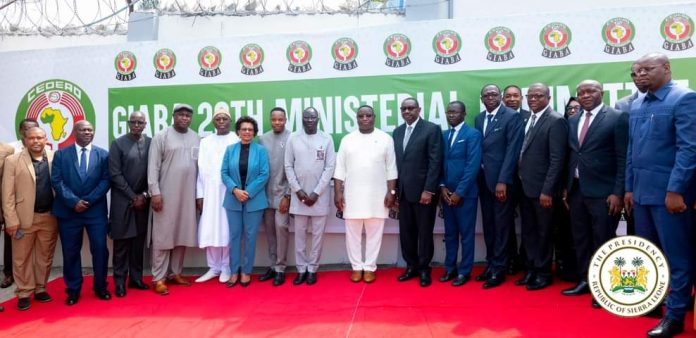
The Inter-Governmental Action Group against Money Laundering in West Africa (GIABA) is holding its Statutory Meeting in Sierra Leone’s capital, Freetown, from November 17 to 26, 2024. The high-profile event, taking place at the New Brookfields Hotel, has gathered over 200 delegates, including heads of Financial Intelligence Units (FIUs) from 16 ECOWAS member states, experts in financial crimes, regional and international partners.

The meeting, which marks the 42nd Technical Commission/Plenary and 29th Ministerial Committee Meeting, is a biannual event dedicated to assessing progress and addressing challenges in combating money laundering, terrorist financing, and illicit financial flows.

President Dr. Julius Maada Bio, in addressing participants on the 23rd November, 2024, emphasized Sierra Leone’s unwavering dedication to combating money laundering and terrorism financing.

He reaffirmed the nation’s alignment with global best practices and standards established by the United Nations, the Financial Action Task Force (FATF) and other international organizations to counter financial crimes effectively.

“Our commitment to the fight against money laundering and terrorism financing remains resolute,” he declared. “We have taken significant steps to ensure our policies meet international benchmarks, safeguarding not only our nation but also the wider West African region.”

President Bio also highlighted the importance of collaboration among ECOWAS member states, urging the continuation and strengthening of joint efforts. “We must build on the gains we have made as ECOWAS member states by deepening our collaboration to combat money laundering and terrorism financing,” he stated.

The President’s remarks underscored Sierra Leone’s leadership role in regional security and economic integrity, reflecting the country’s broader strategy to uphold transparency and accountability while fostering sustainable development.

His call to action serves as a reminder of the shared responsibility of nations in safeguarding financial systems and promoting regional stability.

It must be noted that one of the major highlights of this year’s meeting is the consideration and adoption of the 2nd Round of the Mutual Evaluation Report for São Tomé and Príncipe. This report is a critical tool for evaluating member states’ compliance with the Financial Action Task Force (FATF) recommendations, which form the global standards for combating financial crimes.

Delegates are also reviewing Follow-Up Reports for Nigeria, Sierra Leone, and Senegal and discussing strategies to enhance compliance and strengthen anti-money laundering (AML) and counter-terrorism financing (CFT) frameworks across the region. Several memoranda aimed at ensuring the effective implementation of FATF standards are also being deliberated upon.

Sierra Leone’s Minister of Finance, Sheku Fantamadi Bangura, officially opened the Technical Commission/Plenary session on November 21. He emphasized the need for a proactive approach to combat evolving financial crimes, driven by advancements in technology.

“Economic crimes know no boundaries. Recent advancements in technology, while offering opportunities for growth, also present significant risks. These risks must be addressed to safeguard our economies and ensure regional peace and stability,” said Bangura.

This is the first time in 15 years that Sierra Leone is hosting this significant event. David Borbor, Director General of the Financial Intelligence Agency of Sierra Leone, described the occasion as a testament to Sierra Leone’s dedication to fostering transparent financial systems.

The meeting also addressed the growing drug crisis in West Africa, which has become a significant concern due to its potential to fuel terrorism. GIABA’s Director General, Edwin Harris Jnr, who assumed office in August 2022, highlighted the urgency of addressing the issue.

“Drug trafficking continues to erode the future of our member states. Criminal networks benefit from the proceeds of this illicit trade, undermining governance and security,” Edwin Harris warned.

Edwin Harris called on ECOWAS member states to declare a state of emergency on drug trafficking and adopt stringent legislative measures to punish traffickers while providing rehabilitation for victims. He stressed that removing the profit motive from criminal activities is one of the most effective ways to combat such crimes.

The ECOWAS Commission President, represented by Special Technical Adviser Mamburay Njie, emphasized the importance of unity and cooperation in tackling financial crimes. Njie acknowledged progress made during the second round of Mutual Evaluations but raised concerns over the low effectiveness of implementation by member states.

“The lack of effective implementation poses a threat to regional integration and security. We must work together to overcome these challenges,” Njie stated.

The meeting will culminate on November 26 with the Ministerial Committee Meeting, during which delegates will consider and adopt the Director General’s Summary Activity Report, the Report of the 42nd Technical Commission/Plenary, and other confidential documents.

The gathering underscores GIABA’s commitment to fostering regional solidarity, sharing best practices, and addressing emerging challenges in combating financial crimes and terrorist financing. As Sierra Leone hosts this pivotal meeting, it reaffirms its leadership in promoting secure and transparent financial systems in West Africa.

Iceland Embassy Boosts School Feeding Programme In Bonthe District

By Foday Moriba Conteh

In a significant boost to food security and education in Sierra Leone, the Head of Mission for Iceland, Ásdís Bjarnadóttir, alongside the World Food Programme (WFP) Country Director, Yvonne Forsen, embarked on a two-day visit to Bonthe Island from November 18 to 20, 2024. The visit aimed to monitor the implementation of the WFP’s Home-Grown School Feeding (HGSF) initiative, funded by Iceland’s recent contribution of $2.4 million.

This generous support is providing nutritious, locally sourced meals to over 40,000 schoolchildren across 184 public schools in Bonthe District, reinforcing Iceland’s commitment to fostering education and community development in Sierra Leone.

During her visit, Ásdís Bjarnadóttir toured the FAWE Primary School in Imperri Chiefdom, a World Vision-assisted institution with Water, Sanitation and Hygiene (WASH) facilities. She also ventured to remote coastal communities, including Delken, Mbokie, Jamaica and Choekolo , by boat. Here, she witnessed firsthand the school feeding programme’s implementation and visited orange-fleshed sweet potato (OFSP) gardens and woodlots established as part of the initiative.

The Head of Mission engaged with head teachers, farmers and School Management Committee representatives to understand the programme’s transformative impact on education and local agriculture.

A cornerstone of the HGSF initiative is its support for Farmer-Based Organizations (FBOs), which receive training, agricultural inputs and market opportunities. The programme empowers 1,740 women and youth farmers in the cultivation of OFSP, promoting sustainable agriculture and economic self-reliance.

Reflecting on her visit, Ásdís Bjarnadóttir described it as an “insightful experience” and highlighted the vital role of the home-grown school feeding initiative in advancing education and strengthening local food production.

The Iceland-WFP partnership exemplifies a commitment to sustainable and innovative approaches to school feeding in Sierra Leone. WFP currently provides school meals to 255,167 pupils across five districts, with 55,313 of these benefiting from the home-grown model.

This initiative aligns with the Government of Sierra Leone’s National School Feeding Policy and the Feed Salone programme, which leverages school feeding as a tool to boost local food production and procurement. By linking education to agricultural development, the programme fosters social and economic growth within communities.

The visit underscores Iceland’s and WFP’s dedication to creating long-lasting change, ensuring that children in Bonthe and beyond have access to nutritious meals while empowering local farmers and supporting community development.

Choithram Memorial Hospital Brings Hope with Free Cleft Lip and Palate Surgeries in December

By Amin Kef (Ranger)

In a groundbreaking move to improve healthcare accessibility in Sierra Leone, Choithram Memorial Hospital has announced a Free Surgery Camp scheduled to take place from December 9 to December 14, 2024. This initiative aims to provide life-changing cleft lip and palate surgeries at no cost, offering vital medical interventions to individuals who might otherwise be unable to afford such treatments.

The camp will be led by the internationally acclaimed Professor (Dr.) Bayo Aluko-Olokun, an Oral and Maxillofacial Surgeon from Abuja, Nigeria. Renowned for his innovative Olokun-Olaitan technique for cleft lip and palate repair, Dr. Aluko-Olokun brings exceptional expertise to this initiative. He will be joined by Choithram Memorial Hospital’s own accomplished Plastic Surgeon, Dr. Eric Wongo, along with a team of seasoned medical professionals from Sierra Leone and Nigeria. Together, this dedicated team is set to deliver world-class surgical care to those in need.

The Free Surgery Camp is open to new patients requiring initial surgeries as well as individuals in need of follow-up procedures. By offering these services free of charge, Choithram Memorial Hospital reaffirms its commitment to removing financial barriers and ensuring that essential healthcare services are accessible to all Sierra Leoneans.

Dr. Gowrinath M. George, the Medical Superintendent of Choithram Memorial Hospital, highlighted the significance of the initiative. “This is a unique opportunity for many Sierra Leoneans to receive life-changing surgeries. We strongly encourage those who qualify to take advantage of this invaluable service,” he stated.

The hospital’s commitment to enhancing healthcare extends beyond this initiative. Earlier this year, Choithram Memorial Hospital launched a state-of-the-art MRI machine, significantly boosting its diagnostic capabilities. This advancement underscores the hospital’s dedication to delivering comprehensive, high-quality care to the community.

Harish Agnani, Chief Administrator of Choithram Group, emphasized the organization’s focus on innovation and community support. “Our commitment is to provide comprehensive, cutting-edge healthcare to the community, and the Free Surgery Camp is a testament to that dedication,” he remarked.

Registration for the Free Surgery Camp opened on November 6, 2024. Families and individuals interested in participating are encouraged to contact the hospital at +232 76 541 331 or visit Choithram Memorial Hospital at Hill Station, Freetown, to secure their place.

Through this remarkable initiative, Choithram Memorial Hospital continues to make a profound impact on the lives of Sierra Leoneans, ensuring that even the most vulnerable members of society can access critical healthcare services. This effort exemplifies the hospital’s vision of breaking down barriers to healthcare and transforming lives through compassion and innovation.

Biometric National Identification: A Cornerstone for Sierra Leone’s Digital Future

By Amin Kef (Ranger)

In a bold stride toward enhancing national security and streamlining access to services, Sierra Leone has introduced the Biometric National Identification Card, developed by the National Civil Registration Authority (NCRA). This cutting-edge ID system leverages biometric technology to safeguard identities and simplify public service delivery across the country.

The card integrates advanced features such as fingerprint and facial recognition, ensuring the highest level of security against identity fraud. This innovative solution not only protects individuals but also strengthens trust in national systems by providing an accurate and tamper-proof means of verifying identity.

The Biometric National ID card simplifies interactions with Government institutions by serving as a single, comprehensive form of identification. Citizens can use it for voting, accessing healthcare, registering for benefits and opening bank accounts, reducing reliance on multiple documents. This unified approach saves time and improves efficiency for both citizens and service providers.

Incorporating biometric data ensures that each ID is uniquely tied to the individual, making it nearly impossible to counterfeit or misuse. The card also plays a pivotal role in linking mobile phone SIM cards to verified identities, significantly enhancing cybersecurity and reducing risks such as identity theft and digital fraud.

The Biometric ID system is central to Sierra Leone’s vision of creating a comprehensive national database. This database will help policymakers make informed decisions on infrastructure, education, healthcare, and more by providing accurate demographic data. With this technology, the government aims to foster equitable development and better target resources to underserved areas.

The NCRA is urging all Sierra Leoneans to register and obtain their Biometric ID cards. Registration ensures citizens gain secure and seamless access to essential services while contributing to a more efficient and transparent governance system.

This initiative underscores Sierra Leone’s commitment to modernizing its systems, improving public service delivery, and strengthening identity protection for all its citizens. With the Biometric National Identification Card, the country is embracing technology to build a more secure and inclusive future.

To address the rising demand for Biometric ID cards, the National Civil Registration Authority (NCRA) has established multiple registration centers nationwide, ensuring convenient access for all Sierra Leoneans. Key locations include:

  • NCRA Headquarters: 2 Walpole Street, Freetown
  • NCRA Office: 23B Off Kingharman Road, Freetown
  • NCRA Office: Kennedy Street, Freetown
  • NCRA Branch Office: 230 Lumley Road, Freetown (Near the Roundabout)
  • NCRA Office: Waterloo, along the Freetown Highway (Opposite the Police Station)
  • Regional NCRA Offices: Bo, Kenema, Makeni, and Port Loko

For corporate clients, the NCRA offers tailored verification services to enhance organizational efficiency and foster trust. Residents can easily reach the NCRA for assistance via phone at +232-33-433-333 or +232-30-500-000, or by email at idverification@ncra.gov.sl.

As part of efforts to bolster digital security, the NCRA has launched a vital initiative to link National Identification Numbers (NINs) to mobile phone SIM cards. Running from September 1 to November 30, 2024, this campaign aims to curb fraudulent activities and improve mobile service efficiency.

All mobile users are required to link their NINs to their SIM cards. Non-compliance may result in the suspension of essential services such as calls, SMS, and mobile money transactions.

To meet the increased demand during this period, the NCRA has added more registration centers and urges all residents to complete the process promptly to avoid service interruptions.

The Biometric ID Card and NIN-SIM linkage campaigns mark significant advancements in identity management and the protection of digital and financial ecosystems in Sierra Leone. These initiatives underscore the NCRA’s commitment to fostering a secure, efficient, and inclusive system that benefits all residents.

Residents are strongly encouraged to:

  1. Acquire their National ID Cards.
  2. Link their NINs to their SIM cards.

These steps are crucial to maintaining uninterrupted access to essential services and ensuring a safer, more efficient digital landscape in Sierra Leone.

NP (SL) Strengthens Sierra Leone’s Energy Infrastructure with Advanced Fuel Distribution Tech

By Amin Kef (Ranger)

NP Sierra Leone Limited (NP-SL), the nation’s premier petroleum marketing company, continues to solidify its position as an industry leader through innovative developments aimed at improving customer satisfaction and contributing to Sierra Leone’s economic growth.

In a recent announcement, NP-SL revealed a series of upgrades to its operations, emphasizing its commitment to providing efficient, reliable and customer-centric services. These initiatives reflect the company’s dedication to setting benchmarks in the petroleum industry while ensuring convenience and affordability for its growing customer base.

At the forefront of NP-SL’s latest advancements is the introduction of a more secure and efficient version of its flagship Energy Pass Card. This digital payment system, already celebrated for its ease of use, now features enhanced security protocols and real-time tracking capabilities. Customers can use the card to purchase fuel without the hassle of carrying cash, a convenience that aligns with global trends in cashless transactions.

The company emphasized that this upgrade aims to reduce transaction times and enhance accuracy at service stations, creating a seamless experience for customers while ensuring accountability in fuel distribution.

Recognizing the need for accessible energy solutions in every corner of Sierra Leone, NP-SL is also expanding its network of service stations. The company plans to open several new outlets in both urban and rural areas by early 2025. This initiative will not only make fuel and lubricant products more accessible but will also contribute to job creation and community development.

By employing local talent and engaging with communities, NP-SL reinforces its commitment to supporting Sierra Leone’s development and optimizing local content.

In line with global efforts to combat climate change, NP-SL is integrating environmentally friendly solutions into its operations. The company is exploring alternative energy sources such as liquefied petroleum gas (LPG) and has launched awareness campaigns to educate the public about the environmental benefits of clean energy options.

Additionally, NP-SL is upgrading its storage and distribution infrastructure to minimize emissions and reduce environmental impact. These efforts not only reflect the company’s responsibility toward the environment but also demonstrate its adaptability to the changing energy landscape.

Customer feedback continues to play a crucial role in shaping NP-SL’s strategies. As part of its recent developments, the company has enhanced its customer support services, introducing a 24/7 helpline and an online platform where customers can access information, lodge complaints and track transactions.

This approach underscores NP-SL’s dedication to ensuring that customer needs remain at the heart of its operations.

Beyond its focus on service delivery, NP-SL is a key contributor to Sierra Leone’s economy. The company provides direct and indirect employment opportunities, supports small businesses through partnerships and contributes significantly to Government revenue.

By prioritizing innovation and excellence, NP-SL not only strengthens its position as a market leader but also exemplifies the role of private-sector initiatives in driving national development.

With these recent developments, NP-SL has set a high standard in Sierra Leone’s petroleum industry. The company’s focus on innovation, sustainability and customer satisfaction ensures that it remains a trusted partner in powering Sierra Leone’s progress.

As NP-SL continues to evolve, its commitment to delivering world-class services and fostering national growth remain unwavering, reinforcing its reputation as a beacon of excellence in Sierra Leone’s energy sector.

Caritas Freetown Empowers Young Women to Actively Participate in Politics

By Millicent Senava Mannah

Caritas Freetown, in collaboration with Catholic Relief Services (CRS) and supported by the UN Peace Building Fund, hosted a two-day training program aimed at empowering young women aspirants, including individuals with disabilities, to actively participate in politics. The event, held on November 22 and 23, 2024, took place at the Western Rural District Council Hall in Waterloo and focused on imparting essential skills such as public speaking, mobilization, advocacy and lobbying.

The training sought to equip young women with the tools needed to influence political processes and advocate for women’s rights.

Eliza Sillah, Programme Coordinator at Caritas, explained that the training aimed to boost women’s confidence and provide them with the skills necessary to participate in decision-making. “Many women want to participate in politics but lack the confidence or skills to do so. This training will not only equip them but also empower them to share what they have learned with others in their communities,” Eliza Sillah noted.

Foday Sesay, a representative from the Ministry of Gender, highlighted the critical need for self-belief and empowerment, urging women to overcome societal obstacles and not allow men to hinder their advancement. He identified the main challenges women face in politics: reproductive roles, production roles and community expectations. Foday Sesay pointed out how reproductive duties often take precedence over personal and professional development, limiting women’s engagement in areas like politics.

“Too often, women prioritize household responsibilities over opportunities that could drive their personal and professional growth,” Foday Sesay remarked, calling for more proactive steps to help women engage in empowerment activities that foster personal and community development.

Key speaker, Doris Webber, spoke on the significance of advocacy and the role of lobbying in driving social and political change. She emphasized that collective action, particularly through lobbying, is vital for advancing women’s rights and addressing community and labor-related issues. Doris Webber further highlighted how equipping women with the necessary skills could empower them to make meaningful changes in their communities.

“Young people, particularly in the western region, must be encouraged to take responsibility for their rights and contribute to shaping the future of their communities,” Doris Webber urged.

Margaret M. Fofanah, a young women leader and training participant, passionately stressed the importance of women’s involvement in politics. She discussed the significant barriers women face, including the lack of political representation and the need for greater empowerment.

“Women must have a seat at the decision-making table. The fight for empowerment is ongoing and we must ensure that our voices are heard in the political space,” Margaret M. Fofanah stated.

Councillor Alimatu Kamara from Ward C Rural District Council also shared her gratitude for the training, emphasizing its importance in encouraging young women to participate in politics. She acknowledged the progress made within local councils and highlighted the need for further support to help young women overcome societal challenges and negative perceptions about their roles in politics.

In addition to political engagement, the training also covered key topics such as gender laws, the GEWE Act (Gender Equality and Women’s Empowerment Act) and strategies for establishing women’s organizations. Participants were equipped with the knowledge and tools to advocate for themselves and their communities, ensuring that they remain active contributors to political and social change.

The event marked a significant step toward fostering a more inclusive political environment for young women in Sierra Leone, empowering them with the skills and confidence to drive social change and contribute meaningfully to the nation’s development.

NaTCA Celebrates Major Win as Sierra Leone and Guinea Forge New Telecommunications Alliance

By Amin Kef (Ranger)

The National Telecommunications Authority (NaTCA) on Friday, November 22, 2024, expressed immense satisfaction following the signing of a historic Framework Agreement between Sierra Leone and Guinea. This partnership establishes an Alternative International Traffic Route, also known as the Redundant Route, aimed at enhancing regional telecommunications infrastructure and driving the digital economy in West Africa.

The agreement was signed by Sierra Leone’s Minister of Communications, Technology and Innovation, Madam Salima Monorma Bah, and Guinea’s Minister of Posts, Telecommunications and Digital Economy, Rose Pola Pricemou. The deal focuses on improving cross-border internet redundancy, affordable data roaming, resource optimization and the exchange of knowledge between the two nations.

Amara Brewah, Director General of NaTCA, called the initiative a significant milestone in harmonizing resources and promoting infrastructure sharing between the two countries. He highlighted that interconnecting terrestrial fiber optic cable networks would improve secure communication, make services more affordable and enhance efforts to combat cybercrime in the region.

“The framework agreement ensures enhanced and redundant internet connectivity through a terrestrial fiber network linking both nations,” Amara Brewah said. “This will bolster the resilience and reliability of our digital infrastructures, which are critical for promoting economic growth, fostering socio-economic development and reducing risks associated with network disruptions.”

One of the key highlights of the agreement is the facilitation of seamless sub-regional roaming for SMS, voice and data services. Amara Brewah also noted the introduction of regulatory frameworks aimed at advancing the “one network” concept, simplifying cross-border communication. NaTCA believes this collaboration will foster secure and affordable interconnections, contributing to a more inclusive digital economy.

The partnership aligns with Sierra Leone’s broader vision, championed by President Julius Maada Bio, to make connectivity a basic human right. Amara Brewah stressed that this agreement emphasizes the importance of digital transformation for both national and regional progress.

“This is a major step in the realization of President Bio’s vision of universal connectivity, which will help reduce the digital divide and provide opportunities for ICT startups, e-commerce, and digital education,” he added.

Minister Salima Monorma Bah reflected on the origins of the initiative, which dates back to 2019 and its alignment with Sierra Leone’s ambition to achieve middle-income status by 2039. She underscored the importance of the agreement in making internet and mobile connectivity accessible to all Sierra Leoneans, irrespective of their location.

“This agreement is a long journey that started with the vision of President Julius Maada Bio, who believes that internet and mobile connectivity should be considered a basic human right. Our Government is committed to ensuring that every citizen has access to affordable connectivity,” said Minister Salima Monorma Bah.

The framework agreement will not only enhance telecommunications network interconnections but also introduce regulations to promote regional initiatives such as the “one network” concept, making cross-border communication simpler and more efficient.

Guinea’s Minister of Posts, Telecommunications and Digital Economy, Rose Pola Pricemou, celebrated the historic ties between the two nations, emphasizing their shared history and commitment to mutual support. She expressed optimism for the future, stating that the agreement would strengthen not only physical connections but also economic, cultural, and technological collaboration.

“Guinea and Sierra Leone share more than just geographical proximity. We have a deep-rooted history of solidarity and mutual support. Today, we celebrate this partnership and look forward to a future where our nations are even more connected in all aspects,” Pricemou said.

The agreement is expected to foster economic growth, improve regional connectivity and create opportunities for innovation in West Africa. NaTCA expressed gratitude to various stakeholders, including Guinea’s Ministry of Posts and Telecommunications, ARPT, SOGEB, GUILAB, and Sierra Leone’s Ministry of Communications, Technology & Innovation, LEONECOM, and ZOODLABS, for their contributions to the agreement.

As NaTCA commended the landmark agreement, it emphasized that the partnership would elevate the two nations on their developmental trajectories, enhancing communication systems and fostering innovation across the region.

“This agreement reflects our united commitment to a future where technology drives growth and connectivity transcends borders,” NaTCA concluded. “Together, we are building a digital landscape that meets current needs while anticipating future demands.”

This Framework Agreement is more than a milestone; it sets the stage for advancing telecommunications, digital innovation and economic development in West Africa, setting a precedent for collaboration across the continent.

Sierra Leone Excels in MCC Anti-Corruption Rankings, Achieving 74% in 2024

By Amin Kef (Ranger)

In a landmark achievement, Sierra Leone has once again scored exceptionally high in the Millennium Challenge Corporation (MCC) ‘Control of Corruption’ Indicator, recording an impressive 74 percent in 2024. This marks seven consecutive years of remarkable progress in the MCC Scorecard since 2018, reflecting the nation’s steadfast commitment to combating corruption.

According to a Press Release from the Anti-Corruption Commission (ACC), this latest score underscores a significant turnaround from 2017, when the country failed the indicator with a score of 49 percent. Since 2018, Sierra Leone has maintained an upward trajectory, consistently achieving scores above 70 percent; a testament to the country’s resolve and dedication to addressing corruption.

For the first time in its history, Sierra Leone has achieved seven consecutive passes in the MCC ‘Control of Corruption’ Scorecard. This accomplishment highlights the nation’s transformation from years of failing the indicator to becoming one of the continent’s top performers.

In the 2024 rankings, Sierra Leone outperformed several countries in the region, including:

  • Ivory Coast (63 percent)
  • Ghana (70 percent)
  • Nigeria (45 percent)
  • Mali (60 percent)
  • Guinea (55 percent)
  • Liberia (57 percent)
  • Cameroon (38 percent)
  • Mozambique (62 percent)
  • Egypt (30 percent)

With this performance, Sierra Leone is ranked among the top ten in its income category, one of the best performers in Africa and the leading nation in the Mano River Union.

Sierra Leone’s fight against corruption has also been acknowledged on other global and regional platforms. In the 2023 Transparency International Corruption Perception Index, the country rose 22 places to rank 108th, achieving its highest score of 35 and surpassing the Sub-Saharan African average.

The 2021/23 Afrobarometer Survey Report Round 9, covering 39 countries, ranked the Sierra Leonean Government’s performance in fighting corruption at 58 percent, significantly higher than the 39-country average of 29 percent. Additionally, Sierra Leone was among only six African nations where the majority of citizens approved of their government’s efforts to curb corruption.

In the 2024 Mo Ibrahim Index of African Governance, Sierra Leone ranked in the top ten most improved countries in governance between 2014 and 2023. Notably, the country scored 54.5 in Anti-Corruption Mechanisms, ranking seventh out of 54 African nations and surpassing both the African and West African averages.

The ACC reaffirmed its commitment to maintaining effective corruption control across Sierra Leone. In its statement, the Commission emphasized its unwavering dedication to sustaining these achievements and ensuring transparency and accountability in governance.

Sierra Leone’s continued success in anti-corruption rankings serves as a beacon of hope and a model for other nations striving for good governance and ethical leadership.

Leone Rock Unveils $150,000 Sponsorship for 2024/2025 Premier League Season

By Foday Moriba Conteh

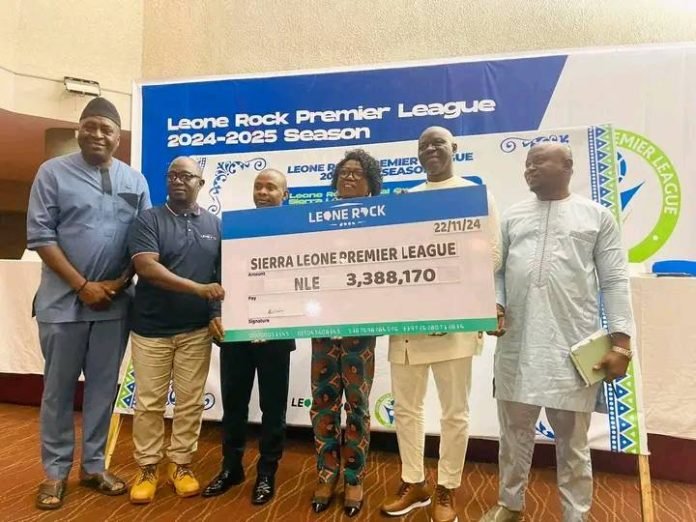
Leone Rock Metal Group (LRMG) has once again solidified its role as a key stakeholder in the development of Sierra Leone football by signing a sponsorship agreement with the Sierra Leone Premier League Board (SLPLB). On Friday, November 22, 2024, a ceremony at the Radisson Blu Hotel in Freetown marked the announcement of a $150,000 sponsorship package for the 2024/2025 Leone Rock Premier League season. This commitment underscores LRMG’s dedication to elevating football in Sierra Leone while promoting unity and fostering local talent.

Speaking at the signing ceremony, Mohamed S. Daffae, LRMG’s Human Resource Director, highlighted the company’s vision for Sierra Leone football. He emphasized that the sponsorship goes beyond financial support, representing a profound commitment to nurturing young talents, strengthening the league and positioning it as a beacon of excellence across Africa.

“This moment is not just about a signing,” Mohamed S. Daffae remarked. “It is a testament to our shared vision and passion for football in Sierra Leone. Leone Rock is committed to building on the extraordinary talent, electrifying matches and the passionate fan base we witnessed last season.”

Mohamed S. Daffae extended gratitude to the Ministry of Sports, the National Sports Authority (NSA) and the Government for their ongoing efforts to foster a conducive environment for private-public partnerships. He praised the pivotal role of these stakeholders in advancing the growth of football, emphasizing their significance in the league’s continued success.

“To the players, you are the stars that make this league shine. To the coaches, staff and organizers, your dedication keeps this dream alive. And to the fans, your unwavering support is the heartbeat of this league,” he concluded.

Emmanuel Saffa Abdulai, Executive Director of the NSA, described the sponsorship deal as a historic milestone for Sierra Leone’s football. “This is the most significant private sector investment in Sierra Leone’s football history,” he asserted, highlighting the Government’s previous efforts to fund the league while calling for increased private sector participation.

“Football is a multi-billion-dollar industry globally and to reap similar rewards, we must invest heavily,” Emmanuel Saffa Abdulai stated. He further commended Leone Rock for stepping up to fill a critical gap, urging other private sector players to follow suit.

Emmanuel Saffa Abdulai also called for reforms in the management of the Premier League to ensure sustainability and professionalism. He stressed the importance of restructuring the league to emulate successful models like the English Premier League, which operates as a self-sufficient corporate entity.

“The Premier League must be restructured to generate revenue and thrive independently,” he stated. Emmanuel Saffa Abdulai also announced plans to establish a Sports Development Fund aimed at attracting additional private sector investment into sports.

Thomas Daddy Brima, President of the Sierra Leone Football Association (SLFA), expressed optimism about the future of football under this new partnership. He highlighted the unprecedented nature of Leone Rock’s sponsorship, describing it as a giant leap for Sierra Leone football.

“Leone Rock is setting a pace that others should emulate,” Thomas Daddy Brima maintained. “Their commitment is an example of how corporate entities can support the development of sports.”

Thomas Daddy Brima  also reflected on Sierra Leone’s failure to qualify for the Africa Cup of Nations (AFCON), emphasizing the need for unity and collaboration among stakeholders to improve the country’s football landscape. He urged the SLFA and other stakeholders to ensure professionalism and deliver value to Leone Rock, noting the potential for future sponsorship growth.

“If we give Leone Rock the visibility they need, this $150,000 sponsorship could grow to $500,000 in just two years,” he projected.

Salim Sillah, Chief Technical Officer of Leone Rock Metal Group, emphasized the importance of accountability and transparency in the league’s operations. He urged the Premier League Board to prioritize detailed closure reports, explaining that these reports are essential for evaluating the impact of investments and guiding future sponsorship decisions.

“This Premier League sponsorship is an opportunity for Leone Rock to contribute to the nation’s development through football,” Salim Sillah stated. “Football transcends politics, race, gender and religion, uniting people in shared moments of joy.”

Salim Sillah also called for improved financial management and operational transparency to attract even greater investments in the future. He concluded by reaffirming Leone Rock’s commitment to supporting the league, with hopes of transforming it into a regional powerhouse.

The keynote address by Minister of Sports, Augusta James Teima underscored the Government’s commitment to sports as a vital driver of national development. She expressed gratitude to Leone Rock Metal Group for their continued investment and highlighted football’s potential to inspire unity, foster youth engagement and create job opportunities.

“Sport is life. It is not just recreation but a pillar of national development,” Minister Augusta James Teima declared. She reassured stakeholders that the Government is deeply investing in creating opportunities through sports, with a focus on job creation and human capital development.

Augusta James Teima also acknowledged the challenges facing Sierra Leone football, including the recent AFCON qualification disappointment. However, she called for optimism and renewed efforts to achieve greater milestones such as qualifying for the FIFA World Cup.

“We must rise above setbacks. Together, we can achieve remarkable feats,” she urged, emphasizing the need for constructive criticism and collaboration among all stakeholders.

The ceremony highlighted the transformative potential of the Leone Rock sponsorship, not only for football but for Sierra Leone as a whole. It underscored the importance of partnerships between the private sector, Government and football stakeholders in advancing the sport.

Leone Rock Metal Group’s $150,000 sponsorship for the 2024/2025 Premier League season is more than just financial backing; it is a commitment to fostering unity, professionalism and excellence in Sierra Leone football. As the new season approaches, stakeholders are optimistic that this partnership will inspire growth, generate opportunities and position the Premier League as a source of national pride and international recognition.

Dr. Isata Mahoi Reveals Plans for 16 Days of Activism Against Gender-Based Violence

By Alvin Lansana Kargbo 

The Ministry of Gender and Children’s Affairs, in collaboration with its partners, held a Press Conference on Friday, November 22, 2024, at its office on Big Waterloo Street, Freetown, to unveil plans for their upcoming 16 Days of Activism campaign, which will run from November 25 to December 10, 2024. The campaign, aligning with international observances such as the International Day for the Elimination of Violence Against Women on November 25 and International Human Rights Day on December 10, aims to raise awareness about the ongoing issue of gender-based violence and its devastating impact on women and girls.

This year’s campaign is centered on a country-specific theme: “Unite to End Violence Against Women and Girls” The initiative, which will engage various sectors of society, emphasizes the importance of gender equality and the struggle to end violence against women since the landmark 1995 Beijing Declaration.

The 16 Days of Activism will feature a series of activities aimed at educating the public, empowering women and girls and fostering community engagement. Among the key events announced at the Press Conference is the launch of the Real Man campaign, which seeks to involve men and boys in the fight against gender-based violence. The campaign will promote positive masculinity and social responsibility through speeches, performances and discussions. Government officials, development partners, UN agencies and various stakeholders will be part of the event.

Other planned activities include media campaigns to spread awareness about the Beijing Declaration and the different forms of violence against women, as well as community outreach programs to empower local populations with knowledge about their rights, available resources and reporting mechanisms. Sensitization programs will be conducted in schools and universities, focusing on promoting respect, consent and healthy relationships among young people. A float parade, featuring participants dressed in themed attire and carrying banners will be held to showcase messages of solidarity against gender-based violence.

During the Press Conference, Dr. Isata Mahoi the Minister of Gender and Children’s Affairs addressed the ongoing challenge of sexual and gender-based violence in Sierra Leone. She underscored the persistence of violence, including sexual violence and domestic abuse, which often leads to fatalities. Citing specific cases, the Minister highlighted the severity of the issue and called for urgent action.

She emphasized the need for a collective response to address this crisis, involving partners, parents and communities. She acknowledged that while women and girls are disproportionately affected by gender-based violence, young boys and men also suffer from domestic and sexual violence. The Ministry, she explained, is working with the Judiciary and Police to ensure justice for survivors and is committed to strengthening legal frameworks and support systems.

The Minister also spoke about ongoing legislative efforts, including the review of the Child Rights Act and amendments to the 2019 Sexual Offenses Act, aimed at closing legal gaps. In addition, she stressed the importance of enforcing laws to prohibit child marriage and protect children from abuse.

Dr. Isata Mahoi also discussed the Ministry’s efforts to develop and implement strategies that align with the third generation of the National Action Plan for the Implementation of the United Nations Security Council Resolution 1325 on Women, Peace and Security. She called for greater collaboration among national and international partners, particularly in the context of the forthcoming 30th anniversary of the Beijing Declaration.

The Minister also noted the urgent need for the passage of the Child Rights Bill, which seeks to protect children from abuse, including cyberbullying and trafficking. The bill, which is expected to be passed by December 2024, will help safeguard children under the age of 18. She urged all stakeholders to work together to ensure the bill’s passage and to create a safe environment for children in Sierra Leone.

Usu Mallya, Senior Advisor Policy and Strategic Planning Officer at UN Women, also spoke at the Press Conference, emphasizing the global significance of the 16 Days of Activism. With the theme: “Unite to End Violence Against Women and Girls,” she reflected on the impact of the Beijing Declaration and the continued prevalence of gender-based violence worldwide. She highlighted alarming statistics, such as one in three women experiencing physical or sexual violence and noted that Sub-Saharan Africa, including Sierra Leone, has some of the highest rates of gender-based violence.

The UN Women Senior Advisor Policy and Strategic Planning Officer  urged Governments, organizations and communities to revisit their commitments to addressing gender-based violence and to strengthen efforts to tackle systemic inequalities and harmful social norms. She stressed the importance of equitable laws, collaboration with international partners and the active involvement of communities in promoting gender equality and ensuring the safety and well-being of women and girls.

Through this initiative, the Ministry aims to build a safer and more inclusive environment for women and children, with a focus on strengthening support systems for survivors and eliminating the root causes of violence. The campaign is expected to significantly contribute to the ongoing fight to end gender-based violence in Sierra Leone.