
Home Blog Page 288

APC Calls for Leadership Transition: Dr. Samura Kamara Asked to Step Down

By Amin Kef (Ranger)

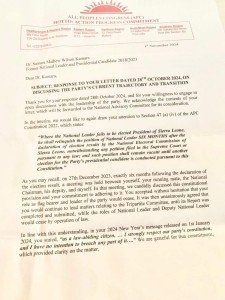
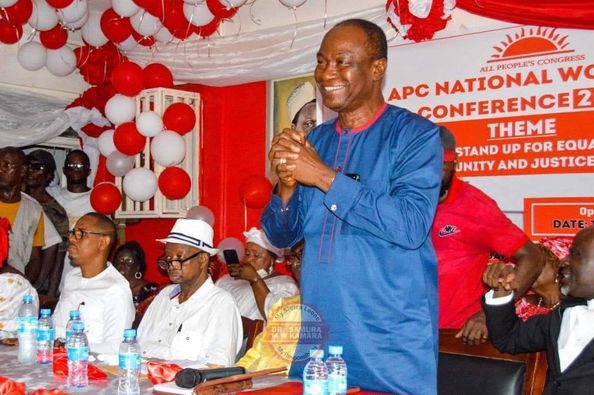
In a formal letter dated November 1, 2024, the All Peoples Congress (APC) National Secretary General, Lansana Dumbuya Esq., has requested Dr. Samura Mathew Wilson Kamara, former National Leader and the party’s presidential candidate in the 2018 and 2023 elections, to vacate the office of National Leader. This request is based on Section 47(a)(iv) of the APC Constitution, which stipulates that the role of National Leader should be relinquished six months after the announcement of election results if the candidate is not elected as President.

The APC leadership referenced an agreement reached during a December 2023 meeting, where Dr. Samura Mathew Wilson Kamara  reportedly committed to stepping down as National Leader in accordance with the party’s constitution. Dr. Samura Kamara’s role was extended to oversee the Tripartite Committee’s work until its report was finalized—a task which has now been completed.

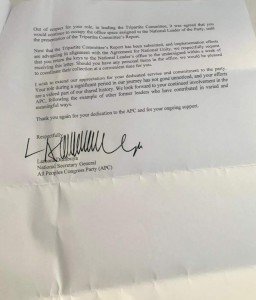
In the letter addressed to Dr. Samura Kamara, Lansana Dumbuya expressed appreciation for Dr. Samura Kamara’s service, noting his contributions to the APC’s growth and influence. He further encouraged  Dr. Samura Kamara to remain actively involved in the party’s future endeavors, following the example set by other former leaders who continue to support the party in various capacities.

The APC’s letter also acknowledged Dr. Samura Kamara’s commitment to the party’s constitutional requirements. In a New Year’s message on January 1, 2024, Dr. Samura Kamara had stated his respect for the APC Constitution and his intention to abide by its guidelines.

Given that the Tripartite Committee’s report has been completed and that efforts to implement the Agreement for National Unity are progressing, the APC has requested that Dr. Samura Kamara return the keys to the National Leader’s office within a week of receiving the letter.  Lansana Dumbuya assured that arrangements would be made to facilitate the collection of any personal items Dr. Samura Kamara may have in the office.

This development marks a pivotal moment in the APC’s journey toward realignment and unity, as it strives to uphold constitutional provisions while recognizing the valuable contributions of its senior members. The letter concluded by expressing optimism for Dr. Samura Kamara’s ongoing support and commitment to the APC’s vision and goals.

Go for Your Biometric ID Card Now as it Helps to Verify, Fight Identity Theft & Fraud Threats

By Amin Kef (Ranger)

 The National Civil Registration Authority (NCRA) of Sierra Leone is intensifying efforts to secure identities and enhance service access nationwide. Through a broad campaign, the NCRA is urging all individuals, both citizens and non-citizens, to register for Biometric ID Cards, which come with a unique National Identification Number (NIN). These cards, available at various designated centers, are designed to streamline identity verification, prevent fraud and make accessing essential services more straightforward.

A critical component of this initiative is linking NINs to mobile phone SIM card; a Government-mandated action that must be completed between September 1 and November 30, 2024. According to the NCRA, this linkage aims to protect individuals’ identities and prevent the misuse of mobile services for illicit purposes. Those who do not link their NINs within this period may face disruptions in their mobile service, affecting their ability to make calls, send messages or carry out mobile money transactions.

The Biometric ID Card, far more than a simple ID, represents a significant advancement in securing personal information. By assigning a unique NIN to each individual, the Government can verify identity more accurately, bolstering the fight against identity theft and fraud threats that are becoming more common in the digital age.

Beyond providing a secure form of identification, the Biometric ID Card is now essential for accessing various services in Sierra Leone. Recent Government policies mandate presenting the card for activities like banking, where it serves as an extra layer of security to combat fraud. Law enforcement also relies on these cards for identity verification at checkpoints across the country, further enhancing national security.

In education, the Biometric ID Card has become a requirement for students taking national exams like the West African Senior School Certificate Examination (WASSCE). This requirement strengthens the examination process by verifying candidate identity, thus reducing the risk of impersonation and preserving the integrity of academic evaluations.

To ensure that all eligible individuals can obtain their Biometric ID Cards, the NCRA has established registration and collection centers nationwide, including:

– NCRA Headquarters: 2 Walpole Street, Freetown

– NCRA Office: 23B Off Kingharman Road, Freetown

– NCRA Office: Kennedy Street, Freetown

– NCRA Branch Office: 230 Lumley Road, Freetown (Near the Roundabout)

– NCRA Office: Waterloo, along the Freetown Highway (Opposite the Police Station)

– Regional NCRA Offices in Bo, Kenema, Makeni, and Port Loko

Individuals seeking assistance or more information can contact the NCRA at +232 33 939740 or +232 79 578063, visit their website at [www.ncra.gov.sl](http://www.ncra.gov.sl), or email them at info@ncra.gov.sl. Additionally, the NCRA offers services for corporate Biometric ID Card issuance, catering to both public and private institutions.

As Sierra Leone moves toward a more secure identification system, the NIN-SIM linkage is a crucial step in protecting citizens and residents. With identity verification at the core of modern service delivery, linking NINs to SIM cards will enhance national security, reduce fraud and improve efficiency across government and private services.

The NCRA remains committed to supporting all eligible individuals in securing their identities and taking advantage of essential services. This national drive represents a pivotal effort toward a safer and more connected Sierra Leone.

NP (SL) Strengthens Commitment to Customer Care and Quality Service Delivery

By Amin Kef (Ranger) 

In a remarkable display of resilience and innovation, NP (SL) Ltd continues to carve a niche for itself within the petroleum landscape of Sierra Leone. The company has earned widespread acclaim for its effective and efficient service delivery, solidifying its status as a leader in the importing and marketing of petroleum products. Over the years, NP (SL) has adeptly navigated numerous challenges, achieving an enviable reputation in the Oil and Gas Industry.

Founded decades ago, NP (SL) has experienced exponential growth, thanks in part to its commitment to business-oriented initiatives. These efforts have transformed the company into a towering entity within the national and sub-regional business landscapes. A key driver of this success has been the company’s emphasis on optimizing customer care and expanding its customer base.

NP (SL) stands as a prime example of astute indigenous entrepreneurship, having made significant strides in modernizing petroleum marketing in Sierra Leone. The company is dedicated to ensuring greater accessibility to petroleum products while providing the highest level of satisfaction to its diverse customer base across the country.

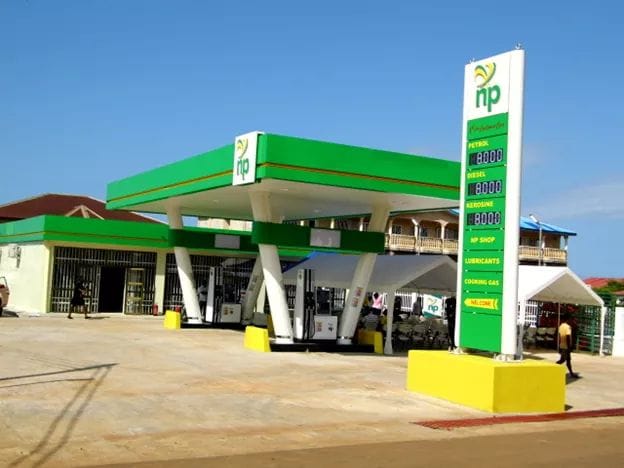
In pursuit of these goals, NP (SL) has made substantial investments in technology, including the installation of calibrated pumping dispensers and fuel storage tanks at various Dealer/Reseller outlets nationwide. These modern dispensers not only dispense the correct quantity of fuel but also display current prices, fostering transparency in transactions. The introduction of these advanced machines has effectively eradicated the practices of unscrupulous attendants who previously exploited outdated pumping systems to cheat customers. With the calibrated dispensers in place, customers can trust that they are receiving exactly what they pay for.

Furthermore, NP (SL) Ltd has simplified the fuel purchasing process through the introduction of the NP Smart Card. This innovative solution allows individuals and organizations to buy fuel without the need for physical cash, facilitating seamless transactions at Filling Stations, as long as there is credit on the card.

Building on this digital convenience, NP (SL) recently launched the Energy Pass Card, a state-of-the-art cashless option that aligns with the company’s “FUBU” (For Us, By Us) initiative. This card offers users SMS notifications and mobile integration, ensuring real-time balance updates and enhanced security. Its capability for both online and offline transactions makes it an excellent choice for customers in areas with limited internet connectivity, empowering them to make secure purchases no matter their location. Through these technological advancements, NP (SL) exemplifies how embracing innovation can transform customer service and improve accessibility.

In line with Sierra Leone’s Local Content Policy, NP (SL) has made a concerted effort to employ exclusively Sierra Leoneans. This policy not only promotes national employment but also significantly contributes to poverty alleviation and improved standards of living for its workforce. NP (SL) has replicated this employment model in its operations across the West African Sub-Region.

As a responsible corporate citizen, NP (SL) is committed to giving back to the community through various Corporate Social Responsibility (CSR) initiatives. These include the construction of squash courts in educational institutions to promote the sport, providing educational support to disadvantaged children, and establishing a Burns Unit at the Connaught Hospital, among other projects.

To maintain open lines of communication with its customers, NP (SL) operates on an open-door policy, aimed at addressing customer concerns effectively. The company values public feedback and integrates it into its decision-making processes; ensuring resolutions are tailored to meet the needs of its customers.

As a wholly indigenous company, NP (SL) not only leads the petroleum sector in Sierra Leone but also embodies the spirit of entrepreneurship and innovation that drives the nation forward. With its unwavering commitment to service excellence and community development, NP (SL) continues to shine as a beacon of hope and progress in the oil marketing industry.

MRCG, SLAJ Calls for Enhanced Safety Measures for Journalists on International Day to End Impunity for Crimes Against Journalists

By Amin Kef (Ranger)
The Media Reform Coordinating Group (MRCG) has on Saturday November 2, 2024 amplified its advocacy for the safety of journalists in Sierra Leone as it commemorates the ‘International Day to End Impunity for Crimes Against Journalists’ today. This year’s observance, held in partnership with the Sierra Leone Association of Journalists (SLAJ) and various global organizations, focuses on the theme “Safety of Journalists in Crises and Emergencies.”
The United Nations General Assembly established November 2 as a day to honor journalists who have lost their lives, specifically marking the assassinations of two French journalists in Mali in 2013. The resolution encourages member states to combat the culture of impunity that allows violence against media professionals to persist. It calls on nations to take decisive actions, ensuring the prosecution of perpetrators and providing redress for victims.
The UNESCO Observatory of Killed Journalists reports a staggering figure of over 1,700 journalists killed globally between 2006 and 2024, with approximately 90% of these cases remaining unsolved. The prevalence of impunity often correlates with a rise in violence and the deterioration of legal frameworks.
Since 2018, the MRCG, supported by the National Endowment for Democracy (NED), has diligently monitored media freedom in Sierra Leone. Its latest report reveals that it has tracked 82 cases of harassment, intimidation, and violence against journalists, with 57 cases resolved, six currently in court, 19 under police investigation, and nine abandoned due to a lack of progress.
The MRCG has documented several specific incidents in Sierra Leone since January 2024, including the detention of Alie Bai Kamara from Citizen Radio, the arrest of Emmanuel C. Thorli from Night Watch Newspaper, and various instances of online harassment targeting journalists like Amadu Lamrana Bah and Patrick Kai. Other notable cases include assaults by police officers on reporters and allegations of cyberstalking against media personnel.
Furthermore, the MRCG highlights that threats to journalists’ safety are not limited to government and police actions; local authorities and the public also pose risks, particularly in online interactions.
A recent MRCG report, “The Welfare of Journalists in Sierra Leone 2024,” reveals alarming trends in journalist welfare, with many journalists reporting unpaid salaries and inadequate working conditions. Approximately 40.3% of journalists have never received salaries, and 48.3% earn less than the national minimum wage, which stands at approximately $35.
In light of these findings, the MRCG reiterates its call to the Sierra Leonean government, political leaders, media organizations, and civil society to prioritize the safety and welfare of journalists, ensuring their protection and support in their crucial role as watchdogs in society.

As APC Issues Formal Request… Dr. Samura Kamara to Step Down as National Leader in Accordance with Party Constitution

By Amin Kef (Ranger)
In a formal letter dated November 1, 2024, the All Peoples Congress (APC) National Secretary General, Lansana Dumbuya Esq., has requested Dr. Samura Mathew Wilson Kamara, former National Leader and the party’s presidential candidate in the 2018 and 2023 elections, to vacate the office of National Leader. This request is based on Section 47(a)(iv) of the APC Constitution, which stipulates that the role of National Leader should be relinquished six months after the announcement of election results if the candidate is not elected as President.
The APC leadership referenced an agreement reached during a December 2023 meeting, where Dr. Kamara reportedly committed to stepping down as National Leader in accordance with the party’s constitution. Dr. Kamara’s role was extended to oversee the Tripartite Committee’s work until its report was finalized—a task which has now been completed.
In the letter addressed to Dr. Kamara, Dumbuya expressed appreciation for Dr. Kamara’s service, noting his contributions to the APC’s growth and influence. He further encouraged Dr. Kamara to remain actively involved in the party’s future endeavors, following the example set by other former leaders who continue to support the party in various capacities.
The APC’s letter also acknowledged Dr. Kamara’s commitment to the party’s constitutional requirements. In a New Year’s message on January 1, 2024, Dr. Kamara had stated his respect for the APC Constitution and his intention to abide by its guidelines.
Given that the Tripartite Committee’s report has been completed and that efforts to implement the Agreement for National Unity are progressing, the APC has requested that Dr. Kamara return the keys to the National Leader’s office within a week of receiving the letter. Dumbuya assured that arrangements would be made to facilitate the collection of any personal items Dr. Kamara may have in the office.
This development marks a pivotal moment in the APC’s journey toward realignment and unity, as it strives to uphold constitutional provisions while recognizing the valuable contributions of its senior members. The letter concluded by expressing optimism for Dr. Kamara’s ongoing support and commitment to the APC’s vision and goals.

Parliament Ratifies Agreements to Support Agriculture, Debt Management, & Infrastructure Expansion

By Alvin Lansana Kargbo

Parliament of Sierra Leone on Thursday October 31, 2024 debated and ratified a series of agreements aimed at advancing the nation’s socio-economic development. These agreements, spanning areas like agriculture, education, financial inclusion and healthcare, underscore Sierra Leone’s commitment to sustainable growth and development.

The agreements approved by Parliament include:

  1. Global Agriculture and Food Security Program Grant: Additional financing under the West Africa Food System Resilience Program Phase 2, in collaboration with the International Bank for Reconstruction and Development, dated August 4, 2023.
  2. Transition Support Facility Agreement: Focused on enhancing public debt management efficiency, this agreement supports the EEPDMIS projects, dated July 5, 2023.
  3. Sierra Leone Financial Inclusion Project: A financing agreement with the International Development Association (IDA), dated June 29, 2023, to foster financial inclusivity.
  4. Free Education Project (Second Additional Financing): An agreement with IDA to support free education initiatives, dated September 29, 2023.
  5. Agricultural Value Chain Development Project: This agreement with the International Fund for Agricultural Development (IFAD), dated March 22, 2023, aims to enhance agricultural productivity through additional loans and grants.
  6. Rural Finance and Community Improvement Program II: Also with IFAD, this agreement supports rural finance and community development, dated October 24, 2023.
  7. Construction and Equipment of Riyadh Referral Hospital: A loan agreement with the Saudi Fund for Development to improve healthcare infrastructure, dated November 9, 2023.
  8. European Commission Financing Agreement: Strengthens various development initiatives in collaboration with the European Commission.
  9. Mano River Union Road Development Programme Phase IV: A protocol agreement with the African Development Fund to facilitate regional transport infrastructure, dated February 5, 2024.
  10. Subsidiary Agreement on Financial Inclusion: Between the Ministry of Finance and Bank of Sierra Leone, supporting the Sierra Second Financial Inclusion Project, dated October 26, 2023.

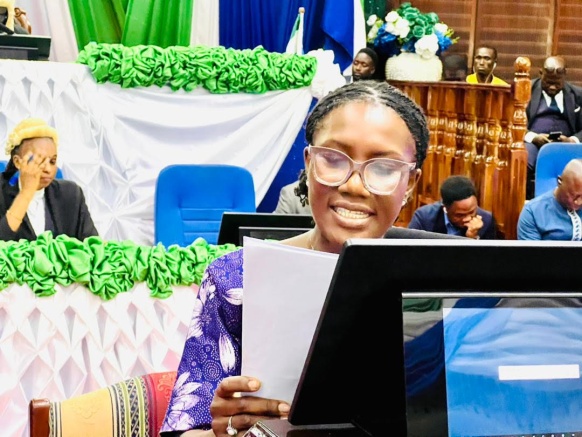
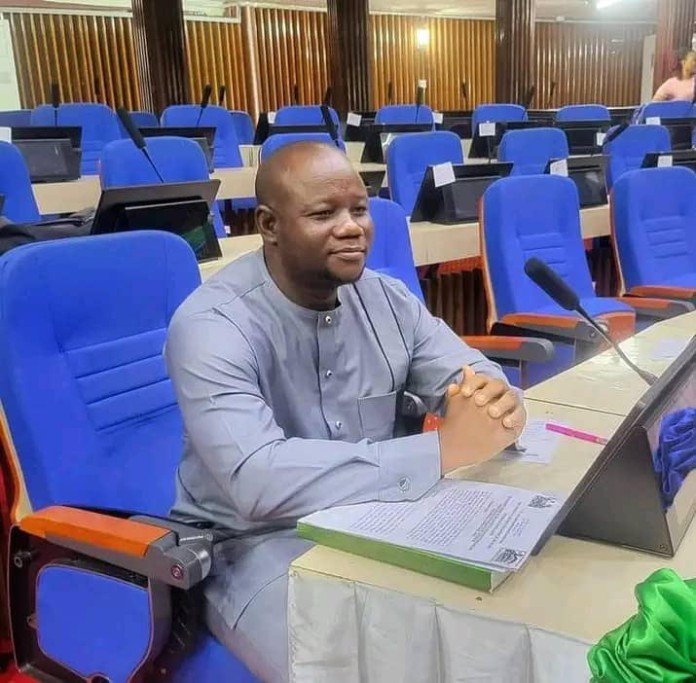
Deputy Finance Minister, Kadiatu Alie, presented the agreements, emphasizing their potential to boost economic growth and enhance the quality of life for Sierra Leoneans. Hon. Mustapha Sellu from Moyamba District echoed this sentiment, advocating for robust oversight to ensure effective implementation.

Hon. Rugaitu Bangura from Tonkolili District highlighted the need for support in the agricultural sector, specifically for Master Farmers to sustain their operations. Acting Leader of the Opposition Hon. Daniel Koroma stressed the importance of adding value to agricultural products to maximize benefits for local communities.

Concluding the session, Acting Leader of Government Business, Hon. Bashiru Silikie ,  expressed optimism about the agreements, predicting significant positive impacts on Sierra Leone’s development. The ratification of these agreements marks a key step forward in realizing the country’s strategic development goals.

EU and SLAJ Wrap Up Green Journalism Training in Sierra Leone

By Amin Kef (Ranger)

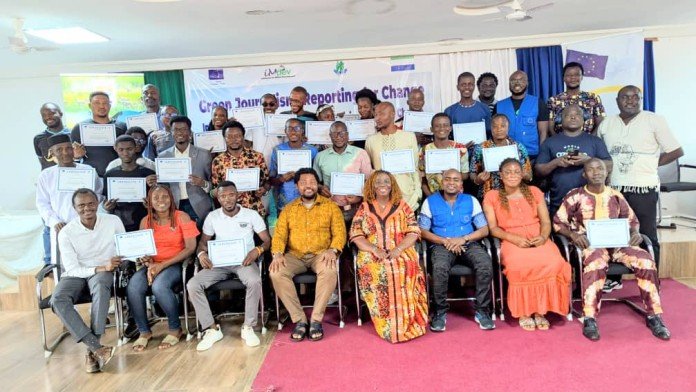
Twenty-five journalists from various media outlets across Sierra Leone have on November 1, 2024 successfully completed an intensive Green Journalism Training program in Kenema City, organized by Initiatives for Media Development (IMdev) and the Sierra Leone Association of Journalists (SLAJ), with funding from the European Union. This initiative aims to equip journalists with the skills necessary to effectively report on environmental issues, raise public awareness and inspire action regarding Sierra Leone’s urgent environmental challenges.

The five-day training covered vital topics such as environmental regulations, institutional mandates, sustainable development, climate change and multimedia storytelling. Participants engaged in practical learning through field visits to Tiwai Island Wildlife Sanctuary in Barri Chiefdom, Pujehun District and Kambui Hills Forest Reserve in Nongowa Chiefdom, Kenema District, where they encountered real-world environmental management challenges.

“Environmental journalism is crucial in addressing the pressing issues facing Sierra Leone and the world,” stated SLAJ President Ahmed Sahid Nasralla. “This training not only equips journalists with the skills they need to tell these important stories but also empowers them to advocate for sustainable environmental management and change in their communities.”

Participants received expert guidance on crafting impactful stories that resonate with local audiences, emphasizing the relevance of global issues such as climate change and deforestation to their communities. The training also included multimedia skills development, equipping journalists with software tools for data presentation and analysis, as well as techniques to leverage video, audio and social media for enhanced audience engagement.

A key highlight of the program was the networking opportunities fostered among journalists, establishing a robust network of environmental reporters in Sierra Leone. “We are building a network of environmentally conscious journalists who will continue to support each other and promote green reporting long after this training,” said John C. Abu-Kpawoh from the Rural Development and Infrastructure Section of the European Union. “Our goal is to create lasting impacts and we believe these journalists will help lead the way.”

In addition to the training, a fellowship program was launched to encourage journalists to report on environmental issues and facilitate the formation of a Network of Environmental Journalists. With ongoing support from SLAJ and IMdev, these journalists are positioned to drive a powerful movement for sustainable development through journalism, fostering greater environmental awareness and accountability across Sierra Leone.

This training is particularly timely in light of the Sierra Leone Presidential Initiative on Climate Change, Renewable Energy and Food Security, which will kick off a National Dialogue on November 4, led by President Julius Maada Bio. The European Union is strongly supporting this dialogue, which will require media involvement to effectively relay its content and messages.

EU Ambassador to Sierra Leone, Jacek Jankowski, affirmed the EU’s commitment, stating, “The European Union is dedicated to providing significant funding to support green transition efforts, particularly related to environmental protection, climate change mitigation and adaptation, renewable energy, and sustainable agriculture through a range of ongoing projects in Sierra Leone.”

The European Union extends its appreciation to the Ministry of Environment and Climate Change, SLAJ, the Independent Media Commission of Sierra Leone, local stakeholders and other partners for their invaluable contributions during the week-long training.

Hon. Alpha Ben Mansaray Urges Government Action on Utility Pole and Road Safety in Parliament

By Esther Wright

During a recent session of Parliament, Hon. Alpha Ben Mansaray, Deputy Parliamentary Spokesperson for the All People’s Congress (APC), raised urgent concerns over the quality and safety of high-tension utility poles installed as part of the Bumbuna Hydroelectric Project. This project, responsible for generating over 50% of Sierra Leone’s electricity, includes a 161 kV transmission line stretching 205 kilometers from Bumbuna Falls to Freetown, enhancing energy access across urban and rural areas.

Invoking Standing Order 23, Hon. Alpha Ben Mansaray called attention to construction issues with some utility poles, particularly those installed with exposed concrete bases or positioned above ground level. He warned that these design flaws could create severe safety risks, especially in the event of vehicular accidents. Without sufficient shock resistance, the poles could fail upon impact, endangering motorists and pedestrians. Hon. Alpha Ben Mansaray urged the Government to coordinate with contractors to rectify these issues promptly, stressing that failure to act could result in costly repairs and increased future liabilities for the Government.

Hon. Alpha Ben Mansaray also highlighted deteriorating conditions along the Wellington-Masiaka Road, noting significant climate-related damage exacerbated by recent heavy rains. He underscored the urgent need for sustainable, long-term solutions that extend beyond the current, temporary fixes implemented by China Railway Seventh Group (CRSG), the contractor handling the road project. As the project nears completion, he advocated for infrastructure that would endure Sierra Leone’s shifting climate conditions and serve citizens reliably.

In his address, Hon. Alpha Ben Mansaray urged the Government to strengthen oversight of CRSG’s reconstruction efforts to ensure the roads are reinforced for long-term durability. He cautioned that without sufficient investment in resilience, maintaining these roads could become a major financial burden once contractors complete their work. Such proactive measures, he argued, would prevent costly repairs down the line and safeguard the country’s infrastructure investments.

Hon. Alpha Ben Mansaray emphasized that “prevention is better than cure,” advocating for immediate Government intervention to mitigate future risks and protect the wellbeing of Sierra Leoneans.

Sierra Leone Hosts Landmark Women in Tourism Regional Congress

By Millicent Senava Mannah

Sierra Leone’s capital city recently hosted the prestigious Women in Tourism Regional Congress, held from October 29-31, 2024, at the Bintumani International Conference Centre. Organized by the Ministry of Tourism and Cultural Affairs, in collaboration with the UN Tourism Organization the Congress centered on the theme: “Beyond Empowerment to Education, Innovation and Financial Access.”

The three-day event was inaugurated by Sierra Leone’s Vice President, Dr. Mohamed Juldeh Jalloh, and gathered high-level attendees, including Tourism Ministers and Deputies from across Africa, UN Tourism experts and women entrepreneurs and innovators from the region. This gathering was designed to transcend traditional empowerment by equipping women in tourism with essential resources, actionable insights and equitable opportunities for growth in leadership and innovation.

In her opening remarks, Elcia Grandcourt, UN Tourism Regional Director for Africa, emphasized the significance of empowering women through tourism, a key priority within the UN’s “Tourism for Inclusive Growth” agenda. She praised Sierra Leone’s 10-year tourism strategic plan for its transformative vision, grounded in strong public-private partnerships and attractive investment incentives.

Elcia Grandcourt highlighted that Sierra Leone’s efforts were helping amplify women’s voices and recognize their contributions to the tourism sector. UN Resident Coordinator, Saraphine Wakana echoed these sentiments, reaffirming the UN’s commitment to fostering a thriving and inclusive tourism sector in Sierra Leone.

Minister of Tourism and Cultural Affairs, Nabeela Farida Tunis welcomed delegates from across the continent, expressing gratitude to President Dr. Julius Maada Bio and the Government for their support in hosting the Congress. She remarked that the event marked a major milestone in promoting an actionable and inclusive agenda for African women in tourism. Nabeela Farida Tunis also acknowledged UN Tourism Secretary-General, Zurab Pololikashvili, for offering 100 scholarships to support women in the sector.

In his keynote address, Vice President Dr. Mohamed Juldeh Jalloh commended the Congress’s focus on advancing women in tourism. He noted the Government’s commitment to transforming the tourism sector, which he identified as pivotal to the country’s economic diversification and the broader “Big-5 Agenda.” Dr. Mohamed Juldeh Jalloh highlighted the Congress theme as essential in addressing challenges and opportunities for women in tourism, emphasizing that the transition from empowerment to education and financial access was key to supporting women in leadership roles across the sector.

One of the highlights of the Congress was the announcement of 100 scholarships from UN Tourism for women in Sierra Leone’s tourism industry. The Congress also featured several panel discussions and master classes, including sessions on topics such as: “Breaking Barriers: Women Shaping the Future of African Tourism” and “Leveraging Digital Transformation for Women Entrepreneurs.” An interactive forum, “Tourism Fambul Tok,” allowed women from diverse tourism backgrounds to share insights and experiences with peers.

The Women in Tourism Leadership Africa Committee was chaired by Minister Nabeela Tunis and prominent guests included Freetown Mayor Yvonne Aki-Sawyerr, UN Women Sierra Leone Head of Office Jeromine Setcheme Mongbo, ECOWAS Commission President Omar Touray and former Nigerian Tourism Minister, Lai Mohammed, who currently serves as Special Adviser to the UN Tourism Secretary-General.

The event was filled with engaging activities, including a welcome dinner for international delegates, a morning walk and tours to notable cultural and touristic sites in Freetown. The Congress concluded with an Open Air Carnival at Gigibonta Car Park, featuring vibrant performances and recognition awards for notable contributors to the cultural space, including the National Dance Troupe, Big Market Women and musical icon Amie Kallon.

This groundbreaking Congress highlighted Sierra Leone’s growing role in promoting an inclusive tourism landscape, underscoring the importance of advancing women’s leadership and innovation across Africa’s tourism industry.

Dr. Fatima Maada Bio Honored as ‘First Lady of the Year 2024’ at Prestigious London Event

By Amin Kef (Ranger)

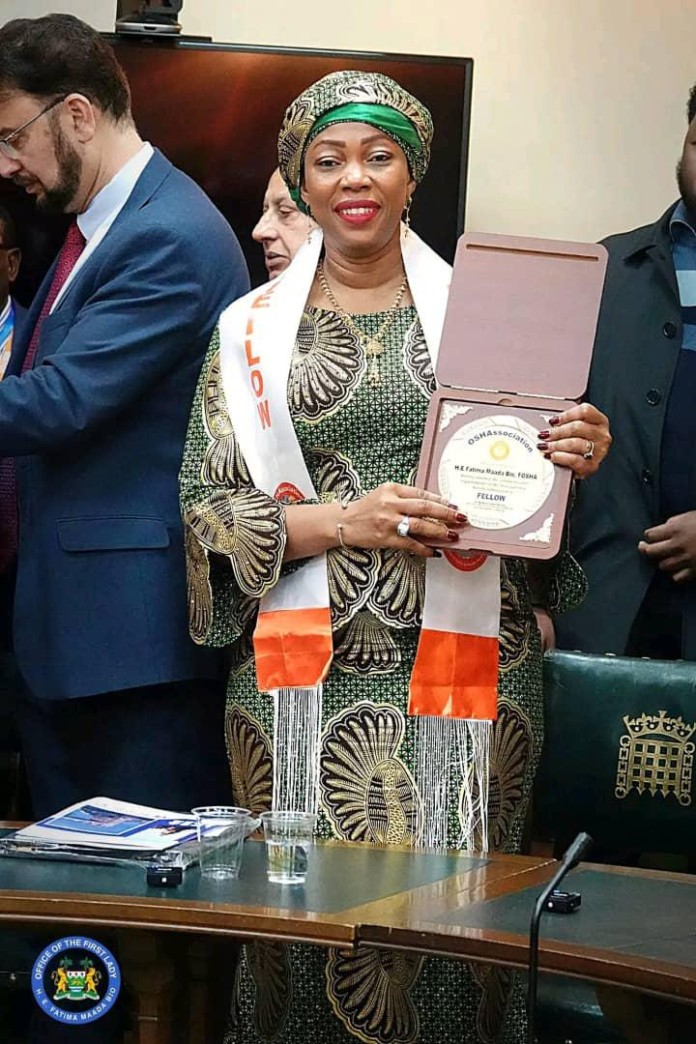
Dr. Fatima Maada Bio, the First Lady of Sierra Leone, was awarded the highly esteemed title of : “First Lady of the Year 2024” at the 9th Annual London Political Summit and Awards. Held at the House of Commons, UK Parliament, this ceremony celebrated her outstanding contributions to the empowerment and protection of women and girls both in Sierra Leone and on the international stage.

The award, presented on October 10, 2024, underscores Dr. Fatima Bio’s dedication to social justice, gender equality and child welfare. Known for her relentless advocacy, Dr. Fatima Maada Bio has implemented numerous initiatives aimed at transforming the lives of Sierra Leone’s most vulnerable populations, focusing on areas such as healthcare, education and social empowerment.

One of Dr. Fatima Maada Bio’s most recognized achievements is her flagship campaign, Hands Off Our Girls, which has garnered international praise for addressing issues like child marriage and Female Genital Mutilation (FGM). This campaign has driven significant reforms in Sierra Leone, including a legislative ban on child marriage, marking a milestone achievement that resonates with communities both locally and internationally. Through this initiative, Dr. Fatima Maada Bio has shone a spotlight on the urgent need to protect young girls from harmful practices and exploitation.

Dr. Fatima Maada Bio’s advocacy extends beyond Sierra Leone, reaching global platforms like the United Nations where she has championed gender equality, maternal health and youth empowerment. Her tireless efforts have made her a respected figure in global discussions about social equity, exemplifying how local leadership can effectuate broader change on the world stage.

Her work in Sierra Leone has also been instrumental in bridging the digital divide. In collaboration with global technology firms, including Starlink, Dr. Fatima Maada Bio has improved digital connectivity across Sierra Leone, particularly in underserved regions. This effort has facilitated better access to education, healthcare and economic opportunities, fostering societal advancement and positioning Sierra Leone to thrive in an increasingly digital world.

Further highlighting her commitment to impactful partnerships, Dr. Fatima Maada Bio recently engaged with Sir Christopher Hohn of The Children’s Investment Fund to secure support for educational and child protection initiatives. These collaborations demonstrate her focus on building strategic networks that drive progress and support the wellbeing of Sierra Leoneans.

On November 2, 2024, Sierra Leoneans gathered at the Presidential Lodge to welcome President Julius Maada Bio and Dr. Fatima Maada Bio in an enthusiastic display of national pride. Citizens from diverse backgrounds, particularly women, came together to celebrate the leadership and commitment of the First Lady, whose work has redefined the role of her office in championing the rights of women and children.

Through her unwavering dedication, Dr. Fatima Maada Bio continues to set an inspirational standard for leadership in Sierra Leone and beyond. Her transformative work and advocacy for social equity are not only reshaping Sierra Leone’s landscape but also establishing a legacy that will benefit generations to come.