
Home Blog Page 319

As he Reinforces President Bio’s Vision… NCRA DG Champions One Man, One Identity Policy for National Security   

By Amin Kef (Ranger)

In a recent Press Conference organized by the National Civil Registration Authority (NCRA) ahead of the 7th Africa Civil Registration and Vital Statistics (CRVS) Day, NCRA Director-General Mohamed Mubashir Massaquoi reaffirmed his commitment to ensuring that every citizen in Sierra Leone is accounted for through the principle of “One Man, One Identity.” The event also served as a platform to announce Sierra Leone’s plans to commemorate the day with a demonstration of SIM card registration linked to the National Identification Number (NIN).

The decision to link SIM cards with NINs is a crucial step in enhancing national security and accountability. According to the Director General, the initiative aims to eliminate the misuse of mobile phones for harmful activities, such as spreading misinformation, inciting violence and conducting fraudulent transactions. For years, some individuals have exploited anonymity to engage in slander, intimidation and other illicit activities, often undermining public peace and safety.

The Director-General assured the nation, particularly the security sector, that once the SIM-NIN linkage is fully implemented, it will be nearly impossible for anyone to commit crimes anonymously using mobile communications. He stressed that this move aligns Sierra Leone with global practices, ensuring that those who attempt to disrupt the country’s peace and development are swiftly identified and brought to justice. He emphasized that the development initiatives of President Julius Maada Bio will not be hindered by the actions of troublemakers.

Mohamed Massaquoi’s unwavering commitment to “One Man, One Identity” underscores the NCRA’s mission to eradicate identity fraud and manipulation, which has historically allowed individuals to hold multiple identities for various purposes. His leadership has been instrumental in transforming the NCRA into an institution that upholds civil registration as both a right and a critical component of national development.

Despite the challenges that come with his high-profile role, Mohamed Mubashir Massaquoi remains focused on his mission of delivering quality services to the people of Sierra Leone. Critics may judge or misunderstand, but his leadership is driven by resilience, dedication and a deep commitment to inclusivity and integrity in public service.

Under his guidance, the NCRA has evolved into a model institution, reflecting the vision of President Julius Maada Bio for efficient governance. Through his steadfast leadership, Mohamed Mubashir Massaquoi has ensured that every citizen is recognized and accounted for, paving the way for a more secure and transparent society.


Meya Mining’s Latest 391- Carat Diamond Discovery Enhances Sierra Leone’s Global Standing

By Amin Kef (Ranger)

In a major announcement made on August 26, 2024, the Ministry of Mines and Mineral Resources, alongside the National Minerals Agency, revealed the recovery of a remarkable 391.45-carat diamond from the Meya Mine in Kono District, Eastern Sierra Leone. This exceptional diamond was unearthed on August 20, 2024, marking the second extraordinary discovery from the Meya River kimberlite domain, one of 16 kimberlite zones targeted within the mining license area.

This discovery follows the 2017 recovery of a 476-carat Type IIa diamond, known as the Meya Prosperity, during the initial bulk sampling program. That earlier find stemmed from a 523.44-carat diamond, which was divided into three segments: 476.98 carats, 27.89 carats and 18.58 carats. Similarly, the recently recovered stone was originally a 514.99-carat diamond that was split into three pieces, yielding 391.53 carats, 105.43 carats and 18.11 carats.

Geologically, the recovery of another large, superdeep Type IIa diamond is noteworthy. According to Casey Hetman of SRK Consulting, these diamonds originate from the earth’s lower mantle, approximately 750 kilometers beneath the surface—much deeper than most natural diamonds, which form at depths of 150 to 250 kilometers. The diamonds at Meya are less likely to be fragmented by explosive forces during their ascent, as they are emplaced within dykes, rather than pipes, preserving their integrity.

The Company’s specialized processing plant, designed by Consulmet of South Africa and equipped with cutting-edge technology from Tomra Sorting Solutions in Germany, was instrumental in recovering this stone. Jan Joubert, CEO of Meya Mining, emphasized the rarity of such finds, noting, “Only four mines globally occasionally recover diamonds over 500 carats. The fact that Meya has found two such diamonds from just 84,195 tonnes of kimberlite suggests significant potential as we scale up to steady-state production of 500,000 tonnes annually. Our focus now is on upgrading the plant to minimize breakages and enhance recovery of these high-value stones intact.”

This marks the sixth time an exceptional diamond has been discovered in the region, underscoring Sierra Leone’s status as a key source of some of the world’s largest diamonds. Since 1945, six of the largest diamonds globally have been recovered from Sierra Leone, including the 770-carat Woyie Diamond (1945), the 620-carat Sefadu Diamond (1970), the 969-carat Star of Sierra Leone (1973), the 709-carat Peace Diamond (2017), the 476-carat Meya Prosperity (2017) and now the 391-carat discovery.

Reacting to the news, Julius Daniel Mattai, Minister of Mines and Mineral Resources, expressed optimism that this discovery will renew international interest in the country’s mining potential. “The recovery of the 391-carat diamond reaffirms Sierra Leone’s immense mineral resource potential. I am particularly pleased with the transparent approach taken by Meya Mining to determine the market value of this stone, ensuring that economic benefits are equitably shared among all stakeholders,” the Minister stated.

This discovery once again places Sierra Leone in the spotlight as a premier source of exceptional diamonds, reinforcing the country’s reputation on the global stage.

Sierra Leone Police Set to Transition into a Service Under IGP Sellu’s Visionary Leadership

By Esther Wright

In a move inspired by Ghana’s successful transition from a “police force” to a “police service,” the Inspector General of Police (IGP) for Sierra Leone, William Fayia Sellu, has revealed plans to transform the Sierra Leone Police (SLP) into a service-oriented institution. To advance this initiative, IGP Sellu is actively seeking strategic partnerships and collaborations.

This vision took a significant step forward on February 26, 2024, when Fayia Sellu held discussions with the United Nations Development Programme (UNDP) Resident Representative, Frederick Ampiah, at Police Headquarters. Their meeting explored the possibility of replicating Ghana’s transition model, with Mr. Ampiah bringing valuable insights from his involvement in Ghana’s reform.

Building on these discussions, a high-level delegation led by the UNDP embarked on an exploratory visit to Ghana on August 12, 2024. The delegation included IGP Sellu, Minister of Internal Affairs Major General (Rtd) David Taluva, Deputy Minister of Justice Hon. Alpha Sesay Esq., Director of Policy in the Ministry of Internal Affairs  Mohamed G. Yoki Esq., Regional Commander for Freetown-West AIG Sylvester Koroma, Acting Director of Corporate Affairs ACP Esther Kaintor-Dukuray and Head of Media, Public Relations, and Sports ACP Brima Kamara. The primary goal of the visit was to learn from Ghana’s experience in transitioning to a police service.

Upon their arrival at the Ghana Police Service Headquarters, the Sierra Leone delegation was warmly received by the Inspector General of the Ghana Police Service, Dr. George Akuffo Dampare, who provided a detailed briefing on the reform processes. The delegation engaged with key stakeholders over three days to gain comprehensive insights into the transition. Speaking to the media at the end of the visit, IGP Sellu confirmed that both the Sierra Leonean Government and its strategic partners remain fully committed to supporting the transition, with the UNDP playing a crucial coordinating role.

Key outcomes from the visit included:

  1. The establishment of a technical working group to steer the transition.
  2. The development of a clear roadmap for the transformation.
  3. The shift from strategic planning to operational execution.
  4. Enhanced inter-agency collaboration.
  5. Institutionalized partnerships leading to a Memorandum of Understanding (MoU).
  6. The formation of a bilateral partnership with the Ghana Police Service.

IGP Sellu expressed confidence that the shared history and similar contexts between Ghana and Sierra Leone make the lessons learned highly relevant. He noted that the visit provided both practical insights and a concrete roadmap for guiding Sierra Leone’s own transition from a “police force” to a “police service.”

Hon. Tawa Conteh Leads Successful Recovery of Over Le 40 Billion in Tax Arrears 

By Foday Moriba Conteh

In a significant financial recovery effort, the Public Accounts Committee (PAC) of the Sierra Leone Parliament, chaired by the Deputy Speaker, Hon. Ibrahim Tawa Conteh, announced the recovery of over 40 billion old leones in tax arrears. The announcement was made on Friday, 23rd August 2024, at the Kenema District Council in the presence of Heads of devolved sectors.

The recoveries pertain to arrears from the 2021 and 2022 audit periods, with the Committee focusing primarily on Corporate Taxes, Goods and Services Tax (GST), Pay As You Earn (PAYE) and withholding taxes.

Highlighting the Committee’s work, Hon. Tawa Conteh revealed that a significant portion of the recovered funds came from GST payments. He noted that the PAC examined the cases of eleven taxpayers, collaborating closely with the Ministry of Finance and the National Revenue Authority (NRA) throughout the inquiry. “Over 30 billion leones was recovered,” Hon. Conteh stated, crediting the NRA for its pivotal role.

Further recoveries were made from mobile network operators and internet service providers, with 10.5 billion old Leones paid into the Universal Access Development Fund. Additionally, Hon. Conteh reported that small and medium-sized businesses, alongside micro-tax contributors, owed over 3.5 billion old Leones. Out of this, more than one billion old Leones has already been recovered, while payment plans have been arranged for the remaining amounts.

For transit accounts and machinery operations, the Chairman confirmed that a substantial sum has been deposited into the Consolidated Revenue Fund.

Hon. Tawa Conteh emphasized that the PAC Secretariat is actively sending correspondences to the NRA and other agencies to address outstanding arrears, while also working to resolve inter-agency tax liabilities. He assured that all recovered funds have been deposited into the Consolidated Revenue Fund, with the PAC Secretariat maintaining all necessary documentation for verification.

The Deputy Speaker reaffirmed the Committee’s commitment to holding all institutions accountable for any outstanding Government debts. “Any institution owing the Government will be held accountable and must eventually pay its dues to the state,” he asserted.

Hon. Conteh also used the occasion to urge Ministries, Departments, and Agencies (MDAs) to operate within legal frameworks and adhere to audit standards, stressing the importance of compliance with rules and regulations.

“In the work of the PAC, there is no secrecy; it is open, transparent, and a work in progress. The Committee will never relent in its quest to recover missing funds for the state,” he said.

Looking ahead, Hon. Conteh stated that the PAC will continue to engage MDAs in raising awareness about the importance of prudent public financial management and training.

He expressed gratitude to his fellow MPs for their dedication to promoting transparency and accountability in Sierra Leone’s governance, while also recognizing the contributions of previous PAC Chairmen toward advancing accountability and transparency for the benefit of the state.

The Chairman concluded by noting that the PAC is currently engaging Local Councils across the country, based on the Auditor General’s Reports for the fiscal years 2021/2022.

Mali, Niger, Burkina Faso Dialogue Still Possible with ECOWAS – Says VP Juldeh Jalloh

By Esther Wright

Vice President of Sierra Leone, Dr. Mohamed Juldeh Jalloh, has said that dialogue is still possible even though the break may seem complete, because Burkina Faso, Niger and Mali, the three countries of the Alliance of Sahel States, are founding members of ECOWAS, the Economic Community of West African States.

”The challenges and difficulties are many and we do not deny them. For our part, President Julius Maada Bio [Sierra Leone] has begun to build very effective relationships with these countries to restart dialogue,” he revealed.

In an exclusive interview with Le Point, the global News Magazine that enjoys over 22 million readers and millions of subscribers globally, the former Advisor of the Sahel to the Special Representative of the United Nations Secretary-General for UNOWAS, said Sierra Leone’s President will leverage the UN Security Council platform to discuss stability initiatives in the region.

“I have also personally worked in some Sahel countries, serving as an advisor to the UN Special Representative in Dakar, Senegal and later with MINUSMA in Mali. Therefore, I am closely acquainted with the difficult situation these states and their populations are facing,” he asserted.

He further disclosed that ECOWAS had also appointed Senegal’s President Bassirou Diomaye Faye as a special envoy to engage the three Sahelian countries on the path to their effective return to the sub-regional organisation. He added that they were convinced of the need to do everything possible to ensure they regained their full place within the regional bloc.

“President Julius Maada Bio had the opportunity to hold a one-on-one discussion with his counterpart, Ibrahim Traoré. This allowed him to gain a clearer understanding of the situation in Burkina Faso. They discussed various topics, including different stability initiatives and how we should work with the Sahelian countries for their return to the ECOWAS family,” he said.

Dr. Emmanuel Saffa Abdulai: Championing Justice, Governance & Sports in Sierra Leone

By Amin Kef (Ranger)

Dr. Emmanuel Saffa Abdulai is a multifaceted leader whose contributions span the fields of law, human rights, sports administration and governance reform in Sierra Leone. A seasoned legal practitioner, human rights advocate and sports administrator, Dr. Abdulai’s work has left an indelible mark on the nation’s legal framework, civic freedoms and sports development.

As the Executive Director of the Society for Democratic Initiatives (SDI), Dr. Abdulai has been instrumental in advancing human rights and promoting governance reforms. Under his leadership, SDI has championed access to information, open data and anti-corruption initiatives, contributing to the passage of key legislation like the Right to Access Information Act and the Sexual Offences Act. These efforts have been crucial in enhancing transparency and protecting the rights of Sierra Leoneans, particularly marginalized groups and activists.

Beyond his legal advocacy, Dr. Abdulai serves as the Head of the Law Department at Fourah Bay College, University of Sierra Leone. In this role, he is shaping the next generation of legal professionals, blending academic rigor with practical insights drawn from his extensive experience in social justice. His commitment to education reflects his belief in the transformative power of knowledge and law in addressing societal issues.

In the realm of sports, Dr. Abdulai has made significant strides. His tenure as Chairman of the Premier League Board in 2019 marked a milestone in Sierra Leonean football, with the league’s most successful season under his leadership. Building on this success, he now serves as the Executive Director of the National Sports Authority (NSA), where he has spearheaded transformative reforms within a short period. His leadership at the NSA has been characterized by innovation and a focus on elevating sports standards in the country.

Dr. Saffa Abdulai’s passion for sports is also evident in his role as CEO of Luawa FC, a Premier League club in Sierra Leone. His strategic vision has turned Luawa FC into a formidable force, while his engagement at the grassroots level underscores his belief in sports as a vehicle for community development and national pride.

Despite facing personal and professional challenges, including harassment and threats from various quarters, he remains undeterred in his mission to defend human rights and advocate for justice. As a publisher of News Watch newspaper and a co-founder of the Renaissance Movement of Sierra Leone, Dr. Saffa Abdulai continues to voice critical perspectives and challenge the status quo.

His activism extends beyond courtrooms and newspaper columns; it is reflected in his role in drafting important legislation, including the Freedom of Information Bill, the Devolution of Estates Act and the Extractive Industry Transparency Law. These contributions have helped shape the legal landscape and strengthen democratic governance in Sierra Leone.

Dr. Emmanuel Saffa Abdulai’s legacy is one of resilience, visionary leadership, and unwavering commitment to justice, governance, and sports. His impact is felt across multiple sectors, inspiring future generations of leaders and solidifying his place as a key figure in Sierra Leone’s development. As he continues to champion these causes, Dr. Abdulai remains a beacon of hope and progress in the country.

NP (SL) Maintains Leadership in the Petroleum Industry Via Quality Service & Customer Care

By Amin Kef (Ranger)

NP (SL) Limited continues to solidify its reputation as Sierra Leone’s leading petroleum marketing company by consistently providing high-quality products and exceptional customer service. Through careful planning, strategic partnerships and a commitment to maintaining a steady fuel supply, the company has effectively avoided disruptions, ensuring that customers can rely on their products whenever needed.

Renowned for offering top notch petroleum products, NP (SL) Ltd has built its brand on delivering premium petrol, diesel and lubricants that customers trust. The company’s lubricants are widely recognized for enhancing engine performance and are readily available at retail outlets across the country. This attention to quality has made NP (SL) Ltd a household name for both individual consumers and commercial operators.

A key pillar of NP (SL) Ltd’s success lies in its strong emphasis on customer care. The company has earned the distinction of being “1st For Customer Care” due to its proactive approach to listening to client feedback and using it to improve service delivery. This customer friendly strategy has helped the company foster loyalty while driving continuous growth.

At NP (SL) Ltd’s Filling Stations, customers benefit from modern, calibrated pumping machines that accurately display fuel quantity and cost. This transparency reinforces customer trust, as they can be confident they are receiving exactly what they pay for. Additionally, the company’s flexibility in payment arrangements for Ministries, Departments and Agencies (MDAs) ensures that essential public services remain uninterrupted, even during budgetary delays.

Supporting Sierra Leone’s Local Content Policy has been a priority for NP (SL) Ltd since its establishment. The company actively hires skilled Sierra Leoneans, creating jobs and empowering the local workforce. By keeping revenue within the country, NP (SL) Ltd plays a role in poverty reduction and economic growth.

NP (SL) Ltd is also recognized for its innovative products that meet the changing needs of its customers. Among these is NP Gas, a portable and efficient cooking device available in different cylinder sizes, which has become popular in homes and businesses.

The company has also embraced modern technology by introducing the NP Smart Card, a convenient payment solution that allows customers to buy fuel anytime, even when banks are closed. The card ensures quick, secure transactions and provides an easy-to-use experience.

Building on its track record of innovation, NP (SL) Ltd recently launched the NP Energy Pass Card, part of its “FUBU” (For Us, By Us) initiative. This smart card allows for both online and offline transactions, offers instant SMS notifications, and features advanced security measures like One-Time Passwords (OTPs). The NP Energy Pass Card is a significant step towards a cashless economy, enabling customers to fuel their vehicles independently while giving station owners streamlined access to funds through direct bank credits.

The petroleum marketing company’s success extends beyond Sierra Leone’s borders. The business entity has expanded into neighboring countries such as Guinea, Liberia, Ivory Coast and The Gambia.

These international branches have thrived, contributing to economic stability and job creation in their respective regions. The company’s regional presence underscores its ability to compete on a broader scale, making it a source of pride for Sierra Leone.

In addition to its business achievements, NP (SL) Ltd is a responsible corporate citizen, actively supporting national development initiatives.

As one of the country’s largest taxpayers, the company plays a significant role in funding Government projects and public welfare initiatives. Its consistent tax compliance demonstrates its commitment to contributing positively to Sierra Leone’s growth.

NP (SL) Ltd’s continued success reflects its dedication to quality, customer satisfaction and innovation. As the company expands its operations and introduces new services, it remains at the forefront of the petroleum industry in Sierra Leone and beyond. With its focus on transparency, customer care and community empowerment, NP (SL) Ltd is poised to remain a key player in the country’s economy and a trusted partner for its customers for years to come.

NCRA Urges Timely Collection of Biometric ID Cards as National Identification Becomes Essential

By Amin Kef (Ranger)

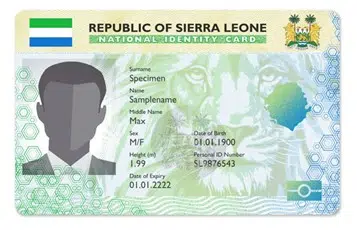
The National Civil Registration Authority (NCRA) continues to highlight the importance of acquiring Biometric ID Cards, urging citizens and non-citizens across Sierra Leone to collect their cards at designated registration and collection centers. This initiative is part of the ongoing process to enhance identity security, ensure efficient service delivery, and prevent identity fraud.

The Biometric ID Card, which contains a unique National Identification Number (NIN), goes beyond standard identification. It offers a robust mechanism for securing individual identities. The NIN assigned to each cardholder is unique and cannot be shared, reducing the risks of identity theft and fraud—issues that are becoming increasingly problematic in today’s digital landscape.

In addition to strengthening identity security, the Biometric ID Card is now a mandatory requirement for accessing several critical services in Sierra Leone. A recent Cabinet directive mandates that both citizens and non-citizens present their ID cards when engaging in specific public and private transactions. This includes banking operations, where the ID card adds a layer of security to prevent fraudulent activities. Law enforcement agencies have also made the card a requirement at checkpoints across the country to ensure accurate identification of individuals.

Moreover, the Biometric ID Card is now a prerequisite for sitting various public exams. For instance, students intending to take national exams like the West African Senior School Certificate Examination (WASSCE) must present their Biometric ID Cards. This measure not only helps in verifying candidates but also strengthens exam integrity by reducing cases of impersonation.

Despite the card’s critical importance, the NCRA reports that many individuals have yet to collect their cards, even after being notified via SMS that their cards are ready. A significant number of these uncollected cards remain at district offices and collection centers across the country. Factors such as incorrect or inactive phone numbers provided during registration have hindered effective communication. In some instances, applicants used phone numbers belonging to relatives or friends, making it challenging for the NCRA to reach them directly.

To address this issue, the NCRA is urging all applicants who registered on or before July 31, 2024, to visit the registration or collection center where they initially applied, even if they have not received an SMS. Applicants are reminded to bring their ID application slips, which will expedite the collection process.

In a related development, the NCRA has rolled out a new initiative aimed at enhancing identity protection by linking the National Identification Number (NIN) to mobile phone SIM cards. This initiative is part of the Government’s broader effort to safeguard identities and prevent mobile networks from being exploited for criminal activities.

Between September 1 and November 30, 2024, all mobile phone users must link their NINs to their SIM cards. Failure to do so could result in service disruptions, including the inability to make calls, send SMS messages, or conduct mobile money transactions. The objective is to ensure that every active SIM card in Sierra Leone is tied to a verified identity, thereby bolstering national security across the communication network.

To facilitate the collection of Biometric ID Cards, the NCRA has established several registration and collection points, including:

  1. NCRA Headquarters: 2 Walpole Street, Freetown
  2. NCRA Office: 23B Off Kingharman Road, Freetown
  3. NCRA Office: Kennedy Street, Freetown
  4. NCRA Branch Office: 230 Lumley Road, Freetown (By the Roundabout)
  5. NCRA Office: Waterloo, along the Freetown Highway (Opposite the Police Station)
  6. Regional NCRA Offices in Bo, Kenema, Makeni, and Port Loko

For further information, the NCRA can be reached via the following contacts:

– Mobile: +232 33 939740 / +232 79 578063

– Website: [www.ncra.gov.sl](http://www.ncra.gov.sl)

– Email: info@ncra.gov.sl

The NCRA also offers corporate issuance of Biometric ID Cards for both public and private institutions.

As Sierra Leone moves towards a more secure and efficient identification system, the Biometric ID Card has become a critical tool for identity management and access to essential services. Whether for banking, exam eligibility, or communications security, the ID card plays a vital role in the daily lives of residents. The NIN-SIM card linkage initiative further underscores the Government’s commitment to national security and service enhancement.

In light of these developments, it is imperative that all eligible individuals take immediate steps to secure their Biometric ID Cards. The NCRA remains dedicated to ensuring that no one is left behind in this nationwide effort to build a more secure identity management system for Sierra Leone.

Visionary Leadership Pivotal for SLPP’s 2028 Victory: Alhaji Musa Tarawally’s Lasting Legacy

By Foday Moriba Conteh

As Sierra Leone approaches the 2028 elections, one name stands out as a pillar of leadership and grassroots mobilization within the Sierra Leone People’s Party (SLPP)—Hon. Alhaji Musa Tarawally. His contributions over the years have been instrumental in shaping the party’s victories and solidifying its presence across the country.

Starting as a Young Generation Member, Alhaji Musa Tarawally worked alongside notable figures like the late SB Marah, Teacher Laggao, and Hinga Norman to bring the late President Ahmed Tejan Kabbah to power in 1996. As a District Young Generation Leader, he was among those who went into exile with President Kabbah and played a key role in restoring the SLPP government in 2008.

In 2002, as a member of the SLPP Strategic Planning Committee, Tarawally’s strategic efforts contributed to securing over 70% of the vote for the SLPP. His leadership extended to his role as Moyamba District Chairman and Member of Parliament, where he worked tirelessly to secure political appointments for SLPP members and improve the conditions for MPs. His bold advocacy led to increased salaries and the provision of diplomatic passports for parliamentarians.

Under his chairmanship, the SLPP Working Group was established to evaluate the chances of the late Vice President Solomon Berewa in the 2007 presidential elections. Despite strong opposition, Alhaji Musa Tarawally was unafraid to confront harsh realities, warning that Berewa’s candidacy might not be successful. His frankness, although met with resistance, marked him as a leader with the foresight and courage to speak the truth.

Alhaji Musa Tarawally’s commitment to the SLPP was further demonstrated in 2005 when he met with the now-President, Retired Brigadier Julius Maada Bio, predicting his potential as a winning candidate. He mobilized key party figures, chiefs and district executives to support Bio’s candidacy.

Despite facing political victimization, both within the SLPP and later under the APC, Musa Tarawally’s dedication to the party never wavered. As Minister in the APC Government, he covertly protected SLPP interests, defending chiefs and party members, securing legal support for former Civil Defense Forces fighters, and driving development initiatives across southeastern districts.

Even after his removal as District Chairman and MP, his resilience saw him form a coalition under the CDP banner, ultimately playing a crucial role in the 2018 runoff, helping to bring the SLPP back to power.

In the 2023 elections, his grassroots engagement once again proved vital to the SLPP’s success. Hon Alhaji Musa Tarawally, described as a seasoned, visionary leader with unmatched grassroots influence, remains a driving force in Sierra Leonean politics.

As the SLPP looks toward the 2028 elections, many within the party believe that the leadership of Hon. Alhaji Musa Tarawally could be the key to securing another victory. His experience, resilience and unwavering commitment to the party’s ideals make him a legendary figure whose contributions continue to shape the future of the SLPP.

For the SLPP, 2028 could be the year where a tested and proven leader like Hon. Alhaji Musa Tarawally once again plays a pivotal role in guiding the party toward success. His legendary status and visionary grassroots leadership are what the SLPP needs to navigate the challenges ahead.

13.8% of Sierra Leoneans Live with Hepatitis B – Dr. Sulaiman Lakkoh Urges Urgent Action

By Ibrahim Sorie Koroma

Dr. Sulaiman Lakkoh, Director of the Directorate of Disease Prevention and Control (DPC) at the Ministry of Health, has raised concerns over the rising prevalence of Hepatitis B in Sierra Leone. He revealed that 13.8% of the population is currently living with the disease, warning that the trend is alarming and calls for immediate intervention from stakeholders to boost public awareness and prevention strategies. Dr. Lakkoh shared these insights during a recent stakeholders’ meeting held in Freetown.

Providing a global context, Dr. Lakkoh noted that 296 million people worldwide are living with Hepatitis B, while 58 million are affected by Hepatitis C. Tragically, almost 1.5 million people succumb to complications from viral hepatitis, such as liver cancer, every year.

Dr. Lakkoh further detailed the epidemiology of Hepatitis B within Sierra Leone, noting that the 13.8% infection rate spans various age groups. He reported that 8.7% of individuals aged 15 years are infected, with the rate increasing to 15.8% among those aged 15-29 years and 16.6% among those aged 30-44 years. The infection rate is also higher among males at 15.5% compared to 11.4% among females.

Explaining the nature of the disease, Dr. Lakkoh highlighted that hepatitis is a liver condition caused by various factors, including Hepatitis B, which can lead to liver cancer. The primary modes of transmission include mother-to-child transmission, sharing of contaminated needles, unprotected sex and unsafe blood transfusions.

Addressing prevention, Dr. Lakkoh stressed that vaccination is a critical tool, but currently, Hepatitis B vaccination is mostly available through private healthcare providers, making it costly for the average Sierra Leonean. He recommended early screening as another vital preventive measure, particularly since Hepatitis A and C are treatable when detected early.

He also emphasized the importance of early childhood vaccination adding that the Ministry of Health is planning to roll out a Hepatitis B birth dose for newborns in 2025, which would offer protection within the first 24 hours of life. This new vaccine will complement existing conjugate vaccines that protect infants against the disease.

In his concluding remarks, Dr. Lakkoh urged stakeholders to intensify efforts and provide the necessary resources to curb the spread of Hepatitis B stressing that the disease is largely preventable and that proactive measures can save lives and safeguard public health.