
Home Blog Page 320

As Government Cracks Down on Substandard Iron Rods… Odhav Multi Industries Set to Revolutionize Sierra Leone’s Iron Rod Manufacturing Sector

By Amin Kef (Ranger)

In a Press Conference held on Tuesday, August 20, 2024, the Ministry of Information and Civic Education highlighted crucial updates on national initiatives designed to bolster peace, consumer protection and local manufacturing. Led by Minister Chernor Bah, the conference underscored the Government’s commitment to enhancing the quality of life for Sierra Leoneans through strategic industry regulations and partnerships.

One of the key announcements came from the Deputy Minister of Trade and Industry, Fatmata Kargbo, who revealed plans to commission Odhav Multi Industries (SL) Ltd., an iron rod manufacturing facility in Songo, by the end of the year. This project aligns with President Dr. Julius Maada Bio’s vision of reducing Sierra Leone’s dependence on imported iron rods while strengthening the country’s manufacturing sector.

To further safeguard consumer interests, she said the Ministry has intensified efforts to combat the importation of substandard iron rods. The Deputy Minister disclosed that the Ministry has successfully engaged importers, leading to the cessation of such imports. According to her, 10 shops found selling substandard iron rods have been shut down and stricter certification protocols for iron rod imports have been enforced. These measures, she said, are supported by comprehensive monitoring at Ports to ensure that only iron rods meeting the specified standards enter the market.

Jogor Bah, Deputy Executive Director of the Sierra Leone Standards Bureau, detailed the specifications for standard iron rods, ensuring consumers have accurate information:

– Quarter Rods: Length 40ft, Diameter 6mm, 377 pieces per ton.

– 1/2 Inch Iron Rods: Length 40ft, Diameter 12mm, 94 pieces per ton.

– 5/8 Inch Iron Rods: Length 40ft, Diameter 16mm, 53 pieces per ton.

The Deputy Executive Director also highlighted the Bureau’s plans to introduce a Consignment-Based Conformity Assessment Program by 2025, aimed at further reducing the prevalence of substandard goods in Sierra Leone. This initiative is expected to lower the rate of such products by 20%, with a long-term goal of reaching zero.

In his address, Lawrence Bassie, CEO of the National Consumer Protection Commission (NCPC), reaffirmed the Commission’s dedication to safeguarding consumer rights. He encouraged citizens to report issues related to substandard goods or services using the Commission’s hotline (+23230080527) or email (nationalconsumerprotectioncom@gmail.com). The CEO assured the public that violators would face legal consequences under the Consumer Protection Act of 2020.

These developments mark significant progress in the Government’s drive to enhance industry standards, protect consumers and promote local manufacturing, positioning Sierra Leone on a stronger economic path.

Expired SABCO Sardines Dumped at Bumeh Calls for Thorough Investigation

By Amin Kef (Ranger)

Concerns have been raised following reports that vehicles bearing the SABCO Sardines logo were seen dumping large quantities of expired sardines on Friday August 23, 2024 at the Bumeh Dump site. Eyewitnesses noted that alongside the sardines, various other wastes were disposed of.

Authorities are being urged to investigate SABCO for not notifying the public earlier that some of their products have expired before they undertook the move to dump them because they are no longer fit for human consumption which may likely have created room for unsuspecting members of the public to have purchased them or give a leeway to unscrupulous traders to erase the expiry date in order to convincingly sell them out thereby putting the lives of victims at risks. The Standards Bureau is also called upon to ensure all expired items are accounted for and properly managed. SABCO should face scrutiny and transparency in this matter.

This development comes just months after President Julius Maada Bio inaugurated the SABCO Fish Canning Factory, emphasizing the Government’s commitment to supporting private sector initiatives. The factory was hailed as a significant investment, with the potential to employ thousands.

The President had praised SABCO’s contribution to the FEED SALONE initiative, aimed at increasing locally sourced protein and enhancing food security. This incident, however, raises questions about the quality and safety standards maintained by the company.

Chief Financial Officer Abess Sabbagh had previously highlighted SABCO’s dedication to quality and community growth.

According to reliable sources, Sardines are a popular fish preserved through canning and known for their long shelf life making them a staple in many pantries. Besides, the preserved process allows these small, oily fish to be stored for extended periods without spoiling. Furthermore, typically unopened canned sardines can last from two to five years with the longevity depending on factors such as the manufacturing date and storage conditions.

This incident of dumping expired sardines by SABCO less than two years of the commencement of manufacturing of canned sardines really  casts doubt on the company’s adherence to these commitments.
As the situation unfolds, the media will continue to investigate and monitor developments closely.

EU Ambassador Bids Farewell to Sierra Leone’s Independent Media Commission

CREATOR: gd-jpeg v1.0 (using IJG JPEG v80), quality = 82

By Esther Wright

Manuel Müller, the European Union Ambassador to Sierra Leone, on August 20, 2024 paid a farewell visit to the Independent Media Commission (IMC) at its headquarters on 54 Siaka Stevens Street, Freetown.

Ambassador Müller was warmly received by IMC Chairman, Joseph Egbenda Kapuwa, alongside other Commissioners and staff members. The visit commenced with Chairman, Joseph Egbenda Kapuwa, delivering a welcome address, followed by the Executive Secretary, Khalil Kallon, introducing the Commissioners and staff.

In his speech, Ambassador Müller underscored his dedication to Press Freedom, highlighting his close collaboration with the Sierra Leone Association of Journalists (SLAJ) and media practitioners. He praised the successful Press Freedom Day held in 2022, sponsored by the EU, and stressed the importance of ongoing cooperation among journalists. He also reflected on the EU’s recent countrywide tour aimed at promoting press freedom and media inclusivity.

Ambassador Müller shared insights from his tour, which provided a deeper understanding of media-related initiatives in Sierra Leone. He noted that the tour allowed media practitioners, including bloggers and social media journalists, to connect more deeply with various regions of the country.

The Ambassador described his visit to the IMC as both a farewell and a chance to understand the challenges facing the media sector and the Commission’s future plans for media development.

In response, IMC Chairman Kapuwa outlined several challenges, including difficulties in monitoring media content and the issue of media institutions failing to renew their registrations. He highlighted the need for merging media entities, improving training for community radio Station Managers and enhancing governance structures within community radios. Egbenda Kapuwa also discussed the ongoing review of the IMC Act 2020, aimed at incorporating new media into the regulatory framework.

Executive Secretary, Khalil Kallon emphasized the critical role of community radios in Sierra Leone’s democratic process and accountability. He expressed concern over the takeover of community radios by individuals, leading to a loss of community ownership. Khalil Kallon revealed that the IMC has developed a framework to strengthen governance and management structures for community radios and advocated for sustainable solutions, such as solar panels, to address electricity issues. He also expressed gratitude for the EU’s support in monitoring media coverage during the recent elections.

In his closing remarks, Ambassador Müller reaffirmed the EU’s commitment to supporting community radios and pledged that the EU would address these issues early next year. He shared his experiences with social media and stressed the need to adapt to the evolving media landscape.

The visit concluded with Ambassador Müller expressing his appreciation for the IMC’s support and his hope to return to Sierra Leone in the future.

IOM, Social Welfare Ministry Raise Awareness on Human Trafficking in Waterloo

By Foday Moriba Conteh

The International Organization for Migration (IOM) Sierra Leone, in collaboration with the Ministry of Social Welfare and the Anti-Trafficking in Persons Task Force Secretariat, organized a significant community stakeholders’ awareness-raising session on Friday, August 23, 2024, at the Western Area Rural District Council Hall in Waterloo. The session aimed to intensify efforts in combating human trafficking in the Western Area Rural District.

The event was welcomed by Deputy Chairman of the Western Area Rural District Council (WARD-C), Robert Brown, who highlighted his personal commitment to anti-trafficking advocacy. Recalling his earlier years of advocacy with World Hope International, he emphasized the importance of community involvement in eradicating modern-day slavery. He commended the IOM, Ministry of Social Welfare and the Anti-Trafficking Secretariat for prioritizing awareness as a critical step in the fight against trafficking.

Representing the Ministry of Social Welfare, Deputy Director, Hawanatu Koloneh Koroma underscored the Ministry’s mandate to support vulnerable groups, including those affected by trafficking. The Deputy Director also discussed the Ministry’s five-year strategic plan focused on improving social services, which aligns with President Julius Maada Bio’s Big Five Game Changers. She reaffirmed the Ministry’s dedication to addressing human trafficking through a comprehensive approach that includes victim support and community outreach.

Albert George Sheriff, Director of Public Prevention and Public Education at the Anti-Trafficking in Persons Task Force Secretariat (ATIPS), highlighted the session as part of ongoing efforts following the World Day Against Trafficking in Persons. He explained that raising public awareness is a core objective in the recently launched National Action Plan Against Trafficking in Persons 2024-2028.

Albert George Sheriff pointed out that Waterloo is a trafficking hotspot and that similar community engagements will soon be replicated in other high-risk areas, including schools.

The session also featured contributions from various stakeholders, including the Sierra Leone Police, military, community leaders and civil society groups. They shared insights into their experiences with trafficking cases and reinforced the need for increased collaboration and proactive measures. Additionally, a video screening depicted the different forms of trafficking prevalent in the region, such as forced labor, sex trafficking and exploitation of vulnerable individuals.

Mangeh Sesay, National Project Officer for the Africa Regional Migration Project, emphasized the importance of understanding the Anti-Human Trafficking and Migrant Smuggling Act of 2022. He explained that the Act provides the legal framework for prosecuting traffickers and protecting victims. Sesay stressed that stakeholders in Waterloo, a community that has grown rapidly due to urbanization, must step up efforts to protect vulnerable populations from exploitation.

The session concluded with renewed commitments from all participants to intensify their efforts in combating trafficking, focusing on public awareness, community vigilance, and the enforcement of anti-trafficking laws. The awareness-raising event was part of the Africa Regional Migration Project, funded by the US Bureau for Population, Refugees, and Migration.


President Bio Breaks Ground for Bo School Educational Project, Pledges Rigorous Oversight

By Esther Wright

President Dr. Julius Maada Bio on Friday, 23 August 2024, officially launched a major educational project at Bo Government Secondary School, signaling his commitment to Sierra Leone’s educational reform. During the groundbreaking ceremony in Bo City, the President turned the sod for the construction of seven new buildings and the rehabilitation of 24 existing structures as part of a $65 million initiative funded by the Arab Bank for Economic Development in Africa (BADEA).

The President expressed deep gratitude to the Principal, Board of Directors and other stakeholders for their unwavering support of his educational agenda. He highlighted his enthusiasm for the project, emphasizing that it would be closely monitored to ensure the use of quality materials, timely completion and the construction of durable infrastructure.

In his address, the President urged the contractor to meet high standards, warning that any company delivering substandard work would be blacklisted. “My Government is giving you the tool to navigate the world because I believe that with education, you will never get stuck anywhere in the world,” he stated. He also called on the nation to embrace education for the benefit of future generations, noting that the expansion and refurbishment of the school would help reduce overcrowding in classrooms and dormitories.

“This is one of the biggest projects and I am happy because Bo School has contributed immensely to national development,” President Bio added.

Mustapha Wai, the Project Lead for the Project Fiduciary Management Unit (PFMU) at the Ministry of Finance, praised President Bio’s leadership in advancing human capital development. He outlined that the BADEA-funded project would extend to other institutions, including Magburaka Government Secondary School for Boys, Kenema Secondary School for Boys, the Prince of Wales Secondary School, Milton Margai Technical College and Kenema Technical College. He also highlighted that the project would create around 1,000 jobs for locals, promote infrastructure development and support the local economy, with completion expected on schedule.

Both the Minister and Deputy Minister of Higher Education and Basic Education expressed their appreciation for the project, noting that the additional classrooms and dormitories would enable more students to benefit from the Free Quality Education initiative. They stressed the importance of cooperation between stakeholders and school authorities to achieve the President’s vision for education in Sierra Leone.

The ceremony also featured remarks from the Paramount Chief of Kakua Chiefdom and the Principal of Bo Government Secondary School, followed by a tour of the school’s facilities.

MBSSE Minister Cautions Education Stakeholders, Vows to Uproot Unethical Practices

By Amin Kef (Ranger)

In a decisive meeting held on Thursday, August 22, 2024, Minister of Basic and Senior Secondary Education (MBSSE), Conrad Sackey, delivered a stern message to Deputy Directors of Education, Members of Parliament from the Committee on Basic and Senior Secondary Education, the Sierra Leone Teachers Union, and the National Council of Head Teachers. The Minister’s focus was on rooting out unethical practices within the education system and prioritizing accountability as the new academic year approaches.

The Minister emphasized that this year will mark a turning point, where responsibility and transparency will be strictly enforced. “This year is going to be different,” he declared. “People will be held responsible and that starts now. When you submit anything, I expect you to sign against it—no more hiding behind the system.”

He also expressed concern over the growing issue of absenteeism, which drains Government resources. “If someone is invited to an exam and doesn’t show up, the Government still pays for that seat. That’s money wasted—money that could be used to recruit more teachers or pay school fees. This cannot continue. Those responsible for this wastage will be held accountable,” he warned.

Conrad Sackey did not hold back in addressing fraudulent activities. He stated that any Head Teacher found submitting false lists with fake names will face suspension, with their salary redirected to cover the financial losses incurred.

However, the Minister also extended support to educational leaders. “I’m not just here to wield the stick. I’m committed to supporting our educational leaders. If you need resources, I will do everything in my power to provide them, even if it means asking donors for help. We have to get this right,” he assured.

He highlighted that accountability starts within the MBSSE itself before it can be demanded from the public. “I won’t account for things that aren’t my responsibility, but I will ensure that those under my leadership are held to the highest standards.”

The Minister’s firm stance reflects his commitment to ensuring that Sierra Leone’s education sector operates with integrity. “Those who undermine this system will face the consequences. It’s the right thing to do and we must get it right,” he concluded.

As Minister of Mines Reveals…   Meya Mining Company Unearthed 391-Carat Diamond in Kono

By Amin Kef (Ranger)

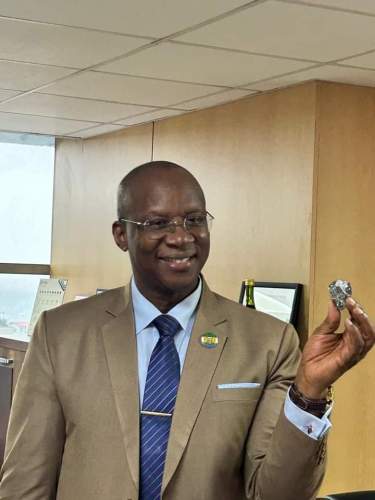
The Minister of Mines and Mineral Resources, Julius Daniel Mattai, has unveiled a remarkable 391-carat diamond recovered by Meya Mining Company in the Kono District. The impressive stone was extracted on August 20, 2024, using the company’s Tomra Coarse XRT sorter at the Meya River Underground Mine in Tankoro Chiefdom, located in the Eastern region of Sierra Leone.

The 391-carat diamond, described as a near-gem piece, was initially part of a larger stone estimated to be over 500 carats. Just a day after the initial discovery, two additional diamonds weighing 105 and 18 carats were recovered from the same area, underscoring the rich potential of the mining site.

The diamonds were unearthed during underground stoping operations at depths ranging from 279 to 295 meters above mean sea level. The discovery took place within the same geological zone where the famous 476-carat “Meya Prosperity” diamond was found in November 2017. That stone, a Type IIa D-color diamond, was sold to GRAFF for a staggering $16.5 million, further enhancing Sierra Leone’s reputation as a significant player in the global diamond market.

Experts note that the newly discovered 391-carat diamond and the 476-carat “Meya Prosperity” stone are located vertically within the same zone, just 100 meters apart, indicating the area’s potential for future high-value finds.

The discovery of this diamond reinforces Sierra Leone’s standing as a major diamond producer and highlights the continued potential of the Kono District for yielding valuable gemstones.

Deputy Foreign Minister Engages Japan’s Tsuji at TICAD 2024 on Strengthening Bilateral Ties

By Amin Kef (Ranger)

State Minister for Foreign Affairs TSUJI Kiyoto of Japan and Hon. Mrs. Francess Piagie Alghali, Deputy Minister of Foreign Affairs and International Cooperation of the Republic of Sierra Leone, on August 23, 2024 held a pivotal meeting in Tokyo. This discussion occurred as Mrs. Alghali visited Japan for the Tokyo International Conference on African Development (TICAD) Ministerial Meeting.

The meeting, which lasted approximately 20 minutes, underscored the deepening of Japan-Sierra Leone relations and focused on several key areas:

  1. Gratitude and Cooperation: State Minister Tsuji opened the dialogue by expressing Japan’s appreciation for Sierra Leone’s steadfast collaboration, particularly as a significant member of the C10 group advocating for Security Council reforms.
  2. Acknowledgment and Future Cooperation: In response, Deputy Minister Alghali praised Japan’s proactive role through TICAD and emphasized Sierra Leone’s commitment to further collaboration on global issues, notably Women, Peace and Security (WPS).
  3. Economic Development: Both parties highlighted the critical role of investment in fostering economic growth. They agreed to enhance their cooperation to bolster economic relations between their countries.
  4. Looking Ahead: The discussions also set the stage for deepening Japan-Sierra Leone relations with a view toward the TICAD 9 conference scheduled for next year.

The C-10 or Committee of Ten, was established at the 4th Special Session of the African Union General Assembly in August 2005. This Committee comprises two Heads of State from each of the five African regions and advocates for an increase in African representation on the UN Security Council, pushing for two permanent seats with veto power and five additional non-permanent seats.

This meeting marks a continued effort by both nations to reinforce their strategic partnership and collaborative endeavors on the international stage.

President Bio Speaks to ‘Africa Renewal’ on Need for UN Security Council Reforms

By Amin Kef (Ranger)

President Dr. Julius Maada Bio is making a strong case for reforming the United Nations Security Council (UNSC), arguing that its current structure fails to adequately represent Africa’s interests. In an exclusive interview with Africa Renewal, President Bio, who is also the coordinator of the African Union Committee of Ten Heads of State and Government on UN Security Council Reform (C-10), emphasized the need for significant changes in the Council’s composition.

Currently, Sierra Leone holds a non-permanent seat on the UNSC and is presiding over the Council this month. In his address on August 12, President Bio criticized the UNSC’s outdated structure, which he believes does not reflect Africa’s growing significance and contributions on the global stage.

“The current structure of the Security Council reflects an outdated world order that fails to recognize Africa’s growing importance and contributions,” President Bio stated. He highlighted that Africa, with its 1.3 billion people and 54 member states out of 193 UN members, plays a crucial role in global affairs. “We cannot be merely a battleground for proxy wars. We have our own solutions to our problems and should have a voice in how they are addressed,” he asserted.

The President’s call for reform includes demands for at least two permanent seats for Africa and two additional non-permanent seats, increasing the total number of non-permanent seats to five. Additionally, Africa seeks the abolition of the veto power or, if retained, its extension to all new permanent members.

President Bio acknowledged the challenges posed by the permanent members of the Security Council, known as the P-5 (the United States, the United Kingdom, France, Russia, and China), who hold significant power in the Council. However, he expressed optimism that there is a growing recognition of Africa’s plight among these powers.

UN Secretary-General António Guterres supports the push for UNSC reform, stating, “We cannot accept that the world’s preeminent peace and security body lacks a permanent voice for a continent of well over a billion people.” Guterres emphasized the need for the Council to reflect the calls for reform from various UN member states and geographic groups.

Reflecting on Sierra Leone’s own history, President Bio drew lessons from the country’s civil war, which he believes underscores the importance of dialogue and consensus in conflict resolution. “After all the fighting, we resolved our problems at the negotiating table,” he noted. He envisions Africa playing a significant role in global peace and security through multilateralism and partnership.

In addition to his advocacy for UNSC reform, President Bio has prioritized gender equality in Sierra Leone. The country recently passed a law mandating that at least 30 percent of positions in both the private and public sectors be held by women. Sierra Leone has also enacted legislation banning child marriage.

On climate change, President Bio highlighted Sierra Leone’s vulnerability to severe weather patterns and outlined the country’s efforts in reforestation, drainage improvement, and public education on environmental issues. “Combating climate change requires collective action, both locally and globally,” he stated.

President Bio also addressed the issue of capital flight from Africa, urging Africans to leverage knowledge and skills gained abroad to contribute to their home countries’ development. “Home is home. Nobody’s going to fix that home. We [Africans] have to fix that home,” he declared.

As the UN approaches its 80th anniversary in 2025, President Bio’s advocacy for UNSC reform underscores a broader movement within Africa to ensure fair and equitable representation on the global stage.

NP (SL) Continues to Excel as Sierra Leone’s Leading Petroleum Company

By Amin Kef (Ranger)

NP (SL) Limited remains committed to providing its customers with high-quality petroleum products and exceptional service, maintaining its position as Sierra Leone’s foremost petroleum marketing company. Known for its consistency and dedication, the company continues to take proactive steps to ensure a steady supply of fuel across the country. Through timely arrangements and strategic partnerships, NP(SL) Ltd has effectively avoided shortages and disruptions in its supply chain, ensuring that its customers always have access to the products they need.

The petroleum importing and marketing company has built its reputation on the foundation of delivering premium products that customers trust. Whether it is petrol, diesel or lubricants, the company’s offerings are designed for optimal engine performance. NP (SL) Ltd’s lubricants are recognized as some of the best on the market and are available in retail outlets nationwide. The company’s meticulous attention to quality has made it a household name for both individual and commercial users.

A significant factor contributing to NP (SL) Ltd’s success is its unwavering focus on customer care. The company has proudly earned the accolade “1st For Customer Care,” a reflection of the value it places on its customers. NP (SL) Ltd continuously seeks feedback from its clients, using their suggestions to shape policies that enhance service delivery. This approach has proven to be a win-win, fostering a loyal customer base while driving growth for the company.

At NP (SL) Ltd’s Filling Stations, customers are served by modern calibrated pumping machines that display both the quantity of fuel and the corresponding price. This transparency has reinforced customer trust, as they are assured they are receiving exactly what they pay for.

The company’s reliability extends to flexible payment arrangements for Ministries, Departments, Agencies (MDAs), recognizing that budgetary allocations are sometimes delayed. By accommodating these entities, NP (SL) Ltd helps ensure that critical public services remain uninterrupted.

From its inception, NP (SL) Ltd has been committed to implementing Sierra Leone’s Local Content Policy. The company prioritizes hiring Sierra Leoneans with the requisite skills, thereby creating jobs and empowering the local workforce. By keeping money in the pockets of Sierra Leoneans, NP (SL) Ltd contributes to poverty alleviation and economic empowerment.

NP (SL) Ltd continues to lead the market with innovative products that meet the evolving needs of its customers. Among its offerings is NP Gas, a safe and portable cooking device available in various cylinder sizes. Designed for efficiency and user-friendliness, NP Gas has become a popular choice for households and businesses alike.

In line with modern technological trends, NP (SL) Ltd introduced the NP Smart Card, a secure and convenient payment method for purchasing fuel. This card allows customers to buy fuel at any time, even when banks are closed. It is quick, easy to use and ensures secure transactions.

One of NP(SL) Ltd’s latest innovations is the NP Energy Pass Card, part of the company’s “FUBU” (For Us, By Us) initiative. This smart card supports both online and offline transactions, offers instant SMS notifications, and includes advanced security features such as One-Time Passwords (OTPs). The NP Energy Pass Card is a step toward a cashless economy, enabling customers to fuel their vehicles independently while receiving real-time updates on their transactions. The card also benefits station owners by facilitating direct bank credits, streamlining operations and enhancing financial management.

NP (SL) Ltd’s growth has not been limited to Sierra Leone. The company has successfully expanded its operations into neighboring countries, including Guinea, Liberia, Ivory Coast and The Gambia. These branches have thrived, contributing to job creation and economic stability in their respective regions. The company’s presence in those countries reflects its capability and ambition to compete on a regional scale, making it a source of pride for Sierra Leone.

As a responsible corporate citizen, NP (SL) Ltd is also committed to supporting national development initiatives. The company is also, one of the country’s largest taxpayers, playing a vital role in funding Government projects and contributing to public welfare. Its compliance with tax obligations exemplifies its commitment to contributing positively to the nation’s growth

NP (SL) Ltd’s continued success is a testament to its dedication to quality, customer satisfaction and innovation. As the company expands its operations and enhances its service offerings, it remains a leader in the petroleum industry, both in Sierra Leone and beyond. With a focus on transparency, customer care and community empowerment, it is set to remain a cornerstone of the country’s economy and a trusted partner for its customers.