The National Civil Registration Authority (NCRA) continues to emphasize the importance of citizens and non-citizens in Sierra Leone to obtain their Biometric ID Cards, a process that is currently ongoing at designated registration and collection centers across the country. The Biometric ID Card, which contains a unique National Identification Number (NIN), plays a crucial role in securing identities, enhancing access to public and private services and preventing identity fraud.
The Biometric ID Card is not just another form of identification. It represents a significant advancement in ensuring that every registered individual has a unique identity. The NIN embedded in the card is exclusively assigned to the cardholder, ensuring that no two individuals share the same number. This unique identification system is critical in preventing identity theft and fraud, which have become increasingly prevalent in today’s digital world.
In addition to identity security, the Biometric ID Card is now a requirement for accessing a wide range of services in Sierra Leone. Through a Cabinet decision, it has been mandated that both citizens and non-citizens must present their ID cards when seeking certain public and private services. This includes banking transactions, where the ID card provides an additional layer of security, reducing the risk of fraud and identity misrepresentation. Law enforcement agencies also require verification of the Biometric ID Card at various checkpoints across the country, ensuring that individuals can be accurately identified when necessary.
Furthermore, the Biometric ID Card is essential for eligibility to sit for various public exams. Students intending to take national examinations, such as the West African Senior School Certificate Examination (WASSCE), must now present their ID cards to be allowed to participate. This requirement not only helps in verifying candidates but also strengthens the integrity of the examination process by reducing the chances of impersonation.
Despite the critical importance of the Biometric ID Card, the NCRA has recently revealed that many individuals have yet to collect their ID cards, even after being notified via SMS when the cards were ready for collection. A significant number of these uncollected cards are currently sitting in district offices and collection centers across Sierra Leone. This situation has been attributed to several factors, including applicants providing incorrect or non-functional phone numbers during registration.
In some cases, applicants used the phone numbers of relatives or friends instead of their own, making it difficult for the NCRA to directly reach them with collection notifications. Additionally, outdated or non-operational phone numbers provided during registration have further complicated the notification process. As a result, many applicants remain unaware that their cards are ready for pickup.
The NCRA has therefore issued a call to all applicants who registered on or before July 31, 2024, urging them to visit the registration or collection point where they initially applied, even if they have not received an SMS notification. To facilitate smooth collection, applicants are advised to bring their ID card application slips, which will allow NCRA personnel to quickly locate their cards.
In a related development, the NCRA has also launched a broader initiative aimed at enhancing identity security by linking the National Identification Number (NIN) to mobile phone SIM cards. This initiative is part of the Government’s commitment to protecting citizens’ identities and ensuring that mobile phone services are not exploited for criminal activities.
The NCRA has announced that between September 1 and November 30, 2024, all mobile phone users must link their NIN to their SIM cards. Failure to do so could result in service disruptions, preventing individuals from making or receiving calls, sending SMS messages or conducting mobile money transactions. The move is designed to ensure that every active SIM card in Sierra Leone is linked to a verified identity, thereby enhancing security across the country’s communication network.
To streamline the collection process, the NCRA has established several registration and collection centers, including:
NCRA Headquarters: 2 Walpole Street, Freetown
NCRA Office: 23B Off Kingharman Road, Freetown
NCRA Office: Kennedy Street, Freetown
NCRA Branch Office: 230 Lumley Road, Freetown (By the Roundabout)
NCRA Office: Waterloo, along the Freetown Highway (Opposite the Police Station)
Regional NCRA Offices in Bo, Kenema, Makeni, and Port Loko
For more information or assistance, the NCRA can be contacted through the following channels:
The NCRA also facilitates corporate issuance of Biometric ID Cards for both public and private institutions.
It must be noted that the Biometric ID Card stands out as a key tool for identity management and access to essential services. From banking security to eligibility for exams, the ID card serves multiple critical functions that impact the lives of citizens and non-citizens alike.
The ongoing collection process, coupled with the NIN-SIM card linkage initiative, highlights the Government’s broader strategy of enhancing national security, protecting identities, and improving service delivery. For these reasons, it is imperative that every eligible individual takes the necessary steps to obtain their Biometric ID Card. The NCRA remains committed to facilitating this process and ensuring that no one is left behind as the country moves towards a more secure and efficient identification system.
The rising cost of rice, a staple food in Sierra Leone, has placed a significant strain on households across the country. Over recent months, the prices of various types and brands of rice have skyrocketed, making it increasingly difficult for many families to afford this essential commodity. This worrying trend has been largely attributed to the re-imposition of the 5% import duty on rice, as stipulated under the 2024 Finance Act, alongside other associated charges that have forced importers to increase prices.
In communities across Sierra Leone, the rising price of rice has become a critical issue. For many families, the increasing costs have forced them to cut back on their daily consumption, leading to food insecurity and heightened financial pressure. Previously, the removal of import duties on rice was seen as a measure to alleviate the financial burden on households. However, the re-introduction of the 5% import duty in 2024 has reversed these gains, pushing rice prices to unprecedented levels.
A bag of rice, which was once affordable for the average Sierra Leonean, is now beyond the reach for many. Reports indicate that prices have surged by as much as 30% since the import duty was reinstated, leaving consumers in a precarious situation. Low-income families are particularly affected, as rice is a primary staple in their diets. With their purchasing power already constrained due to economic challenges, these households are finding it increasingly difficult to sustain themselves.
The 2024 Finance Act’s provisions have also placed significant pressure on rice importers and retailers. As a result of the added costs from the import duty and other charges, importers have been forced to increase the prices at which they sell their goods. Retailers, in turn, pass these costs onto consumers, further exacerbating the problem.
For importers, the objective is to sell their stock quickly and maximize profits. However, with the current economic conditions and high prices, sales have slowed down considerably. Retailers are now facing a situation where large quantities of rice are sitting in their shops unsold, contrary to expectations. The limited purchasing power of consumers has disrupted their business operations, leading to reduced revenue and financial strain.
One importer, who preferred to remain anonymous, expressed frustration: “We are in a tight spot. The high taxes and import duties have left us with no choice but to raise prices. But with these prices, people just can’t afford to buy as much as they used to, so our sales have dropped significantly.”
The decision by the Government, through the Ministry of Finance, to re-impose the 5% import duty on rice was primarily driven by the need to generate revenue and protect local rice production. According to officials, the funds from this tax are intended to support the Government’s flagship “Feed Salone” program, which aims to boost domestic rice production and reduce reliance on imports.
The Government has argued that the import duty is a necessary step towards achieving long-term food security in the country. The rationale is that by imposing taxes on imported rice, local farmers will be incentivized to increase their production, thereby reducing the nation’s dependency on foreign rice. However, the short-term impact has been a sharp increase in prices, which has placed immense pressure on the population.
In an attempt to mitigate the impact of rising prices, the Financial Secretary, Matthew Dingie, assured the public that the Government would develop a pricing formula for essential commodities like rice, cement and iron rods. This formula was supposed to help stabilize prices and protect consumers from exorbitant increases. Unfortunately, despite these promises, the plan has yet to materialize. This delay has led many to question the Government’s commitment to addressing the crisis and protecting the interests of ordinary Sierra Leoneans.
Consumer advocacy groups have been vocal in their criticism, arguing that the failure to implement a pricing formula has left the population vulnerable to unchecked price increases. “The Government’s inaction is worsening the situation. People are struggling to feed their families and yet we’re still waiting for a solution that was promised months ago,” said a representative of one such group.
As the crisis deepens, there is a growing consensus that the Government needs to revisit the 2024 Finance Act and consider removing the 5% import duty on rice. Such a move would likely lead to a reduction in prices, providing much-needed relief to households. Additionally, improving the country’s road networks, especially those that link farms to markets, would help reduce transportation costs, which are a significant contributor to high food prices.
Experts have also called for a renewed focus on revamping the agricultural sector. While the “Feed Salone” program is a step in the right direction, more needs to be done to achieve self-sufficiency in rice production. This includes providing farmers with better access to resources such as seeds, fertilizers and modern farming techniques, as well as offering incentives to boost productivity.
The Ministry of Agriculture must play a more active role in ensuring that local production is able to meet the country’s demands. With sustained efforts, Sierra Leone can achieve food security and reduce its reliance on imported rice, thereby shielding the population from global price fluctuations and economic shocks.
The rising price of rice is a major concern for households in Sierra Leone. The reinstatement of the 5% import duty under the 2024 Finance Act, while intended to generate revenue and protect local production has had the unintended consequence of driving up prices, making life harder for many families. Unless urgent action is taken to address the underlying issues, the situation is likely to worsen, leaving even more people struggling to afford this essential staple. The Government must act swiftly to revisit its policies, fulfill its promises, and put in place measures that will ease the burden on both consumers and businesses.
The Planned Parenthood Association of Sierra Leone (PPASL), along with its volunteers and staff, has expressed strong support for the recent enactment of the Child Marriage Bill which makes child marriage illegal in Sierra Leone. The Association also extended its appreciation to the Government and partner organizations, including Save the Children, for taking this bold step towards protecting the rights and futures of children in the country.
In a Press Statement, PPASL described the new law as a “significant milestone” in safeguarding children and securing their well-being, growth and development. The harmful practice of child marriage, which has devastating consequences for young girls, particularly in terms of their physical and mental health and educational opportunities, has long been a challenge in Sierra Leone.
PPASL emphasized that any legislation aimed at ending child marriage must prioritize the best interests of children and ensure comprehensive protection against abuse, exploitation and harm. The newly enacted bill addresses these concerns by including measures to prevent and tackle the root causes of child marriage.
PPASL is currently implementing a six-year project focused on “Strengthening Adolescent Sexual and Reproductive Health,” aimed at empowering adolescent girls to make informed decisions about their well-being and future. Through various radio and television discussion programs, the Association has raised awareness on issues such as adolescent Sexual and Reproductive Health (SRHR), teenage pregnancy and early child marriage. PPASL’s projects are youth-centered and utilize integrated approaches to address these challenges.
As part of its contributions to national efforts, PPASL provides data on adolescent SRHR, early child marriage and teenage pregnancy reduction to the country’s DHIS2 platform. These contributions have played a role in achieving the milestone of the new legislation.
Additionally, PPASL is an active member of several Technical Working Groups (TWGs) focused on issues related to teenage pregnancy reduction, child marriage and reproductive health advocacy. The Association also serves as the Vice Chair of the People’s Alliance for Reproductive Health Advocacy, a Civil Society Organization with over 60 members advocating for the passage of the Safe Motherhood and Reproductive Health Bill.
PPASL emphasized the importance of a collective national effort to enforce the new law, raise public awareness and provide support to those at risk of child marriage. The Association recognized the commitment of the First Lady of Sierra Leone, Dr. Fatima Maada Bio, in prioritizing children’s rights and welfare and launching a national campaign to create public awareness about ending child marriage.
As a leading organization committed to promoting the rights and well-being of children, PPASL reaffirmed its readiness to work with the Government, civil society and other stakeholders to advocate for legislation that protects the rights of children in Sierra Leone. The Association called on all Sierra Leoneans to prioritize child protection and take immediate action to address the harmful practice of child marriage in the country.
In response to recent inaccuracies reported by Africa Confidential regarding the Institute of Public Administration and Management (IPAM) Bureh Campus project, Femab Properties Limited has issued a detailed rebuttal to set the record straight.
The contract for the Bureh Campus project, signed on August 2, 2018, was the result of extensive discussions between IPAM/USL and Femab Properties Ltd, with the Sierra Leone government as witness. The agreement, approved by Cabinet and Parliament, outlines a $50 million construction project, with Femab financing the majority.
Key conditions for the contract included an upfront payment of $12.5 million from IPAM and a Sovereign Guarantee from the government to cover the remaining $37 million. Despite progress, the project faced delays primarily due to the government’s failure to provide the required Sovereign Guarantee, hindering Femab’s ability to secure necessary funds.
Construction work officially began on January 24, 2019, following a sod-turning ceremony. Initial work included site preparation and mobilization, with Femab investing significantly in preliminary tasks and materials. Reports and site visits have confirmed that substantial preparatory work was completed, despite the slow pace due to financing issues.
Femab’s efforts, including securing international funding and advancing project preparations, underscore its commitment to the project. Recent meetings and reports have outlined plans to resume construction through a phased approach, which will continue to rely heavily on Femab’s financing.
The rebuttal criticizes Africa Confidential for neglecting ongoing high-level discussions and providing a misleading portrayal of the project’s status. Femab emphasizes that the project remains active and that issues causing delays have been addressed, reaffirming its dedication to the successful completion of the Bureh Campus project.
The IPAM Bureh Town Campus project is expected to offer significant benefits, including improved educational facilities, job creation, and economic growth for Sierra Leone.
Read the complete response below.
IPAM Bureh Campus Project And Femab (SL) Limited:
FACTS OF THE MATTER:
A REJOINDER TO AFRICA CONFIDENTIAL ERRONEOUS INSINUATIONS AND DELIBERATE MISINTERPRETATIONS
Our attention has been drawn to the above publication by an online rag that calls itself Afica Confidential on the on-going Institute of Public of Administration and Management residential campus in Bureh Town, Sierra Leone, we would like to put the records straight and disabuse the mind of the public from the deliberate misinterpretations and malicious misconceptions of the publication.
Following series of engagements between IPAM/USL and Femab Properties Ltd, a contract was eventually signed between the two parties witnessed by the government of Sierra Leone on Thursday 2, August 2018 at State House, for the construction of the University’s entire university campus and its ancillary facilities on the terms stated in the contract. The signing came after the proposal was discussed and approved by Cabinet and later ratified by Parliament.
The contract was to be jointly financed by both IPAM/USL and FEMAB with Femab providing the lion share of the Finance.
The Contract stipulates two main conditions precedent:
i. IPAM should make an upfront payment of equivalent to 25% (US$ 12,5 million) of the contract amount of US$50million
ii. The Government of Sierra Leone should provide a Sovereign Guarantee covering the remaining 75% (US$ 37million) of the Contract amount to Femab to enable the company secure a loan of the same amount.
Following the conclusion of all discussion, agreements and preliminary activity necessary in Contracts of this nature, on 24th January 2019, the sod was turned by Ministers from relevant Government Ministries for the commencement of Construction work after all due diligence work had been completed and after all Architectural, Engineering and Electrical Designs have been properly scrutinized and approved. Furthermore, the IPAM Bureh Town Campus Contract was managed through well-defined and financial control mechanisms monitored by the Ministry of Finance.
IPAM/USL through a loan facility obtained from the UNITED Bank for Africa (UBA), and internally generated revenue transferred funds equivalent to US$ 4.5 million (7% of total Project Cost) to Femab. With that, mobilization to site commenced with the topographic survey, a comprehensive soil test, detailed planning, designs and drawings of the Bureh Town Residential Campus.
However, progress has been slow if not stalled mainly due to the inability to meet condition (ii) above – a Sovereign Guarantee to be provided by the Ministry of Finance to enable Femab obtain their part of the funds required to commence full-fledged construction.
In the meantime, the University set up a Special Committee to look into the activities relating to the FEMAB/IPAM Bureh Town Campus Development Project and advise the Vice-Chancellor on where the project was, the progress made so far and Challenges encountered and the way forward. The Committee he reported, had met before and had even conducted a site visit to Bureh Town where they discovered that mobilization had actually started, but work seemed to have stalled.
On another front, the Directorate of Office of the President’s Infrastructure Initiative (OPII)visited the site and subsequently wrote a report recommending that a number of issues be looked into including the Project Contract Amount and changing the financing model from one which required a Sovereign Guarantee to a Build, Operate & Transfer (BOT) model relying on IPAM’s cash flow.
Other reports confirmed that Femab had actually moved to site and commenced work. All materials procured for the construction were visible on site, machinery and equipment for site clearing, excavation of foundations, and molding of blocks (with the huge number of building blocks that had been molded) were observed on the ground, storehouses constructed and stacked with tons of cement, tons of reinforcement, were also on the ground in addition to mountains of sand and granite. Sites that were excavated for the commencement of the substructure for the hostels would still be visible on close inspection even today.
Moreover, FEMAB at great financial cost running into Millions of Dollars (USD), embarked on the following:
(i) Employment and payment of consultants, independent professionals and specialized staff to provide preliminary consultancy and preparatory work for the project.
(iii). Funding delegation visits of International Finance from United Arab Emirates, United Kingdom, and U.S.A. to Sierra Leone for the purpose of physically verifying and appraising and project.
(v) Entering into sub-contracts and mobilization of sub-contractors towards the execution of the project.
(vi) Procurement of and payment for Building and Finishing materials for the project in order to avoid future price fluctuations.
(vii) Deposit on Purchase of heavy-duty equipment required for the execution of various aspects of the project.
You will no doubt agree that based on all the assurances, approvals and document passed on to us in this transaction as well as our unflinching desire to deliver on the project, we for five (5) years deployed huge financial resources, time, corporate goodwill and opportunity cost in meeting our part of the contract and complying with various requests regarding the project including repeated requests for us to commences operations.
As a result of the Ministry of Finance’s inability to provide the Sovereign Guarantee s required, Femab has been visiting regularly to follow up on the restraining factors affecting the progress of the project, suggesting other financing options that also required government commitment to the project. Femab also made a report informing us of how the funds received were spent. A lot of background pre-mobilization work of designs, drawings, procurement of equipment and other materials, insurance and others had to be done before physical work on the ground could commence. This is in addition to all the machinery, equipment and materials mentioned above. Femab even went further to obtain an Advance Payment Guarantee (APG) for the guarantee of the initial payment by IPAM which cost a lot of money, to demonstrate its transparency and forthrightness in the transaction. All the above are efforts requiring spending, in sharp contrast to Africa Confidential’s erroneous insinuation that there was nothing to show for the money paid to Femab.
Africa Confidential has deliberately neglected the fact that this is an ongoing project, which has not been terminated or ended. It has failed to use the evidence provided and submitted to them about ongoing high-level meetings between IPAM, USL & FEMAB in 2022, 2023 & 2024.
IPAM made a request to the Ministry of Works to verify the documents presented by Femab as a measure to ensure transparency and fairness in our due process and there was no indictment whatsoever against Femab.
In Femab’s quest to ensure the continuation of the project, Femab in a letter dated 20th February 2021 addressed to the Financial Secretary, Ministry of Finance, indicated that they have obtained evidence of proof of funds for their counterpart funding of the Project.
The facility could accommodate alternative repayment option (s) of a payment guarantee backed by the Ministry of Finance and an acceptable cash flow projection of IPAM, USL and other comforts as may be required by the Ministry of Finance.
The IPAM Bureh Town Campus Project had taken off with all the Legal and Financial aspects concluded, sod turned on the site and mobilization started. However, the implementation by way of excavation and commencement of construction took off as evidenced by what is visible on site even now. It slowed down mainly because the Sovereign Guarantee requested for by Femab could not be obtained from the Ministry of Finance. No foreign investor will plug its finances in projects where its investment cannot be recouped.
To confirm the assertion that the project is on-going, various high powered deliberations between IPAM officials and Femab have been held from 2023 to now, the recent being in this month of August, where it was concluded that the scope of the project be divided into phases and each phase be handled as turn-key projects that can be started, concluded and operated viably independent of other phases.
We are of the opinion that blogs like Africa Confidential should engage in thorough investigative journalism and reportage. Our side of the story as expressed in the interview between our Corporate Communications representative and AC’s Josef Skrdlik before this publication during which our representative debunked all his misinterpretations was never reflected in his write up, and this smacks of a hatchet man’s job lacking professionalism and tinted with underlying, deliberate attempt to portray Femab and IPAM officials in bad light as this is common practice among brown envelope journalists.
It is clearly obvious that Josef is doing a paid job for those who have been jostling with Femab for the project from the very beginning.
They forgot that the idea of the IPAM Bureh Campus Project was conceptualized by Femab and ALL efforts to make the project see the light of day was bank rolled by Femab, only for some Ministry officials to want to use their position to wrest the project from Femab at the last minute. The fact that Femab eventually consummated the transaction got them infuriated to the point of wanting to sabotage the project at all costs.
Trying to connect Femab with Milost is the worst attempt to forcefully marry us with someone else’s misadventure. Milost was in Nigeria in 2017 to secure investment relationships with reputable companies in the country. We were among the companies it came to. A proper check on Milost by our contacts revealed that Milost style was far from what it portrayed itself to be, and we immediately discussion with it.
However, we are pleased to announce that the issues that delayed the project have been resolved, and the project will resume very soon.
The IPAM Bureh Town Campus project will bring numerous benefits to Sierra Leone, including:
– Enhanced educational facilities for students, providing a conducive learning environment
– Increased access to higher education, reducing the gap in educational opportunities
– Economic growth and job creation, stimulating local economic development
– Improved infrastructure development, contributing to the country’s growth
– Enhanced reputation for the University of Sierra Leone, attracting international students and scholars.
Femab still demonstrates its commitment to the success of the IPAM Bureh Town Campus in this phased strategy as the bulk of the Finance of the project is still being borne by Femab.
The Solicitors of the Estate of Alhaji Abu Bakarr Lee have issued a stern warning to the public regarding fraudulent claims related to the ownership of a property located off Leicester Peak Road, Hill Station. These Solicitors have identified Yakuba Kamara, Frank Kamara and Abdul Mansaray as individuals fraudulently claiming ownership of the property using a counterfeit conveyance document dated April 28, 2013.
They have asserted that the disputed property, which spans approximately 1.8369 acres and is detailed in Survey Plan LS 2443/15 dated December 14, 2015, is legally registered under Deed of Conveyance No. 2467/2015 in Volume 760 at Page 145 of the official conveyance records. It must be noted by all that Haja Zainab Jalloh, the widow and Administratrix of Alhaji Lee’s estate is currently managing the aforementioned property.
Furthermore, it has been asserted that the Registrar-General of Sierra Leone has confirmed that the document presented by Yakuba Kamara and his Associates is not officially registered and contains discrepancies when compared to legitimate records. In addition, the genuine entry involves a Vesting Deed for Leslie Beserve not the names of Yakuba Kamara and his Associates.
In response to these fraudulent activities, the High Court of Sierra Leone, presided over by Honorable Mr. Justice A. R. Mansaray J., has issued an interim injunction against the aforementioned individuals.
That legal order prohibits Yakuba Kamara and his Associates. from entering, selling or otherwise dealing with the property until September 5, 2024. The court has also stayed the execution of a default judgment obtained by these individuals without proper legal procedures.
It must be emphasized that the public is advised to avoid any transactions or agreements with Yakuba Kamara, Frank Kamara and Abdul Mansaray concerning the said property. The Solicitors have emphasized that the property is not for sale also underscoring that any dealings with these individuals will be at person’s own risk.
For additional information or assistance, please contact the Solicitors of the Estate of Alhaji Abu Bakarr Lee at the address listed below:
Popular Kono based diamond dealer, Jihad Basma and his Co-accused remain in custody due to stringent bail conditions imposed by Magistrate Santigie Bangura at Court No.2 on Monday after their third appearance. Each accused was instructed to provide two sureties, each with a property valued at US$42 million and a bank account holding NLe1 billion—conditions deemed impractical given the local context.
In view of the stiff bail conditions many have questioned where in Sierra Leone can anyone find a property valued at US$42Million and that sort of money in an individual’s personal bank account some expressing the view that the bail conditions should be reviewed to make common sense. They demand justice for Jihad Basma and the two others.
It must be pointed out that in a high-profile case unfolding in Freetown, Jihad Basma, a prominent diamond dealer from Kono, along with two co-accused, are facing multiple charges, including fraudulent conversion of a diamond.
The case revolves around allegations that Jihad Basma purchased a 20.28-carat diamond from Sheku Kabba, Sahr Lebbie and Tamba Lebbie in Koidu town, Kono district, in May 2024. The diamond, reportedly stolen, is claimed by British miner ,Benjamin Meer, to be part of a larger 264-carat stone that was taken from him.
Police investigations revealed that Jihad Basma bought the diamond at a price consistent with its market value. Also, Jihad Basma asserts he was unaware of the diamond’s stolen status and voluntarily surrendered it to the authorities. His diamond transaction records were verified by the National Minerals Agency, showing transparency and accuracy.
Despite this, Benjamin Meer and his associates have accused Jihad Basma of purchasing the stolen diamond, citing a leaked audio conversation between Jihad Basma and Sheku Kabba. In the recording, Sheku Kabba refers to a “small thing,” which Jihad Basma identifies as a 2.64-carat stone. This conversation has sparked confusion and controversy, as the diamond in question was reportedly of poor quality and sold for NLe25,000.
The core issue of the dispute involves the valuation of the alleged 264-carat diamond. Questions have arisen regarding how Benjamin Meer’s team determined its worth at US$42.5 million. Accurate diamond valuation requires an expert assessment of various factors including color, clarity and fluorescence, in addition to weight. The absence of evidence supporting the existence of the 264-carat diamond raises doubts about the credibility of the claims.
In 2017, Jihad Basma was recognized for his role in handing over a 709-carat diamond to the State, which was subsequently sold for US$6.4 million. This diamond was of high quality, contrasting sharply with the current allegations involving a purportedly inferior stone.
As the case progresses, the court will rely on evidence and witness testimonies to determine the outcome. The principle of presumption of innocence until proven guilty remains central to the judicial process.
Caritas Freetown, in collaboration with Dental Coop, a medical and dental organization from Spain, embarked on a vital mission to deliver essential dental care to residents of Susan’s Bay and Culvert communities. This initiative not only addresses immediate dental needs but also empowers residents with knowledge about oral hygiene and preventive care.
The campaign, which began on the 15th of August 2024 and concluded on the 21st of August, featured four dental surgeons from Spain, including two men and two women. Held at the Susan’s Bay Community Centre, the initiative benefited over 400 patients, including men, women and children. Notably, over 200 patients underwent multiple tooth extractions.
Ishmael Alfred Charles, the Acting Executive Director of Caritas Freetown, discussed the significance of the dental care initiative in Sierra Leone, stressing the importance of dental health education. He highlighted the community’s general neglect of dental care and the necessity for educational campaigns to improve hygiene practices such as proper brushing techniques. He explained that the initiative primarily involved tooth extractions due to the prevalent occurrence of toothaches and the lack of resources for more complex procedures like fillings.
The Acting Executive Director emphasized that while extractions provide immediate relief, the long-term goal is to impart dental care knowledge to the community members. He said by educating people on maintaining dental hygiene, the initiative aims to create a lasting impact that will benefit future generations. Ishmael Alfred Charles stressed that this educational aspect is particularly significant as it empowers individuals to protect their own and their families’ dental health.
Speaking with one of the dental surgeons from Spain, Cristian Gracia, he underscored the altruistic nature of their Association, highlighting their commitment to providing services without expecting anything in return. Gracia expressed pride in this approach, emphasizing the value of selfless giving, particularly in underserved communities like Susan’s Bay.
Gracia also reflected on the challenges they face as dental professionals, noting that their work often takes place under difficult conditions. Despite these challenges, their dedication to their profession remains strong. He acknowledged that the working environment at Susan’s Bay is far from ideal but stressed the importance of maintaining high professional standards.
Cristian Gracia noted that many people, especially children, suffer from inadequate nutrition due to poor dietary habits, including the frequent consumption of chewing gum and soft drinks, which contribute to dental problems. He advised people to consume more vitamin-rich foods and to eliminate habits that will lead to dental issues.
One of the beneficiaries, Fatmata Kanu shared her experience, mentioning that just two weeks ago, she had to pay a significant sum of NLe 550 to have a tooth removed at a hospital, which is a considerable burden for someone of her financial means. She expressed her gratitude to Caritas and Dental Coop for providing the opportunity to have her teeth removed for free. She appreciated not only the dental care but also the advice provided by the professionals to prevent future problems.
With NLe 250 being the average minimum cost for a single tooth extraction in Freetown, Caritas Freetown and Dental Coop from Spain have made a significant contribution by offering these services for free, a gesture that has been highly appreciated by the communities that benefited from this initiative.
A farewell reception was held at the Bintumani Hotel in Freetown, on August 22, 2024, to honor 189 Sierra Leonean students who have been awarded scholarships by the Chinese Government to pursue academic programs in China. This event marked a significant milestone in their educational journey, symbolizing the deepening ties between Sierra Leone and The People’s Republic of China.
The ceremony was attended by high-profile dignitaries, including the Chinese Ambassador to Sierra Leone, Wang Qing, the Minister of Technical and Higher Education, Madam Ramatulai Wurie and other Government representatives.
In his address, Ambassador Wang Qing highlighted the event as a reflection of the strengthened political cooperation between China and Sierra Leone, emphasizing the revitalized comprehensive strategic partnership. He noted the upcoming Forecast Summit in early September, which is expected to further reinforce the longstanding friendship between China and Africa, fostering deeper unity and collaboration.
Ambassador Wang Qing spoke about the Chinese Government’s commitment to deepening reforms and promoting high-quality development. He encouraged the students to seize the opportunities presented by their studies in China, urging them to integrate into Chinese society and contribute to the growing relationship between the two nations.
“Your selection for this scholarship is a testament to your excellence and potential,” the Ambassador told the students. He advised them to focus on their studies, reminding them that they represent not only themselves but also their country. While praising the majority of past Sierra Leonean students for their commendable conduct, he cautioned the new batch to maintain discipline and avoid activities that could tarnish their country’s image.
Minister of Technical and Higher Education, Madam Ramatulai Wurie, lauded the Chinese Government’s unwavering commitment to Sierra Leone’s educational development. She highlighted that over 1,300 Sierra Leonean students have benefited from various Chinese scholarship programs, with more than 5,000 individuals receiving training in short-term courses.
The Minister also underscored the significance of the recent training of 25 University administrators and education officials, which has enhanced the capacity of higher education institutions in Sierra Leone. Additionally, she noted the Chinese Ambassador’s Scholarship, which has provided critical financial support to students, furthering their academic pursuits.
Looking ahead, Minister Ramatulai Wurie emphasized the importance of the upcoming Forum on China-Africa Cooperation as a platform for exploring new avenues of collaboration, particularly in education and human capital development. She also mentioned the recent state visit to China in February 2024, during which a Memorandum of Understanding was signed between a Chinese University and the University of Sierra Leone. This MOU, she said, aims to foster academic collaboration, research exchange and joint initiatives that will benefit the educational landscapes of both countries.
Addressing the scholarship recipients, the Minister reminded them of their role as ambassadors of Sierra Leone. She urged them to embrace the opportunities ahead with dedication and to return home equipped with the knowledge and skills necessary to contribute positively to Sierra Leone’s development.
As the students prepare to embark on their academic journey in China, the farewell event served as both a celebration of their achievements and a reminder of the responsibilities they carry as representatives of their nation.
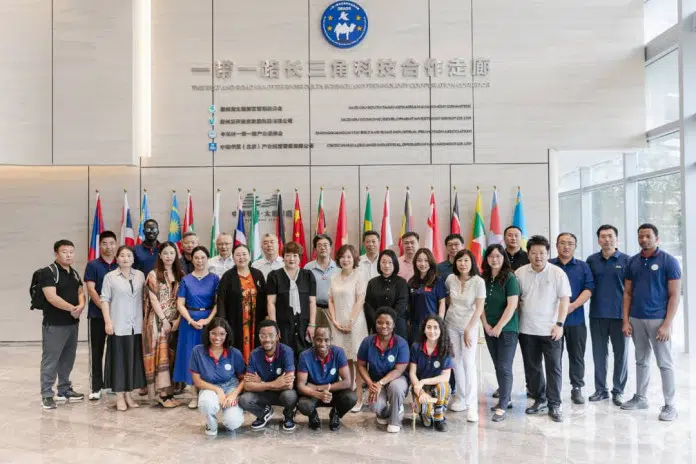
As Sierra Leone navigates its path toward economic growth and development, forging strategic international partnerships has never been more crucial. Among these partnerships, the Zhongguancun Belt and Road Industrial Promotion Association (ZBRA) emerges as a pivotal connector between African nations and China’s industrial sector. This article explores how ZBRA is facilitating investments and outlines its potential impact on Sierra Leone’s development.
The Zhongguancun Belt and Road Industrial Promotion Association (ZBRA) is an independent social organization based in Zhongguancun, China’s innovation hub often called “China’s Silicon Valley.” Founded with the aim of promoting international cooperation under the Belt and Road Initiative (BRI), ZBRA links scientific research, technology and innovative enterprises across Asia, Europe and Africa.
With its headquarters in Beijing and liaison offices in North Africa, ASEAN countries and North America, ZBRA serves as a cultural and economic bridge. It plays a key role in the BRI, which focuses on enhancing infrastructure and investment across the globe.
Sierra Leone, rich in natural resources and with a young, dynamic population, stands at a crossroads of potential transformation. Key sectors such as infrastructure, agriculture, mining, energy and technology require substantial investment to reach their full potential. ZBRA’s role is crucial in bridging the investment gap, bringing Chinese capital, technology and expertise to these sectors.
Initiated by President Xi Jinping in 2013, the Belt and Road Initiative (BRI) aims to foster economic cooperation and create a global community of shared interests and responsibilities. For Sierra Leone, the BRI represents a unique opportunity to fast-track economic development. Through ZBRA, Sierra Leone can leverage Chinese expertise in building critical infrastructure, such as roads, ports and power plants.
ZBRA is instrumental in facilitating investments between Chinese and international markets through several key functions:
– Identifying Investment Opportunities: ZBRA collaborates with African governments and businesses to pinpoint viable investment projects that align with Chinese companies’ goals.
– Providing Market Intelligence: ZBRA offers detailed analysis and insights into the economic and regulatory environments in Sierra Leone, helping Chinese investors navigate potential risks.
– Facilitating Business Matchmaking: The association organizes forums and trade missions, providing a platform for direct engagement between African and Chinese stakeholders.
– Supporting Project Implementation: ZBRA assists with regulatory approvals, project management, and conflict resolution, ensuring successful and sustainable partnerships.
ZBRA’s efforts include several notable programs:
– Cirrus Program: Links Chinese enterprises with international students through internships, vocational training, and entrepreneurship programs, integrating Chinese technology and products into Belt and Road countries.
– Investment Forums and Expos: These events connect African and Chinese business leaders, showcasing investment opportunities and fostering deeper market understanding.
– Research and Development Collaboration: ZBRA promotes joint R&D projects to address specific challenges in African markets, enhancing competitiveness in sectors such as agriculture and energy.
– Capacity Building and Training: Offers programs to equip African professionals with essential skills, ensuring that investments lead to sustainable development.
ZBRA’s impact is evident in several success stories across Africa. In Ethiopia, Chinese investments have helped establish a manufacturing hub, while Kenya’s infrastructure, including the Standard Gauge Railway, has seen significant development. For Sierra Leone, these examples highlight the transformative potential of ZBRA’s partnerships.
Investors engaging with ZBRA can expect:
– Access to Capital and Expertise: Chinese companies offer financial resources and technical know-how for large-scale projects.
– Government Support: Both the Chinese and Sierra Leonean governments back BRI projects, reducing investment risks.
– Market Expansion: Local businesses gain access to Chinese supply chains and markets, driving growth.
– Sustainable Development: ZBRA’s commitment to sustainability ensures projects are environmentally and socially responsible.
Sierra Leone’s path to economic growth hinges on strategic partnerships. The opportunities presented by ZBRA and the Belt and Road Initiative are substantial. By engaging with ZBRA, Sierra Leone can attract vital investment, drive development, and improve living standards.
Investors are invited to explore Sierra Leone’s potential through ZBRA, where opportunities abound in infrastructure, agriculture, mining, and technology. Together, Sierra Leone and its Chinese partners can build a prosperous future.
For more information and to explore partnership opportunities, visit [www.zbra.org.cn](http://www.zbra.org.cn).
During a well-attended ceremony held on Tuesday 20th August, 2024 at the Committee Room, University House, Fourah Bay College Campus in Freetown, Prof. Aiah Lebbie, Vice Chancellor of the University of Sierra Leone, launched the African Genius Awards 2024. The official launching of the awards marked the beginning of preparations for the prestigious awards, which will be hosted by Fourah Bay College on September 7, 2024 for the first time outside South Africa.
The prestigious awards, which was first established in 2021 by “Priority Performance Projects” in collaboration with the University of Pretoria, aim to celebrate and recognize outstanding achievements in Science, Education, Technology, Politics, Social Work, Media, Arts and Culture across the African continent.
Prof. Lebbie highlighted the rich history of Fourah Bay College, referring to the institution’s legacy as one that dates back nearly 200 years. He expressed pride in FBC’s global influence, noting that its alumni have made significant contributions in various sectors worldwide.
“The African Genius Awards, taking place here at FBC for the first time outside South Africa, is a unique opportunity to showcase the best of Fourah Bay College and the University of Sierra Leone to the world,” Prof. Lebbie remarked. He encouraged the young people present to rise to the occasion and see themselves as potential future nominees for the awards, stressing that Sierra Leone has no shortage of talented individuals.
Prof. Lebbie also applauded the efforts of the AGA Planning Committee and the leadership of FBC for their rigorous preparations. He expressed confidence that the upcoming event on September 7, 2024, would be a showcase of the best the University has to offer and a celebration of African excellence.
The Vice Chancellor formally launched the African Genius Awards ceremony, marking a historic moment for Fourah Bay College as it prepares to host the event for the first time outside South Africa. He concluded by expressing pride in the institution’s achievements and reaffirming the commitment of USL to making the 2024 African Genius Awards a global success.
Prof. Kelleh Mansaray, Deputy Vice Chancellor, Fourah Bay College, emphasized the importance of recognizing exceptional Africans who have contributed to the continent’s self-determination, dignity and exceptionalism.
“This is a special event not only for FBC and the University of Sierra Leone but for the entire country,” Prof. Mansaray said, highlighting the significance of Sierra Leone hosting the African Genius Awards for the first time.
He announced that a Planning Committee had been established at FBC to ensure the event aligns with its goals and messaging. Additionally, Student Ambassadors have been appointed to help promote the event through social media, email campaigns and on-campus activities.
“It’s high time we start to recognize exceptional Africans who have contributed towards the realization of African self-determination, dignity and exceptionalism,” Prof. Mansaray reiterated during his address.
Since its inception, eight Africans have been honored with the African Genius Awards, including Wole Soyinka, Chinua Achebe (posthumously), Aliko Dangote and Stephen Biko (posthumously). The 2024 edition of the awards will be the first to be hosted outside South Africa, with FBC taking the lead.
In anticipation of the event, the African Genius Awards Committee in South Africa has released the official list of nominees for 2024. The list includes 47 exceptional Africans, with two Sierra Leoneans among them: Ibrahim Parizco Dainkeh, a self-taught innovator, inventor and engineer who built the world’s first peace robot using scrap materials and Dr. Yakama Manty Jones, an economist, researcher, entrepreneur, consultant and philanthropist.
He also hinted that many more Sierra Leoneans who have made significant contributions to society will be considered for the 2025 awards.
Updating the gathering on preparations for the upcoming AGA ceremony, Dr. Solomon Tucker, Chair of the African Genius Awards (AGA) Planning Committee at Fourah Bay College (FBC), highlighted the significance of the awards, likening them to the Nobel Awards, but with a unique focus on recognizing exceptional Africans who have made significant contributions across various fields.
He expressed gratitude to the leadership of Fourah Bay College and the University of Sierra Leone, acknowledging the robust support from the Vice Chancellor, Deputy Vice Chancellor and Deputy Registrar. Additionally, Dr. Tucker thanked the African Genius Awards team in South Africa for their financial backing and local efforts in publicity.
As preparations continue, Dr. Tucker confirmed that all aspects of the event, including media coverage, guest lists and speakers, are on track. He expressed excitement about the upcoming ceremony and assured the public that updates will be provided through various media channels leading up to the prestigious event.
Abu Bakarr Jalloh, Public Relations and Country Representative for the African Genius Awards (AGA) in Sierra Leone, shared insights into the journey that led to Sierra Leone being selected as the first country outside South Africa to host the prestigious awards.
Reflecting on the pivotal moment, he revealed that while on a ferry to Lungi, he received a call from the founder of the African Genius Awards, asking about potential locations to host the event outside South Africa. Abu Bakarr Jalloh quickly suggested Sierra Leone, highlighting the country’s welcoming nature and peaceful environment. Despite initial consideration of Uganda, he pushed for Sierra Leone, emphasizing the country’s resilience and ability to host such a significant event.
Expressing gratitude for the overwhelming support from FBC and the University’s leadership, Abu Bakarr Jalloh highlighted the efforts of the AGA Planning Committee, particularly recognizing Professor Kelleh Mansaray, among others for their collaboration and dedication.
He concluded by reaffirming his commitment to promoting Sierra Leone through positive stories and expressed his excitement about the upcoming African Genius Awards on September 7, 2024. Abu Bakarr Jalloh encourages everyone to be proud of Sierra Leone’s role in hosting such a prestigious international event.
As the countdown to September 7 begins, the college and the nation at large are gearing up to celebrate African excellence on a global stage, with Fourah Bay College at the forefront.