
Home Blog Page 33

WoME & WANrg Commemorate African Women Climate Justice Day

By Alvin Lansana Kargbo

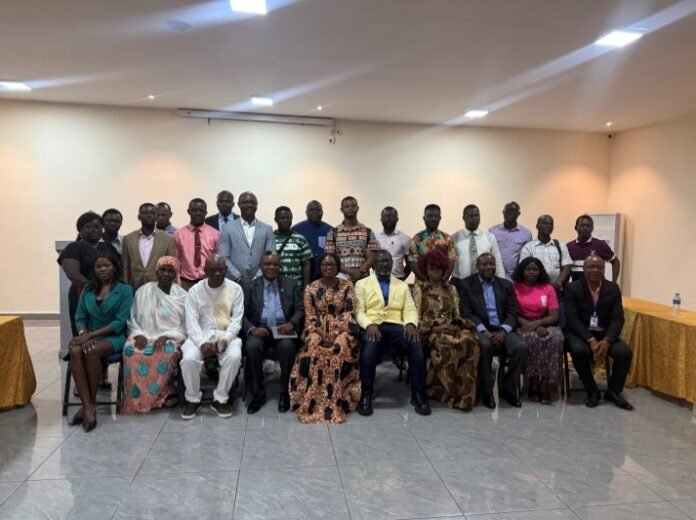
Women on Mining Extractives (WoME) and the Women Alliance for Natural Resource Governance (WANrg) on Tuesday, 15 April 2026, commemorated African Women Climate Justice Day in Freetown with a renewed and forceful call for reparations, inclusive policymaking and stronger accountability in climate governance, as activists, development partners and civil society leaders warned that African women continue to bear the heaviest burden of climate change despite playing a leading role in advancing solutions.

The event, held at the Human Rights Defenders Network headquarters in Brookfields under the theme: “Our Lands, Our Voices: African Women United for Reparations and Climate Justice,” brought together women leaders, grassroots organizers, legal experts, governance advisers and rights advocates who highlighted the disproportionate impact of climate change, environmental degradation and extractive economic models on women across Sierra Leone and the African continent.

In a Press Release issued during the commemoration, the organisations said the event comes at a critical time marked by escalating climate crises, resource-driven conflicts and widening social inequalities. They noted that African women, while among the most affected by environmental destruction, remain at the forefront of resistance, innovation and community resilience.

According to the release, the day serves not merely as an awareness platform but as a rallying point for restorative justice, including demands for the payment of climate debts by industrialized nations responsible for the bulk of global emissions, alongside concrete measures to repair environmental and social damage in communities most affected by extractive activities and climate shocks.

The organisations further explained that African Women Climate Justice Day forms part of a broader continental movement driven by the Women’s Climate Assembly, a platform that unites activists and community leaders across Central and West Africa. Since its establishment, the Assembly has created space for analyzing intersecting crises and developing collective strategies centred on climate justice, food sovereignty and resistance to extractive economic systems that continue to deepen inequality and environmental harm.

Speaking at the event, President of the Women Alliance for Natural Resource Governance, Esther Kandeh, said the initiative emerged from a regional movement established in Senegal and later strengthened through engagements in Liberia. Esther Kandeh explained that April 15 was intentionally designated as a unified day for African women to confront climate policy gaps, implementation failures and weak community-level awareness. She said the platform seeks to bring together women from all walks of life, including farmers, teachers, market women, professionals and community leaders, to ensure broad and inclusive participation in climate discourse. Esther Kandeh further disclosed that future commemorations are expected to expand significantly, with stronger coordination across districts and countries aimed at producing more policy-driven outcomes.

Also addressing the gathering, Mariama Dumbuya, Legal Adviser at the 50/50 Group, underscored the need for action beyond advocacy and symbolic engagement. Mariama Dumbuya urged women to deliberately position themselves in decision-making spaces, particularly within the mining, land governance and environmental sectors, stressing that meaningful and lasting change depends on active participation at both policy and institutional levels. She highlighted Sierra Leone’s legal framework supporting environmental governance, including the Environmental Protection Agency Act, the Meteorological Agency Act and the National Climate Change Policy, noting that a sound understanding of those instruments is critical for effective civic engagement and accountability.

Josephus Ellie, Senior Governance Adviser at Irish Aid, said support for women and girls remains central to Irish Aid’s development efforts, particularly in strengthening climate resilience and natural resource governance. Josephus Ellie noted that Irish Aid continues to work with local authorities and civil society actors to ensure women influence land use decisions, environmental oversight and community planning processes. He added that Ireland is also advocating at the global level for increased climate finance directed at women-led initiatives and more equitable access to technology, adaptation tools and resources for countries disproportionately affected by climate change.

Rachel Walter, Human Rights Officer at the Human Rights Defenders Network, described climate change as a fundamental human rights issue, stressing that women face heightened vulnerabilities, including displacement, food insecurity and increased exposure to gender-based violence. Rachel Walter called for stronger protection mechanisms and the full integration of human rights principles into national and regional climate responses, warning that climate governance without a rights-based lens risks leaving the most vulnerable further behind.

Adding her voice to the discussion, Jaiah Kaikai, Campaign Coordinator for Amnesty International Sierra Leone, said the climate crisis is already having severe consequences for women in mining communities across Sierra Leone. Jaiah Kaikai cited pollution, loss of livelihoods, unsafe water sources and growing social risks as major realities confronting women in extractive zones. She outlined urgent demands for the mandatory inclusion of women in policymaking, stronger corporate accountability in extractive industries and guaranteed land rights for women in affected communities. Jaiah Kaikai also called for the establishment of a global loss and damage financing mechanism, proposing substantial annual funding to support vulnerable communities, particularly women-led initiatives at the grassroots level.

Speakers at the event unanimously agreed that the recognition of April 15 as African Women Climate Justice Day represents a collective stand against systems that continue to prioritize profit over people and the environment. They stressed the urgent need for sustained mobilization, policy reform and international cooperation to achieve climate justice, reparative action and equitable development.

The commemoration ended with a unified call for sustained advocacy, stronger institutional accountability and increased investment in women-led climate initiatives, as stakeholders reaffirmed their commitment to advancing a just, inclusive and sustainable response to the climate crisis in Sierra Leone and across Africa.

Moral Guarantors Deepen Engagements With Government, APC Over Tripartite Agreement Progress

By Amin Kef (Ranger)

A high-level international delegation of Moral Guarantors, led by former Gambian Vice President H.E. Fatoumata Jallow Tambajang, has intensified diplomatic engagements with both the Government of Sierra Leone and the opposition All People’s Congress (APC) in a decisive effort to assess progress on the implementation of the Agreement for National Unity (ANU) and address lingering governance concerns threatening the country’s democratic stability.

The delegation brought together key regional and international peace actors, including H.E. Barrie Freeman, Deputy Special Representative for West Africa and the Sahel; Tanmaya Lal, Deputy Secretary-General of the Commonwealth Secretariat; the ECOWAS Ambassador to Sierra Leone; United Nations Resident Coordinator Ms. Seraphine Wakana; Reverend Shodanke Johnson, Chairman of the Independent Commission for Peace and National Cohesion and the Executive Secretary, Hawa Samai. Their latest mission is widely seen as a crucial intervention aimed at rebuilding trust and restoring confidence in Sierra Leone’s democratic governance institutions.

A closed-door engagement was held with senior APC leaders at the party’s headquarters in Freetown. The APC delegation was led by Ambassador Foday Yansaneh, alongside National Secretary General Lawyer Lansana Dumbuya, Chief Negotiator Dr. Kaifala Marrah, Minority Leader Hon. Abdul Kargbo, Hon. Chernor Maju Bah (Chericoco), Leonard Balogun Koroma and Mayor of Freetown Yvonne Aki-Sawyerr, whose participation further underscored her growing influence in shaping the party’s governance and reform agenda.

Opening the deliberations, Lawyer Lansana Dumbuya described the current mission as “the last window for credible action,” warning that unless decisive progress is made, the ANU and the Tripartite process risk being remembered as a failed opportunity for national reconciliation. He maintained that the APC returned to governance in good faith following earlier interventions by the Moral Guarantors at Bintumani, despite internal resistance and dissatisfaction among supporters, but argued that such a goodwill has not been matched by meaningful implementation on the Government side.

In his remarks, Ambassador Foday Yansaneh revisited the political stalemate that followed the 2023 elections, which the APC continues to dispute. He explained that the crisis led to the creation of the ANU and the establishment of the Tripartite Committee under Resolution 3 to review the elections and recommend corrective measures. He expressed concern over persistent delays, lack of transparency and what he described as unilateral Government actions that undermine the spirit of the agreement. As a key example, he cited the recent appointment of Edmond Sylvester Alpha as Chief Electoral Commissioner, arguing that the decision contradicts Recommendation 36 of the Tripartite Committee and heightens the need for stronger confidence-building safeguards within Sierra Leone’s democratic architecture.

Ambassador Foday Yansaneh further alleged that the President contravened the 1991 Constitution by failing to consult political parties in the appointment of the Chief Electoral Commissioner. He also raised concerns over politically motivated legal cases, lack of political will and the President’s refusal to directly engage the APC, all of which he said have contributed to the party’s ongoing boycott of governance structures. He additionally referenced the recent sentencing of opposition supporter Zainab Sheriff as another development deepening concerns among party supporters.

Further submissions by Dr. Kaifala Marrah focused on what he described as failures by the Government’s chief negotiator to uphold the “sacred responsibilities of state,” thereby weakening trust in the reform process ahead of the 2028 elections. He pointed to alleged non-compliance by the Electoral Commission, concerns surrounding the civil register and the earlier imposition of Proportional Representation as issues requiring urgent attention.

Leonard Balogun Koroma, Chairman of the APC 2026 Census Committee, also raised concerns over the postponement of the 2025 Census and the implications of relying on 2021 mid-term census data for future constituency boundary reviews. He warned that such uncertainty could further erode public trust if not addressed transparently and inclusively.

Mayor Yvonne Aki-Sawyerr provided an update on the Steering Committee overseeing the Tripartite process, emphasizing the need for measurable accountability and credible progress. Her intervention, particularly on the position of APC-led local councils regarding the governance boycott, reinforced the opposition’s insistence on a trust-based and verifiable resolution before normal governance participation resumes.

Hon. Abdul Kargbo also outlined parliamentary concerns, including the APC’s inability to nominate representatives to international parliamentary bodies and the urgent need to implement Recommendation 20 of the Tripartite report, which calls for the establishment of a dedicated parliamentary oversight committee for electoral management bodies. He further pointed to the APC’s cooperation in the Constitutional Amendment process as evidence of its sustained commitment to dialogue and democratic reform.

Ambassador Foday Yansaneh concluded the APC’s presentation with a position paper reaffirming the party’s commitment to peaceful dialogue and democratic processes, emphasizing that sustainable peace must remain anchored in justice, trust and credible electoral systems.

Responding on behalf of the Moral Guarantors, H.E. Fatoumata Jallow Tambajang expressed appreciation for the APC’s frank and comprehensive presentation. She acknowledged concerns surrounding the non-functionality of the Secretariat and stressed that both the ANU and the Tripartite Committee recommendations remain “moral documents” that carry responsibility and accountability for all parties. She assured the APC that the mission would carefully review submissions from both the opposition and the Government in order to develop a common position aimed at safeguarding peace, political stability and national cohesion.

She further reaffirmed the mission’s determination to address the root causes of the political impasse and urged all sides to continue embracing dialogue, compromise and peaceful democratic engagement as the only sustainable pathway forward.

In a separate strategic engagement with the Chief Minister, Dr. David Sengeh and other SLPP representatives, the Moral Guarantors reviewed the status of the ANU and received a comprehensive update on the implementation of the Tripartite Committee Report, developed under Resolution 3 of the agreement.

Government officials outlined measures already undertaken, presented timelines for outstanding commitments and highlighted renewed efforts to strengthen institutional coordination, implementation efficiency and accountability mechanisms. The discussions also focused on practical pathways for enhancing trust among political stakeholders as the country gradually moves toward the 2028 elections.

It was concluded that the APC and the Moral Guarantors will reconvene on Thursday, 16 April 2026, in a smaller setting to begin addressing the most critical issues raised during the initial engagements. This latest round of talks is widely regarded as a crucial opportunity to break the current stalemate, restore confidence in Sierra Leone’s democratic institutions and move the country closer to the full and credible implementation of the Agreement for National Unity.

At G7+ Eminent Persons Meeting: President Bio Calls for Stronger Global Response to Guinea-Bissau and South Sudan Crisis

By Amin Kef (Ranger)

President Julius Maada Bio has called for stronger collective global and African action to address the political and security challenges confronting fragile states, with particular focus on Guinea-Bissau and South Sudan, during a high-level virtual meeting of G7+ Eminent Persons held on Tuesday, 14 April 2026, at State House in Freetown.

The strategic meeting, convened by Kay Rala Xanana Gusmão, Prime Minister of the Democratic Republic of Timor-Leste, brought together eminent leaders from fragile and conflict-affected states to strengthen solidarity, deepen cooperation, and enhance strategic engagement among G7+ member countries. The engagement also marked an important diplomatic milestone, culminating in the decision to establish formal bilateral relations between Sierra Leone and Timor-Leste.

In his address, President Bio praised Timor-Leste for its continued leadership in hosting the G7+ Secretariat and reaffirmed Sierra Leone’s unwavering commitment to the bloc’s founding ideals of peace, resilience, and sustainable development. He described the G7+ as an essential platform for peer learning, collective advocacy, and cooperation among nations that share the common experiences of fragility, conflict recovery, and institution building.

Turning to developments in Guinea-Bissau, the President noted that the country remains in a fragile transitional phase that demands sustained regional and international support. He stressed that the Economic Community of West African States (ECOWAS) continues to be guided by its democratic governance protocols, which reject unconstitutional changes of government. President Bio further highlighted ongoing diplomatic engagements aimed at restoring constitutional order and safeguarding stability ahead of the country’s planned elections.

On the situation in South Sudan, President Bio said the country remains at a delicate point in its peace journey. While acknowledging the progress framework created by the Revitalized Peace Agreement, he pointed to continuing challenges in security sector reform, constitutional development, and preparations for credible elections. He emphasized that sustained dialogue, confidence-building, and inclusive political participation remain crucial to securing lasting peace.

The Sierra Leonean leader urged the G7+ to intensify peer-to-peer solidarity missions, promote broader political dialogue, and strengthen advocacy for sustained international support tailored to the specific realities of fragile states. He also proposed the convening of a high-level meeting of G7+ Eminent Persons to develop a strategic roadmap for deeper engagement in countries facing complex political transitions.

Drawing from Sierra Leone’s own post-conflict recovery experience, President Bio underscored the importance of strengthening democratic institutions, promoting accountable governance, and encouraging community-based peacebuilding initiatives. He reaffirmed Sierra Leone’s readiness to support mediation, reconciliation, and confidence-building efforts within the G7+ framework.

A major outcome of the meeting was the mutual agreement to establish formal diplomatic relations between Sierra Leone and Timor-Leste, a move expected to deepen South-South cooperation and broaden collaboration in governance reform, peacebuilding, youth empowerment, and other development priorities.

The meeting ended with a renewed commitment by G7+ member states to strengthen solidarity, amplify global advocacy, and ensure that fragile nations receive the support needed to advance peace, stability, and sustainable development.

NUSS Honors 70 Most Influential Students at National Awards 2026

By Ibrahim John Sesay

The National Union of Sierra Leone Students (NUSS) on Friday, April 10, 2026, successfully hosted the National 70 Most Influential Students Awards at City Hall in Freetown, bringing together student leaders, Government officials and distinguished guests to celebrate academic excellence, innovation, leadership and entrepreneurship among students across the country.

Held under the theme: “Celebrating Academic Excellence, Innovation and Entrepreneurship,” the event highlighted NUSS’s continued commitment to promoting holistic student development and recognizing young people whose impact extends beyond the classroom into community service, creativity, problem-solving and national development.

The awards ceremony, described as one of NUSS’s flagship initiatives, served as a powerful platform to inspire students nationwide to emerge as innovators, change-makers and visionary leaders. The honored students were recognized not only for academic distinction but also for their transformative roles within their universities, communities and the nation at large.

Speaking at the event, the first female democratically elected President of NUSS, Fiona Ngima, described the ceremony as a celebration of students whose contributions continue to advance student welfare and national progress.

She reaffirmed the Union’s dedication to student empowerment, noting that the 70 awardees symbolize the resilience, creativity and service spirit of Sierra Leone’s youth.

“We celebrate leadership, creativity and service. These 70 students represent the energy of young people who refused to be limited by circumstance. They remind us that influence is not about position but about impact,” she stated.

President Fiona Ngima also disclosed major institutional reforms and innovations being spearheaded by her administration, including plans to officially launch the NUSS Constitution to ensure accessibility and governance clarity across all Students’ Union Governments (SUGs).

In a major digital transformation move, she further announced the development of a student-focused mobile application called UniCollect, which will allow students to access grading systems and receive first-hand academic information through an integrated platform connecting various universities.

She also revealed plans to launch a magazine before the end of her tenure, aimed at showcasing female leadership and documenting student contributions to national development, while amplifying NUSS’s work in promoting student advancement across Sierra Leone.

Representing the Ministry of Technical and Higher Education, Director of Education Emmanuel J. Momoh Esq. commended NUSS for organizing what he described as a historic event that affirms intellect, resilience, innovation and transformative youth leadership.

He praised the leadership of President Fiona Ngima, emphasizing the significance of the initiative being hosted under the stewardship of the first female democratically elected NUSS President.

“To be named among the 70 Most Influential Students is an affirmation of your capacity to transcend mediocrity. You are not just students; you are agents of change, architects of progress and custodians of our collective future,” he told the awardees.

The Director of Civil Education and Citizens’ Engagement at the Ministry of Information and Civic Education, Timothy Sam, also congratulated the students and used the opportunity to challenge young people to embrace patriotism, civic responsibility and environmental consciousness.

He urged students to appreciate Sierra Leone’s beauty, culture and hospitality, while emphasizing responsible citizenship and national pride.

Timothy Sam further disclosed the Ministry’s intention to strengthen collaboration with NUSS through a proposed Memorandum of Understanding (MoU) aimed at expanding civic education programmes across universities and colleges nationwide.

Delivering the keynote address, former ECOWAS Parliament Speaker, Rt. Hon. Dr. Sidie Mohamed Tunis, described the occasion as a defining national moment of recognition and responsibility.

He stressed that education must go beyond academic attainment and translate into solutions for societal challenges.

“Leadership is not proven by words, but by impact. After tonight, what problem in Sierra Leone will you solve? What system will you improve? What ideas will you turn into impact?” he challenged the students.

Dr. Sidie Mohamed Tunis also highlighted the contributions of the One Love Salone Foundation, revealing that the organization has committed over 10 Billion Old Leone in scholarships and institutional support to educational development in Sierra Leone.

In recognition of his dedication to youth empowerment, leadership and national development, Dr. Sidie Mohamed Tunis received an Award of Honor from the NUSS leadership during the ceremony.

The event climaxed with the presentation of awards to the 70 selected students, who were celebrated for their outstanding contributions to student advocacy, innovation, leadership and entrepreneurship on campuses across Sierra Leone.

The joyous atmosphere saw friends, families and colleagues applauding the awardees, underscoring the significance of the initiative in inspiring a new generation of student leaders committed to national transformation.

The National 70 Most Influential Students Awards 2026 stands as more than a ceremony; it is a national statement on the power of youth leadership, innovation and education in shaping Sierra Leone’s future. Through such initiatives, NUSS continues to strengthen its role as a platform that amplifies student voices and fosters opportunities for young people to thrive.

APC Sets 16 May for Nationwide Constituency Lower-Level Elections

By Foday Moriba Conteh

The National Secretariat of the All People’s Congress (APC) has officially announced that its Constituency Lower-Level Elections will be conducted nationwide on Saturday, 16 May 2026, in a move aimed at strengthening the party’s internal democratic structures ahead of future political engagements.

According to a public notice dated 13 April 2026 and issued by the party’s National Secretary-General, Lansana Dumbuya Esq., the elections will involve party members, aspirants, delegates and other stakeholders across all regions of Sierra Leone.

The notice stated that the exercise is intended to engage all key organs of the party, including the National Advisory Committee (NAC), National Executive Committee (NEC), Regional Executives, District Executives, Constituency Executives and Ward Executives, alongside all relevant individuals and bodies involved in the electoral process.

As part of preparations for the lower-level elections, the APC Secretariat has urged all interested aspirants to ensure that their applications are fully completed and submitted on or before 30 April 2026. The party explained that the deadline is necessary to allow sufficient time for the processing of applications, the timely publication of the list of contestants and the proper circulation of candidate lists to relevant electoral bodies to avoid unnecessary delays or disputes.

The APC emphasized that the entire electoral process must be conducted in a manner that guarantees transparency, fairness and credibility, while also ensuring equal opportunity for all aspirants seeking various lower-level positions within the party.

The notice further called on all members and participants to conduct themselves in a peaceful, respectful and disciplined manner, in line with the cherished values and traditions of the APC.

Party members have also been encouraged to approach the elections in the spirit of unity, comradeship and democratic participation, while working collectively to ensure a smooth, credible and successful process across the country.

Political observers say the announcement marks a significant step in APC’s ongoing efforts to consolidate its grassroots structures and reinforce internal cohesion as the party continues preparations for future national political contests.

The scheduled lower-level elections are expected to attract keen interest from aspirants across the party’s strongholds in the Western Area, Northern, North-Western, Eastern and Southern regions.

With the date now officially set, attention is expected to shift toward the submission of applications, stakeholder consultations and constituency-level mobilization in the lead-up to the 16 May exercise.

Nant Energy Project Moves Sierra Leone Closer to Early 2027 Power Generation -As First Turbine Lands in Freetown

By Amin Kef (Ranger)

Sierra Leone’s ambition to significantly expand its electricity generation capacity has received a major boost following the arrival of the first turbine for the landmark Nant Energy power plant in Freetown over the weekend.

According to the United States Embassy in Freetown, the delivery of the turbine marks an important milestone in the implementation of the Nant Energy project, a transformative energy initiative expected to strengthen Sierra Leone’s power infrastructure and improve national energy reliability. The Embassy disclosed that electricity generation from the plant is projected to commence in early 2027, a development widely seen as a major step toward addressing the country’s persistent energy challenges.

The Nant Energy project, financed by the U.S. International Development Finance Corporation, underscores the United States Government’s commitment to promoting strategic trade and investment partnerships in Africa. The initiative reflects a broader collaboration anchored on innovation, economic growth and infrastructure development that is expected to benefit both Sierra Leone and American private sector partners.

It could be recalled that on June 20, 2024, DFC Deputy Chief Executive Officer, Nisha Biswal attended the groundbreaking ceremony for the project, which was then described as one of the most significant power sector investments in Sierra Leone’s history. The facility is expected to nearly double the country’s existing energy capacity, positioning Sierra Leone more strongly to attract industrial expansion and foreign direct investment.

Previously known as the Western Area Power Generation Project, the Nant Energy facility will become Sierra Leone’s first gas-to-power plant, created to address the country’s longstanding need for stable and reliable electricity supply. The project is expected to play a critical role in improving power access for homes, businesses, healthcare institutions and key sectors of the economy.

Construction began under a 36-month implementation timeline, with the project jointly sponsored by Milele Energy and TCQ Power. Milele Energy, a Nairobi-based independent power company founded by former GE Africa executives, is working alongside TCQ Power to deliver the large-scale infrastructure project.

Officials have described the initiative as a seminal development for Sierra Leone and one of the most significant U.S.-supported energy investments on the continent. Earlier, DFC’s Board of Directors approved up to US$412 million in financing and political risk insurance for the project, making it one of the largest single-country energy capacity expansions supported by the institution.

Speaking during the groundbreaking, Nisha Biswal emphasized that reliable electricity remains central to improving livelihoods and driving long-term economic growth, noting that the Nant Energy project will significantly enhance Sierra Leone’s energy security.

Former U.S. Ambassador to Sierra Leone, Bryan David Hunt, described the project as a transformative private-sector investment that will unlock opportunities for communities nationwide and usher in a new era of economic prosperity.

TCQ Power Chief Executive Officer, Karim Nasser, said the project’s financing completion and visible construction progress send a strong message that Sierra Leone is open for business and ready for major infrastructure partnerships.

Beyond increasing power supply, the Nant Energy plant is expected to support job creation, industrial productivity, healthcare delivery, food systems and small business growth, all of which depend heavily on dependable electricity.

The arrival of the first turbine therefore stands as a defining symbol of progress in Sierra Leone’s infrastructure transformation and a promising indicator of a brighter, more powered future for the nation.

53% of Citizens Blame Corruption for Loss of Trust in Politicians, Institutions — CHRDI

By Amin Kef (Ranger)

The latest online citizen opinion poll conducted by the Campaign for Human Rights and Development International (CHRDI) has revealed that corruption and lack of integrity remain the single biggest reasons citizens are losing trust in politicians and public institutions.

According to the 2026 findings of the Campaign for Human Rights and Development International (CHRDI) poll, a commanding 53 percent of respondents identified corruption and a lack of integrity as the single biggest factor undermining their confidence in leadership and governance systems, significantly outweighing all other concerns highlighted in the survey.

The findings present a stark picture of public sentiment, suggesting that concerns over accountability, honesty and ethical leadership now dominate citizens’ perceptions of national governance.

The poll, which sought to determine the main drivers of declining public trust, showed that political polarization ranked second with 16 percent, underscoring growing concern over the deepening “us versus them” political climate that many citizens believe is undermining national cohesion and effective governance.

Closely following was broken promises and unreliability at 14 percent, reflecting frustration among citizens who feel political leaders often fail to deliver on campaign pledges and public commitments.

Meanwhile, misinformation and lack of transparency accounted for 9 percent, indicating that concerns over unclear communication, hidden decision-making processes and the spread of misleading narratives continue to erode confidence in public institutions.

At the lower end of the poll, economic insecurity and lack of political voice each recorded 4 percent, suggesting that while those issues remain significant, many respondents believe they are symptoms of deeper governance failures rooted in corruption and institutional dishonesty.

The results further indicate that political polarization now outweighs broken promises as a source of distrust, highlighting the extent to which division and partisan hostility are increasingly viewed as obstacles to national progress.

Observers say the findings send a strong message to policymakers, governance institutions and political actors that rebuilding public trust will require far more than rhetoric. Citizens appear to be demanding visible reforms, ethical leadership, transparency and stronger accountability mechanisms.

The CHRDI survey offers an important snapshot of public opinion at a time when confidence in democratic institutions remains central to national stability, citizen participation and long-term development.

With corruption emerging so overwhelmingly at the top of public concern, the poll reinforces growing calls for institutions to strengthen integrity systems, enforce anti-corruption safeguards and promote leadership standards that restore citizens’ belief in governance.

Dr. Sidie Mohamed Tunis Honored at National 70 Most Influential Students Awards

By Ibrahim John Sesay

At a colourful and inspiring ceremony held on April 10, 2026, at City Hall in Freetown, the National Union of Sierra Leone Students (NUSS) honoured Rtd. Hon. Dr. Sidie Mohamed Tunis, former ECOWAS Parliament Speaker, at the National 70 Most Influential Students Awards 2026, where he also delivered a thought-provoking keynote address that challenged young leaders to translate recognition into measurable national impact.

The prestigious event, which brought together students, lecturers, policymakers and development stakeholders from across Sierra Leone, celebrated 70 exceptional students from universities nationwide who have distinguished themselves in academics, leadership, innovation and entrepreneurship. Held under the theme: “Celebrating Academic Excellence, Innovation and Entrepreneurship,” the ceremony reinforced the critical role of young people in shaping the country’s future through knowledge, creativity and responsible leadership.

In his keynote address, Rtd. Hon. Dr. Sidie Mohamed Tunis described the awards as a defining national moment that should come with greater responsibility for the honourees. He urged the students to look beyond applause and titles and instead focus on the value they can create within their communities and the nation at large. According to him, true leadership is never measured by rhetoric, but by service, impact and the ability to solve real societal problems. He encouraged the awardees to continue learning, loving, sharing and engaging in volunteerism that directly improves the lives of others, while constantly reflecting on the systems they can transform for national progress.

Rtd. Hon. Dr. Sidie Mohamed Tunis further highlighted his longstanding commitment to education, disclosing that since 2022, he and his wife, Nabeela Tunis, have committed 10 billion old Leones over a five-year period through the One Love Salone Foundation to support scholarship opportunities for less privileged students across Sierra Leone. He noted that the initiative is already changing lives by expanding access to higher education and helping deserving young people realize their academic ambitions.

Reflecting on his public service journey, he stated that for over 19 years, he has remained dedicated to youth and women empowerment through interventions in education, health, agriculture and entrepreneurship, contributions that have earned him several recognitions, including a Lifetime Achievement Award for Peace and Democracy.

He also commended the leadership of NUSS, particularly its President, Fiona Ngima, whom he praised as the first female democratically elected President of the National Union of Sierra Leone Students. He described her leadership as a symbol of progress, courage and inclusivity in student governance, noting that her tenure reflects a positive shift in youth leadership and representation.

In her remarks, Fiona Ngima said the awards were designed not merely to celebrate academic excellence, but to spotlight leadership, creativity, innovation and community service among students who continue to make meaningful contributions to national development. She stressed that influence should never be mistaken for position but rather understood through the positive impact one makes in society. She further revealed plans by NUSS to launch the Union’s constitution, introduce a digital application known as UniCollect to integrate grading systems and improve access to information for university students and roll out a NUSS Magazine that will highlight female leadership and document student contributions nationwide.

Also speaking at the event, the Director of Education at the Ministry of Technical and Higher Education, Emmanuel J. Momoh Esq., applauded NUSS for organizing what he described as a historic and transformative initiative. He noted that the awards represent a celebration of intellect, resilience and innovation among Sierra Leone’s youth, while encouraging the honourees to rise above mediocrity and position themselves as architects of progress and custodians of the nation’s future. He urged students to maximize digital tools and modern opportunities to accelerate both academic excellence and societal transformation.

The Director of Civic Education and Citizens’ Engagement at the Ministry of Information and Civic Education, Timothy Sam, also called on students to embrace patriotism, civic responsibility and environmental consciousness. He encouraged them to take pride in Sierra Leone’s identity, culture and natural beauty, while serving as ambassadors of positive change in their institutions and communities. He further disclosed plans for future collaboration between the Ministry and NUSS through a proposed Memorandum of Understanding aimed at strengthening civic education across tertiary institutions in the country.

In recognition of his unwavering dedication to student advancement and national development, Rtd. Hon. Dr. Sidie Mohamed Tunis was presented with an Award of Honor by the NUSS leadership. The citation praised his steadfast support, guidance and tireless commitment to shaping the success paths of students nationwide.

The event climaxed in a celebratory atmosphere as the 70 award recipients were honoured in the presence of their peers, lecturers, friends and family members. As the 2026 edition drew to a close, NUSS reaffirmed its commitment to fostering an inclusive and empowering environment where students can thrive as innovators, leaders and drivers of Sierra Leone’s development, further cementing the National 70 Most Influential Students Awards as one of its flagship initiatives for youth excellence.


Karene Civic Day Opens with Quiz and Debate Competitions, Deepens Youth Civic Engagement

By Ibrahim Sesay

The Ministry of Information and Civic Education (MoICE) on Monday, April 13, 2026, officially commenced its two-day Civic Day Series in Karene District with an engaging inter-school quiz and debate competition aimed at strengthening civic awareness among secondary school pupils and bringing governance closer to the people.

Held at the Karene District Council Hall in Kamakwie, the event forms part of the Ministry’s broader nationwide public engagement drive under the theme: “Government at Your Doorstep,” a people-centered initiative designed to create direct interaction between citizens and Government leaders on national development issues.

Delivering the opening statement, Permanent Secretary of MoICE, Andrew Seannie Kamara, described the Civic Day engagement as a vital democratic platform that allows citizens, particularly young people, to directly interface with decision-makers while improving their understanding of civic responsibilities.

“This two-day engagement is very significant. It gives you the unique opportunity to interact with your leaders and ask questions,” he said, noting that the academic contests were intentionally designed to test students’ understanding of governance, citizenship and national issues.

Speaking on behalf of the district’s traditional leadership, Paramount Chief Momodu James Kamara of Sella Limba Chiefdom welcomed the initiative and assured organizers of the full support of the chiefs and local authorities.

He said the presence of Ministers and senior Government officials in the district presents an important opportunity for communities to seek answers to longstanding concerns affecting their people.

“Having Ministers come here to answer those questions is a laudable step,” he said, while encouraging residents to actively participate in the ongoing Civic Day activities. He added that the invitation extended to the chiefs reflects Government’s confidence in their role as custodians and representatives of the people.

The day’s youth-centered segment attracted strong participation from schools across Kamakwie township including Christ Solutions Academy, Wegdam High School, Magbonkoni Community Secondary School, St. Peter’s Agricultural Secondary School and the Sierra Leone Muslim Brotherhood (SLMB) Secondary School.

The quiz competition proved highly competitive, stretching through three intense rounds before heading into a decisive tie-breaker stage. At the end of the contest, Zainab O.A. Kamara of St. Peter’s Agricultural Secondary School emerged winner with 31 points, while Bilal Timbo of SLMB Secondary School secured second place with 28 points.

The debate competition was equally spirited, featuring four schools: St. Peter’s Agricultural Secondary School, SLMB, Westlyn Secondary School and Wegdam High School.

Students debated major civic and development issues, including whether Government should prioritize the Feed Salone initiative over Free Quality Education, as well as whether the upcoming national census should be viewed primarily as a development exercise rather than a political process.

Following two rigorous rounds of debate, Samura Momoh A. of St. Peter’s Agricultural Secondary School claimed first place with 15 points. Abdulai Sillah of SLMB finished second, while Sarah Sankoh of Wegdam High School secured third place.

In recognition of their outstanding performances, the winners received cash prizes, certificates and commemorative civic education materials. First-place winners in both categories each received NLe 2,000, Certificates of Participation as well as census-branded jackets and caps. Second and third-place winners received NLe 1,500 and NLe 1,000 respectively, alongside certificates.

The Ministry said the schools’ segment reflects its continued commitment to nurturing informed, responsible and civically conscious young citizens who can contribute meaningfully to national development.

The Civic Day Series continued on April 14, with a major town hall meeting bringing together more than ten senior Government officials and local residents for direct dialogue on constitutional review, the national census, local governance reforms and other pressing national issues.

The town hall session was led by the Minister of Information and Civic Education, Chernor M. Bah, as Government intensifies efforts to promote civic participation and strengthen trust between state institutions and communities across Sierra Leone.

Through the Karene engagement, MoICE’s Civic Day Series continues to reinforce the message that governance works best when citizens are informed, involved and empowered to shape national conversations.

Orange Money Launches Mastercard Virtual Card, Unlocking Global Payments for Sierra Leoneans

By Foday Moriba Conteh

Orange Mobile Finance Sierra Leone Limited has officially unveiled the Orange Money Mastercard virtual card, a landmark innovation expected to significantly broaden digital payment access for customers across Sierra Leone. Powered through a strategic partnership with Zenith Bank Sierra Leone and global payments giant Mastercard, the new product marks a major step forward in the country’s evolving digital finance ecosystem.

The launch introduces a seamless bridge between Orange Money wallets and Mastercard’s international payment network, allowing customers to make secure local and international transactions directly from their mobile wallets. With the virtual card, users can now pay for goods and services at any merchant point worldwide where Mastercard is accepted, while also enjoying easier access to online shopping platforms, subscription services, travel bookings and other digital services.

This development effectively removes longstanding barriers that limited many Sierra Leoneans from participating fully in the global digital economy, especially those without access to traditional banking cards.

Speaking at the launch, Orange Money Chief Executive Officer David S. Mansaray described the initiative as a transformative leap in the company’s financial inclusion agenda.

“The introduction of the Orange Money Mastercard marks a significant step forward in our vision to provide inclusive, accessible and innovative financial solutions. This product empowers our customers to participate confidently in the global digital economy while enjoying the simplicity and security of Orange Money,” he stated.

Also speaking, the Chief Executive Officer and Managing Director of Zenith Bank Sierra Leone, Ugochukwu Irechukwu, underscored the strategic value of the partnership, noting that it strengthens the intersection between conventional banking and mobile money services.

According to him, the collaboration is designed to deliver safe, fast and convenient online and international payments, while enhancing customer experience and accelerating the growth of Sierra Leone’s digital economy.

Mastercard Country Head for Ghana, Gambia, Liberia and Sierra Leone, Bossman Akuffo Kwapong, described the product as a game changer for digital payments in the region, emphasizing its potential to expand access to global commerce for millions of users.

A major attraction of the Orange Money Mastercard is its direct wallet integration, which gives customers real-time access to available funds and supports smooth, instant transactions. Key features include strong security protocols, global acceptance, secure online payments and convenient access to e-commerce, travel, entertainment and subscription platforms.

The innovation is expected to particularly benefit young people, freelancers, small business owners and entrepreneurs, many of whom previously faced difficulties making international digital payments.

Customers can conveniently obtain and manage the virtual card through the Orange Money Maxit App, making the onboarding process simple and user-friendly.

The launch further reinforces Orange Money’s position as a leader in mobile financial services in Sierra Leone, where it continues to drive financial inclusion through money transfers, bill payments, merchant services and now expanded global payment access.

With Mastercard operating in over 200 countries and territories, and Zenith Bank Sierra Leone providing technology-driven banking support, the new virtual card is widely seen as a major boost to Sierra Leone’s digital transformation journey.