The Managing Director of the Sierra Leone Commercial Bank (SLCB), Yusufu Abdul Silla, has been exonerated by the Anti-Corruption Commission (ACC) of any criminal or financial misappropriation in the procurement of fifteen operational vehicles and an official vehicle for his use.
Sources within the anti-graft agency have revealed that after a comprehensive investigation, the ACC concluded that Yusufu Abdul Silla acted without criminal intent, although some administrative breaches were noted. All the vehicles in question were confirmed to be brand new with zero mileage.
This ACC report contradicts earlier media allegations of financial misappropriation against the Managing Director regarding the vehicle procurement. The acquisition of these vehicles has reportedly resulted in significant cost savings for the bank, which previously relied heavily on rentals for its daily operations.
Additionally, a reliable source from the ACC indicated that recommendations have been handed over to the SLCB’s Board of Directors. These recommendations aim to implement stringent measures to prevent future procurement processes from lacking thorough administrative oversight.
The Ministry of Youth Affairs in Sierra Leone has taken a significant step forward in an initiative aimed at enhancing coastal risk reduction and combating drug abuse among youth in coastal communities,. Through the establishment of fishing youth cooperatives and the construction of 50 new boats, the project is set to make a lasting impact on the lives of young people in seven coastal districts.
Speaking about the project, Mohamed Orman Bangura, the Minister of Youth Affairs, emphasized the importance of creating alternative livelihood opportunities for the youth. “Our goal is to empower young people to become self-reliant and productive members of society. By engaging them in the fishing industry, we are not only providing them with a source of income but also reducing their vulnerability to coastal risks and the temptation of substance abuse.”
James Sandi, the Project Manager for the Youth in Fisheries Project at the Ministry, highlighted the community-driven approach to the construction of the boats. “We believe in the power of community involvement. By allowing the communities to select beneficiaries and supervise the construction of the boats, we are fostering a sense of ownership and ensuring the sustainability of the project in the long run.”
Salifu Kamara, the National Master Fisherman, commended the initiative for its comprehensive support to the beneficiaries. “Each boat comes fully equipped with essential fishing gear, including fishing nets, a 40HP outboard machine, and life jackets. This not only sets the youth up for success in their fishing activities but also prioritizes their safety on the water.”
The relevance of the project extends beyond economic empowerment. By engaging young people in a meaningful and productive activity such as fishing, the project is promoting social cohesion and community development. It is also addressing the root causes of drug and substance abuse by providing viable alternatives and instilling a sense of purpose among the youth.
Furthermore, the project’s emphasis on coastal risk reduction is crucial in a region prone to natural disasters and environmental challenges. By equipping the youth with the necessary tools and skills for sustainable fishing practices, the project is contributing to the resilience of coastal communities in the face of climate change and other threats.
Overall, the Youth in Fisheries Project is a shining example of government-led initiatives that prioritize the well-being and future prospects of young people. With strong leadership, community engagement, and a clear focus on empowerment, the project is poised to make a lasting impact on the lives of youth in Sierra Leone’s coastal communities.
Over 500 banking students at the Institute of Public Administration and Management (IPAM) have played host to the Managing Director of Rokel Commercial Bank who was at the college to engage the students at the Banking Finance Department on the very critical topic of Customer Relationship Management.
A core component of the Bank’s corporate social responsibility in the education sector, Dr Walton Gilpin’s lecture seeks to help students studying Banking and Finance gain practical knowledge of various aspects marketing, branding and customer relations.
During the lecture, the RCBANK Managing Director emphasized the importance of customer data management to determine as a sure way to develop effective customer relations strategies to target customers in various demographics for maximum impact. In this regard, a robust IT software will be of existential relevance to manage and coordinate effective customer relationship activities in a financial institution.
Furthermore, the erudite MD said an institution’s location, visibility efforts, service output and positive attitudes from staff would have a tremendous impact on the perception the public holds for that institution.
As the lecture transformed into a more lively and interactive session, the Banking and Finance Student of IPAM were exposed to world of Banking as well as how the inspirational and visionary leadership of any institution would make the difference.
A larger number of the students present were also eager to know the phenomenal journey of Rokel Commercial Bank and how the bank was transformed from a poor performer to one of the fastest growing financial entities in Sierra Leone and the Sub-region.
As part of their efforts to broaden citizens’ understanding of the mandate of the Tripartite Committee on Electoral Reforms and the work done so far, the Centre for Accountability and Rule of Law-Sierra Leone (CARL-SL), with funds from the Open Society Foundation (OSF), has conducted Regional Stakeholder Engagements. These engagements aimed to discuss the Committee’s mandate and progress.
The Regional Stakeholder Engagement for the Eastern Region was held on Tuesday, June 25, 2024, at the Kenema District Council Hall in Kenema District. The Southern Region’s engagement took place the following day, Wednesday, June 26, 2024, at the Bo District Council Hall in Bo District.
In his presentation in both Kenema and Bo Districts, Jeremy Ben Simbo, Head of Programs at the Centre for Accountability and Rule of Law-Sierra Leone (CARL-SL), explained that following the June 24, 2023 elections in Sierra Leone, a political impasse arose between the two main political parties, the All-People’s Congress (APC) and the Sierra Leone People’s Party (SLPP).
He continued that the APC was dissatisfied with what they perceived as inaccurate results of the Presidential, Parliamentary, and Local Council elections announced by the Electoral Commissioner.
As a result, he informed, the APC decided not to participate in any form of governance and instructed their elected members not to take their seats in Parliament and the Councils until the ECSL released the disaggregated results for every polling station.
Jeremy Ben Simbo informed participants that in response, with technical and financial support from development partners like ECOWAS, the African Union and the Commonwealth, the Peace and Independent Commission for Peace and National Cohesion Sierra Leone facilitated a three-day dialogue between the SLPP and the APC adding that on October 18, 2023, leaders from both parties signed a communiqué, symbolizing an agreement and resolution in the interest of peace and national cohesion.
He said that the communiqué included several key resolutions: the President was to make a national address on dialogue, unity, cohesion, and peace; the APC agreed to end its non-participation in governance; and a cross-party Committee on Electoral Systems and Management Bodies Review was to be constituted with leadership nominated by the Government of Sierra Leone, the APC, and Development Partners.
According to him the Committee’s mandate is to examine the electoral systems, structures, and processes of the 2023 multitier electoral cycle, informed by previous elections, with a view to enhancing the credibility of future elections in Sierra Leone.
Jeremy Ben Simbo detailed that the Committee would address contentious issues of elections and result management, including the collation, verification, authentication and publishing of electoral data consistent with international best practices.
He also informed how the Terms of Reference were developed within 30 days, and the Committee’s duration was set for six months, although it has since been extended. Pointing out that the Committee is gender-balanced he underscored that its recommendations are to be actionable and implementable.
He pointed out that further resolutions included the release of individuals arrested for election-related offenses, discontinuation of politically motivated court cases against APC supporters, and support for the resettlement of displaced political party supporters.
According to him, upon assumption of their governance positions, elected APC officials were to have their entitlements addressed by the appropriate institutions.
He intimated how the dialogue also agreed on institutionalizing an inter-party framework and condemned incitement to violence and hate speech.
“Moral guarantors were established to oversee the implementation of the national unity agreement,” Jeremy Ben Simbo stated.
Commenting on the progress, he noted that significant steps had been taken over the past six months, including the development of key documents, outreach activities with stakeholders and engagement with international experts.
He said the Committee’s work has focused on electoral management, institutional and legal reforms adding that the final stages are now underway, with a comprehensive report to be presented to the President of Sierra Leone.
Jeremy Ben Simbo ended up expressing gratitude to development partners, experts and moral guarantors who supported the process, urging all stakeholders and citizens to maintain peace and support crucial electoral reforms that will shape the future of Sierra Leone’s democracy.
In Bo, the Regional Secretary South of the All-People’s Congress, Hon. Legacy Sankoh, expressed appreciation to the Centre for Accountability and Rule of Law-Sierra Leone (CARL-SL) for the Regional Stakeholder Engagements on the mandate of the Tripartite Committee on Electoral Reforms in the country.
He said that the All-People’s Congress is happy to participate in the engagement and share their ideas on the work and the mandate of the Tripartite Committee on Electoral Reforms and the work done so far by the Committee.
The Regional Secretary South of the Sierra Leone People’s Party (SLPP), Francis Massaquoi, said that after the end of elections the country should think about the development adding that for far too long the country would have progressed.
He commended CARL-SL for the Regional Stakeholder Engagements on the mandate of the Tripartite Committee on Electoral Reforms saying it is very key stressing how such would have been done long before in order to give citizens a better understanding on the mandate of the Tripartite Committee on Electoral Reforms in the country.
The Deputy Director & Head of Office, Southern Region, Human Rights Commission Sierra Leone, Emmanuel Thomas, said that following the June 24, 2023 elections in Sierra Leone, a political impasse arose between the two main political parties, the All-People’s Congress (APC) and the Sierra Leone People’s Party (SLPP), which saw the establishment of the Tripartite Committee in order to reform the country’s electoral systems.
He said that the 2023 general elections and previous elections have been challenged on the premise of lack of transparency and credibility of which he said that there is a dire need for collective actions to address those challenges going forward.
Key stakeholders in Kenema also made statements during the engagement.
As part of engagement participants engaged in group work and made presentations followed by open discussions and general feedback.
In a Press Release dated June 28, 2024, Orange Sierra Leone has made history by becoming the inaugural telecom company in Sierra Leone to earn certification as a Top Employer from the prestigious Top Employers Institute. This global authority specializes in recognizing excellence in People Practices, enhancing workplaces worldwide through rigorous certification processes.
David Plink, CEO of Top Employers Institute, lauded the 2024 certified companies, remarking, “Exceptional times reveal the best in people and organizations. This year’s certified Top Employers have demonstrated outstanding commitment to employee development and well-being, enriching workplaces globally.”
Sekou Amadou Bah, CEO of Orange Sierra Leone, emphasized the significance of the achievement, stating, “Being recognized as a top employer underscores our steadfast dedication to excellence and continuous investment in our people. It validates our commitment to becoming the employer of choice in Sierra Leone, fostering an inclusive and supportive culture that promotes creativity, agility and teamwork.”
Agnes Songa, Human Resource Director at Orange Sierra Leone, expressed enthusiasm about the recognition, saying, “This certification affirms our ongoing efforts to enhance the employee experience. We remain committed to nurturing growth and providing ample opportunities for training and career advancement. Our employees are pivotal to our success and their well-being remains our priority.”
In 2024, the Top Employers Institute certified over 2,300 organizations across 121 countries/regions, positively impacting more than 12 million employees worldwide.
Orange Sierra Leone is a leading telecommunications operator and service provider licensed by the National Communication Authority. Committed to addressing socio-economic needs, the company aims to enrich lives through responsible digital experiences and corporate social investment in Sierra Leone.
Orange Foundation, in partnership with the Ministry of Communication, Technology and Innovation and the Ministry of Basic Senior Secondary Education
A transformative initiative was marked as Orange Foundation, in partnership with the Ministry of Communication, Technology and Innovation and the Ministry of Basic Senior Secondary Education, commences the distribution of digital school kits to 20 primary schools nationwide.
This initiative, aimed at enhancing digital literacy among young learners, aligns with the Government’s Big Five agenda, specifically focusing on Pillar 2: Nurturing Skills for the 21st Century, and Pillar 5: Investing in Technology and Infrastructure.
The distribution kicked off in Kangama and Koindu, reflecting Orange SL’s commitment to supporting education through access to Information Communication, Technology (ICT). Each school kit includes essential tools such as laptop computers, smart projectors, Raspberry Pi units, power banks, JBL Bluetooth speakers, Android tablets, and more. Solar panel kits are also provided for schools without electricity.
Sekou Amadou Bah, CEO of Orange SL, emphasized the importance of digital literacy in primary education, stating, “This initiative is a significant step towards enhancing digital literacy for pupils and resonates with Orange’s commitment to supporting Education.”
Since its inception in 2022/23, Orange has already donated 20 kits to primary schools, benefiting over 3,000 pupils. This year alone, more than 600 pupils across the country will benefit from these kits. The first phase includes schools like Roman Catholic Primary School in Koindu and Kailahun District Education Committee Primary School in Kangama, East Kailahun.
Minister Salima Monorma Bah of the Ministry of Communication, Technology and Innovation, together with Sekou Amadou Bah, will oversee the first phase distribution, with plans for additional donations to be made to other primary schools in the coming months.
The initiative, which began in 2022/23, has seen Orange already donating 20 kits to 20 schools thereby providing access to more than 3000 pupils in primary schools. This year, over 600 pupils will benefit from these kits.
Orange Foundation, in partnership with the Ministry of Communication, Technology and Innovation and the Ministry of Basic Senior Secondary Education
Participating Schools for this first phase:
1. Roman Catholic Primary School, Koindu, East, Kailahun
2. Kailahun District Education Committee Primary School, Kangama, East, Kailahun
School kits:
● Laptop Computer & Charger
● Smart Projector & Screen
● Raspberry Pie & Charger
● Power Bank
● JBL Bluetooth Speaker
● Android Tablets
● Padlock
● Power Extension
● SD Cards
● Headphones
● USB Bracelets
● Solar Panel Kit (for schools without electricity)
This collaborative effort signifies a pivotal moment in equipping the next generation with the necessary tools to thrive in today’s digital age.
Sierra Leone faces a significant challenge as it ranks 19th highest globally in child marriage prevalence, a practice that severely impacts health, education, and psychological well-being. Despite Government efforts, including providing free quality education, the practice remains a barrier to the nation’s human capital development.
Child marriage adversely affects young girls, increasing risks of health complications during pregnancy and childbirth, heightened susceptibility to HIV and other infections, early school dropouts and mental health issues like low self-esteem and depression.
First Lady, Dr. Fatima Maada Bio, has emerged as a beacon of hope in combating this issue. She presented the ‘Prohibition of Early Child Marriage Bill’ to Parliament, aiming to protect children’s rights and ensure their access to education and opportunities. That move was part of her ongoing advocacy, which began with the launch of the “Hands Off Our Girls” campaign in 2018.
Dr. Bio’s initiative included engaging stakeholders from Civil Society Organizations (CSOs), local authorities, Members of Parliament, Government and Non-Government officials, international partners, religious leaders, parents and children. These consultations, conducted over the last three years, helped shape the Bill and garnered diverse perspectives, enriching its content and increasing its chances of successful implementation.
A notable step in her advocacy was engaging the female caucus in Parliament, presenting a private member bill. This demonstrated her commitment to prioritizing the voices of women and girls in the legislative process. The Bill garnered bipartisan support, reflecting the importance of the issue and the effectiveness of Dr. Bio’s strategies.
The Prohibition of Child Marriage Bill has now passed Parliament and awaits the President’s signature to become law. This legislation sets the minimum legal age for marriage at 18 and includes stringent enforcement measures, focusing on education and empowerment for young girls.
Dr. Bio’s relentless advocacy involved public speeches, community meetings, and media campaigns to raise awareness about the dangers of child marriage. She engaged various stakeholders, including traditional and religious leaders, parents and young people, to garner widespread support. Her efforts aim not only at legislative change but also at transforming societal norms and attitudes towards child marriage.
The Bill’s passage in Parliament was celebrated by both ruling and opposition members. The Deputy Speaker called for a dedicated budget for the First Lady’s office, acknowledging the significant impact of her initiatives. Majority Leader, Hon. Mathew S. Nyuma, highlighted the Bill’s roots in the “Hands Off Our Girls Campaign” and praised Dr. Bio’s resilience and unwavering commitment.
This legislative victory is a monumental achievement in Sierra Leone’s efforts to protect children’s rights and well-being. As the nation moves forward with implementing the Prohibition of Child Marriage Bill, it does so with the support and guidance of Dr. Fatima Maada Bio. Her dedication has laid the foundation for a future where every girl in Sierra Leone can grow up free from early marriage threats and pursue her dreams. This passage underscores the power of dedicated leadership and collective will to effect positive change, serving as a beacon of hope for future generations.
In order to enhance healthcare administrative capabilities, Orange SL has donated a set of desktop computers to the Lumley Central Hospital. The donation, made on June 21, 2024, aligns with Orange Foundation’s ongoing support for the President Dr. Julius Maada Bio Paediatric Centre of Excellence at the hospital.
During the handover ceremony, Dr. Francis Smart, Director of Policy and Planning at the Ministry of Health, emphasized the importance of integrating modern technology into the healthcare system. “It is essential for every child born in Sierra Leone to not only grow healthy but also thrive by ensuring we keep good records of him or her,” he said, highlighting the critical role of Information and Communication Technology (ICT) in medical record-keeping.
Sekou Amadou Bah, Chief Executive Officer of Orange SL, expressed gratitude to the attendees and reiterated the company’s commitment to Sierra Leone’s development and digitization efforts. “Donating these desktop computers is part of our belief in facilitating growth across various sectors. I congratulate the Ministry of Health for spearheading this significant health project. Together, we can ensure no one is left behind,” he noted.
Representing the Minister of Health, Dr. Austin Demby, Dr. Mustapha Kabba lauded the gesture. “It is essential for facilities like this to be technologically equipped. This initiative is a stride towards our goal to digitize health records and improve service delivery,” he said, reflecting on the transformative potential of digital healthcare tools.
Dr. Kabba also expressed profound gratitude on behalf of the Ministry of Health and the Government of Sierra Leone. He noted that the donation, along with a recent contribution by the Japan International Cooperation Agency (JICA) of $16,500,000, is crucial in enhancing the hospital’s capacity and service delivery.
The President Dr. Julius Maada Bio Paediatric Centre of Excellence, a key feature of the hospital, offers specialized healthcare services for children and has significantly improved the hospital’s facilities. It now houses 166 patient beds and 46 beds dedicated to the Special Baby Care Unit (SBCU), equipped with advanced medical technology, including phototherapy units, high-incubators and radiant warmers. Additionally, a dedicated kangaroo mother care unit supports neonatal care and high-quality baby care services.
Dr. Ayesha Mustapha, Medical Superintendent of the hospital, extended heartfelt thanks to Orange SL and its CEO. She praised their contribution and vision for a technologically advanced healthcare system. “This collaborative effort between Orange SL and the Government of Japan demonstrates a shared commitment to improving healthcare service delivery in Sierra Leone, providing a brighter future for the nation’s healthcare system,” she remarked.
In a very important stride towards sustainable development, Sierra Leone secured an $800 million pledge at the High-level Investment Roundtable on Renewable Energy and Food Security. Organized by the OPEC Fund for International Development in collaboration with Sierra Leone’s Presidential Initiative on Climate Change, Renewable Energy, and Food Security, the event was held on Monday June 24, 2024 in Vienna, Austria.
The pledges, announced at the event, are as follows:
1. OPEC Fund: USD$250 million
2. Arab Bank for Economic Development in Africa (BADEA): USD$250 million
3. International Fund for Agricultural Development (IFAD): USD$90 million
4. Africa50: USD$130 million
5. Qatar Fund for Development: USD$80 million
President Julius Maada Bio, alongside his team, played a pivotal role in securing this landmark funding. This achievement underscores Sierra Leone’s commitment to sustainable growth through international partnerships.
The event featured esteemed organizations, including The OPEC Fund, BADEA, Africa50, IRENA, SEforALL, IFAD, the Qatar Fund for Development, and the IAEA. President Bio expressed gratitude for the pledges, emphasizing their potential impact on advancing renewable energy and infrastructure projects in Sierra Leone.
This substantial funding aims to address key challenges in energy access and food security. The successful implementation of these funds is expected to drive the nation closer to its development goals, enhancing infrastructure and improving living standards for its people.
Dr. Abdulhamid Alkhalifa, President of OPEC Fund, who co-chaired the High-level segment, praised President Bio for his leadership, highlighting that there can be no development without food security and energy. He affirmed that the OPEC Fund’s USD$250 million pledge would support Sierra Leone’s development needs.
Dr. Sidi Ould Tah, President of BADEA, also emphasized the importance of the Investment Roundtable as an opportunity to scale up his institution’s partnership with Sierra Leone. He praised President Bio’s exemplary leadership and reaffirmed the critical nature of energy and food security for the nation.
President Bio thanked the OPEC Fund for hosting the Investment Roundtable and acknowledged the enduring partnership with various Development Finance Institutions, Multilateral Development Banks, and the Arab Coordination Group.
“Our gathering here signifies a shared vision for the future. A future where Sierra Leone emerges as the symbol of prosperity and opportunity in Africa,” President Bio stated.
The High-level Investment Roundtable was moderated by Hon. Dr. Kandeh Kolleh Yumkella, adding further prominence to the event.
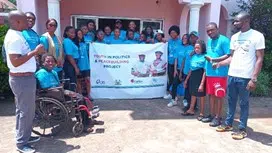
In an important effort to educate and empower young women on entrepreneurship and business, the Caritas “Youth in Politics and Peacebuilding” Project, supported by the UN Peacebuilding Fund (UNPBF), concluded a five-day Entrepreneurship and Business Management Consultancy Training for youth and women’s groups in Sierra Leone. This 24-month project is a collaborative endeavor between the Catholic Relief Service (CRS), Caritas Freetown, and the UNPBF.
The training brought together twenty women from eight communities in the Western Rural area, including four women with disabilities. Topics covered included entrepreneurship, business ideas, financial literacy, business management and micro-financial institutions.
Implemented in five different districts across the country, similar training sessions have already been conducted in Port Loko, Kenema, Bo and Western Rural, with Western Urban remaining.
Eliza Sillah, the Programme Coordinator, emphasized the consultant’s approach to train local young women on entrepreneurship. The training aimed to inspire them to identify problems they could solve and create business plans to contribute to the financial improvement of their families and communities.
She noted that the training is already showing positive impacts, with participants beginning to apply their knowledge and start their own businesses further clarifying that no seed money would be provided. However, financial institutions were invited during the training to teach participants how to acquire loans to start businesses if needed.
Abdulai Bangura, the Lead Consultant and Director for Livelihood Development for the Human Rights Commission, highlighted the importance of the training. He stated that young people are economic drivers with the energy, willingness, skills and innovation needed to undertake and succeed in business.
One of the beneficiaries, Fatima, expressed her gratitude to Caritas and CRS for the impactful training, mentioning her plans to open a tailoring shop in her community to benefit other young women.
Jane Kamara, another beneficiary and one of the participants with disabilities, also expressed her gratitude and intention to implement her new knowledge to support her family and community financially. She further urged donors to continue funding and extending the project to benefit more youth.