Home Blog Page 38

WAICA Re Commissions New Headquarters, Strengthens Sierra Leone’s Role as West Africa’s Financial Hub

President Dr. Julius Maada Bio has officially commissioned the permanent headquarters of the West African Insurance Companies Association Reinsurance Corporation (WAICA Re) PLC in Freetown

By Amin Kef (Ranger)

President Dr. Julius Maada Bio has officially commissioned the permanent headquarters of the West African Insurance Companies Association Reinsurance Corporation (WAICA Re) PLC in Freetown, describing the development as a major boost to Sierra Leone’s growing reputation as a regional center for finance, investment and economic cooperation in W est Africa.

The commissioning ceremony, held on Tuesday 31 March 2026 at 4A Alshek Crescent, Hill Station, brought together senior Government officials, Members of Parliament, representatives of the diplomatic and consular corps, stakeholders in the insurance and financial services sector and regional business leaders. The event marked the formal opening of a landmark institution that has become central to strengthening insurance and reinsurance capacity across the West African sub-region.

Delivering his keynote address, President Julius Maada Bio said the occasion represented much more than the unveiling of a modern office complex, stressing that it symbolizes Sierra Leone’s credibility, the strength of regional cooperation and Africa’s growing ability to build durable financial institutions.

He described the commissioning as a significant milestone in the collective effort to establish resilient institutions capable of supporting economic growth, mitigating risk and promoting deeper regional integration.

According to the President, Sierra Leone remains proud to host WAICA Re since its establishment in 2011, noting that the institution has evolved into a strategic pillar in enhancing the insurance and reinsurance landscape across West Africa.

He said the fulfillment of the commitment to establish the permanent headquarters demonstrates the enduring value of trust, continuity and respect for agreements among African nations and institutions.

President Bio reaffirmed his Government’s commitment to providing a stable legal, regulatory and investment environment that allows credible institutions to grow and thrive.

He emphasized that the Headquarters Agreement signed years ago remains a solemn obligation of the State and assured the corporation’s leadership that Sierra Leone will continue to honor its responsibilities in ways that strengthen investor confidence and deepen the country’s reputation as a dependable destination for business and finance.

The President assured regional partners and the leadership of WAICA Re that Sierra Leone remains open to credible long-term investment, adding that his Government will continue to protect institutional rights, strengthen the rule of law and create the enabling conditions necessary for sustainable business growth.

He noted that the significance of WAICA Re extends far beyond the insurance industry, describing it as a symbol of Africa’s capacity to create strong regional institutions that address local realities, pool shared strengths and reduce dependence on external financial systems.

At a time when global uncertainties continue to shape economic realities, President Bio said resilient African financial institutions such as WAICA Re are increasingly important for ensuring economic stability and effective risk management.

He commended the leadership of the corporation for their strategic foresight, dedication and perseverance in transforming the long-held vision of a permanent headquarters into reality.

The President further stated that the new headquarters reinforces Sierra Leone’s broader development agenda centered on economic diversification, private sector growth and international competitiveness.

According to him, the presence of the institution in Freetown strengthens the country’s profile as a hub for regional finance, commerce and investment, while complementing Government’s efforts to attract more multinational and regional institutions into Sierra Leone.

Speaking in his capacity as Chair of the ECOWAS Authority of Heads of State and Government, President Bio said he was especially pleased that the project reflects the spirit of regional cooperation and shared prosperity that ECOWAS continues to champion.

He stressed that the future prosperity of West Africa depends on institutions that transcend borders, build trust and foster collective resilience among member states.

President Bio called on African nations to continue investing in institutions that embody solidarity, innovation and shared purpose, adding that the WAICA Re headquarters should stand as a lasting symbol of what African countries can achieve when they work together in unity.

On behalf of the corporation, Group Managing Director and Chief Executive Officer, Abiola E. Ekundayo, expressed appreciation to the Government and people of Sierra Leone for the sustained support provided since WAICA Re’s establishment in 2011.

He said the new headquarters symbolizes the institution’s growth, operational stability and long-term confidence in Africa’s economic future.

According to him, WAICA Re’s footprint continues to expand across the continent and beyond, reflecting the trust placed in the corporation as a reliable reinsurance partner.

Also speaking, Group Chairman of WAICA, Kofi Duffuor, commended the Government of Sierra Leone, Parliament and the people of the country for hosting the institution and ensuring that the headquarters agreement has been honored.

He praised President Bio’s leadership and commitment to sustaining the agreement, describing it as a demonstration of confidence in building enduring regional institutions that can support Africa’s financial transformation.

The commissioning of the WAICA Re headquarters is widely regarded as a major step in consolidating Sierra Leone’s role as a strategic destination for regional financial services and strengthening economic cooperation among West African states.

The development is also expected to further elevate Freetown’s status as a preferred destination for regional institutions seeking a stable and credible operational base.

With the formal opening of the headquarters, Sierra Leone has once again reaffirmed its readiness to host major regional organizations and deepen its contribution to Africa’s evolving financial architecture.

Opposition Condemns Inflammatory Political Rhetoric, Warn Against Threats to Sierra Leone’s Democracy

By Amin Kef (Ranger)

Hon. Abdul Kargbo, Leader of the Opposition All People’s Congress (APC) in Parliament, has issued a strong warning over what he described as a “dangerous pattern” emerging in Sierra Leone’s political discourse, following recent controversial remarks allegedly made by senior figures within the ruling Sierra Leone People’s Party (SLPP).

In a strongly worded statement, Hon. Abdul Kargbo condemned comments attributed to the SLPP Chairman, Jimmy Batilo Songa, which reportedly suggested that the APC should be “killed” or made to cease existing. He described such rhetoric as deeply troubling and fundamentally incompatible with democratic principles.

“Political parties are not enemies to be destroyed; they are representatives of the people, protected by the very principles of democracy,” Hon. Abdul Kargbo stated, stressing that threats, intimidation and hostile political language must never be allowed to shape the country’s future.

Drawing historical parallels, the opposition leader recalled the political tensions of the 1960s, when Sir Albert Margai allegedly used state power to suppress the APC through intimidation, restrictions on opposition activity and attempts to move Sierra Leone toward a one-party state. According to Hon. Abdul Kargbo, those efforts ultimately failed.

“Despite those efforts, the APC did not die. Instead, it grew stronger, more resilient and ultimately gained the confidence of the people,” he noted. “The lesson is simple: you cannot eliminate an idea whose time has come. You cannot silence a people determined to be heard.”

Hon. Abdul Kargbo urged political actors across the divide to learn from history by strengthening democratic tolerance, respecting political diversity and allowing the will of the people, not threats or coercion, to determine the nation’s direction.

His comments come at a time of heightened political tension, with APC Members of Parliament continuing their boycott of parliamentary proceedings and other governance processes over concerns surrounding the appointment of Edmond Sylvester Alpha as Chief Electoral Commissioner ahead of the 2028 elections.

Efforts to resolve the impasse have so far yielded little progress. On March 25, 2026, Speaker of Parliament Rt. Hon. Segepoh Solomon Thomas held high-level talks with opposition leaders, urging them to return to Parliament and emphasizing the institution’s constitutional independence. However, the APC has maintained its position.

The party has also recently rejected a Government directive introducing what it described as an “interim political head” to oversee APC-led local councils, arguing that the move lacks legal and statutory backing.

Adding to the chorus of concern, prominent APC figure, Joseph Fitzgerald Kamara (JFK), also condemned reported threats directed at APC members and supporters in Bonthe District.

Joseph Fitzgerald Kamara described as “profoundly disturbing” remarks allegedly made during the commissioning of the SLPP party office in Mattru, Bonthe District and attributed to President Dr. Julius Maada Bio, suggesting death to citizens based on their support for the APC.

“Such a statement, especially from a party leader, risks being interpreted not as mere rhetoric but as a signal; one that could embolden overzealous supporters to act outside the bounds of the law,” Joseph Fitzgerald Kamara warned.

He noted that such remarks threaten to normalize fear, deepen political divisions and place innocent citizens at risk simply for exercising their democratic rights. Joseph Fitzgerald Kamara called on APC supporters in Bonthe and across the country to respond not with retaliation, but with resilience, unity and renewed commitment to democratic values.

“Leadership must inspire confidence, not fear; unity not division,” Joseph Fitzgerald Kamara stated, emphasizing that no citizen should ever feel unsafe because of political affiliation.

Similarly, prominent politician and commentator Dr. Sylvia Olayinka Blyden has sharply criticized President Julius Maada Bio over a series of recent controversial public remarks, accusing him of undermining his constitutional responsibility as Sierra Leone’s Symbol of National Unity.

In a statement issued on Easter Monday, April 6, 2026, Dr. Sylvia Olayinka Blyden pointed to remarks allegedly made by the President during the launch of an SLPP office in Bonthe District, where he reportedly stated in Mende that anyone in the district who supports the APC “shall die early in the morning.”

She argued that such comments, alongside other recent controversial jokes and statements, are deeply divisive and inconsistent with the obligations of the presidency under Section 40(2) of the Constitution.

“Our President is no longer an ordinary citizen who can say anything in public,” Dr. Sylvia Olayinka Blyden said. “Everything the President does in the public space should symbolize national unity.”

The State House Communications Directorate has, however, pushed back against the literal interpretation of the President’s Bonthe remarks. Communications Director, Myk Berewa, stated that the comment was metaphorical in Mende and was lost in translation, suggesting it implied that long-standing APC loyalty in Bonthe was akin to a political curse rather than a literal threat.

Dr. Sylvia Olayinka Blyden dismissed the explanation, insisting that even metaphorical language suggesting citizens are “cursed” over their political beliefs remains dangerous and divisive.

She further argued that the remarks fit into what she described as a troubling pattern of hostility toward the opposition, citing alleged statements from other ruling party officials that similarly called for the eradication of the APC and its supporters.

As public debate intensifies, political observers say the growing exchange of inflammatory rhetoric underscores the urgent need for restraint, responsible leadership and renewed commitment to peaceful democratic engagement in Sierra Leone.

“Sierra Leone belongs to all of us,” Hon. Abdul Kargbo concluded, calling for unity, tolerance and respect for political plurality as the nation moves toward the 2028 elections.

NP (SL), Leonoil Partnership Delivers Modern Burns Unit at Connaught, Boosting Emergency Healthcare Capacity

President Dr. Julius Maada Bio officially commissioned a state-of-the-art Burns Unit and advanced diagnostic facilities at Connaught Government Hospital in Freetown

By Alvin Lansana Kargbo

A major milestone in Sierra Leone’s healthcare transformation was recorded on Thursday, 2 April 2026, as President Dr. Julius Maada Bio officially commissioned a state-of-the-art Burns Unit and advanced diagnostic facilities at Connaught Government Hospital in Freetown, in what has been widely described as one of the most significant private sector-supported interventions in the country’s specialized emergency healthcare system. The landmark project, strongly backed by NP (SL) Limited in collaboration with Leonoil Company Limited, represents a strategic response to longstanding gaps in Sierra Leone’s capacity to manage severe burn injuries and other complex medical conditions.

The newly commissioned facilities include advanced publicly owned CT scan technology, modern ultrasound equipment and a fully equipped Burns Unit, all aimed at significantly strengthening Sierra Leone’s diagnostic and emergency response capabilities.

The intervention is expected to improve clinical outcomes, reduce dependence on overseas referrals and enhance confidence in the national healthcare system.

Constructed through a partnership involving NP (SL) Limited, Leonoil Company Limited, Interburns and Resurge Africa, the Burns Unit is the first specialized facility of its kind in Sierra Leone. The 50-bed complex comprises two operating theatres, an intensive care unit and a high dependency unit tailored to serve both adults and children. Its completion addresses a critical void in the country’s health infrastructure, particularly in light of estimates that approximately 40,000 burn cases are recorded annually, the majority of them involving children.

The significance of the project is deeply rooted in the painful lessons of the Wellington fuel tanker explosion of 5 November 2021, a national tragedy that exposed serious limitations in Sierra Leone’s emergency medical preparedness. The disaster, which claimed many lives and left dozens of citizens with devastating injuries, underscored the urgent need for a dedicated burns treatment and recovery facility.

Speaking during the commissioning ceremony, the Executive Chairman of NP (SL) Limited, Dr. Mohamed Babatunde Cole, said the project was inspired by the realities revealed during the Wellington disaster. He noted that the absence of a specialized facility at the time highlighted a glaring weakness in the country’s health response system and reinforced the need for proactive private sector intervention.

According to Dr. Mohamed Babatunde Cole, the collaboration between NP (SL) Limited and Leonoil Company Limited was driven by a patriotic determination to ensure that Sierra Leone would never again be left unprepared in the face of such a disaster. He described the newly commissioned unit as far more than a physical structure, emphasizing that it symbolizes compassion, resilience and a commitment to national service.

He stated that the facility is a place where lives will be saved, where recovery will begin and where hope will be restored, adding that the intervention reflects the companies’ dedication not only to petroleum and energy services but also to impactful Corporate Social Responsibility that directly responds to urgent national priorities.

Chief Executive Officer of NP (SL) Limited, Dr. Ing. Mohamed S. Kanu, said the company’s intervention was informed by the need to provide sustainable solutions to national challenges. He explained that the absence of a dedicated Burns Unit during the Wellington tragedy underscored the urgency for private sector participation in strengthening healthcare delivery.

Dr. Ing. Mohamed S. Kanu further described the initiative as part of NP’s broader Corporate Social Responsibility framework, which prioritizes practical, high-impact interventions. Over the years, he said, the company has financed several national development projects, including solar-powered boreholes, sanitation facilities, rehabilitation of school infrastructure and recreational facilities for the military, all funded from company profits as part of a deliberate strategy to reinvest in Sierra Leone’s development.

In his keynote address, President Dr. Julius Maada Bio praised NP (SL) Limited, Leonoil Company Limited and all development partners involved in the project, describing the intervention as a major leap forward in the Government’s drive toward a resilient, people-centered healthcare system. He emphasized that the strength of any nation is rooted in the health and well-being of its people, stressing that healthcare must be delivered with dignity, professionalism and equity.

The President reiterated that human capital remains Sierra Leone’s most valuable resource and noted that investments in specialized treatment facilities and modern diagnostic tools are essential to improving national productivity and resilience. He further highlighted ongoing gains in reducing maternal mortality and reaffirmed Government’s commitment to eliminating preventable deaths, particularly among women and children.

President Dr. Julius Maada Bio also underscored the importance of accurate diagnosis in modern medicine, cautioning against presumptive treatment and describing the expansion of CT scan services and other diagnostic tools as critical to improving patient outcomes. He urged health workers and the general public to ensure the proper maintenance and protection of the newly installed equipment so that it continues to serve generations of Sierra Leoneans.
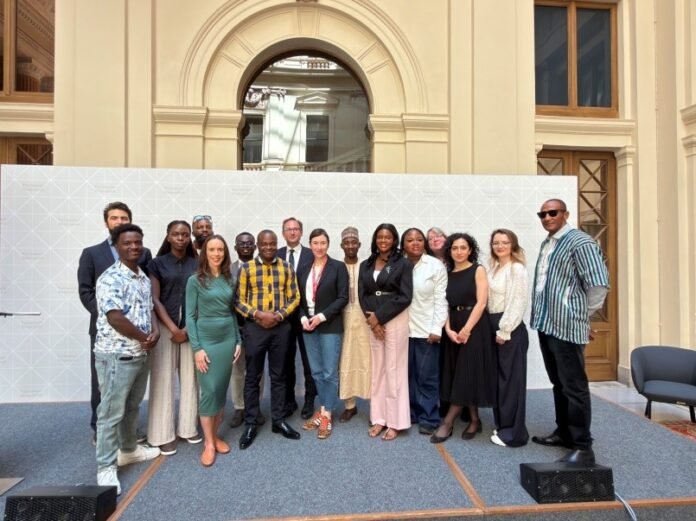
Senior Permanent Secretary at the Ministry of Health, Andrew Sorie, described the commissioning as another clear example of the administration’s leadership in leveraging both global and local partnerships to transform healthcare infrastructure.

Medical Superintendent of Connaught Hospital, Dr. I.M. Kapuwa, welcomed President Dr. Julius Maada Bio and commended the support provided by NP (SL) Limited and Leonoil Company Limited, noting that the intervention would significantly improve the hospital’s capacity to manage critical burn and trauma cases.

Deputy Chief Medical Officer Dr. Musa Kabba said the memory of the Wellington disaster remained a major driving force behind the establishment of the Burns Unit, adding that the new facility reflects Sierra Leone’s shift from reactive emergency care to a more prepared and responsive healthcare delivery model.

Minister of Health, Dr. Austin Demby, described the commissioning as a historic advancement in both diagnostic capability and emergency care services. He stated that the CT scanner, ultrasound equipment and Burns treatment facility will greatly enhance service delivery, improve patient outcomes and strengthen national confidence in public healthcare institutions.

Dr. Austin Demby further hailed the collaboration as a model of effective public-private partnership, crediting NP (SL) Limited and Leonoil Company Limited for demonstrating national responsibility through direct investment in life-saving infrastructure. He added that the Burns Unit will also serve as an important training ground for medical professionals, contributing to long-term capacity building in Sierra Leone’s health sector.

For NP (SL) Limited and Leonoil Company Limited, the project stands as a compelling symbol of how indigenous private sector institutions can complement Government efforts in delivering sustainable national development. Their intervention has not only strengthened Sierra Leone’s emergency healthcare capacity but has also established a powerful example of corporate leadership rooted in patriotism, resilience and social responsibility.

The commissioning of the Burns Unit and advanced diagnostic facilities therefore marks a defining chapter in Sierra Leone’s healthcare reform journey, firmly positioning NP (SL) Limited and Leonoil Company Limited as key partners in saving lives, restoring hope and building a stronger, more responsive healthcare future for the nation.

VLN Solutions Honours Susan’s Bay with NLe40,000 Cash Prize & Phones for Securing 2nd Place at Coastal Boat Race

By Amin Kef (Ranger)

The maiden Coastal Unity Boat Race 2026 ended on a high note with strong displays of sportsmanship, community pride and national celebration, as VLN Solutions Private Limited took centre stage in recognizing excellence by proudly sponsoring the second prize award.

Speaking during the climax of the thrilling two-day event held on April 4 and 5, 2026, Lithin Kumar Nasani, Founder and Chief Executive Officer of VLN Solutions Private Limited, announced that the company had awarded the second-place prize of NLe40,000 in cash alongside three brand-new mobile phones to the Susan’s Bay Community team, in recognition of their outstanding performance.

He described the award as a celebration of resilience, teamwork and community spirit, congratulating the Susan’s Bay rowers for their remarkable showing in one of the most exciting highlights of Sierra Leone’s Independence anniversary festivities.

“The 2nd Prize is proudly awarded by VLN Solutions Private Limited; a cash prize of 40,000 New Leones along with three brand-new mobile phones. Congratulations to the people of Susan’s Bay Community,” Lithin Kumar Nasani stated.

The race, organized as part of activities marking Sierra Leone’s 65th Independence Anniversary, was a landmark initiative spearheaded by the Ministry of Tourism and Cultural Affairs in collaboration with the GEED Foundation, with strategic support from the Ministry of Sports, Rokel Commercial Bank, Afrimoney, EST Applied Intelligence and VLN Solutions Private Limited.

The event drew large crowds across Freetown’s coastline and culminated in a colourful grand finale at Lumley Beach, where the Minister of Tourism and Cultural Affairs, Nabeela Farida Tunis, graced the occasion. Her presence underscored Government’s growing commitment to promoting coastal tourism, cultural heritage and sports tourism as viable drivers of national development.

Addressing participants and spectators, the Minister praised the competing teams for their discipline, determination and unity, noting that such initiatives not only preserve Sierra Leone’s maritime heritage but also strengthen social cohesion and youth engagement.

The overall championship title was clinched by Kissy Ferry Terminal, whose exceptional performance throughout the competition earned them victory in the maiden edition of the national race. Their triumph set a strong benchmark for future editions and further elevated the prestige of the event.

Despite missing the top spot, the Susan’s Bay Community team’s second-place finish remained one of the most celebrated moments of the competition, particularly with the generous recognition from VLN Solutions Private Limited, whose award package became a major talking point among spectators.

The company’s sponsorship of the second prize was widely applauded as a meaningful corporate contribution toward community empowerment, youth motivation and the promotion of sporting excellence.

This year’s Coastal Unity Boat Race successfully blended competition, tourism, culture and corporate partnership, showcasing the beauty of Sierra Leone’s coastline while reinforcing messages of unity and national pride.

With the success of the maiden edition, expectations are already rising for an even bigger and more competitive event in 2027, as organizers and partners look to build on the momentum created by this year’s memorable spectacle.

NP (SL)–Leoneoil Partnership Delivers Modern Burns Unit at Connaught, Boosting Sierra Leone’s Emergency Healthcare Capacity

President Dr. Julius Maada Bio joins the Executive Chairman of NP (SL) Limited, Dr. Mohamed Babatunde Cole, at the commissioning of the modern Burns Unit at Connaught Hospital in Freetown.

By Alvin Lansana Kargbo

A major milestone in Sierra Leone’s healthcare transformation was recorded on Thursday, 2 April 2026, as President Julius Maada Bio officially commissioned a state-of-the-art Burns Unit and advanced diagnostic facilities at Connaught Government Hospital in Freetown. The landmark intervention, strongly supported by NP (SL) Limited in collaboration with Leoneoil Company Limited, has been widely hailed as one of the most significant private sector contributions to specialized emergency healthcare in the country.

The newly unveiled facilities include Sierra Leone’s first publicly owned advanced CT scanners, ultrasound equipment, and a fully equipped Burns Unit, all aimed at strengthening the country’s ability to diagnose and manage complex medical cases while improving emergency response for severe burn injuries.

NP (SL) has reinforced its role in national development through a major investment in healthcare infrastructure, culminating in the commissioning of a modern Burns Unit at Connaught Hospital by President Dr. Julius Maada Bio.

The commissioning ceremony underscored the growing importance of public-private partnerships in national development, with NP (SL) and Leoneoil receiving commendation for their strategic role in supporting a health intervention that is expected to save lives and improve patient recovery outcomes.

The facility, constructed through a partnership involving NP Sierra Leone, Leoneoil, Interburns, and Resurge Africa, represents the first specialized Burns Unit in Sierra Leone. The 50-bed complex includes two operating theatres, an intensive care unit, and a high dependency unit designed to serve both adults and children. Its completion addresses a long-standing gap in the country’s health system, where an estimated 40,000 burn cases are recorded annually, the majority involving children.

The investment reflects NP Sierra Leone’s expanding footprint beyond its core petroleum business into critical sectors such as health, education, and public welfare. The company financed the construction of the Burns Unit in response to systemic deficiencies exposed during the November 2021 Wellington fuel tanker explosion, when victims overwhelmed existing facilities at Connaught Hospital.

Speaking during the event, the Executive Chairman of NP (SL) Limited, Dr. Mohamed Babatunde Cole, said the Burns Unit project was inspired by the painful realities exposed by the tragic Wellington fuel tanker explosion of 5 November 2021, which claimed many lives and left dozens of Sierra Leoneans with devastating burn injuries.

According to him, the national tragedy revealed a glaring gap in Sierra Leone’s emergency medical preparedness, particularly the absence of a specialized facility dedicated to the treatment and recovery of burn victims. He noted that the collaboration between NP (SL) and Leoneoil was therefore driven by a desire to ensure that the country would never again be caught unprepared in the face of such a disaster.

Dr. Cole described the newly commissioned unit as far more than just a hospital structure, emphasizing that it represents compassion, resilience, and a commitment to national service.

“It is a place where lives will be saved, where recovery will begin, and where hope will be restored,” he stated.

His remarks placed NP (SL) and Leoneoil at the center of a transformative intervention, demonstrating the companies’ commitment not only to energy and petroleum services but also to impactful corporate social responsibility that directly addresses urgent national needs.

Chief Executive Officer of NP (SL), Dr. Ing. Mohamed S. Kanu, said the company’s intervention was guided by the need to provide sustainable solutions to national challenges. He noted that the absence of a dedicated Burns facility at the time of the disaster underscored the urgency for private sector participation in strengthening healthcare delivery.

He described the project as part of NP’s broader corporate social responsibility framework, which prioritizes tangible and high-impact interventions. Over the years, the company has delivered a range of projects including solar-powered boreholes, sanitation facilities, rehabilitation of school infrastructure, and recreational facilities for the military. These initiatives, he said, are financed from company profits as a deliberate effort to reinvest in national development.

NP’s contribution to the Burns Unit forms part of a wider pattern of infrastructure support highlighted at the commissioning. Speaking on behalf of project partners, Tunde Cole emphasized that the initiative demonstrated the capacity of Sierra Leonean institutions to address national problems through collaboration and long-term planning. He said the facility stands as a functional response to recurring healthcare challenges rather than a symbolic gesture.

He noted that NP and its partners had consistently invested in social infrastructure, including the construction of the Aberdeen Women’s Clinic, support to security sector education, and provision of water facilities to improve fire response capacity. The Burns Unit, he said, represents a continuation of this approach, focusing on resilience and preparedness within the health sector.

In the keynote address, President Dr. Julius Maada Bio, in his address, acknowledged the role of NP Sierra Leone in advancing the country’s healthcare agenda. He emphasized that a nation’s strength is rooted in the well-being of its people, noting that investments in healthcare are essential to building a productive and resilient population. He reiterated that human capital remains Sierra Leone’s most valuable resource and stressed that healthcare must be delivered with dignity and equity.

He further stated that government is pursuing a comprehensive approach to health sector reform, integrating infrastructure, advanced technology, and skilled personnel to strengthen service delivery. He highlighted ongoing progress in reducing maternal mortality and reaffirmed the national commitment to eliminating preventable deaths, particularly among women and children.

The President also underscored the importance of accurate diagnosis in modern medicine, cautioning against reliance on presumptive treatment and pointing to the expansion of CT scan services and other diagnostic tools as critical to improving patient outcomes. He called for proper maintenance and effective use of newly installed equipment to ensure sustainability.

He urged health workers to uphold professionalism and compassion, stressing that public health facilities belong to the people and must be managed responsibly to deliver quality care.

President Bio, while commissioning the facilities, praised healthcare workers, development partners, and private sector collaborators for their shared commitment to strengthening Sierra Leone’s health sector. He described the new installations as a significant leap forward in the government’s drive toward a people-centered and resilient healthcare system.

The President stressed that the health of citizens remains central to his administration’s human capital development agenda, noting that improved diagnostic tools and specialized treatment units are critical to better health outcomes nationwide. He also urged health professionals and the general public to ensure the proper maintenance and protection of the new facilities so they can continue to serve generations of Sierra Leoneans.

Senior Permanent Secretary at the Ministry of Health, Andrew Sorie, described the event as another clear example of the administration’s strong leadership in leveraging global and local partnerships to transform healthcare infrastructure.

Medical Superintendent of Connaught Hospital, Dr. I.M. Kapuwa, welcomed the President and applauded the support from NP (SL) and Leoneoil, noting that the intervention would significantly improve the hospital’s capacity to respond to critical burn and trauma cases.

Also speaking at the event, Deputy Chief Medical Officer Dr. Musa Kabba explained that the memory of the Wellington disaster remained a key driving force behind the establishment of the unit. He said the new facility reflects Sierra Leone’s shift from reactive emergency care to a more prepared and responsive healthcare delivery system.

Minister of Health Dr. Austin Demby further described the commissioning as a historic step in improving both diagnostic capability and emergency care services, emphasizing that the CT scanners, ultrasound equipment, and Burns treatment facility will greatly enhance service delivery and patient outcomes.

Minister of Health Austin Demby described the partnership as a model for effective public-private collaboration. He stated that the Burns Unit, alongside newly installed CT scan and ultrasound machines, would significantly improve clinical outcomes, reduce referrals abroad, and enhance confidence in the national health system.

He credited NP Sierra Leone and its partners for demonstrating national responsibility through direct investment in life-saving infrastructure. The facility, he added, will also serve as a training ground for medical professionals, contributing to long-term capacity building within the sector.

For NP (SL) Limited and Leoneoil Company Limited, the project stands as a powerful symbol of how indigenous private sector institutions can complement government efforts in delivering sustainable national development. Their intervention has not only strengthened emergency healthcare capacity but has also set a strong example of corporate leadership rooted in patriotism and social responsibility.

The commissioning of the Burns Unit and advanced diagnostic equipment therefore marks a defining moment in Sierra Leone’s health sector reform journey—one in which NP (SL) and Leoneoil have firmly positioned themselves as key partners in saving lives, restoring hope, and building a stronger healthcare future for the nation.

The commissioning marks a significant milestone in Sierra Leone’s transition toward improved healthcare delivery, with NP Sierra Leone positioned as a key driver of development through sustained investment in public infrastructure.

President Dr. Julius Maada Bio
Executive Chairman of NP (SL) Limited, Dr. Mohamed Babatunde Cole
Minister of Health Dr. Austin Demby

Warning Non-Nationals to Comply… Constrat Systems Boosts Digital Permit Enforcement with 17 Vehicles, 20 Motorbikes for Labour Ministry & Immigration

By Ibrahim Sesay 

In a major boost to Sierra Leone’s digital migration and labour governance architecture, Constrat Systems SL Ltd. has provided 17 vehicles and twenty (20) motorbikes to support the nationwide rollout and enforcement of the Unified E-Resident and Work Permit System, which is being jointly implemented through the Ministry of Employment, Labour and Social Security (MELSS) and the Sierra Leone Immigration Department (SLID).

The official unveiling ceremony, held at the Youyi Building in Freetown on Tuesday, March 31, 2026, brought together senior Government officials, private sector partners and other key stakeholders, marking another important milestone in the country’s ongoing drive toward digital transformation, regulatory compliance and institutional modernization.

The logistics support package, delivered under the strategic partnership between Government and Constrat Systems, is expected to significantly strengthen field monitoring, compliance verification and enforcement activities across Sierra Leone. The vehicles and motorbikes will improve the operational reach of labour officers and immigration personnel, especially in remote and hard-to-access areas where compliance monitoring has often been constrained by logistical challenges.

Out of the 17 vehicles and 20 motorbikes, five vehicles and 10 motorbikes were simultaneously distributed to MELSS and SLID, while the remaining seven vehicles have been retained for general operational deployment in support of nationwide enforcement exercises and technical field operations.

This intervention follows the landmark agreement signed between the Government of Sierra Leone and Constrat Systems SL Ltd. to design, build and co-manage the country’s first unified digital resident and work permit platform, which officially became operational on January 1, 2026.

It must be noted and recalled that the 90-day grace period granted to non-nationals to regularize their legal status officially ends on 31 March 2026. Beginning 1 April 2026, all non-nationals are required at all times to possess valid resident and work permits, failing which they will face the full force of the law, with penalties applicable to both employers and employees. Authorities emphasized that the only official channels for obtaining the permits remain the online platform and assistance through designated Government offices.

It was further underscored that compliance teams, working in close cooperation with security officials, will be deployed across the country to ensure strict adherence to the new regime. Under the new legal framework, a penalty of US$3,000 per defaulter applies to both employee and employer for resident permit violations, while a penalty of US$5,000 each applies to both employee and employer for work permit breaches.

Authorities also stressed that effective 1 April 2026, the only legally recognized permit will be the biometric permit, as the paper-based exchange window lapses on 31 March 2026. While foreign nationals may still continue to exchange old permits through the official website and designated offices, such exchanges will no longer exempt defaulters from enforcement action from 1 April onward.

Speaking at the ceremony, the Minister of Employment, Labour and Social Security, Mohamed Rahman Swaray, described the deployment as a practical demonstration of the Government’s commitment to digital innovation and effective service delivery.

He disclosed that one of his principal objectives upon assuming office was the digitalization of work and resident permit applications, noting that the operationalization of the unified platform, coupled with the deployment of mobility assets by Constrat Systems, represents a major breakthrough in institutional reform.

According to him, digitalization, innovation and technology remain central pillars of the Government’s Big Five Game Changers Agenda, stressing that the modernized permit ecosystem will improve accountability, strengthen compliance monitoring and enhance public confidence in the administration of work and residence permits.

“This initiative reflects the Government of His Excellency President Julius Maada Bio’s commitment to strengthening institutional capacity and ensuring that our systems are responsive, transparent and aligned with national development priorities,” the Minister stated.

He further emphasized that the initiative is crucial to building a well-regulated labour market, which he said would support economic growth, protect national interests and promote responsible migration governance.

Also speaking at the event, the Operational Manager of Constrat Systems, Marwan Fawaz, lauded the partnership with Government and expressed delight over the company’s role in serving and developing the project.

He noted that Constrat Systems has enjoyed a seamless working relationship with Government throughout the implementation process.

“We have worked with people who are willing to work for the progress of their country,” Marwan Fawaz stated, while reaffirming the company’s commitment to supporting innovation-driven public service delivery in Sierra Leone.

In his remarks, the Chief Immigration Officer of SLID, Moses Tiffa Baio, described the deployment by Constrat Systems as laying a strong operational foundation for the department’s broader digital transformation agenda.

He said the integration of modern digital systems with real-time enforcement capacity will greatly improve compliance, reinforce security oversight and ensure a more coordinated approach to residency administration.

“By integrating digital systems with operational enforcement, we are enhancing compliance, improving security oversight and ensuring a more accountable and coordinated approach to residency and security administration,” Moses Tiffa Baio said.

He underscored that the deployment aligns directly with President Julius Maada Bio’s Big Five development priorities as well as the Sierra Leone Immigration Transformation Master Plan, adding that the collaboration between the Labour Ministry, SLID and Constrat Systems serves as a model for impactful public-private sector cooperation.

“What we are witnessing today is a true testament of private partnership cooperation with public enterprises,” he noted.

Also speaking, the Deputy Minister of Internal Affairs, David Fortune, said the digitalization of resident and work permit applications, supported by the newly deployed vehicles and motorbikes, will significantly improve the Immigration Department’s ability to process and issue permits with greater speed, precision and nationwide effectiveness.

He maintained that the deployment reflects Government’s determination to build a modern, responsive and technology-driven immigration system, while also creating a more welcoming and efficient framework for foreign nationals who contribute to Sierra Leone’s socio-economic development.

The event climaxed with a symbolic test ride of some of the vehicles around the Youyi Building, signaling the fleet’s immediate readiness for deployment.

With the public campaign message, “Stay Legal, Stay Compliant,” authorities renewed calls on employers, expatriates and foreign residents to utilize the official digital portal for all resident and work permit applications and renewals, as Sierra Leone continues to modernize labour regulation and migration management through innovation-driven partnerships.

Hybrid Electoral System Best Fits Sierra Leone’s Governance Realities — IGR

Executive Director of IGR, Andrew Lavalie

By Alvin Lansana Kargbo

The Institute for Governance Reform (IGR) has called for the introduction of a hybrid electoral system in Sierra Leone, warning that the ongoing debate between Proportional Representation (PR) and First-Past-the-Post (FPTP) oversimplifies the country’s governance needs.

Addressing journalists during a session of its Critical Perspectives Series on Monday 30th March, 2026, the Institute’s Executive Director, Andrew Lavalie, said Sierra Leone’s electoral reform process should focus on combining the advantages of both systems rather than treating them as mutually exclusive options.

He noted that the engagement was aimed at presenting IGR’s position while encouraging citizens to support reforms that reflect the country’s realities. Andrew Lavalie stressed that electoral reform should be guided by what delivers effective governance and improves citizens’ welfare.

According to him, the structure of an electoral system directly influences accountability, political conduct and national development outcomes. He argued that although Sierra Leone is endowed with significant natural and human resources, these have not translated into widespread benefits for citizens, partly due to governance weaknesses and limited public understanding of political processes.

He also pointed out that discussions around electoral reform have largely been shaped by a narrow choice between PR and FPTP, particularly following recommendations by the Tripartite Committee and ongoing constitutional review efforts. He said that approach fails to capture the broader governance challenges facing the country.

The Institute further raised concern over low public awareness of electoral systems. Findings from its 2022 research indicate that the majority of Sierra Leoneans do not know which electoral system the country uses, highlighting a gap between policy discussions and citizen engagement.

Providing further analysis, Professor M’Cormack-Hale outlined four critical pillars for any electoral framework: accountability, stability, inclusion and cost efficiency.

She explained that while FPTP strengthens accountability by establishing a clear link between voters and their representatives, recent implementation of the district block PR system has weakened that relationship. In many cases, communities are unable to identify their representatives, limiting avenues for participation and feedback.

Research cited by the Institute shows that numerous wards across several districts lack direct councillor representation, with Western Rural, Falaba and Kono among the most affected areas.

IGR warned that such gaps risk creating uncertainty in representation and weakening local governance structures.

To address those concerns, the Institute recommended that constituencies be clearly defined and easily recognizable to citizens, rather than using numbering systems that may cause confusion.

It concluded by calling for a pragmatic electoral approach that integrates the accountability benefits of FPTP with the inclusiveness of PR, arguing that a hybrid system offers a more suitable path for Sierra Leone’s democratic development.

Human Rights Network Calls for Urgent Action Over Police Non-Execution of Court Directives

By Alvin Lansana Kargbo

The Human Rights Defenders Network Sierra Leone has raised serious concerns over what it describes as a growing pattern of non-execution of court orders by the Sierra Leone Police, warning that the trend undermines the rule of law and weakens public confidence in the justice system.

The concerns were outlined during a Press Conference held on Tuesday at the organization’s Secretariat on Rasmusson Street in Freetown. The coalition, which comprises Civil Society Organisations and individuals advocating for the protection of human rights, called for urgent corrective measures and accountability within law enforcement institutions.

Executive Secretary of the network, Alphonsus B.M. Gbanie, said the press briefing was convened to draw national attention to what he described as a troubling disregard for judicial authority by law enforcement officers. He noted that the failure to implement court directives poses a direct threat to democratic governance and the administration of justice.

The network’s Human Rights Officer, Rachel Walters, presented a detailed statement highlighting findings from the organization’s recent monitoring. According to the statement, more than 25 court orders in the Western Area alone have reportedly been delayed or left unenforced by the Sierra Leone Police since January 2025.

The organisation stated that such actions may amount to contempt of court and constitute a violation of constitutional provisions. It warned that persistent non-compliance with judicial orders erodes the authority of the courts and diminishes public trust in state institutions.

HRDN-SL further emphasized that the failure to enforce court orders is particularly evident in civil and land-related disputes. It cautioned that this creates legal uncertainty and encourages individuals to resort to unlawful methods to resolve disputes, increasing the risk of what is commonly referred to as jungle justice.

The network called on the Inspector General of Police to take immediate steps to ensure that all outstanding court orders, injunctions and non-bailable warrants are executed without delay.

In its recommendations, HRDN-SL urged the Police Council to hold senior police officers accountable for ensuring compliance with court directives and to guarantee adequate support for bailiffs and court officials in enforcing judgments. It also called on the Judicial Council to initiate disciplinary action against officers who fail or refuse to carry out court orders.

Additionally, the organisation appealed to the donor and diplomatic community to support Civil Society efforts aimed at strengthening independent monitoring of court processes.

HRDN-SL maintained that urgent intervention is required to restore confidence in the justice system and uphold the rule of law in Sierra Leone.

MBSSE Concludes National English Conference, Unveils Reform Agenda to Reverse WAEC Decline

By Alvin Lansana Kargbo

The Ministry of Basic and Senior Secondary Education has concluded a two-day national English Language Conference in Freetown with a commitment to implement sweeping reforms aimed at reversing declining performance in English in the West African Examinations Council (WAEC) examinations.

Held from March 30–31, 2026, at the New Brookfields Hotel under the theme: “English Language Performance – Addressing the Issues Impacting National Development”, the conference brought together policymakers, educators, development partners and other stakeholders to examine the causes of poor performance and propose practical reforms.

Discussions focused on identifying systemic challenges affecting English Language outcomes, including weak foundational literacy, gaps in teacher preparation, inadequate learning resources and inconsistencies in curriculum delivery. Participants reviewed WAEC Chief Examiners’ reports and assessed teaching methodologies across primary and secondary education.

The conference framework was built on five pillars: data-driven diagnosis, immediate remedial interventions, reforms in higher education admissions, long-term systemic changes and strengthened monitoring and accountability.

Delivering the keynote address, on the opening day, Minister of Basic and Senior Secondary Education, Conrad Sackey, said improving English proficiency is critical to human capital development and requires coordinated national action. He noted that while overall education indicators have improved, English Language performance continues to decline.

According to the Ministry, credit pass rates in English dropped from 19.71 percent in 2021 to 11.77 percent in 2025, despite a 43.7 percent increase in candidates obtaining five or more credits in WASSCE over the same period. The Basic Education Certificate Examination pass rate also rose from 69 percent in 2020 to 94 percent in 2025.

He attributed the decline largely to foundational learning gaps, citing early grade assessments that showed extremely low literacy levels among pupils. He noted that many junior secondary students remain below expected proficiency levels in English despite ongoing curriculum reforms and teacher training initiatives.

Deputy Minister of Technical and Higher Education, Sarjoh Aziz-Kamara, said poor English performance has significantly limited access to tertiary education, as many students who pass other subjects fail to meet the English requirement. He called for strengthened teacher training, curriculum modernization and the integration of technology in teaching, while cautioning against overdependence on digital tools.

Chief Executive Officer of Africa Human Capital Development Plus Ltd., Finda Koroma, described the situation as a national human capital crisis, linking English proficiency to employability and competitiveness. She highlighted systemic issues such as large class sizes, inadequate teacher preparation, limited resources and the disconnect between home languages and English instruction.

Chair of the Parliamentary Committee on Basic and Senior Education, Rebecca Yei Kamara, said Parliament would work closely with the Ministry to improve education quality. She warned that weak literacy skills have broad implications across professions and raised concerns about declining reading culture, social media distractions and the presence of unqualified teachers in classrooms.

Education stakeholder, Alphonso Manley, emphasized the need for better coordination between Ministries and higher education institutions, as well as adequate funding to ensure effective implementation of reforms.

In his closing remarks on the second day, Minister Conrad Sackey said the conference had generated frank and solution-oriented discussions, focusing on three central pillars: pedagogy, admissions and resources.

He stressed that while significant progress has been made in developing curricula across early childhood, basic and senior secondary education, greater attention must now be placed on how teaching is delivered. He called for inclusive and responsive teaching methods that address the needs of all learners, including those with learning difficulties.

On admissions, he underscored the need for a fair, transparent and equitable system that ensures all pupils, regardless of background, have access to higher education opportunities.

Addressing resource constraints, he highlighted the urgent need for trained teachers, adequate learning materials, improved infrastructure and sustainable financing, warning that reforms cannot succeed without sufficient investment.

He assured participants that the outcomes of the conference would be compiled into a comprehensive report to guide policy and implementation, describing it as a “living document” intended to drive measurable improvements in classrooms.

The Minister reaffirmed the Ministry’s commitment to translating discussions into action, pledging continued collaboration with partners, educators and communities to improve learning outcomes.

He urged stakeholders to maintain collective resolve, emphasizing that sustained cooperation and innovation would be essential to achieving lasting reform in the education sector.

The conference ended with a unified call for urgent and sustained action to reverse declining English language outcomes, with stakeholders agreeing that failure to address the crisis would continue to undermine education quality, workforce readiness and national development. Participants committed to supporting the implementation of the forthcoming national action plan, as the Ministry moves to translate policy discussions into measurable improvements in teaching, learning and student performance across the country.

Labour Ministry, Recruitment Agencies Review Welfare of Over 300 Sierra Leonean Workers Across Gulf States

The Ministry of Employment, Labour and Social Security has held a high-level consultative meeting with leading overseas private employment agencies to assess the safety and welfare of Sierra Leonean migrant workers currently employed across the Middle East.

The meeting, held on Monday, March 30, 2026, formed part of the Ministry’s proactive efforts to closely monitor the wellbeing of Sierra Leoneans working abroad amid evolving regional developments and growing concerns over migrant safety.

Welcoming participants, the Permanent Secretary of the Ministry, Joseph Teckman Kanu, described the engagement as an important platform for stakeholders to share updates, exchange operational data and address emerging concerns relating to the welfare of Sierra Leoneans employed overseas.

Addressing the gathering, the Minister of Employment, Labour and Social Security, Mohamed Rahman Swaray, emphasized that recruitment agencies remain critical gateways through which many Sierra Leoneans access overseas employment opportunities. He noted that recent developments in parts of the Middle East made it necessary for the Ministry to directly engage stakeholders in order to obtain firsthand updates on the safety and wellbeing of Sierra Leonean workers in the region.

Giving an update on behalf of SOS Traveling Agency, Yusuf Conteh informed the meeting that the organization has maintained consistent weekly contact with Sierra Leonean workers in Dubai to closely monitor their welfare. He assured the Ministry that all workers under the Agency’s supervision remain safe.

Representing HRGSL, Jeremiah Johnson disclosed that the Agency currently has approximately 200 workers in Saudi Arabia, 79 in Qatar, and 30 in Dubai. While confirming that all workers are safe, he noted that some remain apprehensive due to ongoing regional concerns, although many continue to actively perform their duties at their respective workplaces.

For Kemokai Recruitment Agency, Clifford P. Williams reported that the Agency has 15 workers stationed in Dubai, all of whom are safe. He added that the Agency maintains daily communication with its workers through a dedicated WhatsApp platform to ensure continuous monitoring and support.

Speaking on behalf of Explore SL Ltd, Sheku Kanneh stated that the company deployed 30 female workers to Dubai last year and assured the Ministry that all of them remain safe despite prevailing concerns in the region.

Rev. B. Kallon of First International Recruitment explained that the company is relatively new and has not yet deployed workers abroad. However, he disclosed that its Managing Director is currently in Dubai engaging potential partner companies in preparation for future worker deployment.

Meanwhile, the Chief Executive Officer of Malador Travels Agency commended the Ministry for organizing the engagement. He revealed that although the company had not previously deployed workers to the Middle East, it recently facilitated the travel of 15 Sierra Leoneans to Qatar, with an additional 20 workers scheduled to depart before the end of the month.

In his closing remarks, Minister Mohamed Rahman Swaray underscored the importance of sustained engagement and effective monitoring, urging recruitment agencies to maintain regular communication and periodic visits to Sierra Leonean workers abroad as part of efforts to safeguard their welfare.

He thanked all stakeholders for their cooperation and reaffirmed the Ministry’s unwavering commitment to protecting the rights, safety and wellbeing of Sierra Leonean migrant workers overseas.