
Home Blog Page 39

Govt. Assures Public of Ebola Preparedness, Confirms Sierra Leone Remains Ebola-Free

Man wearing a blue cap and matching vest with an organization logo, seated at a table indoors.

By Amin Kef-Ranger

The Government of Sierra Leone, through the National Public Health Agency (NPHA), has reassured citizens that the country remains free of the Ebola Virus Disease (EVD), while outlining a series of preparedness and preventive measures aimed at safeguarding public health amid an outbreak reported in the Democratic Republic of Congo (DRC).

In a public advisory issued on 17 May 2026, the National Public Health Agency emphasized that Sierra Leone currently has no confirmed, suspected or probable cases of Ebola Virus Disease, stressing that the nation remains Ebola-free.

According to the Government, an active Ebola outbreak involving the Bundibugyo strain has been declared in Ituri Province in the Democratic Republic of Congo, with reports indicating 246 suspected cases and 65 deaths as of 17 May 2026. Authorities also noted that Uganda has recorded one confirmed imported death linked to the outbreak, although no local transmission has been reported there.

The advisory highlighted that while the risk of regional spread remains elevated, Sierra Leone’s current risk level is assessed as low. However, mindful of the devastating experience of the 2014–2016 Ebola outbreak, the Government stated that proactive measures are already underway to prevent any possible importation of the disease.

To strengthen national preparedness, the Public Health Emergency Operations Centre (PHEOC) has been activated at a heightened readiness level, while the National Emergency Health Committee has also been convened to coordinate preventive efforts.

Government further disclosed that enhanced screening measures have been intensified at major entry points, including the Lungi International Airport, Freetown Harbour and land border crossings in Kambia, Gbalamuya and Kailahun.

Additionally, authorities confirmed that Personal Protective Equipment (PPE), isolation materials and rapid diagnostic tools have been pre-positioned in the Western Area and key border districts to ensure swift response in the event of any suspected case.

Rapid Response Teams have also been placed on standby across all sixteen districts of the country, while Infection Prevention and Control (IPC) protocols have been reinforced at strategic health facilities nationwide.

The National Public Health Agency further noted that Sierra Leone continues to work closely with regional and international partners, including the Africa Centres for Disease Control and Prevention (Africa CDC), the Economic Community of West African States (ECOWAS), the World Health Organization (WHO) and counterpart institutions in the DRC, Uganda, Guinea and Liberia.

As part of public guidance, citizens have been urged to immediately call the emergency toll-free number 117 if they or anyone they know develops symptoms such as sudden fever, severe headache, vomiting, diarrhoea, skin rash or unexplained bleeding, particularly following recent travel from the Democratic Republic of Congo or Uganda.

The Government also advised against unnecessary travel to Ebola-affected areas in the Democratic Republic of Congo and Uganda and cautioned the public against handling blood or bodily fluids of individuals showing signs of unexplained haemorrhagic illness.

Citizens have further been encouraged to maintain regular handwashing practices using soap and water or alcohol-based sanitizers and to rely solely on official Government communication channels, including the National Public Health Agency, Ministry of Health and Sierra Leone Broadcasting Corporation (SLBC), for verified updates.

In a special appeal to health workers, the Government called for heightened vigilance in identifying suspected haemorrhagic fever cases, especially among persons with travel history from affected countries. Health workers were urged to immediately report any suspected cases to their respective District Health Management Teams or through the emergency line 117.

The National Public Health Agency stressed that healthcare professionals should strictly observe standard infection prevention and control procedures and avoid managing suspected Ebola cases in unprepared facilities, instead activating isolation measures and contacting Rapid Response Teams for immediate support.

Reaffirming Government’s commitment to public safety, Executive Director of the National Public Health Agency, Brigadier General Professor Foday Sahr, assured citizens that Sierra Leone is fully prepared and called on the public to remain calm, alert and cooperative in the collective effort to keep the country safe from Ebola.

“Sierra Leone is Ebola-Free,” the Government emphasized, while encouraging citizens to stay informed and remain vigilant without panic.
President Bio Challenges African Leaders to Anchor Stability and Drive Reform

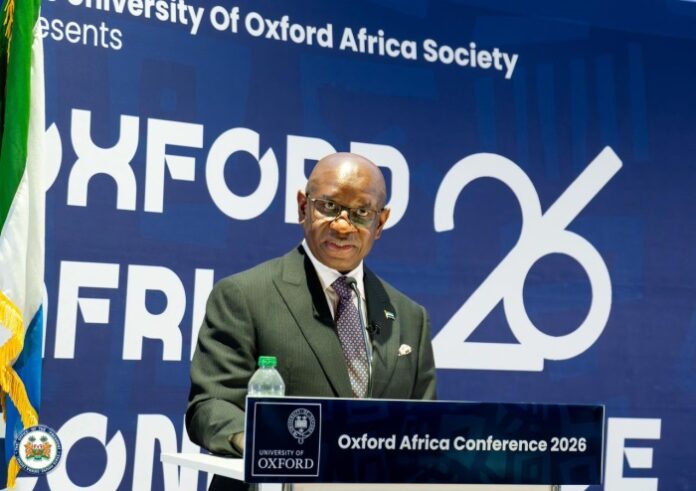
Man in a dark suit and glasses speaks at a lectern, with a blue backdrop reading 'Oxford Africa Conference 2026'.
President Dr. Julius Maada Bio

By Amin Kef (Ranger)

President of the Republic of Sierra Leone and Chairman of the ECOWAS Authority of Heads of State and Government, Julius Maada Bio, has called for bold, practical and resilient leadership across Africa, urging Governments to build strong institutions capable of withstanding political, economic, climate and technological disruptions.

Delivering the Presidential Keynote Address at the 2026 Oxford Africa Conference held on Sunday, 17 May 2026, at the University of Oxford in Oxford, England, under the theme: “Anchoring Africa: Grounded, Game-Changing Leadership in the Age of Disruption,” President Bio stressed that Africa’s future would depend not only on reclaiming its voice but also on establishing durable systems capable of surviving modern global challenges.

Addressing scholars, policymakers, members of the African diaspora and students attending the conference, President Bio reflected on the need for Africa to move beyond simply asserting its agency and focus instead on ensuring that the gains achieved are sustainable.

“Last year, standing on this same platform, I spoke about African agency,” President Bio said. “This year, we must ask something harder: Can what we define endure? Can it survive shocks and disruption?”

The Sierra Leonean leader emphasized that Africa’s numerous challenges are deeply interconnected and cannot be addressed in isolation, warning that crises often evolve into broader regional and national problems.

“A drought does not stay a drought. It becomes a food crisis. A food crisis becomes a revenue crisis. A revenue crisis becomes a security crisis,” he stated, underscoring the need for Governments to treat constitutional order, economic resilience, security cooperation, climate adaptation, youth opportunities and technological advancement as interconnected priorities.

Speaking in his dual capacity as President of Sierra Leone and Chairman of ECOWAS, President Bio reflected on Sierra Leone’s own experience with civil conflict, the Ebola epidemic, economic hardship and climate vulnerability, describing the country as a testament to resilience and gradual reform.

He noted that since assuming office in 2018, his administration had remained focused on long-term national transformation despite numerous setbacks, including the COVID-19 pandemic.

President Bio highlighted flagship Government initiatives such as the Free Quality Education Programme and the Feed Salone agricultural agenda, describing them as practical interventions aimed at expanding educational access and strengthening food security.

“Our Free Quality Education programme has expanded access to schooling for millions of children who would otherwise have been excluded, particularly girls,” he said, adding that agricultural reforms under Feed Salone were steadily strengthening domestic production and reducing dependency on food imports.

“These are not perfect outcomes. But they are meaningful ones,” he added. “They show that when policy is sustained and aligned with national priorities, progress becomes tangible.”

On regional stability and governance, President Bio warned that coups and unconstitutional changes of Government in parts of West Africa reflect deeper governance failures and declining public trust in institutions.

“Democracy goes far beyond elections,” he said. “To be meaningful, democracy must work in substance. Our responsibility is not only to defend democracy but to make it mean something in the daily lives of our citizens.”

He further noted that while regional sanctions and diplomatic efforts may help maintain constitutional order, long-term stability can only be achieved through effective governance, accountability and institutions that deliver results for citizens.

President Bio also underscored the importance of regional cooperation, cautioning that instability in one country inevitably spills into neighboring states through conflict, migration, arms trafficking and economic disruptions.

“Regional cooperation is not an optional ideal but a survival strategy,” he emphasized, noting that many African communities remain historically linked through trade, language, culture and shared history.

Turning to Africa’s rapidly growing youth population, President Bio described demography as one of the most defining realities shaping the continent’s future.

“Africa is the world’s youngest continent,” he stated. “If politics does not adapt to demographic reality, frustration will outrun reform.”

He warned that expanding educational systems without corresponding job opportunities and meaningful participation in governance would deepen frustrations among young people, urging Governments to prioritize education, employment, mobility and innovation.

President Bio also drew attention to the growing importance of technological governance, particularly in Artificial Intelligence, warning that Africa risks becoming merely a passive consumer of technologies developed elsewhere.

“Artificial Intelligence is already reshaping economies, governance and society,” he said. “Africa cannot afford to be a passive consumer of these systems.”

Calling for a continent-wide approach, he proposed the establishment of a Pan-African AI governance framework to ensure African countries participate meaningfully in shaping global technological regulations and innovation.

On climate change, President Bio described the crisis as “one of the greatest injustices of our time,” pointing out that although Africa contributes the least to global carbon emissions, it continues to bear a disproportionate burden of climate-related consequences.

He called for fairness in global climate financing while encouraging African Governments to continue investing in resilience, adaptation and sustainable development.

In his closing remarks, President Bio challenged young Africans and members of the diaspora to remain actively connected to the continent and contribute meaningfully to its development.

“To the young Africans here, build where you stand. But stay connected to where you come from,” he urged. “The diaspora is not outside Africa’s story. The diaspora is one of Africa’s most powerful assets.”

Reaffirming his optimism about the continent’s future, President Bio declared that Africa is already shaping its own destiny but stressed that sustaining progress would require courageous reforms, institutional strength and visionary leadership.

“Africa can anchor its own story. We are already doing so,” he concluded. “What remains is leadership steady enough to hold the ground where stability is needed and bold enough to change it where reform is overdue.”

First Batch of 300 U.S. Deportees Arrives in Freetown

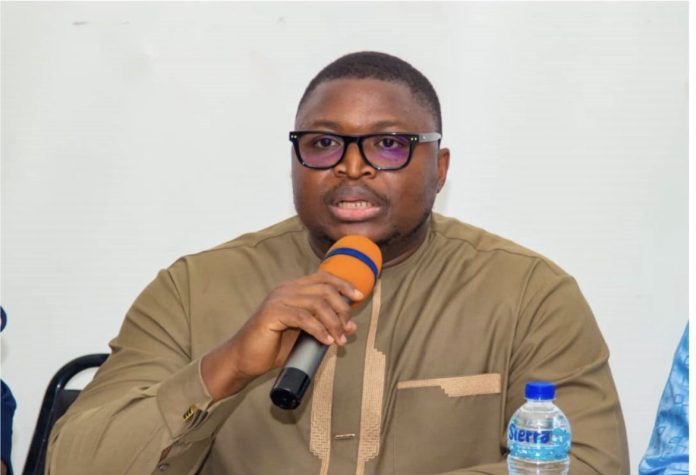
Man wearing brown traditional attire speaks into an orange microphone at a panel, with a water bottle on the table nearby and a pale background.
Minister of Foreign Affairs and International Relations, Timothy Musa Kabba

By Foday Moriba Conteh

The Government of Sierra Leone has agreed to receive hundreds of West African migrants deported from the United States under a newly established arrangement aimed at supporting U.S. immigration enforcement efforts.

According to Sierra Leone’s Minister of Foreign Affairs and International Cooperation, Timothy Musa Kabba, the country has signed a Third Country National Agreement with the United States to accept deported nationals from countries within the Economic Community of West African States (ECOWAS).

Speaking on the arrangement, Timothy Musa Kabba disclosed that the first group of deportees is expected to arrive in Sierra Leone on May 20, 2026. The flight is expected to transport nationals from Senegal, Ghana, Guinea and Nigeria, although the exact number of deportees on the first trip was not immediately disclosed.

The Foreign Minister explained that under the agreement, Sierra Leone has committed to accepting up to 300 ECOWAS citizens annually, with a maximum of 25 deportees arriving each month.

“Sierra Leone signed a Third Country National Agreement with the U.S. to accept 300 ECOWAS citizens from the U.S. per year with a maximum of 25 a month,” Timothy Musa Kabba stated.

The agreement places Sierra Leone among a growing number of African countries partnering with the United States on third-country deportation arrangements as Washington intensifies efforts to accelerate migrant removals. Similar arrangements have reportedly been implemented in countries including Ghana, Cameroon, Equatorial Guinea, the Democratic Republic of Congo and Eswatini.

Sierra Leone’s arrangement is understood to be similar to that of Ghana, which also accepts deportees from neighbouring West African countries. However, it remains unclear whether migrants deported to Sierra Leone will be allowed to remain in the country or whether they will eventually be repatriated to their countries of origin.

Timothy Musa Kabba did not disclose what benefits or support Sierra Leone would receive in exchange for participating in the arrangement. He, however, stressed that the agreement forms part of the broader diplomatic and bilateral relationship between Sierra Leone and the United States.

“It’s part of our bilateral relationship with the U.S. to assist with its immigration policy,” he said.

The development has sparked interest amid ongoing global discussions surrounding third-country deportation policies. Legal experts and human rights organizations have previously raised concerns about the legal basis for deporting migrants to countries where they are not nationals, as well as the conditions and protections available to affected individuals.

Reports from international policy discussions have indicated that millions of dollars have previously been allocated by the United States to support countries involved in similar deportation arrangements. A report released earlier this year by members of the U.S. Senate Foreign Relations Committee revealed that more than $32 million had reportedly been provided to countries such as Equatorial Guinea, Rwanda, El Salvador, Eswatini and Palau for migration-related agreements.

The United States and Sierra Leone have experienced tensions over deportation matters in the past. In 2017, during the first administration of former U.S. President Donald Trump, the United States imposed visa restrictions on certain Sierra Leonean foreign ministry and immigration officials over concerns that Sierra Leone had refused to receive some of its deported nationals.

The latest agreement is expected to generate public debate within Sierra Leone and across the ECOWAS region regarding migration management, regional cooperation and the broader humanitarian implications of third-country deportation arrangements.

SLCAA DG Endorses Aviation Safety Policy to Strengthen Sierra Leone’s Air Transport Sector

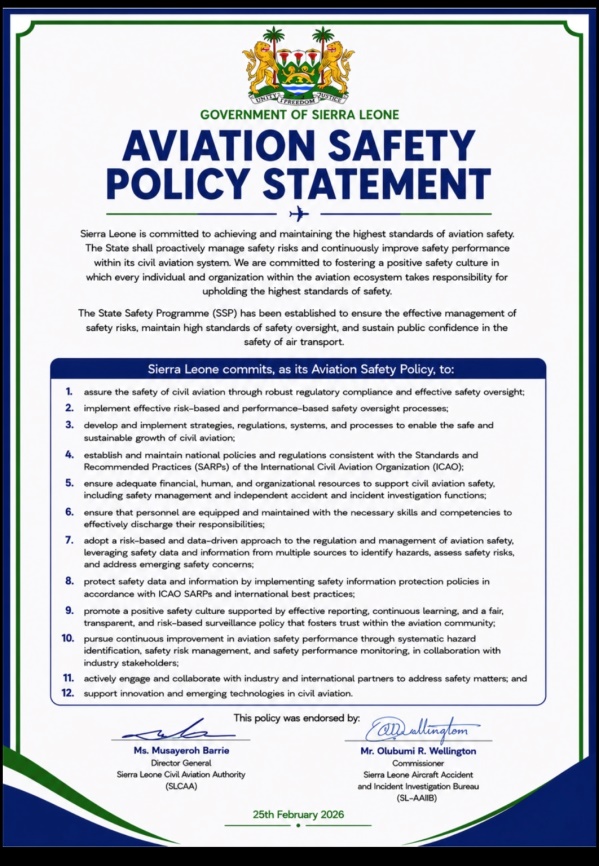
Poster from the Government of Sierra Leone titled Aviation Safety Policy Statement outlining commitments to civil aviation safety and standards.

By Amin Kef (Ranger)

The Government of Sierra Leone has officially unveiled a comprehensive Aviation Safety Policy Statement aimed at strengthening safety oversight, enhancing regulatory compliance and sustaining public confidence in the country’s air transport system.

Approved by the Minister of Transport and Aviation,  Hon. Alhaji Fanday Turay Esq., on 25th February 2026, the policy underscores Sierra Leone’s commitment to achieving and maintaining the highest standards of aviation safety through proactive risk management and continuous performance improvement.

According to the policy statement, the Government is committed to fostering a positive safety culture within the aviation ecosystem, where every individual and institution assumes responsibility for upholding safety standards. Authorities emphasized that the State Safety Programme (SSP) has been established to ensure effective management of aviation safety risks, maintain robust oversight mechanisms and strengthen public trust in air transportation.

The Aviation Safety Policy outlines a broad framework through which Sierra Leone seeks to modernize and improve aviation governance. Among the key commitments highlighted are robust regulatory compliance, implementation of risk-based and performance-based safety oversight systems and the development of strategies and regulations to support the sustainable growth of civil aviation.

The policy further aligns Sierra Leone’s aviation system with the Standards and Recommended Practices (SARPs) of the International Civil Aviation Organization (ICAO), reflecting the country’s determination to comply with global aviation safety benchmarks.

In a move aimed at strengthening institutional capacity, the Government also pledged to ensure adequate financial, human and organizational resources for aviation safety, including support for safety management systems and independent accident and incident investigation mechanisms.

Authorities additionally stressed the importance of equipping aviation personnel with the necessary skills and competencies to effectively discharge their responsibilities, while promoting a data-driven approach to safety regulation and management.

The policy statement noted that Sierra Leone will place emphasis on the protection of aviation safety data and information in accordance with international best practices, while encouraging effective reporting systems, continuous learning, transparency and risk-based surveillance to foster trust among stakeholders in the aviation sector.

Another major component of the policy is the Government’s commitment to continuous improvement in aviation safety performance through systematic hazard identification, risk management and close collaboration with local and international aviation stakeholders.

The policy also encourages innovation and the adoption of emerging technologies in civil aviation, signaling Sierra Leone’s ambition to build a resilient and future-ready aviation sector.

The Aviation Safety Policy was endorsed by the Director General of the Sierra Leone Civil Aviation Authority (SLCAA), Ms. Musayeroh Barrie and the Commissioner of the Sierra Leone Aircraft Accident and Incident Investigation Bureau (SL-AAIIB), Olubumi R. Wellington, reinforcing institutional support for the implementation of the initiative.

The introduction of the policy is expected to boost confidence in Sierra Leone’s aviation industry while strengthening safety standards in line with international requirements.

Sierra Leone, MCC Strengthen Partnership as Compact Enters Pre-Implementation Phase

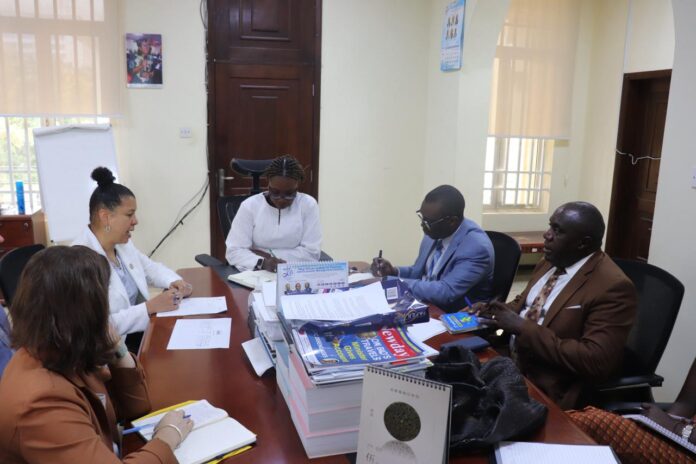
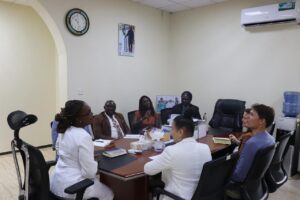
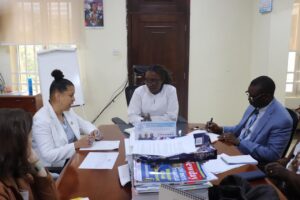
Five professionals in a meeting around a cluttered conference table with documents and magazines on display in a bright office setting.

Acting Deputy Vice President for Africa at the Millennium Challenge Corporation (MCC), Alicia Robinson-Morgan, on Tuesday, 19th May 2026, paid a courtesy visit to Sierra Leone’s Acting Minister of Finance, Madam Kadiatu Allie, at her George Street office in Freetown as part of a week-long official engagement aimed at advancing the implementation of the MCC Sierra Leone Compact.

The visit, which runs from 18th to 22nd May 2026, comes at a critical stage as Sierra Leone’s MCC Compact enters its important pre-implementation phase, signaling significant progress in the partnership between the Government of Sierra Leone and the Millennium Challenge Corporation.

Alicia Robinson-Morgan, who oversees MCC’s multi-country Africa portfolio within the Department of Compact Operations, is expected to engage with key Government stakeholders and implementing institutions to assess ongoing preparations and strengthen coordination ahead of the Compact’s anticipated implementation.

During the meeting with Madam Kadiatu Allie, discussions focused on critical matters surrounding the pre-implementation phase of the MCC Compact, including progress made so far and areas requiring continued collaboration to ensure a smooth transition into full implementation.

Alicia Robinson-Morgan acknowledged the progress achieved during the pre-implementation stage, particularly in procurement and recruitment processes, while also commending the clarity provided regarding Sierra Leone’s financial contribution to the Compact. She emphasized the importance of sustaining momentum to ensure that all requirements are adequately met ahead of implementation.

Welcoming the Acting Deputy Vice President to Sierra Leone, Madam Kadiatu Allie expressed satisfaction with the progress recorded thus far and reaffirmed the Government of Sierra Leone’s commitment to fulfilling its obligations under the Compact agreement. She underscored the Government’s determination to ensure that all necessary reforms and commitments are met to facilitate the successful execution of the programme.

The meeting also brought together senior officials involved in the implementation process, including Financial Secretary Matthew Dingie, Millennium Challenge Corporation Resident Country Director Steven Gruda, Chief Executive Officer of MCA-Sierra Leone Nyade Sesay and officials from the Ministry of Finance, including representatives from the Fiscal Risk Division.

Discussions among the officials centered on key issues relating to taxation, ongoing reforms within Sierra Leone’s energy sector, the Government’s financial commitments and other technical matters considered essential to ensuring the effective implementation of the Compact.

The engagement further highlighted the shared commitment between the Government of Sierra Leone and the Millennium Challenge Corporation to maintain progress during the preparatory stage, with implementation expected to commence in 2027.

The MCC Sierra Leone Compact is widely viewed as a transformative initiative expected to support critical development priorities, particularly in the energy sector, while strengthening institutional systems and promoting sustainable economic growth in Sierra Leone.

Chamber of Commerce Hosts Business Networking Lunch to Boost Private Sector Growth

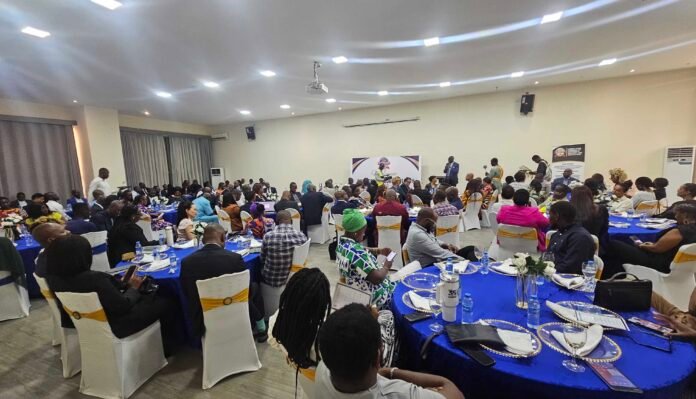
Large banquet hall with round tables covered in blue cloths and many formally dressed attendees listening to a speaker at a podium on a stage.",

By Alvin Lansana Kargbo

The Sierra Leone Chamber of Commerce, Industry and Agriculture (SLCCIA) convened a Business Networking Lunch on Tuesday 19 May 2026 at the New Brookfields Hotel, bringing together Government officials, private sector leaders and development stakeholders to strengthen collaboration, address business constraints and explore opportunities for economic growth.

The event served as a strategic platform for dialogue between the public and private sectors, focusing on trade facilitation, investment promotion and private sector-led development. It also created an avenue for businesses to establish partnerships, exchange ideas and identify solutions to shared challenges within Sierra Leone’s evolving economic landscape.

In his welcome address, the Sierra Leone Chamber of Commerce, Industry and Agriculture’s President, Oluniyi Robbin-Coker, underscored the importance of sustained collaboration between Government and the private sector in shaping national economic outcomes. He emphasized that the country’s growth trajectory depends on building strong partnerships that encourage innovation, improve competitiveness and expand market opportunities.

A central issue raised was the growing congestion at the Freetown port, which he described as a major constraint on business operations. He noted that the port is currently operating beyond its intended capacity, leading to delays, increased costs and the diversion of cargo through neighboring countries. He called for the reestablishment of a Port Users Committee to improve coordination among stakeholders, including customs authorities, shipping lines and security agencies, to address inefficiencies in port operations and transportation logistics.

He also highlighted the Chamber’s ongoing engagement with Government institutions, referencing previous agreements aimed at improving the business environment. He reiterated that while Government is responsible for providing policy direction and regulatory frameworks, the private sector must drive economic growth through investment, production and job creation.

He identified tourism as a key sector with strong growth potential but acknowledged structural challenges within the hospitality industry that require targeted interventions. He further stressed the importance of regional integration, calling for the effective implementation of protocols under the Mano River Union to expand market access and facilitate cross-border trade. According to him, strengthening regional economic ties could significantly increase the size of the accessible market for local businesses and attract greater investment.

On tourism and economic diversification, Nabeela Farida Tunis, the Minister of Tourism and Cultural Affairs, stressed that sustainable transformation requires strong partnerships with the private sector. She noted that tourism has evolved into a key economic sector with linkages to multiple industries, including hospitality, entertainment and the creative economy.

She emphasized the need to support micro, small and medium enterprises through formalization, skills development and access to finance, enabling them to scale up and contribute meaningfully to the economy. She further called for the integration of culture and creativity into business models, positioning them as drivers of job creation and national identity.

The Minister announced upcoming initiatives, including the One Nation Mega Festival and a national food expo, as opportunities for businesses to showcase products and services, attract investment and expand market reach.

Delivering the keynote address, Hon. Alpha Sesay, Minister of Trade and Industry, reaffirmed the Government’s commitment to private sector development. He conveyed the support of Julius Maada Bio and described the networking lunch as an important mechanism for advancing trade, industrialization and national development.

The Minister acknowledged institutional challenges that had previously affected the effectiveness of the Chamber but noted that reforms and sustained dialogue had helped restore stability and confidence. He disclosed that between 2023 and 2025, the Government provided over 82.6 million dollars in tax incentives to support businesses, despite fiscal constraints.

He highlighted improvements in key economic indicators, including steady GDP growth, declining inflation and relative exchange rate stability, supported by reforms and international partnerships. He pointed to manufacturing as a significant contributor to the economy and outlined Government efforts to promote local production, agro-processing and value addition, with the aim of reducing import dependency and improving the trade balance.

The Minister also emphasized the importance of regional and continental trade frameworks, including the African Continental Free Trade Area, which offers access to a vast market and new opportunities for Sierra Leonean businesses. He outlined ongoing reforms such as the introduction of a National Single Window system to digitize trade processes and address port inefficiencies, alongside broader legislative and policy measures to strengthen the investment climate.

The Business Networking Lunch concluded with a renewed commitment from both Government and private sector stakeholders to deepen collaboration, address structural constraints and promote inclusive economic growth. Participants emphasized that sustained engagement and coordinated action remain essential to building a competitive and resilient economy.

Man in a navy suit with a light blue pocket square, speaking into a handheld microphone at a formal event.
Hon. Alpha Sesay, Minister of Trade and Industry

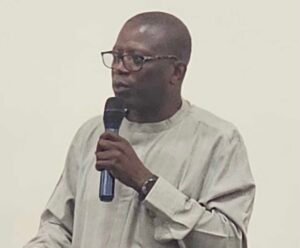
Man wearing a light traditional shirt and glasses, speaking into a handheld microphone.

A Defining Moment for India–Africa Partnership

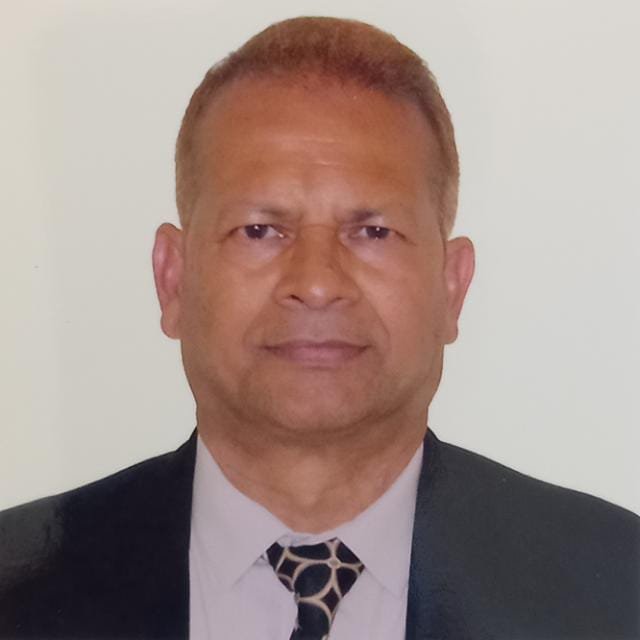
Head-and-shoulders portrait of a middle-aged man in a dark suit and patterned tie, facing the camera against a plain background.
High Commissioner of India to Sierra Leone, Baisnab Charan Pradhan 

By the High Commissioner of India to Sierra Leone, Baisnab Charan Pradhan 

As India prepares to host the Fourth India–Africa Forum Summit (IAFS-IV) in New Delhi this May 2026, we stand at a pivotal juncture in a partnership that has been shaped by history, strengthened by solidarity and driven by a shared vision for the future. The India–Africa relationship is not merely diplomatic; it is deeply human, rooted in centuries of exchange, mutual respect and common aspirations.

From the early days of trade across the Indian Ocean to our shared struggles against colonial rule, India and Africa have walked parallel paths. Leaders and movements on both sides inspired one another, forging bonds that continue to influence our engagement today. This legacy is not symbolic; it is a living foundation upon which we are building a modern, forward-looking partnership.

Since the launch of the India–Africa Forum Summit in 2008, this platform has evolved into the cornerstone of our engagement with the African continent. Each summit has expanded the scope and ambition of our cooperation. Now, IAFS-IV arrives at a time when the global landscape is marked by uncertainty, making partnerships based on trust and equality more important than ever.

Guided by the principles articulated by Prime Minister Narendra Modi, India’s engagement with Africa is anchored in mutual respect, demand-driven development and alignment with African priorities, including the African Union’s Agenda 2063. This approach ensures that our cooperation is not prescriptive but responsive; shaped by the needs and aspirations of African nations themselves.

Africa today occupies a central place in India’s foreign policy. This is reflected not only in the frequency of high-level visits but also in the depth of our cooperation across sectors. Trade between India and Africa has grown significantly, with India emerging as one of Africa’s largest trading partners. Beyond commerce, our development partnership, focused on capacity building, infrastructure, healthcare and education, continues to make tangible differences in people’s lives.

For countries like Sierra Leone, this partnership holds particular promise. India’s commitment to supporting local priorities, strengthening institutional capacity and fostering inclusive growth aligns closely with Sierra Leone’s own development agenda. Whether through training programs, lines of credit or technology partnerships, India’s engagement is designed to empower communities and create sustainable opportunities.

India’s partnership with Sierra Leone reflects a steady blend of investment, development cooperation and capacity building. Indian firms are driving industrial growth through food processing, steel, plastics and cement manufacturing, alongside a broader Indian/PIO business presence spanning trade, pharmaceuticals, constructions and infrastructure. Complementing private sector engagement, Government of India Lines of Credit have supported critical sectors including agriculture mechanization, irrigation, water supply, energy, telecommunications and higher education. Capacity-building initiatives under ICCR and ITEC have further strengthened human capital. India’s humanitarian assistance, from Ebola and COVID-19 support to food aid and disability-focused grants, demonstrates responsiveness to local needs. As both countries look ahead to the India-Africa Forum Summit, this multifaceted engagement underscores a shared commitment to sustainable development, resilience and South–South cooperation.

The theme of this year’s summit, “IA SPIRIT: India–Africa Strategic Partnership for Innovation, Resilience and Inclusive Transformation”,captures the essence of what lies ahead. It signals a shift from traditional cooperation to a more dynamic, innovation-driven partnership. As both India and Africa pursue ambitious development goals, India’s “Viksit Bharat 2047” and Africa’s Agenda 2063,the convergence of our visions presents immense opportunities.

Equally significant is the India–Africa Business Dialogue, which will be held alongside the summit. By bringing together business leaders, investors and policymakers, this platform will translate political intent into economic reality. It will catalyze partnerships in critical sectors such as energy, digital technology, agriculture, healthcare and manufacturing; areas that are essential for Africa’s transformation and where Indian expertise can play a meaningful role.

Importantly, the focus on MSMEs, startups and innovation ecosystems reflects a recognition that the future of our partnership will be driven not only by Governments but by entrepreneurs, innovators and young people. That is where the true potential of India–Africa collaboration lies; in harnessing creativity, technology and enterprise to address shared challenges.

As the world navigates complex geopolitical and economic shifts, the India–Africa partnership offers a model of cooperation based on equality, trust and shared progress. It is a partnership that prioritizes people over politics, development over dependency and collaboration over competition.

IAFS-IV is more than a diplomatic gathering; it is a reaffirmation of a shared journey and a collective commitment to shaping a better future. Together, India and Africa are not just partners in development; we are partners in resilience, innovation and transformation.

For Sierra Leone and the broader African continent, this summit represents an opportunity to deepen engagement, unlock new possibilities and strengthen a partnership that is both historic and forward-looking. The spirit of India–Africa cooperation has never been stronger and its future has never been brighter.

********

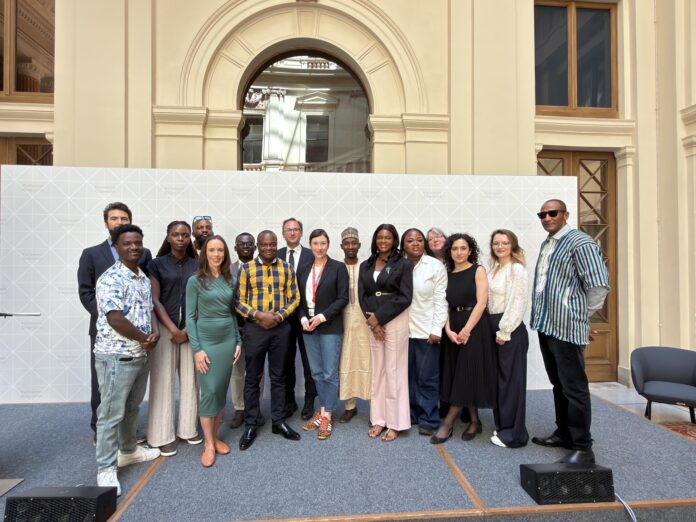
State Secretary Sepp Schellhorn Hosts African Journalists, Highlights Austria’s Neutrality and Global Cooperation

State Secretary Sepp Schellhorn Hosts African Journalists

By Amin Kef Sesay

Ten journalists from different African countries participating in the Austria-Africa Media Fellowship Programme 2026 in Vienna, Austria, on Tuesday, 19 May 2026, engaged Austria’s State Secretary at the Federal Ministry for European and International Affairs, Sepp Schellhorn, in an extensive and insightful discussion centered on democracy, Austria–Africa relations, media literacy, cultural diplomacy, tourism, investment opportunities, and the growing global threat posed by misinformation and fake news.

The high-level engagement formed part of activities under the Austria-Africa Media Fellowship Programme, which has brought together ten accomplished journalists from across Africa for professional exchanges and policy engagements in Vienna. The session provided participants with a rare opportunity to directly interact with a senior Austrian government official and gain deeper insight into Austria’s foreign policy priorities, international partnerships, democratic values, and engagement strategy with African nations.

The participating journalists represented a broad spectrum of African media institutions and countries, including Favour Ulebor-Emmanuel of Vanguard Newspaper in Nigeria, Alhassan Bala, Founder and Editor of Alkalanci (The Arbiter) in Nigeria, Albert Oppong-Ansah, Editor and Desk Head for Environment, Science and Energy at the Ghana News Agency, Amin Kef Sesay, Managing Editor of The Calabash Newspaper in Sierra Leone, Miriam Angil of Swahilipot Hub Foundation in Kenya, Clement Manyathela, host of The Clement Manyathela Show on Radio 702 in South Africa, Erin Marisa Bates, Anchor and Presenter at Carte Blanche in South Africa, Eyasu Zekarias Tadesse, Reporter and Fact Checker with Capital Ethiopia/FM 97.7, Ernestina Serwaa Asante of GhanaWeb, and Farai Shawn Matiashe, an international journalist from Zimbabwe.

Welcoming the journalists to the Foreign Ministry, Sepp Schellhorn expressed delight in meeting the delegation and acknowledged the intensive schedule already undertaken by the fellows, which included engagements at the Austrian Parliament and the United Nations headquarters in Vienna.

Introducing himself, Sepp Schellhorn disclosed that he oversees several portfolios, including deregulation, simplification of administrative systems, European affairs, arts, culture, and aspects of Austria’s foreign engagement. He stressed that arts and culture remain close to his heart, describing cultural diplomacy as one of the most effective and peaceful mechanisms for building bridges among nations and peoples.

According to Sepp Schellhorn, Austria strongly believes in the power of culture as a diplomatic instrument capable of fostering mutual understanding, strengthening dialogue, and reducing misunderstandings among nations.

“We believe arts and culture are among the easiest ways of building bridges between nations and people,” Sepp Schellhorn said, noting that Austria continues to prioritize cultural engagement as part of its broader foreign policy approach toward Africa and other regions.

He revealed that Austria had opened a cultural forum in Accra, Ghana, in February, underscoring the country’s growing commitment to engagement with Africa through culture and creative exchanges. He further disclosed that Austria’s Africa strategy is built around four key pillars: education, business and economic cooperation, culture, and migration.

Speaking during the exchange, Sepp Schellhorn explained that Austria sees education as a critical area of partnership with Africa, citing scholarship opportunities and exchange programmes as pathways for strengthening people-to-people relations and building long-term cooperation. He also highlighted Austria’s expertise in areas such as hydro-energy transformation, business innovation, and institutional cooperation.

The State Secretary emphasized that Austria, despite being a relatively small European nation, remains committed to fostering partnerships with African countries through diplomacy, cultural engagement, and multilateral cooperation. He noted that Austria’s status as a neutral country places it in a strategic position to facilitate dialogue and cooperation at the global level.

Responding to questions from journalists regarding Austria’s international standing and partnerships with Africa, Sepp Schellhorn said Austria’s neutrality remains central to its foreign policy, particularly as the country seeks a non-permanent seat on the United Nations Security Council for the 2027–2028 term.

He explained that smaller and neutral countries such as Austria play an essential role in promoting inclusive global dialogue and ensuring that the voices of less powerful states are represented in international decision-making processes.

As discussions progressed, journalists raised critical questions surrounding tourism, investment, misinformation, democracy, governance, and cultural preservation.

Amin Kef Sesay, Managing Editor of The Calabash Newspaper in Sierra Leone, used the opportunity to inquire about Austria’s diplomatic and development cooperation with African countries, particularly Sierra Leone.

Amin Kef Sesay sought clarity on how Austria’s foreign policy and international cooperation framework could create meaningful opportunities for African countries in areas such as education, trade, youth empowerment, governance, peacebuilding, institutional development, and sustainable economic growth.

Among the questions posed by Amin Kef Sesay were how Austria intends to strengthen diplomatic and development cooperation with African nations, the specific initiatives available to support education and climate resilience, and how countries like Sierra Leone can benefit from Austrian scholarships, investments, technical support, and international partnerships.

Responding to concerns over misinformation and digital manipulation, Sepp Schellhorn acknowledged that fake news, misinformation, and disinformation remain growing global challenges affecting democracies across the world, including Austria.

He maintained that misinformation does not only threaten political systems in Europe but increasingly influences elections and public opinion globally, making the protection of independent journalism more important than ever.

According to Sepp Schellhorn, combating misinformation requires a collective effort involving governments, media institutions, and society as a whole, while emphasizing the importance of protecting free and responsible journalism.

“This is not just a problem between Austria and African countries; it is a global issue,” he remarked, warning that digital platforms and social media have significantly increased the spread of false narratives and manipulative information.

The discussion also examined tourism and cultural preservation, with journalists seeking lessons from Austria’s globally admired tourism industry and heritage conservation systems.

Sepp Schellhorn explained that Austria’s tourism success has been built over decades through deliberate investment in preserving cultural heritage, historical landmarks, museums, and public infrastructure. He emphasized that Vienna’s attractiveness as a tourism destination lies not only in its architecture and history but also in the country’s commitment to maintaining heritage sites for future generations.

He encouraged African countries to identify and strengthen their unique tourism identities while protecting cultural and historical assets that can attract international visitors.

The session climaxed with an engaging question-and-answer segment in which journalists from Ghana, South Africa, Kenya, Nigeria, Ethiopia, Zimbabwe, and Sierra Leone explored issues relating to investment risks, democratic governance, corruption, migration, tourism recovery after COVID-19, and opportunities for stronger Austria–Africa cooperation.

At the close of the meeting, participants expressed appreciation for the frank and interactive engagement, describing the dialogue as insightful and beneficial to understanding Austria’s governance model, foreign relations priorities, and growing partnership ambitions with Africa.

For many of the African journalists, the engagement represented not only a diplomatic exchange but also an opportunity to reflect on how strengthened Austria–Africa relations could contribute to sustainable development, democratic governance, media advancement, and stronger people-to-people cooperation across continents.

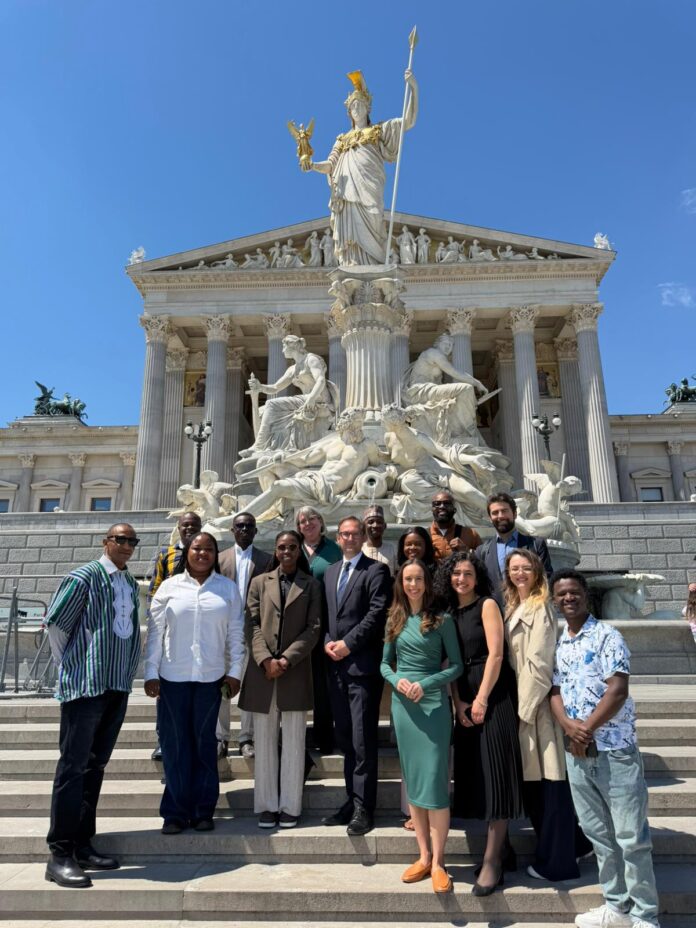
Austria Parliament Engages African Journalists on Democracy, Disinformation & Stronger Africa Relations During Media Fellowship in Vienna

Austria Parliament Engages African Journalists

By Amin Kef Sesay

Ten journalists from different African countries participating in the Austria-Africa Media Fellowship Programme in Vienna, Austria, on Tuesday, 19 May 2026, engaged senior Members of the Austrian Parliament in an insightful and wide-ranging discussion on democracy, media literacy, misinformation, Austria–Africa relations and the growing threat of foreign disinformation campaigns on democratic institutions and societies.

The engagement, held as part of the Austria-Africa Media Fellowship Programme, brought together journalists from Sierra Leone, Nigeria, Ghana, South Africa, Kenya, Ethiopia and Zimbabwe with Austrian lawmakers for an exchange of ideas on governance, digital security, media responsibility and the future of international partnerships between Africa and Europe.

The meeting featured Member of the Austrian National Council and Vice-Chair of the Foreign Affairs Committee, Andreas Minnich, alongside Member of the Austrian National Council, Henrike Brandstötter, who both shared perspectives on Austria’s democratic system, geopolitical realities and the country’s growing concern over the spread of fake news and digital manipulation.

The African journalists participating in the fellowship included Favour Ulebor-Emmanuel of Vanguard Newspaper, Nigeria; Alhassan Bala, Founder and Editor of Alkalanci (The Arbiter), Nigeria; Albert Oppong-Ansah, Editor and Desk Head for Environment, Science and Energy at the Ghana News Agency; Amin Kef Sesay, Managing Editor of The Calabash Newspaper, Sierra Leone; Miriam Angil, Head of Communications at Swahilipot Hub Foundation, Kenya; Clement Manyathela, Host of The Clement Manyathela Show on Radio 702, South Africa; Erin Marisa Bates, Anchor and Presenter at Carte Blanche, South Africa; Eyasu Zekarias Tadesse, Reporter and Fact Checker at Capital Ethiopia/FM 97.7, Ethiopia; Ernestina Serwaa Asante, Multimedia Journalist at GhanaWeb; and Farai Shawn Matiashe, International Journalist from Zimbabwe.

The engagement provided participants with a firsthand understanding of Austria’s parliamentary system, political dynamics and democratic governance, while also allowing room for meaningful dialogue on global issues affecting both continents.

Speaking during the session, Henrike Brandstötter gave a detailed overview of Austria’s current political structure, explaining that the country operates under a five-year parliamentary term and is presently governed through a three-party coalition arrangement.

According to Henrike Brandstötter, Austria’s National Council consists of 183 members, while the Federal Council represents the country’s federal system and regional interests.

She explained that Austria’s political environment, like many democracies around the world, is increasingly shaped by economic pressure, geopolitical instability and political polarization.

Henrike Brandstötter noted that the Russia–Ukraine war, instability in the Middle East, inflation and economic challenges continue to influence policymaking and political discourse in Austria and across Europe.

She further highlighted concerns over the growing influence of far-right political movements, warning that democratic institutions must continue to evolve to remain resilient in increasingly polarized environments.

According to Henrike Brandstötter, Austria’s coalition government is a necessary democratic arrangement designed to maintain stability despite ideological differences among the governing parties.

She acknowledged that governance in such circumstances can be challenging but stressed the importance of dialogue, compromise and shared responsibility in protecting democratic systems.

Turning to Austria’s engagement with Africa, Henrike Brandstötter disclosed that Austria is repositioning its approach toward African partnerships through a renewed Africa Strategy focused more on trade, investment, innovation and equal cooperation rather than limiting relations to development assistance and humanitarian support.

She emphasised that Austria increasingly views Africa as a continent of opportunity and long-term partnership.

“The future is in Africa,” Henrike Brandstötter stated, stressing that Europe must rethink its approach and begin engaging African countries more as strategic partners capable of driving global economic growth and innovation.

She maintained that Austria seeks stronger cooperation with African countries through parliamentary exchanges, development programmes, diplomatic engagement and mutually beneficial economic partnerships.

A major focus of the discussions centered on misinformation, disinformation and foreign propaganda, particularly the impact of Russian misinformation campaigns in Europe and Africa.

Andreas Minnich and Henrike Brandstötter both acknowledged that disinformation has emerged as a major threat to democracy, national security and public trust across Europe.

According to Andreas Minnich, misinformation campaigns often exploit social tensions, target vulnerable populations and seek to weaken confidence in democratic institutions and traditional journalism.

He stressed that misinformation, particularly online disinformation, spreads rapidly and cheaply, making it increasingly difficult for governments, institutions and journalists to respond effectively.

The Austrian lawmakers noted that fake news and manipulated content continue to shape political narratives, influence public opinion and deepen societal divisions, especially through digital platforms and social media.

They explained that Austria is increasingly treating misinformation not only as a media challenge but also as a national security issue requiring coordinated responses.

The African journalists also shared experiences from their respective countries, providing practical examples of how misinformation and propaganda have influenced political discourse, elections and public perception across the continent.

Journalists from Nigeria, South Africa and Ghana described how social media manipulation, false narratives, fake job opportunities and foreign propaganda increasingly target young people and communities with low media literacy.

Some participants explained that misinformation spreads rapidly through WhatsApp, Facebook, radio stations, influencers and online platforms where fact-checking mechanisms are often weak or nonexistent.

They observed that misleading narratives frequently gain traction during elections, protests and periods of political uncertainty, increasing the risk of instability and mistrust among citizens.

Amin Kef Sesay, Managing Editor of The Calabash Newspaper in Sierra Leone, raised questions regarding Austria’s parliamentary cooperation with African countries, particularly Sierra Leone.

He sought to understand how Austria intends to deepen partnerships with African countries in areas such as democratic governance, education, youth empowerment, media development, investment and diplomatic cooperation.

Amin Kef Sesay also inquired about opportunities for parliamentary exchanges, scholarships and institutional partnerships that could directly benefit Sierra Leone and other African countries.

In response, the Austrian parliamentarians reaffirmed Austria’s commitment to strengthening relations with African countries through dialogue, diplomacy and mutually beneficial engagement.

Henrike Brandstötter emphasized the importance of strengthening media literacy, especially among young people and citizens in rural communities, as one of the most effective ways to combat misinformation.

She explained that Austria is increasingly introducing educational programmes aimed at helping young people identify fake news, verify information and better understand responsible digital behaviour.

According to her, schools are gradually incorporating media literacy and digital awareness programmes to equip students with skills to navigate online content responsibly.

She further revealed that discussions are ongoing in Austria about strengthening safeguards for children and young people against harmful online content and excessive social media influence.

The parliamentarians also underscored the importance of trusted journalism, ethical reporting and professional fact-checking in defending democracy against misinformation.

They encouraged journalists to prioritize accuracy, verification and balanced reporting in order to maintain public confidence in traditional media.

The engagement climaxed with an interactive question-and-answer session where participants exchanged experiences, discussed practical strategies to counter misinformation and explored opportunities for stronger Austria–Africa cooperation.

The discussions highlighted the urgent need for governments, journalists, educators and civil society organizations to work collaboratively in promoting media literacy, protecting democratic values and combating the increasing spread of false information.

For the participating African journalists, the meeting offered valuable insight into Austria’s parliamentary system, democratic processes and policy approaches to addressing global challenges, while also strengthening dialogue on future partnerships between Africa and Europe based on trust, cooperation and shared interests.


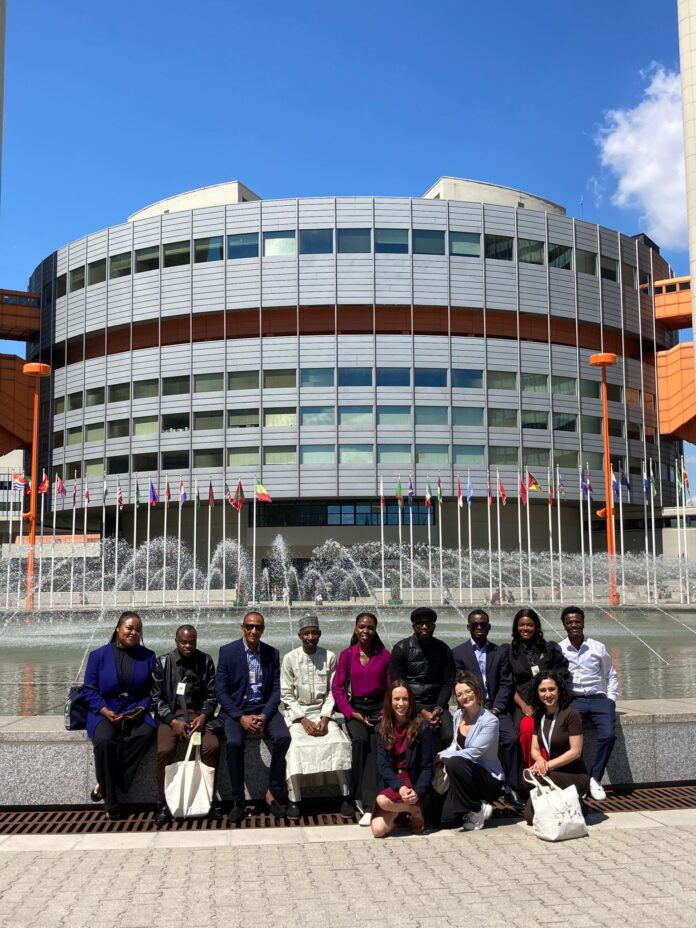
Austria-Africa Media Fellows Visit IAEA Headquarters, Gain Deeper Insight into Peaceful and Safe Uses of Nuclear Technology

Ten journalists from different African countries participated in the Austria-Africa Media Fellowship Programme.

By Amin Kef Sesay, Managing Editor, The Calabash Newspaper, Sierra Leone

Ten journalists from different African countries participating in the Austria-Africa Media Fellowship Programme on Monday, 18 May 2026, visited the headquarters of the International Atomic Energy Agency (IAEA) at the Vienna International Centre in Vienna, Austria, where they received comprehensive briefings on the agency’s global mission, technical cooperation programmes, and peaceful nuclear applications aimed at advancing sustainable development.

The visit formed part of activities under the fellowship programme and provided participants with firsthand insight into the operations of the IAEA, globally recognized as the world’s “Atoms for Peace and Development” organization. Established in 1957, the agency operates as an autonomous body within the United Nations system and is mandated to promote the peaceful use of nuclear science and technology while ensuring such technologies are not diverted for military purposes.

The IAEA headquarters, located at the Vienna International Centre in Vienna’s 22nd district of Donaustadt, serves as the nerve centre of the agency’s international activities. The institution plays a critical role in advancing nuclear safeguards, safety, technical cooperation, and scientific research across its member states.

During the visit, the journalists received a briefing from Sinéad Harvey, Press and Public Information Officer in the Office of Public Information and Communication, who provided an overview of the agency’s work and global engagement efforts. She highlighted the importance of public awareness and accurate reporting on nuclear science, particularly regarding its peaceful applications in development, healthcare, food security, environmental protection, and energy planning.

Participants later attended an in-depth lecture delivered by Michel Warnau, Section Head in the Division for Africa under the Department of Technical Cooperation, who explained the agency’s organizational structure and technical cooperation mechanisms aimed at supporting member states.

According to Michel Warnau, the IAEA operates through six departments, including four major technical divisions focusing on nuclear energy, nuclear sciences and applications, safety and security, alongside departments responsible for management and technical cooperation.

He explained that the agency’s Technical Cooperation Programme serves as the primary mechanism for transferring nuclear knowledge, expertise, and technology to member states, particularly in areas where nuclear applications offer advantages over conventional methods.

“The Technical Cooperation Programme is entirely member state-driven,” Michel Warnau stated, adding that countries identify their own national priorities, which the agency then supports through carefully designed projects aligned with development goals.

He noted that technical cooperation interventions are structured around a biennial cycle beginning with requests from member states based on national priorities and strategic development plans. Once priorities are identified, projects are developed jointly between national authorities and IAEA technical experts.

Michel Warnau further explained that every member state appoints a National Liaison Officer who acts as the focal point for coordinating technical cooperation with the agency. Following project design and approval, implementation involves the dispatch of technical experts, delivery of equipment, and extensive human resource development initiatives.

He disclosed that the agency strongly emphasizes capacity building through fellowships, scientific visits, training programmes, workshops, conferences, and technical exchanges aimed at strengthening local expertise.

The African region remains a major beneficiary of the IAEA’s Technical Cooperation Programme. According to Michel Warnau, about 47 African member states received support under the programme last year, while the number has now risen to approximately 50 countries.

He disclosed that countries including Guinea, Somalia, and The Gambia have recently joined the programme after completing necessary accession processes.

He further explained that the agency works under a regional cooperative arrangement known as the African Regional Cooperative Agreement for Research, Development and Training Related to Nuclear Science and Technology (AFRA), established in 1990 to coordinate regional technical cooperation efforts across Africa.

According to him, the agency recorded about 197 active national and regional projects in Africa by the end of last year, spanning areas such as health, food and agriculture, water management, industrial applications, radiation safety, nuclear knowledge management, and environmental sustainability.

Providing figures for 2025, Michel Warnau revealed that the IAEA organized 32 regional training courses across Africa, deployed 563 experts and lecturers for technical missions and training, while over 800 fellows and scientific visitors received overseas training opportunities to enhance specialized knowledge.

He also disclosed that approximately 1,400 participants took part in training activities, with women accounting for nearly 1,000 participants, underscoring efforts to promote female participation in science and technical fields.

The briefing further highlighted several flagship IAEA initiatives benefiting Africa, including the Rays of Hope programme, launched in 2022 to improve cancer diagnosis and radiotherapy services across the continent.

Michel Warnau emphasized that nearly 70 percent of Africans currently lack access to radiotherapy treatment despite the growing cancer burden, making the initiative essential in expanding cancer care infrastructure and strengthening medical expertise.

The agency is also supporting the establishment of radiotherapy centres, radiopharmacy networks, and training hubs in countries including South Africa, Algeria, and Morocco, which now serve as regional centres of excellence.

Another major initiative discussed was Atoms4Food, launched to address food insecurity and agricultural challenges through nuclear science applications in crop improvement, animal health, pest control, food safety, and water management.

The programme seeks to improve food productivity and resilience, especially in African countries where millions continue to face hunger and climate-related agricultural challenges.

Michel Warnau also highlighted the NUTEC Plastics initiative, which focuses on tackling marine and terrestrial plastic pollution using nuclear techniques to monitor plastic waste and develop innovative recycling technologies.

He warned that plastic pollution poses a growing global threat, noting that current estimates suggest there is now one ton of plastic for every three tons of fish in the ocean, a figure expected to worsen significantly by 2050.

The final flagship programme discussed was ZODIAC, launched during the COVID-19 pandemic to strengthen countries’ capacities to detect, monitor, and respond to zoonotic diseases.

The initiative supports diagnostic laboratories, biosafety systems, genome sequencing, and disease surveillance mechanisms across member states to improve preparedness for future health emergencies.

The visit concluded with an interactive engagement between the journalists and IAEA officials, providing participants with a broader understanding of how nuclear science and technology are contributing to healthcare, food security, environmental protection, and sustainable development across Africa and the wider world.