
Home Blog Page 40

Orange Sierra Leone Commissions NLe1.8 Million Ultra-Modern Health Centre in Wai Community, Boosting Rural Healthcare Access

Deputy Minister of Health I, Dr. Charles Senesie, alongside Orange Sierra Leone Chief Executive Officer, Madam Aïcha Touré

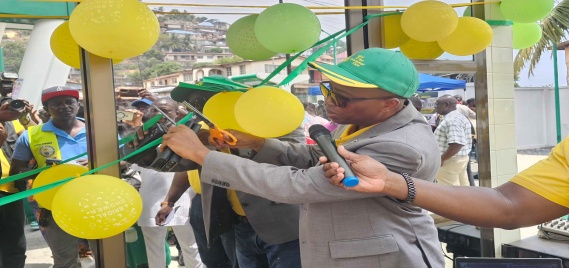
Orange Sierra Leone, in partnership with the Ministry of Health, has officially commissioned a NLe1.8 million ultra-modern ten-room health centre in Wai Community, Sorogbema Chiefdom, Pujehun District, marking a major milestone in the drive to improve access to quality healthcare services in rural Sierra Leone.

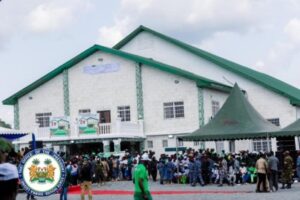
The facility, which was officially inaugurated on March 28, 2026, is expected to significantly transform healthcare delivery in Wai and surrounding communities, where residents have for years grappled with limited access to essential medical services due to distance, inadequate infrastructure, and insufficient resources.

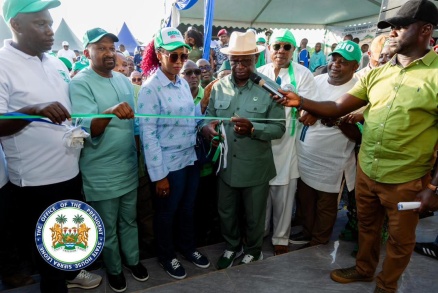
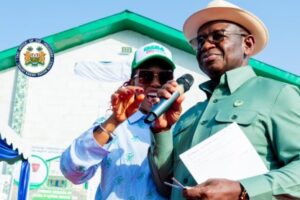
The commissioning ceremony was officiated by the Deputy Minister of Health I, Dr. Charles Senesie, alongside Orange Sierra Leone Chief Executive Officer, Madam Aïcha Touré, in the presence of the Paramount Chief, local authorities, traditional leaders, and hundreds of community residents who turned out to witness the historic event.

Delivering the opening remarks, Orange Sierra Leone’s Corporate Social Responsibility Officer, Mohamed Santos Bangura, gave a detailed overview of the project, tracing its journey from the groundbreaking ceremony held on April 17, 2025, to its successful completion.

He described the commissioning as a landmark achievement that reflects Orange Sierra Leone’s unwavering commitment to impactful social investment and sustainable national development.

According to Bangura, the new health centre is specifically designed to address critical gaps in rural healthcare delivery, with a strong focus on maternal and child health services.

He emphasized that the expansion of life-saving healthcare services in Wai would play a vital role in reducing preventable illnesses while contributing significantly to the reduction of maternal and child mortality rates in Pujehun District.

The Paramount Chief of Sorogbema Chiefdom, Mustapha Jeangay Massaquoi III, expressed profound appreciation to Orange Sierra Leone for what he described as a timely and transformative intervention.

He assured all stakeholders that the chiefdom would take full ownership of the facility, ensuring proper maintenance, protection, and effective monitoring so that it continues to serve both present and future generations.

Speaking during the commissioning, Orange Sierra Leone CEO Madam Aïcha Touré reaffirmed the company’s dedication to community wellbeing and national development, noting that the health centre was deliberately designed to respond to the urgent healthcare needs of Wai and neighbouring communities.

She disclosed that the ten-room facility is equipped with a labour ward and other essential medical infrastructure, enabling it to provide a broad range of healthcare services including maternal and child health care, outpatient consultations, emergency response, and basic diagnostic services.

Madam Touré further highlighted that the initiative aligns with the Orange Foundation’s maternal mortality reduction programme, under which the Wai facility will continue to benefit from targeted interventions aimed at improving outcomes for pregnant women, nursing mothers, and newborns.

In his keynote address, the Deputy Minister of Health I, Dr. Charles Senesie, commended Orange Sierra Leone for complementing Government’s efforts to strengthen healthcare systems across the country.

He noted that the project fits squarely within the Ministry’s broader strategy of expanding access to quality healthcare, particularly in underserved and hard-to-reach rural communities.

Dr. Senesie also announced that the former Wai Maternal and Child Health Post (MCHP) has now been officially upgraded to a fully equipped Community Health Centre (CHC), a development expected to significantly improve service delivery capacity and save more lives in the district.

The ceremony also featured remarks from philanthropist Mr. Salim Feika, one of the key contributors to the project, who expressed appreciation to all partners involved, including the Ministry of Health, the District Health Management Team, Orange Sierra Leone, and local authorities.

As part of his contribution, Mr. Feika donated two large waste disposal containers, chairs, and a motorbike to improve sanitation management and strengthen emergency response capabilities at the health facility.

He further appealed to stakeholders and development partners to support additional priority needs, including the construction of staff quarters, the provision of an ambulance, and continued capacity-building for healthcare workers, all aimed at ensuring efficient and sustainable service delivery.

In his closing remarks, Sierra Leone’s Ambassador to Liberia, Eddie Sidikie Mansaray, urged residents of Wai and surrounding communities to take full ownership of the facility by utilizing its services responsibly and supporting healthcare workers in maintaining high standards of care.

The well-attended commissioning ceremony brought together government officials, traditional leaders, development partners, health professionals, and community members, and concluded with the formal handover of the health centre to the Wai community and the people of Sorogbema Chiefdom.

With support from the Orange Foundation, the Wai Community Health Centre is now expected to significantly improve healthcare access, strengthen maternal and child health services, and contribute meaningfully to Sierra Leone’s ongoing national efforts to reduce mortality rates and improve public health outcomes in rural communities.

#image_title
#image_title

Ahmed Sillah’s Whereabouts Unknown as Family and Community Members Maintain Four-Year Search

Ahmed Sillah
Ahmed Sillah

By Ibrahim Sesay

KOIDU TOWN, KONO DISTRICT – In the dark heart of Sierra Leone’s diamond-rich East, blood and tradition are currencies heavier than gold. For four years, the rolling green hills and secret bush paths of Koidu Town have hidden a secret no one dares to speak aloud: the disappearance of Ahmed Sillah, the first son of the late Chief Kandeh Sheku Sillah.

To his family, Ahmed is a thief who stole their future. To the powerful Poro society, he is a marked man—a deserter who broke a sacred covenant. To the few who know his story, he is a young man who chose a backpack over a throne, and a life of shadows over one of ritual power.

When the revered Chief Kandeh Sheku Sillah passed away four years ago, the drums of succession began to beat immediately. As Section Chief of Koidu Town and a former ringleader of the Poro—the all-male secret society that governs spiritual and customary law across much of Sierra Leone—Kandeh wielded immense influence.

Tradition dictated that upon his death, his firstborn son, Ahmed, would inherit not just the chieftaincy stool, but also the spiritual burden of the Poro.

“Ahmed was to be forcefully initiated,” explains a community elder who spoke on condition of anonymity for fear of retribution. “The Poro does not ask. When your father is a ring leader, you are born into the oath. The night of the initiation, the Devil (the masked spirit) comes for you. There is no refusal.”

According to inside sources, in the months before his father’s death, Ahmed discovered the location of a hidden cache—raw diamonds his late father had secretly mined and stored over decades, separate from the chiefdom’s communal funds.

“He didn’t just run,” says a family relative. “He waited. He played the grieving son. Then, on the eve of the ‘Kpanguima’ (the initiation night), when the town was consumed by preparation and the sound of the ‘Sorsornie’ (Poro siren), Ahmed slipped out of his father’s house.” He didn’t leave empty-handed. Sources claim he took the entire hidden stash of uncut diamonds.

“He knew that if he stayed, the stones would become the property of the Poro,” a local miner told us. “Once he was chief, he would control the land, but the society controls the chief. The diamonds would have funded the family for generations. Ahmed took that power with him.” Today, two powerful forces are hunting Ahmed across West Africa.

  1. The Family – Greed and Honor

Ahmed’s uncle—the late chief’s younger brother—has mobilized a network of relatives. For them, this is not just about revenge. The “family fortune” is gone. Without the diamonds, the Sillah household has fallen into disarray. They believe Ahmed is living lavishly somewhere in Guinea or Liberia, using their birthright to fund a foreign life.

“He has betrayed his blood,” the uncle reportedly told a family meeting. “He will return the stones, or he will return in a coffin.”

  1. The Poro – The Long Arm of the Bush

The Poro society is not merely a club; it is a parallel government. Highly influential and deeply connected, its members include politicians, police commanders, and border officials. To the Poro, Ahmed’s escape is an existential threat.

“If a son of a ring leader can escape initiation and steal sacred assets, the bush loses its power,” a secret society researcher in Freetown explains. “They are hunting him not for the money, but for the precedent. He has broken the spiritual chain. They will find him. The Poro has no statute of limitations.”

For four years, Ahmed has vanished into the underground economy of West Africa. Reports—unverified—place him in the mining zones of Kenema, the backstreets of Conakry, and even as far as Bamako.

“He is a ghost,” one of his former friends says. “He will not come back. He knows that if he sets foot in Kono District, he will be taken to the bush by force. And this time, the initiation might be his last.”

Conclusion

Ahmed Sillah wanted a life of his own, free from the Fina (the Poro secret) and the weight of a chieftain’s crown. But in Sierra Leone, tradition is a heavy chain. He may have escaped the initiation night, but he cannot escape the blood he shares with his hunters.

As one elder put it: “The diamonds are cursed now. They are not his fortune. They are his death warrant. The Poro will have its son, or the bush will have his soul.”

For now, the heir to Koidu Town remains a phantom—rich, alone, and hunted by two armies: one bound by blood, the other by the spirit.

QNET’s Firm Stand Against Fraud Deserves National Backing

QNET
QNET

In recent years, West Africa has witnessed a troubling rise in transnational fraud schemes that prey on the hopes and vulnerabilities of young people seeking jobs, business opportunities, and a better life abroad. These criminal networks have become increasingly sophisticated—often hiding behind the names of legitimate global brands to gain credibility. One such company that has repeatedly found itself at the centre of this abuse is QNET.

However, contrary to the narratives often peddled by misinformation and opportunistic critics, QNET’s latest engagement with the Ministry of Foreign Affairs in Ghana signals something far more responsible: a company taking decisive steps to protect its integrity while supporting national efforts to combat fraud.

By formally submitting its business model to the Ministry of Foreign Affairs in Ghana and aligning itself with the government’s call for vigilance, QNET is not evading scrutiny—it is embracing it. That distinction matters. In an era where many corporations remain silent in the face of reputational threats, QNET has chosen transparency and collaboration.

QNET’s partnership with Ghana’s Economic and Organised Crime Office (EOCO) is particularly noteworthy. This is not a symbolic relationship. It has already yielded concrete results, including the rescue of over 300 victims and the arrest of perpetrators who have exploited QNET’s name to run criminal enterprises. These are not the actions of a company complicit in wrongdoing; they are the actions of a corporate entity actively fighting abuse of its brand. And the company is trying to replicate similar partnerships across West Africa.

Equally commendable is QNET’s investment in public education through its “QNET Against Scams” public education and media campaign, which is already in motion in Ghana, Sierra Leone and Senegal. At a time when digital deception is on the rise, public awareness remains one of the most powerful tools in prevention. By equipping citizens with the knowledge to identify and avoid scams, QNET is contributing meaningfully to national security and consumer protection.

QNET is a 27-year-old company with a global track record, and its strict direct selling model reinforces a key point: QNET’s business is rooted in product sales, not the fraudulent recruitment schemes often falsely linked to it.

It is important, therefore, for the public—and indeed the media—to draw a clear line between criminal syndicates and legitimate businesses whose identities are being hijacked. Failure to make this distinction risks not only damaging credible enterprises but also diverting attention from the real culprits.

This is not to suggest that vigilance should be relaxed. On the contrary, people must remain cautious and verify every opportunity presented to them. But vigilance must be informed, not reactionary. It must target the fraudsters—not the institutions working alongside authorities to stop them.

QNET’s call for individuals to independently verify claims through its official compliance channels is a step in the right direction. It empowers the public while reinforcing accountability.

In the broader context, this situation highlights the need for stronger collaboration between government agencies, private sector actors, and the media. Fraud in its modern form is borderless and adaptive; defeating it requires unity, not misplaced blame.

QNET has taken a position. It has chosen to stand with the state, with law enforcement, and with the victims. That stance deserves recognition—and more importantly, support.

The fight against fraud is a shared responsibility. And in that fight, those who step forward as partners, like QNET, should be seen not as suspects, but as allies.


Vice President Leads Call for Single Digital Market at ECOWAS ICT Summit

Vice President, Dr. Mohamed Juldeh Jalloh

By Amin Kef (Ranger)

The Vice President of Sierra Leone, Dr. Mohamed Juldeh Jalloh, has underscored the urgent need for accelerated digital transformation across West Africa, as he delivered a keynote address at the 20th Meeting of the Economic Community of West African States (ECOWAS) ICT Council of Ministers held on Friday, March 27, 2026, in Freetown.

Addressing Ministers, policymakers and regional stakeholders, Dr. Mohamed Juldeh Jalloh emphasized that digital transformation is central to unlocking sustainable economic growth, innovation and inclusive development within the ECOWAS sub-region. He noted that the region stands at a critical juncture where coordinated digital policies and investments can significantly reshape economies and improve livelihoods.

“The future of West Africa lies in our ability to harness digital technologies to drive growth, create jobs and expand opportunities for our people,” the Vice President stated, while calling for stronger collaboration among member states to build a unified and competitive digital ecosystem.

A major highlight of his address was the call for the establishment of a single digital market across ECOWAS. According to Dr. Mohamed Juldeh Jalloh, such a market would enable businesses to operate seamlessly across borders, reduce operational costs and stimulate entrepreneurship, particularly among young people and small and medium-sized enterprises.

He further stressed that under the leadership of Julius Maada Bio, who currently chairs ECOWAS, there is a renewed commitment to advancing interoperable digital infrastructure. This, he noted, must be built on the principles of inclusivity, accessibility and effective governance to ensure that no segment of society is left behind in the digital revolution.

The high-level ministerial meeting brought together Ministers responsible for telecommunications, ICT and digitalization from across West Africa. Hosted by the Government of Sierra Leone, the gathering focused on strategies to strengthen digital infrastructure, harmonize policies and accelerate regional integration.

The event featured remarks from key figures, including the Minister of Planning and Economic Development, Kenyeh Barlay and the ECOWAS Commissioner for Infrastructure, Energy and Digitalization, Sediko Douka. The session was formally opened by the Minister of Communication, Technology and Innovation, Madam Salima Monorma Bah, who also chaired the meeting.

Deliberations during the session were guided by recommendations from a prior Experts’ Meeting, which outlined critical priorities such as infrastructure expansion, cybersecurity enhancement and policy harmonization. Ministers engaged in extensive discussions, ultimately adopting the Experts’ report and its recommendations, signaling a collective commitment to advancing the region’s digital agenda.

In his remarks, Dr. Mohamed Juldeh Jalloh called for practical and forward-looking decisions that translate policy frameworks into tangible outcomes for citizens. He highlighted the importance of expanding broadband access, strengthening digital trust and promoting innovation ecosystems capable of sustaining long-term growth.

The meeting also reviewed key regional initiatives, including updated frameworks on data protection, cybersecurity protocols and a comprehensive regional e-government strategy aimed at improving public service delivery. Discussions further addressed the harmonization of electronic communication regulations and the implementation of regional roaming systems to enhance connectivity.

Participants noted significant progress in regional digital cooperation, including the establishment of cybersecurity mechanisms, digital forensics capabilities and coordinated internet governance structures. Those efforts are expected to contribute to a more secure, resilient and integrated digital environment across ECOWAS member states.

Concluding the meeting, Ministers reached a strong consensus on the need for sustained collaboration and decisive action. Stakeholders expressed optimism that the outcomes will translate into concrete advancements in digital connectivity, improved service delivery and expanded economic opportunities for citizens across West Africa.

The Vice President’s keynote address ultimately set the tone for the meeting, reinforcing Sierra Leone’s leadership role in driving regional digital transformation and positioning ECOWAS as a competitive player in the global digital economy.

Solidaridad Boosts Feed Salone Initiative with Vehicle Donation to Agriculture Ministry

Solidaridad West Africa in Sierra Leone has reinforced its support to the Government’s flagship agricultural programme by donating two fairly used Toyota Land Cruiser vehicles to the Ministry of Agriculture and Food Security, in a move aimed at strengthening the implementation of the Feed Salone Initiative.

The donation, which was formally handed over during a brief ceremony, is expected to enhance the Ministry’s operational capacity, particularly in reaching farming communities and improving agricultural productivity across the country.

Speaking at the event, Solidaridad’s Country Representative, Andrew Kojo Morrison, underscored the significance of the contribution, noting that it aligns with ongoing efforts to boost food production, create employment opportunities and stimulate economic growth.

“It is in recognition of these efforts that we are handing over these vehicles to support the Ministry’s work under the Feed Salone Initiative, led by the President of Sierra Leone,” Andrew Kojo Morrison stated. “Solidaridad appreciates the strong partnership and the enabling environment provided for our operations in the country.”

He further conveyed the commitment of Solidaridad’s Regional Director, Isaac Gyamfi, reaffirming the organization’s readiness to continue collaborating with the Ministry and other stakeholders in implementing sustainable agricultural programmes aimed at addressing food insecurity nationwide.

Receiving the vehicles on behalf of the Minister of Agriculture and Food Security, Dr. Musa Henry Kpaka, the Ministry’s Spokesperson and Director of Extension Services, Yayah Mansaray, expressed profound appreciation for the timely support.

He commended Solidaridad for its consistent contributions to strengthening agricultural value chains in Sierra Leone, particularly in key sectors such as cocoa, coffee, oil palm and cashew production, describing the organisation as a reliable and strategic partner in advancing the country’s food security agenda.

Yayah Mansaray noted that the addition of the vehicles will significantly improve the Ministry’s field operations, enabling extension workers to effectively reach farmers in remote areas, thereby enhancing productivity and service delivery across farming communities nationwide.

He also called for sustained collaboration between the Government and development partners to ensure long-term impact and the successful realization of the Feed Salone Initiative.

In a related development, Solidaridad earlier this week extended similar support to its local partner, Develop Salone (DESAL), through the donation of a fairly used Toyota Land Cruiser vehicle under the European Union-funded Jobs and Growth Programme.

The support is aimed at expanding outreach to cashew farmers in Northern Sierra Leone under the Sustainable Cashew Agroforestry Value Chain project.

Receiving the vehicle, DESAL’s Executive Director, Alhassan Kemoh Sesay, expressed gratitude for the intervention, noting that it will significantly enhance the organization’s capacity to reach more farmers and deepen its impact at the community level.

“With this support, DESAL will be able to reach many more farmers and make a meaningful impact in their communities,” he stated.

The intervention forms part of the European Union-funded Developing an Inclusive and Sustainable Cashew Agroforestry Value Chain (DISCA-VC) Project, which focuses on strengthening agricultural systems and improving livelihoods through sustainable practices.

Solidaridad continues to demonstrate its commitment to complementing the Government of Sierra Leone’s agricultural development efforts through strategic partnerships and the delivery of impactful, community-driven programmes designed to build resilient value chains and improve livelihoods across the country.

Forty-Two ASSL Staff Complete Specialized EU-Supported Training on Tax and Revenue Audits

By Amin Kef (Ranger)

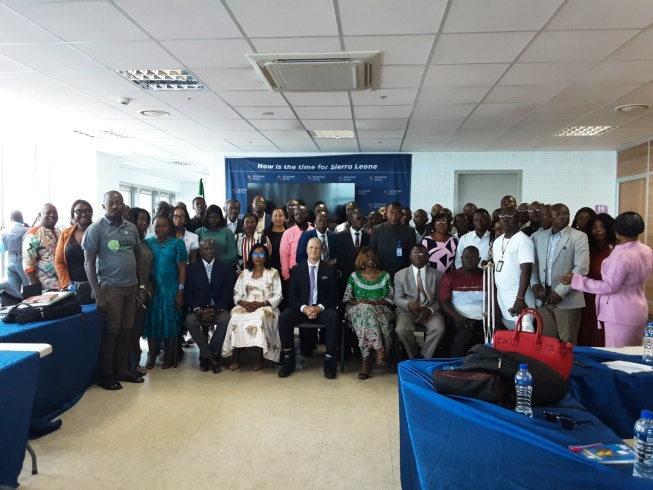
Forty-two technical staff of the Audit Service Sierra Leone (ASSL) have successfully concluded an intensive three-day capacity-building training aimed at enhancing the institution’s effectiveness in auditing public revenues and taxation, in a move seen as a significant boost to financial accountability in the country.

The training, organized under the Technical Assistance and Exchange Information (TAIEX) instrument funded by the European Union, was held from Tuesday 24th to Thursday 26th March 2026 at the Radisson Blu Hotel in Freetown. It brought together key technical personnel tasked with overseeing revenue and tax audit processes within the institution.

The workshop was designed to strengthen both the theoretical understanding and practical competencies of participants in the critical area of revenue auditing. Facilitated by experts from Poland’s Supreme Audit Office, the sessions provided insights into international best practices and modern auditing techniques, particularly from the perspective of a Supreme Audit Institution.

Central to the training was the adoption of globally recognized methodologies aligned with standards set by the International Organization of Supreme Audit Institutions (INTOSAI). Participants were taken through key areas including risk-based auditing approaches, tax compliance frameworks, enforcement mechanisms and the identification and mitigation of revenue-related risks and irregularities.

The training also emphasized the importance of strengthening public financial management systems through effective oversight. By equipping staff with the necessary tools and knowledge, ASSL is expected to improve its capacity to detect inefficiencies, enhance compliance and ensure that public revenues are properly accounted for and managed.

Through a blend of interactive sessions, group discussions and practical case studies, participants were able to deepen their understanding of audit processes, particularly in areas such as audit reporting, formulation of actionable recommendations and effective follow-up mechanisms. Those components are critical in ensuring that audit findings lead to meaningful reforms and improved governance outcomes.

Speaking on the significance of the training, officials noted that building institutional capacity remains a key priority for ASSL, especially at a time when the demand for transparency and accountability in public financial management continues to grow. The support provided through the European Union-funded TAIEX programme underscores the importance of international collaboration in strengthening governance institutions.

The successful completion of the training is expected to have a lasting impact on the performance of ASSL, enabling it to carry out more robust and effective audits of public revenue streams. That, in turn, will contribute to improved accountability, better resource management and enhanced public trust in Government financial systems.

Sierra Leone’s ongoing pursuit of reforms to strengthen fiscal discipline and governance underscores the importance of initiatives such as the training programme, which highlight the critical role of capacity development in achieving sustainable national development goals.

Shalimar Trading Warns Against Fake Spare Parts, Urges Riders to Buy Genuine Products

Shalimar Trading Company Limited, the exclusive distributor of motorcycles and three-wheelers manufactured by TVS Motor Company, is intensifying its call for motorcycle owners and commercial riders across Sierra Leone to prioritize the use of genuine spare parts and engine oil purchased from its recognized outlets, warning that the growing circulation of counterfeit products poses serious risks to safety, performance and livelihoods.

The company, widely acknowledged as a key contributor to employment and economic expansion, says the increasing availability of fake spare parts and substandard lubricants on the market is undermining the durability of motorcycles and threatening the income of thousands of riders who depend on their bikes for daily survival.

According to industry observations, motorcycles remain a central pillar of Sierra Leone’s transport system, particularly in areas where access to formal public transportation is limited. From urban centres to rural communities, commercial riders rely heavily on dependable motorbikes to move passengers and goods efficiently. However, the use of counterfeit components has emerged as a major challenge, often resulting in frequent breakdowns, increased maintenance costs and avoidable accidents.

Shalimar Trading is therefore urging customers to purchase all spare parts, including engine oil, tyres and batteries, exclusively from its approved and recognized shops. The company emphasizes that genuine parts are specifically designed to meet manufacturer standards, ensuring optimal performance, fuel efficiency and long-term reliability.

“Using original spare parts is not just about maintaining your motorcycle; it is about protecting your investment and your livelihood,” a company representative noted, stressing that riders who opt for cheaper, fake alternatives often end up spending more due to repeated repairs and reduced engine lifespan.

Since its establishment in 2003, Shalimar Trading has grown into one of Sierra Leone’s leading automobile distributors, with a strong footprint in the motorcycle and tricycle market. Its partnership with TVS Motor Company has enabled the steady supply of durable and cost-effective bikes, including the widely used TVS Star HLX series, which has become a preferred choice for commercial riders due to its strength and adaptability to local road conditions.

In addition to motorcycles, the company continues to expand the three-wheeler segment through the distribution of the TVS King Deluxe passenger tricycle, commonly known as “kekeh,” as well as cargo variants that support small businesses and traders in transporting goods. Those mobility solutions have created employment opportunities for thousands of Sierra Leoneans, particularly among youth engaged in the informal transport sector.

Beyond distribution, Shalimar Trading has invested significantly in after-sales service, establishing a network of showrooms and service centres across Freetown and other parts of the country. Those facilities not only provide access to genuine spare parts but also create jobs for mechanics, technicians and sales personnel, contributing to skills development within the automotive industry.

The company also deals in other internationally recognized brands, including Suzuki, Isuzu and Ashok Leyland vehicles, as well as agricultural machinery such as Sonalika tractors, further supporting economic activities across multiple sectors.

Despite its growing influence, Shalimar Trading maintains that its priority remains ensuring customer satisfaction and safety. By encouraging the use of authentic spare parts and discouraging counterfeit products, the company aims to safeguard the efficiency of motorcycles while protecting the livelihoods of riders who depend on them.

With Sierra Leone’s transport sector continuing to expand, the company’s message remains clear: investing in genuine parts is essential not only for optimal vehicle performance but also for sustaining the economic opportunities that motorcycles and three-wheelers provide nationwide.

Information Minister Champions Fight Against Misinformation at Global Stratcom 2026 Summit in Istanbul

Minister of Information and Civic Education, Chernor Bah

Sierra Leone’s Minister of Information and Civic Education, Chernor Bah, has delivered a compelling message on the global stage, positioning the country as an active voice in the international fight against misinformation during the 2026 International Strategic Communication Summit in Istanbul.

The high-level summit, which convened on Friday, March 27, 2026, brought together policymakers, diplomats, media professionals and technology experts from across the world to address evolving challenges in information management and strategic communication. Organized by Türkiye’s Presidency Communications Directorate, the gathering focused on strengthening global responses to misinformation, disinformation and digital manipulation.

Taking the podium at the opening session, Chernor Bah outlined Sierra Leone’s growing commitment to promoting transparency, strengthening public trust and empowering citizens through accurate and accessible information. He emphasized that misinformation is no longer a localized issue but a global threat capable of undermining governance systems, weakening democratic institutions and eroding confidence between Governments and their citizens.

In a series of high-profile media engagements with TRT, AfroTurk TV and CGTN, the Minister clearly articulated Sierra Leone’s firm stance against the spread of false narratives. He highlighted ongoing national efforts that prioritize collaboration with local media institutions, the rollout of digital literacy initiatives and the establishment of regulatory frameworks designed to curb the proliferation of harmful online content.

According to the Minister, building resilience against misinformation requires a multi-faceted approach that includes educating citizens, enhancing media credibility and ensuring that Governments remain open and accountable in their communication. He underscored that empowering citizens with the skills to identify and challenge false information is essential in safeguarding democratic values and national cohesion.

Beyond the issue of misinformation, he also drew attention to the broader global environment, noting how international conflicts continue to have far-reaching consequences even for countries geographically distant from the crisis zones. Referencing tensions involving Israel, the United States and Iran, he explained that Sierra Leone is already experiencing indirect economic pressures.

He pointed to rising fuel prices, increasing import costs and mounting pressures on the cost of living as tangible impacts of global instability. Those developments, he noted, are placing strain on households, businesses and Government resources, reinforcing the need for proactive policies that shield citizens from external shocks.

Despite those challenges, Chernor Bah reaffirmed the Government’s commitment to strengthening economic resilience and maintaining stability. He emphasized that Sierra Leone remains focused on protecting its population while adapting to an increasingly interconnected and unpredictable global landscape.

Observers at the summit noted that Sierra Leone’s contributions stood out for their clarity and practical focus, reflecting a country that is not only aware of global communication challenges but actively working to address them through policy and engagement.

The Information Minister’s participation at the Stratcom Summit underscores Sierra Leone’s growing presence in international policy discussions, particularly in areas related to information integrity and digital governance. His intervention reinforced the country’s role as a committed partner in promoting credible information ecosystems and countering the harmful effects of misinformation in an increasingly digital world.

SLPHA DG Yakuba Bio Leads Crackdown as 461 Cartons of Tramadol Intercepted at Freetown Port

By Amin Kef (Ranger)

A major joint security operation at the Freetown Port has led to the interception of a large consignment of suspected controlled substances, as authorities intensify efforts to curb the illegal importation of drugs into Sierra Leone.

On Tuesday, March 24, 2026, a coordinated team comprising the Sierra Leone Ports and Harbours Authority, National Revenue Authority, Office of the National Security, Pharmacy Board of Sierra Leone and the Sierra Leone Police successfully intercepted four containers carrying a total of 461 cartons of Tramadol and Tapentadol Hydrochloride. The interception followed a comprehensive 100 percent joint examination conducted within the precinct of Freetown Terminal Limited.

Authorities confirmed that the consignment included high-dose pharmaceutical products, specifically Tramadol and Tapentadol Hydrochloride ranging between 225mg and 250mg; substances often associated with abuse and strict regulatory control.

Investigations further revealed that the importer linked to the seized containers is Jalim Bah Investment, located at 80 Fourah Bay Road in Freetown.

Details of the intercepted containers indicate a systematic shipment structure: Container HASU1264025 contained 100 cartons of Tramadol; MRKU6998749 held 114 cartons; TCLU3516278 carried 147 cartons; while SUDU7509283 contained 100 cartons, bringing the total seizure to 461 cartons.

Security officials noted that the successful interception highlights the growing effectiveness of inter-agency collaboration at the nation’s ports. The operation forms part of broader national efforts to strengthen border controls and prevent the influx of illicit drugs, which pose serious public health and security risks.

In a related development, the Sierra Leone Ports and Harbours Authority on Friday, March 27, 2026, officially handed over the suspected tramadol consignment to the Sierra Leone Police. The handover, conducted in the presence of media representatives and key security stakeholders, underscored the authorities’ commitment to transparency and accountability in handling such sensitive matters.

Director General of the Sierra Leone Ports and Harbours Authority, Yakuba Bio, reaffirmed the institution’s resolve to maintain strict vigilance over cargo passing through the country’s ports. He emphasized that the Authority remains fully aligned with Government’s determination to combat drug trafficking and safeguard national security.

The latest seizure serves as a strong warning to individuals and entities involved in the illegal importation of controlled substances, while reinforcing confidence in the capacity of Sierra Leone’s security architecture to respond decisively to emerging threats.

SLCAA Strengthens Aviation Oversight with Successful AFI-CES Technical Assistance Mission

SLCAA Strengthens Aviation Oversight with Successful AFI-CES Technical Assistance Mission

By Amin Kef (Ranger)

The Sierra Leone Civil Aviation Authority (SLCAA) has reaffirmed its commitment to strengthening aviation safety and security following the successful conclusion of the AFI-CES Technical Assistance Mission, a high-level intervention that has significantly enhanced regulatory oversight in Sierra Leone’s aviation sector.

Director General of SLCAA, Musayeroh Barrie, welcomed the outcome of the mission, noting that it marked a major milestone in aligning the country’s aviation security systems with international standards. She emphasized that, in collaboration with experts from the African Civil Aviation Commission, key Aviation Security (AVSEC) frameworks were strengthened to improve operational effectiveness and regulatory compliance.

“SLCAA welcomes the successful conclusion of the AFI-CES Technical Assistance Mission, which has strengthened oversight in Sierra Leone. In collaboration with AFCAC experts, key AVSEC frameworks were enhanced in line with international standards. We remain committed to implementing these outcomes,” Madam Musayeroh Barrie stated.

The mission complements the Authority’s recent efforts, including the successful completion of a three-day Aviation Security (AVSEC) Risk Matrix Review held from March 16 to 18, 2026, at Freetown International Airport. The exercise brought together critical stakeholders across the aviation and security sectors, including the Office of National Security, Republic of Sierra Leone Armed Forces, Sierra Leone Police, immigration authorities, airport operators and AVSEC service providers.

The collaborative review focused on reassessing emerging threats, identifying operational vulnerabilities and strengthening preparedness against evolving risks within the aviation ecosystem. At the end of the intensive sessions, participants developed and validated a harmonized 2026 Aviation Security Risk Matrix tailored specifically to the country’s main international gateway.

According to SLCAA officials, the updated framework introduces a dynamic, intelligence-led and risk-based approach to aviation security. It is designed to enhance proactive threat detection, improve coordinated responses and ensure efficient allocation of resources to areas of greatest need. The revised matrix is also expected to strengthen decision-making processes and elevate the overall effectiveness of security operations at the airport.

A key achievement of both the AFI-CES mission and the AVSEC review process is the strengthening of inter-agency collaboration. Improved coordination among security institutions is expected to enhance communication, intelligence sharing and joint operational responses, ultimately creating a more resilient aviation security architecture.

SLCAA further underscored that those initiatives are consistent with global best practices and international aviation standards. The Authority noted that ongoing reforms are part of a broader strategy aimed at modernizing Sierra Leone’s aviation sector and boosting international confidence in its air transport systems.

In recent years, SLCAA has continued to expand its technical capacity through strategic partnerships and targeted interventions. Those include the installation of modern security systems, enhanced inspection protocols and specialized training programmes for aviation personnel to ensure optimal operation and maintenance of critical equipment.

The Authority has also engaged in regional and international collaborations, including technical missions and capacity-building programmes designed to strengthen regulatory oversight and operational efficiency. Such engagements have reinforced Sierra Leone’s position within the global aviation community and contributed to safer and more efficient air navigation systems.

The successful conclusion of the AFI-CES Technical Assistance Mission, alongside the AVSEC Risk Matrix Review, represents a significant step forward in Sierra Leone’s aviation security journey. It highlights SLCAA’s sustained commitment to safeguarding the country’s airspace through proactive, intelligence-driven and internationally compliant measures, while laying a solid foundation for continued progress in the sector.

Director General of SLCAA, Musayeroh Barrie