In a significant ceremony preceding the Plenary of Judges, Justice Paula da Conceição Machatine Honwana was sworn in as a Judge of the Residual Special Court for Sierra Leone (RSCSL) on February 28, 2024. The event, held in Freetown, marked a pivotal moment in the court’s continued pursuit of justice. Justice Machatine Honwana solemnly declared her commitment before RSCSL Vice President Justice Emmanuel E. Roberts to uphold her duties impartially and conscientiously, without any bias.
Justice Machatine Honwana’s appointment follows the untimely passing of Justice Elizabeth Ibanda-Nahamya in January 2023. Her extensive legal experience, spanning over two decades, includes notable positions such as serving as a Judge of the Superior Court of Appeals in Mozambique from 2011 to 2014 and again from 2020 to 2022. Additionally, she contributed significantly as a Legal Adviser to the President of the Supreme Court of Mozambique from 2014 to 2020.
Her dedication to legal scholarship and education is evident through her tenure as a law instructor at prestigious institutions such as the Higher Institute of Sciences and Technology of Mozambique (ISCTEM) and the Centre of Judicial and Judiciary Training in Maputo, Mozambique. Furthermore, Justice Machatine Honwana’s scholarly contributions include co-authoring a handbook on wildlife crime for judges in 2022 and publishing numerous articles and academic papers.
Justice Machatine Honwana’s academic achievements are equally impressive. She obtained her law degree from the Faculty of Law at the University of Lisbon in Portugal in 1997, followed by a Master’s degree in Public and International Law from the University of Melbourne in Australia in 2017. In 2021, she furthered her expertise with a Postgraduate degree in International Contract Law from Eduardo Mondlane University in Mozambique.
The Residual Special Court for Sierra Leone, entrusted with continuing the legal obligations of its predecessor, the Special Court for Sierra Leone, plays a crucial role in ensuring justice prevails. Its responsibilities encompass overseeing prison sentences, providing witness protection and support, managing archives, and aiding national prosecution authorities.
Justice Paula da Conceição Machatine Honwana’s induction into the RSCSL brings a wealth of experience and expertise, reinforcing the court’s commitment to upholding the rule of law and delivering justice in Sierra Leone.
Invited participants including the Deputy Minister 2 of MAFS (Center) flanked by Director of Crops at MAFS and WHH Head of Programmes.
By: Tamba Borbor
Communication & Advocacy Officer
WHH Sierra Leone
Welthungerhilfe Sierra Leone (WHH) has on Wednesday 21st February 2024 launched the “Promoting Sustainable Food and Nutrition Security through Climate-Smart Livestock Farming” Project at the Galaxy Hall in Kamakwie Town, Karene District.
With funding from the German Federal Ministry for Economic Cooperation and Development (BMZ), the new project is implemented in Karene and Moyamba Districts by two WHH’s local partners- Mankind’s Activities for Development Accreditation Movement (MADAM) and the Sierra Leone Animal Welfare Society (SLAWS). With a duration of 36 months, the project targets 2,000 vulnerable smallholder households in Moyamba and Karene districts to benefit from development of climate-smart agriculture and small-scale livestock geared towards improved food and nutrition security.
Speaking at the official project launch in Kamakwie, Head of Programmes, Gospell Matondi, gave a brief background of WHH’s intervention in Sierra Leone since 2002.
He stated that WHH’s main goal is to ensure that “every Sierra Leonean does not go to bed hungry in line with our Vision of Zero Hunger by 2030”, adding that launching this project complements the Government’s “Feed Salone” Flagship development programme.
Gospell Matondi noted that supporting 2,000 women in the two project districts manifests WHH’s commitment to empowering vulnerable women households in food production and improved income generation.
“WHH is committed to establishing its presence in the North of Sierra Leone, which include Karene and Falaba Districts. Through this Project, we expect development of sustainable and resilient local food systems nutrition for the two districts,” Gospell further stated.
He appealed to the project participants to ensure the project is sustainable and stressed the need for close collaboration and synergy with relevant line Ministries including the Ministry of Agriculture and Food Security (MAFS).
The WHH Head of Programmes further informed the community that a Complaint Response Mechanisms will be established, to enable participants to communicate their concerns to the Project Management team during the implementation phase.
“Do not be afraid to reach out to WHH at any time to complain if things are not progressing according to what is contained in the project document,” Gospell urged the participants.
The Director MADAM, Mohamed Sorie Conteh thanked WHH for the continued support over the years especially to undertake such a project that prioritizes women’s empowerment at the local level, while noting that the project’s objectives are in line with the Feed Salone Initiative of the Government of Sierra Leone.
Mr. Conteh stated that the people of Karene and Moyamba are fortunate to be benefiting from this project which he noted will support income generation, prevent malnutrition, and improve climate resilience because of climate change.
He urged the participants to support the project to ensure sustainability and assured his Team will work in collaboration with the Ministry of Agriculture and Food Security (MAFS) and other stakeholders for successful implementation.
The Chairman of Karene District Council, Kandeh Turay in his statement lauded the intervention of WHH in his District with the objective of increasing food and livestock production.
He appealed to the people to support the project as women are at the heart of it all.
“Let us ensure the Feed Salone Initiative of the Government succeeds by supporting this project which will benefit 1,000 of our women farmers,” the Council Chairman stated, committing to knock on all doors to bring development projects that will benefit the people.
The District Agriculture Officer of the Ministry of Agriculture and Food Security- Mohamed Sheriff acknowledged WHH-supported project has objectives that are in line with the Feed Salone Flagship Initiative of the Government of Sierra Leone.
He urged the project participants to enlist their support for the project even after completion to ensure all the gains are sustainable.
In his keynote address to officially launch the project in Karene District, the Deputy Minister Two of the Ministry of Agriculture and Food Security- Sahr Hemoh thanked WHH for the various interventions across the country to positively impact the lives of “our people.”
He stated that with such a project that focuses on boosting food and livestock production, the country is in line to feed itself.
“We must be food sovereign… and the President has said that we must grow what we eat and eat what we grow,” the MAFS Minister further stated, adding that all relevant development partners are needed to achieve this objective.
He lauded WHH for embedding solar irrigation technology in the project which has been a challenge for farmers in the rural areas and stressed the need for collaboration between the Ministry staff in the district and MADAM.
“Our staff has the required technical knowledge and experience to advise the implementing partner- MADAM and WHH, so we hope this can be fully utilized for the successful roll out of this project for the benefit of our people,” Deputy Minister Hemoh further stated.
Edward Conteh, the Head of Programmes of MADAM in explaining the purpose and overview of the project stated that 2,000 smallholder households in Karene and Moyamba districts will have access to the improved infrastructure, support services for small livestock, vegetables, and markets.
In general, he said, the project aims at improving food and nutrition security and strengthening resilience and adaptation to the impacts of climate change in Moyamba and Karene districts of Sierra Leone.
Momoh Lawrence Turay, the Project Manager of MADAM delivered a PowerPoint Presentation of the project’s components.
Welthungerhilfe has been involved in various sectors in Sierra Leone ranging from agriculture, food and nutrition security, cocoa value chain, water and sanitation, emergency response, waste management, clean energy and skills development in the remote parts of the country.
The organization has a Vision of a world in which everyone can lead a self-determined life in dignity and justice, free from hunger and poverty.
The Minister of Technical and Higher Education, Dr. Ramatulai Wurie, during a ceremony held on Saturday, February 24th, 2024, at the Njala Campus lauded the University for its unwavering commitment to excellence. Dr. Wurie commended the remarkable strides of the University in line with the Ministry of Technical and Higher Education’s vision for sustainable educational transformation.
During her address, Dr. Wurie highlighted several achievements of Njala University, including advancements in infrastructure, the integration of technology to broaden educational accessibility, investment in staff research capabilities, and innovative approaches to addressing contemporary and future challenges.
The Minister further expressed sincere appreciation to the University Court, Administration, and staff for their dedication to nurturing student intellect and maintaining high academic standards. She emphasized Njala University’s pivotal role in advancing the national development agenda, particularly in bolstering productivity and commercialization within the agriculture sector.
She underscored the University’s role in equipping students with essential knowledge, skills and entrepreneurial acumen necessary for success in the 21st century.
“Njala University is molding a generation of future leaders, entrepreneurs and catalysts for change, poised to steer Sierra Leone towards prosperity,” remarked Dr. Ramatulai.
The Minister reaffirmed the Ministry’s unwavering support for Njala University’s contributions to national development and its promotion of a culture characterized by excellence and innovation.
“While celebrating the achievements of our graduates, it is crucial to acknowledge the Ministry’s ongoing initiatives aimed at revolutionizing education in Sierra Leone,” she stated. “We are committed to initiatives that promote innovation, inclusivity, and academic excellence, aligning our educational institutions with global standards and equipping students with skills relevant to the demands of the modern era.”
Dr. Wurie outlined the Ministry’s strategic focus on establishing a robust legal framework for technical and higher education through the formulation of the Technical and Higher Education Act. This legislation aims to ensure quality assurance, safeguard student and educator rights, enhance accountability, and align educational institutions with sustainable national development goals.
“To bolster our regulatory oversight, we are dedicated to revising the Tertiary Education Commission Act, empowering the Tertiary Education Commission (TEC) to enhance regulatory functions, promote quality, align with national development objectives, foster international collaboration, and ensure effective governance,” she explained.
The Minister reiterated the Ministry’s commitment to establishing a solid financial foundation for all educational institutions and leveraging digital transformation to enhance efficiency across various educational processes, aligning with the “Big Five Game Changers” agenda.
“In embracing the digital era, the Ministry is committed to driving comprehensive digital transformation initiatives, from admissions to administration, teaching, financial management, and data utilization, with the aim of enhancing efficiency and delivering a technologically advanced educational experience,” she concluded.
In a bid to bolster political and campaign finance regulation in Sierra Leone, the International Institute for Democracy and Electoral Assistance (International IDEA) organized a 4-day (19th – 22nd February 2024) peer learning visit to the Independent Electoral Commission (IEC) in South Africa. This initiative, facilitated under the Sierra Leone Democracy Strengthening Programme funded by the European Union (EU), aimed to foster shared learning and explore best practices in political and campaign financing for the Political Parties Regulation Commission (PPRC) of Sierra Leone.
The study tour was prompted by the provisions of the Political Parties Act (PPA) No. 25 of 2022, focusing on candidate and political party finance regulatory functions of the PPRC. Additionally, it responded to recommendations from national and international election observation groups, particularly echoing the EU Elections Observation Mission of 2023’s recommendation 10.
The visit centered on mutual exchange of ideas, systems, and processes in candidate and political party campaign financing regulation for the PPRC. The IEC of South Africa, renowned for its effective political finance regulatory framework, provided valuable insights. With a dedicated political finance directorate boasting extensive experience in party funding and regulating money in politics, the IEC served as a prime example for the PPRC.
Political and campaign finance plays a pivotal role in democratic governance, ensuring fairness, accountability, and integrity in electoral processes. Recognizing this, International IDEA has supported the development of a draft political campaign finance regulation for the PPRC, awaiting validation from political parties before presentation to parliament.
During the South Africa visit, participants engaged with leading experts, practitioners, and regulators at the IEC to delve deeper into the political finance landscape. Discussions encompassed legal frameworks, enforcement strategies, financial reporting procedures, sanctions and enforcements, records management, monitoring, and communication. Interaction with South African civil society organizations further enriched the learning experience.
Dr. Idrissa Mamoud Tarawallie, Head of International IDEA, Sierra Leone Country Programme, emphasized the significance of understanding the sources and usage of political funds for electoral fairness and integrity. He expressed International IDEA’s commitment to leveraging partnerships like the one with the IEC of South Africa to strengthen the capacity of the PPRC in regulating money in politics.
Hon. Justice Abdulai M. Bangurah, outgoing Chairman of the PPRC, lauded the collaboration with International IDEA, marking it as a pivotal part of his legacy. He highlighted the PPRC’s enhanced capacity and regulatory framework for political campaign financing, coupled with the invaluable opportunity to learn from South African peers.
This collaborative effort underscores International IDEA’s dedication to democratic governance and electoral integrity. By facilitating peer-to-peer learning and capacity-building initiatives, International IDEA aims to empower institutions like the PPRC to effectively regulate political finance, thereby fostering transparency and accountability in Sierra Leone’s electoral processes.
In a significant development for youth empowerment and skills development, the Turkish Ambassador to Sierra Leone, Sibel Erkan, has partnered with the Ministry of Youth to donate welding equipment through the TIKA project. The initiative aims to provide hands-on training opportunities for young people, equipping them with valuable skills for the future.
Minister of Youth, Mohamed Orman Bangura, expressed his gratitude for the generous donation, emphasizing the importance of practical training in empowering the youth. “Receiving welding equipment from Ambassador Sibel Erkan and the TIKA project is a testament to the trust our donor partners have in the youth sector,” Minister Bangura stated. “We are determined to empower our youth through skills development and create opportunities for them to thrive in a rapidly changing world.”
Ambassador Sibel Erkan, in her statement, highlighted her support for the Minister’s vision of empowering young people through practical training. “I am thrilled to be part of this partnership that aims to invest in the future leaders of tomorrow,” Ambassador Erkan said. The donation of welding equipment underscores the commitment to providing the youth with the tools they need to succeed and contribute meaningfully to society.
The partnership between the Turkish Embassy and the Ministry of Youth is set to have a profound impact on the youth sector, offering hands-on training opportunities that will enhance the skills and employability of young people. The welding equipment donated by Ambassador Sibel Erkan will enable practical training sessions that align with the needs of industries and equip the youth with in-demand skills.
Minister Bangura emphasized the importance of such partnerships in creating a supportive ecosystem for youth development. “Collaborations like this one with Ambassador Sibel Erkan and the TIKA project are crucial in our efforts to empower the youth and prepare them for the challenges of the future,” he stated. The Ministry of Youth is committed to leveraging such partnerships to create sustainable opportunities for young people to thrive and succeed.
The impact of the partnership between the Turkish Embassy and the Ministry of Youth is already being felt across the youth sector. Young people who will have access to the welding equipment and hands-on training opportunities are expected to expressing enthusiasm and dedication to acquiring new skills. The initiative is not only providing technical training but also instilling a sense of confidence and empowerment among the youth.
Ambassador Sibel Erkan’s commitment to supporting youth empowerment initiatives has been commendable, with her donation of welding equipment serving as a tangible demonstration of her dedication to investing in the future generation. The partnership with the Ministry of Youth reflects a shared vision of creating a supportive environment for young people to realize their full potential.
As the Youth Minister, Mohamed Orman Bangura, continues to champion initiatives that empower young people through skills development, the partnership with Ambassador Sibel Erkan and the TIKA project stands out as a shining example of collaboration for positive change. The welding equipment donation is a stepping stone towards a brighter future for the youth, equipped with the skills and confidence to succeed in a competitive world.
The partnership between the Turkish Embassy, represented by Ambassador Sibel Erkan, and the Ministry of Youth, led by Minister Mohamed Orman Bangura, is a beacon of hope for youth empowerment and skills development. The donation of welding equipment signifies a commitment to investing in the potential of young people and creating opportunities for them to thrive. With this collaboration, the future looks promising for the youth of Sierra Leone.
Freetown, Sierra Leone, February 21, 2024 – QNET, a global lifestyle and wellness company is aware of media publications especially by the Sierra Leonean Global Times titled: ‘Two QNET Staff Docked for Le 100m Fraud” and published on 21st February 2024. We strongly refute the assertion that the individuals mentioned in the story are ‘QNET Staff’. We wish to emphatically make it known we are in no way connected to the two individuals in question. QNET does not have any of its member of staff stationed in Sierra Leone.
People who engage in the QNET business to sell or introduce QNET products to others are not in the gainful employment of the company. They are independent representatives and personally liable for any act of misconduct they commit.
Biram Fall, Regional Manager for QNET sub-Saharan Africa, says, “We are fully committed to cooperating with the local police to address any allegation of fraud by any individual purportedly working in the name of QNET. We take allegations of illegal or fraudulent activity very seriously and will take strong action against anyone found to be misrepresenting QNET.”
Mr. Fall reiterated that: “QNET is not an employment agency and does not make offers of “guaranteed income” or “travel opportunities” in exchange for money. As a legitimate global direct selling company, QNET provides a safe, legitimate business model where distributors earn an income only by selling our high-quality, life-enhancing products. If you are approached by someone claiming to be from QNET and promising employment or travel opportunities in exchange for payment or administrative charges, please contact the relevant authorities or QNET’s Network Integrity team immediately.”
QNET holds its employees and distributors to the highest ethical standards and implements strict policies and procedures to protect customers from unlawful, fraudulent, or unprofessional behaviour. Unfortunately, some individuals behave in unethical and unprofessional ways, thereby causing reputational damage to the company’s image. In some cases, people who are not associated with the company in any way, attempt to scam others using the company’s name.
QNET has actively combated misinformation surrounding its operations and the direct-selling sector in Sub-Saharan Africa, taking notable measures to address misconceptions. A key initiative is the establishment of a WhatsApp Compliance Hotline (+233256630005) since September 1, 2023, enabling individuals to report any unethical use of the QNET name directly. This hotline serves customers across Sub-Saharan African markets, including Ghana, Nigeria, Sierra Leone, Burkina Faso, Liberia, Cameroon, Mali, Guinea, Benin, Togo, among others, providing support in both English and French languages. For more information, visit https://www.directsellingdisinformation.org/.
About QNET
QNET is a prominent lifestyle and wellness company that uses a direct selling business model to offer a wide selection of exclusive products that enable individuals to embrace a healthier, more balanced life. Established in 1998, QNET marks 25 years of making an impact around the world through its product offerings and e-commerce-powered business model, in 2023.
QNET proudly holds memberships in the Direct Selling Association in several countries, the Hong Kong Health Food Association, the Health Supplements Industry Association of Singapore, and more. QNET is also active in several global sports sponsorships including in its role as the official direct selling partner of the Manchester City Football Club and the Confederation of African Football (CAF), underscoring its commitment to excellence and global reach.
To learn more about QNET and its mission of RYTHM – Raise Yourself To Help Mankind, please visit www.qnet.net.
Photo: showcasing beautiful cotton jerseys made in the Republic of Benin.
In a momentous collaboration aimed at fostering economic growth and empowerment in Africa, FIFA President Gianni Infantino and World Trade Organization (WTO) Director-General Dr. Ngozi Okonjo-Iweala participated in the unveiling of cotton products from ARISE Integrated Industrial Platform (ARISE IIP).
The partnership, dedicated to utilizing African-made products as drivers for economic inclusion, was showcased by ARISE IIP at a special event in Abu Dhabi, held alongside the 13th WTO Ministerial Conference. Attended by FIFA President Gianni Infantino and former Nigerian finance minister and WTO Director-General Dr. Ngozi Okonjo-Iweala, the event emphasized the transformative potential of initiatives like the Cotton-4 plus (C4+) program.
The C4+ program, designed to leverage football’s influence to spur economic growth and empowerment in developing nations, particularly in West Africa, highlights the economic significance of cotton production in countries like Benin, Burkina Faso, Chad, and Mali.
Gianni Infantino underscored football’s broader impact, stating, “It was my pleasure to shine a spotlight on FIFA’s ‘Cotton-4 plus’ (C4+) initiative in partnership with the WTO ahead of the 13th World Trade Organization Ministerial Conference in Abu Dhabi.” He emphasized the initiative’s aim to create jobs, combat poverty, and empower women in C4+ countries.
Expanding the football economy beyond Europe, Infantino sees Africa playing a pivotal role in economic growth and poverty alleviation. FIFA remains committed to supporting countries worldwide, particularly those with limited resources, through initiatives like Football for Schools.
Dr. Ngozi Okonjo-Iweala highlighted the untapped economic potential of the sports apparel market in Africa, stressing the importance of creating value-added products on the continent. She emphasized a successful side event on cotton, aimed at assisting Cotton 4 countries to develop the cotton value chain in Africa, tapping into the lucrative $270 billion football and sports apparel market.
The event, attended by ministers and senior officials from WTO member states, aimed to advance key international trade discussions fostering development. FIFA and the WTO signed a Memorandum of Understanding (MoU) in 2022 to explore using football to promote economic inclusion, particularly through the WTO’s cotton program.
Cotton holds significant economic importance for West African C4+ countries, yet much of it is exported as raw material rather than finished products. Completing the field-to-fabric cycle within these nations could significantly increase their share of football apparel market revenues.
ARISE IIP’s involvement in industrial projects across Africa, such as the Glo-Djigbe Industrial Zone (GDIZ) in Benin, demonstrates their commitment to transforming local value chains sustainably. Projects like GDIZ, which includes textile production capabilities, are expected to generate thousands of skilled jobs by 2025.
ARISE IIP’s investment portfolio includes partnerships with governments across Africa, such as the Gabon Special Economic Zone and plans for the Koya Industrial Zone in Sierra Leone. These projects aim to boost exports, promote local transformation of raw materials, and create job opportunities, aligning with ARISE IIP’s goal of unlocking Africa’s industrial potential in an environmentally sustainable manner.
About ARISE IIP:
ARISE Integrated Industrial Platforms (ARISE IIP) is a pan-African developer and operator of world-class industrial parks committed to fostering economic growth in Africa. Through strategic partnerships and sustainable practices, ARISE IIP aims to unlock Africa’s industrial potential while minimizing environmental impact. Currently present in multiple African countries, ARISE IIP is recognized for its contribution to economic development and sustainability.
The Residual Special Court for Sierra Leone, with support from its partners, has concluded a two-day Legacy Conference, which started on Monday 26th February and ended on Tuesday, 27th February, 2024 at the Bintumani Conference Centre in Freetown.
Participants of the epoch making event included eminent personalities from the legal landscape, representatives of Civil Society Organizations, international experts from various continents, United Nations Officials, University Professors , officials of various Non-Governmental Organizations, victims of the 11 years war in Sierra Leone and community leaders.
The Conference was called to order by the Registrar of the Residual Special Court for Sierra Leone, Ms Binta Mansaray, who succinctly highlighted and briefly delved into the theme: “To Raise Awareness of the Contributions of the Special Court for Sierra Leone to International Justice, Peace and Security”. She further underscored that the other key objectives of the conference are to reflect on the past and identify significant milestones or achievements made by the Special Court also stressing that the key expectation is to consolidate peace and social cohesion.
Vice President of the Residual Special Court, Justice Emmanuel Ekundayo Roberts, in a statement delivered in respect of the President, Justice Pierre G. Boutet, who was unavoidably absent but was closely following the various sessions, highlighted that after 22 years since the establishment of the Special Court for Sierra Leone, which was the first hybrid tribunal, convening a conference of such a nature was not only timely but also important considering the challenges to international justice and democracies around the world . Justice Roberts noted how the need for justice and accountability to fight impunity and promote peace cannot be overlooked. He informed that the conference will disclose lessons learnt and their application to emergent as well as ongoing transitional justice efforts not only in West Africa but globally. The Vice President added that it is another milestone event that is meant to promote the legacy of the Special Court which he said successfully completed its mandate within record time.
He said the successor body of the Special Court, the Residual Special Court preserving the legacy of the court in various ways and went on to mention specific legacies ranging from its immense contributions to international jurisprudence and to serving as a reminder to individuals that perpetration of impunity cannot go unpunished.
Justice Ekertarina Trendafilova, President of Kosovo Specialist Chambers and Specialist Prosecutor’s Office, on her part, said it is a privilege to reflect on the legacies of the Special Court which, according to her, materialized due to a collective resolve to fight impunity. She pointed out that an important legacy that the court left in its wake was the huge contribution to international justice adding how the court provided a record of what truly transpired, also informing participants that one of its overall successes was sending a strong warning to future generations to refrain from violations of international criminal law.
She continued that the court gave the victims of the war a voice and helped in reducing their harrowing experiences by holding perpetrators accountable. Among other legacies she mentioned the vast contributions to jurisprudence, changing the perception of the immunity of Heads of State vis-à-vis against being held accountable for committing heinous crimes making reference to the trial and judgement of former President of Liberia, Charles Taylor. She stressed how it really helped in changing the notion of the sovereignty of a State as a barrier to preclude perpetrators of impunity and violation of international law and human rights from accountability or bearing the greatest responsibility of conflicts.
Justice Ekertarina Trendafilova mentioned another significant legacy of mainstreaming gender based issues in the dispensation of justice referencing forced marriage, rape and the use of child soldiers as precedents in adjudicating cases involving impunity and gross human rights violations elsewhere in the world.
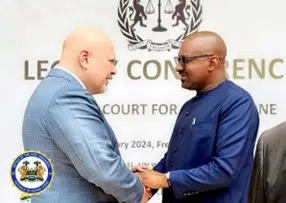
In his statement, the Prosecutor of the International Criminal Court (ICC), Karim A.A. Khan, praised the hospitality of Sierra Leoneans saying it is one reason for the success of the Special Court for Sierra Leone. He expressed excitement to be part of what he referred to as a significant conference adding that the establishment of the Special Court was a critical accomplishment by the United Nations and further maintained how it portrayed that justice belongs to Sierra Leone.
Karim Khan underscored that the rule of law was seen as something that was not alien or externally imported but was rather demanded by Sierra Leoneans stressing the importance of homegrown justice. He pointed out that the vital roles played by the court to international justice and peace cannot be forgotten easily. According to him, the court helped in bringing forward many outstanding Sierra Leoneans who are today contributing immensely to the furtherance of justice here at home and abroad.
He said the legacies of the court should galvanize the next generation and position them to continue to raise the bar high. The Prosecutor said one key legacy of the court was that there was no one that came forward with complaint of miscarriage of justice and highlighted the pivotal role it played in the ICC in enriching its processes. Karim Khan ended up saying essential principles of justice cannot be compromised.
The Assistant Secretary General of the United Nations Office of Legal Affairs, Stephen Mathias, in his keynote address gave a historical background that led to the establishment of the Special Court. He said these are not easy times for international peace and security as calls are becoming louder for impunity not to prevail. According to him, the creation of the Special Court for Sierra Leone is a testimony that impunity cannot be tolerated stressing how through the collaboration of the UN and Sierra Leone it became the first hybrid court to be instituted. He said the Court was an overall strategy for long term peace with the Government and people of the country occupying the driver’s seat. Stephen Mathias said there never existed a hybrid tribunal prior to the setting up of the court to try persons bearing the highest responsibility for war. He informed that after 22 years it is seen as a novelty and a significant move further highlighting the legacies of the court with particular reference of mainstreaming gender issues such as forced marriage into its proceedings as well as the issue of conscripting child soldiers.
Mentioning the localized nature of the Special Court, located in the country where the crimes were committed, he said it was advantageous for the country in various ways. He commended the roles played by Civil Society in the successful outcomes of the court stressing the importance of the Residual Court in preserving the legacies . The Assistant Secretary General ended up calling for more support for the Residual Court.
On his part, the Vice President, Dr. Mohamed Juldeh Jalloh, said all are gathered to commemorate an important milestone in the nation’s history, the twenty two years anniversary of the Special Court for Sierra Leone. He said the Special Court is a remarkable institution that played a pivotal role in the actualization of justice, reconciliation and peace after more than a decade long war in Sierra Leone. The Vice President informed that though the war brought immense suffering the establishment of the Special Court demonstrated the unwavering commitment to uphold the rule of law and ensured that justice was served. He said the trials that took place sent a strong message that impunity is unacceptable and went on to acknowledge the significant roles played by the Truth and Reconciliation Commission (TRC) in fostering national healing , truth telling side by side with the provision of justice by the Special Court.
According to him, important national institutions were instituted out of the TRC’s recommendations naming the Anti Corruption Commission, the Human Rights Commission and the Legal Aid Board underscoring the vital roles they are playing today.
Highlighting some of the court’s legacies he mentioned how it helped in shaping legal processes, investigations, the setting up of a Witness Protection Office, its impactful contribution to human capital development stressing how personnel who worked at the court acquired knowledge which is now applied in other sectors, mentioned former personnel of the court now working in key institutions abroad, helping in the grooming of professional law enforcement personnel engrossed in peace keeping missions overseas as well as how it helped in strengthening the country’s domestic judicial system.
The Vice President revealed how the Criminal Procedure Act is being revised that will contain important international instruments geared towards fair trial and judgement. He said Sierra Leone, now being a member of the UN Security Council, is a testimony of an impressive journey from a country that was once a recipient of decisions made by the UN for the restoration of peace to one that is now part of the decision making processes of brokering peace elsewhere. He ended up calling on all to renew the commitment of upholding accountability and the rule of law adding that the Government has plans to transform the former Special Court into a Justice Sector Complex that will host all legal entities in the country. He reiterated the importance of rising above partisan divide to actively promote national cohesion which, he said, is pivotal for a stable democracy.
Other key personalities included Valnora Edwin, representing the Civil Society, the Chief Justice Browne Mark, the British High Commissioner, in her capacity as Dean of the Consular Corp made salient contributions bordering on the Court’s legacies.
The two day conference also featured highly informative and thought provoking Panel Discussions by eminent personalities drawn from Sierra Leone and the international arena on thematic issues and subjects related to transitional justice and the legacies of the Special Court as well as the important functions of the Residual Court.
Closing remarks were delivered by the Attorney General and Minister of Justice, Mohamed Lamin Tarawally after the presentation of the Conference Outcomes.
During a well-attended ceremony held on Tuesday, February 27th, 2024, at Sierra Palms Resort in Aberdeen, Freetown, the International Organization for Migration Sierra Leone concluded a one-day high-level stakeholders’ session that focused on strategic reflection for the IOM Country Strategy 2025-2030 in collaboration with its partners.
In his remarks, Christos Christodoulides, Head of Office at IOM Sierra Leone, commended the Republic of Sierra Leone for two significant achievements: the recent launch of the National Development Plan and the establishment of a dedicated migration policy.
He emphasized the importance of integrating migration into the national development agenda and highlighted the key role of the migration policy in governing migration issues.
The session, according to Christodoulides, marked a milestone in addressing the complex challenges and opportunities associated with migration, underscoring the need for a collaborative and inclusive approach involving various stakeholders, including Government bodies, NGOs, Civil Society, the UN family, academia, and the private sector.
Throughout his address, Christodoulides emphasized the importance of collective input in shaping policies and programs to address emerging challenges effectively. He stressed the need to enhance regular migration pathways while addressing issues of irregular migration, human trafficking, and smuggling.
Christodoulides reiterated the paramount importance of collaboration among stakeholders to harness collective wisdom in achieving sustainable development goals. He expressed optimism about the outcomes of the session, which aimed to shape the next country strategy aligned with Sierra Leone’s development plan and the upcoming UN Sustainable Development Program.
In closing, Christodoulides thanked all participants for their contributions and reiterated his commitment to working collaboratively towards safe and orderly migration in Sierra Leone.
Addressing attendees, Major General (Rtd) David Taluva, Minister of Internal Affairs underscored Sierra Leone’s historical significance in the transatlantic slave trade and the current dominance of internal migration, particularly rural to urban migration, driven by spatial inequalities and the pursuit of better economic prospects. Notably, Freetown in the western region emerged as the most favored destination due to its high urbanization rate.
He addressed the prevalence of irregular migration in Sierra Leone, often associated with human smuggling and trafficking, driven by poverty, leading to cases of sexual exploitation and forced labor, both domestically and internationally.
The Minister emphasized the timeliness of the session, especially amidst challenges concerning people smuggling, human trafficking, and climate change, highlighting IOM’s financial support for the safe return of migrants and its contribution to addressing climate-related issues and others in the north, which has led to conflicts between cattle herders and crop owners.
He stressed the importance of such engagements to inform and strengthen the Government’s response to human trafficking and environmental migration issues.
Addressing distinguished guests and stakeholders at the event, the UN Resident Coordinator, Seraphine Wakana, emphasized the importance of their shared commitment to ensuring safe, orderly and humane migration for the benefit of all, noting the significance of the session as a journey of dialogue and collaboration to shape the future of migration governance in Sierra Leone, marking a significant milestone in collective efforts to address human migration, one of the most pressing needs and opportunities of our time.
Having recently participated in the launch of the Medium-Term National Development Plan (2024-2030), Wakana expressed her delight in being part of the consultation and visioning meeting for the IOM Country Strategy 2025-2030, highlighting the crucial role of efficient and effective migration management in achieving the goals outlined in the National Development Plan.
She commended the IOM Country Office for its instrumental role in addressing migration needs and fostering sustainable development in Sierra Leone since 2001. The Resident Coordinator praised their dedication to migration management and governance, particularly in the face of complex migration dynamics driven by historical legacies and contemporary realities.
She underscored the importance of aligning efforts with global frameworks such as the Sustainable Development Goals (SDGs) and the Global Compact on Migration, which provide a roadmap for addressing migration challenges while promoting sustainable development and ensuring the protection of migrants’ rights.
Seraphine Wakana concluded by calling for the continued commitment to leaving no one behind and ensuring that migration is safe, orderly, and beneficial for all. She emphasized the importance of collaboration and partnership in harnessing the potential of migration to drive development, promote social cohesion, and build resilient communities. She looked forward to productive discussions and fruitful outcomes from the meeting.
In his keynote address, Rev. Dr. Jonathan Titus-Williams, Deputy Minister of the Ministry of Planning and Economic Development, emphasized the significance of the discussion in shaping Sierra Leone’s development agenda.
Dr. Titus-Williams extended a warm welcome to participants, recognizing the importance of their presence in reflecting on national issues critical to informing the next IOM Country Strategy. He expressed gratitude to the IOM Country Team for their longstanding partnership with the Government of Sierra Leone and for organizing the strategic reflection session.
The Deputy Minister underscored the session’s alignment with Sierra Leone’s development aspirations, particularly with the recent launch of the Medium-Term National Development Plan (MTNDP 2024-2030). He highlighted the strategic direction outlined in the Plan, focusing on the “Big Five Game Changers” and “Key Enablers” aimed at driving inclusive and sustainable growth in Sierra Leone.
Dr. Titus-Williams emphasized the relevance of the MTNDP’s policy areas to IOM’s operational focus in Sierra Leone, particularly in addressing migration needs and challenges. He expressed confidence that the Plan would provide strategic guidance for formulating the new IOM Country Strategy.
Looking ahead to the implementation phase of the MTNDP, Dr. Titus-Williams urged participants to provide critical inputs to enrich the next GoSL-IOM Country Strategy. He called for frank discussions to ensure alignment with strategic policy actions outlined in the MTNDP.
Dr. Titus-Williams acknowledged and appreciated the IOM Country Team’s support across various sectors in Sierra Leone in recent years. On behalf of the Government of Sierra Leone, he officially opened the one-day Strategic Moment of Reflection on the Preparation of the next IOM Country Strategy for 2025-2030, wishing all participants fruitful deliberations.
The statements were followed by presentations on various topics after group sessions.
In a Press Briefing held at the Ministry of Foreign Affairs and International Cooperation Conference Room in Freetown, Dr. Austin Demby, Minister of Health, emphasized the urgent need for concerted efforts to improve child health in Sierra Leone under the theme: “A Call to Action for Child Health.”
Dr. Demby underscored the significance of the gathering, stating it marked a pivotal moment for Sierra Leone to address the health of its children. He stressed the rejection of complacency and renewed commitment to safeguarding children’s lives through evidence-based interventions.
Acknowledging Sierra Leone’s historical challenges and progress in reducing child mortality rates, Dr. Demby highlighted the persisting disparities and the country’s high ranking in child mortality globally. He emphasized the need for urgent action to align with the Sustainable Development Goal target for child mortality reduction.
Aligned with President Julius Maada Bio’s vision for human capital development, Dr. Demby announced the Ministry of Health’s commitment to accelerating actions to improve child health. He highlighted initiatives such as the national Child Survival Action Plan and the establishment of the Child Health Programme to prioritize child health at all governance levels.
Dr. Demby outlined specific action points aimed at reducing under-five mortality rates, including ensuring vaccine access, improving healthcare infrastructure, promoting community engagement, and enhancing healthcare professional training and retention.
He concluded with a call to action, urging collective efforts to address priority areas and safeguard the future of Sierra Leone’s children. The Minister expressed gratitude for support and urged swift and decisive action to protect the nation’s children.
On his part, UNICEF Representative, Rudolf Schwenk, emphasized the urgent need for collective action to improve child health in Sierra Leone under the theme “A Call to Action for Child Health.”
Despite significant progress in reducing mortality rates for mothers and children under the age of five, Sierra Leone, classified as one of the 40 low-income countries globally, continues to face challenges in child survival. While policies granting free access to primary healthcare and increased health financing have contributed to a notable reduction in under-five and neonatal mortality rates, there remains a pressing need for comprehensive and bold approaches.
The National Child Survival Action Plan, spearheaded by the Ministry of Health and developed through extensive consultations with support from UNICEF and partners, serves as a roadmap to accelerate progress towards achieving the Sustainable Development Goal target of 25 or fewer deaths of children under five per 1,000 live births by 2030.
To address existing disparities, Rudolf Schwenk underscored the importance of building a robust primary healthcare system that reaches all communities, particularly those most in need. Overcoming systemic bottlenecks requires sustainable financing, data and accountability mechanisms, access to quality care, essential supplies, technology, infrastructure, and community engagement. However, with strong leadership, accountability, and partnership among key stakeholders, these challenges can be surmounted.
He highlighted UNICEF’s instrumental support over the past three decades in strengthening Sierra Leone’s health system, including improvements in immunization coverage, response to the COVID-19 pandemic, expansion of Special Baby Care Units, procurement of a new malaria vaccine, and strengthening of community health teams.
Acknowledging the cooperation of the Ministry of Health and support from donors such as the Global Fund, GAVI, and the Islamic Development Bank, Schwenk emphasized the need for focused efforts and investments to achieve ambitious child survival targets. UNICEF calls for a renewed commitment to child survival and stronger operationalization of the Sierra Leone Action Plan to accelerate progress towards universal health coverage.
Rudolf Schwenk urged collective action to improve the health system and build a healthier and more resilient Sierra Leone, ensuring every child has the opportunity to survive and thrive.