
Home Blog Page 50

SLPP Raises Alarm Over Hate Speech, Calls for Accountability After APC Meeting

Jimmy Batilo Songa, National Chairman of the Sierra Leone People’s Party

By Ibrahim Sesay

The Sierra Leone People’s Party (SLPP) has strongly condemned what it described as hate speech and inflammatory rhetoric directed at His Excellency President Julius Maada Bio, while expressing full support for an ongoing criminal investigation by the Sierra Leone Police into incidents that occurred at a recent opposition gathering.

In a Press Statement issued on Thursday February 5, 2026, the ruling party said the remarks were made during an All People’s Congress (APC) meeting held on January 31, 2026, at the Attouga Mini Stadium, where senior opposition figures and supporters allegedly made statements intended to vilify, humiliate and incite hatred against the President of the Republic and Leader of the SLPP .

The SLPP described the rhetoric as deeply regrettable and warned that such conduct undermines democratic values, fuels political polarization and risks inciting violence. While reaffirming its commitment to freedom of expression, the party stressed that this right is not absolute and does not extend to speech that attacks, insults, degrades or encourages violence against constitutional authorities.

“The conduct of APC representatives on January 31 transcended acceptable democratic boundaries,” the statement said, noting that political criticism must remain constructive and lawful rather than inflammatory and divisive .

The SLPP further rejected a Press Release issued by the APC National Secretariat on February 4, 2026, which sought to justify the statements made at the meeting. According to the ruling party, the opposition failed to lawfully challenge the outcome of the June 24, 2023 presidential election within the constitutionally mandated seven-day period, rendering its claims legally baseless.

“These allegations cannot withstand scrutiny before the Supreme Court,” the statement asserted, adding that continued attempts to promote unsubstantiated narratives or propose unauthorized political actions amounted to deliberate efforts to sow instability.

Despite the political tensions, the SLPP highlighted President Julius Maada Bio’s leadership in initiating dialogue with the opposition, which has led to the ongoing implementation of recommendations from the Tripartite Committee involving the Government, the APC and international partners.

The party also acknowledged the important role of the opposition in a democratic society but emphasized that political engagement must be guided by the rule of law, responsible conduct and a commitment to national cohesion.

In that regard, the SLPP said it fully supports the Sierra Leone Police in continuing their criminal investigation into the conduct and expressions displayed at the January 31 APC meeting, describing the probe as necessary to ensure accountability and prevent political violence.

The party further called on all stakeholders, including moral guarantors, to collectively condemn hate speech, incitement to violence and obscenity in public discourse. It also commended the Political Parties Regulation Commission (PPRC) for its swift action regarding alleged contraventions of the Political Parties Act 2022 by the APC.

The statement concluded with a reaffirmation of the SLPP’s commitment to peaceful, lawful and democratic governance in the interest of national unity and prosperity.

The press statement was signed by Jimmy Batilo Songa, National Chairman of the Sierra Leone People’s Party.

Anti-Corruption Commission Drags Former SLEWRC DG, Procurement Officers to Court

By Amin Kef (Ranger)

The Anti-Corruption Commission (ACC) has filed indictments against Emmanuel Mannah, former Director General of the Sierra Leone Electricity and Water Regulatory Commission (SLEWRC), along with Isatu Mariama Bah and Richard Anthony Success Lahai Goba, over alleged corruption offences linked to procurement activities under donor-funded projects.

According to a Press Release issued by the Commission on 6 February 2026, the indictments follow investigations into two World Bank–sponsored projects implemented in 2024 by the Project Implementation Unit (PIU) of the Electricity Distribution and Supply Authority (EDSA). The projects include the review of the Sierra Leone Electricity and Water Regulatory Commission Act of 2011 and a nationwide sensitization campaign on the use of electricity.

The ACC disclosed that Emmanuel Mannah is charged with six counts under the Anti-Corruption Act No. 12 of 2008, as amended in 2019. The charges include one count of using his position for advantage, one count of failure to disclose interest in a company, three counts of failure to give information to the Anti-Corruption Commission when required and one count of conspiracy to commit a corruption offence.

Isatu Mariama Bah, a Procurement Officer at SLEWRC and Richard Anthony Success Lahai Goba, a Procurement Officer attached to the PIU at EDSA, are jointly charged with four counts. These include two counts of failure to comply with applicable procurement procedures and guidelines and two counts of conspiracy to commit a corruption offence, contrary to the same legislation.

Investigations conducted by the ACC revealed that the two projects were awarded in violation of the applicable procurement laws and regulations. The Commission stated that the contracts exceeded the financial threshold allowed under the Request for Quotation (RFQ) procurement method as provided for in the Public Procurement Regulations of 2016.

The contract for the review of the SLEWRC Act was valued at Le1,182,288.08, while the nationwide sensitization campaign contract was valued at Le1,300,000. Both amounts, according to the ACC, were significantly above the RFQ ceiling, rendering the procurement process non-compliant with established procedures.

Further findings by the Commission indicated that Emmanuel Mannah, while serving as Director General of SLEWRC, allegedly used his position and insider knowledge of available project funding to influence the procurement process. The ACC alleged that he strategically positioned FAME Consultancy Services, a company in which he reportedly held an interest, to benefit from the contracts.

The Commission emphasized that the alleged actions undermined procurement integrity and transparency, particularly within donor-funded projects, where strict adherence to procurement rules is required to safeguard public and development partner resources.

The ACC noted that the indictments form part of its broader mandate to prevent, investigate and prosecute corruption-related offences in both public and private sector institutions. It reiterated its commitment to holding public officials accountable and ensuring that public procurement processes are conducted in accordance with the law.

The matter is expected to proceed through the judicial process, where the accused persons will have the opportunity to respond to the charges in court.

The Commission encouraged members of the public to continue supporting the fight against corruption by reporting suspected cases, reaffirming its slogan that fighting corruption remains a national concern.

Kabala High Court Records 10 Convictions, Withdraws Key Cases in Week-Long Special Criminal Session

Justice Abu Bakarr Sannoh

By Amin Kef (Ranger)

The High Court sitting in Kabala has concluded a Special Criminal Session presided over by Justice Abu Bakarr Sannoh, marking a significant judicial exercise aimed at addressing a growing backlog of criminal matters and curbing rising crime trends in the northern districts. The special session was held between Monday 26 January and Saturday 31 January 2026 in Kabala, Koinadugu District.

The session handled a total of 41 matters, comprising 37 fresh cases and four old cases carried over from previous sittings. At the close of proceedings, the court recorded 10 convictions, seven files withdrawn for judgment, four murder cases referred to the next criminal session and two manslaughter cases similarly deferred. The majority of cases heard during the session involved offences of burglary and larceny, house breaking and larceny, shop breaking and office breaking and larceny, reflecting what the court described as an alarming rise in property-related crimes in both Koinadugu and neighbouring Falaba Districts.

The State was represented throughout the session by Augustine Y.S. Mansaray Esq. and A.R. Fofanah Esq., while all defendants were represented by A.T. Jalloh Esq. from the Legal Aid Board, ensuring legal representation for accused persons who could not afford private counsel.

Among the notable convictions was that of Morlai Turay, a 28-year-old man arrested on 29 September 2025 and charged under Criminal Summons No. 142/2025 with burglary and larceny contrary to sections 25 and 13 of the Larceny Act 1916, as well as malicious damage contrary to section 51 of the Malicious Damage Act 1861. Morlai Turay pleaded guilty to the charges and was sentenced to 10 years’ imprisonment on the burglary count and five years on the malicious damage count, to be served concurrently. His co-accused, Mohamed Kamara, arrested on the same date and charged with receiving stolen goods contrary to section 33 of the Larceny Act 1916, also pleaded guilty. Evidence before the court revealed that he was induced by Morlai Turay to purchase a Samsung A05 mobile phone under the false claim that it belonged to Morlai Turay’s wife. Mohamed Kamara was convicted and sentenced to six months’ imprisonment, effective from the date of his arrest.

In another case, Ibrahim Bundu was arrested on 23 July 2024 at Thunder Hill Market in Kabala and charged with shop breaking and larceny contrary to section 26(1) of the Larceny Act 1916, involving items stolen from a charging shop along Teacher Street. He pleaded guilty and was sentenced to five years’ imprisonment, effective from the date of his arrest.

Tibu Jalloh also pleaded guilty to a charge of store breaking and larceny involving items belonging to Pavi-Fort Construction Company in Kabala. In mitigation, defence counsel referred the court to the case of Aron Salia v. The State. State counsel, however, urged the court to take judicial notice of the widespread increase in larceny cases across Koinadugu and Falaba Districts. Tibu Jalloh was subsequently convicted and sentenced accordingly.

Several other defendants, including Mohamed Kamara, Abu Bakarr and Osman Jalloh, were convicted for offences ranging from receiving stolen goods to burglary, house breaking and malicious damage, with sentences ranging between two and five years’ imprisonment, most of which took effect from the dates of arrest.

The court also heard the case of Mustapha George, also known as “Clean Salone,” a 24-year-old arrested on 2 September 2025 at Thunder Hill Market and charged with store breaking and larceny. In sentencing him to two years’ imprisonment, Justice Abu Bakarr Sannoh considered mitigation submissions that the defendant did not benefit from the stolen items, which were perishable goods recovered and returned to the complainant.

Another conviction involved Mohamed Larmin Denkeh, aged 25, arrested at Jadia Town on 16 August 2025 and charged with house breaking, larceny and malicious damage. He pleaded guilty and was sentenced to three years’ imprisonment.

In a separate matter, Mohamed Alie Shaw, a 33-year-old okada rider and Sidikie Kamara, a 29-year-old power saw operator, pleaded guilty to conspiracy to commit a crime and killing an animal with intent to steal, contrary to Section 4 of the Larceny Act 1916. The offences occurred on 26 December 2024 at Njaia Ranch in Dogolia Town, Falaba District. Taking into account the time already spent in detention, the court sentenced both men to one year imprisonment on each count, to run concurrently from the date of arrest.

The session also saw several discharges. Bailor Shaw, a former police officer charged with robbery with aggravation, was discharged after the complainant declined to pursue the matter. Kadiatu Sankoh, who had been standing trial for murder across three special criminal sessions, was discharged due to the prosecution’s difficulty in securing witnesses from a remote village and in consideration of her physical and health condition. Justice Abu Bakarr Sannoh emphasized that such a discharge was not a bar to future prosecution.

Similarly, Osman Keita Jalloh, along with Mohamed Samura, Brima Jawara, and Lansana Jabbie, who were charged with house breaking, conspiracy and office breaking and larceny, were all discharged. The judge warned that their discharge did not absolve them permanently and that they remained under observation.

At the close of the session, Justice Abu Bakarr Sannoh withdrew all drug-related cases charged under section 8(a) of the National Drug Control Act No. 10 of 2008 for judgment to be delivered at a later date. Two additional cases involving aggravated sexual assault and sexual penetration of minors were also withdrawn for judgment. In his concluding remarks, the judge echoed submissions by state counsel regarding the sharp increase in theft-related offences in Koinadugu and Falaba Districts, noting that other serious matters, including murder, manslaughter and sexual offences, would be addressed in the next special criminal session of the High Court of Sierra Leone sitting in Kabala.


As Internal Affairs Minister’s Defence Backfires… Netpage Profits While the State Loses: IGR Sounds Alarm on Sierra Leone’s E-Passport Contract

By Foday Moriba Conteh

A new governance report has reignited national debate over Sierra Leone’s electronic passport contract, raising serious concerns about revenue leakages, high passport fees and weak oversight in the long-standing contractual arrangement between the Government and a private passport supplier, Netpage.

The report, released by the Institute for Governance Reform (IGR), questions whether the State is deriving fair value from the e-passport contract awarded to Netpage, the company responsible for the production and sale of Sierra Leonean passports. According to IGR, the arrangement reflects deeper structural weaknesses in how lucrative public contracts are negotiated, renewed and monitored.

Titled: “Di hade’ pa di case’: Politics and Revenue Failures in Sierra Leone”, a Krio expression meaning “the heart of the matter,” the report examines revenue-generating state concessions and argues that many are structured in ways that disproportionately benefit private interests rather than the public purse. The e-passport deal is cited as a prominent example of how weak contract governance can undermine domestic revenue mobilization.

IGR estimates that between 60,000 and 70,000 passports are issued annually in Sierra Leone and notes that, based on prevailing fees, this volume should generate between USD 7 million and USD 9 million each year. Despite the significant earning potential, the report states that it found no clear evidence of royalty payments or similar revenues from the e-passport operation being paid into the Government’s Consolidated Revenue Fund, describing the absence of traceable income as a major fiscal gap in a country facing persistent budgetary pressures.

The report further draws attention to the high cost of acquiring a Sierra Leonean passport, with fees ranging from USD 100 to USD 180, making it one of the most expensive travel documents in the West African region. IGR argues that such pricing places an undue burden on citizens, particularly low-income earners and is difficult to justify in the absence of transparent disclosure on revenue-sharing arrangements or clarity on how proceeds are reinvested into public services.

Beyond pricing and revenue flows, IGR raises concerns about the procurement and renewal processes underpinning the e-passport contract, noting that the agreement has reportedly been renewed multiple times without open competitive bidding or a comprehensive value-for-money assessment. Such practices, the report argues, undermine established public procurement principles and weaken the State’s ability to renegotiate improved terms that could increase Government revenue or reduce costs to citizens.

Situating those findings within a broader critique of Sierra Leone’s economic governance framework, IGR contends that while corruption, political instability and ethnic politics are often cited as drivers of weak public finances, inadequate scrutiny of high-value contracts plays an equally damaging role. The report warns that when critical revenue streams are structured to limit state benefits, the long-term consequence is reduced fiscal space for essential services such as health, education and infrastructure.

Drawing on data from approximately 3,400 state contracts and interviews with current and former officials across successive administrations, IGR concludes that the challenges highlighted by the e-passport deal cut across political cycles. The contract, it observes, has spanned multiple Governments, suggesting that the problem lies less with any single administration and more with entrenched institutional practices.

IGR further alleges that powerful business actors often employ strategies to retain control over lucrative concessions, including cultivating relationships across political parties, anchoring agreements in institutions rather than individuals to ensure continuity and exploiting periods of political transition when oversight may be weaker. It also suggests that influence over sections of the media can sometimes be used to blunt sustained public scrutiny of controversial contracts.

While acknowledging the presence of ethical public servants and reform-minded business leaders, the report warns that a system has emerged in which large public revenue losses are effectively normalized, with weak accountability mechanisms and the absence of strong political platforms focused on economic governance reform continuing to entrench the problem.

Despite the claims against Netpage, the issue has also drawn a public response from the Minister of Internal Affairs, Morie Lengor, who has defended the company by stating that his Ministry, in collaboration with the Ministry of Finance, waived the royalties Netpage was required to pay to the Government. The Minister, however, provided no documentary evidence to support that claim and did not specify the years to which such waivers allegedly applied. That defence appears to sit uneasily alongside the terms of the passport production contract, which stipulate that royalties were set at 8 per cent on the sale of each e-passport between January and December 2022 and increased to 10 per cent between January and December 2023, with arrangements from January 2024 onwards described as “open to negotiation with authorities.” Auditors’ records further complicate the Minister’s position, as they reportedly show no royalty payments from Netpage into Government accounts over the past five years and no indication that any formal waiver was granted.

Ultimately, the report frames the e-passport contract as more than an administrative issue, presenting it as a clear illustration of how flawed contractual arrangements can quietly drain national resources over time. Without greater transparency, competitive procurement processes and firm political will to safeguard public revenue, IGR cautions that Sierra Leone risks perpetuating a cycle in which private interests benefit disproportionately while citizens bear the cost.

Shalimar Trading Expands Market Influence as Demand for Affordable Mobility Rises

Shalimar Trading Company Limited is further entrenching its influence within Sierra Leone’s transportation sector as TVS motorcycles continue to record strong uptake among commercial riders, commuters and small-scale entrepreneurs nationwide.

Across urban centres and remote communities alike, motorcycles have become an essential means of movement, supporting trade, delivery services and everyday commuting. Within this evolving landscape, TVS-branded motorcycles have emerged as a dominant presence, with users pointing to their durability, fuel economy and suitability for both paved and rugged road networks as key advantages.

Industry analysts note that this sustained growth is closely linked to Shalimar Trading’s strategic alliance with TVS Motor Company. The partnership has allowed for consistent product availability, supported by an organized distribution system and reliable after-sales service, helping to build long-term trust among riders whose incomes depend on dependable transport.

As the exclusive authorized distributor of TVS motorcycles, scooters, mopeds and three-wheelers in Sierra Leone, Shalimar Trading Company Limited has become a central player in a market shaped by rising demand for affordable and efficient mobility. With commercial riding and informal logistics expanding, operators are increasingly favouring motorcycles that can withstand heavy daily use while keeping running costs low.

The TVS Star HLX range remains one of the most common choices among riders. Available in several engine variants, the model is widely regarded for its robustness, making it suitable for long-distance routes and challenging terrain. Its consistent performance has earned it a reputation as a workhorse within the country’s transport system.

Meanwhile, the TVS XL 100 moped is finding favour among traders and household users who require simple, economical transport for short-distance activities. Its fuel efficiency and practical build have made it particularly popular for market deliveries and small-scale commercial operations in densely populated areas.

Riders seeking a blend of comfort and efficiency are increasingly turning to the TVS Victor motorcycle, while urban commuters are showing growing interest in the TVS Jupiter scooter. In traffic-heavy cities such as Freetown, the scooter’s manoeuvrability and ease of use are seen as major advantages for navigating congested streets.

Younger riders and new entrants into commercial riding are also contributing to market expansion through interest in models such as the TVS NEO XR and TVS ZT 125. These motorcycles are attracting attention for their modern design and economical performance, reflecting changing consumer preferences within the sector. At the higher end of the market, performance-focused riders continue to embrace the TVS Apache range, including the Apache RTR 200, valued for its responsive handling and sport-oriented features.

In shared transport services, the TVS King Deluxe three-wheeler is playing an increasingly visible role. With the capacity to carry multiple passengers, it has become a practical option for operators providing affordable transport within towns and along short intercity routes.

Beyond product sales, stakeholders highlight Shalimar Trading’s investment in after-sales support as a critical factor in sustaining market confidence. Access to genuine spare parts and professional maintenance through service points in Lumley, Bai Bureh Road and Siaka Stevens Street has strengthened customer loyalty and improved vehicle longevity.

In addition to TVS products, the company distributes other international automotive and industrial brands, including Suzuki, Sonalika International, Isuzu, CFMOTO and Leyland. Its regional expansion, including operations in Liberia, is contributing to employment creation and skills development.

With demand for reliable and cost-effective transport on the rise, Shalimar Trading’s role in shaping Sierra Leone’s mobility landscape is becoming increasingly pronounced, with TVS motorcycles firmly at the centre of everyday transport and commerce.

ECOWAS Court to Hold High-Level Engagement in Sierra Leone on Enforcement of Judgments

By Foday Moriba Conteh

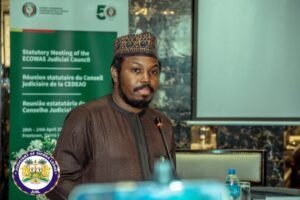
The Community Court of Justice of the Economic Community of West African States (ECOWAS) is set to hold a bilateral meeting with the Competent National Authority and key stakeholders in Sierra Leone to review the status of enforcement of its judgments in the country.

The engagement, scheduled to take place from 9 to 13 February 2026, forms part of activities marking the 50th anniversary of ECOWAS and is aimed at strengthening cooperation between the regional court and national authorities on the effective implementation of its decisions.

According to the Court, the meeting seeks to establish a structured framework for collaboration, promote the exchange of best practices and address challenges affecting the enforcement of ECOWAS Court judgments at the national level. The initiative is expected to enhance compliance, improve coordination and foster sustainable cooperation between the Court and relevant institutions in Sierra Leone.

The programme will provide a platform for in-depth dialogue between the ECOWAS Court and the Competent National Authority, focusing on improving enforcement procedures, ensuring greater uniformity across jurisdictions and building institutional capacity for effective implementation of judgments. Discussions will also centre on identifying existing constraints to enforcement and developing practical strategies to address them.

A special forum will be held on the current status of enforcement of ECOWAS Court judgments in Sierra Leone, alongside presentations on the Court’s enforcement mechanisms and perspectives from Government authorities. The programme will also include a bilateral engagement with Civil Society Organisations, as well as deliberations on next steps and future cooperation.

Stakeholder engagement sessions, presentations and discussions throughout the week-long programme are designed to promote inclusive participation, constructive dialogue and shared ownership of solutions aimed at strengthening the enforcement process.

As part of the visit, the ECOWAS Court delegation will pay courtesy calls on senior Government officials, including the Minister of Planning and Development, the Minister of Foreign Affairs and International Cooperation, the Attorney General and Minister of Justice, the Chief Justice of Sierra Leone and the Speaker of Parliament. Meetings are also scheduled with the Chairperson of the Human Rights Commission of Sierra Leone and the President of the Sierra Leone Bar Association.

The delegation will be led by the President of the ECOWAS Court, Justice Ricardo Cláudio Monteiro Gonçalves, and includes the Vice President, Justice Sengu Mohamed Koroma, as well as directors and other staff of the Court.

The Community Court of Justice, ECOWAS, was established under Articles 6 and 15 of the Revised ECOWAS Treaty. Although the Protocol relating to the Court was adopted in 1991, the pioneer judges were appointed in 2001. The Court has four core mandates: interpretation and application of ECOWAS legal instruments, adjudication of administrative disputes involving ECOWAS institutions, arbitration and the protection of human rights within the Community.

Foreign Affairs Minister Participates in U.S. Critical Minerals Ministerial in Washington

By Amin Kef (Ranger)

Sierra Leone has taken a decisive step in strengthening its global economic diplomacy, joining world leaders at the high-level United States Critical Minerals Ministerial held on Wednesday, February 4, 2026, at the Loy Henderson Conference Room of the United States Department of State in Washington, D.C. The invitation-only ministerial brought together foreign Ministers and senior Government officials from across the globe to deliberate on the strategic importance of critical minerals in global supply chains, economic security and technological advancement.

Sierra Leone’s delegation led by the Minister of Foreign Affairs and International Cooperation, Alhaji Musa Timothy Kabba, underscores Freetown’s determination to position the country as a responsible, credible and forward-looking partner in the evolving global minerals economy. The summit was hosted by U.S. Secretary of State Marco Rubio, reflecting Washington’s renewed push to convene like-minded nations around a shared framework for diversifying mineral supply chains and reducing global vulnerabilities.

For Sierra Leone, participation in the ministerial comes at a pivotal moment. The country is endowed with significant mineral resources, including rutile, bauxite, iron ore and gold, alongside emerging prospects in lithium and rare earth elements; materials increasingly essential for clean energy technologies, electric vehicles, digital infrastructure and advanced manufacturing. Minister Alhaji  Musa Timothy Kabba’s presence at the summit reinforced Sierra Leone’s commitment to translating its natural resource wealth into long-term, inclusive and sustainable national development.

Explaining the purpose of his visit, the Minister said his Washington engagement combined participation in the Strategic and Critical Minerals Conference with broader bilateral discussions. “At the invite of the U.S. Secretary of State, I arrived in Washington, D.C. to participate in a Strategic Minerals Conference and to engage on broader bilateral issues,” he noted.

The Foreign Minister was accompanied by Sierra Leone’s Deputy Minister of Mines and senior officials from the Ministry of Foreign Affairs and International Cooperation, reflecting the technical depth and policy focus of the delegation. The inclusion of mining and diplomatic experts signaled Sierra Leone’s intention to position itself as an informed and credible partner in global resource governance and supply-chain discussions.

Drawing on his background as a former Minister of Mines and a petroleum engineer, Alhaji Musa Timothy Kabba emphasized the growing importance of resource diplomacy in modern international relations. He noted that natural resources now sit at the intersection of economic growth, national security and environmental sustainability. “Resource diplomacy requires understanding your country’s competitiveness in order to create partnerships defined by collective security, mutual benefit and environmental sustainability,” he said.

He further highlighted that the extractive-sector policies pursued under President Julius Maada Bio have laid a solid foundation for such engagements, describing them as compelling and progressive in their emphasis on transparency, value addition and safeguarding the long-term national interest.

The ministerial opened against a backdrop of heightened global concern over the fragility and concentration of critical mineral supply chains. Senior United States officials and international partners stressed the urgency of securing resilient and diversified sources for minerals vital to modern economies.

Opening the meeting, U.S. Secretary of State, Marco Rubio, described access to critical minerals as a top priority for the U.S. administration, emphasizing their central role in economic security, national defense and technological innovation. He warned that the heavy concentration of global mineral supply chains poses risks not only to individual nations but also to the stability of the global economy.

Keynote remarks were delivered by U.S. Vice President, JD Vance, who underscored that despite the digital and high-tech character of today’s economy, it remains fundamentally dependent on physical resources. “There is no realer thing than critical minerals,” he said, stressing that energy systems, advanced manufacturing, defense technologies and emerging industries all depend on secure and predictable supply chains.

Vice President, J.D Vance, noted that erratic pricing, market distortions and sudden supply surges have discouraged long-term investment in mining and processing projects worldwide. According to him, that volatility has left resource-rich developing countries unable to fully translate mineral wealth into sustained development, while industrialized economies remain exposed to supply disruptions.

To address those challenges, J.D Vance announced a sweeping U.S.-led initiative aimed at restoring predictability and fairness to global mineral markets. Central to the proposal is the creation of a preferential trade zone for critical minerals, featuring enforceable price floors and coordinated trade policies among participating nations. The framework is intended to stabilize prices, protect strategic investments and encourage the development of end-to-end supply chains across allied and partner countries.

The Vice President also outlined measures already undertaken by the U.S. administration, including unprecedented public financing for mining and processing projects, direct equity investments, the establishment of domestic smelters for the first time in decades and the launch of Project Vault; America’s first civilian-focused strategic stockpile of critical minerals. Those initiatives, he said, are designed to support reindustrialization, create skilled jobs and reduce long-term dependence on unstable or non-market-based supply arrangements.

Japan’s State Minister for Foreign Affairs, Horii Iwao, welcomed the U.S. initiative and expressed strong support for collective action. He highlighted Japan’s own efforts to diversify mineral supply sources through policy reforms and significant public-private investments, stressing that no single country can overcome supply-chain fragility alone.

As the ministerial progressed into closed-door sessions, participants broadly agreed that diversified, transparent and rules-based supply chains are essential for global growth and security. Organizers said discussions are expected to culminate in new bilateral and multilateral agreements, positioning the Critical Minerals Ministerial as a foundational step toward a more stable and cooperative global minerals market.

The Washington engagement forms part of a broader diplomatic strategy aimed at strengthening Sierra Leone’s role in international economic governance. Over the past year, the country has deepened its global engagement through active participation in multilateral forums, including its recent responsibilities at the United Nations Security Council. Against that backdrop, the Critical Minerals Ministerial provided an opportunity for Sierra Leone to consolidate its standing as a constructive voice in global discussions on resource governance and economic security.

The Sierra Leonean delegation used the platform to emphasize the country’s intention to move beyond raw material exports toward value addition, job creation and stronger linkages between mining and the wider economy. Officials highlighted ongoing policy reforms, sustainable mining practices and efforts to integrate renewable energy, such as solar and hydropower, into mining operations to reduce costs and environmental impact.

As global competition for critical minerals intensifies, Sierra Leone’s participation at the highest diplomatic level signals a clear statement of intent. It reflects a growing recognition that foreign policy, economic strategy and sustainable development are increasingly interconnected.

Through its engagement at the U.S. Critical Minerals Ministerial, Sierra Leone reaffirmed its place in the emerging global conversation on economic security and sustainable development; an engagement that could help shape the country’s development trajectory for decades to come, ensuring that its mineral wealth becomes a catalyst for shared prosperity rather than a source of volatility.

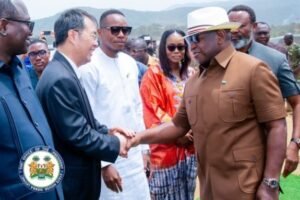
Walking In Solidarity On The Great Path For A Bright Future—Marking The 36th Consecutive New Year Visit Of China’s Foreign Minister’s To Africa

Ambassador Zhao Yong, Chinese Ambassador to Sierra Leone

By Ambassador Zhao Yong, Chinese Ambassador to Sierra Leone

From January 8 to 12, H.E. Wang Yi, Member of the Political Bureau of the CPC Central Committee and Minister of Foreign Affairs, successfully visited the African Union, Ethiopia, Tanzania, and Lesotho. This visit coincided with the 70th anniversary of the establishment of diplomatic relations between China and Africa, and marked the 36th consecutive year that China’s Foreign Minister has made Africa his first destination in the New Year. It holds profound significance and far-reaching implications.

China-Africa friendship is originated from our shoulder-to-shoulder struggle for national independence and liberation, and has matured through our shared commitment to social and economic development. The past year brought much turmoil to the world. At the beginning of the new year, China’s Foreign Minister once again visited this continent with hope, making Africa the starting point of China’s diplomacy each year. As Foreign Minister Wang Yi stated, this visit embodies the deep affection of the Chinese people for the African people, and shows the commitment and spirit that China will always be the first friend standing by Africa’s side when African brothers and sisters need us.

At the Beijing Summit of the Forum on China-Africa Cooperation, President Xi Jinping solemnly proposed that China and Africa join hands to achieve the “six modernizations,” charting the future of China-Africa relations. Through joint efforts, over 90% of the FOCAC Beijing Summit’s objectives have been implemented or made significant progress. More than 300 “smart and beautiful” projects are advancing smoothly, with China-Africa passenger flights increasing by 23%. Nearly 1,000 medical volunteers have provided free clinics in Africa, and over 200 agricultural experts have taken up posts. In the first 11 months of 2025, China-Africa trade volume surpassed the historic threshold of $300 billion. During this visit, Foreign Minister Wang Yi also formally launched the “China-Africa Year of People-to-People Exchanges” with African counterparts. This initiative serves as both a shared celebration for the peoples of China and Africa and a comprehensive showcase of the achievements of China-Africa cooperation. Through nearly 600 exchange activities, the two sides will bring together peoples from various sectors, including youth, culture, and media, covering all areas of China-Africa engagement. This will enable the African people to gain a greater sense of fulfillment and deeper recognition of China-Africa friendship.

China is the largest developing country, while Africa is the continent with the most of developing nations. China and Africa share similar historical experiences and bear common historical responsibilities. The two sides coordinate closely on international and regional affairs, offering firm mutual support on issues involving each other’s core interests and major concerns. Looking ahead, no matter how the international landscape may shift, we are confident that China and Africa will forever stand together in solidarity, resolutely uphold the purposes and principles of the United Nations Charter, and firmly safeguard the legitimate rights and interests of African peoples.

Foreign Minister Wang Yi’s visit not only continues the fine tradition of Chinese foreign ministers making Africa their first destination at the beginning of the year for 36 consecutive years, but also reaffirms that no matter what changes occur in the international and regional landscape, China remains the most trustworthy friend of Africa’s brothers and sisters, the most reliable partner for African countries pursuing development and revitalization, and the strongest backing for Africa on the international stage.

China will continue to uphold the spirit of sincerity, real results, amity and good faith. Together with Sierra Leone and other African nations, we will strengthen the alignment of our development strategies, jointly tackle global challenges, and continuously consolidate the foundation of our cooperation through mutual respect and shared prosperity. Let’s work together to make more contributions to building the all-weather China-Africa community with a shared future for the new era.

AYV Expands Global Footprint as Anthony Navo Jr. Leads Housemates Salone Delegation to Dubai

By Amin Kef (Ranger)

The Chief Executive Officer of Africa Young Voices (AYV), Anthony Navo Jr., is leading a high-level delegation from Freetown through London to Dubai as part of a strategic initiative aimed at strengthening international partnerships and expanding AYV’s global footprint.

The delegation includes the winner of Housemates Salone Season 4, alongside selected finalists and housemates from the season. The trip marks a milestone for the reality television platform, offering participants rare international exposure, cultural exchange and opportunities for personal and professional development.

According to AYV, the Dubai leg of the visit will focus on high-level engagements with creative industry stakeholders, exploration of content development opportunities and the positioning of Sierra Leone’s entertainment and creative economy on the global stage. The engagements are expected to open doors for collaboration in media production, talent development and lifestyle programming, while elevating the visibility of Sierra Leonean youth talent abroad.

The journey forms part of AYV’s innovative reality television concept, The Trip, under the Housemates Salone franchise. The initiative blends reality television with travel and mentorship, designed to showcase local talent, promote youth empowerment and expose participants to global standards and opportunities. By integrating cultural immersion with professional learning, AYV continues to pioneer bold entertainment formats that project Sierra Leonean stories beyond national borders.

Earlier this week, members of the Sierra Leonean community in Dubai turned out in large numbers to welcome the delegation on arrival. From airport reception to spontaneous displays of solidarity, the atmosphere reflected strong diaspora pride and unity. Organisers described the welcome as “loud, proud and unforgettable,” noting that Dubai briefly felt like Freetown as supporters rallied around the Housemates Salone delegation.

AYV expressed appreciation to Sierra Leoneans in Dubai for their show of support, saying the warm reception set the tone for the delegation’s activities and underscored the unifying power of culture and entertainment. “No matter the distance, home remains united,” a statement from the organisers noted, adding that the reception marked “just the beginning” of a broader international engagement.

As part of the Dubai programme, AYV has announced a major public engagement event scheduled for Friday, 6 February, at Spectra Night Club, located at the Marco Polo Hotel. The live Meet-and-Greet is expected to bring together fans, creatives and members of the diaspora for an immersive Housemates Salone experience featuring music, photo moments and interactions with the housemates.

Organisers say the event will celebrate Sierra Leonean culture abroad while reinforcing AYV’s mission to amplify local talent on global platforms. With momentum building in Dubai, AYV’s leadership believes the initiative will further cement the network’s role as a trailblazer in African youth media and entertainment, showcasing how Sierra Leoneans connect, create and celebrate wherever they are in the world.

Historic Regional Milestone: Sierra Leonean Officer Named Chief of Staff of ECOWAS Standby Force

Brigadier General Sheik Sulaiman Massaquoi

By Amin Kef (Ranger)

Sierra Leone has recorded another historic milestone on the regional and international stage following the appointment of Brigadier General Sheik Sulaiman Massaquoi as Chief of Staff of the ECOWAS Standby Force, becoming the first Sierra Leonean officer to ever occupy the prestigious position.

The landmark appointment, which follows a rigorous competitive selection process, was supported by the nomination of President Dr. Julius Maada Bio, alongside the Chief of Defence Staff, Idara Bangura. It marks a proud moment for Sierra Leone and underscores the country’s growing influence within the regional security architecture of the Economic Community of West African States.

As Chief of Staff, Brigadier General Sheik Sulaiman Massaquoi will be responsible for operational planning, logistics coordination and strategic oversight of the ECOWAS Standby Force ;  a multinational, brigade-sized rapid deployment force established in 2004 under the ECOWAS Protocol on Conflict Prevention, Management, Resolution, Peacekeeping and Security. The force is mandated to respond swiftly to crises across the sub-region, including unconstitutional changes of Government, insurgencies, terrorism and humanitarian emergencies.

Over the years, the ECOWAS Standby Force has played key roles in stabilization efforts in countries such as Mali and Guinea-Bissau, drawing troops and resources from member states to promote peace and stability in a region frequently challenged by political instability and violent extremism.  Brigadier General Sheik Sulaiman Massaquoi’s leadership is expected to further strengthen the force’s operational effectiveness at a critical time for the bloc.

Brigadier General Sheik Sulaiman Massaquoi’s journey to this historic role began in 1994 when he enlisted in the Republic of Sierra Leone Armed Forces, earning his first commission on June 16, 1995. An alumnus of the prestigious Bo School, he has steadily risen through the ranks, earning a reputation for discipline, professionalism and strategic acumen.

Throughout his three decades of service, he has held numerous command and staff positions, including Platoon Commander, Adjutant, Company Commander, Commanding Officer of Intelligence and Commanding Officer of the 4th Infantry Battalion. He has also served as Chief of Operations, Chief Planning Officer, Chief of Staff, Director of Military Intelligence, Staff Officer at the National Joint Operations Centre, Commandant of the Joint Logistics Unit and Acting Director General of the Sierra Leone Correctional Services.

Currently, prior to his ECOWAS appointment, Brigadier General Sheik Sulaiman Massaquoi served as Assistant Chief of Defence Staff for Logistics and Equipment Support at Defence Headquarters in Freetown, where his expertise in logistics, supply chain management and resource optimization contributed significantly to ongoing reforms and modernization within the RSLAF.

Complementing his operational experience is an impressive academic and professional training portfolio acquired across Africa, Asia and the United States. He completed the Junior Staff Course at the Ghana Armed Forces Command and Staff College and the Combat Team Commanders Course at the Ghana Armed Forces Military Training Academy in Accra.

In the United States, he undertook the Basic Military Intelligence Officer Course and the Captain’s Career Military Intelligence Course at the U.S. Army Intelligence Center in Fort Huachuca, Arizona, and earned a Diploma in Equal Opportunity Advisory from the Defense Equal Opportunity Management Institute in Florida. He also specialized in Civil-Military Responses to Terrorism at the Naval Postgraduate School in Monterey, California.

Brigadier General Sheik Sulaiman Massaquoi further attended the Senior Staff Course at the Defence Services Command and Staff College in Mirpur, Bangladesh, graduating with a Master of Science in Military Studies from the Bangladesh University of Professionals. He also holds a Master of Arts in Strategic Security Studies from the National Defense University in Washington, D.C., and completed the Regional Senior Mission Leaders’ Course at the International Peace Support Training Centre in Nairobi, Kenya.

In addition to his military education, he holds a Bachelor of Science (Honours) in Political Science and a Master of Science in Diplomacy and International Relations from Fourah Bay College, University of Sierra Leone ;  an academic foundation that has shaped his strong belief in diplomacy as a primary tool for conflict prevention.

On the international front, Brigadier General Sheik Sulaiman Massaquoi served with the United Nations Multidimensional Integrated Stabilization Mission in Mali (MINUSMA), contributing to multinational efforts to combat jihadist threats and protect civilians in one of Africa’s most volatile theatres. His experience in Mali prepared him for the complexities of coordinating multinational forces drawn from ECOWAS’s 15 member states, in line with the African Union’s broader peace and security framework.

Brigadier General Sheik Sulaiman Massaquoi’s appointment comes at a delicate moment for ECOWAS, following the withdrawal of Burkina Faso, Mali and Niger in 2024 after a series of military coups. As Chief of Staff, he is expected to play a central role in revitalizing the Standby Force, strengthening training and readiness, supporting exercises such as the annual “Durbar” simulations and advocating for sustainable funding through the ECOWAS Peace Fund.

His elevation not only honours his distinguished service but also reflects Sierra Leone’s renewed regional standing under President Bio’s leadership. It reinforces the country’s commitment to collective security and serves as an inspiration to a new generation of military and civilian leaders across the Mano River Union and the wider West African sub-region.