
Home Blog Page 52

Foreign Minister, U.S. Deputy Secretary Christopher Landau Hold High-Level Talks on Economic Cooperation and Migration in Washington

Foreign Minister, Timothy Musa Kabba, and U.S. Deputy Secretary Christopher Landau Hold High-Level Talks on Economic Cooperation and Migration

By Amin Kef (Ranger)

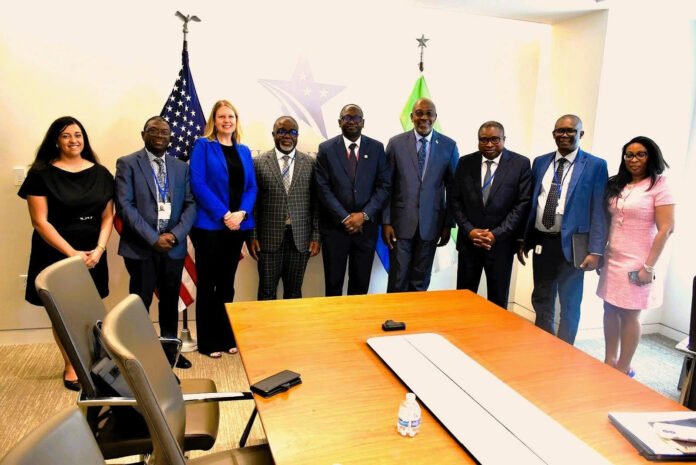
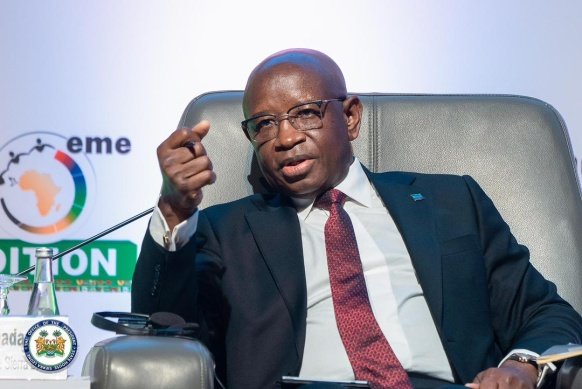
Sierra Leone’s Minister of Foreign Affairs and International Cooperation, Timothy Musa Kabba, on Tuesday, February 3, 2026, held high-level bilateral discussions with Christopher Landau, Deputy Secretary of State of the United States, as part of ongoing diplomatic engagements aimed at deepening cooperation between the two countries.

The meeting, which took place at the U.S. Department of State in Washington, D.C., focused on advancing joint economic interests, promoting shared prosperity, and strengthening collaboration to deter illegal immigration. It also formed part of a broader diplomatic calendar surrounding the inaugural U.S.-hosted Critical Minerals Ministerial scheduled for February 4.

Speaking after the engagement, Deputy Secretary Landau described the meeting as productive and forward-looking. “I greatly enjoyed reconnecting today with Sierra Leonean Foreign Minister Timothy Musa Kabba to discuss how the United States and Sierra Leone can better promote prosperity for our peoples and work together to deter illegal immigration,” he said, underscoring Washington’s interest in expanding practical cooperation with Freetown.

Minister Kabba, who arrived in Washington at the invitation of Marco Rubio, explained that his visit combines participation in the Strategic and Critical Minerals Conference with broader bilateral discussions. “At the invite of the U.S. Secretary of State, I arrived in Washington, D.C. this morning to participate in a Strategic Minerals Conference and to engage on broader bilateral issues,” the Foreign Minister noted.

He is accompanied by Sierra Leone’s Deputy Minister of Mines and senior officials from the Ministry of Foreign Affairs and International Cooperation, reflecting the technical and policy depth of the delegation. The presence of mining and diplomatic experts signals Sierra Leone’s intention to position itself as a credible and informed partner in global resource governance and supply chain discussions.

Drawing on his background as a former Minister of Mines and a petroleum engineer, Kabba emphasized the growing importance of resource diplomacy in modern international relations. He noted that natural resources now sit at the intersection of economic growth, national security, and environmental sustainability. “Resource diplomacy requires understanding your country’s competitiveness in order to create partnerships defined by collective security, mutual benefit, and environmental sustainability,” he said.

The Foreign Minister further highlighted that President Julius Maada Bio’s policies in the extractive sector have laid a strong foundation for such engagements, describing them as “compelling and progressive” in their focus on transparency, value addition, and long-term national interest.

The Kabba–Landau meeting also aligns with the United States’ renewed engagement with African nations on issues of migration, security, and strategic minerals. U.S. officials have increasingly stressed the need for collaborative approaches to managing migration flows while expanding lawful economic opportunities that address root causes.

Beyond migration, economic cooperation featured prominently in the talks, particularly in the context of global efforts to diversify and secure critical minerals supply chains. Sierra Leone, endowed with significant mineral resources, has been positioning itself as a potential partner in responsible mining and supply chain resilience, areas of growing interest to the United States.

The engagement with Sierra Leone comes as Washington hosts delegations from more than 50 countries for the inaugural Critical Minerals Ministerial, a landmark gathering aimed at strengthening international collaboration on minerals essential for technological innovation, economic strength, and national security.

Overall, the meeting between Minister Kabba and Deputy Secretary Landau reflects the steady strengthening of U.S.–Sierra Leone relations, anchored on mutual respect, shared economic interests, and cooperation on global challenges. As both countries look to translate dialogue into concrete outcomes, the Washington talks mark another step toward a more robust and multidimensional partnership.

Costly Passports, Missing Revenue: Government Lost Millions Under Netpage E-Passport Deal

By Foday Moriba Conteh

Fresh concerns have resurfaced over Sierra Leone’s national e-passport arrangement following the publication of a detailed governance report by the Institute for Governance Reform (IGR), which raises serious questions about revenue losses, weak oversight and persistent flaws in the contract between the Government of Sierra Leone and the private company Netpage, mandated to print and sell Sierra Leonean passports.

The findings are contained in IGR’s recent report entitled: ‘Di hade’ pa di case’: Politics and Revenue Failures in Sierra Leone, a Krio phrase meaning “the heart of the matter.” The report examines how large state contracts, particularly those with strong revenue-generating potential, are often structured and managed in ways that provide limitedNetpage,Netpage, benefits to the state while favouring private business interests.

According to the report, between 60,000 and 70,000 passports are printed and sold annually in Sierra Leone. Based on prevailing fees, this translates into an estimated USD 7 million to USD 9 million in revenue every year. Despite those significant sums, IGR states that it found no evidence of royalty payments from the e-passport operation being paid into the Government’s consolidated revenue fund. That absence of traceable revenue inflows, the report argues, represents a major fiscal gap in a country where public resources remain severely constrained.

The cost of acquiring a Sierra Leonean e-passport is another major concern highlighted in the report. Priced between USD 100 and USD 180, the passport is among the most expensive in the West African region, making it unaffordable for many citizens. IGR notes that this high pricing is difficult to justify, particularly when there is little public evidence that the state is receiving proportional financial returns or that citizens are benefiting from significantly enhanced service delivery.

Beyond cost and revenue, the report draws attention to the procurement process underpinning the e-passport contract. Despite repeated concerns about pricing, transparency and state revenue losses, the contract has reportedly been renewed at least three times without any competitive rebidding or a thorough value-for-money assessment. Such renewals, IGR argues, undermine basic public procurement standards and deny the Government the opportunity to renegotiate improved terms that could increase revenue, lower passport fees or both.

The e-passport contract forms part of a broader analysis by IGR into why Sierra Leone, despite being resource-rich, continues to struggle with widespread poverty and weak public finances. While systemic corruption, political instability and ethno-regional politics are frequently cited as root causes, the report argues that insufficient attention is paid to how critical revenue streams are awarded and controlled. When lucrative contracts are structured in ways that limit state benefits, they place a long-term strain on Government budgets and weaken the state’s ability to fund essential services.

Drawing on data from approximately 3,400 state contracts and interviews with current and former officials from both the SLPP and APC administrations, IGR demonstrates that those challenges are not confined to a single political era. The e-passport contract concession examined spans multiple administrations. That continuity, IGR notes, illustrates how institutional practices often remain unchanged regardless of which political party is in power.

The report further suggests that business elites often employ deliberate strategies to maintain influence over key economic institutions. These include financing political actors across party lines, structuring agreements around offices rather than individuals to ensure continuity and exploiting periods of political transition when new officials may lack institutional knowledge or financial stability. In some cases, influence over sections of the media is also used to limit sustained public scrutiny of controversial contracts.

While IGR acknowledges the existence of ethical public servants and responsible business leaders who are pushing for reform, it warns that a system has been normalized in which large public procurement losses are tolerated and even legalized. The absence of strong political platforms focused on economic governance reform, the report notes, further weakens prospects for meaningful change.

Ultimately, the e-passport contract is presented not merely as an isolated administrative issue, but as a clear example of how flawed contractual arrangements can quietly drain national resources. Without transparency, competitive bidding and firm political will to protect public revenue, IGR cautions that Sierra Leone risks continuing a cycle where vital income streams benefit private interests while citizens bear the cost.

Sierra Leone to Join Commonwealth Law Ministers in Fiji for 2026 High-Level Rule of Law Talks

By Amin Kef (Ranger)

Sierra Leone is set to participate in the 2026 Commonwealth Law Ministers Meeting, which will take place in Nadi, Fiji, from 9 to 12 February 2026. The high-level gathering will bring together Ministers of Justice and Attorneys-General from across the Commonwealth to deliberate on strengthening the rule of law at a time of growing global uncertainty.

The meeting comes against the backdrop of increasing challenges to the rule of law worldwide, including threats to democratic governance, access to justice, human rights protection and institutional accountability. Over the three-day programme, Minsters are expected to engage in wide-ranging discussions on how robust legal safeguards underpin everyday life from citizens’ participation in democratic processes and access to fair economic opportunities, to the protection of safe, inclusive and environmentally sustainable communities.

Central to the discussions will be practical strategies to advance the rule of law across member states. These include improving access to justice for all, strengthening judicial and legal institutions and reinforcing legal frameworks that promote stable societies, fair economies and environmental protection. For Sierra Leone, participation in the meeting aligns with its continued commitment to democratic governance, justice sector reform and adherence to Commonwealth values.

The Commonwealth Secretariat has expressed appreciation to the Government of Fiji for hosting the meeting. Commonwealth Secretary-General, Shirley Botchwey, underscored the urgency of the discussions, noting that the rule of law remains a vital foundation for peace, stability and sustainable development.

“The rule of law remains essential to peace, stability and development, yet it is under serious pressure in many parts of the world,” she said. “Where it is weakened or unevenly applied, the impact is felt most sharply by ordinary people. For the Commonwealth, the rule of law is a cornerstone of our Charter and our work. It demands practical, thoughtful commitment and cooperation, not rhetoric.”

She further emphasized that the Fiji meeting would provide an opportunity for collective action. “In Fiji, our Ministers will come together to strengthen the rule of law as the foundation of a resilient future, where every person has a voice in democracy, every worker is treated with dignity and every vulnerable community is protected from a changing climate,” the Secretary-General stated, adding that collaborative action remains key to safeguarding the rights and wellbeing of Commonwealth citizens.

The meeting will be chaired by Fiji’s Minister for Justice and Acting Attorney-General, Siromi Turaga, under the theme: “Anchoring Justice in a Changing Tide: Strengthening the Rule of Law for a Resilient Future.” Minister Turaga noted that Fiji looks forward to engaging Commonwealth partners on ensuring justice systems remain flexible, inclusive and responsive to emerging challenges.

He explained that discussions would also address the implications of climate change, digital transformation and regional cooperation on legal systems, stressing the need for laws and institutions that can adapt and remain effective for future generations.

In addition to the ministerial sessions, the meeting will feature five side events designed to broaden participation and inclusivity. These events will bring together youth leaders, individuals with lived experience of the justice system and disability rights advocates, ensuring that diverse perspectives help inform policy discussions and outcomes.

The outcomes of the 2026 Commonwealth Law Ministers Meeting are expected to play a significant role in shaping the agenda for the forthcoming Commonwealth Heads of Government Meeting, scheduled to be held in Antigua and Barbuda later in the year. For Sierra Leone and other member states, the meeting represents a crucial platform to reinforce shared values, deepen cooperation, and strengthen the legal foundations necessary for resilient and inclusive development across the Commonwealth.

SLAJ, Chinese Embassy Launch National Short Video Competition to Mark 55 Years of China–Sierra Leone Relations

By Amin Kef (Ranger)

The Sierra Leone Association of Journalists (SLAJ), in collaboration with the Embassy of the People’s Republic of China in Sierra Leone, has officially launched a national short video competition inviting members of the public to creatively tell stories of cooperation, friendship and shared development between China and Sierra Leone.

The competition, announced in a Press Release dated 2 February 2026, is themed: “China–Sierra Leone Cooperation in My Eyes.” It forms part of activities marking two significant milestones: the 55th Anniversary of Diplomatic Relations between China and Sierra Leone and the China–Africa Year of People-to-People Exchanges 2026.

According to the organisers, the initiative is designed to strengthen people-to-people ties, showcase shared development experiences and highlight the positive impact of China–Sierra Leone cooperation through the eyes of Sierra Leoneans. By using short videos as a storytelling tool, the organisers aim to encourage authentic, creative and community-based narratives that reflect everyday experiences and long-standing partnerships between the two countries.

The competition is open to all Sierra Leoneans across diverse backgrounds. Eligible participants include journalists and media practitioners, content creators and social media influencers, students and young people, academics and researchers, community storytellers, and members of the general public. While collaborative works between Sierra Leonean and Chinese creators are encouraged, the organizers emphasized that the main characters and perspectives should remain primarily Sierra Leonean.

Participants are expected to submit videos that creatively explore China–Sierra Leone relations and cooperation. Suggested focus areas include stories of friendship and people-to-people exchanges, China’s contribution to national development in sectors such as infrastructure, agriculture, health, education, trade and transportation, cultural exchanges and everyday moments of cooperation. Youth-focused stories showing how collaboration is helping young people achieve their dreams are also encouraged, alongside forward-looking reflections on the future of China–Sierra Leone cooperation, including sustainable development and the Belt and Road Initiative.

From a technical standpoint, submitted videos must not exceed five minutes in length and should be produced in formats such as interviews, short documentaries, public service announcements, creative vlogs, micro-stories, animations or other original styles. Accepted file formats include MP4, AVI, MOV and WMV, with a minimum resolution of 1920 by 1080 (Full HD) and a maximum file size of 500MB. Videos should be in English, with subtitles encouraged and all submissions must be original works with full copyright ownership retained by the creator. There is no limit to the number of submissions per participant.

Entries will be reviewed by a joint panel of experts appointed by SLAJ and the Chinese Embassy. Selected winners will receive cash prizes and certificates of recognition, while outstanding entries will be showcased on the Chinese Embassy’s social media platforms and other media outlets.

Submissions are now open and will close on 31 March 2026. Videos, along with a brief description and the creator’s contact details, should be emailed to slajchinavideo@gmail.com, using the subject line format: Creator’s Name – Video Title – Phone Number.

The competition is jointly organized by SLAJ and the Embassy of the People’s Republic of China in Sierra Leone and is signed by Edward Marah, Secretary General of SLAJ, who encouraged Sierra Leoneans nationwide to seize the opportunity to share their stories and help deepen public understanding of China–Sierra Leone cooperation through creativity and storytelling.

APC Accuses Government of Unilateralism in Unity Agreement, Demands Urgent Reform Reset

APC’s Acting National Chairman, Ambassador Alhaji Dr. Osman Foday Yansaneh

By Foday Moriba Conteh

The All People’s Congress (All People’s Congress) has expressed deep concern over what it describes as the slow and selective implementation of the Agreement for National Unity and the Tripartite Committee Recommendations (TCRs), warning that continued delays could trigger nationwide democratic action.

The concerns were raised during a massive grassroots meeting held at the Attouga Mini Stadium in Freetown on Saturday, January 31, 2026. Addressing party members, supporters and flagbearer aspirants, the APC’s Acting National Chairman, Ambassador Alhaji Dr. Osman Foday Yansaneh, delivered a detailed update on the status of the agreement, nearly eighteen months after the TCRs were formally submitted.

Alhaji Yansaneh told the gathering that progress on implementing the recommendations has been “limited and far below expectations,” despite the APC’s continued commitment to patience, dialogue and democratic engagement. He commended party supporters for their restraint and reiterated the APC’s resolve to pursue reforms aimed at strengthening Sierra Leone’s electoral system and democratic governance.

He acknowledged the role of development partners and international supporters, noting that their technical and financial assistance, particularly in voter registration, election result management and institutional capacity-building for the Electoral Commission of Sierra Leone (ECSL), remains vital to national dialogue and the credibility of future elections.

According to the Acting Chairman, some modest gains have been recorded. Those include the gazetting of a Constitutional Amendment Bill containing selected electoral reforms, a management review of the ECSL, the release of some detainees, the return of a limited number of displaced persons and the discontinuation of certain politically motivated cases. However, he stressed that those steps fall short of the comprehensive reforms envisaged under the Tripartite framework.

Of particular concern, Alhaji Yansaneh said, is the reported disappearance of appeal case files involving APC members at the Commission of Inquiry Secretariat. He warned that the missing files undermine access to justice, obstruct effective legal representation and erode public confidence in accountability processes.

The APC Acting Chairman sharply criticized what he described as the Government’s unilateral approach to reforms, arguing that it violates the agreed Tripartite Roadmap. He characterized the Steering Committee and Support Secretariat as “dysfunctional and lacking inclusiveness,” adding that engagement with the Government’s Chief Negotiator has effectively broken down due to persistent non-responsiveness.

He also objected to several recent Government actions, including Parliament’s refusal to establish a dedicated electoral committee, the failure of the ECSL to reconstitute the Political Parties Liaison Committee and provisions in the Constitutional Amendment Bill that grant the President appointment powers which, he said, contradict the spirit and letter of the TCRs. In that regard, he cited the role of the Parliament of Sierra Leone as critical to restoring confidence in the reform process.

Alhaji Yansaneh further condemned the postponement of the 2025 Population and Housing Census and questioned the continued reliance on the disputed 2021 Census, warning that flawed demographic data could compromise electoral planning and national development.

The APC also rejected proposals to introduce a Proportional Representation electoral system and to alter the presidential winning threshold. The party warned that such changes, if pursued without broad consensus, could deepen political divisions and destabilize the electoral environment.

In concluding his address, the Acting National Chairman called for the immediate restructuring of reform bodies, full transparency in the implementation of the National Unity Agreement and urgent intervention by development partners to safeguard the process. He cautioned that if the Government continues what the APC perceives as unilateralism and intimidation, the party would mobilize peaceful, lawful and democratic actions across the country to defend democracy and uphold the will of the people.

George Taylor Takes Over EDSA as Newly Appointed Director General

George Taylor (in grey suit) Takes Over EDSA as Newly Appointed Director General

By Amin Kef (Ranger)

His Excellency Julius Maada Bio, President of the Republic of Sierra Leone, has appointed George Taylor as the new Director General of the Electricity Distribution and Supply Authority (EDSA), with immediate effect. The appointment forms part of the Government’s ongoing reforms aimed at strengthening governance, efficiency and service delivery within the country’s energy sector.

According to official sources, the decision reflects President Bio’s confidence in George Taylor’s vast experience in administration, banking, Information and Communication Technology (ICT), as well as his proven track record in institutional transformation. The Ministry of Energy has reaffirmed the President’s strong commitment to transparency, accountability and the sustainable transformation of Sierra Leone’s electricity distribution system.

On Monday, 2 February 2026, the Minister of Energy, Cyril Arnold Grant, formally received and welcomed the new Director General at a ceremony held in the conference room of the Ministry of Energy in Freetown. Minister Cyril Grant described George Taylor’s assumption of office as timely, noting that EDSA is at a critical juncture in its reform journey.

“George Taylor is here riding on the crest of a highly respected background,” Minister Cyril Grant said. “We have examined his credentials carefully and we are highly impressed. EDSA is expected to go into concession in the coming months and this requires decisive leadership that can seize this historic moment and drive transformation.”

Cyril Grant further noted that George Taylor assumes office at a time when EDSA faces significant challenges, including financial constraints, operational inefficiencies and staff-related concerns. He emphasized that EDSA remains one of the largest public utilities in the country by turnover, stressing that it must be properly managed, financially stabilized and repositioned to better serve both employees and consumers.

A seasoned banker and ICT specialist, George Taylor rose through the ranks of the Sierra Leone Commercial Bank (SLCB), eventually serving as its Managing Director. During his tenure, the bank recorded a major turnaround, moving from financial distress to sustained profitability and paying dividends to the Government of Sierra Leone as its principal shareholder. He is also widely credited with mentoring a generation of young bankers, many of whom now occupy key decision-making positions within the institution.

Speaking at the event, the Board Chairman of EDSA, Andrew Kailie, confirmed that George Taylor underwent a rigorous recruitment and interview process conducted by the Board and was found to be suitably qualified. He assured the new Director General of the Board’s full support, while underscoring the enormity of the task ahead.

Outgoing Acting Director General, Tesman Egbe, expressed gratitude to stakeholders for their guidance and cooperation during his tenure. He highlighted what he described as unprecedented operational gains achieved under his leadership despite prevailing challenges.

In his acceptance remarks, George Taylor, acknowledged the difficult realities confronting the utility but expressed optimism and determination. He pledged to work collaboratively with the Board, Management, staff and stakeholders to deepen reforms, improve revenue generation and enhance service delivery. Emphasizing teamwork and mutual respect, he noted that meaningful progress would only be achieved through collective effort.

With the energy sector playing a pivotal role in the Government’s national development agenda, including the Feed Salone initiative, stakeholders view George Taylor’s appointment as a significant step toward consolidating recent gains and restoring public confidence in electricity distribution. As congratulatory messages continue to pour in from across the country, expectations are high that his leadership will steer EDSA toward greater efficiency, financial sustainability and improved service for Sierra Leoneans.

Africell Honours Abdul Karim Sesay as Manager of the Year at 2025 Staff Awards

Abdul Karim Sesay, Media Manager at Africell Sierra Leone

By Amin Kef (Ranger)

Abdul Karim Sesay, Media Manager at Africell Sierra Leone, has been honoured with a Certificate of Appreciation in recognition of his exceptional performance and leadership during the company’s 2025 operational year, underscoring Africell’s commitment to rewarding excellence and professional dedication.

The prestigious award was presented on Saturday, January 31, 2026, at the colourful Africell Annual End-of-Year Staff Party, organized in collaboration with Afrimoney. The well-attended ceremony brought together senior management, staff members and invited partners from across the corporate and media landscape, creating an atmosphere of celebration and appreciation.

Issued in Abdul Karim Sesay’s name, the certificate recognized him as Manager of the Year 2025, citing his dedication, professionalism and impactful service delivery within the Media and Communications space. The award reflects his consistent role in strengthening Africell’s corporate image, deepening media relations and expanding public engagement across traditional and digital platforms.

Over the past year, Abdul Karim Sesay has been instrumental in shaping Africell’s communications strategy, ensuring timely, accurate and compelling storytelling that reinforces the company’s position as a leading telecommunications and digital services provider in Sierra Leone. His leadership has helped amplify Africell’s brand visibility while fostering constructive relationships with journalists, content creators and strategic partners nationwide.

Speaking after receiving the award, Abdul Karim Sesay expressed heartfelt appreciation to his colleagues and external partners for their sustained support and collaboration. He emphasized that the recognition was not merely a personal milestone but a shared success born out of teamwork, trust and collective commitment.

“This recognition would not have been possible without the unwavering support, collaboration and partnership I continue to enjoy,” he said. “It symbolizes the collective effort of a dedicated team and partners who believe in professionalism, consistency  and positive storytelling.”

He paid special tribute to media partners for their professionalism and commitment to accurate reporting, noting that their role remains critical in amplifying Africell’s impact and reinforcing public confidence in the brand. According to him, strong media relations are central to building transparency and sustaining meaningful engagement with the public.

Abdul Karim Sesay also thanked Africell’s Management for the confidence reposed in him and his team, reaffirming his commitment to innovation, excellence and stronger stakeholder engagement in the years ahead. He expressed optimism about deepening collaboration with partners and delivering even greater results as the company continues to grow.

The Africell Annual Staff Party remains a key platform for celebrating performance, recognizing outstanding contributions and reinforcing the company’s culture of appreciation and teamwork. Through such initiatives, Africell continues to motivate its workforce while strengthening its reputation as a forward-looking and people-centred organisation in Sierra Leone’s fast-evolving digital economy.

PPRC Slaps APC with NLe350,000 Fine Over Alleged Inciting Statements at Mammoth Rally

By Ibrahim Sesay

The Political Parties Regulation Commission (PPRC) has imposed financial penalties on the All Peoples Congress (APC) for violations of the Political Parties Act, 2022, following statements made during a recent party gathering in Freetown.

In a Press Release issued on Monday, February 2, 2026, the PPRC announced fines amounting to Three Hundred and Fifty Thousand Leones (NLe350,000) against the opposition party. The sanctions stem from alleged breaches of Section 39 (1)(c) and Section 39 (1)(d) of the Political Parties Act, Act No. 25 of 2022.

According to the Commission, the violations occurred during the APC’s widely attended “mammoth meeting” held at the Atouga Mini Stadium on Saturday, January 31, 2026. The fines were issued in relation to statements attributed to the party’s National Secretary General, Lansana Dumbuya Esq., who was fined NLe200,000, and Zainab Sheriff, who received a fine of NLe150,000.

The PPRC stated that the remarks made at the event were found to be “profane, obscene, provocative and inciting,” actions which the Commission considers contrary to the provisions governing political conduct and public order in Sierra Leone.

The Commission further disclosed that it had previously warned the APC against similar conduct. By a formal letter dated November 11, 2025, the PPRC cautioned the party over its contravention of Section 39 of the Act, urging compliance with the legal and ethical standards expected of registered political parties.

“The Commission notes with grave concern that such statements undermine peace, national cohesion and the democratic process,” the Press Release emphasized.

In line with the law, the APC has been granted seven (7) days from the date of the notice to settle the imposed fines. The PPRC warned that failure to comply within the stipulated timeframe would compel the Commission to invoke additional enforcement measures as provided for under the Political Parties Act.

The PPRC reiterated its mandate to regulate the conduct of political parties, promote peaceful political engagement and safeguard national stability. It called on all political actors to exercise restraint, responsibility and respect for the law, particularly during public rallies and political meetings.

For further clarification, the Commission advised the public and stakeholders to contact the Director of Training and External Relations at the PPRC.

Foreign Affairs Minister Leads Sierra Leone Delegation to U.S. Critical Minerals Ministerial Summit Starting Today

Foreign Affairs Minister (middle) Leads Sierra Leone Delegation to U.S. Critical Minerals Ministerial Summit

By Amin Kef (Ranger)

Sierra Leone’s Minister of Foreign Affairs and International Cooperation, Alhaji Musa Timothy Kabba, is leading the country’s delegation to the inaugural United States Critical Minerals Ministerial Summit scheduled for February 4, 2026, in Washington, D.C. The high-level engagement underscores Sierra Leone’s growing role in global discussions on strategic mineral supply chains and international economic security.

The delegation includes the Deputy Minister of Mines and Mineral Resources, Umaru Napoleon Koroma, reflecting a coordinated approach between Sierra Leone’s foreign policy and extractive-sector leadership. The team arrived in Washington on Monday, February 2, following an official invitation from the United States Secretary of State, Marco Rubio, who is hosting the ministerial at the U.S. Department of State.

The Critical Minerals Ministerial brings together Government leaders from mineral-rich and industrialized countries to address the growing global demand for strategic resources essential to advanced technologies, clean energy transitions and national defense systems. Central to the discussions are minerals such as cobalt, lithium, copper, uranium and rare earth elements; resources that are increasingly vital to electric vehicles, renewable energy infrastructure, semiconductors and defense manufacturing.

According to briefing materials, the conference aims to secure, diversify and strengthen global supply chains for critical minerals, with a particular focus on reducing over-dependence on China-dominated processing and distribution networks. The United States is expected to advocate for new bilateral and multilateral frameworks that promote transparent mining practices, responsible investment and long-term supply security.

African participation forms a key pillar of the ministerial. Several mineral-rich African countries, including Guinea and the Democratic Republic of Congo, have confirmed attendance, highlighting Washington’s push to deepen strategic partnerships across the continent. Sierra Leone’s presence places it within a select group of countries being courted as potential long-term suppliers in the evolving global minerals market.

For Sierra Leone, the summit presents an opportunity to showcase its mineral potential while advancing national interests related to value addition, investment diversification and sustainable resource governance. Officials familiar with the delegation’s agenda say discussions will emphasize mutually beneficial cooperation, respect for national sovereignty over mineral resources and the need for investments that support local development and job creation.

The ministerial is also unfolding within a broader geopolitical context shaped by the United States’ renewed emphasis on securing critical supply chains under an “America First” economic strategy. Negotiations are expected to focus on access arrangements, processing partnerships and technology transfer, particularly in Africa, where vast untapped mineral reserves are increasingly central to global competition.

Alongside the ministerial, Secretary of State, Marco Rubio and senior U.S. State Department officials are holding a series of diplomatic engagements and strategic dialogues in Washington during the week, underscoring the high-level nature of the event. While the official U.S. public schedule remains subject to change, the summit itself is widely viewed as a milestone in redefining global cooperation on critical minerals.

Sierra Leone’s participation signals its intent to position itself as a credible and responsible partner in the global critical minerals value chain, while leveraging international platforms to advance sustainable economic growth and strategic diplomacy.