Home Blog Page 547

ECSL Announces Elected Paramount Chief MPs Result

By Abubakarr Harding

The Electoral Commission for Sierra Leone (ECSL) has on the 26th May, 2023 officially announced the results of the Paramount Chief Members of Parliament (PCMP) elections which were held on Saturday, May 20, 2023. Elections were held in five districts namely Falaba (6 candidates), Bonthe (3 candidates), Kambia (2 candidates), Pujehun (2 candidates) and Bombali (2 candidates).

In the exercise of powers conferred upon Electoral Commission for Sierra Leone  by Sections 33, 72, and 74 (l) (a) of the Constitution of Sierra Leone 1991, (Act No. 6 of 1991); and pursuant to Section 98 to 101 of the Public Elections Act, 2022 (Act No. 17 of 2022), it hereby publish the following:

For Bombali District Two (2) Paramount Chief Members of Parliament candidates contested the election as follows: PC KALAWA 111 Salifu Mannah and PC KIEHA 111 Kandeh Baba with the former pulling 954 votes (36.9) and the latter 1,630 votes (63.1).

Bombali PC KIEHA III Kandeh Baba was declared winner having pulled 1630 valid votes, Falaba PC MARRAH III Thor Thor Sheku T.T.N.K. Fonkola was declared winner having pulled 1,184 valid votes, for Kambia district PC NGBAK IV Bai Farama Tass Bubu was declared winner having pulled 3,479 valid votes, in Bonthe PC BIO Prince Lansana was declared winner having pulled 2,374 valid votes, for Pujehun district PC KEBBIE III Brima Victor Sidi, was declared winner having pulled 4,914 valid votes.

The Commission wished all the winners successful tenures in office.


“Echoes of Democracy: Unrigging Sierra Leone’s Elections” 

Is a thrilling and inspiring account of the struggle to uphold democracy in the West African nation of Sierra Leone during the pivotal 2023 elections. The narrative unfolds against a backdrop of political turmoil, corruption, and a nation’s desperate cry for justice and integrity.

The book opens with the introduction of the “Custodians,” an anonymous group of patriots committed to preserving the sanctity of the democratic process in Sierra Leone. As the nation gears up for the upcoming elections, the custodians uncover disturbing evidence of a massive plot to rig the electoral process by several political parties.

In the ensuing chapters, the custodians expose the depth of the corruption, risking their lives to bring the truth to light. Amid assassination attempts and threats, they launch a campaign to educate the public about the rigging tactics, drawing on the power of social media and grassroots mobilization to spread their message.

As election day approaches, the tension escalates. Sierra Leone is compared to a powder keg ready to explode, with the custodians racing against time to safeguard the electoral process. Their efforts pay off when they manage to expose widespread electoral malpractice, leading to international intervention and a thorough investigation of the election process.

Under global scrutiny, the corrupt factions crumble, and a fair election is held, marking a new dawn for Sierra Leone. However, the victory is not without cost. The aftermath of the struggle sees the custodians and the people of Sierra Leone count their losses and celebrate their gains. The nation steps into a new era of accountability, bearing the scars and lessons of its tumultuous journey.

The book concludes on an uplifting note, with the echoes of Sierra Leone’s triumphant struggle for democracy inspiring other nations to safeguard their democratic processes. The custodians’ legacy serves as a beacon of hope, a testament to the power of the people, and a resonant reminder of democracy’s indomitable spirit.

“Echoes of Democracy: Unrigging Sierra Leone’s Elections” is a poignant testament to the resilience of the human spirit in the face of adversity and a stirring reminder of the transformative power of people when united for a noble cause.

Stay tuned for the Release date


ECSL Commences Two Day Training for Chief Executives & Senior Editors on Election Reporting

By Amin Kef (Ranger)

The Electoral Commission for Sierra Leone (ECSL), through the European Union and Germany co-funded ECOWAS Peace and Security Architecture and Operations (EPSAO) Project, implemented by GIZ, has commenced a two-day training for Media Editors and Chief Executives on election reporting to prevent violence ahead of the forthcoming general elections in Sierra Leone.

Held at the Sierra Palms Hotel, the training brought together about 40 Editors and Chief Executives drawn from across different segments (online, print, and electronic media) in Sierra Leone.

Facilitated by the ECOWAS Democracy and Good Governance Division (DGGD), in collaboration with the Electoral Commission of Sierra Leone (SL), the Independent Media Commission (IMC) and the Sierra Leone Association of Journalist (SLAJ), the training is conducted in recognition of the important role of the media during elections, as well as the importance of good and mutually reinforcing cooperation between the media and national election management bodies in the delivery of peaceful, transparent, inclusive, and credible elections.

In attendance were the Resident Representative of the President of ECOWAS Commission in Sierra Leone, His Excellency Harouna Moussa, representatives of the European Union, German Embassy and SLAJ.

In his opening remarks, His Excellency Harouna Moussa stated that there is no other appropriate time better than this for such a training to be conducted targeting media personalities. He disclosed that as the country will soon hold multi tier elections the role of the media in ensuring credible, free and fair elections cannot be overemphasized. He underscored that as gatekeepers the media can play the role of overseeing the entire electioneering period and ensuring that best practices are followed.

The Resident Representative maintained that in this Social Media age it has now become evident that some use it to spread incendiary messages as well as for disseminating fake news and misinformation that are very misleading. While highlighting the dangers that this new phenomenon poses, he pointed out that the role of media practitioners in fact checking and countering such fake news and misinformation is very key in sanitizing the political landscape.

He expressed the view that the knowledge that the participants will acquire will better equip them to practice their profession professionally through balanced and objective reporting of political events as well as giving different political parties and candidates equal opportunities to disseminate cogent political messages in order to ensure fairness.

The Resident Representative concluded by underscoring the need for the media to sensitize the public on the negative effects of involving in political violence and the penalties that await perpetrators of violence.

Before declaring the training open, the Chief Electoral Commissioner and Chairman of ECSL, Mohamed Kenewui Konneh, in his keynote address stated that he is very happy and delighted to address participants during such an auspicious engagement with Chief Executives and Senior Editors of Media Houses.

He disclosed that the agenda is loaded with topical issues which he believes are very relevant and timely further expressing hope that at the end of the engagement all will do due diligence in their respective institutions and media outlets.

The Chief Electoral Commissioner thanked the organizers for the engagement and for bringing important personalities together. He furthered that ‘Media and Communication’ is one of his flagship’s programmes at the Electoral Commission disclosing that when he took over in August 2020, he set out an agenda to restructure the institution in order to meet with current trends.

He informed how the Strategic Plan 2020-2024 electoral cycle was at the formative stage and they, therefore, had the opportunity to include media and communication as a standalone department adding also how they
set out to develop a Communication Policy and Strategy to be the framework for their media engagement.
“We also hired a media and communication specialist to drive this agenda,” he told an attentive audience.

The Chief Electoral Commissioner stated how the Commission, through the support of GIZ have trained journalists right across the media landscape of this country adding that they have redesigned the Commission’s website plus having a very robust twitter account and social media platforms to engage the public.

Mohamed Kenuwei Konneh revealed that they have also signed MoU’s with SLBC, ITV and 98.1 FM Stations from where they engage the public.

He said with the advent of social media and difficulties around regulating that sector, misinformation and disinformation have thrived over traditional media adding that there seems to be a huge task in the implementation of any regulation and coupled with hate speech it has put a huge gap in the industry of cybercrime bill.

The Chief Electoral Commissioner expressed hope that there is going to be discussions on a lot of those issues including opportunities and the way forward for managing media related issues around electoral process, dealing with hate speech and its implications on national peace.

In his attempt to define Misinformation and disinformation,  the Chief Electoral Commissioner stated that the latter refers to false information that is spread with specific intent of misleading or deceiving people. According to him,  it is sometimes confused with misinformation which he said  generally refers to false information, regardless of whether or not it is intended to mislead or deceive people.

In attempting to answer the question of what is its effect on the electoral process, Mohamed Kenewui Konneh stated that Disinformation is more dangerous because it is “frequently organized, well resourced, and reinforced by automated technology.”

According to him, Disinformation can cause a crisis which in any event, issue or situation threatens to undermine the relationships or any event, issue or situation with negative consequences.

He told participants how Disinformation can have serious consequences for social media users, as it can lead them to believe false or misleading information which in turn can cause them to make bad decisions based on that information or to support conspiracy theories.

The Chief Electoral Commissioner cautioned Media outlets and news sites to be careful about sharing disinformation saying it can damage their credibility.

Suggesting ways of minimizing/stopping  disinformation he said there
are a few things that can be done including fact-checking before sharing information, punishments instituted by Government through laws enacted by Parliament that punish those who spread disinformation.

He also recommended for Media outlets to take measures to prevent disinformation from being spread on their platforms adding that one should be skeptical of what one reads online and on social media stressing that not everything one sees is true.
Checking sources to make sure that the information one is reading comes from a reliable source was another suggestion he proffered.

The Chief Electoral Commissioner concluded by expressing the view that Disinformation is often spread to influence people or to create chaos and cautioned against sharing disinformation stressing that if one sees disinformation, one should not share it as sharing disinformation can make the problem worse. He also advised participants to educate themselves about disinformation and how to spot it saying the more one knows about disinformation the easier it will be to spot it.
During the training exercise, presentations were made on the various topic by seasoned facilitators:”Media and Elections in West Africa… Challenges, Lessons Learnt and Opportunities”, “ECOWAS’ Norms and Standards for the Media in the Promotion of Peace and Security in West Africa”, “Media Sustainability in West Africa: Striking Balance between Ownership and Editorial Independence in an Electioneering period – A Critical Look at Editorial Obligations/Liabilities” , “Proportional Representation System” which were all interspersed with question and answer  sessions as well as group work and presentations.

Earlier in the programme, representatives of the European Union, German Embassy and SLAJ delivered Goodwill Messages.


 

ICPNC & KAIPTC train Peace Mediators

By Millicent Senava Mannah

The Independent Peace Commission for National Cohesion (ICPNC), in partnership with the Kofi Annan International Peace-Keeping Training Centre (KAIPTC) conducted a two days training for 150 Peace Monitors ahead of the June 24, 2023 General Elections.

The training, which aimed at enabling participants to observe and identify threats before and after the elections was conducted at the institution’s Head Office on Lamina Sankoh Street in Freetown.

Coordinator of the Peace situation Room at ICPNC, Babara Sangare, disclosed that majority of the Peace Monitors are bike riders who are considered to be one of the set of people most times influenced by politicians to create violence.

She mentioned how there has been a systemic change of perceiving themselves as perpetrators of violence to the perspective of peace ambassadors maintaining how they have already started working and  are all over the country.

Babara stated that they are conducting training in all districts across the country disclosing that some of the Peace Monitors have already started reporting peace threats.

She noted that they need to support them to build their capacity so that  they would work better saying that is why they organized the two days training further revealing how they will be trained by trainers from Ghana during which the Peace Monitors will also share their own experiences.

Mustapha Abdallah, a Senior Researcher at the Kofi Annan International Peace-Keeping Training Centre stated that their institution is one of the ECOWAS Centres of Excellence located in Accra, Ghana that is committed to training of peace keepers as well as conflict resolution mediators.

He informed that the training is based on the need to ensure the promotion of peace as elections are drawing near furthering how they want to contribute to the peace and stability in the country.

‘’The key aim of the training is to ensure that we enlarge the capacity of peace monitors and conflict resolution mediators in the country for them to be able to maintain peace and national cohesion during and after elections.’’ Mustapha Abdallah stated.

‘’At the end of the training we expect that participants will be able to actually monitor and ensure  they can detect potential threats that can undermine the peace and stability of the elections,’’ he said.

He noted that they should be able to report to key state actors and institutions in order to respond effectively so that the elections are  free from potential risks and instability.

Mustapha stated that they are looking at three key areas, election monitoring saying if elections are not monitored very well the triggers of threats will not be seen.

Second is conflict analysis, which helps to understand the context, the key actors within the political landscape in Sierra Leone, adding that when it is done it enables actors to know the potential areas where conflicts are likely to occur, and by understanding all the dynamics they would  be able to respond to volatile situations.

The third area is mediation stating that if they identify all these areas of conflict and they don’t have mediators in place who are trained to handle  such situations it is likely these conflicts will escalate into violence.

Nellie Smith Conteh, National Chairlady of the Bike Riders Association, one of the Peace Monitors, commended the institution for organizing such a timely training.

She maintained that, they will work assiduously to implement what they have learnt to ensure that peace and national cohesion are maintained in the country.

She continued that, because of the training she now knows her limitations, and how she should not be partisan going on to advice riders not engage in violent situations.

Climaxing the training was the question and answer session.

USL & NAEAP Conclude Education Conference

By Foday Moriba Conteh

The University of Sierra Leone (USL) in collaboration with the Nigerian Association for Educational Administration and Planning (NAEAP), Lagos State University Branch, Lagos State Chapter has on Thursday 25thMay, 2023 concluded a Four-day Education Conference on the theme: “Educational Research in Sub-Saharan Africa”. The four-day conference which features presentation of papers, including virtual/online presentations by academics and educationists on eleven sub-themes, was held at the Multipurpose Hall on Fourah Bay College Campus in Freetown.

In his welcome address during the opening of the conference, the Vice-Chancellor and Principal of the University of Sierra Leone, Brig. Gen. Prof. Foday Sahr, who acted as the Chief Host of the conference, expressed appreciation to the Nigerian Association for Educational Administration and Planning (NAEAP) for choosing the University of Sierra Leone to play host to the International Education Conference.

He said when the University of Sierra Leone was approached by the Nigerian Association for Educational Administration and Planning (NAEAP) with the idea of hosting the said conference the University wasted no time but gave approval to the proposal of which they immediately drafted a Memorandum of Understanding in order to guide the conduct of the conference.

Brig. Gen. Prof. Foday Sahr said that the theme for the conference is “Educational Research in Sub-Saharan Africa” which he said resonates with what the University of Sierra Leone is doing in their various institutions, adding that their curriculum is now been designed to reflect innovative learning in order to support development and that this can only be done when there is security in the Sub-Region.

He said that the importance of educational research cannot be overemphasized, stating that research serves as a bedrock of the mission of the University of Sierra Leone and it increases the prominence of the University in the world.

The Vice-Chancellor and Principal concluded by stating that the University of Sierra Leone will continue to encourage its staff to engage in scholarly writings to enhance their career paths.

Declaring the conference open, the Former Vice Chancellor and Principal of the University of Sierra Leone, Prof. Ekundayo Thompson, described the theme, “Educational Research in Sub-Saharan Africa” as very appropriate.

He added that the conference is very important as it provided the opportunity to energize all in the rubrics of research  and to pay attention to the important role of educational research, which according to him is very important in any higher educational entity.

Prof. Ekundayo Thompson maintained that educational research is centered and that centrality, he said, will be overwhelmed as they forge links and partnerships to expand the frontiers of knowledge not only to generate and analyze useful data but to also inform policies.

Delivering the keynote address, Chairperson of the Nigerian Association for Educational Administration and Planning (NAEAP), Lagos State Chapter, Dr. Ayoola Oyeyemi Iyabo(Mrs.), said the objective of the conference is to inspire discussion that will lead to regional policy recommendations that may form the basis of collaboration towards a sustainable educational research that will generate innovation promotion, security networking and socio-economic development in sub-Saharan Africa.

She added that they will also extrapolate, using the analysis of publications by researchers in sub-Saharan Africa, with the objective of raising educational research’s visibility and its potential to inform policy and practice in the region.

Dr. Ayoola Oyeyemi Iyabo revealed that the region is experiencing significant social, political, land ,economic transformations over the past few decades; as a result, the educational landscape of the region has also evolved with increased access to education and growing concerns about educational quality vis a vis the relevance of education.

She maintained that development of innovation, science and technology  in sub-Saharan Africa is exposed to numerous difficulties from the budgetary stage adding that Research and Development attracts considerably less public investment in Saharan Africa than the defense ,education  or health sectors.

The Chairperson said that the proportion of Gross Domestic Product (GDP) attributable to research and development averages about 0.3% in the region, seven times less than that spent by industrialized countries on that sector of which she added that South Africa spends most on research and development with its investment rising from 73% in 2001 to 94% in 2006 and has a proportion of its GDP, that is Gross Domestic Expenditure on Kenya (81%), Nigeria (5%) and Sierra Leone (0%).

She underscored that collaboration between researchers, policymakers, educators and communities may assist the development of evidence-based strategies that can address the region’s most pressing challenges, involvement of stakeholders in the research process may help to ensure that research findings are widely disseminated and the developed strategies for implementation are shared.

Dr. Ayoola Oyeyemi Iyabo concluded by stating that collaborative research is a critical means of promoting security and development in Sub-Saharan Africa adding how it is possible to develop strategies that can address the region’s most pressing challenges through stakeholder’s promotion of contextually relevant and evidence-based research.

Closing the opening ceremony of the conference was an Award presentation of which the Vice-Chancellor and Principal of the University of Sierra Leone, Brig. Gen. Prof. Foday Sahr and the Chairperson of Nigerian Association for Educational Administration and Planning (NAEAP), Lagos State Chapter, Dr. Ayoola Oyeyemi Iyabo received awards.

The Goodwill messages by special Guests and Heads of Delegation from other higher institutions of learning were also delivered which was followed by the presentation of papers, including virtual/online presentations by academics and educationists on eleven sub-themes during the conference.

WOLAFOSUD Trains 350 Girls on SGBV at Koya Chiefdom

By Millicent Senava Mannah

The Women Lead On Advocacy for Sustainable Development (WOLAFOSUD), with support from the Sierra Leone Adult Education Association (SLADEA), has organized a seven days training for  350 secondary school pupils (male and female) from the  18th to 26th May, 2023. The training is part of the organization’s move in ‘’Preventing Adolescents Against SGBV in the Mamarah-Makolo Communities’’  was held at Mamarah Village in Koya Chiefdom, Port Loko District.

Giving an overview of the organization, the Chairperson of the aforementioned organization, Betty Mans-Kallon, stated that it is a Community Based Organization located in Koya Chiefdom, Port Loko District, stating how the project will help to prevent Gender Based Violence against adolescent girls in rural schools and communities.

She maintained that this is not the first training that the organization has undertaken continuing that they are committed to promote issues related to women and girls as it is a way of building human capital development.

One of the facilitators, Sajor Bah, Deputy Chairperson of WOLAFOSUD took the pupils through teenage pregnancy, admonishing them to abstain from sexual activities and concentrate on their academic works instead of engaging in boyfriend and girlfriend relationships.

The facilitator maintained that they must report any sexual harassment by any male stressing that teenage pregnancy can destroy their beautiful future.  She continued that there are several other complications that are related to teenage pregnancy citing fistula as an example.

She also touched on early marriage saying girls must not allow their parents or anybody else to force them into early marriage revealing that there are laws that protect girls from such evil practices, and how early marriage will lead to teenage pregnancy and that will lead to them not be able to fulfill their dreams.

One of the pupils stated, on behalf of her colleagues, that they appreciate the organization for organizing such a training and how they will go back and implement what they have learnt and become a positive influencers.

The focal teachers that represented their schools were pivotal in all the training sessions as they assured the organization that they will reinforce the knowledge and skills acquired in their respective schools.

One of the teachers commended the organization on behalf of her colleagues stating that it was timely as teenage pregnancy and early marriage have long been social problems affecting girls in not only their chiefdom but the country as a whole.

The training was climaxed with the participants asking questions that were responded to and vice versa.

Ministry of Lands Launches National Revenue Pay Platform

By Alpha Good Kamara

The Ministry of Lands, Housing and Country Planning has on Thursday 25th May, 2023 launched the National Revenue Pay Platform. The launching ceremony took place at the Ministry of Lands Conference Room at Youyi Building on Brookfields in Freetown.

Making his statement, the Director of Surveys and Lands at the Ministry of Lands, Housing and Country Planning, Tamba Dauda said that the Ministry has various revenue streams, adding that the Ministry has over the years been challenged by computation of figures of  revenue that it generates per year adding that the Ministry has been struggling to get bank statements from banks in which monies are deposited on its behalf.

He said that the Ministry sometimes cannot determine what they have collected in a year as per revenue stating that whenever the Ministry is defending its budget difficulty is encountered because of lack of correct data or figures especially with regards to what they have generated.

Tamba Dauda stated that the launch of the National Revenue Pay Platform will enable the Ministry to be able to know the total amount they are generating.

He said the Ministry has also experienced payments purportedly made into the consolidated revenue fund with fake receipts presented to the Ministry.

One of the Commissioners at National Revenue Authority, Sheku Fadika suggested that there is need for Government to strengthen revenue collection.

He said that NRA is keen on discouraging the traditional way of revenue collection adding that through technological innovation it will enable the Lands Ministry to meet the revenue collection target and there will be less tax avoidance and evasion.

Sheku Fadika said that if they are to adopt the available technology and mobilize more revenue the country’s dependence on foreign aid will be reduced.

He noted that NRA has been facing challenges in revenue collection from some MDAs which he said resulted in a gap between what they collect and what they are supposed to collect.

The Commissioner revealed that the National Revenue Pay Platform has benefits to tax payers which includes convenience, flexibility and lowers transaction costs.

Giving the keynote address, Deputy Minister of Lands, Housing and Country Planning, Rev. Abraham Sesay-Jones stated that the platform is a transparent and fully accountable system, adding that he is with the strong conviction that the platform it will increase the Ministry’s revenue base.

He maintained that with the platform, the Ministry will be able to implement the SOPs and generally improve service delivery.

Climaxing the event was the official launching of the National Revenue Pay Platform by the Deputy Ministry of Lands, Housing and Country Planning, Rev. Abraham Sesay-Jones.

ECOWAS Conducts Regional Workshop on Energy Information System

By Millicent Senava Mannah

The ECOWAS Energy and Mines Department, in collaboration with the Ministry of Energy, has held a regional workshop at the Family Kingdom Resort, Aberdeen in Freetown on the 23rd May, 2023 to discuss ECOWAS Energy Information System (EIS).

Giving an overview of the event, the Chairperson intimated that the EIS is set of techniques for the collection, recording, processing and dissemination of energy information, and how the EIS aims at providing country-specific and regional consolidated data and information on all aspects of energy situation in West Africa.

Continuing the Chairperson said it also entails consumption, production, supply, sources of energy, flows, amongst others and how it facilitates sound regional energy policy formulation and long-term energy sector planning.

The workshop formed part of activities earmarked under the programme “Improving the Energy Governance in West Africa” (AGoSE-AO). It was set up within the framework of a cooperation agreement between the ECOWAS Commission, UEMOA and the European Union (EU) under the 11th European Development Fund (EDF).

ECOWAS Director for Energy and Mines, Mr. Morlaye Bangoura commended the organizing committee and the Ministry of Energy for making the engagement a success.

He maintained that energy plays a pivotal role in driving economic growth, development and also in improving livelihoods and welfare.

The Director noted that a credible, consistent, reliable and regularly updated Energy Information System provides data and information for better planning, design and monitoring of energy sector policies.

Morlaye Bangoura averred that it is in that context that the ECOWAS Commission, with the support of the European Union, has put in place the ECOWAS Energy System within a framework called; ‘Improving Energy Governance in the ECOWAS region’.

“The system provides, among other things, information on the region’s economic energy situation, economic and social indicators, energy infrastructure policies and regulatory information and carbon emissions,’’ he disclosed.

According to him, it is a complete information platform that can be consulted by decision makers as well as the general public and went on to note that this is the fourth workshop in a series and how the first three were held in Nigeria, Niger and Ivory Coast.

‘’This year’s workshop in Freetown will engage in productive discussions, share best practices and we will learn from each other’s experiences,’’ he stated revealing that their aim is to enhance the collection, analysis and dissemination of energy statistics, ensuring that they align with international standards and methodologies.

“Together we can build robust energy statistics that will facilitate evidence-based decision making, attract investment and promote sustainable energy development in our region,” he expressed optimism concluding with a firm commitment for ECOWAS to work in close collaboration with its member States to sustain the system and transform it into a reference tool for the region.

A representative from Sierra Leone’s Ministry of Energy highlighted the Medium-term Development Plan key policy actions which, he said, encompasses a range of energy priorities.

“These priorities include enhancing generation, transmission and distribution infrastructure, investing in local renewable technologies, improving energy governance, promoting women’s involvement in renewable energy development, extending electrification to rural communities and expanding the national grid to remote areas,” he informed.

He emphasized that the workshop will facilitate resource allocation and enable comprehensive planning for energy projects, while also ensuring efficient delivery and implementation.

According to him, Sierra Leone stands to gain from the supervision and implementation of its energy project which aims at providing modern energy access to all segments of the population and ensure sustainable development through energy security, concluding that at the end of the workshop, the country will possess the capability to effectively collect, organize and manage energy data.

Head of the Electricity Generation Transmission Company, Ing David Kamara intimated that the relevance of adequate and accurate data collection in any human activity cannot be overemphasized, furthering that, it is particularly so for the energy sector.

He maintained energy plays a key role in virtually every human activity and that in any project development, if the data is wrong, everything could go wrong as well.

Ing Kamara disclosed that they are presently reviewing pre-feasibility studies done by the Millennium Challenge Social Programme for possible energy programmes for their intervention.

He expressed hope that at the end of the programme, they will be better informed about what is happening elsewhere and how to collect data in order to prepare projects and programmes to address certain issues.

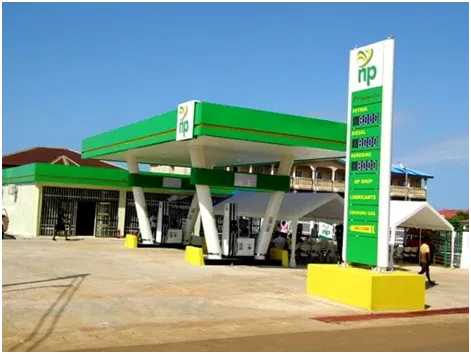
 NP-SL’s Professionalism in Dealing with Customers Makes it 1st for Customer Care

National Petroleum Sierra Leone Limited (NP-SL-Ltd)

By Amin Kef-Ranger

NP-SL Ltd is now a household name as the petroleum importing and marketing continues to take the lead in the timely importation and marketing of a wide variety of high grade petroleum products needed by individuals, businesses and institutions. As a well structured marketing entity, it has, under its name, a wide array of Filling Stations in all the districts in Sierra Leone assuaging the petroleum needs of individuals, businesses and institutions. Being in the business of marketing petroleum products for over four decades, NP(SL)Ltd is now well grounded, mastering the trade to such an extent that its footprint could be found in various places within the country.

One of the first impressions of coming into contact with the company is its impressively built Filling Stations, most of which have spacious forecourts to conveniently accommodate vehicles, painted in green and yellow, some with minimarts and with latest calibrated pumping machines and the other is the professional ways Station Managers and Pump Attendants treat customers always leaving them with the feeling that they are esteemed customers of the company.

Always conscious of availing its customers with qualitative products coupled with the professional ways it treats its customers have contributed largely in earning the corporate entity the accolade of 1st for Customer Care.

Many have reposed confidence in NP (SL) Ltd out of the strong and proven belief that with the installation of the latest calibrated pumping machines at its Filling Stations, they getting in return value for money simply because they are always receiving the right type and quantity of products paid for. The feeling of being cheated is indeed farfetched as far as majority of the company’s customers are concerned.

Moving with modern trends, NP (SL) Ltd introduced what is known as NP Smart Card. With NP Smart Card, a customer can procure fuel at most Filling Stations where the system works. As long as the customer has money in the Smart Card, he or she can secure fuel at a Filling Station without exchanging physical cash. Whenever the money in the Smart Card gets low the holder should top-up it for the next purchase.

This is now trending with the advantages of not being exposed to risk of carrying physical cash that could be stolen or get missing. It makes allowance, also, for proper planning of a budget meant solely for fuel purchase.

The company has for sale at its various Filling Stations gas cookers designed in various cylinder sizes proven to be environmentally friendly and very economical in consuming gas which ignites it as well as very fast in terms of performance. Those who have experienced its high performance have attested that it is a good partner in the kitchen.

When it comes to the company’s policy with regards employment, premium is placed on giving preference to indigenous Sierra Leoneans maybe to resonate with the fact that the company is owned by indigenes of this country. This policy is only waived in  situations where foreign experts are needed to carry out certain tasks.

This policy, which is tenaciously adhered to, has contributed in some Sierra Leoneans securing good mainstream jobs as well as gaining auxiliary employment related to petroleum marketing that has helped and still continues to do so in terms of poverty reduction. From time to time, employees are exposed to trainings that help in them becoming more professional in the performance of assigned tasks.

When it comes to the rolling out of its Corporate Social Responsibility, the company is very keen on doing so in impressive ways. Instances abound among which are the facilitation of the construction of standard boreholes with gadgets connected to pump water into fire engines of the National Fire Force which, in turn, is used to extinguish fire in times of fire disasters. NP(SL)Ltd provided the bore holes and other equipment which are today benefitting the Kissy Branch of the National Fire Force.

In the wake of the Wellington Tanker Explosion that claimed over 100 lives in the East End of Freetown, the Board and Management of NP (SL) Ltd collaborated with the Management of Connaught Hospital to construct the first Burns Unit of the hospital, specialized in treating burns.

The company’s support in popularizing the game of squash by building courts in schools and at Fourah Bay College as well as organizing competitions is the latest, among other supports that the company has made geared towards elevating the sport in the country by making it not only attractive but also competitive.

As one of the entities that go pay huge taxes, NP(SL) Ltd is giving back to society, contributing to the revenue basket from which Government partially derive funds to undertake certain development interventions.

In summary, NP (SL) Ltd is a major partner in the socio-economic development of the country to which it is doggedly committed side by side with its primary task of marketing qualitative petroleum products.

CGSL National Debating Championship for Girls Quarterfinals: Intellectual Clashes and Empowered Voices Take Center Stage

Eight schools will be participating in the quarterfinals of the National Debating Championship for Girls 2023 in a competition that has intensified as the debates continue to challenge norms, advocate for empowerment and embrace the importance of online safety, reproductive health gender equality and more.

On Thursday, May 25, 2023, Malama Comprehensive engaged in a clash of ideas with The International School Limited on the topic: “Online Safety Measures Should be Integrated into School Curriculums.” During the debate, a thought-provoking discussion ensued on the crucial need to equip students with the knowledge and skills to safely navigate the digital world.

Simultaneously, Government Model Secondary School locked horns with Beacon High School on the topic: “Sexual and Reproductive Health Should be Taught in Schools.” This debate shed light on the significance of comprehensive sexual education in promoting healthy relationships, informed choices and the well-being of young individuals.

Today, Friday, May 26, 2023, will witness another round of captivating debates. Saint Joseph’s Convent will tackle Providence International on the topic “Marriage is a Patriarchal Institution.” Brace yourselves for an engaging discourse that explores the dynamics of marriage and its impact on gender equality, societal expectations, and personal freedoms.

Simultaneously, Methodist Girls High School will face off against John F. Kennedy School, debating the topic “The Two Major Religions Gravely Undermine the Empowerment of Women.” This debate will delve into the intersection of religion, cultural norms, and women’s empowerment, offering insightful perspectives on the challenges and potential solutions.

Amidst the excitement, it is worth highlighting the remarkable efforts of Marigold, an organization dedicated to supporting girls in their journey towards technological development and online safety. As a proud sponsor of the National Debating Championship for Girls, Marigold empowers young women, equipping them with essential skills to thrive in the digital age.

Marigold’s commitment to bridging the gender gap in technology aligns seamlessly with the championship’s vision of breaking barriers and amplifying girls’ voices. By providing valuable technological resources and education on online safety, Marigold empowers participants to become savvy digital citizens and champions of change.

As the quarterfinals battle continues to gain momentum it is important to celebrate the determination, intellect, and passion exhibited by these remarkable young debaters. Their voices are shaping narratives, challenging stereotypes, and inspiring a brighter, more inclusive future and together we can support these exceptional young women.