
Home Blog Page 59

CARL-SL Appoints Jeremy Simbo Acting Executive Director as Ibrahim Tommy Steps Down

By Alvin Lansana Kargbo

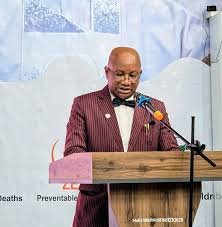
The Board of Directors of the Centre for Accountability and Rule of Law Sierra Leone (CARL-SL) has announced the appointment of Jeremy Ben Simbo, formerly the organization’s Head of Programmes, as Acting Executive Director, following the stepping down of Ibrahim Tommy Esq after nearly fifteen years in office.

The announcement was made during a press conference held on Thursday, 22 January 2026, at CARL’s headquarters on Pultney Street, Freetown.

Ibrahim Tommy assumed leadership of CARL-SL in May 2011, and is widely credited with transforming the organisation into one of Sierra Leone’s leading civil society institutions advocating for accountability, justice sector reform, and human rights protection.

According to a press statement from CARL-SL, Ibrahim Tommy’s tenure was marked by strengthened internal governance structures, an expanded programme scope, and the development of strategic partnerships with both national and international institutions. The statement noted that he intensified advocacy for human rights protection, access to justice, and institutional accountability, with a particular focus on addressing sexual and gender-based violence (SGBV) and corruption-related offences.

The statement further highlighted that under his leadership, CARL-SL implemented initiatives supporting judicial independence, police accountability, and improved legal and medical services for victims of SGBV. It added that CARL-SL also expanded its oversight activities on public sector governance, consistently demanding accountability for human rights violations and the mismanagement of public resources.

CARL-SL also increased engagement with regional and international justice institutions, promoting credible legal frameworks for addressing atrocity crimes and serious human rights violations.

Speaking at the press conference, Ibrahim Tommy said his decision to step down was not politically motivated, but rather based on personal and professional considerations. He described leading CARL-SL for almost fifteen years as a significant responsibility that required unwavering commitment to public interest advocacy, institutional discipline, and resilience in confronting governance and justice sector challenges.

He said that during his time as Executive Director, CARL-SL worked to build a strong and professional institution capable of defending human rights, supporting vulnerable communities, and promoting justice and accountability at both national and community levels.

According to him, the organisation responded to community-level injustices, provided support for victims of abuse, and remained consistent in holding state institutions accountable.

Ibrahim Tommy also acknowledged that the challenges were extensive, including limited resources, resistance to accountability reforms, and systemic weaknesses within governance structures. Despite these constraints, he said CARL-SL remained firm in pursuing its mandate and succeeded in building credibility among citizens, partners, and international institutions.

He expressed confidence that CARL-SL now has a stronger team, improved systems, and clearer strategic direction capable of sustaining the organisation’s work.

The former Executive Director disclosed that he has accepted an appointment in the private sector where he will serve as Chief Executive Officer, marking a transition from civil society leadership to corporate management. He reiterated that the decision was not influenced by political considerations and reaffirmed his commitment to national development through his new role.

Meanwhile, the CARL-SL Board commended Ibrahim Tommy for strengthening the institution’s capacity and national relevance in governance and justice sector advocacy, noting that his leadership positioned the organisation as a key stakeholder in promoting the rule of law in Sierra Leone.

The Board confirmed that Jeremy Ben Simbo will oversee CARL-SL’s operations and strategic direction in an acting capacity until a substantive Executive Director is appointed.

The Centre for Accountability and Rule of Law Sierra Leone has reaffirmed its commitment to strengthening democratic governance, protecting human rights, and advancing justice and accountability in Sierra Leone.

UBA Sierra Leone Applauds ACC, Judiciary Over Conviction of Ex-Operations Head Frederick Caulker

UBA Sierra Leone Managing Director and Chief Executive Officer, Mohamed Alhajie Samoura

United Bank for Africa (UBA) Sierra Leone has commended the Anti-Corruption Commission (ACC) and the Judiciary for what it described as a major victory in the fight against financial misconduct, following the conviction of its former Head of Operations, Frederick Caulker, over the misappropriation of public funds intended for the National Revenue Authority (NRA).

In a statement released after the conclusion of the matter, UBA Sierra Leone Managing Director and Chief Executive Officer, Mohamed Alhajie Samoura, praised the ACC and the Court for what he called the speed and diligence with which the case was handled. The bank’s public response followed a formal communication from the Anti-Corruption Commission dated January 19, 2026, confirming that the proceedings had been successfully concluded.

Frederick Caulker, a resident of No. 38A Taylor Street, Wellington, Freetown, was found guilty on four counts of corruption linked to the diversion of funds said to be close to two billion old Leones. The money involved included PAYE and withholding taxes paid by the Small Holder Commercialization Agri-Business Development Project (SCADeP), which were meant to be deposited into a designated National Revenue Authority account but were allegedly redirected through unauthorized channels while he served as United Bank for Africa’s Head of Operations.

Court proceedings revealed that the irregular transactions raised immediate concern within the bank, prompting internal action and a formal report to the Anti-Corruption Commission. Following the discovery and the bank’s swift escalation of the matter, Frederick Caulker reportedly fled to the United States, where his family had relocated but the Anti-Corruption Commission maintained pursuit of the case and pushed the matter through to conclusion despite his absence.

In delivering judgement, the Honourable Judge handed down a stiff sentence of 40 years imprisonment, structured as 10 years on each of the four counts to run consecutively. The Court also provided an alternative option of a fine of NLe 100,000 per count, amounting to NLe 400,000 in total. In addition, the Court ordered restitution in the sum of NLe 1,980,233.40, representing the full amount stolen, to be paid into the Consolidated Revenue Fund.

Reacting publicly to the conviction, Anti-Corruption Commission Commissioner, Francis Ben Kaifala, restated the Commission’s determination to pursue corruption cases to their logical end, warning that individuals who abuse public resources will not escape accountability. Posting on social media, Francis Ben Kaifala declared: “We will not allow him to enjoy his criminality ever happily after.” The Anti-Corruption Commission further disclosed plans to arrest and extradite Frederick Caulker, while also pursuing the sale of his Wellington property, which it said his father had wrongfully claimed ownership of.

United Bank for Africa Sierra Leone, in reaffirming its commitment to corporate governance and accountability, said its proactive reporting played a critical role in securing the outcome and demonstrating the bank’s refusal to tolerate misconduct involving public funds. Mohamed Alhajie Samoura said the verdict validates the institution’s internal control systems and its insistence on integrity, stressing that the bank would never compromise on transparency and accountability.

“This verdict validates the strength of our internal control systems and our refusal to compromise on integrity. By proactively reporting this anomaly, UBA has demonstrated that we remain a transparent institution where public funds are secure and where accountability is non-negotiable,” Mohamed Alhajie Samoura said.

The conviction has been widely described as a strong deterrent and a clear signal of Sierra Leone’s continued push to safeguard public revenue, strengthen transparency and ensure that individuals who abuse financial systems are held fully accountable under the law, regardless of position, status or attempts to evade justice.


Vice President Ends Eastern Tour with Peace Message at National Remembrance Day in Kailahun

Vice President, Dr. Mohamed Juldeh Jalloh shaking hands with young men during during his Eastern tour commemorating the National Remembrance Day

By Amin Kef (Ranger)

Sierra Leone’s Vice President, Dr. Mohamed Juldeh Jalloh, has called on citizens across the country to use the first-ever National Remembrance Day as a renewed national pledge to protect peace, deepen reconciliation and prevent the return of conflict.

In a message to mark the historic commemoration, the Vice President said the day represents a solemn commitment by Sierra Leoneans to “build a house of peace from the rubble of conflict,” stressing that national healing must not end with reflection alone but must be followed by concrete action and collective responsibility.

Dr. Mohamed Juldeh Jalloh noted that the theme: “Never Again” must not remain a slogan reserved for public ceremonies but should be transformed into daily practice through peaceful conduct, tolerance and unity, especially in communities still recovering from the painful effects of the country’s decade-long civil war.

“ ‘Never Again’ must be more than words,” he emphasized, urging Sierra Leoneans to promote reconciliation, strengthen national cohesion and choose dialogue over division, regardless of political differences, ethnicity, region or religion.

The Vice President encouraged citizens to honour the memories of those who suffered during the conflict by supporting one another, embracing forgiveness and building a stable and progressive nation where future generations will never experience a similar tragedy.

Dr. Mohamed Juldeh Jalloh made the remarks in Kailahun District, where he formally kicked off this year’s National Remembrance Day commemorations with residents of the eastern district, widely regarded as one of the places most closely tied to the origins of Sierra Leone’s civil war.

Addressing a packed hall filled with community members, local leaders, youth groups, women’s organisations and traditional authorities, the Vice President reflected on the significance of Kailahun’s history. He reminded the gathering that the district borders Bomaru, the town where the first shots of the conflict were fired on 23 March 1991, marking the beginning of the country’s 11-year civil war.

The Vice President described Kailahun as a symbol of both national pain and national strength, noting that while the district witnessed some of the earliest impacts of the war, it also represents the resilience of Sierra Leoneans who endured hardship and worked to rebuild their lives and communities.

National Remembrance Day, observed on 18 January 2026, was declared by President Dr. Julius Maada Bio, following recommendations from the Truth and Reconciliation Commission (TRC). The day is set aside for Sierra Leone to reflect on the causes, course and consequences of the conflict, honour victims and survivors and draw lessons to ensure that the country never returns to war.

In his address in Kailahun, Vice President Dr Mohamed Juldeh Jalloh called for collective remembrance rooted in truth, healing, reconciliation and national unity, noting that peace cannot be sustained unless citizens remain committed to protecting it.

He also urged communities to teach young people the true cost of war, insisting that national remembrance must include education, civic responsibility and a strengthened culture of peace across the country.

Upon his arrival in Kailahun town, the Vice President, wearing a white ribbon and dressed in a navy-blue Africana outfit, walked through the crowd, warmly greeting residents. Witnesses said he shook hands with young people, women and the elderly, and spent time interacting with children, reflecting his message of solidarity with communities that bore some of the heaviest scars of the war.

Observers described the moment as emotional and symbolic, as residents welcomed the national leadership to share in the remembrance of lives lost and to reaffirm the country’s commitment to peace.

Beyond the commemoration activities, the Vice President Jalloh also inspected key Government projects in the district, including ongoing infrastructure works and road construction along the Kailahun–Koindu axis, as part of efforts to assess development needs and strengthen service delivery.

His visit to Kailahun also marks the conclusion of a three-day reconciliation tour of the eastern region, during which he engaged local leaders, stakeholders and community representatives in his role as Deputy Leader of the Sierra Leone People’s Party (SLPP). The tour, according to officials, was aimed at strengthening unity, encouraging peacebuilding and reinforcing Government commitment to inclusive national development.

With Sierra Leone having already observed its first National Remembrance Day, the Vice President’s message remains clear: the country’s peace is a shared duty and the lessons of the past must guide the nation toward a future defined by unity, stability and progress.

MoH Launches First National Health Information Hub to Strengthen Data-Driven Healthcare Delivery

Minister of Health, Dr. Austin Demby

By Foday Moriba Conteh

The Ministry of Health (MoH) has officially launched Sierra Leone’s first-ever National Health Information Hub, marking a major milestone in the country’s efforts to modernize healthcare delivery through real-time, evidence-based decision-making. The launch ceremony took place on Monday, 19 January 2025, at Riverside Drive, Brookfields, Freetown and was attended by senior Government officials, United Nations representatives, development partners, civil society organizations, health sector leaders and members of the media.

Unveiling the state-of-the-art digital facility, the Minister of Health, Dr. Austin Demby, described the Hub as a central pillar of the Ministry’s digital transformation agenda and a critical step toward building a stronger, smarter and more responsive health system. He said the initiative is designed to enhance service quality, strengthen coordination across the health sector and accelerate progress toward Universal Health Coverage (UHC).

Dr. Austin Demby explained that while Sierra Leone has made significant investments in health digitization over the years, the sector has continued to face challenges due to fragmented data systems. According to him, critical health information has often been scattered across multiple platforms, arriving late or lacking consistency, thereby limiting the Government’s ability to make timely and informed decisions. Those challenges, he noted, have had serious implications for emergency response, health service management and efforts to reduce maternal and child mortality.

The Minister said the National Health Information Hub is the Ministry’s strategic response to those gaps. Fully Government-owned and Government-led, the Hub integrates data from multiple existing health information systems, including DHIS2 and other priority platforms. It currently features 12 real-time interactive dashboards and a 3D geospatial map with advanced analytics, providing decision-makers with clear and timely insights at national, district and facility levels.

“This is not a pilot or a concept,” Dr. Austin Demby emphasized. “We are commissioning a functional national health information hub with live dashboards covering priority health indicators and automated national reporting. It forms the foundation of a robust, scalable and sustainable national health information system.”

Looking ahead, the Minister outlined plans for the next phase of the digital transformation, which will include the nationwide rollout of electronic medical records (EMRs) across health facilities. Those systems, he said, will feed directly into the Hub, improve data quality and support real-time, patient-centred care. He also disclosed plans to establish regional and district-level health information hubs to decentralize data use and ensure that evidence-based decision-making is embedded across the country not only in Freetown.

Dr. Austin Demby stressed that the success of the Hub will depend on its active use by policymakers, programme managers, district teams and partners. He described the Hub as a critical national asset and called on all stakeholders to use it consistently so that data informs action and ultimately saves lives.

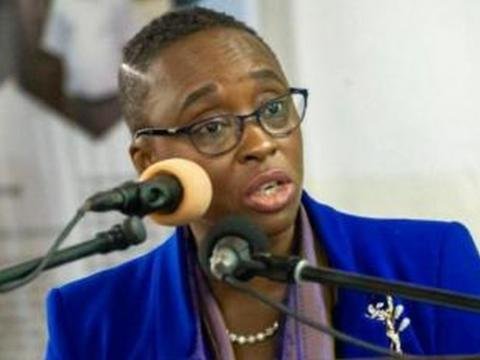
The United Nations Resident Coordinator in Sierra Leone, Ms. Seraphine Wakana, described the launch as a landmark achievement in advancing evidence-based governance and improved health outcomes. She said the Hub reflects strong national leadership, strategic vision and a firm commitment to using reliable data to guide policy and service delivery.

Ms. Seraphine Wakana noted that timely, high-quality and accessible data is essential for effective action, particularly as Sierra Leone works toward achieving the 2030 Sustainable Development Goals (SDGs). She explained that by integrating routine health data into a centralized platform, the Hub will enable decision-makers to identify who is being reached by health services, who is being left behind and where corrective action is needed.

She further highlighted that the initiative supports a person-centred, life-course approach to healthcare by integrating data from maternal and newborn health through childhood, adolescence, adulthood and older age. This holistic perspective, she said, is essential for delivering continuous, equitable and responsive care.

According to the UN Resident Coordinator, the Hub also strengthens Health Information Systems, one of the core building blocks of a resilient and high-performing health system. Improved data integration and use will support stronger governance, more effective health financing, better workforce planning and improved service delivery, thereby accelerating progress toward Universal Health Coverage.

Reaffirming UN support, Ms. Seraphine Wakana disclosed that the United Nations system is finalizing an additional flagship joint programme aimed at further strengthening routine data systems across sectors. She said the National Health Information Hub will play a central role in building a sustainable, nationally owned health information ecosystem.

Deputy Chief Medical Officer–Clinical, Dr. Mustapha Kabba, highlighted the Hub’s ability to transform raw data into actionable insights. He said the platform will provide real-time data that enables faster responses to emerging health issues, improved prioritization of interventions and more efficient allocation of resources.

According to him, the system offers comprehensive visibility into healthcare delivery across districts, communities and referral networks, thereby strengthening planning and monitoring.

Chief Medical Officer, Dr. Sartie Kenneh, reflected on the country’s long-standing challenges with health data reliability, particularly regarding maternal mortality statistics. He recalled that past Demographic and Health Surveys often generated controversy and mistrust due to infrequent data collection and perceived inconsistencies. That, he said, led to delays in decision-making and overreliance on external assessments.

“For many years, we doubted our own data,” Dr. Sartie Kenneh noted. “This Hub represents our decision to trust ourselves and to believe that we can generate and use our own data effectively.”

He emphasized that while the Hub is a major technological achievement, it does not replace frontline health workers or district health management teams. Instead, it strengthens accountability by making real-time data visible to decision-makers. He also called for mobile-accessible dashboards to allow senior officials to regularly monitor key health indicators.

The launch of the National Health Information Hub marks a significant step in strengthening Sierra Leone’s health information systems, improving accountability and enhancing planning and responsiveness across the healthcare sector. Stakeholders described the initiative as a transformative development that positions the country to deliver better, fairer and more responsive healthcare for all Sierra Leoneans.

Accord Logistics CEO Summoned as Parliament Issues Strong Contempt Warning

Chief Executive Officer of Accord Logistics, Johny Kouza appears in front of Parliament

The Parliament of Sierra Leone has issued a stern warning to the Chief Executive Officer of Accord Logistics, Johny Kouza, after summoning him to appear before the House over allegations of disrespect and contempt toward the Parliamentary Committee on Trade and Industry.

Johny Kouza was called to the Bar of Parliament where the Rt. Hon. Speaker, Segepoh Solomon Thomas, strongly reprimanded him for what was described as an affront to the Committee on Trade and Industry and Parliament as an institution. The Speaker told the CEO in clear terms that such conduct was unacceptable and would not be tolerated under any circumstance.

Addressing the matter, Rt. Hon. Segepoh Solomon Thomas warned that failure to comply with the summons of any Standing Committee of Parliament is considered contempt of Parliament, stressing that the House has the legal authority to apply the full force of the law against any individual or institution found to be undermining its authority.

The Speaker further reminded Johny Kouza that Parliament has the power to detain and imprison anyone who refuses to obey parliamentary directives or treats parliamentary proceedings with disrespect. He described Parliament as a constitutional institution that must be respected noting that its committees act on behalf of the people of Sierra Leone.

The warning followed a formal complaint from the Chairperson of the Parliamentary Committee on Trade and Industry, Hon. Veronica Kadie Sesay, who reportedly informed the House that Johny Kouza had demonstrated disrespect toward the Committee during its work.

In his strong statement, the Speaker told the CEO that Parliament would consider the incident as his final opportunity to correct himself, warning that any repetition would attract serious consequences, including imprisonment.

“You are lucky but this is the first and last time we will accept such behavior from you,” Rt. Hon. Segepoh Solomon Thomas warned. “The next time you appear before this Parliament for contempt, we will imprison you. We want to know what you rely on to make you behave disrespectfully to Parliament.”

The Speaker’s remarks sent a strong message that Parliament remains committed to protecting its dignity and authority, and ensuring full compliance with its procedures by all individuals, institutions and corporate bodies operating in Sierra Leone.

Reacting to the development, the Leader of the Opposition, Hon. Abdul Kargbo, commended the Speaker for what he described as a bold and necessary decision in publicly naming and reprimanding the CEO of Accord Logistics. Hon. Abdul Kargbo also urged Rt. Hon. Segepoh Solomon Thomas to apply the same level of firmness to officials of Ministries, Departments and Agencies (MDAs) who fail to honour parliamentary summons or disrespect parliamentary committees.

Observers say the incident highlights the growing focus on accountability and respect for democratic institutions, while underscoring Parliament’s role in ensuring that both the public and private sectors cooperate with legislative oversight in the interest of good governance and national development.

Lithin Nasani Wins Best ICT Guru of the Year as VLN Solutions and Salone Bly Clinch Top ICT and E-Commerce Awards in 2025

By Foday Moriba Conteh

Lithin Kumar Nasani, Founder and Chief Executive Officer of VLN Solutions Private Limited, has continued to strengthen his position as one of Sierra Leone’s most outstanding technology leaders following a new wave of national recognition for innovation, ethical leadership and meaningful contributions to the country’s expanding ICT and digital economy.

Lithin Kumar Nasani was recently honoured at the National Professional Awards 2025, organized by African Consulting Group (ACG), where he received the prestigious Best ICT Guru of the Year 2025 award. The recognition was presented in appreciation of his commitment to professional excellence, integrity, teamwork and strong leadership within Sierra Leone’s fast-growing technology space.

The awards ceremony, held as part of the 10th Annual Edition Awards Banquet, placed national attention on the growing relevance of technology-driven enterprises in supporting economic development. Observers described the event as a clear indication that Sierra Leone is increasingly recognizing the private sector’s role in driving solutions through digital innovation, with  Lithin Kumar Nasani emerging as one of the most outstanding examples of ICT leadership making real national impact.

In the same awards cycle, VLN Solutions Private Limited also received major recognition after being named Best ICT Company of the Year 2025. The award marks a significant milestone for the company and reflects its rising reputation for delivering reliable technology solutions, enterprise systems and digital platforms for institutions and businesses across Sierra Leone and beyond.

Industry stakeholders say the award confirms the company’s ability to blend technical excellence with sustainability, while helping clients modernize operations, improve service delivery, strengthen efficiency and enhance customer experience through innovative digital tools.

Adding to the growing list of achievements, Salone Bly (SaloneBly.com), VLN Solutions Private Limited’s rapidly expanding online e-commerce platform, was recognized as the Best Online E-Commerce Company of the Year (2025 Edition).

The platform has gained popularity for making online shopping more accessible and for supporting local merchants to expand their businesses through digital markets. Many observers say the recognition reflects the platform’s growing influence in promoting e-commerce adoption, boosting digital inclusion and creating fresh opportunities for local sellers to reach customers beyond traditional physical markets.

The National Professional Awards also presented Salone Bly with an additional institutional honour, recognizing its professional excellence and continued contribution to strengthening digital commerce and merchant support in Sierra Leone.

The latest honours have further cemented the growing legacy of  Lithin Kumar Nasani, whose profile has continued to rise through consistent recognition at both national and regional award platforms celebrating entrepreneurship, leadership and innovation.

It could be recalled that Lithin Kumar Nasani and VLN Solutions Private Limited have previously received recognition at the Environmental Care and National Climate Awards, where the company was honoured for promoting digital innovation and sustainability. That earlier recognition reflected an approach that positions technology not only as a tool for business growth but also as a solution for sustainability and long-term development goals.

With each award, many young Sierra Leoneans in the technology space say Lithin Kumar Nasani’s leadership journey remains a source of inspiration, proving that discipline, vision and ethical professionalism can produce impact and attract national respect.

Over the years, VLN Solutions Private Limited has built a reputation for delivering practical and high-impact ICT services, especially across sectors such as finance, revenue systems, enterprise automation, e-commerce and institutional digitization.

The company’s growing portfolio has positioned it as a key player within Sierra Leone’s evolving digital ecosystem. Stakeholders often credit Lithin Kumar Nasani’s leadership style as one rooted in professionalism, ethical conduct, innovative thinking and measurable delivery; qualities that have helped the company earn trust in a highly competitive environment.

Speaking on the significance of the recognitions, Lithin Kumar Nasani has consistently described the awards as more than personal success, stressing that technology must always be designed to create value, empower people and expand opportunities for businesses and communities.

As part of its expansion strategy, VLN Solutions Private Limited has announced the opening of a new office located at 6A Main Motor Road, Wilberforce, Freetown. The move is expected to strengthen service delivery, improve customer accessibility and widen the company’s operational reach.

The new office has also been welcomed by clients and partners as a sign of confidence in Sierra Leone’s growing technology market, while reinforcing the company’s commitment to providing professional services closer to institutions, businesses and individual customers.

VLN Solutions Private Limited has encouraged customers, institutions and business owners seeking professional digital services to engage the company for:

  • Website Development
  • Mobile App Development
  • Portal Development

The company says its solutions are designed to support modern business needs by improving digital visibility, increasing customer engagement, strengthening communication and streamlining service delivery for both private and public sector organisations.

The continued recognition of Lithin Kumar Nasani comes at a time when Sierra Leone is placing increasing attention on digital transformation, innovation and technology-led national development.

From winning Best ICT Guru of the Year 2025 to leading VLN Solutions Private Limited as Best ICT Company of the Year 2025 and driving Salone Bly as Best Online E-Commerce Company of the Year, Lithin Kumar Nasani’s recent achievements reflect a consistent record of leadership excellence and steady growth.

Many stakeholders believe the progress of VLN Solutions Private Limited and its founder will remain a strong reminder that strategic technology leadership can deliver innovation, jobs, sustainability and national development as Sierra Leone’s digital economy continues to expand.

YMCA, Bread for the World Support 13 Sierra Leoneans with Scholarships, Laptops and Living Allowances

By Ibrahim John Sesay

The Young Men’s Christian Association (YMCA) Sierra Leone has awarded fully funded scholarships to 13 Sierra Leoneans pursuing higher education in various institutions across the country in a move aimed at strengthening youth academic development and building a new generation of community-focused leaders for national progress.

The scholarship award ceremony took place on Wednesday, 14 January 2025, at the YMCA Office in Freetown, bringing together YMCA officials, scholarship beneficiaries, sponsors and members of the organization’s Board. The scholarship programme is supported by Bread for the World (BftW), an international development organisation widely recognized for promoting education, social justice and poverty reduction.

Speaking during the event, the Chief Executive Officer of YMCA Sierra Leone, Christian Martyn Kamara, said the scholarship forms part of a broader initiative targeting young people across the Mano River Union sub-region, which consists of Sierra Leone, Guinea and Liberia. He explained that the programme is focused on both undergraduate and postgraduate students who have demonstrated academic excellence but are constrained by financial challenges.

Christian Martyn Kamara described the scholarship as a strategic investment in young people, noting that education remains one of the most reliable pathways for lasting change in society. He disclosed that the programme will run for 39 months, spanning three years, from October 2025 to September 2028.

“At the YMCA we empower young people. This scholarship, we are not only paying your fees, we will also give you a new computer, yearly living allowance and annual academic material allowance for books,” Christian Martyn Kamara stated.

He encouraged scholarship recipients to remain focused, disciplined and committed to their studies, stressing that the opportunity has been created to help beneficiaries succeed academically and contribute meaningfully to their communities. He reminded them to uphold the YMCA values of Honesty, Integrity, Care and Love, and urged them to see the scholarship not only as financial support but as a responsibility to serve.

The Chief Executive Officer further expressed gratitude to Bread for the World for its continued partnership, describing the support as critical in ensuring that talented students are not forced to abandon their education due to financial hardship. He congratulated the beneficiaries and wished them success throughout the scholarship period.

In her statement, the Programme Officer for Bread for the World, Dr. Petra Niefind, underscored the value of education in shaping resilient societies and driving national development. She urged beneficiaries to see their academic journey as part of a larger mission to improve the lives of others.

“We encourage you to give back to your communities and develop your country,” Dr. Petra Niefind told the students.

The Programme Officer for Bread for the World also advised beneficiaries to communicate openly about any challenges they may face during the scholarship programme, noting that the initiative extends beyond financial aid. She said beneficiaries would be connected through digital workshops, community programmes and international exchange opportunities, including travel within the Mano River Union countries to learn languages and share cultural values.

“Do the best in your studies, for your community and YMCA,” Dr. Petra Niefind concluded.

Providing an overview of the initiative, the Project Manager for the Mano River Union Scholarship for Change, Pious Mannah, said the programme is designed to empower young people who struggle to pay tuition while encouraging them to pursue education alongside community service. He explained that the selection process was transparent and based on academic performance, financial need and demonstrated commitment to community development.

Pious Mannah disclosed that the 13 beneficiaries include 10 undergraduate students and three postgraduate students currently enrolled in various higher institutions in Sierra Leone. He added that the scholarship is expected to support a total of 33 beneficiaries across Sierra Leone, Guinea and Liberia.

During the ceremony, beneficiaries described the scholarship as a turning point in their lives. One undergraduate recipient said the support has lifted a heavy financial burden from their family and provided renewed confidence to continue their education.

“This scholarship has lifted a huge financial burden off my family. I can now focus fully on my studies without fear of dropping out,” the beneficiary said.

A postgraduate beneficiary also expressed appreciation, describing the scholarship as a fresh opportunity to pursue academic excellence with hope and determination.

“As a postgraduate student, funding has always been a challenge. This opportunity has renewed my hope and strengthened my resolve to excel academically,” the beneficiary stated.

Other scholarship recipients pledged to remain disciplined, maintain strong academic performance and serve as ambassadors of YMCA values within their respective institutions. YMCA officials also reminded beneficiaries that the initiative is not limited to tuition payment, but includes mentorship, leadership development and guidance intended to shape responsible and impactful citizens.

The ceremony climaxed with the presentation of new computers, scholarship documents and support packages, including yearly living allowances and annual academic material allowances. The event ended with group photographs and messages of encouragement to the beneficiaries as they begin their journey under the scholarship scheme.

For many years, YMCA Sierra Leone has played a leading role in youth empowerment through education, skills training and community development initiatives across the country.

The scholarship programme, backed by Bread for the World, continues to stand as a powerful symbol of hope, opportunity and sustained investment in Sierra Leone’s human capital development as the beneficiaries advance in their academic pursuits.

Speaker Segepoh Solomon Thomas to Represent West Africa on CSPOC Standing Committee

The Parliament of Sierra Leone has recorded a major diplomatic and institutional achievement after being elected as West Africa’s representative on the Standing Committee of the Conference of Speakers and Presiding Officers of the Commonwealth (CSPOC) for the 2026–2028 period.

The recognition was announced during the 28th Conference of Speakers and Presiding Officers of the Commonwealth (CSPOC), held in New Delhi, India, from January 14 to 17, 2026. The high-level gathering brought together 61 Speakers and Presiding Officers from 42 Commonwealth countries and served as an important platform for parliamentary leaders to exchange ideas, strengthen cooperation and promote democratic governance.

This year’s conference focused on strengthening democratic institutions, modernizing parliamentary practices and deepening citizens’ participation in governance. Discussions also centred on emerging issues shaping legislatures worldwide, including the use of Artificial Intelligence (AI) in parliamentary work, the impact of social media on democracy and the safety and security of parliamentarians.

India’s Prime Minister, Shri Narendra Modi, officially inaugurated the event, using the occasion to reaffirm India’s commitment to democratic values and stronger cooperation among Commonwealth nations.

With Sierra Leone’s successful election, the Rt. Hon. Segepoh Solomon Thomas, Speaker of the Parliament of Sierra Leone, is expected to take up the responsibility of representing West Africa on the Standing Committee and will attend the next Steering Committee meeting scheduled to take place in Barbados in August 2026. Political observers have described the development as a step forward for Sierra Leone’s parliamentary diplomacy and international engagement.

The Sierra Leone delegation to the CSPOC conference, representing the Rt. Hon. Speaker, included Hon. Daniel Brima Koroma, Deputy Leader of the Opposition; Gilbert Bosco N’habay, Deputy Clerk of Parliament; and Hon. Fatmata Bintu Bockarie, Deputy Chair of the Mines Committee. Hon. Daniel Brima Koroma led the delegation throughout the conference proceedings in New Delhi.

As part of their official engagements, the delegation held a closed-door meeting with the Rt. Hon. Speaker of the Indian Parliament, during which they discussed key issues related to strengthening bilateral parliamentary cooperation. Among the key proposals raised was the establishment of a Sierra Leone–India Parliamentary Friendship Group, aimed at fostering closer ties, mutual learning and stronger engagement between lawmakers of both countries. The delegation also highlighted the need for the urgent establishment of a Sierra Leonean embassy in India to support growing diplomatic, economic and institutional relations.

The CSPOC, established in 1969, provides an important forum for Speakers and Presiding Officers to share experiences, exchange best practices and contribute to strengthening parliamentary democracy across Commonwealth member states. The conference also promotes the emergence of impartial and independent presiding officers and encourages stronger institutions that uphold democratic accountability.

Sierra Leone’s election to the CSPOC Standing Committee is being viewed as a demonstration of the country’s rising profile in both regional and international parliamentary platforms. It further reflects Parliament’s commitment to democratic values, transparency, inclusivity and accountability.

With this new role, the Parliament of Sierra Leone is expected to contribute meaningfully to shaping Commonwealth parliamentary practices and procedures, while promoting cooperation and institutional development across West Africa and the wider Commonwealth community.

ECOWAS Commitments Highlighted in Conakry as President Bio Witnesses Doumbouya’s Swearing-In

President Dr. Julius Maada Bio leaders at the inauguration ceremony of the President-elect of the Republic of Guinea, H.E. President Mamady Doumbouya

President Dr. Julius Maada Bio joined fellow Heads of State and international leaders at the inauguration ceremony of the President-elect of the Republic of Guinea, H.E. President Mamady Doumbouya, held on Friday 17 January 2026 at the Stade Général Lansana Conté in Conakry, Guinea.

The historic ceremony marked a major political milestone for Guinea following a period of transition, as President Doumbouya was officially sworn in and assumed constitutional leadership of the country. The event attracted high-level dignitaries from across Africa and beyond, reflecting the significance of Guinea’s renewed political direction and its role in regional affairs.

In his inaugural address, President Doumbouya reaffirmed Guinea’s commitment to democratic governance and constitutional order, promising to lead with a focus on national unity, reform and inclusive development. He pledged to strengthen the country’s democratic institutions, uphold the rule of law and promote fairness and accountability in governance.

The Guinean leader also emphasized the need to expand opportunities for women and young people, describing inclusion as a national priority in his administration’s agenda. He highlighted his intention to ensure that all citizens, regardless of background, are given a voice in national decision-making and development planning.

President Doumbouya further committed to improving Guinea’s engagement with the international community and strengthening partnerships that support peace, economic growth and sustainable development. He acknowledged the importance of cooperation with regional and global actors, particularly as Guinea seeks to consolidate stability and rebuild confidence in its institutions.

The inauguration ceremony also served as a symbol of wider regional aspirations for peace, stability and cooperative political transitions, consistent with the ECOWAS Protocol on Democracy and Good Governance. Observers noted that Guinea’s transition and inauguration send an important message about regional responsibility, dialogue and the need for constitutional processes in governance.

President Bio’s presence at the ceremony underscored Sierra Leone’s support for regional solidarity and its continued commitment to strengthening democratic governance across West Africa. His participation further demonstrated Sierra Leone’s readiness to maintain strong diplomatic ties with neighbouring states and contribute to stability within the Mano River region and the broader ECOWAS sub-region.

Sierra Leone and Guinea share long-standing bilateral relations rooted in shared history, cultural ties and strong people-to-people connections. Both countries have continued to cooperate in areas including trade, cross-border security, digital connectivity and regional integration, with a mutual interest in promoting socio-economic development along their borders.

The event was attended by several Heads of State and senior representatives from Africa and beyond, including leaders from Senegal, The Gambia, Rwanda, Mauritania, Gabon, Mali, Nigeria, Equatorial Guinea, as well as representatives from China, the African Union, and ECOWAS.

The inauguration of President Mamady Doumbouya is expected to open a new chapter in Guinea’s governance and regional engagement, with the eyes of the sub-region focused on continued peace, democratic consolidation and inclusive growth.

Pres. Bio Declares ‘Never Again’ as Sierra Leone Observes National Remembrance Day

President Dr. Julius Maada Bio

By Amin Kef (Ranger)

President Dr. Julius Maada Bio has officially declared January 18 as Sierra Leone’s National Day of Remembrance, marking the first time the nation has set aside a special day to honour victims of the civil war and reflect on the painful sacrifices that led to peace.

In a solemn national address delivered in Freetown on Sunday, 18 January 2026, President Bio said the country must “pause together to remember, to honour and to reflect,” stressing that the day is not only about emotion but about collective responsibility to protect peace and prevent a return to violence.

“This day calls not only for emotion, but for commitment. We declare, with one voice: Never Again,” the President stated, describing peace as a choice and remembrance as a tool to keep it alive across generations.

President Bio recalled that Sierra Leone’s civil war was officially declared over on January 18, 2002, after which the country established the Truth and Reconciliation Commission (TRC) to document the conflict, give victims a voice and guide national healing.

He noted that the TRC recommended January 18 be observed as a National Day of Reconciliation and Remembrance, but acknowledged that the recommendation remained unfulfilled for 24 years. The President said the nation has now chosen to give full meaning to that historic recommendation by formally recognizing January 18 as a day of national memory and moral reflection.

Speaking not only as Head of State but as a survivor of the conflict, President Bio described the Remembrance Day as deeply personal, revealing that members of his own family in Bonthe District suffered the war’s brutality and that some lost their lives.

He described the war as a tragedy that destroyed without discrimination, leaving permanent pain in countless families across the country.

The President outlined the scale of the conflict, stating that more than 50,000 Sierra Leoneans were killed, communities were uprooted, thousands suffered amputations and many citizens endured physical and sexual abuse, displacement and lasting psychological trauma.

In one of the most emotional parts of his address, President Bio asked for forgiveness on behalf of the nation and its leaders, past and present, while recognizing that victims and survivors must be allowed to heal in their own time.

He emphasized that acknowledging the truth is not about blame but about healing and prevention, adding that national unity cannot be rebuilt without forgiveness, dalogue and responsibility.

President Bio cautioned that war does not begin with bullets but with hatred, lies, intimidation and division. He warned that Sierra Leone faces new threats in the era of social media, where dangerous rhetoric can spread rapidly and inflame tensions.

He urged citizens to weigh their words carefully, reject incitement and verify information before sharing, stressing that democracy needs criticism but also demands responsibility.

“This is not a call for censorship,” he said, adding that the nation must keep empathy in politics and reject any form of politics that promotes hatred.

The President particularly challenged young people, many of whom did not witness the war, to understand that peace is not guaranteed.

He urged them to use their energy to build and strengthen the country, participate responsibly in public life and reject violence, emphasizing that the younger generation has inherited a duty to defend the peace others paid for with their lives.

President Bio paid tribute to individuals and institutions whose sacrifices supported Sierra Leone’s return to democracy and stability. He honoured the Armed Forces, Civil Defence Forces, women, teachers, health workers, journalists and civil society actors who stood for peace during the nation’s darkest years.

He also recognized the contributions of international partners and foreign soldiers from several countries, as well as regional leaders and humanitarian workers who supported Sierra Leone through the conflict.

The President announced that from 2026 onward, Sierra Leone will observe National Remembrance Day every January 18, accompanied by a Week of Remembrance dedicated to civic education, interfaith prayer, storytelling, reflection and peacebuilding.

He called on families to speak honestly with their children about the war, honour the survivors and safeguard dignity, while urging the nation to resolve disagreements through dialogue and reject tribal, regional, religious and political division.

During the address, President Bio led the nation in a minute of silence for those who lost their lives and offered prayers for peace, healing and unity. He pledged to continue protecting peace and strengthening state institutions so they never again fail the people.

“Peace is not something we inherited. It is something we earned through suffering and sacrifice,” the President said, calling on citizens to defend peace through their conduct, institutions and choices.

He concluded with a renewed call for national unity, reminding Sierra Leoneans that remembrance is not meant to reopen wounds but to safeguard the future.

“May the souls of all who were lost rest in peace. May the survivors find healing. And may God continue to bless and protect the Republic of Sierra Leone,” President Bio ended.