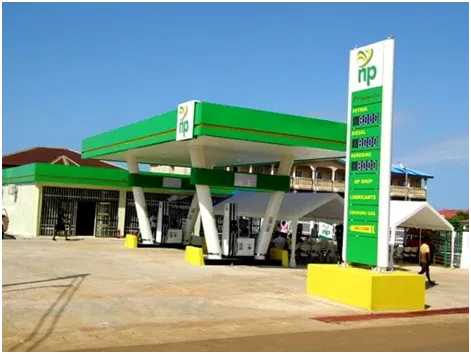
NP-SL is making frantic efforts in engaging oil producing companies with the primary objective of always ensuring that petroleum products are timely secured in order to make it possible for stocks to last over periods of time in order to avert shortages from taking place.
Interestingly, NP-SL is not a Government entity or appendage; no politician has a share in it as its shareholders are mere ordinary Sierra Leoneans, starting with 35 of them who some time ago bought shares from the Government out of their end of service benefits to establish what today has become a towering entity (NP-SL) to reckon with in the business landscape.
As had been fallaciously propagated by certain ill-motivated persons, who do not mean well for this country, that there are certain politicians that have vested interests in the company, our investigations have proven otherwise.
NP-SL is a 100% indigenous company to the letter and it has weathered various storms that could have dwarfed it or left it to extinct save therapeutic intermittent Managerial injections that keep it upright and on the right course.
Demonstrating its true Sierra Leonean identity the company has maintained a policy of strictly adhering to the Local Content Policy ensuring that it has a maximum indigenous staff in its employ. What this actually means is empowering our brothers and sisters to access employment opportunities and reduce poverty.
As a matter of fact some of its members continue to benefit from various trainings that have afforded them the conduit to imbibe useful skills to efficiently carry out certain tasks. If we are counting the number of companies that have upheld the Local Content Policy, without any iota of doubt, NP-SL could be seen at the top.
This intrinsic nationalistic posture of the company runs through and it is a sine qua non to overall national development. If such a compliance rate should have been followed by other local companies, willingly, without any pressure from the relevant authorities then indisputably this country should have been miles away in its development trajectory.
Business Management experts have made it abundantly clear that the way and manner in which customers are cared for in terms of talking to them, making them feel at ease go a long way in attracting them. Such should be done sincerely in order to make them more important. NP-SL for a very long period now has mastered that art and executing it so well which definitely is paying dividends.
1st for Customer Care was earned by the company because it has been widely acclaimed by many for solidly executing such.
In its drive to optimize customer satisfaction the company went the extra mile to install calibrated pumping machines which are not only modern but trustworthy, as opposed to old pumping machines which certain unscrupulous individuals used to cheat unassuming customers.
This is helping to repose confidence in customers that they are dealing with a very transparent entity. The friendliness of their pump attendants is very impressive and they are always there to timely respond to various concerns.
Still within the purview of 1st for Customer Care, the company is always in position to enter into payment plans with its reliable and dependable customers including Ministries, Departments and Agencies for supplied fuel and lubricants as long as all the necessary modalities have been put in place.
When cognizance is taken of the fact that some of these institutions receive intermittent budgetary allocations then such an arrangement is very significant. Its significance in real terms borders on functional continuity of those institutions as they will be assured of supplies of petroleum products in as much as they keep honoring their obligations.
For those who have not tried NP Gas for the first time it is now time to give it a try. Designed in sizable varying cylinders and sold at various NP Filling Stations, this cooking device has been rated as one of the best that is on offer for sale. NP Gas is safe, user friendly and portable. Trying it will spur you to recommend it to others.
NP Smart Card is now in vogue and is one of the latest technological devices used to purchase petroleum products. Using it has attendant advantages as evident in procuring fuel at any time of the day even during times when monies could not be accessed from banks. It is secured, easy to use and very quick. It is now trending.
To crystallize proposed projects into tangible realities on the ground, Government needs the required financial resources to effectively do so and one sure way is from collection of taxes which is the mandate of the National Revenue Authority (NRA). NP is one big tax payer to Government and it has been doing so timely.
NP-SL remains undaunted, unperturbed amidst all the challenges it is going through and conscientiously it is steadily contributing to the socio-economic development of the country as well as positively changing communities and lives.
Grown up Sierra Leoneans will be heaving sigh of relief that after a long period of waiting to obtain national identity cards finally they will be able to access them. Many have faced embarrassments just because when sometimes identification is demanded other forms of identification produced were not accepted.
Against such a backdrop, the National Civil Registration Authority (NCRA) has been working assiduously to ensure that all arrangements were made and implemented for the production of National and Non-National Identity Cards.
According to the Director General of NCRA (National Civil Registration Authority), Mohamed Mubashir Massaquoi, the National Identity Card is mandatory for all Sierra Leoneans aged 12 and above adding how the National ID card will soon become a requirement to access critical services in the country.
Mr. Massaquoi furthered that the country’s National Identity card is mandatory and has a life span of five years. It can be accessed at any of the NCRA branches across the country.
The NCRA Director General noted that the Non-National Identity Card is also mandatory for non-Nationals. It has a life span of one year. He added that the Non-National Identity card is a requirement for Residential and Work Permits.
Mr. Massaquoi assured Sierra Leoneans that the ID Cards are of high quality with resounding security features and specifications that are in line with international standards.
He assured the public that His Excellency President Dr. Julius Maada Bio will officially launch the production of ID Cards (ECOWAS, National and Non-National) on the 30th January, 2023.
In their strides towards equipping public and private sector workers in the country’s tourism sector, the Ministry of Tourism and Cultural Affairs in collaboration with the National Tourist Board (NTB), with support from the Sustainable Tourism Development and Promotion Project (STDPP), under the Enhanced Integrated Framework (EIF) Tier 2 and Government counterpart funding, has on Wednesday 25th January, 2023 launched a 5-day training of trainers workshop for public and private sector workers. The training workshop, which attracted 50 carefully selected participants from the public and private sector who will in turn transfer the knowledge acquired to their various institutions, was officially launched at the Country Lodge Hotel Hall in Freetown.
The five days training will focus on introducing tourism-why people travel, sustainability and the triple bottom line, sales systems and marketing, delivering quality services and performance metrics and review will be facilitated by two Canadian tourism experts, Fergus Maclaren and Wayne Smith both from the Ted Rogers School of Tourism Management in Canada.
In her address, the Human Resource and Admin Manager of the NTB, Cyrillia Wilson, on behalf of the General Manager of the NTB, Fatmata Hamid Carew, an entity that also manages the EIF Project, remarked that despite the great opportunities in the sector, lamentably, it continues to suffer from an acute human resource capacity limitation at all levels of demand.
She continued that to address such a challenge the Ministry and the Board with support from the STDPP, EIF Tier 2 undertook to map out a training needs assessment and training plan for the sector which revealed significant gaps on the supply and demand needs of the sector and reiterated the need for overhauling of the curriculum for the sector and the need to build an educational infrastructure and capacity for the delivery of education on tourism and hospitality.
She mentioned that they have, with support from the EIF, also developed the Integrated Tourism Curriculum that speaks to all facets of the tourism industry and is expected to address issues related to the human resource capacity gaps including the ability of tourism training institutions to support both formal, informal, public and private education and training needs in Sierra Leone.
Cyrillia Wilson called on participants to exchange experiences and work together and get more knowledge, not only for another certificate but as tourism trainers that will speak to the rebirth of their tourism training institutions in Sierra Leone.
One of the trainers, Wayne Smith, the Interim Director, School of Hospitality and Tourism Management in Canada intimated that the training comprises of great leaders who will work as mentors and take the knowledge acquired to their various institutions. He stated that the training will be sustained in a way that they are making good connections with the individuals, adding that the service and the people need to have a good connection with their guests.
Launching the training of trainers workshop, the Minister of Tourism and Cultural Affairs, Dr. Memunatu Pratt maintained that the training is a strategic step towards building the capacity of sector workers, hence tourism is about service delivery and ensure the guests get the best experience.
“You can have the beautiful places with world class facilities but if the trained personnel is lacking the guests cannot understand the products and enjoy the services,” she said maintaining that as a result of linking effective service delivery and building the tourism infrastructure, they decided to embark on human resources capacity building and review of the curriculum supported by the EIF.
The Minister pointed out that the training is important as it resonates with President Bio’s vision to make tourism a growth sector. She thanked Ted Rogers University for working with them and the EIF for their continued support to the sector, while also encouraging participants to treat the training with utmost seriousness.
One of the beneficiaries, Kadiatu M. Akefel, a Teacher at the Women Vocational Center, commended the Ministry of Tourism and Cultural Affairs and the National Tourist Board for organizing the five days training of trainers workshop for public and private sector workers in the tourism sector.
She said that the tourism sector plays an integral role towards the development of the country, adding that with such trainings it will empower them in order to be more proactive in their work.
Kadiatu M. Akefel said that as the training focuses on introducing tourism-why people travel, sustainability and the triple bottom line, sales systems and marketing these will give them a better understanding of those subject matter.
She concluded by assuring that they will ensure that after the training the knowledge acquired will be used towards addressing some of the challenges faced within the tourism sector in the country.
The High Commission of India, Freetown celebrated the 74th Republic Day of India on Thursday, 26 January 2023 as ‘Azadi Ka Amrit Mahotsav’. Charge d’ Affaires a.i. Neeraj Kumar Saini hoisted the national flag at a ceremony at the Chancery premises followed by reading of the address of the President of India to the Nation.
This was followed by a cultural programme of patriotic speeches, dance on patriotic songs and singing of patriotic songs by Indian diaspora children and two dance performances by local Bollywood dance group ‘Original Bollywood Fan Club’ on Shiv Stuti and patriotic song Jai Ho. Brahma Kumari sisters also addressed the gathering.
‘India Corner’ was set up on this occasion in the Chancery. They Mission also conveyed the details of interaction of Hon’ble Prime Minister of India with students, teachers and parents on the next edition of ‘Pariksha Pe Charcha’ on Friday, 27th January 2023 and celebration of 2023 as International Year of Millets. This is to highlight that UN has declared 2023 as International Year of Millets.
Over 150 guests including Indian nationals, friends of India and Embassy officials and their family members participated in the celebration. Refreshments along with Millets Special dishes were served after the function.
……………………………………………………………………………………………………………….
India Takes World Centre-Stage with G20 Presidency
Amb. Ashok Sajjanhar
Introduction
India assumed the Presidency of G20 (the Group of 20 countries comprising 19 large economies and the European Union) for 2023 from Indonesia on 1st December, 2022. While accepting this responsibility, PM Narendra Modi said that India’s G20 presidency will be “inclusive, ambitious, decisive and actionoriented.’’
India’s assumption of the G20 presidency has decisively signaled its emergence as a significant player on the global stage. While most countries in the world, both developed and developing, have found it difficult to effectively handle the challenges thrown up by the Covid-19 pandemic and the RussiaUkraine conflict, India, through its bold leadership and prudent policies, has been able to successfully navigate the headwinds it has encountered over the last three years.
What is the G20?
The G20 is an international forum which represents the world’s biggest economies encompassing both industrialized and developing nations. Its core mandate is to address the major challenges related to the global economy, developmental issues and financial architecture, such as international financial stability, climate change mitigation, sustainable development etc.
Together, the G20 members represent 85% of the global gross product; 75% of international trade, and two thirds of the world population.
Because the G-20 is a forum, its agreements or decisions are not legally binding but they do influence countries’ policies and global cooperation.
The Setting
The Bali G20 Summit in November, 2022 was held at a particularly difficult and uncertain moment in international politics and economics.
The world has been subjected to huge instability and volatility over the last 3 years inter-alia due to the Covid-19 pandemic. The ongoing Russia-Ukraine conflict has had global implications through high inflation, shortages of food, fertilizers and energy, unsustainable debts, supply chain disruptions and more. In addition, the challenges of climate change, terrorism, nuclear proliferation, achievement of the Sustainable Development Goals (SDGs) and others continue to unsettle the global economy and community. It is in these circumstances that India has been entrusted with the responsibility of steering the activities of the G20.
The Summit
India emerged as a ‘’leader, solution provider and consensus builder’’ at the Bali Summit. The shadow of the Russia-Ukraine conflict loomed large over the deliberations in the run up to the Summit. It was not found possible to arrive at a mutually acceptable language on the conflict in several of the G20 meetings that preceded the Summit. India was able to act as a bridge between the opposing sides on the issue. A compromise solution was achieved which reiterated the assertion by PM Modi to Russian President Vladimir Putin in Samarkand on the sidelines of the Shanghai Cooperation Organization Summit that ‘’today is not an era of war,’’ and that the solution to the conflict should be found through ‘’dialogue and diplomacy.’’
The Declaration, a 19-page document addressed in considerable detail, the major challenges confronting the global economy and financial system.
In his remarks in the first session on Energy and Food Security, PM Modi clearly stated that the United Nations had failed to resolve the political and economic challenges afflicting the world. It is because of the failure of the multilateral organizations that the significance of G20 has increased. PM Modi exhorted the countries to evolve a new world order as had been done after the Second World War.
While speaking on the need to make digital connectivity truly inclusive, PM Modi asserted that “digital transformation is the most remarkable change of our era. The proper use of digital technologies can become a force multiplier in the decades-long global fight against poverty. Digital solutions can also be helpful in the fight against climate change.’’ PM Modi asserted that India’s experience of the past few years has shown that if digital architecture is made ‘inclusive’, it can bring about socio-economic transformation. He declared that the principle of “Data for development” will be an integral part of the overall theme of India’s Presidency “One Earth, One Family, One Future”. Batting for sustainable growth, PM Modi stated that LiFE i.e. ‘Lifestyle for Environment’ campaign can make a big contribution to this. He encouraged the global community to make sustainable lifestyle a mass movement.
India’s Presidency
During its Presidency, India will aspire to deliver outcomes in areas of critical interest such as integrating the climate and development agenda, accelerating progress towards achieving the SDG 2030 mandate, furthering development cooperation, supporting small and marginal farmers, enhancing food security and nutrition, addressing global skill gaps, women empowerment, promotion of blue economy and coastal sustainability, digital health solutions, green hydrogen and tech-enabled learning.
India hit the ground running on assuming the Presidency of the G20. Even before taking over charge, India organized a Special Briefing for envoys of G20 and invitee countries and International Organisations in the Andaman and Nicobar Islands on 26th November, 2022. Starting with the first 4-day Sherpa meeting in Udaipur from 4th December, 2022, India has already organized several substantive meetings including the first Finance and Central Bank Deputies Meeting in Bengaluru; first Meeting of the G20 Development Working Group in Mumbai; first Global Partnership for Financial Inclusion in Kolkata, and several more.
India has also emerged as a strong and clear voice of the global South. There is a persistent feeling among several small countries that their concerns and problems do not get the attention they deserve. In a remarkable path-breaking initiative, India organized the ‘’Voice of the Global South for Human-Centric Development’’ virtual Summit on 12th-13th January, 2023. The theme of the
Summit was ‘’Unity of Voice, Unity of Purpose.’’ The Summit brought together 125 countries of the global South to share their perspectives and priorities on a common platform across a whole range of issues. The Summit, as is evident from the numbers, received a strong, positive response across the world. This initiative was inspired by PM Modi’s vision of ‘Sabka Saath, Sabka Vikas, Sabka Vishwas, Sabka Prayas’ (the support of everyone, development for everyone, trust of everyone with everyone’s effort), and was also underpinned by India’s philosophy of Vasudhaiva Kutumbakam (The World is One Family). The Summit was a platform to exchange ideas and solutions, and to unite in voice and purpose, the issues of concern and priorities for the Global South.
In his Opening Address, PM Modi declared that the Voice of the Global South will be the Voice of India and the priorities of the developing countries will be India’s priorities. PM Modi gave a call for 4Rs – ‘Respond, Recognize, Respect and Reform’ in context of various priorities of the developing world. Prime Minister also announced a number of new initiatives by India. These include – AarogyaMaitri whereby essential medical supplies will be provided to any developing country affected by natural disasters or humanitarian crisis; Global South Centre of Excellence for research on development solutions to be implemented around the world; Global South Science and Technology Initiative to share expertise in areas such as space technology and nuclear energy; Global South Young Diplomats Forum; and Global South Scholarships.
While assuming the Presidency, PM Modi had said that India’s G20 priorities would be shaped in consultation with not just G20 partners, but also with our fellow travellers in the Global South, whose voice often goes unheard. This Summit was an opportunity for those countries that are not part of the G20 process to share their ideas, concerns, aspirations and expectations. Several developing countries like Bangladesh, Egypt, Mauritius, Nigeria, Oman and the UAE have also been invited as “guest countries” by India to the G20 Summit in September this year.
Conclusion
Accepting the G20 Presidency, PM Modi declared that India will organize more than 200 G20 meetings in 55 different cities on 35 different themes around the country. Visitors to India will get the full experience of its amazing diversity, inclusive traditions, and cultural richness. He invited all G20 members and international organizations ‘’to participate in this unique celebration in India, the ‘Mother of Democracy’ ’’.
Assuming charge of the G20 at this critical moment is a huge challenge. It is also a great opportunity. The world is looking at India with hope and expectation to effectively deal with the turbulence engineered by the Covid-19, Russia-Ukraine conflict, global economic downturn, and climate change. India is committed to reach out to all countries of the North and the South, the East and the West to ensure as PM Modi said at the Bali G20 Summit that “next year when the G20 meets in the holy land of Buddha and Gandhi, we will all agree to convey a strong message of peace to the world.’’
India will hand over the baton to Brazil at the end of November, 2023. It is for the first time that the troika comprising of the current, past and future Presidencies of G20 will comprise of three major developing and emerging economies. This provides a unique opportunity to India, supported by Indonesia and Brazil, to make a significant contribution to peace, security, stability and prosperity in the world. India looks forward to its Presidency of the G20 with determination and confidence.
***
[The writer is former Indian Ambassador to Kazakhstan, Sweden and Latvia.]
……………………………………………………………………………………………………………….
Mighty Millets – Super Grains of Power
Prof. Rajeev K Varshney
Super-grain, super-food and wonder-grain are some of the adjectives often used to describe millets, one of the oldest foods known to humans, and probably the first grain used for domestic purposes.
The unanimous adoption by the United Nations General Assembly (UNGA) of the resolution to declare 2023 as the International Year of Millets, a proposal sponsored by India and supported by over 70 nations, underlines the international community’s support to recognise the importance and benefits of these grains for the global food system. Speaking on the subject during the adoption of the resolution India’s former permanent representative to the UN, Ambassador TS Tirumurti, said, “There is an urgent need to promote the nutritional and ecological benefit of millets to consumers, producers and decision-makers to improve production efficiencies, research, and development, investments, and food sector linkages”. He expressed gratitude to all the co-sponsors, especially Bangladesh, Kenya, Nepal, Nigeria, Russia, Senegal and all member states of the UN for their strong support.
Several ancient Indian scriptures make references to millets and the traces of millets have been found in the archaeological sites of Harappa and Mohenjodaro. For many years, millets were a part of our daily diet. Today, there is a growing realisation among Indian farmers that cultivating millets requires fewer inputs and it is also an economically viable option, especially in harsh and dry environments. This is supported by the new-found knowledge on the health benefits of millets. Also, over the last few years, the Indian government has been making extensive efforts to encourage the cultivation of millets.
The Union Government of India, headed by Prime Minister Narendra Modi, had declared 2018 as the National Year of Millets to boost production of the nutrient-rich grains.
A smart food
Millets are an important staple cereal crop for millions of smallholder dry-land farmers across Asia and sub-Saharan Africa. They are also called nutri-cereals or dry-land cereals, and include sorghum (jowar), pearl millet (bajra), finger millet (ragi), foxtail millet (kangni), proso millet (chena), barnyard millet (samvat ke chawal) and kodo millet (kodon), and offer high nutritional benefits. Millets are also referred to as ‘Smart Food’, which are good for the consumers, the planet and the farmers. For instance, finger millet has three times the amount of calcium as in milk, and most millets have very high levels of iron and zinc, low glycemic index, good levels of protein and fibre, and are gluten-free.
Millets can also contribute to addressing some of the largest global issues in unison: poor diet (malnutrition to obesity); environmental issues (climate change, water scarcity and environmental degradation); and rural poverty. They have a low carbon footprint and have the ability to survive and grow in warm climate with very little water. They are climate-smart and hence constitute a good risk management strategy for farmers as compared to rice and wheat crops, which need higher quantities of water and fertiliser supplements.
Indian millets at the forefront
Efforts to bring Indian millets to the international forefront began in October 2017, during the Committee on Food Security event in Rome. A series of meetings involving the Government of India (GOI), the agricultural research body International Crops Research Institute for the Semi-Arid Tropics (ICRISAT) and other stakeholders were organised at the Food and Agriculture
Organization (FAO) of the UN to identify the process of promoting the idea with FAO departments and the Indian Embassy in Rome. Following this initial step, in November 2017, the Government of India’s then Union Agriculture Minister Radha Mohan Singh wrote to the UN Secretary-General, Antonio Guterres, requesting the inclusion of the proposal in the UN General Assembly agenda for an International Year of Millets in 2018. Although this process can typically take five years, the GOI, ICRISAT, the Consultative Group on International Agricultural Research (CGIAR), the Indian Council of Agricultural Research (ICAR) of the Ministry of Agriculture & Farmers’ Welfare and its millets research institute, ICAR – Indian Institute of Millets Research (IIMR), along with others pursued the cause, which came to fruition in 2021.
It is encouraging to note that the world is talking about depleting natural resources like arable land and water, and the pressing need to produce more to meet the food and nutritional requirements of the growing population. Staple crops like rice and wheat are part of our traditional diets but are known to be water guzzlers, challenging our farmers, consumers and policy makers to explore ways to diversify our cropping system. Millets suit this requirement.
Easy to cultivate
Tolerant to drought and high temperature, and other climate change vagaries, millets are mostly cultivated on low-fertile land, mountainous, tribal and rain-fed areas of India like Andhra Pradesh, Chhattisgarh, Gujarat, Haryana, Madhya Pradesh, Odisha, Rajasthan, Maharashtra, Karnataka, Uttar Pradesh, Tamil Nadu and Telangana. As per the Food and Agriculture Organization’ data, the global millet production stands at about 90 million tonnes, of which India’s share is about 19 million tonnes.
However, as productivity for a majority of millets is very low, several Indian and international organisations have been working towards enhancing crop productivity by using multi-disciplinary approaches. For instance, the Pearl Millet Genome Sequencing Consortium, comprising 30 institutions, decoded the genome of pearl millet and identified genes for drought-and-heat-tolerance that may be useful not only for millets but also for other major cereals. These researches have contributed to developing several high-yielding hybrids and improved varieties of several millets that are grown by farmers in India.
Mission millet
At the national level, the Government of India has been promoting the cultivation of millets on a mission mode to achieve nutritional security, following recommendations by a committee headed by NITI Aayog. Indian Prime Minister Narendra Modi dedicated 17 biofortified varieties of eight crops, which included two varieties of finger millets and one variety of little millet, on October 16, 2020, on the 75th anniversary of the FAO. As a part of the government’s initiative under the National Food Security Act, state governments have been advised to procure millets at minimum support price and distribute them under the public distribution system (PDS). India’s National Nutrition Mission, POSHAN Abhiyaan, has also advised state governments to include millets under large public system delivery channels such as Integrated Child Development Services, Mid-Day Meals etc.
While the government and research organisations work towards higher productivity of millets, nutritionists and chefs are contributing towards the promotion of millets by creating unique millet dishes. Promotions are being done on easy ways to cook millets, convenient tasty millet recipes, and word is being spread about their nutritional benefits and environment-friendly qualities among all stakeholders – both at the national and international level. The UN Food Systems Summit 2021 also offers additional opportunity to make the food systems sustainable and resilient. The declaration of 2023 as the ‘International Year of Millets’ will certainly support all these efforts and make millets a popular and healthy food choice for all.
***
[Prof. Rajeev K Varshney is a Research Program Director at the International Crops Research Institute for Semi- Arid Tropics (ICRISAT), Hyderabad, India and an Adjunct Professor with Food Futures Institute, Murdoch University, Australia]
……………………………………………………………………………………………………………….
75 Years of India and the United Nations
Amb. Asoke Mukerji
India is one of the 51 original founders of the United Nations (UN). India, following the independence from Britain on 15 August 1947, “continued” as an original member of the UN.
Mrs. Vijayalakshmi Pandit, delivered independent India’s first major statement in the UN General Assembly (UNGA) on 19 September 1947. She noted that “the great Powers, instead of coming closer together, are drifting farther apart. There is tension, suspense and anxiety, and an uneasy awareness that things are perhaps moving towards some new and annihilating disaster for mankind…”. Rejecting attempts to make India part of the ideological confrontation of the Cold War, Mrs. Pandit said that “ideology is less important than practice. We cannot eat an ideology; we cannot brandish an ideology, and feel that we are clothed and housed. Food, clothing, shelter, education, medical services‐these are the things we need.” Independent India had clearly articulated its vision of the UN as providing a supportive global framework for the socio-economic transformation of India.
This vision has been sustained during the past 75 years. Two major achievements stand as a legacy to India’s contribution to the UN so far. First, the successful campaign to democratize international relations enabling former colonial countries to become independent members of the UNGA with the historic unanimous Decolonization Resolution adopted by the UNGA in December 1960. Second, the incremental positioning of sustainable development issues firmly on the central agenda of the UN and its specialized agencies, encapsulated in the UNGA’s unanimous adoption of Agenda 2030 with its 17 Sustainable Development Goals (SDGs) in September 2015. The SDGs represent a holistic matrix of human endeavour, covering health, education, gender, energy, employment, infrastructure, inequalities, urban growth, consumption, and the environment on land, sea, and air.
These two achievements were made possible by India’s proactive diplomatic engagement with other member-states of the UNGA on the basis of shared values and interests. In 1961, India became a co-founder of the Non-Aligned Movement (NAM) that rejected getting mired in the confrontational bloc politics of the Cold War. The NAM today has 120 of the 193 member-states of the UNGA as its members. In 1964, India joined 77 newly independent developing countries to establish the Group of 77 (G-77), which currently has 134 member-states in the UNGA. The driving force of the G-77 is the creation of an equitable new international order, based on the Charter of Algiers adopted by it in 1967, and Agenda 2030 is the G-77’s core interest in the UN.
The inclusion of democracy and sustainable development added substance to the activities of the UN and its specialized agencies over the past 75 years. The Preamble of the UN’s Agenda 2030 underscores that, “There can be no sustainable development without peace and no peace without sustainable development.” Yet, international peace and security is increasingly under threat, primarily due to an increasingly ineffective UN Security Council (UNSC). Currently, over 50 conflicts are on the agenda of the UNSC, including in the Democratic Republic of Congo, South Sudan, Mali, the Central African Republic, Libya, Syria, Yemen, the Middle East, Iraq, Afghanistan, Myanmar, and Ukraine. These conflicts have displaced almost 90 million people across the continents.
In South Asia, the rapidly deteriorating situation in Afghanistan brought about by the UNSC’s refusal to uphold the Doha Agreement endorsed by UNSC resolution 2513 in March 2020 has left half of Afghanistan’s population (about 20 million women) without their basic human rights of education and employment, which are integral to implement Agenda 2030.
Responding to these challenges to international peace, security, and development, Prime Minister of India Shri Narendra Modi proposed an ambitious project to “reform multilateralism” to make it human-centric during the 75th anniversary Summit of the UN in September 2020. The two main objectives of this are reforms within the UN, particularly of the UNSC; and reforms of interlinked multilateral organizations (the UN, its specialized agencies, the International Monetary Fund (IMF), World Bank, and the World Trade Organization) to create a coherent global framework to respond to common challenges facing mankind. Developing countries, which form the vast majority of the UN membership, have a direct stake in reforming the UN and other multilateral institutions to make them more efficient and responsive. Agenda 2030’s SDG 16.8 contains the unanimous commitment of the UNGA to reform multilateral institutions to “broaden and strengthen the participation of developing countries in the institutions of global governance”.
On 12-13 January 2023, India hosted a virtual “Voice of the Global South for Human-centric Development” Summit. A measure of the importance of India’s initiative can be gauged from the fact that 125 countries responded to this initiative, including 47 from Africa, 31 from Asia, 29 from Latin America and the Caribbean, 11 from Oceania, and 7 from Europe. Participating countries were linked by common concerns regarding issues of sustainable development of priority to them, on which existing multilateral institutions have failed to provide significant outcomes.
The outcome of the New Delhi Global South Summit will be integrated into the G-20 process by India, which is the current chair of the G-20. It is significant that the next two chairs of the G-20 are also prominent participants in the New Delhi Global South Summit, with Brazil taking the chair in 2024, and South Africa in 2025. In parallel, India’s initiative provides a major input into the preparations for the UN’s “Summit of the Future”, planned to be held in New York in September 2024.
Achieving “reformed multilateralism” through these processes would require world leaders to review the international situation after the disruptions caused by natural and manmade causes over the past three years, which have set back the momentum of constructive international cooperation. In this context, a decision by the UN’s “Summit of the Future” to convene a General Conference of the UN in 2025, when the organization marks its 80th anniversary, would be appropriate. As a leading voice for diplomacy, dialogue, and development, India must play a major role in ensuring this objective.
***
[Ambassador (Retd.) Asoke Mukerji retired as India’s Permanent Representative to the United Nations in New York in December 2015 after over 37 years in the Indian Foreign Service.]
……………………………………………………………………………………………………………….
Amrit Kaal of the Indian Economy
Dr. Bibek Debroy
Recently, India celebrated 75 years of Independence. The idea of Amritkaal extends that forward to the next twenty-five years, to 2047, when India will celebrate 100 years of Independence. The India of 2023 is different from the India of 1947 and the India of 2047 will be different from the India of 2023 in ways few can anticipate and project today. If one casts one’s mind back, how many would have guessed changes wrought in India in the last twentyfive years? The world is uncertain and the long-run even more so. While the future is always uncertain, the current state of the world has been permeated with an additional dose of uncertainty – Covid, geo-political tensions, collapse of the multilateral system and regionalism, retreat of advanced countries from globalization and the dreaded expression of “recession” in some of those countries. These are external shocks that have been thrust on India, as they have on many emerging market economies, and underline collapse of institutions that provide global public goods, Bretton Woods Institutions included. In passing, global governance has yet to accept rise of economies like India. Lord Keynes is often quoted, usually out of context. A cliched quote is, “In the long run we are all dead.” If one reads the complete text (The Tract on Monetary Reform, 1923), one will find the intention wasn’t quite what out-of-context quotes convey.
There is much that is uncertain, in the present and in the long-run of the future. But there is much that is also certain. Within that band of certainty, it is impossible to dispute India’s inexorable economic rise. At one point, much was made of the Goldman Sachs report, on dreaming with BRICS and path to 2050, authored in 2003. (1) In that report, the average real rate of GDP growth for India was around 5.5%, the explosion in aggregate GDP and per capita GDP by 2050 explained by the nature of the exponential function. (2) That report didn’t have a figure for 2047, but did have one for 2045. In 2045, India’s aggregate GDP was projected to be 18.8 trillion US dollars and per capita GDP of just over 12,000 US dollars. (3) None of the reasons behind optimistic projections have been nullified by the present uncertainty – increase in savings/investment rates as a result of demographic transition and income growth, growth drivers in more efficient land, labour and capital markets and productivity enhancement. To use an economist’s expression, India is still within the production possibility frontier, not on it. To state it differently, aggregate growth for India is a summation of growth in States and States are within their respective frontiers, providing plenty of endogenous slack for growth. Had the external world been more benign, India might have grown at 9%. Typically, one tends to extrapolate the gloominess of the present to the future. It is by no means obvious that the external world will continue to be difficult for the next twenty-five years. But even if that were to be the case, India might not grow at 9%. What real growth rate seems reasonable?
The answer depends on the person making the projection and the assumptions. A nominal figure depends on assumptions made about inflation, which is why projections are often in real terms, in today’s dollars. A dollar figure also depends on assumptions made about the dollar/rupee exchange rate, which is why projections often assume the current exchange rate. (Goldman Sachs assumed rupee appreciation vis-à-vis the dollar.) A PPP (purchasing power parity) exercise is naturally different. With inflation and exchange rate changes out of the way, what trajectory of real growth sounds reasonable? The pessimistic forecaster will point to state of the external world and domestic inefficiencies and opt for 5.5%. The optimistic forecaster will point to empowerment through ease of living and provision of basic necessities, ease of doing business, supply-side reforms, and Union government’s capital expenditure and opt for 7.5%. That’s the rough range, with the recognition that as one grows, growth rates slow. As one moves up the development ladder, it becomes more difficult to grow as fast, with the caveat that different States are at different levels of development and there is plenty of slack. To return to the certainty of the long-run, one can plug in one’s own assumptions about real growth, say something like 6.5%, between the two extremes of 5.5% and 7.5%. In 2047, India’s per capita income will then be something like 10,000 US dollars. The total size of the economy will approach 20 trillion US dollars. These numbers are roughly in the same range as the Goldman Sachs one. In Goldman Sachs, the role of exchange rate appreciation was relatively more. In such projections, the role of real growth is relatively more.
If reforms drive the Indian growth trajectory to higher than 6.5%, and that Citius, Altius and Fortius possibility cannot be ruled out, the corresponding numbers will be higher. Even with the relatively conservative numbers, this means India will be the third largest economy in the world, after United States and China and this will naturally be reflected in India’s global clout. If one does a PPP ranking, India will be the second largest, after China. The annual rate of population growth has slowed and is now less than 1%. Nevertheless, in 2047, India will be the most populous country in the world, with a population of something like 1.6 billion. Expressions like “developed country” are rarely used these days. The term no longer has a specific definition. The World Bank uses terms like middle-income. Today, India is classified as a lower middle-income economy. In 2047, India will move to the upper middle-income category. Once one approaches a per capita income of 13,000 US dollars, the status becomes high-income. That’s when India can be said to be “developed”. In 2047, India will fall short, but the face of poverty, as we know it, will be completely transformed.
Measurement of poverty is based on the notion of a poverty line and using a multi-dimensional poverty index, UNDP has recently documented the sharp drop in number of poor people in India. As economies develop, the notion of a poverty line is of course moved up, beyond a subsistence level of consumption. However, officially, the poverty line used is still the Tendulkar poverty line. Unfortunately, consumption expenditure data, used to measure poverty, do not exist beyond 2011-12. Therefore, different people have used different assumptions to measure poverty today. If one uses PLFS (periodic labour force survey) data and the Tendulkar poverty line, the poverty ratio (percentage of population below the poverty line) is around 17% now. By 2047, this ratio will decline to around 5%. SDG (sustainable development goal) reports, among others, have documented pockets of deprivation in selected geographical regions, targeted by the government through the aspirational districts programme. India is heterogeneous and despite provision of basic necessities (physical and social infrastructure, financial inclusion, access to markets, technology, digital access) and the overall message of empowerment, there will be pockets of poverty, even in 2047. But the nature of that poverty will be very different. India will achieve universal literacy, or be pretty close to it. UNDP uses HDI (human development index), an aggregate measure, to gauge human development, moving beyond poverty ratios. Today, India is in the medium human development category, judged by HDI. In 2047, India will move to the high human development category.
There are five transitions going on and these will be even more marked in 2047. First, there is a rural to urban shift and urbanization is correlated with development. By 2047, almost 60% of India’s population will be urbanized. Delhi and Kolkata with populations of around 35 million, Mumbai with more than 40 million. The mind boggles and the government’s programmes are meant to ensure that urbanization is managed better. Second, there will be grater formalization of the economy. Yet again, formalization is correlated with growth and development. Individuals will have formal job contracts. MSMEs will graduate to become legally registered. Indian companies will become larger and more efficient, integrated into global supply chains. Third, the percentage of the population that earns a living from agriculture will decline. Agriculture’s share in GDP will decline to something like 5% and the percentage of population that earns a living from agriculture will not be more than 20%. Fourth, within agriculture, there will be a shift away towards commercialization and diversification and larger farms. Fifth, there will be greater citizen participation in governance with the “sabka prayas” theme. For years, there was a colonial chip on the shoulder. But the present India is a proud India, a resilient India, an aspiring India. Amritkaal is about that and the country is making great strides on economic front with greater confidence and entrepreneurship.
***
[Bibek Debroy is the Chairman, Economic Advisory Council to the Prime Minister, Government of India.]
……………………………………………………………………………………………………………….
Sky is the Limit to India’s Soft Power
Amb. Lakshmi Puri
When the Golden Globe Award for ‘Best Original Song’ was announced on 10 January 2023, the roar of applause for the winning movie ‘RRR’ was echoed manifold in India and the world. It signified the celebration of India’s vibrant cinematic tradition—globally the largest, most prolific and variegated—but also of the richness and virtuosity of Indian art and culture itself. As India emerges from decades of diffidence to assume a more prominent position on the world stage, this victory feels like a new moment for India@75, a celebration of its soft power renaissance.
A country’s soft power, according to Joseph Nye, rests on three resources: its attractive culture, the political values it lives up to, and foreign policies perceived by others as legitimate and having moral authority. It seeks preferred outcomes through attraction and influence rather than coercion or payment in international relations. PM Modi has consciously posited the idea of the civilisational state of India on the world stage and has sought to swell the tide of its consequential soft power in his global engagement strategy.
As he averred, “India is not only a nation, but also an idea and a culture.” One of the oldest, largest and greatest civilisations, India—unlike other civilisations —has maintained continuity with its glorious past. It has built a unique, assimilative and universalist culture that extends beyond historical territory, ethnolinguistic groups, and modes of governance. From this 5,000-years-old tree of wisdom emanate various branches of social, political, spiritual and transcendental thought that govern everyday life in India. They manifest themselves in India’s vision and policymaking on, and for, global public good.
The G20 theme of “One Earth, One Family, One Future” under India’s presidency in 2023 adopts the core tenets of humanism. On issues of global primacy, especially on achieving the Sustainable Development Goals in the spirit of Gandhian Sarvodaya through Antyodaya – India’s self-belief and actions are being commended. Whether it is his vision for cleanliness, sanitation, housing, food, and energy for all, or digital and financial inclusion and skilling missions, PM Modi has pioneered solutions that are replicable to scale in the Global South.
Winner of the ‘Champion of the Earth Award’, PM Modi has drawn upon India’s deep conviction about harmony with nature to espouse the causes of Green Development, Lifestyle for Environment Mission, and his Panchamrit Action Plan on climate action. This is now a priority theme of India’s G20 Presidency. His leadership on climate justice has won acclaim from developed and developing nations alike. Similarly, India’s Vaccine Maitri, health cooperation, and humanitarian assistance have evoked appreciation.
The Modi government seeks to harness India’s soft power on a wider canvas, to drive a positive India narrative, and to capture alignment in global and regional geopolitics as the global order is re-formed in the wake of the pandemic and the Russia-Ukraine conflict. The Prime Minister’s pronouncement of “this is not the time for war” and propagation of the ‘Vasudhaiva Kutumbakam’ philosophy has gleaned many international admirers. Soft power is complementary to and mainstreamed into India’s military and economic capabilities. There is a paradigmatic shift in our strategic culture. He has led from the front, and has made concerted efforts to popularise India’s soft power.
Yoga, of course, has become the most successful carrier of India’s soft power. It has become global phenomenon with yoga chant echoing from Japan to the US and from Saudi Arabia to Brazil! The UN General Assembly resolution to make 21 June as the ‘International Day of Yoga’ with the highest support of 175 member-states testifies to its universal appeal. Ayurveda, beauty and wellness, and the flavourful palettes of Indian cuisine have captivated the world. Diwali is fast becoming a global festival.
Indian films are a significant cultural export and influencers of global mores and trendsetters. Raj Kapur and Satyajit Ray shaped the world of cinema forever. Actors like Amitabh Bachchan, Rajinikanth, Hrithik Roshan, Aamir Khan, Shahrukh Khan, Prabhas, and Ram Charan have fan following in Asia, Arab and African countries besides Europe, and North and South America. Internet, YouTube, OTT and social media platforms have further spread the popularity of Indian stories, and classical and modern music and dance. The wider creative industry of India, including design, textile, fashion, painting, sculpture, crafts, architecture, languages and literature, are admired and emulated for their original and rich aesthetic and design sensibilities with amenability to fusion.
India is leveraging its intrinsic intellectual capital and entrepreneurial genius in positioning the country at the forefront of global knowledge, ICT, and increasingly, Tech 4.0 capabilities that include AI. Unsurprisingly, many of the biggest industry and tech leaders in the West are of Indian origin. India is today the fastest-growing entrepreneurial ecosystem in the world. India’s emerging economy story is buttressed by its cultural and historical people-topeople links with every corner of the world through trade, travel and tourism as well as its flourishing diaspora of 32 million, with 2.5 million Indians migrating overseas every year – the highest in the world.
India’s soft power as the mother of all democracies, and the world’s largest, pluralistic and tolerant one, has come into sharper focus with its consensus building, and cooperative and mutual benefit ethos which is also the UN ideal. This is in stark contrast to the approach of some authoritarian large powers with their use of coercive power to further their national interests at grave cost to other nations.
It is imperative that India wins this battle of ideas and systems because it portends the success of India’s own sustainable development model and the Indian way as much as it validates a viable democratic national and international order. As President Biden said to PM Modi during the Quad Summit in May 2022, India’s handling of the pandemic showed that “democracies can deliver” and busted the myth that “autocracies can better handle the rapidly changing world.” The Global South expects India to reinforce a model of collaborative development that does not reduce diplomacy to a zero-sum game. The Prime Minister himself acknowledged that, “the world is looking at India proudly and with anticipation….searching for solutions to the problems on the soil of India. This change in the world, in the thinking of the world is the result of our experiential journey of 75 years.”
India is reaping both intended gains through well-executed government efforts but also many unintended gains from the soft power of ‘brand India’. Given its huge potential of demographic dividend towards the goal of a 40 trillion economy by 2047, the reservoir of the largest youth and women power, matched with robust democratic institutions and strong military capabilities, India is on the pathway to becoming a leading power. Its burgeoning soft power will ensure that this rise is benign, benevolent and peaceful, one that strengthens a democratic, sustainably developed, and rules-based global order. India’s farsighted thought leadership draws strength from Swami Vivekananda who foresaw “that form of Mother India, the Mother goddess, who shall once again be the Vishwaguru and would lead the world.” ***
[Writer is a retired Indian diplomat, former Assistant Secretary-General at the
United Nations, and former Executive Director of UN Women.]
President Dr Julius Maada Bio has on the 22nd January,2023 commissioned the Nguala Agribusiness Development Company Industrial Poultry Feed Mill and led the First Lady’s efforts at distributing milling machines to women farmers’ groups in Moyamba District.
The President, who is on a four-day tour of most of the headquarter towns of the 14 chiefdoms in the district said he was particularly impressed and happy to see that there was an increased passion from people to go into agriculture.
“My Government chose human capital development with three sectors, including education, agriculture, and health, for the people of Sierra Leone. Our country has taken off on the trajectory of development, which I have seen coming for a long time.
“Things are tough and difficult globally, but my Government has continued to boost its human capital development agenda. As a nation, we have no business importing rice. My second term as President will focus on agriculture. It is a critical issue because there is money in the bush. All we need as a nation is to structure ourselves with good and accountable leaders,” he revealed.
President Bio, who had promised to change the negative reputation of Sierra Leone, disclosed that he is proud that the country was being recognized globally for all the good reasons, including progress on education indicators and improvement in the fight against corruption.
He added that as a result, the United States Government through its Millennium Challenge Corporation was ready to support his Government with more than $350 million as a result of his progressive leadership style.
“No country has survived without education. No country has striven without a solid educational foundation. So, I am calling on all Sierra Leoneans to choose education in the interest of national development,” he appealed.
Henrietta Matthews, Chairwoman of the Unity Farmers Association, said for the past three years her organization had embarked on the cultivation of onions, vegetables, and groundnuts in Nguala village. She said they had over 30 members, including 20 women, who had received one milling machine from the Government to assist them with ploughing.
“Previously, we had to spend more time ploughing a small plot of land, which took time, energy during every planting season. But with the support from the Government, we are assured of cultivating more farmland in time, which will also increase yield,” she explained.
Cynthia Blango, 20, one of the tractor drivers said, “I am happy to be one of the tractor drivers. I was not fortunate enough to continue my schooling. So, I was advised to join the Nguala Agribusiness Association. For the past two years, I was trained on how to operate the tractors, and now I am one of the only two operators of the tractors.
“I can plough and arrow seeds on any hectare of land. Because I am a woman operating a tractor, I am now admired by men and my colleagues, and I am no longer a liability to my family. My parents are happy for me too,” she informed.
The Chairlady of Wan Word Farmers Association said they were happy as an organization of women farmers to be beneficiaries of the Government’s machinery, pointing out that they were also a major client in the sector who had never been considered for any opportunities.
“We are happy today that President Julius Maada Bio has positioned women at the top, from owning farmland to political participation. Because of the opportunities for women in the agricultural sector created by President Bio, we are calling on our colleague women to come out in their numbers to grab these available opportunities. Most of the farm work is done by women, and if this Government has opened up the space, women should use that opportunity,” she urged.
Parliament has on the 20th January, 2023 officially launched the Parliamentary Caucus on Freedom of Religion or Belief (FoRB), in Committee Room One, Parliament Building in Freetown. The program was organized by the African Center for Parliamentary Affairs, a Non-Governmental Organization with support from the United Kingdom Government.
Launching the program on behalf of the Hon. Speaker of Parliament, the Leader of C4C, Hon. Saa Emerson Lamina, thanked the organizers of Freedom of Religion or Belief and went on recalling his visit to Vienna, where he saw diverse of religious believers. The Leader categorically stated that he envisioned a challenge on religious tolerance in the world over and celebrates Sierra Leone with enthusiasm. He recalled and revealed many instances of religious tolerance, adding that the Late President Ahmed Tejan Kabbah was a Pious Muslim, but his Wife was a Christian and similarly, the current President, Rtd. Brigadier General Julius Maada Bio is a Christian and his wife is a Muslim.
The Hon. Leader of C4C used the opportunity to advise the people of the world to follow the example of Sierra Leone and be tolerant with the belief of other people.
Also speaking, the Executive Director of the African Center for Parliamentary Affairs, Rashid Rahman, who doubles as one of the organizers of the program, said that they were launching the Parliamentary Caucus on Freedom of Religion or Belief in Sierra Leone, and it comprises group of members of Parliament who have voluntarily signed up to champion the course of freedom of religious beliefs in Sierra Leone.
The Executive Director said that the objective of the program is to have champions within Parliament who will always champion issues of freedom of religion or belief in Sierra Leone.
He informed the House that they have longed started the program and have been working with MPs, media, inter religious council and civil society. He reiterated that Sierra Leone was chosen on the premise of promoting religions tolerance, harmony and peaceful coexistence. He went on to say that the country is earmarked for that kind of practice.
In his submission, the Chairman of the Parliamentary Caucus on Freedom of Religion or Belief in the Parliament of Sierra Leone, Hon. Sama Sandy, mentioned that the program is piloted in Sierra Leone and The Gambia, adding that the objective of the program is to enhance and promote more religious tolerance in Sierra Leone.
The Religious MP informed all that the process started in 2018, when they collaborated with religious organizations in Sierra Leone, so as to promote religious oneness. The Chairman also stated that the promotion of religious tolerance is vital for the development of the State.
A representative from the Inter-Religious Council also made meaningful contributions.
Giving the vote of thanks, the Committee Clerk to the Caucus, Hawanatu Sanjah, thanked the Leadership of Parliament and the organizers for promoting religious tolerance in Sierra Leone and urged members to be champions of Freedom of Religion or Belief.
In a bid to boost Sierra Leone’s tourism sector and more especially to capitalize on tourism offerings between Jamaica and Sierra Leone, the two countries are set to sign a Memorandum of Understanding which is aimed at strengthening tourism cooperation between Jamaica and the historic African nation.
“With the strong historical and cultural association between Jamaica and Sierra Leone, it is strategic to collaborate and strengthen our tourism cooperation. Both countries have a lot to offer in tourism and we can capitalize on this to build out new experiences for our visitors,” said Minister of Tourism, Hon Edmund Bartlett.
The discussions centered around air connectivity; training and development; marketing and promotional activities; cultural exchange; tourism diversification, growth and resilience.
“The pandemic has been the most tangible example of tourism vulnerability to disruptions and so a major area of focus will be resilience and resilience building to ensure the future proofing of the industry,” said Minister of Tourism, Hon. Edmund Bartlett.
“It is critical that we build capacity in tourism to withstand and recover stronger for the next disruption we may encounter.”
The Sierra Leone delegation, headed by Minister of Tourism, Dr. Memunatu Pratt, also discussed their participation in the upcoming Global Tourism Resilience Conference that will be held in Kingston at the University of the West Indies’ Regional Headquarters from February 15-17, 2023.
“Tourism resilience is now at the heart of the industry’s survival. We must as destinations, exchange ideas and best practices to create the infrastructure to build capacity to detect, respond and recover from these disruptions,” said Minister Bartlett.
Further discussions to finalize the MOU between both countries will be held in the margins of the Global Tourism Resilience Conference.
The Global Tourism Resilience and Crisis Management Centre, headquartered in Jamaica, was the first academic resource center dedicated to addressing crises and resilience for the travel industry of the region. The GTRCMC assists destinations in preparedness, management and recovery from disruptions and/or crises that impact tourism and threaten economies and livelihoods globally. Since its inception in 2018, several satellite centers have been launched in Kenya, Nigeria and Costa Rica. Others are in the process of being rolled out in Jordan, Spain, Greece and Bulgaria.
Court of Appeal Judge, Hon. Justice Alhaji Momoh-Jah Stevens
A 16-year-old pupil has informed the Sexual Offences Model Court presided over by Court of Appeal Judge, Hon. Justice Alhaji Momoh-Jah Stevens that she was threatened with a knife by Abu Bakarr Sannoh, a 20-year-old University student, who later forcefully removed her school uniform and sexually abused her.
The accused, Abu Bakarr Sannoh, was before the Court on one count of Sexual Penetration contrary to Section 19 of the Sexual Offences Act No. 12 of 2012 as repealed and replaced by Section 4(a)(iii) of the Sexual Offences (Amendment) Act No. 8 of 2019.
It was alleged that the Accused, Abu Bakar Sannoh on dates unknown between the 13th and 17th November 2021 in Freetown, Western Area of the Republic of Sierra Leone, engaged in an act of sexual penetration with a child aged sixteen.
The Accused pleaded not guilty. The Prosecution filed a trial by a Judge alone application instead of a Judge and Jury in accordance with Section 144(2) of the Criminal Procedure Act No. 32 of 1965 as repealed and replaced by Section 3 of the Criminal Procedure (amendment) Act No.11 of 1981.
Justice Stevens granted the application for the Accused to be tried by a Judge alone instead of a Judge and Jury, a process the Prosecution believes will expedite justice delivery and fairness. In support of their case, the Prosecution called Three Witnesses.
In her testimony, the victim identified the Accused as a neighbour, stating that she was coming from school when she came across the Accused in the neighbourhood who forcefully dragged her into his room, removed her school uniform, pulled out a knife and threatened to kill her. The Accused laid her on the bed and penetrated his penis into her vagina. The Victim said she saw blood coming out of her vagina, adding that she also saw a stain of blood on the penis of the Accused. The Victim went home and did not reveal her ordeal.
According to the Victim, her parents knew about the incident through a mobile phone communication the Victim was having with the Accused.
In Cross examination, the Victim reiterated that the knife the Accused used to threaten to kill her was inside the very room the Accused penetrated her vagina with his penis.
The matter was reported to the Police according to the Second Prosecution Witness and the Police issued a Medical Request Form, the Victim went to Rainbow Centre where she was examined and treated. The Endorsed Medical Report was tendered which corroborated that the vagina of the Victim has been penetrated and hymen completely ruptured.
The Accused was cautioned by the Police and he made a Voluntary Cautioned Statement and in same the Accused confessed that the allegation made against him of having penetrated his penis into the vagina of the Victim is ‘true’.
At the commencement of the Defence case, the Accused had no witness and he relied on his Statement he made to the Police.
In his address, the presiding Judge said, “the Law in question is very simple as I see it. The Accused was in a relation with the Victim. But according to the Sexual Offences Act 2012 as amended by the Sexual Offences Act of 2019, a Child is defined as a person who is under eighteen years of age. The Victim is Sixteen years old. The issue of consent before sex does not apply because the Victim is below eighteen Years, and the Accused cannot even plead consent because of the age of the victim.”
Justice Stevens went on to say that on the issue of Confessional Statement, “I hold the legal position that once an Accused has made such a statement without coercion, intimidation or threat of being suffered harm, the said Statement is admissible under the Laws of Sierra Leone.”
“I hold that the Accused is guilty for the offence indicted,” the Judge said, reiterating that, “I therefore found the Accused guilty for the Offence of Sexual Penetration contrary to Section 4(a)(iii) of the Sexual Offences Act 2019 as amended as the prosecution has proven its case beyond reasonable doubt.”
In his allocutus, the Accused asked for mercy.
Justice Stevens on 17th January, 2023 sentenced convict, Abu Bakarr to Ten years imprisonment for penetrating the vagina of a victim with his penis who was Sixteen years of age at the time of the commission of the offence.
Sierra Leone participated at the Nordic Trade Fair Matkamessut which is indisputably the largest travel trade event in Northern Europe. According to officials of the Sierra Leone’s Consulate Planning Team Office in Finland, this year’s participation was facilitated by their office in collaboration with the Special Envoy on Trade and Investment Office of the President of Sierra Leone, State House with the aim of marketing, rebranding Sierra Leone as a potential tourist destination and encourage investors to do business in Sierra Leone with the catch phrase, ” Explore Peace Diamond”.
The Protocol Officer ,Keijo Mikkanen, served as a receptionist who welcomed visitors at the Sierra Leone’s stand with peace messages which is key to sustainable development, hence ” PEACE DIAMOND” a simple way of rebranding Sierra Leone.
The Head of the Sierra Leone’s Consulate Planning Team Office in Finland Sorie Obai Kamara thanked the Sierra Leone High Commission in UK , Office of the Special Envoy on Trade and Investment, Ministry of Tourism and Cultural Affairs and the Ministry of Foreign Affairs and International Cooperation for their support in making Sierra Leone’s presence felt in this global event that brought the world together in Helsinki, Finland.
He further revealed that a delegation from Sierra Leone was expected to participate at the trade fair as ambassadors of our country but they couldn’t travel to Nigeria to pick their visas from the Finland Embassy in Abuja on time therefore their participation was not possible.
Fatima Usman, the Financial Secretary of the Sierra Leone Consulate Planning Office in Finland, thanked their staff for being vigilant and tireless in promoting and rebranding the image of Sierra Leone in Finland whenever they are called upon regardless of the fact that some of them are non Sierra Leoneans.
In wrapping up, she thanked Sorie Obai Kamara the head of the office in Finland for his unique initiatives and proactive nature in putting his country on the global stage with his own finance, expertise and connection.
Kudos to the delegation that didn’t make it simply because they spent their time and resources with the mind set of promoting their country on the global stage.
The Commissioner of the Anti-Corruption Commission, Francis Ben Kaifala Esq. has been recognized and honored as one of the Most Influential Leaders on the Continent during the fifth Annual Edition of the 100 Most influential Leaders in Africa.
The award and ceremony, which is organized by the Pan African Youth Leadership Foundation, is set to hold on the 14th April, 2023 at the British Council, Accra, Ghana.
Francis Ben Kaifala’s recognition cannot be unconnected with the revolutionary leadership he has continued to provide in the campaign against corruption, one of the world’s most insidious plagues in and out of Sierra Leone.
The Pan African Youth Leadership Foundation in partnership with Luminous Hills Investment Limited will host the Fifth Edition of the 100 Most Influential Leaders In Africa on the 14th, April 2023.
Luminous Hills Investment Limited is a fast-growing, privately owned, and internationally recognized business capital organization with interests in Real Estate.
The company is driven by its mantra: Seamless Investments, through its commitment to providing solutions to the housing deficit problems faced by Nigerians, empowering Nigerian youths through human capital development.
Luminous Hills is led by Oluwatosin Samuel Aleriwa with the support of a qualified and highly motivated management team on a unique model that involves constant development and evolution.
As a corporate firm, Luminous Hills Investment Limited is registered with the Corporate Affairs Commission of Nigeria.
Francis Ben Kaifala is the current Commissioner (Head) of the Anti-Corruption Commission (ACC) of the Republic of Sierra Leone. He is the President of the Network of Anti-Corruption Institutions in West Africa (NACIWA) and an elected Board Member of the African Union Advisory Board on Corruption (AUABC). He lectures part-time Commercial Law at Fourah Bay College, University of Sierra Leone.
The young Commissioner came into office in June, 2018 with a solid academic and professional background as a lawyer, and promised a robust fight against corruption. True to his promise, immediate steps were taken aimed at fulfilling the above promise and the results have been remarkable and exceptional. At the time he took over, Sierra Leone was performing very badly in all global indexes on corruption. For instance, Sierra Leone was in a failing position of 49% in the Millennium Challenge Corporation’s Control of Corruption Scorecard.
Under his leadership, the country moved to a respectable pass of 71% in 2018, a further 79% in 2019, 81% in 2020 and an excellent 83% in 2021. This has made Sierra Leone pass that Scorecard four years back-to-back for the first time in its history and has been selected for the Multi-Million Dollar US Government’s Compact award. Today, Sierra Leone is one of the top ten performers in the Lower Income countries – a sign of commitment to controlling corruption over a period of four years since he became commissioner.
Moreover, Sierra Leone has registered its highest ever scores since the establishment of the Transparency International Corruption Perception Survey – Sierra Leone scored thirty-four (34) – compared to the country’s stagnant score of thirty (30) points in the preceding three years to his appointment (2016, 2017, and 2018); and jumped 15 places upward from 130 in 2017 to 129 in 2018, 119 in 2019, 117 in 2020, and now ranks 115 in 2022 in the TI’s Global Country Rankings. The country’s latest scores in the last two years eclipsed the average scores for sub-Saharan Africa for two years in a row for the first time ever.
Similarly, according to the Afro Barometer survey 2020, corruption prevalence in Sierra Leone has reduced from 70% in 2015 to 40% in 2020.
Commissioner Francis Ben Kaifala has introduced far-reaching reforms in ensuring accountability in public life. The new reforms he promulgated and spearheaded are believed to be among the strongest anti-corruption legislative reforms in Africa.
Under the Non-Conviction Based Asset Recovery, the Anti-Corruption Commission has recovered over Le35,000,000,000.00 (Thirty-Five Billion Leones) in less than 3 years – which represents more than twice all recoveries ever made by the ACC in its 18 years prior existence combined before his ascendency into office. He has also introduced the Special Anti-Corruption Division of the High Court, with state-of-the-art paraphernalia and resources to exclusively try corruption cases which have resulted in a very high rate of convictions for corruption. He also introduced the Fourth Generational National Anti-Corruption Strategy which is rated “very strong” and is believed to have the right blueprint for effective corruption control in Sierra Leone.
Francis Ben Kaifala’s model for the fight against corruption, his fearlessness, tenacity and bold approaches have helped position the country on the firm path to consistently and sustainably control corruption; and sets a new trajectory for accountability, effective service delivery, democratic good governance and transformative development. This exceptional leadership and results have brought him multiple local and international awards or recognition including being honored by the Department of State of the United State of America as one of 12 “International Anti-corruption Champions” in February, 2021. He was also named in 2021 as one of “100 Most Influential People of African Descent” by the UN/MIPAD Initiative among dozens of others.
Francis Ben Kaifala holds a Bachelor of Laws Degree from Fourah Bay College, University of Sierra Leone and was called to the Sierra Leone Bar in 2007 having passed the Sierra Leone Law School Bar Examinations as the “Star Pupil”. Francis holds the LLM in Law and Economics from Queen Mary University of London. He is also alumnus of the prestigious Fulbright Program and graduated with the LLM in Comparative Constitutional Law and International Human Rights at the University of Texas at Austin in the US. He was Human Rights Scholar at the Bernard and Audre Rapoport Centre for Human Rights and Justice in Austin, Texas and an Obama Fellow.