
Home Blog Page 64

Sierra Leonean & Foreign Journalists Commence10-Day Familiarization Visit to India

By Amin Kef (Ranger)

The Government of India, through the Ministry of External Affairs (MEA), has launched a 10-day Familiarization Visit for Foreign Media Editors and Journalists aimed at strengthening international media cooperation and enhancing participants’ understanding of India’s governance structures, development priorities, cultural heritage and strategic institutions.

The familiarization programme, which runs from 13 to 22 January 2026, is being implemented by the MEA’s External Publicity and Public Diplomacy Division, coordinated through the External Language Media Section, and covers key locations including New Delhi, Agra, and Mumbai. It is designed to provide visiting journalists with direct exposure to India’s policy-making environment, institutional development and cultural identity, while also promoting professional exchanges between India and participating countries.

According to the High Commission of India in Freetown, Sierra Leone is represented by a delegation of three prominent media professionals: Alhaji Manika Kamara, President of the Sierra Leone Association of Journalists (SLAJ); Amin Kef (Ranger), Managing Editor of The Calabash Newspaper and Thomas Dixon, Managing Editor of The New Age Newspaper. The delegation is participating alongside editors and journalists from Africa and other regions as part of a wider effort to strengthen relations between journalists from Central and West Africa and their counterparts in India.

The initiative, observers say, reflects India’s growing commitment to using media engagement and public diplomacy to promote mutual understanding and strengthen people-to-people ties. It also seeks to build lasting networks between professionals in the media space through collaboration, training opportunities and institutional partnerships.

Prior to their departure, the Sierra Leonean journalists held an engagement with India’s High Commissioner to Sierra Leone, H.E. B. C. Pradhan, who interacted with the group and formally welcomed the opportunity for strengthened cooperation through this exchange programme. The engagement was described as a symbolic start to what is expected to be a valuable and informative visit.

Reacting to the invitation, Amin Kef (Ranger) expressed appreciation to the Government of India and the High Commissioner for the opportunity. He said the visit would allow the delegation to gain deeper insights into India’s diversity, cultural heritage and development progress, while also strengthening professional ties.

In a press release dated 12 January 2026, SLAJ confirmed that its President, Alhaji Manika Kamara, departed Sierra Leone for India on an official invitation extended through the Indian High Commission. SLAJ said the visit will include engagements with major media institutions and key stakeholders, with discussions expected on media development support, training and exchange programmes.

Speaking ahead of his departure, Alhaji Manika Kamara described the visit as a platform for partnership and learning, noting that such international networks are essential for strengthening journalism’s role in promoting democracy and development.

The official schedule shows that activities began in New Delhi on 14 January, including visits to institutions such as the Research and Information System for Developing Countries (RIS) and the Coalition for Disaster Resilient Infrastructure (CDRI), alongside meetings with senior Government officials and cultural engagements.

The programme also features visits to Rashtrapati Bhawan, the Indian Council for Cultural Relations (ICCR), Asian News International (ANI) and the Information Fusion Centre – Indian Ocean Region (IFC-IOR), as well as a cultural experience at the National Museum. A major highlight is the Agra tour on 17 January, with planned visits to the Taj Mahal and Agra Fort.

The final leg of the visit in Mumbai includes engagements with the Export-Import Bank of India (EXIM), the National Payments Corporation of India (NPCI), the Bombay Stock Exchange and the Jawaharlal Nehru Port Authority (JNPA). The visit will conclude on 22 January 2026, with participants departing from Mumbai.

Analysts believe the programme will strengthen media relations, improve understanding and create new opportunities for collaboration between Indian institutions and foreign media professionals.


Royal Fitness Raises the Bar in Sierra Leone with World-Class Gym Experience and Premium Wellness Programmes

Royal Fitness

By Foday Moriba Conteh

Royal Fitness has emerged as one of Sierra Leone’s most powerful symbols of modern wellness, opening 2026 with renewed energy, upgraded services and an unshakable commitment to transforming how Sierra Leoneans view health, fitness and personal development. Situated along the Peninsular Highway in Juba, Freetown, the elite fitness centre is redefining the gym culture with global-standard equipment, professional training support and a premium environment designed for real and lasting transformation.

In a society where lifestyle diseases, stress-related conditions and inactivity continue to affect productivity and quality of life, Royal Fitness is positioning itself not merely as a gym, but as a movement; one that encourages discipline, strength, confidence and sustainable wellbeing. With an expanding membership base and a reputation for excellence, the centre is fast becoming the preferred hub for individuals, families and corporate clients seeking structured fitness solutions.

From the moment members step in, Royal Fitness delivers what many describe as a world-class gym experience comparable to elite wellness centres abroad. Its modern facility is built to serve every level of first-time beginners to seasoned athletes, through dedicated workout zones equipped with advanced cardio machines, precision weight training stations and specialized studios for aerobics, stretching and yoga.

Management said Royal Fitness’ mission goes beyond appearance and aesthetics. The centre’s focus, they noted, is to help Sierra Leoneans adopt fitness as a lifestyle and not a seasonal activity.

“Fitness is not a luxury; it is a necessity. Our commitment in 2026 is to motivate Sierra Leoneans to take charge of their health and experience a new chapter of wellness,” a representative stated.

One of the strongest pillars of Royal Fitness’ growing dominance in the wellness industry is its focus on expert guidance and member support. Certified trainers are readily available to assist clients with safe and structured routines, ensuring that workouts are not only intense but also effective and injury-free. Whether members are targeting weight loss, strength building, endurance, body sculpting or improved athletic performance, Royal Fitness promotes personalized training programmes that keep members accountable, consistent and motivated.

To complement physical training, Royal Fitness has also expanded lifestyle services that maximize results and encourage long-term success. These include high-energy group sessions such as spinning, Zumba and aerobics, as well as one-on-one personal coaching tailored to individual needs. Nutrition and diet counselling have also been introduced to strengthen the connection between disciplined workouts and healthy feeding habits; an area many fitness enthusiasts struggle to master without professional support.

What further separates Royal Fitness from ordinary gyms is its heavy investment in premium international equipment brands trusted in elite training institutions worldwide. Members have access to training machinery associated with high-end global resorts, Olympic-standard facilities and top-level athletic conditioning centres.

Among its leading brands is Technogym, the Italian manufacturer celebrated for digitally integrated equipment that allows users to track, analyse and personalize training sessions. Technogym is widely recognized for its association with the Olympic Games and other global sporting standards. Royal Fitness also features Panatta, another Italian powerhouse known for ergonomic strength equipment that supports natural movement, improves performance and reduces injury risk. In addition, the centre offers Arsenal Strength, an American-made brand built for durability and power, widely respected among professional athletes and elite performance trainers.

Beyond the machines and programmes, Royal Fitness is building a fitness culture grounded in purpose, encouragement and transformation. With a clean, safe and motivating environment, the centre provides flexible membership packages for individuals, families and corporate groups, making premium wellness accessible to more Sierra Leoneans than ever before.

As 2026 unfolds, Royal Fitness continues to stand tall as a beacon of health consciousness, proving that excellence in fitness is achievable in Sierra Leone when vision, investment and professionalism are combined.

For registration or membership inquiries, Royal Fitness can be contacted on (090) 001000. Royal Fitness remains committed to delivering what it proudly represents: a place where health meets excellence and every member is treated like royalty.

2026: The “Action” Year or the “Election-Prep” Year?

Samuel Wise Bangura

By Samuel Wise Bangura

As Sierra Leone steps into 2026, President Julius Maada Bio has declared a “Year of Action”, a promise of steady leadership and tangible results . However, the air in Freetown carries a familiar mixture of weary skepticism and desperate hope. For citizens navigating daily life where the scourge of kush claims young lives and economic opportunities remain scarce, grand declarations from cabinet retreats echo with a hollow tone. The administration, now in its second term, has held at least four major cabinet retreats since 2018, each pledging to “accelerate delivery.” Yet, as the political machinery begins its inevitable warm-up for the 2028 elections, the critical question is whether 2026 can truly transcend being another chapter of promises and become a year of palpable change.

President Bio’s administration has consistently used cabinet retreats as symbolic reset buttons, moments to recalibrate and promise renewed vigor.

Following his first election in 2018, initial retreats set the agenda for the “New Direction,” focusing on anti-corruption and human capital development. Mid-term retreats, particularly around 2021-2022, were framed as solutions to “accelerate delivery,” acknowledging implementation gaps. While the Government highlights achievements in education access, the public’s lived experience continued to be defined by economic hardship.

The post-2023 re-election retreat cemented the “Big Five Game Changers” as the second-term blueprint. The most politically resonant of those is the promise to create 500,000 new jobs. This target, aimed squarely at the country’s restless youth, was a central pledge. However, entering 2026, there is a stark absence of official, consolidated data showing how many jobs have been materialized under this initiative. The Government points to sectoral plans in agriculture and public works, but without transparent metrics, the promise feels suspended in abstraction. This pattern of ambitious announcement followed by opaque tracking has defined the retreat cycle, breeding public cynicism.

The Government’s economic narrative, especially in the lead-up to the 2026 “Pro-People Budget,” emphasizes hard-won macroeconomic stability. Officials point to inflation falling to 4.4% and GDP growth projected at 4.4% as signs of foundational progress. The budget itself is themed on “Enhancing Domestic Revenue Mobilization”, a necessary but challenging shift in an era where “aid is slowing down globally”.

However, those figures are a distant reality for the average Sierra Leonean. The official unemployment rate, modeled by the World Bank, stood at 3.126% in 2024 . This statistic is significantly misleading in a nation with a vast informal sector where underemployment and vulnerable employment are the norm. The promise of 500,000 jobs clashes with the daily struggle of youths hustling for inconsistent daily wages, graduates without prospects, and the lack of creation in the formal, quality employment that people truly need. While the budget includes incentives for local manufacturing and youth entrepreneurship , the translation of these policies into mass, dignified employment remains the government’s greatest unmet challenge.

Beyond the economy, two crises are actively corroding the nation’s social fabric and global standing: the drug epidemic and diplomatic alienation.

The synthetic drug kush has become a national emergency, devastating communities and claiming young lives. President Bio’s address mentioned a “firm response” combining law enforcement and rehabilitation , but the crisis on the ground feels uncontained. It is a public health tragedy that also saps the nation’s productive energy, making the promise of a “Year of Action” ring hollow for families in mourning.

Perhaps the most stinging indictment of governance and institutional health came from the United States in December 2025. In a sweeping visa restriction order, the U.S. placed Sierra Leone on a short list of countries facing a full travel ban, alongside nations like Afghanistan, Syria, and South Sudan . The U.S. cited “widespread corruption,” “poor documentation practices,” and an inability to reliably screen and vet travelers . This is not merely a travel inconvenience; it is a severe blow to the country’s international image, affecting business, education, and diaspora ties. Notably, the order listed 38 other countries given conditions to meet, yet Sierra Leone was left out entirely from this corrective pathway, suggesting a deeper assessment of institutional failure . This isolation contradicts the government’s narrative of rebuilding institutional confidence and represents a tangible governance failure with significant consequences.

This brings us to the core political paradox of 2026. President Bio has rightly called for responsible conduct ahead of the 2028 elections. Yet, in Sierra Leone’s political calendar, 2026/2027 is universally recognized as the year politics takes center stage, with party primaries, realignments, and campaign preparations consuming oxygen. This leaves 2026 as a narrow, 12-month window for unimpeded governance.

The government’s challenge is to prove that this “Year of Action” is a sincere, final push on delivery and not merely a pre-electoral public relations campaign. Will the “Big Five” finally show measurable results in job numbers and agricultural output? Will the fight against kush show a dramatic downturn in addiction and related crime? Can diplomatic efforts repair the deep damage of the U.S. visa ban? The people are measuring action not by budget speeches or retreat communiques, but by changes in their daily lives: the availability of affordable food, the safety of their communities, and the prospects for their children.

President Bio’s 2026 declaration arrives at a critical juncture. The scaffolding of plans from Feed Salone to digital transformation is in place. The “Pro-People Budget” has been articulated . The repeated cycle of retreats has built a foundation of promises. Yet, the patience of the people, worn thin by economic pressure, social despair, and now international stigma, is a finite resource.

Sierra Leone is headed toward a definitive answer. The path of true action requires transparent accountability for past promises, especially on jobs, a marshaling of state resources to combat the drug crisis with the urgency it demands, and a good-faith diplomatic offensive to address the failures that led to international pariah status. The alternative path leads to 2027, where all government action will be interpreted through a partisan lens, and the “Year of Action” will be remembered as a final, unmet pledge before the political storm. The direction for 2026 will not be decided at the State Lodge, but in the streets, farms, and homes where Sierra Leoneans live the reality of their nation’s promises every single day.

Orange Sierra Leone Issues Share Certificates to Employees, Strengthening Inclusive Growth Agenda

By Foday Moriba Conteh

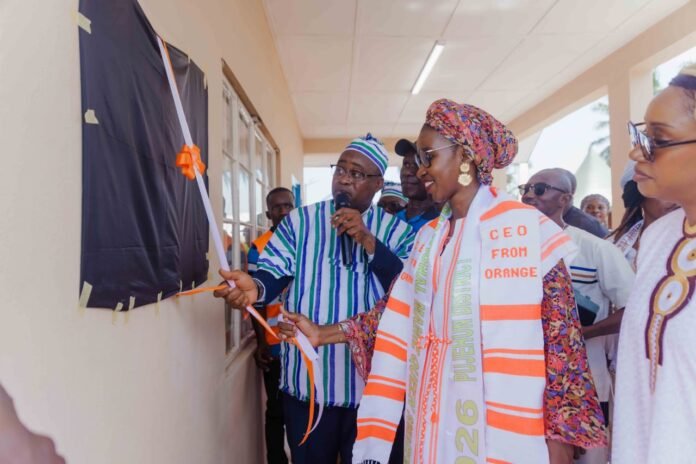
Orange Sierra Leone has taken a significant step toward deepening employee empowerment and inclusive growth by formally issuing share certificates to its employees under the company’s Employee Shareholding Scheme. The initiative, which grants eligible staff ownership rights, profit entitlement and a direct stake in the company’s financial performance, underscores the firm’s belief that those who contribute to its success should also share in the value it creates.

The issuance of the certificates marks a major milestone in Orange Sierra Leone’s corporate journey, positioning employees not merely as workers but as co-owners in the business. Through the scheme, participating employees gain the opportunity to benefit from dividends declared at the end of each financial year, effectively aligning individual effort with collective growth, long-term value creation and institutional sustainability.

The Employee Shareholding Scheme stands as a defining legacy of the company’s outgoing Chief Executive Officer, Sekou Amadu Bah, whose leadership philosophy placed strong emphasis on empowerment, inclusion and long-term partnership with employees. Under his tenure, Orange Sierra Leone introduced a range of initiatives designed to build trust, motivation and a sense of shared purpose across the organisation.

By extending share ownership to its workforce, the company has demonstrated a clear commitment to recognizing employees not only as contributors to daily operations but as long-term partners in shaping the company’s future. Management described the programme as a strategic investment in people, aimed at strengthening accountability, fostering ownership and promoting a culture of long-term thinking across all levels of the organisation.

Reflecting on the historic moment, Agnes Songa, the company’s Human Resource Director and one of its longest-serving employees with over 25 years of service, described becoming a shareholder as “a dream come true.” She expressed pride in being recognized not just as an employee but as a shareholder in a company she has passionately served for more than two decades.

As part of the programme, employees were formally certified as shareholders, a process that strengthens transparency, accountability and good governance within the scheme. Company officials noted that the certification process ensures clarity around ownership rights and reinforces confidence in the structure and sustainability of the programme.

Orange Sierra Leone’s leadership further highlighted that the Employee Shareholding Scheme represents a major step toward deeper employee engagement and institutional resilience. By directly linking employee welfare to corporate performance, the initiative is expected to enhance productivity, loyalty and a shared commitment to achieving the company’s strategic objectives in an increasingly competitive telecommunications landscape.

Beyond its financial implications, the programme reinforces employee confidence and long-term commitment while positioning Orange Sierra Leone as a leading employer that values shared prosperity. It also aligns with the company’s broader corporate governance and social responsibility framework, ensuring that value generated by the business is equitably shared among key stakeholders.

The company also extended appreciation to its shareholders and Board of Directors for their vision, trust and unwavering support in bringing the initiative to fruition. Their backing, Orange Sierra Leone noted, has been instrumental in cultivating a culture of inclusion, ownership and shared success.

Orange Sierra Leone continues to build on this foundation, with the Employee Shareholding Scheme expected to remain a lasting symbol of partnership and empowerment; anchored in a leadership legacy that places people at the centre of sustainable growth and long-term progress.

New Chinese Ambassador Presents Credentials to President Bio at State House

President Julius Maada Bio pose for picture with the new Chinese Ambassador to Sierra Leone, Zhao Yong

By Amin Kef (Ranger)

President Julius Maada Bio has formally received the Letter of Credence from the newly appointed Ambassador of the People’s Republic of China to Sierra Leone, Zhao Yong, reaffirming the commitment of both countries to deepen their long-standing bilateral relations. The ceremony took place on Thursday, 8 January 2026, at State House, Freetown.

The credential ceremony was led by the Minister of Foreign Affairs and International Cooperation, Alhaji Timothy Musa Kabba, who informed the gathering that Ambassador Zhao Yong succeeds Ambassador Wang Qing, following the successful completion of his three-year diplomatic tenure in Sierra Leone. The Minister expressed confidence that the appointment of the new envoy would further strengthen the cordial and mutually beneficial relationship between the two nations, which has been built on decades of cooperation and mutual respect.

In presenting his credentials, Ambassador Zhao Yong conveyed warm greetings from Xi Jinping to President Bio, the Government and the people of Sierra Leone. He commended President Bio for what he described as strong and visionary leadership, noting the progress the country has made in social development, economic governance and national stability under his administration.

The Chinese Ambassador also praised Sierra Leone’s active role in promoting peace and stability within the sub-region, Africa, and the wider international community. He highlighted the country’s engagement within ECOWAS and reaffirmed China’s appreciation for Sierra Leone’s consistent support for the One China Policy. Ambassador Zhao assured President Bio that China remains ready to expand cooperation with Sierra Leone in areas of mutual strategic interest, including infrastructure development, trade and investment, health, education, agriculture and people-to-people exchanges.

Welcoming the Ambassador on behalf of the Government and people of Sierra Leone, President Bio expressed gratitude to President Xi Jinping and the Chinese people for the enduring friendship and solidarity shown to Sierra Leone over the years. He described China as a trusted and reliable development partner that has consistently supported Sierra Leone’s national development agenda, particularly in infrastructure, economic growth and social services.

President Bio emphasized that the bilateral relationship between Sierra Leone and China is anchored on mutual respect, shared values and a win-win partnership. He noted that China’s continued support demonstrates a genuine commitment to Sierra Leone’s progress and thanked the Chinese Government for its contributions to key development projects that have positively impacted the lives of Sierra Leoneans.

The President encouraged Ambassador Zhao Yong to build on the strong foundation laid by his predecessor and to continue strengthening cooperation between the two countries. He reaffirmed his Government’s commitment to working closely with the Government and people of China to ensure that the partnership continues to deliver tangible and sustainable benefits to both nations.

The ceremony concluded with expressions of goodwill and optimism, as both sides reaffirmed their shared resolve to further deepen Sierra Leone–China relations in pursuit of development, stability and mutual prosperity.

Ambassador Zhao Yong presenting his credentials to President Julius Maada Bio at State House

Vice President Leads High-Level Security Mission to Côte d’Ivoire for Counter-Terrorism Cooperation

By Amin Kef (Ranger)

The Vice President of the Republic of Sierra Leone, Dr. Mohamed Juldeh Jalloh, has led a high-level delegation of senior security sector officials to the International Counter-Terrorism Academy (AILCT) in Jacqueville, Côte d’Ivoire, as part of sustained efforts to strengthen regional security cooperation and enhance Sierra Leone’s counter-terrorism and peacekeeping capabilities.

The visit, undertaken on Thursday, January 8, 2026, reflects Sierra Leone’s growing commitment to regional and international collaboration in addressing evolving security threats across West Africa. During the mission, Vice President Jalloh and his delegation held extensive bilateral engagements with senior officials of the Ivorian Government, including the Minister of Defence, Téné Birahima Ouattara, and the Minister of the Interior and Security, General Vagondo Diomandé, as well as other top defence and security authorities.

Discussions centred on strengthening the regional security architecture through structured intelligence sharing, regular exchanges between security institutions and capacity-building support for specialized units. Both sides explored opportunities for joint training programmes, harmonization of counter-terrorism tactics and improved coordination in responding to cross-border security threats, including violent extremism, organized crime and terrorism.

The delegation also visited the International Counter-Terrorism Academy, a joint initiative of the French and Ivorian Governments that has become a continental centre of excellence for counter-terrorism training. The academy provides advanced training for special forces, law enforcement agencies, judicial officials, intelligence professionals and strategic researchers from across Africa, equipping them with modern tools and operational skills to confront complex security challenges.

Vice President Dr. Mohamed Juldeh Jalloh described the visit as a strategic engagement that underscores Sierra Leone’s proactive approach to security diplomacy. He noted that the mission aligns with the broader vision of Julius Maada Bio to deepen regional cooperation, promote African-led security solutions and strengthen the country’s role in peacekeeping and conflict prevention.

“This mission aligns with His Excellency President Julius Maada Bio’s broader vision of deepening regional security cooperation and bolstering Sierra Leone’s peacekeeping and counter-terrorism capabilities,” the Vice President stated following the meetings. He emphasized that sustained collaboration, knowledge exchange and institutional capacity development are essential to safeguarding peace and stability in the sub-region.

Sierra Leone’s engagement in Côte d’Ivoire forms part of a wider diplomatic and security strategy by the Bio administration to address rising insecurity in parts of West Africa. As Chair of the Authority of Heads of State and Government of ECOWAS, President Bio has consistently called for enhanced regional solidarity, collective security mechanisms and stronger partnerships to confront threats that transcend national borders.

Vice President Dr. Mohamed Juldeh Jalloh also expressed profound appreciation to the French Government and the Government of Côte d’Ivoire for their support and commitment to regional peace and stability. He noted that international partnerships remain vital to building resilient security institutions and ensuring long-term stability across the region.

Observers say the visit represents a significant step in strengthening the emerging “security corridor” among West African states, reinforcing trust, interoperability and shared responsibility in combating terrorism and violent extremism. The mission further positions Sierra Leone as an active and credible partner in regional security initiatives, aligned with continental and international efforts to promote peace, stability and sustainable development.

The outcomes of the engagement are expected to translate into enhanced cooperation, improved training opportunities for Sierra Leonean security personnel and deeper institutional ties with regional partners, as the country continues to invest in proactive security diplomacy and regional stability.

President Bio Directs Comprehensive Reform of Sierra Leone’s Mineral Wealth Governance

President Julius Maada Bio

By Ibrahim Sesay

The Government of Sierra Leone has announced a decisive policy shift in the management of the country’s mineral assets, following directives issued by President Dr Julius Maada Bio aimed at strengthening national oversight and ensuring lasting benefits from the country’s natural resources.

In a public notice issued on January 8, 2026 by the Ministry of Information and Civic Education, the President directed the orderly wind-up of the Mineral Wealth Fund Sierra Leone Limited (MWFSL), the termination of its associated management arrangements and the cessation of the Fund’s participation in the Tonkolili North Iron Ore project under its current structure.

According to the notice, the transition is being implemented strictly in accordance with established laws and Government procedures and does not affect the State’s ownership or custodial management of Sierra Leone’s mineral assets. The underlying assets remain vested in the Sierra Leone Mines and Minerals Development and Management Corporation (SLMMDMC), held in trust on behalf of the people of Sierra Leone.

Government officials underscored that the decision represents “a change in vehicle, not a change in vision.” The administration, they said, remains firmly committed to establishing a robust, transparent and nationally anchored sovereign wealth framework aligned with Sierra Leone’s broader economic policy objectives and international best practice.

President Bio’s directive follows a strategic assessment that a stronger and more integrated framework is required to ensure Sierra Leoneans derive enduring value from the country’s finite natural resources. Under the new approach, work will advance toward the establishment of a Sierra Leone Sovereign Wealth Fund as the country’s apex investment vehicle.

Officials explained that the proposed framework will be legally grounded, professionally managed and guided by globally recognized standards, including the Santiago Principles, while operating in harmony with existing statutory institutions responsible for the ownership and management of state mineral assets.

“This is a strategic reset, not an abandonment of our sovereign wealth ambitions,” a senior Government official said. “The President is ensuring that Sierra Leone’s mineral wealth is managed through a structure that is transparent, cost-effective and firmly aligned with the national interest.”

A policy review by the Ministry of Mines and Mineral Resources concluded that the existing Mineral Wealth Fund framework was no longer best suited to advance the country’s long-term economic and governance objectives, citing concerns related to governance architecture, efficiency, transparency and integration with national fiscal policy.

As part of the directive, MWFSL has been instructed to end all further participation in the Tonkolili North Integrated Mining and Infrastructure Project under its Framework and Supplementary Agreements with China Overseas Engineering Company (COVEC). The Attorney-General and Minister of Justice has also been directed to terminate the associated management services agreement.

Crucially, the Government has emphasized that those actions do not diminish Sierra Leone’s ownership or sovereign control over the Tonkolili North asset. The resource remains fully vested in the State through the SLMMDMC and held in trust for the people.

The President has further directed that a competitive bidding process be undertaken to identify a suitable development partner for the project. In the interim, a project company or special-purpose vehicle, established under the chairmanship of the Minister of Mines and Mineral Resources, will advance the project on behalf of the State and under the continued authority of the SLMMDMC.

Looking ahead, the Government plans to establish a Sierra Leone Sovereign Wealth Fund (SLSWF) designed to support macroeconomic stability, long-term development and intergenerational equity. The proposed fund is expected to be more closely integrated with Sierra Leone’s public financial management system, enabling disciplined savings for future generations alongside carefully governed investments that support national development priorities.

The Ministry of Mines’ memorandum accompanying the reforms highlights a core national reality: Sierra Leone’s mineral resources are finite. Once extracted, they cannot be replaced. The State’s responsibility, therefore, is to convert this wealth into enduring assets that continue to serve the nation long after the minerals are exhausted.

Government officials have framed the President’s decision as an act of patriotic stewardship and national responsibility. “Sierra Leone’s minerals belong to Sierra Leoneans,” one official said. “They must be managed transparently, responsibly and in a way that strengthens national sovereignty and long-term prosperity.”

The wind-up of the existing Mineral Wealth Fund will proceed in accordance with applicable law, while work continues on the design and legal establishment of the new sovereign wealth framework. Authorities have assured the public that further details regarding the structure and operationalization of the new system will be communicated in due course.

For now, the message from State House is clear: Sierra Leone is retaining full ownership of its strategic mineral assets, strengthening national oversight and reaffirming its commitment to ensure that the country’s natural wealth delivers lasting benefits for generations yet unborn.

Magistrate Daboh Remands Two Men in Kenema Over Separate Murder and Attempted Murder Cases

Magistrate Daboh

By Ibrahim Sesay

Two men have been remanded at the Sierra Leone Correctional Centre in Kenema after being arraigned before Magistrate Court No. 1 on serious criminal charges of murder and attempted murder.

The accused persons are Abu Kamando, a farmer from Madina Village in Wandor Chiefdom and Mohamed Sheriff, a herbalist based in Kenema City, Nongowa Chiefdom. Both defendants are residents of the Kenema Judicial District. They were brought before the court on January 8, 2025 and remanded by His Worship Magistrate Hadiru Daboh.

Abu Kamando is facing a charge of murder, contrary to Section 1 of the Offences Against the Persons Act of 1861, as repealed and replaced by Section 1 of the Abolition of the Death Penalty Act No. 6 of 2022. According to the prosecution, the accused allegedly murdered Bundu Kamando on Saturday, June 28, 2025, in the bush at Kamando Village, Wandor Chiefdom, within the Kenema Judicial District in Sierra Leone’s Eastern Province.

Prosecutors told the court that the offence is indictable and therefore cannot be tried summarily at the magistrate level. In line with standard legal procedure, no plea was taken from the accused. Magistrate Daboh ordered that Abu Kamando be remanded at the Sierra Leone Correctional Centre in Kenema pending further proceedings. The matter has been adjourned to January 20, 2026, for continuation.

In a separate case, Mohamed Sheriff was arraigned on multiple counts, including attempted murder, wounding with intent and causing grievous bodily harm with intent, all contrary to Section 18 of the Offences Against the Persons Act of 1861. The prosecution alleged that on Wednesday, December 24, 2025, at No. 17 Sheikh Abubakarr Street, Lumbebu Axis, Kenema City, the accused attacked Michel Paul Nicole.

The court heard that Mohamed Sheriff allegedly inflicted severe injuries on the victim’s hands and legs, cut off the victim’s left thumb with a machete, and sprayed a liquid suspected to be acid into the victim’s eyes. Prosecutors said the nature of the injuries sustained was serious and life-threatening, prompting the charge of attempted murder.

As in the murder case, no plea was taken from Mohamed Sheriff due to the seriousness of the allegations. The magistrate ordered that he be remanded at the Sierra Leone Correctional Centre in Kenema. The matter has been adjourned to January 16, 2026, for preliminary investigation proceedings.

Both cases are being prosecuted by Sulaiman Kamara, an Assistant Superintendent of Police (ASP) attached to the Legal and Justice Support Department of the Kenema Police Division.

Court officials emphasized that the remand of the accused persons does not imply guilt, noting that investigations and legal processes are still ongoing. The cases have drawn attention in Kenema due to the seriousness of the allegations, as the judiciary continues to process violent crime cases in accordance with the law and principles of fair hearing.

CHRDI Raises Alarm Over Prolonged Delays in Commission of Inquiry Appeal Cases

Abdul M. Fatoma, Chief Executive Officer of CHRDI

By Amin Kef (Ranger)

The Campaign for Human Rights and Development International (CHRDI) has expressed deep concern over what it describes as persistent failures within Sierra Leone’s judicial system, citing prolonged delays, poor record management and a lack of transparency in the handling of appeals arising from the 2018 Commissions of Inquiry (COIs).

In a statement released on Friday on January 9, 2026, CHRDI said that endemic challenges, including allegations of corruption, inadequate resources, weak accountability mechanisms and limited commitment to human rights protection, continue to undermine public confidence in the country’s courts.

The three Commissions of Inquiry were established in 2018 by President Julius Maada Bio to investigate alleged corruption and governance failures of past administrations. The final reports were submitted in March 2020, with individuals found culpable granted the right to appeal before the courts.

However, nearly seven years after the COIs were constituted and almost five years after the submission of the final reports, a significant number of appeal cases remain unresolved or inadequately documented at the Court of Appeal and the Supreme Court.

CHRDI warned that those delays erode public trust in the judiciary and raise serious questions about efficiency, accountability and respect for the rule of law. “Justice delayed is justice denied,” the organization noted adding that prolonged litigation causes anxiety for litigants, risks the deterioration of evidence and weakens the authority of court judgments.

The rights group recalled that in September 2023, the leadership of the Judiciary issued a directive instructing judges handling COI matters to conclude all cases by mid-October 2023. CHRDI said that directive has not been fully complied with.

In an effort to obtain clarity, CHRDI on August 21, 2025 formally invoked the Right to Access Information Act of 2013, requesting comprehensive updates on COI appeal cases from 2021 to 2025. Following what CHRDI described as initial resistance, partial documents were eventually released after further intervention by the Right to Access Information Commission.

On September 23, 2025, CHRDI lodged a formal complaint with the Commission, accusing the Judiciary of non-compliance with the law. A subsequent directive issued on October 9, 2025 gave the Judiciary a seven-day ultimatum to submit the requested information, warning that failure to comply would trigger legal action.

Despite that, the Judiciary failed to meet the deadline and later sought an extension on November 28, 2025, citing a provision that CHRDI says does not exist under the Act. Partial information was eventually submitted on December 17, 2025, covering 108 COI cases across three appellate panels.

CHRDI’s review of the documents revealed what it described as serious discrepancies, including 38 cases marked “No Record,” representing about 35 percent of the files, as well as three incomplete records. According to the organization, that raises grave concerns about fair hearing guarantees, record-keeping standards and the overall integrity of judicial processes.

CHRDI’s review of the documents revealed significant discrepancies and inaccuracies, including 38 “No Record” case files (35% of COI files) and three incomplete records. The absence of proper records in appellate matters raises serious concerns about fair hearing guarantees, poor record management and the integrity of judicial processes.

Summary of judgments provided is as follows:

  • 2025: 2 appeals allowed; 1 appeal dismissed. (3)
  • 2024: 3 appeals allowed; 1 appeal dismissed. (4)
  • 2023: 5 appeals allowed; 4 appeals dismissed; 1 dismissed for want of prosecution. (10)
  • 2022: 3 appeals allowed; 3 appeals dismissed. (6)
  • 2021: 8 appeals allowed; 3 appeals dismissed. (11)

Overall, the Judiciary’s response has been insufficient, raising significant concerns about transparency and accountability in the handling of these cases.

The summary of judgments provided by the Judiciary shows limited progress between 2021 and 2025, with relatively few appeals concluded each year. CHRDI described the response as inadequate and insufficient to assure transparency and accountability.

Commenting on the situation, Abdul M. Fatoma, Chief Executive Officer of CHRDI, warned that continued inaction could have far-reaching consequences. “The Judiciary’s failure to address those issues will undermine the rule of law and diminish citizens’ right to timely justice,” he said. “When corruption penetrates the judicial system, it compromises the fundamental principle of fairness. A judge who accepts a bribe or obstructs justice cannot be considered independent or impartial.”

CHRDI concluded by calling for bold, honest and comprehensive judicial reforms, backed by adequate financial commitment from the Government to restore confidence in what it described as the nation’s “temple of justice” and to ensure timely and fair access to justice for all Sierra Leoneans.

Choithram International School Freetown Ranked No.1 Private School in Sierra Leone for 2026

Choithram International School

By Amin Kef (Ranger)

Choithram International School Freetown has been ranked the number one private school in Sierra Leone for 2026 by leading global education rankings platform Schoolbell.net, a remarkable achievement that underscores the school’s world-class quality of education despite having commenced operations only in September 2024.

The ranking, released under Schoolbell.net’s annual “10 Best Private Schools in Sierra Leone” list, assessed institutions using a Contextual Reputation Score, a metric that evaluates online credibility, digital presence and reputation signals among peer institutions. Choithram International School Freetown topped the list with a perfect score of 100.0, outperforming all other private schools nationwide.

Education analysts and stakeholders say the recognition is particularly significant given the school’s short operational history. In less than two years of operation, Choithram International School Freetown has risen to the top of Sierra Leone’s private education sector; a feat widely seen as strong evidence that the quality of education offered meets international and world-class standards.

According to Elmer Kang-Juk, Division Director for Africa at Schoolbell.net, the ranking reflects how schools are perceived within the broader educational ecosystem, particularly in terms of trust, visibility and consistency in delivering quality education. He noted that private schools in Sierra Leone play a critical role in offering comprehensive academic programmes that prepare pupils for both local and international opportunities.

The 2026 rankings placed The British International School and Montessori Education second with a score of 99.7, followed closely by American International School of Freetown in third place with 98.9. Other institutions in the top ten include Ayoub International School, Chester Academy of Sierra Leone and Providence International High Schoolamong others.

For Choithram International School Freetown, the number-one ranking is being widely interpreted as validation of its rapid but strategic investment in academic excellence, highly qualified teaching staff, modern learning facilities and a strong emphasis on holistic education. Since opening in September 2024, the school has quickly built a reputation for nurturing well-rounded students who excel academically while developing strong values, discipline and global awareness.

Observers also point to the school’s strong digital footprint, effective communication with parents and consistent engagement with the wider community as key contributors to its top reputation score; factors that typically take institutions many years to establish.

Schoolbell.net, a Singapore-based education analytics platform founded in 2021, uses publicly available data combined with proprietary metrics to benchmark education providers worldwide. Unlike traditional rankings that focus heavily on examination results alone, the platform’s Contextual Reputation Score measures how a school stands relative to similar institutions based on online signals and reputation indicators.

According to the platform, the goal of the ranking is to help parents and guardians make clear, fast and informed decisions when selecting schools, particularly in competitive education markets.

With this latest recognition, Choithram International School Freetown has firmly established itself as a leading force in Sierra Leone’s private education sector, proving that excellence, when built on strong foundations, can be achieved in a remarkably short time. The ranking reinforces the school’s commitment to delivering world-class education and shaping the next generation of global leaders.

Top 10 Private Schools in Sierra Leone – 2026 (by Reputation Score):

  1. Choithram International School Freetown (100.0)
  2. The British International School and Montessori Education (99.7)
  3. American International School of Freetown (98.9)
  4. Ayoub International School (97.5)
  5. Chester Academy of Sierra Leone (95.7)
  6. Providence International High School (93.3)
  7. Lebanese International School (90.4)
  8. Olive B. Academy (87.0)
  9. Romans International Academy (83.0)
  10. Sierra Leone Grammar School (75.0)