
Home Blog Page 65

A Fact-Based Perspective on Shalimar Trading Company and the TVS Product Advantage in Sierra Leone

By Foday Moriba Conteh

The concerns raised about rising transport costs in Sierra Leone reflect real economic pressures faced by riders, kekeh operators and private motorbike owners. However, attributing those challenges to Shalimar Trading Company and characterizing its role as exploitative does not align with verifiable market facts or the operational realities of importing, distributing and servicing motor vehicles in the country.

Shalimar Trading Company is the authorized national distributor of TVS motorbikes and spare parts, representing TVS Motor Company, one of the world’s leading two- and three-wheeler manufacturers. Authorized distributorships are a standard global practice designed to ensure:

  • Product authenticity (protection against counterfeits),
  • Manufacturer-backed warranties,
  • Technical standards and safety compliance and
  • Structured after-sales service.

These safeguards matter in a transport ecosystem where reliability directly affects livelihoods and public safety. 

TVS motorbikes are chosen across Sierra Leone for measurable practical reasons:

  • Fuel efficiency that lowers operating costs over time,
  • Durable engines and frames suited to local road conditions,
  • Consistent availability of genuine spare parts and
  • Lower lifecycle costs compared with unregulated imports that often fail early.

Those attributes explain why TVS models dominate commercial riding; not market coercion but product performance and reliability.

Price increases in bikes and spare parts mirror broader economic forces affecting all imported goods:

  • Exchange-rate volatility and foreign currency costs,
  • Global shipping and insurance expenses,
  • Customs duties, port charges and domestic taxes,
  • Inflation in logistics, fuel and operations.

No distributor can absorb those costs indefinitely. Import-dependent sectors, from food to medicine, face the same pressures. Assigning responsibility to a single company overlooks those systemic drivers.

Shalimar has built a nationwide distribution and service footprint, supporting:

  • Direct and indirect employment,
  • Dealer networks in major cities and regional hubs,
  • Trained technicians and service standards, and
  • Reliable access to genuine parts, which reduces breakdowns and safety risks.

Opening the market to unchecked alternatives would likely increase counterfeit parts, compromise road safety and raise long-term maintenance costs for riders.

Riders’ difficulties warrant solutions, financing options, duty reviews on commercial transport equipment, currency stabilization and sector reforms, not the vilification of a compliant private investor. Constructive engagement among regulators, transport unions, financiers and distributors offers a more credible path to affordability and sustainability.

Shalimar Trading Company’s role is best understood through facts: authorized distribution, proven products, national service coverage and compliance within a challenging macroeconomic environment. TVS motorbikes remain the backbone of daily mobility in Sierra Leone because they deliver value, safety and reliability; qualities that ultimately protect riders’ incomes and the public interest.

NP (SL) Boosts Staff Wellbeing with Health Walk and Burnout Awareness Session

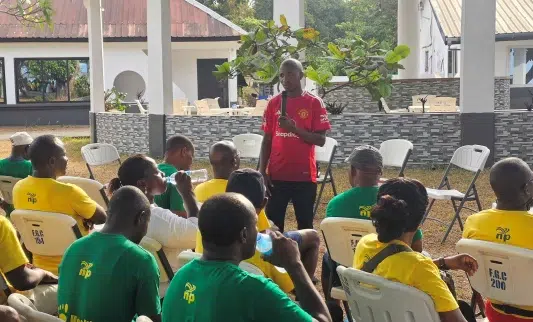
NP (SL) staff participating in health walk and burnout session

By Alvin Lansana Kargbo

NP (SL) Limited on Saturday, 10 January 2026, conducted its monthly staff health walk from the Freetown Golf Club to Aberdeen and back, reaffirming the company’s commitment to employee wellness as a key pillar of productivity and workplace sustainability. The early-morning exercise brought together the Chief Executive Officer, Dr. Mohamed S. Kanu and staff drawn from various departments, creating an opportunity for physical activity, team bonding and open engagement around health challenges increasingly associated with modern work environments.

The health walk, which has become a regular feature of NP (SL)’s internal wellness agenda, is designed to encourage employees to adopt healthier lifestyles by integrating exercise and health awareness into the company’s work culture. Management explained that the initiative aims to reduce stress, boost morale and build a resilient workforce capable of meeting the demands of daily operations without compromising personal wellbeing.

As part of the programme, medical practitioner, Dr. Abdul Kalokoh, delivered an interactive session focused on workplace ergonomics and stress management. He explained that many office-related health complaints, including back pain, waist strain and joint discomfort, are often caused by poor sitting posture and improper body positioning rather than underlying medical conditions. He demonstrated correct sitting techniques, appropriate ways of bending, neck-stretching exercises and proper joint alignment to help staff minimize physical strain during office duties.

Dr. Abdul Kalokoh noted that it is common for employees to feel persistently unwell even when medical tests show no disease, stressing that such symptoms are frequently linked to stress and burnout. According to him, sudden changes in work responsibilities or personal circumstances can trigger stress responses that manifest as fatigue, discomfort and reduced concentration. He warned that extended work schedules without adequate rest push individuals beyond their natural limits, increasing the risk of burnout and diminishing overall performance.

He further highlighted poor time management as a major driver of workplace stress, explaining that postponing tasks until deadlines creates unnecessary pressure, lowers the quality of output and leaves employees overwhelmed. Describing NP (SL)’s operations as demanding across all roles, including support services such as security, he said neglecting self-care often results in repeated medical visits for stress-related conditions.

Dr. Abdul Kalokoh encouraged staff to understand their personal capacities, energy cycles and physical limits, noting that awareness of individual rhythms, including menstrual cycles for women, allows for better task planning and reduces last-minute pressure that fuels burnout. He cautioned that unmanaged burnout can progress to serious health conditions such as hypertension, stroke and depression, adding that younger workers are increasingly affected due to financial obligations and family pressures.

He also outlined behavioural signs that may indicate mental health strain, including persistent irritability, excessive complaints, disruptive behaviour and unusual emotional expressions, urging early recognition and professional referral. He emphasized that identifying burnout should not be left to medical personnel alone, but should be a shared responsibility across the workforce, from security staff to senior management.

The health walk and medical awareness session form part of NP (SL)’s broader strategy to institutionalize employee wellness as a core operational priority, reflecting the company’s focus on building a healthy, productive and sustainable workforce through proactive health and wellbeing initiatives.

Pa Jeety, Shri Gurudwara Sahib Resume Public Community Feeding Programme at Lumley

By Amin Kef (Ranger)

The community feeding programme at Lumley was successfully resumed on Saturday, 10 January 2026, following a temporary suspension occasioned by public health concerns related to Mpox. The initiative, led by Mohinder Bir Singh, fondly known as Pa Jeety, in collaboration with Shri Gurudwara Sahib, Lumley, returned with renewed emphasis on compassion, order and dignity, serving hundreds of beneficiaries from Lumley and surrounding communities.

From the early hours of the exercise, beneficiaries formed peaceful and orderly queues, received plates of rice and then calmly moved away to nearby spaces to eat at their convenience. The feeding was conducted publicly along the pavement outside the Gurudwara, a deliberate arrangement designed to ensure accessibility, transparency and smooth flow while avoiding congestion. The open setting allowed the programme to reach a wide cross-section of the community without compromising safety or personal space.

Organisers explained that the structured approach was intentional. Rather than gathering crowds in one location, individuals were served in sequence and encouraged to disperse to eat at their own pace. This system not only promoted calm and respect but also reduced the risk of disorder, reflecting lessons learned from earlier phases of the programme and broader public health considerations.

The decision to carry out the feeding publicly along the pavement also underscored a commitment to inclusion. Elderly residents, young people and persons living with disabilities were able to approach the serving area with ease, receive their meals without delay and move to shaded or comfortable spots nearby. Wheelchair users and those with mobility challenges, in particular, benefited from the open layout, which eliminated physical barriers and ensured equal treatment for all.

Beneficiaries expressed appreciation for both the resumption of the programme and the manner in which it was conducted. Many described the feeding as timely, noting that ongoing economic pressures have made daily survival increasingly difficult for vulnerable households. For some families, the return of the Lumley feeding programme represents a vital source of relief at a moment when food insecurity remains a pressing concern.

At the heart of the initiative is Pa Jeety, whose humanitarian work has earned widespread respect across Sierra Leone. Known for his humility and quiet generosity, Mohinder Bir Singh has consistently supported community feeding efforts inspired by the Sikh principle of selfless service, which emphasises equality, compassion and care for the needy regardless of background, religion or social status. His sustained commitment has helped make the Lumley feeding programme a dependable lifeline for many residents over the years.

The success of Saturday’s exercise was also driven by the dedication of volunteers who worked behind the scenes to ensure the process ran smoothly and peacefully. The programme was facilitated by Raju Dutt, popularly known as Rocky, alongside Jagat Ram, Bhawar Preet Singh (Sonny), Abdulai Bah, Abu Bakarr Sesay, Ronald Sawyer and Alie Kanu. Together, they coordinated the serving process, guided queues and offered assistance to vulnerable individuals, maintaining a calm and respectful atmosphere throughout.

Beyond the immediate distribution of food, the programme continues to convey a broader message of solidarity and social responsibility. Public feeding carried out openly and in an orderly manner sends a strong signal of accountability and community trust. It demonstrates that humanitarian support can be delivered with dignity, without spectacle or disorder, and in a way that respects the humanity of beneficiaries.

As recipients collected their meals and quietly moved away to eat, many offered prayers for the sustainability of the programme and for the continued strength of those who make it possible. The scene was marked by quiet gratitude rather than noise, reflecting the deep appreciation felt by those who rely on such support for daily survival.

The resumption of the Lumley community feeding programme once again highlights the enduring impact of compassionate leadership and collective effort. Through the generosity of Pa Jeety, the support of the Shri Gurudwara Sahib and the dedication of volunteers, the initiative continues to ease hardship, restore dignity and remind society that simple, well-organised acts of kindness can make a profound difference in the lives of the most vulnerable.

Africell Hands Over Completed House to Jubilee Jumbo Winner Amidu Kamara at TAF Salone Micro City

Africell Chief Executive Officer Shadi Gerjawi presenting house documents and keys to winner, Amidu Kamara (in the middle) of Jubilee Jumbo promotion

By Alvin Lansana Kargbo

Amidu Kamara, a 23-year-old resident of Kabala, has emerged as the grand prize winner of Africell Sierra Leone’s Jubilee Jumbo Promotion, walking away with a fully completed residential house at TAF Salone Micro City. The grand finale of the nationwide promotion was held on Friday, 9 January 2026, at the Taf Micro City estate, bringing to a close Africell’s 25th anniversary customer reward campaign.

The Jubilee Jumbo Promotion was launched in April 2025 as part of Africell’s celebration of 25 years of operations in Sierra Leone. Designed to reward customer loyalty, the promotion enabled subscribers to accumulate points through everyday usage. Customers earned one point for every Africell airtime recharge and two points for AfriMoney transactions. Accumulated points qualified participants for the final draw, which ran until December 2025, with the ultimate prize being a completed, ready-to-occupy house.

Speaking at the grand finale, Africell Chief Executive Officer Shadi Gerjawi described the promotion as a tangible demonstration of the company’s commitment to giving back to its customers. He said the house giveaway fulfilled a pledge made during the anniversary celebrations and symbolized Africell’s transition from 25 years of service into a new phase of operations in 2026.

Gerjawi noted that Africell remains firmly customer-focused, stressing that every product and promotion is assessed based on the value it delivers to subscribers. While acknowledging that service improvement is an ongoing process, he reaffirmed the company’s commitment to affordable connectivity and expanded internet access nationwide.

He also disclosed the recent launch of Kidsonet, a child online protection service that enables parents to restrict access to harmful digital content. According to him, the initiative aligns with national child protection priorities and reflects Africell’s broader responsibility beyond telecommunications.

The Chief Executive Officer further announced plans to intensify network expansion, particularly in underserved upcountry communities, with the aim of bringing more areas online. He assured attendees that the house draw process would be transparent and credible, noting that all qualifying entries were verified and openly displayed prior to selection.

“There are no hidden conditions attached to this prize,” Gerjawi emphasized. “Once the key is handed over, ownership of the house becomes absolute. The winner is free to live in it, rent it out, or sell it.”

Also addressing the gathering, Afrimoney Chief Executive Officer Martinson Obeng-Agyei said the promotion demonstrated the company’s commitment to delivering on promises made to customers. He recalled that the house giveaway was announced in April 2025 and confirmed that the property had been completed and branded in Africell colours. He encouraged customers to continue using AfriMoney services to benefit from future reward programmes.

The President of the Sierra Leone Association of Journalists, Alhaji Manika Kamara, who observed the proceedings, commended Africell for conducting a fair and transparent draw. He said there was no evidence of manipulation and urged the company to maintain integrity in its services to the public.

During the final draw, all qualified participants were invited on stage to submit their folded tickets into a transparent box. Blindfolded, the SLAJ President thoroughly mixed the entries before selecting the winning ticket. The name Amidu Kamara was announced to loud applause as the recipient of the house.

The win marks the conclusion of Africell’s Jubilee Jumbo Promotion and stands as one of the largest customer reward initiatives ever undertaken by a telecommunications company in Sierra Leone, reinforcing Africell’s positioning as a brand that rewards loyalty with life-changing opportunities.

Amidu Kamara winner of Africell Sierra Leone’s Jubilee Jumbo Promotion

Recording 268,929 in 2025… SLCAA Reports Steady Rise in Passenger Traffic Through Freetown International Airport

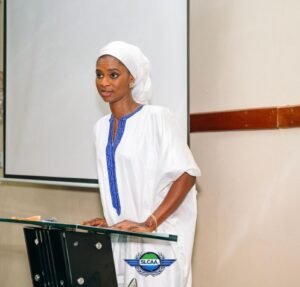
Musayeroh Barrie, Director General of the SLCAA

By Amin Kef (Ranger)

Passenger movement through Freetown International Airport recorded a strong and encouraging increase in 2025, signaling renewed confidence in Sierra Leone’s aviation sector and the impact of sustained reforms in air transport management. Official data released by the Sierra Leone Civil Aviation Authority (SLCAA) show that a total of 268,929 passengers were processed through the airport during the year, marking one of the strongest performances in recent times.

The 2025 figure represents a clear rise from the 250,606 passengers recorded in 2024, translating into a year-on-year increase of 18,323 passengers. Aviation authorities attribute this growth to improved airline connectivity, increased airline movements, enhanced operational efficiency and sustained confidence by both travelers and airline operators in Sierra Leone’s air transport system.

According to the SLCAA, passenger growth in 2025 was supported by over 2,000 airline movements, reflecting a steady expansion in flight activity to and from the country. The data indicate that both international and regional routes contributed to the increased traffic, reinforcing Sierra Leone’s position as a steadily growing aviation destination in West Africa.

Monthly passenger statistics released by the Authority show consistent gains across most months of the year. January 2025 opened with higher passenger numbers compared to the same period in 2024, setting a positive tone for the year. While some mid-year months experienced moderate fluctuations, overall traffic levels remained above those of the previous year. The final quarter of 2025, traditionally a peak travel period, recorded particularly strong performance, with December pushing annual passenger totals to their highest level in recent years.

Commenting on the milestone, Musayeroh Barrie, Director General of the SLCAA, described the figures as a clear reflection of progress in the country’s aviation sector.

“Passenger growth of this nature demonstrates renewed confidence in our skies,” she said. “It shows that the reforms we are implementing, particularly in safety oversight, regulatory compliance and stakeholder collaboration, are yielding tangible results. Our priority remains ensuring safe, secure and efficient air transport services while supporting national development.”

Aviation analysts note that the improved performance is also linked to stronger engagement with international and regional airlines, improved coordination among aviation stakeholders and ongoing investments in airport systems, personnel training and regulatory oversight. Those factors, they say, have helped create a more reliable and predictable operating environment for airlines while improving the passenger experience.

The increase in passenger throughput is expected to have positive spillover effects on tourism, trade and the wider economy. Higher passenger volumes translate into increased demand for hospitality services, ground handling, transportation and other related sectors, contributing to job creation and economic activity.

The yearly comparison chart released by the SLCAA shows a clear upward trajectory, with 2025 outperforming 2024 by a wide margin. Officials believe that with sustained policy consistency, infrastructure upgrades and continued collaboration with airline partners, passenger numbers could continue to rise in the coming years.

As Sierra Leone positions itself as an emerging aviation hub in the sub-region, the SLCAA has reiterated its commitment to international best practices, capacity building and strategic partnerships that strengthen the sector. The Authority has emphasized that safety, security and efficiency will remain at the core of its mandate as traffic volumes grow.

For aviation authorities, the 2025 passenger movement figures represent more than just statistics. They are seen as a strong signal of growing trust in Sierra Leone’s aviation system and a testament to what can be achieved when vision is matched with leadership. As progress takes flight, Sierra Leone appears increasingly connected; both to the region and to the wider world.

CHREPS Officially Unveiled in Freetown, Targets Human Rights and Professional Capacity Building

Executive Director and Proprietor of College for Human Rights Education and Professional Studies (CHREPS), Victor Lansana Koroma

By Foday Moriba Conteh

The College for Human Rights Education and Professional Studies (CHREPS) has been officially unveiled in Freetown, marking the establishment of Sierra Leone’s first private academic institution dedicated primarily to human rights education and professional training.

Speaking at a press conference held on Wednesday, 7 January 2025, at the college’s campus on Blackhall Road by PWD Junction  in the east end part of Freetown, the Executive Director and Proprietor of College for Human Rights Education and Professional Studies (CHREPS), Victor Lansana Koroma, said the institution was founded to build the capacity of future leaders, professionals, activists and advocates in critical areas of national and global development.

Victor Lansana Koroma explained that CHREPS was established in 2025 and is fully registered in the Republic of Sierra Leone. He described the college as a response to existing gaps in higher and professional education, particularly in specialized fields such as human rights advocacy, governance, occupational health and safety, cyber security and law, climate change, peacebuilding and conflict mediation.

According to him, CHREPS is the first institution in Sierra Leone solely dedicated to training human rights professionals, activists and advocates, while also offering market-oriented professional programmes designed to make graduates “ready for work.” He said the college aims to create, manage and disseminate knowledge that enhances students’ skills and self-reliance.

Victor Lansana Koroma noted that the institution operates through partnerships and collaborations with like-minded public and private institutions within and outside Sierra Leone. He added that CHREPS’ faculty comprises experienced scholars and practitioners drawn from reputable universities and professional institutions in Sierra Leone, the West African sub-region and beyond.

He disclosed that the college has received provisional accreditation from the National Council for Technical, Vocational and Other Academic Awards (NCTVA), granting it approval to commence academic activities for an initial one-year period while it continues to strengthen its infrastructure, systems and learning facilities. He further confirmed that the institution is registered with the Office of the Administrator and Registrar General, the National Revenue Authority and other relevant state bodies.

CHREPS will offer programmes at Certificate and National Diploma levels. Areas of study include human rights advocacy, rule of law and ethics, policy and legal research, occupational health and safety management, cyber security and law, climate change management and sustainability, disaster management, global health security, monitoring and evaluation, information technology and human resource management, journalism among others.

Victor Lansana Koroma said the institution has deliberately structured its programmes to accommodate working professionals, with classes scheduled mainly in the evenings and on selected days, Mondays, Wednesdays, Fridays and Saturdays. He added that the college will also provide opportunities for students to complete outstanding WASSCE subjects alongside their professional studies at no additional cost.

Addressing concerns about affordability, the CHREPS Proprietor announced that the college has introduced highly subsidized tuition fees, including a 50 percent discount for its pioneer intake, in order to make education accessible amid prevailing economic challenges.

He further revealed ongoing efforts to affiliate CHREPS with institutions outside Sierra Leone, including Wisconsin University in Ghana, to provide both in-person and online learning opportunities. Discussions are also underway with local universities for academic collaboration and curriculum review.

Victor Lansana Koroma called on the media, civil society organisations, professionals, and development partners to support the institution, noting that CHREPS is committed to promoting human rights, good governance, democracy and sustainable human capital development.

The college operates under the motto, “Building an Empowered Society,” with a mission to promote justice, rule of law and advocacy skills through student-centred academic excellence by 2035.

He concluded by stating that application forms are currently available for sale at Le 250 for certificate programmes and Le 300 for diploma programmes. Interested individuals are encouraged to visit the college at No. 1 Blackhall Road, by Ferry Junction, PWD Roundabout, Freetown, or contact the institution via +232 76 758 511 or +232 77 758 511 for further information.

Orange Sierra Leone Bids Farewell to Outgoing CEO Sekou Amadou Bah

By Foday Moriba Conteh

Orange Sierra Leone has officially bid farewell to its outgoing Chief Executive Officer, Sekou Amadou Bah, marking the end of his nearly four-year tenure on 31 December 2025. His departure was formally celebrated during a well-attended farewell ceremony held on Wednesday, 7 January 2026, at the company’s headquarters on Hill Station in Freetown. The event brought together staff, senior Management and key stakeholders to reflect on his leadership and acknowledge his contributions to the company’s growth, transformation and people-centred culture.

Speakers at the ceremony described Sekou Amadou Bah’s tenure as steady, inclusive and impactful, noting that he assumed leadership during a challenging period, characterized by economic pressures, complex regulatory demands and critical network challenges. Despite those difficulties, speakers said he consistently demonstrated calmness, clarity and composure, inspiring confidence across the organisation.

Elizabeth Clarissa A. Walker, Head of OSL Connect and Head of the Welfare Team, speaking on behalf of all employees, said Sekou Amadou Bah’s leadership strengthened Orange Sierra Leone’s operational foundation through substantial investments that positioned the company for long-term growth. She highlighted his integrity, accessibility and trust-based leadership, describing his open-door policy and daily interactions with staff as key factors that fostered a sense of belonging and motivation among employees.

Elizabeth Clarissa A. Walker also praised Sekou Amadou Bah’s commitment to staff welfare, citing initiatives such as Ramadan vouchers and support for field staff during difficult economic times. She further commended his decision to appoint two Directors from within the existing workforce, including a Marketing Director in a role historically occupied by expatriates, saying that affirmed the value of local talent and institutional knowledge.

Representing the OSL Men’s Association, Vice President, Joseph Saffa Tengbeh, described Sekou Amadou Bah as a principled and courageous leader who embodied the true essence of leadership. He said Sekou Amadou Bah strengthened systems, deliberately built capacity, nurtured talent and promoted a culture of accountability and opportunity. According to Joseph Saffa Tengbeh, Sekou Amadou Bah’s legacy will endure through the standards he raised, the people he inspired and the stronger organisation he leaves behind.

Joseph Saffa Tengbeh also welcomed the newly appointed CEO, Madam Aïcha Touré, expressing confidence in her leadership and assuring her of the Men’s Association’s full support as Orange Sierra Leone enters a new phase.

Similarly, Priscilla Okechukwu, President of Orange Sierra Leone Women, highlighted Sekou Amadou Bah’s commitment to inclusivity and women’s empowerment. She said his leadership went beyond corporate performance, ensuring women were actively included in decision-making processes and supported in their career growth. Under his tenure, she noted, many women advanced into leadership roles, reflecting a culture where empowerment was practiced rather than merely promoted.

Priscilla Okechukwu also commended Sekou Amadou Bah’s role in driving digital transformation and infrastructure development, positioning Orange Sierra Leone as an industry leader. She described him as an accessible leader who valued people as the company’s greatest asset and treated the Orange Women’s Programme as a core pillar of corporate strategy. She concluded by describing him as an outstanding “He-for-She” whose legacy would endure within the company.

The newly appointed Chief Executive Officer of Orange Sierra Leone, Aïcha Touré, praised the leadership and achievements of her predecessor, Sekou Amadu Bah, describing his nearly four-year tenure as transformative, resilient and impactful.

Aïcha Touré said Sekou Amadu Bah led the company with vision, resilience and a strong commitment to Orange Sierra Leone’s mission, guiding the organisation through challenges while unlocking new opportunities. Under his leadership, she noted, Orange Sierra Leone recorded significant progress, including the setting of new customer experience standards across the Orange Group, strengthening of IT systems and expansion of data network coverage to more than 90 percent of the population.

She further highlighted that Sekou Amadu Bah accelerated business growth and profitability, strengthened compliance systems and promoted social cohesion and the development of diverse talent within the organisation. Thanking him for his service, Aïcha Touré said he leaves behind a legacy of excellence and a solid foundation for future growth.

Speaking on her assumption of office, Aïcha Touré said she is taking on the role with humility and would be guided by three core values: empathy, integrity and excellence. She explained that empathy would help her connect with employees, customers and communities; integrity would guide trust-based leadership and excellence would ensure Orange Sierra Leone continues to deliver the best network, customer experience and sector impact.

She outlined four strategic priorities for her tenure: putting people first, driving sustainable business growth, strengthening network excellence and accelerating innovation and digital transformation. Aïcha Touré reaffirmed the company’s commitment to continued investment in mobile, fibre, voice and Orange Money services, as well as improving network quality, reliability and nationwide coverage. She also emphasized Orange Sierra Leone’s role in advancing digital and financial inclusion to ensure no one is left behind.

Aïcha Touré expressed gratitude to colleagues across the Orange Group, her former teams in Mali, her mentors and her family for their support. She also thanked the leadership of Sonatel, Orange Middle East and Africa and the Board of Orange Sierra Leone for the confidence placed in her. Describing Sierra Leone as warm and hospitable, she said she already felt at home and looked forward to working closely with staff and stakeholders to write the company’s next growth chapter.

In his farewell remarks, outgoing CEO Sekou Amadu Bah described the occasion as one of mixed emotions, reflecting gratitude, pride and humility. He thanked the more than 432 employees nationwide, crediting them for the achievements recorded during his tenure. Sekou Amadu Bah highlighted progress in strengthening telecommunications infrastructure, expanding connectivity and improving reliable communication services across the country.

He acknowledged that the company faced significant challenges during the period but said those were overcome through courage, creativity and collaboration. Beyond corporate success, Sekou Amadu Bah emphasized the importance of relationships, describing Orange Sierra Leone as a family built on trust, solidarity and teamwork.

As he handed over leadership, Sekou Amadu Bah expressed confidence in Aïcha Touré and encouraged staff to give her the same support they gave him. He also thanked his family, the Board of Directors, shareholders and the executive team for their support.

The ceremony concluded with a standing ovation, farewell messages from departments and regional teams, the presentation of gifts, marking both the end of Bah’s tenure and the beginning of a new leadership chapter for Orange Sierra Leone.

Girls’ in STEM Initiative Raises Funds, Strengthens Partnerships for Rural Girls’ STEM Education

By Ibrahim John Sesay

The Girls’ in STEM Initiative Sierra Leone has successfully hosted its first-ever Impact Dinner and Fundraising Event, marking a major milestone in its mission to promote Science, Technology, Engineering, and Mathematics (STEM) education among girls in the Western Area Rural District.

Held on Sunday, 28 December 2025, at Kay’s Complex in Newton (Fourmile), the event was themed: “Vision to Impact: Advancing STEM for Community Development.” It brought together development partners, educators, community leaders, students, civil society actors and advocates for gender equality in education to celebrate progress, strengthen partnerships and mobilize resources for the Initiative’s expanding programs.

The Impact Dinner served as both a celebration of achievements and a strategic platform to rally financial and material support for ongoing and future STEM-focused interventions targeting girls from underserved rural communities.

Addressing the gathering, Executive Director, Christina M. Bangura, described the occasion as “a celebration of partnership, progress and purpose,” emphasizing the critical role of girls’ participation in STEM for national development.

“When girls are given the opportunity, mentorship and tools to succeed in STEM, they do not only transform their own lives but also contribute meaningfully to the growth of the nation,” she said.

Christina M. Bangura disclosed that since its inception in 2021, the organization has empowered over 7,000 young people through diverse skills-development programs. These include engineering, ICT and digital literacy, catering, gari processing, cake making, tailoring, hairdressing, decoration and other vocational and technical skills aimed at enhancing self-reliance and employability.

She reaffirmed the Initiative’s vision of creating inclusive pathways that allow girls, particularly those in rural and marginalized communities, to access quality STEM education, mentorship and innovation opportunities.

Also speaking at the event, Evangelist Musa Khalil Koroma, Executive Director of the Global Youth Network for Empowerment and Development (GYNED), commended the Girls’ in STEM Initiative for its impactful work in empowering young people. He pledged GYNED’s continued support and called on other stakeholders to collaborate in expanding the Initiative’s reach across the district.

Former Member of Parliament and former Chief Whip, Hon. Dr. Claude D. M. Kamanda, GOOR, highlighted the origins and sustained impact of the Initiative, describing it as a reliable partner in community development.

“Today, we are here to celebrate the impact of the Girls’ in STEM Initiative Sierra Leone. This organization has transformed many lives in this district, and I have attended most of its programs,” he noted, while reaffirming his commitment to continued support.

The keynote address was delivered by Madam Valnora Edwin, Chairperson of the African Leaders Network and Vice President of the 50/50 Group. She praised the visionary leadership of Christina M. Bangura and provided a comprehensive overview of STEM, Science, Technology, Engineering, and Mathematics, underscoring its relevance to community and national development.

Madam Valnora Edwin also addressed Gender-Based Violence (GBV), encouraging young women to speak out against abuse, while urging students and young entrepreneurs to harness their skills and venture into entrepreneurship. She emphasized that technology and innovation provide women with the tools to excel professionally and achieve independence.

Leadership expert Prof. Paul Alieu Kamara delivered an inspiring address centered on leadership values and integrity. Framing his remarks around traditional, philosophical and psychological dimensions of leadership, he challenged participants to critically assess motivations for leadership and to uphold honesty and self-awareness.

“The biggest problem in leadership is the dishonesty of people in leadership positions,” Prof. Paul Alieu Kamara observed, stressing that politics and leadership must be rooted in service to the people. He concluded by highlighting the importance of adaptability and announced expectations for a future leadership hub in Sierra Leone to train young leaders.

The fundraising segment of the event aimed to generate resources to expand STEM clubs, provide learning materials, sponsor scholarships and support innovation laboratories for girls across multiple districts. Awards were also presented to development partners, individuals and students who have made outstanding contributions to the Initiative’s mission.

With the success of its inaugural Impact Dinner, the Girls’ in STEM Initiative Sierra Leone reaffirmed its commitment to advancing gender-responsive education and shaping a more inclusive future for girls in science and technology across the country.

Freetown Mayor Unveils Green Design Challenge to Reimagine City Centre

Mayor of Freetown, Yvonne Aki-Sawyerr

The Mayor of Freetown, Yvonne Aki-Sawyerr, on Tuesday January 6, 2026 officially launched the Freetown Urban Green Design Competition, a citywide initiative aimed at introducing innovative, climate-resilient greenery into the capital’s Central Business District (CBD).

The competition is part of broader urban regeneration efforts being implemented under the Freetown–Zurich City-to-City Cooperation, a partnership focused on modernizing the city’s core while improving environmental sustainability and urban livability. Key components of the cooperation include the installation of modern street lighting, the organisation of street parking, the creation of urban green spaces and targeted beautification of public areas.

Unveiling the initiative, Mayor Aki-Sawyerr said the competition seeks to harness local creativity to reimagine Freetown’s city centre as a greener, more people-friendly space that responds to climate change and rapid urbanization. She noted that greening the CBD is not only about aesthetics, but also about improving public health, safety and economic activity.

The competition invites residents to redesign the CBD corridor stretching from Walpole Street to Wilberforce Street and from Siaka Stevens Street to Wallace Johnson Street. Participants are encouraged to envision streets lined with lush green trees and enhanced public-facing spaces, including the frontages of commercial banks and other prominent landmarks. The goal is to transform traditionally grey, congested streets into vibrant, welcoming environments that support walking, social interaction and business activity.

Open to students, young professionals and local creatives, the initiative is designed to promote community ownership and empower residents to actively shape the future of their city. Organisers say the competition also provides an opportunity to spotlight homegrown ideas that are practical, affordable and scalable within Freetown’s urban context.

Design submissions will be evaluated against clear criteria, including climate resilience, biodiversity enhancement, contribution to public life and safety, cost-conscious implementation, and overall creativity and innovation. To incentivize participation, the top three winning entries will each receive a cash prize of Le 10,000.

City officials expressed optimism that the competition will generate actionable ideas capable of informing long-term urban planning and reinforcing Freetown’s commitment to sustainable, inclusive development.

Reclaiming the Public Square: How 2025 Reshaped Citizen-Government Relations in Sierra Leone

Chernor Bah, Minister of Information and Civic Education

By Amin Kef (Ranger)

In the life of every democracy, there are defining periods when the relationship between citizens and the state is tested, recalibrated and sometimes renewed. For Sierra Leone, 2025 stands out as such a moment; a year widely regarded as the turning point when the nation deliberately reclaimed its public square and re-established sustained dialogue between Government and the governed.

According to Chernor Bah, Minister of Information and Civic Education, the year was not characterized by political slogans or episodic communication, but by a deliberate commitment to open governance, structured engagement and public accountability. Across town halls, weekly press conferences, civic festivals, policy reforms and community conversations, both at home and abroad, the Government of Sierra Leone made a conscious decision to govern in public and with the people.

For many years, public communication in governance has often been reduced to broadcasting: Government speaks and citizens listen. In 2025, that approach was fundamentally redefined.

Minister Chernor Bah disclosed that over the course of the year, he personally participated in more than 40 major media engagements, supported by 36 weekly press conferences and three special national briefings. Those platforms brought together 92 Government officials, as well as representatives from civil society and the private sector, generating over 56 hours of live public engagement.

More than 500 questions were answered directly and in real time; without scripts and without filters. That, the Minister explained, was central to restoring public trust. Beyond traditional media, civic communication generated more than three million social media interactions, reflecting not just reach, but genuine citizen response, critique and participation.

“Effective communication is not about speaking louder,” Chernor Bah noted. “It is about listening better and responding honestly.”

One of the most impactful initiatives of 2025 was the Civic Day Series, which became the clearest expression of the new philosophy of participatory governance. Over nine months, Government officials travelled across seven districts, engaging citizens in more than 25 hours of structured dialogue on over 20 national issues, including education, employment, agriculture, healthcare and governance.

More than 3,000 citizens took part, raising over 200 direct questions. In Kambia District, a local leader captured the significance of the initiative when he remarked that it was the first time in his lifetime that Government officials had come to his community to explain their work directly.

That sentiment, observers say, underscored the importance of decentralizing governance communication and ensuring that national policies are understood at community level.

For the first time in Sierra Leone’s history, that civic engagement model was extended beyond national borders. A U.S. Civic Day Series brought together more than 300 members of the Sierra Leonean diaspora, reinforcing the principle that governance responsibilities transcend geography and that citizenship remains active beyond the country’s shores.

If the Civic Day Series took Government to the people, the Salone Civic Festival brought the entire nation together in a shared democratic space.

The second edition of the festival was deliberately designed as a modern public square; open, inclusive and interactive. More than 80 Government and private-sector institutions participated, openly showcasing their work, responding to public questions and receiving feedback.

Attendance ranged between 5,000 and 8,000 citizens, complemented by extensive national media coverage and over 700,000 digital interactions across leading platforms.

President Julius Maada Bio described the festival as an opportunity to deepen democratic peace by bringing Government closer to the people, improving access to information and allowing citizens a meaningful voice in governance. For many participants, the festival symbolized a shift away from closed-door governance towards openness and transparency.

For the first time, the festival also welcomed more than ten international speakers from global institutions such as Columbia University, UNESCO and UNFPA, placing Sierra Leone’s civic renewal within a broader international democratic discourse.

Recognizing that democracy is shaped not only by institutions but also by narratives, the Ministry of Information and Civic Education invested significantly in young digital content creators during 2025.

Thirty emerging storytellers were trained through a three-month programme that combined skills development, access to equipment and civic education. The objective, officials explained, was not propaganda, but partnership; empowering citizens to tell their own stories truthfully, creatively and responsibly.

That initiative acknowledged the growing influence of digital media in shaping public opinion and sought to ensure that civic discourse remains informed, balanced and grounded in national realities.

The year also recorded several historic firsts that expanded the scope of national dialogue.

The first Presidential Town Hall in Kenema brought together 1,500 citizens in direct engagement with national leadership. More than 50 questions were posed, with 20 Ministers and over 30 senior officials present not as observers but as active participants.

On Independence Day, the Independent Symposium provided a non-partisan platform for reflection on Sierra Leone’s history and its relevance to contemporary governance. With 2,000 attendees and four eminent speakers, the symposium reinforced the idea that independence is not merely a historical milestone, but an ongoing civic obligation.

Officials were keen to emphasize that public engagement without tangible outcomes risks becoming mere performance. In 2025, dialogue was reinforced by policy action.

Three major national policies were approved: the Records and Archives Policy, the Media and Information Policy and the National Film Policy. Together, those frameworks aim to strengthen transparency, protect information access, preserve institutional memory and promote cultural expression.

The Government also revived The Sierra Leone Daily Mail, restoring a historic public institution as a modern platform for national conversation. In parallel, groundwork was laid for a comprehensive Data Protection Policy and legislation, scheduled for completion in 2026; an increasingly vital safeguard in a digital era.

Building on the foundations laid in 2025, the Government plans to expand the Civic Day Series to additional districts, including Kailahun, Karene, Kono, Pujehun, Falaba, Koinadugu and Bonthe, ensuring inclusive national participation.

Parliament is also expected to consider a Data Protection Law and a Records and Archives Law, further entrenching transparency and accountability. Meanwhile, preparations are underway to scale up the Salone Civic Festival in 2026, targeting 10,000 participants, 100 showcase institutions, 20 international guests and multiple town halls.

As Sierra Leone enters a new chapter, one lesson from 2025 remains clear: public engagement must be continuous, inclusive and institutionalized.

“In 2025,” Minister Chernor Bah reflected, “Sierra Leone did more than improve communication; we began to build a new democratic culture.” One where citizens are informed and respected, where Government shows its work openly and where the public square belongs to everyone.

For many observers, that cultural shift may prove to be one of the most enduring legacies of the year.