Home Blog Page 873

As Brouhaha Rocks its Unity…   APC Plans to Hold Emergency National Delegates Conference

All People's Congress Party.jpg
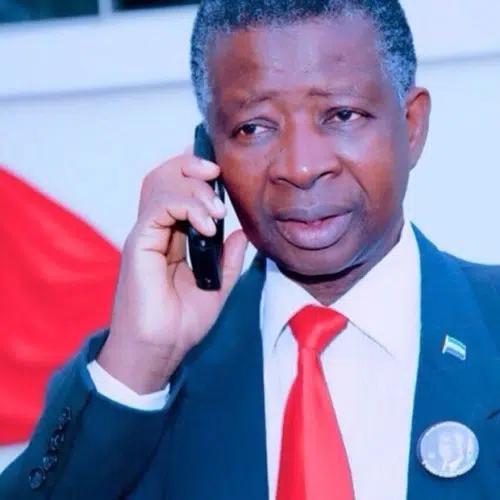
Ambassador Dr. Alhaji Osman F. Yansaneh, APC National Secretary General

By Amin Kef Sesay

 According to a Press Statement from the All Peoples Congress (APC) Party National Secretariat dated the 23rd July 2021 and signed by Amb. Dr. Alhaji Osman Foday Yansaneh, as National Secretary General, the National Advisory Committee (NAC) of the All Peoples Congress (APC), in consultation with Regional and District Chairmen representing all constituencies of the party has decided to go ahead with preparation to convene an Emergency National Delegates Conference to approve the draft constitution of the APC without violating the orders of the High Court.

It furthered that consequently, the National Secretariat and the Legal Team of the party have been mandated by NAC to engage the Political Parties Registration Commission (PPRC) with a view to agreeing on specific dates to conduct conventions to elect twenty delegates of the National Youth League, twenty delegates of the Women’s Congress and five delegates for each Constituency precedent to the holding of the above Emergency National Delegates Conference.

Also stated was that full details relating to the said Emergency National Delegates Conference will be made available to members as soon as possible.

It could be recalled that some members of the All People’s Congress Party (APC) have been enmeshed in petty squabbles that has put the party in a serious quagmire.

Just recently there was a fracas outside the party office as senior party members, mainly, Dr Abdulai Conteh and Ibrahim Bundu were restrained or prevented from entering the building. Ibrahim Bundu reported to the Police attempts by thugs to attack his property.

The High Court, early this year, imposed an injunction barring the party from carrying out its administrative functions until a national convention is held where new leadership of the party will be elected and the party’s draft constitution adopted.

Also ruled by the High Court was that the current party leaders, including former President Ernest Bai Koroma, should not participate in voting at the forthcoming convention.

It is now a wait and see situation to see, as stated in the recent Press Statement whether indeed this time round the Emergency National Delegates Conference will actually materialize or take place.

As Part of Fulfilling its Corporate Social Responsibility… Kingho Mining Company ‘Resuscitates’ School in Kegbema Community

By Abdul Malik Bangura

Since the Free Quality Education (FQE) Programme was launched by the Government, headed by President Julius Maada Bio, calls have been made by the ruling class and other stakeholders on different occasions to support the initiative in order to achieve its desired goals.

One of the entities that have responded to that clarion call has been the Kingho Mining Company Limited.

The company, operating the New Tonkolili Iron (TIO) Mines, has a major cluster in its Community Development Action Plan (CDAP) to boost education in its three operational chiefdoms of Dansogoia, Simiria and Sambaia in Tonkolili District, Northern Province of the Republic of Sierra Leone.

So far the company has undertaken rehabilitation of a school in Kegbema Community, Dansogoia Chiefdom. The school, which is closer to the Toll Gate from Bumbuna was in a very bad shape and needed very urgent attention. Children in nearby communities had to walk for miles to access improved schools in other towns.

The rehabilitation means that the Kegbema School will provide safe and habitable learning environment for hundreds of children in that particular end of the mining communities. It will also eliminate the walking fatigue and road hazards the pupils were hitherto exposed to during travel time to and from long distance schools.

During the rehabilitation process, children and young people in the village were very happy and expressed that by thanking Kingho Mining Company for its support.

Meanwhile, it is worth noting that the rehabilitation of the school in Kegbema Community is Kingho Mining Company’s adherence to the content of the CDAP which was approved by the Environment Protection Agency (EPA). Also worthy of note is that the project was identified by the community themselves through their Chiefdom Representative Committee (CRC) to help boost education in that part of the country.

Note:

Kingho Mining Company Limited is a subsidiary company of Kingho Investment Company Limited. Kingho Mining is undertaking mining at the New Tonkolili Iron Ore Mines in Sambaia, Dasogoia and Simiria chiefdoms of Tonkolili District, Northern Province of Sierra Leone. It was the Government of Sierra Leone which officially handed over the New Tonkolili Iron Ore Mining site to Kingho Mining Co Ltd on 23rd September 2020.

Tourism Ministry & Tourist Board Poised to Accelerate Seaweed Beach Cleaning

By Amin Kef Sesay

With support from the Ministry of Finance and the UNDP Global Environmental Finance (GEF) Project, the Ministry of Tourism and Cultural Affairs and the National Tourist Board have been championing the cleaning of seaweed and environmental waste on the beaches.

Seaweed is the common name for countless species of marine plants and algae that grow in the ocean as well as in river, lakes, and other water bodies. During the raining season, seaweeds are predominantly found on our attractive beaches, especially Lumley beach.

Despite the challenges in cleaning the beaches during the rains, the Ministry and the Board have been engaged in series of cleaning exercise to mitigate the impact of seaweeds on our beaches.

As the Ministry and Agency responsible for the cleaning of the beach, the Ministry of Tourism and Cultural Affairs and the National Tourist Board are intensifying their efforts in ensuring that our beaches are free from seaweed and other environmental wastes.

In order to achieve that, they are calling on the private sector and other sector players to join the relentless drive in removing seaweeds off our beaches.

President Bio’s Major In-Roads in State Governance Are Breath Taking

 By Mohamed Sheriff-Switzerland 

Sierra Leone’s Parliament last week abolished the death penalty, which has been an integral part of our legal system since introduced by British colonial rule. The decision had been taken by His Excellency, President Julius Maada Bio’s Cabinet months earlier and has been awaiting legislative approval. This is a highly progressive development.

The Truth and Reconciliation Commission, noting that the death penalty was consistently abused, recommended in 2004 that it be abolished. Even the liberal Government of President Tejan Kabbah refused to implement this “imperative recommendation.” Now President Bio, after rescinding the notorious seditious libel laws, have with equal determination to expand the freedoms of all Sierra Leoneans, abolished it, joining other countries around the globe that had abolished the death penalty. This means that no one will be legally put to death for any crime in Sierra Leone.

The centuries-year-old law has been used by some political leaders and influential people to infringe on the right to life of many people, mainly to permanently silence their political opponents.

Before now in Sierra Leone, dozens of innocent people were convicted and killed through the court of law either for murder, treason, mutiny or robbing with aggravation.

Dozens of rights groups over the years have been calling on successive Governments to protect and promote the rights of citizens by getting rid of the death penalty but it was not given any attention by successive Governments.

Thanks to the “Tok & Do President Bio” for fulfilling another manifesto commitment which many have described as a significant milestone in respect of fundamental human rights, accountability, transparency, democracy, peace, and security. This is a President who believes in International best practices!

At the 38th Regular Session of the Universal Periodic Review (UPR) mechanism of the Human Rights Council held in May 2021 at the United Nations Assembly Hall in Geneva, Switzerland, Anthony Brewah, Attorney-General and Minister of Justice, assured the UN Member States of Government’s commitment to repeal the death penalty after cabinet decision to abolish it.

Two months later, the Members of Parliament have unanimously abolished the death penalty from the country’s law books. This will add to the tremendous values regarding the Human Rights credentials at the International rankings.

The UN Member States will again applaud President Bio’s administration for his willingness, love, and sincerity to deliver accelerated service to his citizens at the Human Rights Council Session in September 2021 to indicate which recommendations the country will accept or not, during the third human rights review of Sierra Leone in May 2021.

The ‘Tok & Do President’ is moving like an alternative current accelerating the wheel on the train. Dozens of world leaders, especially in Africa and Europe, admire President Bio’s pragmatic steps to develop and implement policies in the best interest of the country in the past three years.

Despite several pledges made by the previous Government to grant a 30% quota to women in elective and appointment positions went unhonoured, this Government under the dynamic and focused leadership of President Bio, the cabinet has approved the Gender Empowerment Bill 2021 to allow for 30% female elected and appointed positions including Parliamentary representation, which Parliament will soon debate for enactment.

Also, to improve and strengthen governance, President Bio recently appointed the Chairman and members of the Independent Commission for Peace and National Cohesion even though the detractors and unpatriotic people were at a loss that at this shortest period such a wonderful success will be registered.

But remember, all these long-lasting achievements made by President Bio were part of his manifesto commitments to Sierra Leoneans, to enhance development programs to change the lives of people at all levels. So, what else come 2023- 2024? Watch this space!

NP-SL Ltd is Successfully Rolling out its Mission, Vision & Culture

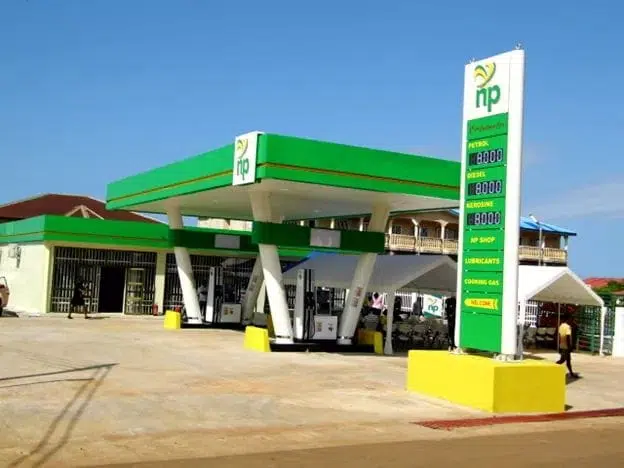
National Petroleum Sierra Leone Limited, NP (SL-Ltd).

By Amin Kef Sesay

The National Petroleum-Sierra Leone Limited (NP-SL Ltd) is a thriving indigenous petroleum marketing company that has stood the test of time since it was established by thirty-five Sierra Leoneans years back.

Overcoming turbulent times through shrewd, incisive and fine managerial initiatives, the company has gained a strong foothold in various parts of the country and has a presence in neighbouring Guinea, Liberia, Ivory Coast and The Gambia.

The company has truly proven that it is committed to the attainment and fulfilment of its mission which borders around “maintaining its dominant leadership position in the local market and strive to operate at sub-regional level by assuring the supply of petroleum products in an environmentally friendly manner while offering superior value for their customers, employees and other stakeholders based on a proud corporate culture with emphasis on safety consciousness, profit optimization, corporate expansion thereby contributing to national development”.

To a large extent the company has, over the years, successfully rolled out what is encompassed in the aforementioned Mission Statement. Today, in Sierra Leone and within the West African sub-region, NP-SL Ltd stands tall, dominating the petroleum marketing landscape in terms of its timely importation of high grade petroleum products, its effective marketing strategies, the number of dealers it has attracted to open Filling Stations even in hard to reach areas as well as the impressive way it is optimizing customer care, earning it the covetous respect as 1st for Customer Care.

With regards safety consciousness, the company always ensures that it provides tips at all its Filling Stations on how customers should conduct themselves when they are transacting businesses. Information such as “No Smoking”, “Avoid Naked Flame”, “Turn Off Engine While Fuel is Being Pumped”, “ Don’t Make-Up While Driving”, “Switch off Mobile Phones” are just some of the precautionary measures that are constantly made visible to all and sundry amidst the fact that fire extinguishers are always handy.

In all the countries within the West African sub-region where the company opted to establish, it was more particularly concerned of building a well-run dominant petroleum company in Liberia that is poised to compete in the West African sub-region. To a large extent that Vision has been achieved as NP-SL Ltd is a vibrant functioning entity that is assuaging the petroleum needs of people in that part of the world and doing so commendably well.

When the company was set up, the owners thought of having a Culture bordering around “developing a disciplined family with an institutional culture working towards building a great company”.


It is against such a backdrop that the company made it a policy that in terms of employment indigenes should be given priority as opposed to expatriates or foreigners. The culture is in sync with promoting the Local Content Policy and has contributed to the improvement of the lives of many locals. Employees of the company are well disciplined, are motivated and courteous in the way and manner in which they treat customers from diverse backgrounds and walks of life.

Known for effective service delivery, the company has calibrated pumping machines that gives the exact amount of fuel requested for.

Also, it introduced what is now known as NP Smart Card which is a memory chip that could be credited from time to time by the holder in order to buy fuel. It is a cashless way of conducting business and many have attested that it is very convenient.

There is also NP-Gas which is a cooking devise that could be refilled with gas. Manufactured in different cylinder sizes it is said to be very efficient and they are sold at the company’s Filling Stations or authorized dealers at affordable prices.

With its core values of NP-SL Ltd are anchored on:

Safe Working Environment, Good Customer Service,

High quality products, environmental sustainability and building positive teams, NP-SL Ltd has come a long way in executing its roadmap to become a viable business entity.

CEOs named for three Orange subsidiaries in Africa and the Middle East


Press Release

Casablanca, July 27, 2021

In agreement with its local partners and during the Board of Directors meetings of its subsidiaries, Orange has appointed the following CEOs for three of its subsidiaries in Africa and the Middle East:

  • Patrick Benon (currently CEO of Orange Botswana) has been appointed CEO of Orange Cameroon, replacing Frédéric Debord – Board of directors meeting on July 13th 2021
  • Frédéric Debord (currently CEO of Orange Cameroun) has been appointed CEO of Orange Madagascar, replacing Michel Degland – Board of directors meeting on July 2nd 2021
  • Michel Degland (currently CEO of Orange Madagascar) has been appointed Deputy CEO of Mauritius Telecom – Board of directors meeting on June 24th 2021

All of these appointments are part of the Group’s international mobility policy, and have taken place at the end of the previous CEO’s term.

The appointments are effective from September 2021.

Orange is present in 18 countries in Africa and the Middle East and has more than 130 million customers at of 31 March 2020. With 5.8 billion euros of revenues in 2020, Orange MEA is the first growth area in the Orange group. Orange Money, its flagship mobile-based money transfer and financial services offer is available in 17 countries and has more than 50 million customers. Orange, multi-services operator, key partner of the digital transformation provides its expertise to support the development of new digital services in Africa and the Middle East.

About Orange

Orange is one of the world’s leading telecommunications carriers with a turnover of €42.3 billion in 2020 and 142,000 employees as at March 31, 2021, of whom 82,000 are in France. The Group has a total customer base of 262 million customers worldwide at March 31, 2021, including 217 million mobile customers and 22 million fixed broadband customers. The Group is present in 26 countries.

Orange is also a leading provider of global IT and telecommunication services to multinational companies, under the brand Orange Business Services. In December 2019, the Group presented its new ‘Engage 2025’ strategic plan, which, guided by social and environmental accountability, aims to reinvent its operator model. While accelerating in growth areas and placing data and AI at the heart of its innovation model, the Group will be an attractive and responsible employer, adapted to emerging professions.

Orange is listed on Euronext Paris (symbol ORA) and on the New York Stock Exchange (symbol ORAN).

To find out more (online and via your mobile device), go to: www.orange.com, www.orange-business.com or to follow us on Twitter: @orangegrouppr.

Orange and any other Orange product or service names included in this material are trademarks of Orange or Orange Brand Services Limited.

Press contact:

Annie Wonnie Katta , .annie.wonnie-katta@orange-sonatel.com, +23276450194

Disarmament & Peace – The Role of Ambassador Omrie Golley during the Peace Process in Sierra Leone

By Noellie Marionette-Chambertin

We have now come almost full circle in highlighting the role of Ambassador Omrie Golley in the peace and disarmament process. The Process culminated in the declaration of the ending of the War by former President Kabbah, in January 2002, in his now famous utterance:

‘Di war don don’.

Much had to be done however, during the twelve months preceding Kabbah’s statement referred to above, in getting the two main protagonists, to the conflict, to finally lay down their weapons and pursue peace.

  • In this difficult task, the role of Ambassador Golley was crucial, and this role was subsequently recognized by the United Nations, ECOWAS, international humanitarian institutions, and the Government of President Tejan Kabbah.

    Writing on the ending of the war in Sierra Leone, in the acclaimed British daily newspaper ‘The Independent’ on the 9th February 2002, their investigative journalists Declan Walsh and Robert Verkaik stated, inter alia:

    “Diplomats, human rights workers, and Government figures agree Mr Golley has played a crucial role in the recent peace process, which has seen the RUF disarm and transform itself into a political party.”

    The journalists went on to quote Solomon Berewa, erstwhile Attorney General and Minister of Justice, who had led the Tejan Kabbah Government’s role in the peace process:

    “He (Ambassador Omrie Golley ) has been very positive in the achievement of peace.”

    Culled from the Independent Newspaper – Saturday 9th February 2002 –

    The period following the attack on the residence of the RUF leader Foday Sankoh in May 2000, had brought another breakdown in the peace process, and hostilities between Pro-Government forces and the RUF restarted.

    By the end of May 2000, the northern provincial town of Lunsar, in Port Loko District, had been overrun by RUF forces. In addition there were renewed hostilities in different parts of the country. The United Nations (UNAMSIL) had commenced deploying peacekeeping troops around the country, which had assisted in lessening hostilities.

    In addition, British military forces invited in by the Kabbah Government, to assist in military operations to gain control of the country, had made significant gains in military offensives against the RUF, allowing for the further deployment of UN peacekeeping operations.

    Notwithstanding these military gains, it was clear to the United Nations and other humanitarian agencies involved in tending to the local war affected population, that there was an urgent need for renewed diplomatic efforts to end renewed hostilities in the country.

    As David Wilmshurst,  Spokesman for UNAMSIL, the United Nations Peace Keeping Organisation, stated, in a news briefing  on the 1st June 2000:

    “What is important now, is that the fighting does stop so that we could find a way to talk to each other again. There is no military solution to this conflict.”

    Culled from Peter Andersen – News Archives of the Sierra Leone Web – 1st June 2000.

    Ambassador Golley meanwhile had returned from Freetown to London, in October 1999, with the return of the RUF Leader to Sierra Leone from Togo and the Lome Peace talks, and consequent of the fact that Golley had formally resigned from the RUF on the 28th December 1999.

    Thereafter, Ambassador Golley maintained watching brief regarding continuing events in his country, but did not take any active role.

    He (Golley) was, however, unhappy with the overall situation in the country, particularly with the increase in military hostilities, in the aftermath of the signing of the Lome Peace Accord. He believed however by this time, that he had done all that he could to advance peace in his motherland.

    Within the RUF movement, splits had emerged amongst the main military commanders, after the capture of their Leader, on the 17th May 2000, in the aftermath of the ‘May 8th incident’.

    In addition, the imprisonment of Foday Sankoh, had occasioned the need for the Movement, to choose a new Leader to attempt to unify the RUF into a cohesive structure. With the active support of ECOWAS and sub-regional leaders, Issa Hassan Sesay, was chosen as the new RUF interim leader, to unify the movement and to assume the leadership in any subsequent peace talks.

    The Lome Peace Accord, entered into in July 1999, between the Sierra Leone Government and the RUF, had agreed on the Disarmament, Demobilization and Rehabilitation (DDR) of all combatants that had been involved in the conflict, as a central plinth of the Agreement. At that point, it was clear and paramount to all observers, that if DDR was to be successful, the RUF, had to be properly structured, under a unified leadership for its (DDR) success.

    However, splits in the RUF in the aftermath of the detention of their Leader, made it very difficult to achieve the successful disarmament of their ex-combatants.

    In addition, prior to the disarmament of Government controlled militias and the RUF, a new ceasefire agreement in Abuja, in November 2000, between the warring factions, had to be reactivated. Humanitarian access to the war weary population, and skirmishes between the opposing forces, made the desired goal of disarmament, difficult to achieve.

    It soon became clear, that unless the difficulties identified above were adequately addressed, it would in turn be very difficult to proceed with a process, leading to the disarming of all ex-combatants involved in the war, and their ultimate reintegration into the towns and villages from which they came.

    It was this realisation, that informed the United Nations, through their Special Representative of the erstwhile Secretary General- Nigerian born Ambassador Oluyemi Adeniji to contact Ambassador Golley in London in January 2001, to return to Freetown, yet again, to assist in the revitalization of the peace process, that, at this period, was in danger of disintegrating.

    Whilst Ambassador Omrie Golley was most reluctant to return to the maelstrom of peace process issues, he was persuaded to return to Freetown in February 2001, after assurances from the Special Representative of the United Nations Secretary-General, Ambassador Oluyemi Adeniji, that his personal safety and security, would be adequately safeguarded.

    Ambassador Golley also sought and received written assurances about his security from the Government of President Kabbah through their erstwhile Attorney General and Minister of Justice, Solomon Berewa.

    Prior to returning to Freetown in February 2001, Golley travelled to Monrovia Liberia to meet with the newly appointed Interim Leader of the RUF, General Issa Hassan Sesay, who prevailed upon Ambassador Golley, to head a soon as possible to be formed RUF Political and Peace Council, to oversee the peace process and proceed to the disarmament of all ex-combatants involved in the conflict.

    With the acceptance of this latest position within the RUF, to support the commencement of a fresh peace initiative, Ambassador Omrie Golley entered the most difficult part of the renewed peace process, which was to agree a new ceasefire with the Government controlled militia otherwise known as the Civil Defence Forces ( CDF), headed by erstwhile Deputy Defence Minister, the late Sam Hinga Norman, and the RUF, and to commence disarmament of all fighting groups involved in the conflict.

    On the 1st May 2001, Ambassador Omrie Golley led a six man delegation, comprising senior military officials of the RUF, to Abuja to meet with officials of the Sierra Leone Government, headed by then Attorney General and Minister of Justice, Solomon Berewa, and the leadership of the Government controlled CDF Militia.

    This meeting, to review the previously agreed Abuja Peace Accord of November 2000, referred to above, and to map out the next stages of the peace process, involving disarmament, was also attended by officials of the United Nations, ECOWAS, and the Sierra Leone Government, with the erstwhile Organisation of African Unity (OAU) acting as Observers.

    The meeting between the RUF, the Sierra Leone Government, together with those of the CDF went well, and agreement to restart the peace process, by ceasing all hostilities, was swift. The meeting afforded Ambassador Golley the opportunity, in particular, of meeting and conferring with the late Leader of the CDF, and erstwhile Deputy Minister, Sam Hinga Norman.

    Ambassador Golley remembers their encounters:

    “During this period in Abuja, I got to meet with the Minister on several occasions, both formally and informally.  I became convinced at an early stage in our deliberations, that he was sincere in his desire to restart the peace process, and end the conflict.”

    Agreement between both sides was reached within 24 hours of the commencement of the Meeting, on the 2nd May 2001.

    Unlike many other Agreements entered into for the duration of the conflict, this Agreement on the cessation of hostilities, signed by the CDF leader, and Ambassador Omrie Golley, as Chairman of the newly created RUF Political and Peace Council, and ratified in Freetown on the 15th May 2001, withstood the test of time, and in effect, signalled the end of the 10 year old conflict.

    The recently signed and ratified Abuja Declaration of May 2001, was in effect, a re-affirmation of the recently failed Abuja Peace Accord of 2000, and called for the cessation of hostilities, the disarmament, demobilisation and re-integration, of all former combatants of both the RUF, and CDF, and the transformation of the RUF into a political party.

    Both the Government and RUF Delegations, returned to Freetown from Abuja after concluding their meeting, together, as one Delegation, to underscore its success.

    That symbolic move was actively encouraged by the personal intervention of the erstwhile President of the Federal Republic of Nigeria, Olusegun Obasango, who graciously provided the Delegations, with the Nigerian Presidential Aircraft, to transport both delegations back to Freetown.

    Upon the return of both the Government and RUF Delegations to Freetown, the complex and difficult part of the Agreement, commenced with the disarmament of the former fighting groups, under an implementation plan.

    This implementation plan, took the form of a number of tri-partite meetings, held in different parts of Sierra Leone, between the Government and the RUF, with the United Nations, acting as the Chair to both delegations during these talks.

    In fact there were 7 meetings that took place from May 2001 to November 2001, between the Government of Sierra Leone and the RUF, chaired by the United Nations, through their Special Representative of the Secretary General, Ambassador Oluyemi Adeniji. The erstwhile Attorney General and Minister of Justice, Solomon Berewa, headed the Government of Sierra Leone Delegation for the duration of these meetings, and Ambassador Omrie Golley, headed the RUF Delegation.

    As Golley remembers:

    “In fact this stage of the peace process, (ie the disarmament programme ), was, arguably,  the most arduous and difficult.  I had to visit various parts of the country where RUF ex-combatants were stationed, accompanied by UN peacekeepers, actively encouraging them to give up their weapons.

    That was an extremely difficult task. The ex-combatants were, on the whole, very skeptical of the whole peace process, and giving up their weapons, which some of them had held, for nearly ten years previously, was very hard for them to bear ‘.

    Ambassador Omrie Golley traversed the length and breadth of his motherland, visiting RUF bases, together with those of the former Government controlled Civil Militia, the CDF, always accompanied by UN Peacekeeping troops, actively encouraging  the disarmament, demobilisation and re integration, of the former fighting groups.

    Ambassador Omrie Golley spent lengthy periods of time, living with the former combatants of the RUF, at their various locations,  to gain their trust, often having to listen to their experiences of fighting a 10 year war. Some of these experiences, often recounted with glee and mirth, by some of these former fighters, were, for Ambassador Golley, often gruesome and unpleasant, to have to listen to.

    Ambassador Golley also found himself during this period, frequently adjudicating and settling quarrels, and long standing disputes and rivalries amongst the former commanders of the Movement. Sometimes these occurrences were very serious, with the potential for disrupting the whole disarmament process, looming large.

    The process of disarmament was carried out successfully in the 8 months from May 2001 to January 2002. On the 17th January 2002, representatives of the Government of Sierra Leone and the RUF, met in Freetown for the last time, with both sides formally declaring the end of the disarmament process, with the disarming of 46,453 former fighters.

    The 10 year old conflict was truly at an end.

    On the 18th of January 2002, President Kabbah, at a symbolic burning of firearms previously held by the former fighting groups, formally declared the war to be at an end, with his now famous quote :

    ‘Di war don don’

    Ambassador Omrie Golley, in a statement issued on the 19th January 2002, to commemorate the ending of the war, had this to say:

    “I consider the end of disarmament and the end of the war, to be the first stage of the consolidation of the peace process, but there is a lot more work to be done, particularly in terms of tackling the problems in our society,- that of poverty, corruption, nepotism, and economic and social mismanagement.”

    Culled from Peter Andersen – Sierra Leone News – January 2002 – The Sierra Leone Web.

    Very strong, meaningful, insightful words coming from Ambassador Omrie Golley, in January 2002, 19 years ago.

 

Note:

For further enquiries on our episodes, please contact the writer:

Noellie Marionette-Chambertin

Phone number: +447535506716    

Email: noelliechambertin@mail.com

Statistics Sierra Leone Briefs President Bio on Position of Mid Term Census

By Foday Moriba Conteh

Headed by the Deputy Statistician-General of Statistics Sierra Leone, Andrew Bob Johnny, a delegation from Statistics Sierra Leone on the 23rd July 2021 called on President Dr. Julius Maada Bio at the Presidential Lodge in Freetown to update him on the status of the 2021 Mid Term Population and Housing Census, making Sierra Leone the first to do both digital cartography and census in Africa.

Andrew Bob Johnny thanked the President and extended gratitude to the World Bank, UN Fund for Population Activities and the Government of Sierra Leone for their support. He also extended thanks and appreciation to the Government of Kenya for providing 20,000 tablets, which would be used to conduct the 2021 Mid Term Census.

“Your Excellency, it is good to note that the process is fair and credible. The committee comprise all stakeholders in the country: Journalists, Civil Society Organisations and all registered political parties,” he reported.

Johnny noted that the process leading up to the Mid Term Census was a breakthrough in the country because the data would be collected in real-time and mapping was done in 3 months compared to when mapping was done for more than 10 months.

“Technology used during this process ensured mappers must be in the field because if the mapper is 20 meters away from their designated locations it will not capture the data. I want to assure you that the 2021 Mid Term Population and Housing Census will be credible and efficient. Thank you very much,” he concluded.

In a brief response, President Bio congratulated the team for the good work, saying that it was a great development for the country. He, therefore, admonished the team to work with diligence and integrity for the credibility of the State.

“Thank you very much for the great work. I am happy that your work will add value to the Human Capital Development of the country, which is the bedrock of the New Direction Government. It is an important experience. I look forward to seeing a successful and credible 2021 Mid Term Population and Housing Census,” President Bio concluded.

UN Appoints Dr. Moinina Sengeh as Member of Committee of Experts

By Mohamed Massaquoi

Dr. Moinina David Sengeh has once more scored another landmark achievement making Sierra Leone proud as on the 22nd July 2021 the United Nations Economic and Social Council (ECOSOC), at its Management Segment Meeting under agenda item 4 elected by acclamation twenty-four (24) Experts including him, as members of the United Nations Committee of Experts on Public Administration (CEPA) for a four-year term starting from 1st August 2021 and ending on 31st July 2025.

Dr. Sengeh and the 23 other Experts were nominated by the United Nations Secretary-General, H.E. Mr. António Guterres, and appointed by ECOSOC, charged with the mandate of providing policy advice and programmatic guidance to ECOSOC on issues pertaining to governance and public administration, in line with the 2030 Agenda for Sustainable Development and support of the implementation and progress reviews of the Sustainable Development Goals.

It is worthwhile to note that CEPA was established by ECOSOC in its resolution 2001/45 and CEPA meets annually at the UN Headquarters in New York.

Before his appointment as the first Chief Innovation Officer of Sierra Leone and Minister, Dr. Sengeh worked as a Research Manager at IBM Research Africa, where he led the healthcare team to design and implement applied Artificial Intelligence systems for the prevention, diagnosis, treatment, and management of disease in Africa.

Prior to joining IBM, Dr. Sengeh completed his PhD. at the MIT Media Lab where his research was at the intersection of medical imaging, computer-aided design and multi-material 3D printing. He invented low-cost, wearable mechanical interfaces that improved prosthetic comfort for amputees.

Furthermore, Dr. Sengeh has published several academic journals and is a holder of patents in the prosthetics and AI fields. Dr. Sengeh is also a co-Founder and was the President (10 years) of Global Minimum (gmin.org), an international NGO that develops platforms to foster innovation and learning, focusing on high school students in Sierra Leone and Kenya. He is also an Obama African Leader, a Senior TED Fellow, a National Geographic Emerging Explorer, and a recording Afrobeat artist.

The Permanent Mission of Sierra Leone to the United Nations in New York is pleased to have facilitated and efficiently coordinated the endorsement of the Minister of Basic and Senior Secondary Education and he is wished the absolute best on his new assignment.


Indicted by ACC…   Former RCB Banker Fined Le 100,000,000.00 or to Serve 10 Years Imprisonment

By Esther Wright

On the 22nd July, 2021the High Court of Sierra Leone Holden at Freetown, presided over by the Honourable Justice Simeon Allieu, sentenced one Mohamed Sheku Turay, a former Banker at the Rokel Commercial Bank, and of No. 2 Alcock Street, Off Macauley Street, Freetown, to pay a fine of One Hundred Million Leones (Le 100,000,000.00) immediately or Serve Ten (10) Years Imprisonment, after his conviction on Two (2) counts of corruption offences.

The Honourable Judge also ordered Mohamed Sheku Turay to pay a restitution of three billion, nine hundred and twenty million, one hundred and forty-five thousand, two hundred and sixty-two Leones (Le 3,920,145,262.00) on or before the 30th September, 2021, being funds he misappropriated from the Electricity Distribution and Supply Authority (EDSA) .

The Hon. Justice Simeon Allieu convicted Mohamed Sheku Turay after he pleaded guilty to Count 1 and Count 3 of the charges; Misappropriation of Public Revenue, contrary to Section 36(1) and Conspiracy to Commit a Corruption Offence, contrary to Section 128(1)(a), of the Anti-Corruption Act  No. 12, of 2008 as amended in 2019 respectively.

It could be recalled that, Mohamed Sheku Turay and Seven Others, Alimamy Sesay, Noah Winnebah, Abioseh Ola Barnes, Musa Momoh Lahai, Hawa Y. Kamara, Mary Bangura (Mrs Ngegbai) and Rugiatu Kalokoh were on 16th July, 2021 indicted by the ACC for misappropriating the sum of three billion, nine hundred and twenty million, one hundred and forty-five thousand, two hundred and sixty-two Leones (Le 3,920,145,262.00) being Electricity Bill paid to EDSA for the supply of electricity. The convict is the principal accused person in the indictment.

Meanwhile, the matter against Alimamy Sesay, Noah Winnebah, Abioseh Ola Barnes, Musa Momoh Lahai, Hawa Y. Kamara, Mary Bangura (Mrs Ngegbai) and Rugiatu Kalokoh, continues at the High Court of Sierra Leone Holden at Freetown.

In that regard, the Commission wishes to reassure the general public of its relentless commitment to protecting public funds and resources at all times.