
Home Blog Page 88

President Bio Condemns Religious Violence, Calls for Peace at Mano River Basin Muslim Conference

By Amin Kef (Ranger)

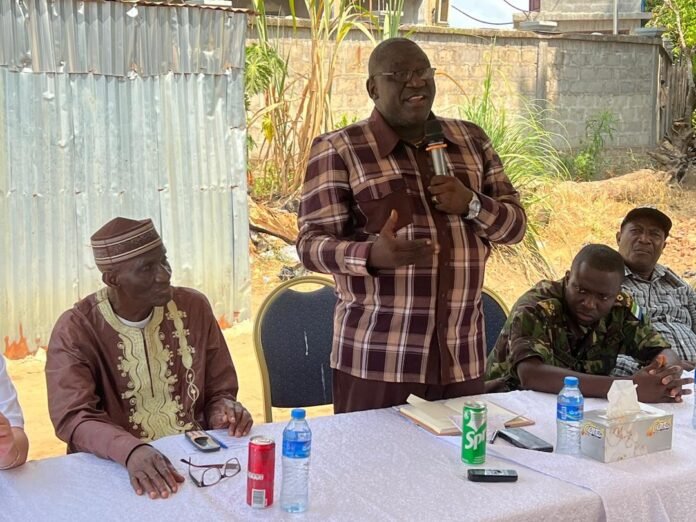
President Julius Maada Bio has renewed his call for peace, tolerance, and religious harmony across West Africa, as he addressed a sub-regional Muslim prayer conference held in eastern Sierra Leone, strongly condemning all forms of religious violence and hate speech.

The President, accompanied by First Lady Fatima Maada Bio, attended the conference on Tuesday, December 30, 2025, in Kpandebu Dama Town, Kenema District. The event was organised by the Sierra Leone chapter of the Kormende Progressive Union and brought together Islamic scholars, clerics, and delegates from across the Mano River Basin.

The annual conference, which rotates among Sierra Leone, Liberia, Guinea, and Côte d’Ivoire, provided a platform for collective prayers of thanksgiving to Allah for peace, life, and unity throughout the sub-region. Special prayers were also offered for the leadership and citizens of the four Mano River Basin countries, with participants calling for sustained stability, harmony, and cooperation.

Delivering his goodwill message, President Bio expressed gratitude to delegates who travelled from neighbouring countries to attend the gathering, describing the conference as a powerful demonstration of faith-driven unity at a time when many societies are grappling with division and intolerance.

He noted that the gathering went beyond religious rituals, describing it as a sacred assembly dedicated to gratitude and reflection. According to the President, the presence of participants from different countries underscored the unifying power of religion when grounded in peace and shared values.

President Bio emphasised that authentic knowledge of the Holy Qur’an and the Bible promotes compassion, tolerance, and respect for human dignity, rather than violence or exclusion. He cautioned religious leaders against preaching messages of hatred, urging them instead to use their influence to foster peaceful coexistence within their communities.

Calling on Islamic scholars across the Mano River Basin to be ambassadors of peace, the President said religious leaders have a moral responsibility to guide followers toward unity and understanding, particularly in a region with deep cultural and spiritual ties.

Highlighting Sierra Leone’s longstanding tradition of religious tolerance, President Bio pointed to the country’s strong interfaith relationships, including shared worship spaces, inter-marriages, and mutual respect between Muslims and Christians. He described Sierra Leone as a living example of how diverse religious beliefs can coexist peacefully and encouraged other nations to draw lessons from that experience.

Reaffirming his government’s commitment to religious freedom, President Bio pledged continued support for initiatives that promote national unity, social cohesion, and peaceful coexistence. He urged citizens of the Mano River Basin to reject division and live together in harmony, regardless of religious, political, or regional differences.

The conference concluded with prayers for peace in 2026 and renewed calls for collective responsibility in safeguarding stability across the sub-region.

Commerce and Mortgage Bank Bags National Development Award 2025 for Driving Private Sector Growth

By Amin Kef (Ranger)

Commerce and Mortgage Bank has been honoured with the National Development Award 2025, conferred by Diaspora Focus, in recognition of the bank’s transformative leadership, strong customer service culture, and sustained contribution to private sector development and nation building.

The prestigious award was presented during the 14th edition of the National Development Awards (NaDA) ceremony held on December 19, 2025, at the Bintumani Hotel. The high-profile event attracted senior government officials, captains of industry, civil society leaders, and members of the Sierra Leonean diaspora, all gathered to celebrate institutions and individuals making meaningful contributions to national progress.

According to the official citation, Commerce and Mortgage Bank was recognised for its strategic role in expanding access to finance, delivering customer-centred banking solutions, and supporting enterprises that drive economic growth and job creation across the country. The organisers highlighted the bank’s operational reforms, service delivery standards, and responsiveness to market needs as key factors aligning with Sierra Leone’s broader agenda of economic transformation and inclusive development.

Presenting the award, Diaspora Focus underscored the importance of strong and resilient financial institutions in national development, particularly in emerging economies. The organisation noted that Commerce and Mortgage Bank’s consistency in innovation, efficiency, and service excellence has positioned it as a dependable partner for businesses, entrepreneurs, and households navigating Sierra Leone’s evolving financial landscape.

“This award celebrates institutions that are in line with our strides for national development,” the citation stated, echoing the NaDA theme, “Together We Can,” which emphasises collective responsibility and partnership between local institutions and the diaspora.

Now in its 14th year, the National Development Awards has become a respected platform for recognising excellence across key sectors, including finance, infrastructure, education, health, governance, and social innovation. Beyond recognition, the awards also serve to strengthen collaboration between the diaspora and development initiatives at home.

Industry observers say Commerce and Mortgage Bank’s recognition further reinforces the growing role of indigenous financial institutions in supporting Sierra Leone’s recovery and long-term development aspirations. The honour is expected to enhance confidence among customers, investors, and partners, while encouraging continued innovation within the banking sector.

The award comes at a time when the bank is sharpening its strategic focus. It will be recalled that the Board of Directors, Senior Management, and staff recently convened their first strategic planning meeting ahead of the 2026 financial year, under the leadership of Alex Emile Studa-Vincent, Managing Director of Commerce and Mortgage Bank. The session provided an opportunity to review performance, align on priorities, and set a clear vision for sustainable growth, innovation, and improved service delivery.

As Sierra Leone looks toward deepening private sector-led growth, stakeholders at the ceremony renewed calls for sustained collaboration between banks, policymakers, and development partners to expand financial inclusion, unlock new opportunities, and accelerate national development.

Over 306,000 Births, 17,905 Deaths Recorded in Sierra Leone in 2025 — NCRA Report

By Amin Kef (Ranger)

The National Civil Registration Authority (NCRA) has released its Provisional Annual Report on Vital Events for the year ending 31st December 2025, offering a comprehensive statistical snapshot of population dynamics in Sierra Leone based on officially registered births, deaths, marriages, divorces and adoptions.

The report, published in accordance with Section 26(1) of the National Civil Registration Act, 2016, underscores the Authority’s statutory responsibility to collect, compile and publish vital statistics on the population of Sierra Leone. These statistics serve as a critical foundation for national planning, public service delivery, health interventions, social protection programmes and evidence-based policymaking .

Over 306,000 Live Births Recorded Nationwide

According to the provisional data, a total of 306,057 live births were recorded across the country during the 2025 reporting period. Of this figure, 149,968 births (49 percent) were males, while 156,089 births (51 percent) were females, producing a sex ratio of 96 males to every 100 females. The figures reflect continued progress in birth registration coverage and public compliance with civil registration requirements .

The report also recorded 3,739 stillbirths nationwide in 2025. While the data remains provisional, the NCRA noted that the accurate documentation of stillbirths is essential for understanding maternal and child health outcomes, improving healthcare planning, and supporting targeted public health interventions aimed at reducing preventable deaths .

Mortality Data Highlights Vulnerable Age Groups

On mortality, the Authority reported 17,905 registered deaths during the year under review. The gender distribution shows that 10,280 deaths (57 percent) were males, compared to 7,625 deaths (43 percent) among females.

Age-disaggregated data reveals that the highest proportion of deaths occurred among persons aged 60 years and above, accounting for 5,652 deaths (32 percent). This was followed by deaths among children aged 0–4 years, with 2,697 cases (15 percent) recorded. The figures highlight persistent vulnerabilities at both ends of the age spectrum and reinforce the importance of strengthening healthcare services for the elderly while sustaining investments in maternal, neonatal and child health programmes .

Marriage Registration Trends Across Faiths and Traditions

The provisional report shows that 755 marriages were officially registered with the Authority in 2025. A breakdown by marriage type indicates that Christian marriages accounted for the majority, with 408 registrations (54 percent). This was followed by 174 Islamic marriages (23 percent), 128 civil marriages (17 percent), and 45 customary marriages (6 percent).

The NCRA noted that the diversity of marriage types reflects Sierra Leone’s rich cultural and religious heritage, while also emphasizing the importance of registering all forms of marriage to ensure legal recognition, protect spousal rights, and support access to social services and inheritance claims .

Divorce Figures Remain Relatively Low

In contrast to marriage registrations, the Authority recorded 60 divorces nationwide during the period under review. Of these, civil marriages accounted for the largest share, with 21 cases (35 percent). Christian marriages and Islamic marriages each accounted for 18 cases (30 percent each), while customary marriages recorded 3 divorces (5 percent).

The relatively low number of registered divorces, according to the NCRA, may reflect a combination of social norms, cultural values, and possible underreporting, reinforcing the need for continued public sensitization on the importance of registering all vital life events .

Adoption Data Shows Higher Female Representation

The report further documents 160 adoption cases registered across Sierra Leone in 2025. Of this total, 99 adoptees (62 percent) were females, while 61 adoptees (38 percent) were males.

Age analysis shows that children aged 13–17 years constituted the largest share, with 62 cases (39 percent). This was followed by children aged 5–12 years, accounting for 60 cases (37 percent), while 38 cases (24 percent) involved children aged 0–4 years. The data provides important insights for child protection agencies, social welfare services and policymakers working to improve adoption systems and child care frameworks nationwide .

Strengthening Civil Registration for National Development

In its conclusion, the NCRA emphasized that the provisional report covers the period January to December 2025 and expressed appreciation to government institutions, local councils, development partners and other stakeholders for their continued support in the recording of vital events.

The Authority strongly encouraged the general public—including citizens and foreign residents—to promptly register births (live or still), deaths, marriages, divorces, adoptions and nullities whenever they occur. According to the NCRA, comprehensive and timely registration is essential for maintaining accurate population records, improving national statistics, and supporting effective governance and development planning in Sierra Leone .

The report was officially signed by Mohamed M. Massaquoi, Director General of the NCRA, reaffirming the Authority’s commitment to strengthening the Civil Registration and Vital Statistics (CRVS) system as a cornerstone of inclusive development, legal identity, and social protection in Sierra Leone.

As the data remains provisional, the NCRA noted that the figures are subject to further validation and updates. However, the report already provides a valuable evidence base for government institutions, researchers, development partners and civil society actors working to address population trends, improve service delivery and advance national development priorities.

China–Sierra Leone Relations Deepen as 2025 Records Major Diplomatic, Economic and People-to-People Milestones

President Julius Maada Bio shaking hands with Chinese President, Xi Jinping

By Amin Kef (Ranger)

Relations between the People’s Republic of China and the Republic of Sierra Leone reached unprecedented heights in 2025, marked by high-level political engagements, expanded trade and investment, enhanced health cooperation, strengthened food security, and growing people-to-people exchanges. A special end-of-year publication by the Chinese Embassy in Sierra Leone title “Special Edition: 2025 Top 10 Highlights of China–Sierra Leone Relations” captures what both governments describe as a transformative year in bilateral relations, laying a solid foundation for deeper cooperation ahead of the 55th anniversary of diplomatic ties in 2026 .

One of the most significant diplomatic highlights of the year was the official visit of Chinese Vice Premier Liu Guozhong to Sierra Leone from November 12 to 14, 2025. During the visit, Vice Premier Liu held extensive discussions with Vice President Dr. Mohamed Juldeh Jalloh, reaffirming mutual commitment to strengthening political trust and expanding practical cooperation. The visit also featured joint participation in events commemorating the 10th anniversary of China–Sierra Leone cooperation in the fight against Ebola, the inauguration of a China-aided fishing port, and a photo exhibition showcasing agricultural cooperation between the two countries.

Economic cooperation recorded major gains following China’s implementation of a historic zero-tariff policy for African countries. Announced by Chinese President Xi Jinping at the Forum on China–Africa Cooperation (FOCAC) Summit in 2024 and expanded in 2025 to cover all 53 African countries with diplomatic ties to China, the policy granted 100 percent tariff-free access to Chinese markets. As a direct result, trade between China and Sierra Leone surged, reaching approximately US$1.82 billion between January and October 2025, representing nearly a 20 percent increase compared to the same period in the previous year. The policy also stimulated Chinese investment in fisheries, mining, infrastructure, manufacturing, and telecommunications, with tangible benefits for local employment and economic growth.

Education and cultural cooperation also featured prominently in 2025. In April, Chinese Ambassador Wang Qing joined President Julius Maada Bio, First Lady Fatima Bio, and alumni of Bo School to celebrate the institution’s 119th anniversary. A key highlight of the ceremony was the unveiling of the newly constructed “Beijing Building,” a student dormitory named after China’s capital. The building stands as a lasting symbol of educational cooperation and cultural exchange between the two nations.

Sierra Leone’s active participation in multilateral diplomacy under the China–Africa framework was further underscored in June when Deputy Minister of Foreign Affairs and International Cooperation Francess Piagie Alghali attended the FOCAC Coordinators’ Ministerial Meeting and the Fourth China–Africa Economic and Trade Expo. During her address, she reaffirmed Sierra Leone’s commitment to multilateralism and highlighted the signing of a Fish Certification Contract with China, a milestone widely viewed as a breakthrough for the country’s fisheries sector and export diversification efforts.

That progress translated into concrete results in July with the official launch of exports of wild aquatic products from Sierra Leone to China. The inauguration ceremony in Freetown was attended by senior government officials, including the Deputy Speaker of Parliament and the Minister of Fisheries and Marine Resources. The initiative, implemented as part of FOCAC outcomes, marked a new phase in fisheries cooperation and opened access to one of the world’s largest consumer markets for Sierra Leonean products.

Health cooperation remained a cornerstone of the bilateral relationship. In early 2025, Chinese medical experts stationed in Sierra Leone played a critical role in the detection and containment of the Mpox outbreak, confirming the first case through gene sequencing and treating over 300 patients. Chinese CDC experts conducted more than half of the national diagnostic tests, while the Chinese Embassy provided US$50,000 in emergency support to Sierra Leone’s National Public Health Agency. Through joint efforts, the outbreak was successfully contained and officially declared over in December 2025.

Food security cooperation also featured prominently. In April, China handed over emergency food assistance to Sierra Leone in support of national efforts to strengthen food resilience. Ambassador Wang Qing described the assistance as a concrete outcome of agreements reached by the two heads of state and a practical demonstration of China’s commitment to the Global Development Initiative.

Security and defense cooperation advanced with the hosting of the first Chinese People’s Liberation Army (PLA) Reception in Sierra Leone in July, following the deployment of China’s first Defense Attaché to the country in 2024. The event, attended by senior Sierra Leonean defense officials and diplomats, underscored growing military-to-military engagement and mutual respect.

Intellectual and cultural ties were further strengthened in January with the launch of the book “China–Sierra Leone Relations: Friendship, Cooperation, and Win-Win Diplomacy.” The publication, edited by former Foreign Minister Prof. David J. Francis, documents the historical evolution of bilateral relations and reflects shared aspirations for sustainable cooperation.

People-to-people exchanges reached record levels in 2025, with over 6,000 Chinese visas issued to Sierra Leonean nationals, the highest figure in history. Approximately 80 percent were business visas, highlighting expanding commercial engagement, while the remainder supported tourism, education, and family visits. The surge signals growing mutual interest and deeper social connections between the two nations.

As Sierra Leone and China prepare to mark 55 years of diplomatic relations in 2026, designated as the China–Africa Year of People-to-People Exchanges, both sides have reaffirmed their commitment to advancing cooperation under the guidance of their respective heads of state. Observers say the achievements of 2025 demonstrate not only the resilience of the China–Sierra Leone partnership but also its evolution into a comprehensive relationship grounded in mutual benefit, shared development goals, and long-term strategic trust.

Lawyers’ Society of Sierra Leone Files Supreme Court Action to Protect President’s Constitutional Rights

President Lawyers' Society, Augustine Sorie-Sengbe Marrah

By Foday Moriba Conteh

The Lawyers’ Society of Sierra Leone has announced that its President, Augustine Sorie-Sengbe Marrah, has instituted legal action before the Supreme Court of Sierra Leone seeking the protection and enforcement of his constitutional rights to freedom of thought and expression.

In a press statement dated December 29, 2025, the Society disclosed that the action was filed on Wednesday, December 24, 2025, against Lloyd Hindolo Jusu, the Deputy Master and Registrar of the High Court of Sierra Leone, along with other unnamed parties. The suit challenges disciplinary proceedings initiated against Mr. Marrah before the Disciplinary Committee of the General Legal Council.

According to the statement, the Supreme Court action seeks judicial clarification on whether the disciplinary complaint lodged against Mr. Marrah violates rights guaranteed under the Constitution of Sierra Leone, particularly provisions safeguarding freedom of thought, expression, and opinion. The Society also cited Sierra Leone’s obligations under international human rights treaties to which the country is a signatory.

The case raises several constitutional questions, including whether public comments made by Mr. Marrah on AYV Television on December 10, 2025—coinciding with International Human Rights Day—can lawfully form the basis of professional disciplinary action.

Additionally, the Society argues that reliance on matters previously resolved—specifically a contempt issue concluded in 2020 and an incident from a non-judicial meeting in 2022—may amount to double penalization. The statement notes that such reliance could undermine the fairness of the disciplinary process and render it unconstitutional.

“These issues go to the heart of constitutionalism, fair hearing, and the proper limits of professional regulation,” the statement indicated.

Beyond the substantive constitutional challenge, Mr. Marrah has also filed a Notice of Motion requesting a stay of the ongoing disciplinary proceedings before the General Legal Council’s Disciplinary Committee. The application seeks to suspend the process until the Supreme Court has conclusively determined the constitutional questions raised.

Legal observers note that such applications are typically aimed at preventing parallel proceedings that could prejudice constitutional litigation or result in conflicting outcomes.

The Lawyers’ Society has publicly declared its full support for the Supreme Court action, describing it as consistent with its mandate to defend the rule of law and uphold constitutional governance. The Society urged judicial authorities to ensure that the matter is resolved fairly, impartially, and without undue delay or interference.

“The Society remains a staunch advocate for constitutionalism and due process,” the statement read, adding that it expects an expeditious determination of the issues involved.

Reaffirming its broader mission, the Lawyers’ Society emphasized its commitment to promoting a free, democratic, and rights-respecting society. It stated that it would continue to stand with individuals whose constitutional rights are threatened or violated and pledged to keep the public informed as developments unfold.

The case is expected to attract significant national attention, given its implications for freedom of expression, professional accountability, and the relationship between constitutional rights and regulatory authority within Sierra Leone’s legal system.

Unified Digital Platform for Resident and Work Permits Goes Live Nationwide

Minister of Employment Labour and Social Security, Mohamed Rahman Swaray

By Amin Kef (Ranger)

The Government of Sierra Leone has officially launched a Unified Digital Platform for the processing of Resident and Work Permits, marking a major milestone in the country’s drive toward digital governance, regulatory efficiency, and improved immigration and labour management.

The announcement was made in a press release issued on Wednesday December 31, 2025 by the Ministry of Employment, Labour and Social Security (MELSS), in collaboration with the Sierra Leone Immigration Department. According to the release, all applications and renewals for Resident and Work Permits will now be processed exclusively online with effect from January 1, 2026.

The new system, known as the Unified Permits Platform, is designed to provide a secure, transparent, and fully integrated end-to-end process that allows applicants to submit applications, track progress, and receive approvals remotely. Government officials say the platform will significantly reduce bureaucratic delays, eliminate inefficiencies associated with manual processing, and strengthen regulatory oversight.

In the statement, the Government informed the general public, employers, investors, diplomatic missions, and all non-nationals living and working in Sierra Leone that the era of manual permit processing has come to an end. The move is expected to boost investor confidence while aligning immigration and labour practices with applicable national laws and international standards.

“The Unified Permits Platform provides a secure, transparent, and fully integrated end-to-end process, enabling applicants to submit, track, and receive approvals remotely, significantly improving efficiency while strengthening regulatory oversight and investor confidence,” the release stated.

The Government further urged all non-nationals to regularize their immigration and employment status without delay. Employers were also called upon to fully cooperate with the new system to ensure a lawful, orderly, and transparent immigration and labour management framework.

Authorities warned that failure to comply with the new requirements could result in serious consequences, including interrupted travel, violations of the law, and penalties as prescribed by existing legislation.

The press release also addressed concerns relating to the temporary moratorium on permit processing that was in effect between November 13 and December 31, 2025. According to the Government, all persons affected by the moratorium are now required to apply for or renew their permits through the digital platform.

In a clear signal of enforcement, the Ministry of Employment, Labour and Social Security and the Sierra Leone Immigration Department announced that nationwide compliance inspections will commence across workplaces and institutions. These inspections will be carried out in collaboration with relevant enforcement agencies.

“Non-nationals residing or working in Sierra Leone unlawfully, and employers found in breach of the law, will face penalties in accordance with existing legislation,” the statement warned.

The launch of the Unified Digital Platform forms part of broader public sector reforms aimed at improving service delivery, enhancing transparency, and strengthening compliance across key sectors of governance. Observers say the initiative is also expected to curb abuse of the permit system, improve data integrity, and support national security and labour market regulation.

Applicants seeking Resident or Work Permits have been advised to visit the official portal at https://unifiedpermit.gov.sl to complete the application process. The platform is accessible nationwide and is expected to simplify procedures for both first-time applicants and those seeking renewals.

For further inquiries, the Government has provided a dedicated contact line: +232 30 300003.

As Sierra Leone continues to embrace digital transformation, the introduction of the Unified Permits Platform represents a significant step toward modernizing immigration and labour administration, ensuring compliance with the law, and creating a more efficient and investor-friendly business environment.

Shalimar Trading Ushers in New Wave of Development in 2026

By Foday Moriba Conteh

Shalimar Trading Limited has reaffirmed its position as a key driver of economic growth and mobility development in Sierra Leone, unveiling bold plans and renewed commitments that are set to accelerate national development in 2026.

As the country looks toward a future defined by inclusive growth, job creation, and improved transportation systems, Shalimar Trading’s continued expansion and innovation in the motorcycle and three-wheeler sector is expected to play a critical role. The company, widely respected for its professionalism and reliability, remains the sole authorized distributor of TVS Motor Company products in Sierra Leone, a partnership that has transformed access to affordable and durable mobility solutions nationwide.

In 2026, Shalimar Trading is scaling up its operations with a focus on deepening nationwide penetration, strengthening after-sales services, and introducing new product lines tailored to local terrain and economic realities. This expansion is expected to significantly benefit commercial riders, small business owners, and rural communities who rely on motorcycles as a primary means of transportation and livelihood.

Speaking on the company’s outlook, industry observers note that Shalimar Trading’s impact goes beyond sales figures. By creating hundreds of direct and indirect jobs across its dealerships, service centers, spare-parts supply chains, and logistics networks, the company continues to support livelihoods and empower youth entrepreneurs across the country. Many riders who started with a single motorcycle have grown into fleet owners, transport operators, and employers—an outcome widely attributed to the reliability and fuel efficiency of TVS products distributed by Shalimar Trading.

The company’s flagship models, including the TVS Star LX and TVS Victor, remain household names among riders due to their low maintenance costs, durability, and strong resale value. These qualities have helped reduce operating costs for commercial riders while improving safety and comfort for users—an important contribution to productivity and income stability.

Beyond commerce, Shalimar Trading has also earned praise for its commitment to corporate social responsibility. Over the years, the company has supported road safety awareness campaigns, skills training for mechanics, and community-based initiatives aimed at promoting responsible riding and vehicle maintenance. In 2026, these efforts are expected to expand further, aligning with national priorities on youth empowerment and sustainable transport.

As Sierra Leone continues to invest in infrastructure, trade, and private-sector-led growth, Shalimar Trading’s role as a trusted partner in development is becoming increasingly evident. By combining international manufacturing excellence with strong local knowledge, the company is helping to modernize transport systems while keeping solutions affordable for ordinary citizens.

With renewed energy and a clear vision for the year ahead, Shalimar Trading enters 2026 not just as a market leader, but as a catalyst for progress—driving mobility, creating opportunities, and contributing meaningfully to Sierra Leone’s development journey.

As Turkish Airlines Deploys Larger Aircraft to Resolve Baggage Backlog… SLCAA Confirms Successful Arrival of Delayed Luggage Following Dreamliner Operation

By Amin Kef (Ranger)

Turkish Airlines on Wednesday, December 24, 2025, deployed a larger aircraft to Freetown International Airport (FIA) as part of efforts to resolve the issue of passengers’ luggage left behind on its previous flight to Sierra Leone.

The airline operated a Boeing 787 Dreamliner on the route, significantly increasing cargo capacity. As a result, the majority of delayed baggage was successfully transported to FIA, with only a few passengers’ items remaining outstanding.

Confirming the development, the Director General of the Sierra Leone Civil Aviation Authority (SLCAA), Musayeroh Barrie, said the action fulfilled earlier commitments made by the airline and aviation authorities.

“True to our word and the arrangements announced earlier this month in our press release, Turkish Airlines deployed the B787 Dreamliner to address the left baggage issue,” Barrie stated.

She assured affected passengers that systems are in place to ensure the remaining luggage is delivered promptly and advised them to contact Sea Coach or Turkish Airlines directly for updates and further assistance.

The intervention follows weeks of coordination between the SLCAA and the airline to address passenger concerns and improve service delivery, particularly during the busy end-of-year travel period.

Barrie also used the opportunity to extend seasonal goodwill to travelers and the general public, wishing everyone happy holidays as air traffic continues to increase during the festive season.

The SLCAA has reiterated its commitment to protecting passenger rights and working closely with international airlines to ensure efficient, safe, and reliable air transport services to and from Sierra Leone.

Vice President Says $129 Million U.S. Health Pact Reflects Deepening Sierra Leone–U.S. Relations

By Amin Kef (Ranger)

Sierra Leone has on December 22, 2025 signed a landmark five-year health cooperation agreement with the United States, unlocking more than $129 million in support to strengthen health infrastructure, combat infectious diseases, and consolidate recent gains in reducing maternal and child mortality.

Vice President Mohamed Juldeh Jalloh described the agreement as a major boost to the country’s public health agenda, noting that the resources will have a transformative impact over the next half-decade. He said the funding will significantly improve health facilities nationwide, enhance disease surveillance and response, and accelerate progress in safeguarding the lives of women, children, and adolescents.

Speaking in his capacity as Chair for health sector coordination and decentralization, the Vice President said he is actively supporting government initiatives to increase health spending and strengthen primary health care in line with Sierra Leone’s newly endorsed health compact. “These resources provided by the U.S. government are crucial to our efforts to improve healthcare services, particularly for women, children, and adolescents,” he said, adding that the partnership reflects strong bilateral collaboration across multiple sectors.

The Memorandum of Understanding (MOU), covering the period 2026–2030, was signed in Freetown by Sierra Leone’s Minister of Health and the U.S. Chargé d’Affaires, making Sierra Leone one of a select group of African countries to enter into such a comprehensive global health partnership with Washington.

Minister of Health Austin Demby welcomed the agreement, calling it a “massive boost” that will deliver measurable and sustainable outcomes. He said the partnership aligns with national priorities to improve service delivery at community level, expand access to essential medicines and diagnostics, and strengthen the health workforce.

Under the agreement, both governments have set ambitious targets to sharply reduce maternal and child mortality and curb deaths from HIV, tuberculosis, malaria, and measles. Specific goals include achieving near-universal HIV testing and treatment coverage, improving routine immunization, and enhancing the country’s capacity to detect and respond to disease outbreaks within seven days—a critical benchmark for epidemic preparedness.

The Vice President also highlighted the broader context of U.S.–Sierra Leone cooperation, citing ongoing collaboration in areas such as energy and infrastructure, including a $480 million Millennium Challenge Corporation–funded compact. He expressed appreciation to the U.S. Embassy Sierra Leone for its continued support and to Minister Demby for leading the technical work that culminated in the signing.

Health sector stakeholders say the new funding will accelerate decentralization reforms by channeling resources closer to communities, improving primary care facilities, and strengthening data systems for accountability and results. With sustained implementation, officials believe the agreement will mark a decisive step toward resilient, people-centered healthcare and improved health outcomes nationwide.

Chief Justice Kamanda Reflects on One Year in Office, Reaffirms Drive for Judicial Transformation

Chief Justice Komba Kamanda

By Amin Kef (Ranger)

Chief Justice Komba Kamanda has used the first anniversary of his tenure to take stock of progress made within Sierra Leone’s Judiciary, highlighting key reforms while renewing his pledge to deepen public confidence in the justice system.

In a commemorative message marking December 16, 2024, the Chief Justice unveiled a special anniversary edition of The Judiciary magazine, a new institutional publication designed to chronicle reforms, achievements, and the collective journey of the courts over the past year. The publication, he explained, captures both the challenges faced and the milestones achieved under his leadership.

Justice Kamanda described the past year as one defined by deliberate efforts to modernize the Judiciary through decentralization, innovation, and improved access to justice. He noted that expanding judicial services beyond traditional centers and embracing new approaches to case management have been central to restoring confidence in the courts.

Addressing judges, magistrates, and judicial support staff across the country, the Chief Justice paid glowing tribute to their professionalism and dedication. He acknowledged their role in sustaining the rule of law under demanding conditions, emphasizing that their daily commitment continues to strengthen the credibility of the justice system.

According to Justice Kamanda, the reform agenda has not been without difficulty. However, he stressed that perseverance and teamwork have helped to establish a solid foundation for a Judiciary that is independent, transparent, and responsive to the needs of citizens. He expressed gratitude to all judicial officers and partners who supported the reform process, often in challenging environments.

“The progress we have recorded is the result of collective sacrifice and shared purpose,” the Chief Justice noted, adding that the Judiciary’s transformation is firmly underway, even as more work lies ahead.

Looking to the future, Justice Kamanda reaffirmed his resolve to promote judicial excellence, reinforce institutional accountability, and safeguard the integrity of the courts. He said strengthening public trust remains a priority, as confidence in the justice system is essential to national stability and democratic governance.

He described The Judiciary magazine as both a mirror and a compass—reflecting achievements already made while guiding the institution toward higher standards of service delivery. The publication, he said, should encourage reflection, learning, and renewed commitment among judicial officers at all levels.

Inviting the public to engage with the anniversary edition, the Chief Justice underscored that justice reform is not an abstract goal but a continuous process that directly affects the lives of ordinary Sierra Leoneans. He emphasized that steady progress, rather than quick fixes, is key to building a resilient and credible Judiciary.

As the Judiciary moves into its next phase, Justice Kamanda expressed confidence that the courts are on a clear path toward greater efficiency and fairness. He concluded by reaffirming that the justice system is advancing with purpose, driven by a shared vision of a stronger, people-centered Judiciary.

The first anniversary of Justice Kamanda’s tenure thus marks not only a moment of reflection, but also a renewed commitment to sustained reform and a brighter future for justice in Sierra Leone.