Home Blog Page 880

Vice President Chairs Newly Formed Government Accountability Platform Meeting

By Esther Wright

Vice President, Dr. Mohamed Juldeh Jalloh, on the 6th July, 2021 chaired a Government High Level Accountability Platform inaugural meeting held at his office on Tower Hill in Freetown.

The newly formed Accountability platform comprising the Anti-Corruption Commission, Parliamentary Accounts Committee, Audit Service Sierra Leone, Ministry of Finance, Public Sector Reform Unit, was established to ensure efficiency in the effort to improve performance and Government accountability.

Dr. Mohamed Juldeh Jalloh noted that the platform will be an information sharing platform that will help in making better coordination of accountability issues, track and deliver on benchmarks, ensure compliance with Auditor-General’s recommendations, and help support the ACC in controlling corruption in Sierra Leone.

The meeting was attended by the Commissioner of ACC, the CEO of the National Public Procurement Authority, the Deputy Speaker and Chair of the Public Accounts Committee of Parliament (PAC), the Financial Secretary of Ministry of Finance, the Auditor General, the MCCU Coordinator, the Minister of State in the VP’s office and other support staff of the respective constituent institutions of the Platform.

Chief Executive Officer (CEO) of MCCU, Ndeye Koroma, highlighted the objectives of the high-level accountability platform. These objectives, she explained, were centered on how Government institutions can coordinate to enhance accountability and transparency in gaining citizens’ trust in Government.

She also underscored that pursuing those objectives require a high-level involvement and presupposes a technical team to drive the process.

The Team will work to integrating all international benchmarks in addition to the MCC and solving the systemic complications within MDAs, promoting collaboration and cooperation, taking a holistic view and approach in improving service delivery by identifying leakages, wastage and inefficiencies through the implementation of strategies to address these issues.

The lack of cooperation by MDAs was highlighted by the Anti-Corruption Commissioner, Francis Ben Kaifala, as he noted that “cooperation of MDAs with auditors is a big challenge and that is a fundamental issue to be addressed by all to ensure a better accountability space.” He went further to say “if the underlying issue of co-operation with regard timely disclosure is tackled, most issues in the Audit Report will not recur.”

The Auditor General (AG), Audit Service Sierra Leone, Lara Taylor-Pearce, maintained that all MDAs should realize that the AG’s office is to be seen as a “watchdog rather than a bloodhound” and allow them to do their job.

The resolution that meetings of this nature should be convened quarterly, as and when deemed necessary was agreed and thereafter the meeting was adjourned.

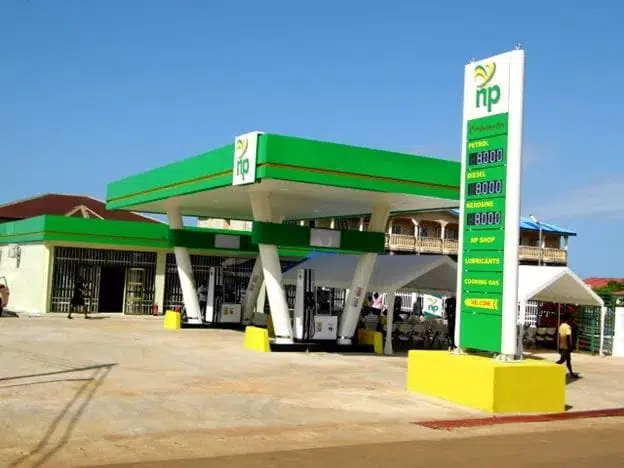
NP-SL Ltd’s Savvy Marketing Strategies are Highly Commendable

By Amin Kef Sesay

The National Petroleum Limited, NP (SL-Ltd) deserves praise as a resilient business entity that had been rated as the country’s foremost importer and dealer in petroleum products, which includes petrol, diesel, gas as well as lubricants of various types and is always poised to give its ubiquitous and esteemed customers the best in terms of giving them value in return for money. The marketing strategies that Management of the company uses are highly commendable.

The company’s competent and result-oriented Managerial think tank, currently headed by its indefatigable Chief Executive Officer, Kobi Walker, in tandem with the Board of Directors, have always endeavoured to be at the pinnacle of affairs within the petroleum landscape of this country, looking at best options, in order for effective service delivery to be executed timely, excellently, all geared towards enhancing good business relationships. If there is any outstanding feature for which the company is identified with then it is that which has to do with giving customers maximum satisfaction  which is why it has earned the enviable reputation of ‘1st for Customer Care’.

Prioritizing customer care is considered very paramount out of the strong conviction that the company will be nowhere without its cherished customers.

It is along that line that the company has a customer care unit that primarily interface with members of the public. Concerns and recommendations channelled through it are raised in certain management meetings, discussed and the way forward mapped out.

Regarding their customers as priceless jewels, NP-SL Ltd always ensures that to give them optimal satisfaction, value must be derived from their monies spent. It was thinking along that line that prompted the shareholders of the company to replace their old fashioned pumping machines to calibrated pumping machines of high standard which transparently pump the requisite quantity of petrol or diesel demanded for. Confidence is now high among its customers that they are getting exactly what they are paying for.

Still within the domain of 1st for Customer Care, the company is always in position to enter into payment plans with its reliable and dependable customers including Ministries, Departments and Agencies for fuel and lubricants supplies as long as all the necessary modalities have been put in place. When cognizance is taken of the fact that some of these institutions receive intermittent budgetary allocations then such an arrangement is very significant. Its significance in real terms borders on functional continuity of those institutions as they will be assured of supplies of petroleum products in as much as they keep honouring their obligations.

In this country today, for one to see a successful business entity that is owned mainly by Sierra Leoneans and having a maximum number of indigenes as members of staff is like trying to find a lost needle on the beach, although there are some that could be identified.

For NP-SL Ltd this has been a big achievement as the company is strongly adhering to the country’s Local Content Policy. Making use of local brains has been identified as one of the conduits through which developing countries like Sierra Leone could attain economic empowerment. Correspondingly, if there is a continuation of the colonial mentality that it is only by importing foreign ideas and skills that we will get there then such could be a very sad mistake.

By providing job opportunities for hitherto jobless Sierra Leoneans, NP-SL Ltd continues to help in alleviating poverty by putting monies into pockets which could be utilized to take care of responsibilities.

For those who have not tried NP Gas for the first time it is now time to give it a try. Designed in sizable varying cylinders and sold at various NP Filling Stations, this cooking device has been rated as one of the best that is on offer for sale. NP Gas is safe, user friendly and portable. Trying it will spur you to recommend it to others.

NP Smart Card is now in vogue and is one of the latest technological devices used to purchase petroleum products. Using it has attendant advantages as evident in procuring fuel at any time of the day even during times when monies could not be accessed from banks. It is secured, easy to use and very quick. It is now trending.

To crystallize proposed projects into tangible realities on the ground, Government needs the requisite financial resources to effectively do so and one sure way is from the collection of taxes which is the mandate of the National Revenue Authority (NRA).  NP is indeed one of the big time tax payers in the country and it is very compliant in that direction.

From all indications, it is crystal clear that NP-SL Ltd is here to stay in order to give the best and contribute tremendously to the socio-economic development of the country. Indeed the company is passionate and committed towards attaining those objectives.

Announcing Transport Fares Is Not Enough… Strict Enforcement By All Stakeholders Necessary

By Amin Kef Sesay

As citizens’ perception of the ability of the New Direction Government to instil discipline and order in the society continues to grow dim by the day, many concerned citizens who deplore the growing, rampant uncontrolled lawlessness in the society have asked: Why does Government exist?

Governments exist for many reasons. Most importantly, it exists to provide a sense of order in the land – meaning that Government is supposed to provide us with an organized system by which we can live as a nation in peace.

All responsible Governments tax, penalize, restrict and regulate their people. A democracy exists to give voice to the people and to protect their basic human rights.

In contrast, a totalitarian Government exists to benefit the State or those in charge, and this type of Government empowers its leaders to rule in any way they see fit. In this type of Government, the people’s personal freedom is not recognized.

Generally, any democratic Government is expected to unite its people, establish justice; insure tranquillity; provide for the common defence and most importantly to promote the general welfare.

Thus, addressing the Executive Management Board of the ‘Force for Good’ at the start of this month, Chief Minister Jacob Jusu Saffa told them that the New Direction Government of President Bio is seriously concerned about the rise of public disorder in the capital city and the country.

Chief Minister Saffa told the law enforcers that the New Direction Government was elected on a platform of instilling discipline in the society. He underscored that respect for public order is a concern of the Government.

In which light, the citizenry of the country is appalled, dismayed and totally disappointed in the New Direction Government that it has apparently failed woefully to instil discipline and law and order in the country – one of the main reasons why the majority of the population voted it into governance in 2018.

Take for example the newly announced transport fares. Prove The Calabash wrong. Go to Jui and Wilberforce and hear how much the motor boys, with sheer impunity for the law, ask for as fare; when the fare announced by the Ministry of Transport is Le3, 500.

Besides, go to all the provincial motor parks and find out how many drivers and motor boys are adhering to the fare to different destinations announced by the Ministry of Transport.

The New Direction Government should be reminded that one of the main reasons that Governments exist is to instil discipline in society and to maintain law and order.

In which light, the credibility and ability of the New Direction Government to effect discipline and to enforce the law is seen as zero in the eyes of the masses who are daily subject to the ruthlessness and merciless exploitative forces in the society which include Traffic Police officers who wherever they have their checkpoints run a lucrative ‘booking’ racket that IG Sovula ,who once headed the Traffic Division, knows about but will not do anything about it because the racket benefits both officers on the streets and their Divisional bosses.

God help Sierra Leone. The more we change, the worse it becomes.


Eight Accused Persons in Court for EDSA Related Offences

By Elkass Sannoh

Eight accused persons have appeared in court on allegation of electricity theft. The eight accused persons are Osman Sesay of No. 7 Upper Easton Street in Freetown, Kadiatu Kamara of No. 15 Lima Street in Makeni Town, Hassan Kamara of No. 45 Azzolini Highway in Makeni, Abass Maligi Kargbo of No. 18 Wusum Street, John Benso Sesay of No. 4 Back of Tecko Road in Makeni, Issa Bangura of 33 City Road Wellington, Alhaji Kargbo and Mohamed Samura of Kuntolo in Wellington.

They appeared before His Worship, Magistrate Sahr Keikura, for various counts contrary to the National Electricity Act No. 6 of 2011.

Kadiatu Kamara of No. 15 Lima Street in Makeni Town, Hassan Kamara of No. 45 Azzolini Highway in Makeni, Abass Maligi Kargbo of No. 18 Wusum Street and John Benso Sesay of No. 4 Back of Tecko Road in Makeni were before the Principal Magistrate, Court No. 1 at Pademba road to answer to four (4) counts of dishonestly abstracting electricity supply contrary to Section 68 of the National Electricity Act No.6 of 2011.

According to the particulars of offence, the four accused on Monday 21st day of June, 2021 in Makeni, Bombali Judicial District in the Northern Province of the Republic of Sierra Leone dishonestly abstracted electricity supply.

Issa Bangura of 33 City Road Wellington, Alhaji Kargbo and Mohamed Samura of Kuntolo in Wellington were brought before the Court to answer to three (3) counts. The Particulars of offence revealed that on Saturday, 15th May, 2021 in Wellington, Freetown Judicial District in the Western Area the accused persons conspired together with other unknown persons to commit a felony.

Osman Sesay of No. 7 Upper Easton Street in Freetown, who made his maiden appearance on the 23rd June 2021 for reportedly stealing electric cables contrary to Section 74 of the National Electricity Act No. 6 of 2011, was represented by I. Macfoy.

The eight accused pleaded not guilty. They were all denied bail and the matter was adjourned to Monday, 12th July, 2021.

The Electricity Offenders’ Court was set up by the Hon. Chief Justice, His Lordship Justice Desmond Babatunde Edwards to address growing cases of persons committing electricity offences such as cutting cables and vandalization of electricity equipment among others.

Human Rights Commission Engages its School Club Members & Coordinators

By Foday Moriba Conteh

In a bid to equip members and coordinators of school clubs with the main objective of promoting and protecting human rights in the country, the Human Rights Commission with support from the United Nations Development Programme (UNDP) and Irish Aid has on Friday 9th July, 2021 held a one day capacity building training for members and coordinators of their Human Rights and Peace Clubs in various selected schools within the Western Area. The training event took place at the Peace Museum on Jomo Kenyatta Road in Freetown.

Addressing participants, Vice Chairman of the Human Rights Commission, Victor Lansana, described the training as wonderful moment for the Commission, adding that the Commission views such as very pivotal as it serves as a bedrock for the respect of human rights and for gaining awareness of existing rights, adding that the Commission believes in catching them young.

He revealed that Sierra Leone has experienced an 11 years civil strife which led to widespread destruction of infrastructure and other properties as well as the death of thousands of people leaving many more injured.

Victor Idrissa Lansana added that during the 11 years rebel war in the country the culture of human rights was absence and that during efforts to end the civil war there was an agreement by the Government and other leaders who signed the Lome Peace Accord to establish a Human Rights Commission, as one of the recommendations of the Agreement, that should seek the interest of Sierra Leoneans in the area of protecting and upholding the human rights of citizens.

The Vice Chairman of Human Rights Commission further disclosed that the Government of Sierra Leone in 2004 established the Human Rights Commission of Sierra Leone with a primary mandate to protect and promote the rights of all citizens regardless of sexuality, tribe, region etc.

He pointed out that since then the Commission has been working assiduously to promote and protect the rights of citizens across the country, adding that in many of their interventions the Commission continues to call on Government to put human rights issues at the center of its development agenda.

Victor stated that they decided to train the pupils from various schools in order for them to understand what human rights are all about and to understand that they have a responsibility as pupils to uphold the rights of people in their schools and communities.

In his presentation on the history of Human Rights, the Human Rights Officer attached to the Directorate of Education, Communication and Training, Ibrahim Tarawallie, said that the belief that everyone, by virtue of her or his humanity, is entitled to certain human rights is fairly new but said however, throughout much of history, people acquired rights and responsibilities through their membership in a group a family, indigenous nation, religion, class, community, or State.

He added that most societies have had traditions similar to the “golden rule” of “Do unto others as you would have them do unto you.”

Ibrahim Tarawallie maintained that there have been calls from across the globe for human rights standards to be uphold in order to protect citizens from abuses by their Governments maintaining that nations could be held accountable for inhumane treatments of those living within their borders, adding that those voices played a critical role in the San Francisco meeting that drafted the United Nations Charter in 1945.

He revealed that with the establishment of the United Nations, member States pledged to promote and respect the human rights of all saying in order to advance that goal, the UN established a Commission on Human Rights and charged it with the task of drafting a document spelling out the meanings of the fundamental rights and freedoms embedded in the Charter.

Ibrahim Tarawallie further pointed out that every convention contains articles that establish procedures for monitoring and reporting how State parties, Governments that have ratified the document, are complying with it and both Covenants, for example, provide for a body of independent experts to monitor governmental compliance with treaty provisions.

One of the participants, Kadija A. Samura, a SSS 3 pupil of the Annie Walsh Memorial School expressed appreciation to the Human Rights Commission for the training which she described as very important to them as pupils in knowing their rights and responsibilities.

She assured the Commission that she will cascade the knowledge she has gained from the training to her school and community.

The Aftermath of Lome – The Role of Ambassador Omrie Golley In The Peace Process  – (Episode 9)

Ambassador Omrie Golley

By Noellie Marionette-Chambertin

The Lome Peace Process, in the Republic of Togo, culminated in the signing of the Lome Peace Accord on the 7th July 1999. It was short-lived, and came to an abrupt end, less than a year later on the 8th May 2000, with a violent demonstration at the erstwhile residence of the RUF Leader, Corporal Foday Sankoh.

That demonstration which had been organized by a number of civil groups in Freetown, led to a number of deaths and injuries, and a short-lived escape by the RUF Leader to the hills around Freetown.  He was subsequently captured a few weeks later, after what had become popularly known as the ‘May 8th Incident’, jailed, and he died in detention months later.

Looking back in hindsight however, for Ambassador Omrie Golley, who had worked feverishly to assist in convening the peace talks in Lome, it was not difficult to see dark clouds gradually emerging over the whole process. All these happened not long after the signing of the Accord, after a number of occurrences, which he believed threatened the whole peace process.

Ambassador Golley had departed from Lome some two weeks before the actual signing ceremony on the 7th July 1999. He had returned to his family and professional work, but still managed to keep in touch with the main players of the Lome Peace process. These players included the Government of Sierra Leone, the RUF, the United Nations, ECOWAS, and additionally, a number of  Governments in the sub region.

Ambassador Golley had not formally relinquished his links with the RUF after he left Lome, in June 1999, which is what he had wanted to do. This was mainly because he had been prevailed upon by a number of the international institutions that had been involved in the peace process, and the host Togolese Government, not to abruptly sever ties formally with the Movement at this stage of the process. It was not until 28th December 1999 however, that Ambassador Golley formally resigned, some five months after the signing of the Accord.

Ambassador Golley’s resignation from the Movement was however not without drama, and rancour emanating from the RUF Leader Foday Sankoh.

Difficulties with the peace process emerged almost immediately after the signing of the Lome Peace Accord. Under the terms of the Accord, the Leader of the RUF was granted the position of Chairman of a newly created Commission, called the Commission of Strategic Resources, National Reconstruction and Development. This courtesy appointment carried with it the rank of Vice President of the Republic of Sierra Leone.

However, President Kabbah, upon returning to Freetown after the signing ceremony, promptly created an additional office of Executive Director for that newly created Commission. The RUF Leader Sankoh believed that the creation of this additional office within the Commission, had significantly devalued his own office. He (Sankoh ) contacted Ambassador Golley in London, and requested him to publicly voice the concerns of the RUF on international media, which Golley duly did.

There were also problems over the allocation of Ministries to members of the RUF by the Kabbah Government, in contravention of the letter and spirit of the Lome Peace Accord.

Foday Sankoh further complained that Kabbah had requested the RUF Leadership to urgently furnish the Government with a list of eligible officials for the four Cabinet positions, together with those of Deputy Ministers, Diplomatic officials, and Chairmen of parastatals, but that he (Sankoh), had not been consulted  over the subsequent appointments.

The RUF Leader complained additionally, that Kabbah had not completed the entire allocation of positions to RUF members, in contravention of the Accord, after the subsequent allocation of Cabinet Ministers and Deputies.

In addition, old rivalries between the RUF and former soldiers of the Sierra Leone Army, the Armed Forces Revolutionary Council (AFRC) started to re-emerge and fester. The AFRC, under their former leader Johnny Paul Koroma, had previously joined forces with the RUF, after the May 1997 military coup, referred to in earlier episodes. After the reversal of the coup in January 1998, remnants of the coalition of the RUF and AFRC had retreated to the provinces of the Republic of Sierra Leone. Meanwhile, despite problems between the two groups after their retreat from Freetown in 1998, they had reappeared in 1999, as one entity, as part of the Lome Peace Process.

However, the aftermath of the signing of the Lome Peace Accord in July 1999, appeared to reopen and re-ignite rivalries between the leadership of the two Groups. This in turn led to a series of abductions of United Nations Peacekeepers and renewed hostilities, with the AFRC accusing the RUF principally of being behind the unfortunate upsurge in these attacks, in contravention of the recently signed Accord.

For Ambassador Omrie Golley, who had by this time returned to London, these events greatly troubled him. He saw the emergence of these events as ominous. He was also greatly troubled by the seeming reluctance of the RUF Leader, Foday Sankoh, to return to Freetown from Lome, capital of the Republic of Togo, after the signing of the Peace Accord to assist in its implementation.

Ambassador Golley also received a telephone call in early September 1999, from the erstwhile Togolese Foreign Minister, Kokou Koffigoh, whose Government had hosted the recently concluded Lome Peace Talks. During their conversation, the Minister voiced his Government’s concern at the reluctance of Sankoh to return home, and sought Ambassador Golley’s assistance in persuading Sankoh to return.

Consequently, Ambassador Golley also received calls from United Nations and ECOWAS officials, all of whom appeared concerned at the seeming reluctance of the RUF Leader to return to Freetown. These developments, made it increasingly difficult for Golley to relinquish his position within the RUF, which he had wanted to do, after he had departed Lome, in June 1999.

Meanwhile despite frequent assurances from Foday Sankoh that he would return to the Sierra Leone Capital, Freetown, days after the signing of the Accord, he remained holed up in his Lome Hotel, accusing Kabbah of incidences of bad faith in implementing the provisions of the Peace Accord.

Ambassador Omrie Golley returned reluctantly to Lome, Togo on the 23rd September 1999, after requests referred to above, to assist in persuading Sankoh to return to Freetown, to join the Kabbah Government. On the 28th September 1999, Ambassador Golley accompanied Foday Sankoh to Monrovia, capital city of the Republic of  Liberia, on the first leg of his return to Sierra Leone.

It was not until the 3rd October 1999, some three months after the signing of the Lome Peace Accord, that RUF Leader Foday Sankoh accompanied by AFRC Leader Johnny Paul Koroma, and other RUF officials, together with Ambassador Golley, arrived in Freetown to join the Kabbah Government in implementing the provisions of the Lome Peace Accord.

Ambassador Golley remained in Freetown for a short period, after accompanying the RUF Leader to Freetown in early October 1999, and left for London a number of days later. Whilst Golley remained concerned about the increase in hostilities generally, with constant accusations being leveled by both the Government and the RUF leadership against each other, he hoped that with the arrival of Sankoh in Freetown, hostilities would lessen and ultimately cease. Sadly that was not to be the case.

On the 28th December 1999, Ambassador Omrie Golley issued a press release formally relinquishing his position as legal representative and spokesman of the RUF. Golley had returned to London in October of that year after accompanying the RUF Leader to Sierra Leone, some three months after the signing of the Lome Peace Accord. By that time, Golley felt that he had nothing further to contribute to the peace process in his motherland. Furthermore, he (Golley) had become disillusioned with the pace and progress of the peace process, and more particularly with the continuing duplicitous behaviour of the RUF Leader, Foday Sankoh.  Ambassador Golley had also started to consider a wider role in the political dispensation of Sierra Leone.

In an interview given to the Sierra Leone Web on the 28th December 1999, Ambassador Golley stated inter alia:

“Since the signing of the Accord, I have been most concerned with the pace and the direction of the peace process, particularly regarding disarmament and demobilization, about the showing of remorse, and pursuing positive acts of reconciliation and rehabilitation, in favour of the people of Sierra Leone – particularly those who have suffered from the prosecution of the devastating nine year old war, and most particularly in respect of recent human rights abuses being perpetrated against innocent civilians.”

Culled from the News Archives of the Sierra Leone Web – 28th December 1999

Ambassador Golley also issued a written Press Release announcing his resignation from the Movement.

This move by Golley did not apparently sit very well with the leadership of the RUF, because that very day, a few hours after the dissemination of the statement of Ambassador Golley regarding his resignation, a terse statement was issued by the newly nomenclatured RUF Spokesman and Publicity Secretary,  Eldred Collins, which simply stated:

“Former RUF Spokesman, Omrie Michael Golley, is no more Spokesman, Legal Representative of the RUF, and is no more empowered to collect funds for and on behalf of the RUFP”.

When further questioned on National Radio, on the evening of the 28th December 1999, as to the reasons why the Press Release issued earlier, referred to collecting funds on behalf of the RUF, the leader of the RUF Foday Sankoh stated  that Ambassador Golley had been traversing the world, obtaining millions (without specifying the currency or denomination ), and converting these monies to his own personal use.

In a subsequent radio interview the following morning, 29th December 1999, and conducted by the same station that had earlier interviewed the RUF Leader, Ambassador Golley, denied the accusations leveled against him by the RUF Leader, further stating that he had never been remunerated or paid, in any shape or form, either directly or indirectly, for his work as legal representative and Spokesman for the RUF.

Despite the seriousness of the accusations raised against Ambassador Golley by the RUF Leader, he (Golley), in response to these accusations went on to inform the interviewer, in a rather jocular fashion, further retorting, that if he had compiled professional billable hours as a lawyer, for the length of time he had legally advised the Movement, that the RUF would be unable to pay his fees and would have  become bankrupt.

Barely six months after the departure of Ambassador Golley from the RUF, the Freetown residence of their Leader, Foday Sankoh was stormed by the civilian population in the previously referred to May 8 incident, which lead to deaths and injuries in the Sierra Leone Capital. Sankoh fled to the hills and was subsequently captured and detained.

Tensions between the parties to the conflict continued into the dawn of the new millennium, and the peace process in Sierra Leone in January 2000, remained fragile.

Accusations and counter accusations continued amongst the main parties to the earlier conflict. The new dispensation in the governance of the country, which the Lome Peace Accord had occasioned, had not resulted in the much yearned for peace and recovery.

By May 2000, the peace process had broken down with the storming of the residence of the RUF Leader.

Little did Ambassador Golley know that he would be prevailed upon again, to return to his motherland in early 2001 to help restart the peace process which had irretrievably broken-down.

It is worthy to note that this episode brings us almost full circle to the amazing story of the role of Ambassador Omrie Golley in the peace process of his country, a story which we commenced, in Episode 1 of our narrative – fast forwarding to the year 2001, with the fateful meeting between the erstwhile Special Representative of the Secretary-General of the United Nations, Ambassador Oluyemi Adeniji, and Ambassador Omrie Golley.

*Note*

For further enquiries on our episodes, please contact the writer:

Noellie Marionette-Chambertin

Phone number: +447535506716

Email: noelliechambertin@mail.com
 

Africell & Premier Media Group Launch Premier News Update

By Foday Moriba Conteh

In a bid to make Africell subscribers with or without smart phones get access to credible and factual news both local and international within their comfort zones in the country, Africell-Sierra Leone in partnership with Premier Media Group Limited on Thursday 8th July, 2021 launched the Premier SMS news update during an auspicious event held at Africell American Corner on Bathurst Street in Freetown.

In his statement, the Chief Corporate Affairs Officer of Africell-Sierra Leone, Joe Abass Bangura, commended Premier Media Group Limited for standing the test of time as one of the oldest media consultancies in the country.

He noted that the launch of the Premier SMS news update will give Africell subscribers the opportunity to access credible and factual news both local and international within their comfort zones through their mobile phones.

He disclosed that news dissemination has come a long way from the days when there were a dozen of newspapers, a single television station and  short medium wave radio stations, adding that with the commencement of FM Radio broadcast in the early 90s such brought higher quality sound broadcasting given the relative affordability of equipment used of which he said even local communities in the country can now boast of having their own radio stations furthering that there has also been a similar proliferation and growth in the number of newspapers and TV stations in the country.

He added that the advent of mobile phones brought in even greater dynamics with majority of households now owning their own mobile phones which, he said, has made news accessibility even faster and on the spot and that people no longer need to wait to read the newspapers or watch the television or listen to the radio to access news furthering that rather news can now be delivered to them through their cell phones via the Premier SMS news update.

He said the service will give Africell subscribers the opportunity to get want they want, which includes the latest and the important breaking news ,direct to their cell phones as and when they happen, adding that Africell customers can subscribe for the service by sending an SMS START to the short code 2122 at a cost of Le300 per day.

He pointed out that Africell Subscribers with or without smart phones, can access the service and that the service is on auto renewal once to subscribe but said subscribers also have the opportunity to unsubscribe from the service by sending STOP to 2122 at any time they wish.

On his part, Managing Director of Premier Media Group Limited, Dr. Julius Spencer, revealed that Premier Media Group Limited was established in 2001 and that they are one of the earliest media consultancies in the country, adding that Premier News was established in 2007 and since then they have been giving credible and factual news to the populace.

He assured all that with this partnership with Africell, subscribers will also have the opportunity to have credible and factual news in all facets of life especially on things that are very relevant for public consumption.

Dr. Julius Spencer ended by calling on all to subscribe to the Premier news update service in order to get credible and factual news.

Climaxing the event was the official launch of the Premier news update by the Chief Corporate Affairs Officer of Africell-Sierra Leone, Joe Abass Bangura and the Managing Director of Premier Media Group Limited, Dr. Julius Spencer.

Govt. to Conduct Administrative Inquiry on Sad Demise of Korean National

By Edward Vamboi

The Directorate of Information Wing of the Ministry of Information and Communication in a 7th, July 2021 Press Release captioned, “Allegations Against The Ministry Of Fisheries And Marine Resources” disclosed that Government’s attention has been drawn to published allegations of unfairness, injustice and corruption among Ministry of Fisheries and Marine Resources officials in the wake of the sad demise of a Republic of Korea national Kim Sung Nyeon who was resident in Sierra Leone.

The Ministry says it is expressing heartfelt condolences to the family of the deceased and to the friendly Government and people of the Republic of Korea adding that a comprehensive administrative inquiry will fully investigate all the issues and circumstances around the unfortunate event.

According to the Release, Government has identified the Fisheries and Marine Resources sector as critical for economic diversification, food security, and international trade and investment and therefore remains fully committed to providing an open, fair, and transparent investment ecosystem through enhanced governance of the sector.

Government, the Ministry furthered, is also committed to stemming annual revenue losses from illegal, unreported and unregulated fishing by interdicting tax evasion and clamping down on underreporting of catch and overfishing.

It ended by stating how Government will continue to develop and expand the sector through transparent and sustainable management and governance policies and practices.

Parliament Debates & Approves $55 Million Grant Agreement

By Foday Moriba Conteh

A Technical and Economic Cooperation Grant Agreement, estimated at $55 Million between the Government of the Republic of Sierra Leone and the Government of the People’s Republic of China for the advancement and development of Sierra Leone was debated and approved by Parliament on the 7th July 2021.

Presenting the agreement for ratification, the Minister of Fisheries and Marine Resources, Hon. Emma Kowa-Jalloh, said the agreement is divided into two halves involving two separate grants for the construction of a fishing harbour.

Speaking on the importance of the agreement, the Minister said that the fishing sector is generating much needed revenue for Government and added that the country is endowed with enough marine resources.

She went on to say that the project would curtail smuggling of the country’s Marine Resources and would contribute to the economy through job creation. Submitting on inter-ministerial coordination and collaboration in light of the agreement, she said aquaculture and fish farming would improve by attracting better international and local markets to our fishing resources.

The Chairperson of the Committee on Fisheries and Marine Resources, Hon. Neneh Lebbie said that the agreement is good and commended President Bio for his proactive moves geared towards enhancing and strengthening the fishing sector.

She lauded the efforts of the Ministry in terms of revenue generation and thanked the Chinese for the grant.

“We know that this country needs this kind of investment,” she posited and alluded to Hon. Dr. Kandeh Yumkella’s call that we need to improve on our fishing market to meet the standards of the European Union (EU) market.

She advised the Minister to do proper monitoring and evaluation in due course to ameliorate the sufferings of the youth through job creation.

The Leader of NGC, Hon  Dr. Kandeh Yumkella thanked Government including President Bio and China for such an initiative aimed at improving our fishing industry to meet international standards. With this new development, he said, he is hopeful that the fishing sector would generate more revenue than the minerals sector in the country. Welcoming the new development to the fishing sector, he suggested that they would provide an alternative site in view of the land disagreement surrounding Black Johnson.

The Hon. Paramount Chief, Bai Kurr Kanagbaro Sanka III of Tonkolili District appealed to all and sundry to support the project relating to the construction of a fishing harbour. However, he raised concerns on the nature of the project and the acquisition of land in respect of the project.

Hon. Dickson Rogers, Chief Whip of Parliament thanked the Minister for creating a new dimension in the fishery industry. He commended President Bio for the new direction and went on to explain the challenges surrounding fishing sector, especially for standardization and acceptance in the EU market. He advised the Minister to ensure that proper packaging is done to attract the EU market.

The Leader of C4C, Hon. Saa Emerson Lamina acknowledged that the agreement is in line with the Government’s medium term development plan. However, he said he was saddened by the inadequate revenue mobilization from that sector due to unregulated and illegal fishing. He commended the Chinese for the grant and went on to say the country has always encountered challenges of packaging for the EU Market. Speaking on Government’s contributions to the project, he called on the Minister to apply the local content policy to its fullest.

Hon. Lahai Marah of APC said the grants would improve on the state of employment in the country and also the Gross Domestic Products (GDP). He said as opposition, they are ready to support what is good for the country and went on to say that, the agreement has attracted controversial public concerns. Calling for a detailed document, he said however that a “scanty document” was given to them whilst pointing out some discrepancies.

Hon. Alpha Amadu Bah said a good compatriot would not speak against the agreement considering its derivative benefits to the country. He also spoke on the need to address sensitive and controversial issues arising from the project in light of the proposed location. “This can be a time bomb”, he said if it is not addressed before the implementation of the project.

Wrapping up, the Opposition Whip, Hon. Hassan Sesay assured of their support in light of the development of Sierra Leone and recalled the origin of the agreement. He said the project is demand driven, and noted that the lack of such facility has seriously affected the country to attract the international market. He also asked the Minister to do due diligence in respect of biodiversity and environmental impact assessment regarding the viability and sustainability of the project. Speaking on the benefits of the project, he called on the Minister to come up with a comprehensive agreement that has stakeholders’ inputs in view of consultations.

Concluding, the Leader of Government Business, Hon. Mathew Sahr Nyuma explained the nature of the agreement in light of a grant and clarified some claims made by some opposition MPs. He also said that the grant is well placed by following due diligence. Referencing the presidential address on the construction of a fishing harbour for an estimated cost of $55 Million, he spoke on the necessity of public health disclosure for environmental health and impact assessment in respect of the project.

Government Pays 3rd Term Tuition & 2021 Examination Fees for NPSE & BECE

By Mary Kabay

As part of its commitment to financing the Free Quality Education Programme the Ministry of Finance, in collaboration with the Ministry of Basic and Senior Secondary Education, are making known that Government has paid the total amount of Le72, 417, 130,000 to beneficiary schools for pupils in Pre-Primary, Primary, Junior and Senior Secondary Schools and to the West Africa Examination Council (WAEC) for the conduct of 2021 NPSE and BECE exams.

Of this amount, the sum of Le51, 925, 870, 000 was in respect of tuition fees for 2,190, 844 pupils in Government and Government-assisted schools for the third term of the 2020/2021 academic year.

The sum of Le 820, 491, 260, 000 was also paid to WAEC; of which Le l0, 491, 260, 000 represents 100% payment for the 2021 National Primary School Examination (NPSE) for 161, 404 candidates and Le10, 000, 000, 000, being 55% payment for the Basic Education Certificate Examination (BECE) for 130, 898 candidates.

The two Ministries say these payments are made directly into the bank accounts of beneficiary schools and WAEC based on the list of approved schools and enrolment data submitted by the Ministry of Basic and Senior Secondary Education.

In that light, commercial and community banks are encouraged to credit the accounts of the schools maintaining how Government once again, reiterates its commitment to the full implementation of its Flagship Programme; the Free Quality Education programme.