
Home Blog Page 889

President Maada Bio Secures a Meaningful Gain at the UN

By Amin Kef Sesay

In a new development following years of advocacy the United Nations General Assembly has finally adopted, by consensus, the  decision on the question of equitable representation on and increase in the membership of the Security Council and related matters.

President Julius Maada Bio serves as Coordinator of the African Union Committee of Ten Heads and Government on the Reform of the UN Security Council (C10).

In that capacity, he champions the African demand for two permanent seats and two additional non-permanent seats on the UN Security Council, which is the principal decision-making Organ on matters relating to international peace and security.

While presenting his statement on the issue at the General Assembly Hall in New York, Alie Kabba said the Ezulwini Consensus and Sirte Declaration are fundamental pillars of the Common African Position and decisions reached by African Heads of State and Government representing the voice of the African people.

He reiterated, on behalf of President Bio, the strong commitment of Africa towards advancing this important issue of reforming the Security Council to better reflect the current geopolitical realities, including correcting the acknowledged injustice that Africa continues to suffer.

“We further wish to reiterate our sincere gratitude to the Co-Chairs for reflecting in their Elements Paper the wide recognition and broad support by Member States for the legitimate aspiration for Africa to play its rightful role in the global stage, including through an increased presence in the Security Council, as reflected in the Ezulwini Consensus adopted by the African Union and also, for accurately reflecting the view that redressing the historical injustice against Africa is viewed as a priority,” adding that they  would like to also register their profound thanks and appreciation to the President of the General Assembly for recognizing and indicating in his  submission the wide and broad support by Member States for the legitimate call of African Countries to correct the historical injustice done to the African continent.

“We would like to reaffirm that the Ezulwini Consensus and Sirte Declaration are fundamental pillars of the Common African Position and decisions reached by the African Heads of State and Government, representing the voice of the African people.

These decisions champions our common aspiration for the full representation of Africa in all decision-making organs of the UN, particularly the Security Council, which is the principal decision-making Organ on matters relating to international peace and security. We therefore hope that the Co-Chairs’ will take this into full consideration to fully and accurately reference the Ezulwini Consensus and Sirte Declaration in their Elements Paper.

“Moving forward, the African Group looks forward to building on the gains made during the 75th session of the IGN and to further constructively engaging with all Member States and Interest Groups, as well as having comprehensive discussions on the Co-Chairs’ Elements Paper with a view to building convergences and tightening down the divergences that still continue to exists as well as ensuring that the full tenor of the discussions of the IGN during its 75th session and the next is reflected in the Co-Chairs’ Elements Paper going forward.

“We acknowledge with appreciation, the Co-Chairs’ indicating in their Paper, the broad support by significant number of Member States for expansion of both the permanent and non-permanent categories of the Security Council in the Elements Paper and for recognizing the wide and broad support the Common African Position continues to garner in these deliberations. Additionally, we would like to reiterate that one issue that underscores the widest possible consensus emerging from the IGN process is that Africa should be represented in the permanent category, especially being a region that is not represented in that category, as well as the need to address its under-representation in the non-permanent category.

We, therefore, hope that the wide and broad support garnered in favour of the Common African position, including the support for Africa to be allocated seats in both the permanent and non-permanent categories of the Security Council will be taken into consideration in the next IGN session.

“Africa will, therefore, continue to underline the need for an expansion in both the current permanent and non-permanent categories of the Council in order to make the Council to be more broadly representative, efficient and transparent, and thus to enhance its effectiveness and the legitimacy and implementation of its decisions,” he said and concluded that the C-10 of the African Group supports the consensus in the spirit of safeguarding the unity and mutual trust among the membership, and also to move forward the reform of the Security Council in conformity with the principles and purposes of the UN Charter.

Finance Ministry Schools MDA Personnel on PFM Reforms & Internal Audit

By Amin Kef Sesay

A day’s Policy Clinic on Public Financial Management Reforms and Internal Audit in the Public Sector was held by the Ministry of Finance on the 22nd June 2021 targeting personnel from Ministries, Departments and Agencies.

The discussions were guided by two research documents presented by the Research and Delivery and Internal Audit Divisions of the Ministry of Finance. The document assesses the issues of prudent public financial and internal audits as well as proffered recommendations that will inform policy-making decisions.

Samuel E.B Momoh, the Senior Deputy Financial Secretary of Ministry of Finance informed participants that the Ministry has been capacitating MDAs on reforms programs, especially in Public Financial Management, and that they used to have the Government Budgeting and Accountability Act 2005, which has now been replaced by the Public Financial Management Act and its associated regulations of 2016.

He furthered that the findings of the two research documents revealed significant outcomes in which the Ministry asked the personnel from MDAs to make their invaluable inputs to help inform decision making. He added that internal audit in Government was not performing well because they were not well-organized, stating that the situation has changed with the strengthening of the Internal Audit Directorate in the Ministry of Finance.

“With the establishment of the research directorate, the research division has collaborated with these key departments on public financial management reform and internal Audit unit to examine the Public Financial Management issues and to provide findings for discussion,” he added.

In his presentation, the Deputy Director of Research and Delivery Division at the Ministry of Finance, Alhaji Abu Komeh, stated that the Ministry is mandated to ensure prudent, effective and transparent use of public funds.

He furthered that the Ministry is guided by principles of transparency and accountability in the budgeting and expenditure processes like formulation and implementation of fiscal policies to achieve macroeconomic stability, provide timely, reliable, and adequate information to the public on fiscal objectives, policies, data, and risks.

Deputy Director Komeh, further disclosed that Public Financial Management findings on four thematic areas are Knowledge of the PFM regulatory environment, Implementation of PFM laws and regulations, Effectiveness of PFM oversight structures, and PFM resources, systems, and processes.

He pointed out some significant challenges affecting the effectiveness of the oversight structures of PFM that there are weak coordination and commitment from FRM stakeholders, ineffective monitoring mechanism, and non-implementation of audit recommendations.

Moses B. Bangura, Assistant Director of Internal Audit of Ministry of Finance touched on areas dealing with the extensive weakness in Internal Controls in the Public Sector which he said is responsible for funds not properly accounted for, periodic reconciliation not done with suppliers, personnel salary increases without appropriate authority, and dates of birth differ between national payroll and NASSIT.

Validation of Curriculum For Research & Parliamentary Studies Done by Parliament

By Esther Wright

The House of Representatives, including MPs and Staff and the Consultant for the maiden curriculum development for Parliamentary Studies, on the 23rd June 2021 met at the New Brookfields Hotel to discuss and make meaningful inputs aimed at validating the curriculum.

The process at that stage is driven and supported by UNDP to strengthen democracy in Sierra Leone through capacity building.

Deputy Director of Centre for Research and Parliamentary Studies, Gilbert N’habay , in welcoming participants, wished everyone a fruitful deliberation tied with meaningful inputs so as to do justice to the validation process. He also said that the curriculum development is being supported by UNDP to improve and strengthen service delivery in and out of Parliament through professional courses.

Director of Centre for Research and Parliamentary Studies, Mohamed Alpha Jalloh thanked participants and informed them about the merger between Research and Parliamentary Studies, following a decision by the Parliamentary Service Commission in Port Loko District to enhance the capacity of MPs, Staff and MDAs of Government. He said, the Centre for Research and Parliamentary Studies in light of capacity building is aimed at integrating and institutionalizing professional courses by affiliating with Universities in Sierra Leone for the award of Certificate and Diploma.

He also said that the training model is pegged on delivery, partnership and the public and that Directors are to serve as potential facilitators. Speaking on course overview, objectives and learning outcomes, he said that the training methodology would be laced with lecture, case studies, group assignments, brainstorming and presentations. He stated that MPs, Staff and others would pay for courses that would be offered by the Centre for Research and Parliamentary Studies.

Speaking on behalf of the Clerk of Parliament, Cyril F. King, Deputy Clerk II thanked participants for being part of the journey relating to the validation of the curriculum in order to professionalize and expose the workings and operations of Parliament.

He craved the indulgence of participants to make good inputs aimed at enriching the curriculum. He likened representative democracy to Muammar Gaddafi’s “jamarihiya”, saying the people are central in a democracy, thus the need for continuous education of the people. He spoke on the utilization of former and current MPs and Staff of Parliament to enhance and institutionalize parliamentary learning. He also called for additional topics and courses to enrich the curriculum.

He called on government to allocate land to Parliament for the construction of a learning centre for the promotion of professional learning aimed at a sustainable democratic development and advancement in Sierra Leone.

Professor Mohamed Yamba Bangura is the consultant contracted by UNDP for the curriculum development for the Centre for Research and Parliamentary Studies. He took participants through the process of the curriculum development and called on them to make stakeholders inputs regarding the validation of the curriculum.

Cyber Security & Crime Bill Becomes Act of Parliament

By Amin Kef Sesay

Parliament  of Sierra Leone has on the 23rd June 2021 passed into law the Bill entitled “The Cyber Security and  Crime Act 2021” with some amendments after holding wider stakeholder engagements based on the advice of Parliament.

The Cyber Bill provides for data security protection and other related matters.

The Act provides for the effective, unified and comprehensive legal, regulatory and institutional framework for the prohibition, prevention, detection, prosecution and punishment of cybercrime; prevention of the abusive use of computer systems; to provide for the establishment of structures to promote cybersecurity and capacity building; to promote for the timely and effective collection of electronic evidence for the purpose of investigation, prosecution of cybercrime; provide for the protection of critical national information infrastructure and measures to protect critical information infrastructures; and promote cybersecurity and the protection of computer systems and networks, electronic communications, data and computer programs, intellectual property and privacy rights to provide for facilitation of international cooperation in dealing with cybercrime matters and to provide for other related matters .

The Act was introduced and piloted by the Minister of Information and Communications, Mohamed Rahman Swarray, who followed parliamentary advice regarding extensive stakeholder engagements on the said Bill to stand the test of time.

The Act, after careful consideration and proper scrutiny by Parliament, was finally passed into law after protracted debates with some amendments.

With Tourism Ministry & NTB Redoubling Strides…   Domestic Tourism Messaging & Content Development Workshop Held

By Theresa Kef Sesay

The Ministry of Tourism and Cultural Affairs and its implementing agency, the National Tourist Board, in their unrelenting drive to improving the performance of Sierra Leone’s tourism sector, have concluded a domestic tourism messaging and content development workshop with key stakeholders at the Family Kingdom Resort, Aberdeen in Freetown on the 22nd June, 2021.

The World Bank in its Sierra Leone Economic Diversification Project (SLEDP), identified product development, marketing and promotion as one of the components that will take an integrated destination approach to improve the tourism industry, facilitate the reduction of barriers to business success, assist existing tourism providers with market access and improve the quality of selected tourism products in order to place the country’s tourism sector on a sustainable and inclusive growth trajectory.

Lucinda Kargbo, the Marketing Manager of the National Tourist Board in explaining the purpose of the workshop said they are rolling out domestic tourism by developing a messaging and content strategy for local and international dissemination using the right channels.

Allieu Kokobaye, Chairman of the National Tourist Board, in his brief remarks noted that the workshop is a step in the right direction as it aims at adding to the development of tourism. He said domestic tourism is pivotal in a way that it paves the way for international tourism to thrive, adding that at the end of it all the country will be portrayed in a positive way.

The Permanent Secretary of the Ministry, Andrew Sorie, maintained that the domestic tourism workshop is a progression from the just concluded marketing and branding workshop to attain the kind of tourism that befits the 21st century, adding that the concentration of domestic tourism impacts external tourism. He called on all to market Sierra Leone in a way that will convince visitors to stay longer.

The Deputy Chairman of the Parliamentary Oversight Committee on Tourism, Hon. Emmanuel Saidu Conteh, applauded the Minister for her zest in changing the tourism narrative. He stated that the workshop is timely because Sierra Leone is in a haste to promote its tourism sector.

In her key note address, the Minister of Tourism and Cultural Affairs, Dr. Memunatu Pratt emphasized that domestic tourism borders around inclusion and the citizens should be the first marketers. She said domestic tourism is fundamentally supported by the inter-relationship between the infrastructure, system and processes and there is no longer an isolated tourism but tourism that connects to the bigger value chain.

She continued that lot has been done in terms of marketing and rebranding but a concerted discussion across the country as to how we want the tourism sector to be represented with regards brand and content message was missing. She thanked the consultants for their timely intervention in adding to what we have.

The General Manager of the National Tourist Board, Fatmata Kroma did a presentation on strides made and where tourism should be taken as a sector. The consultants showcased the development of contents with case studies on other countries and also content/messaging development for Sierra Leone which was climaxed by group presentations by participants.

Dija’s Foundation -SL Donates Free Sanitary Pads & Toiletries in Kambia District

By Edward Vamboi

In commemoration of the Day of the African Child, Dija’s Foundation- Sierra Leone, a non- profitable and non- governmental organization that is raising awareness on and denouncing Sexual and Gender Based Violence (SGBV), on the 16th June, 2021, donated free sanitary pads and toiletries to one hundred teenage girls and women living with disabilities within the Kambia District.

According to the Executive Director of Dija’s Foundation- Sierra Leone, Khadijatu Bah, Menstrual Hygiene Day is recognized worldwide on May 28 and was first launched by advocates in 2014 to highlight the importance of Menstrual Hygiene Management and Education that empower women and girls to fully participate in society and live healthy, safe-determined life.

She said millions of girls are denied the right to manage their monthly menstrual cycle in a dignified and healthy way adding how poor menstrual hygiene management restricts the mobility, freedom and choice of young women and girls everywhere.

Khadijatu Bah disclosed that they are using the opportunity of the commemoration to teach and talk to young girls about Menstrual Hygiene, Sex Education and Sexual, Gender Base Violence (SGBV) . She also highlighted that the donation was done to three school schools respectively, namely Linda Koroma Girls School, Kolenten Secondary School and Sunday Foundation Girls High School.

Khadijatu also motivated the disable women by telling them that they can be better people just like normal people highlighting how disability is not inability.

She added that it is essential for girls to love but admonished them to do what they think is right to abstain from sex until they attain age eighteen.

The Executive Director disclosed that  they distributed the items to twenty five young disable women and seventy five school going girls.

Sawantu Fatu, the Gender Officer of Dija’s Foundation-Sierra Leone intimated that they provided sanitary pads and toiletries to one hundred women and girls in Kambia District for effective menstrual hygiene management for an initial three months period.

She revealed their plan to engage adolescent boys and teachers through a dialogue forum to pass on relevant information and address myths and misconceptions geared towards reducing the stigma associated with menstrual hygiene with the aim of increasing girls’ attendance in school.

Sawantu Fatu pointed out that one of the underlying reasons why menstrual hygiene has been neglected is as a result of gender inequality that results in the voices of women and girls not been heard in decision making processes.

She said women and girls face multiple challenges which serve as barriers against promoting menstrual hygiene management (MHM) maintaining that it is important to step forward towards safeguarding the dignity and overall life opportunities of women and girls.

Increase in Fuel Price is Inevitable if Prevailing Conditions Persist

By Amin Kef Sesay

Few days ago someone said jokingly that already there has been an unofficial increase in transport fares simply because commercial drivers and riders just randomly demand transport fares from individuals according to their whims and caprices, especially during rush hours, quite contrary to the official transport fares. He ended up stating that with an increase in the pump price of petroleum products, which seems inevitable and will possibly be accompanied by an increase in transport fares most people will easily adjust to the new normal as they have already used to paying random unofficial transport fares.

His statement is quite the reality on the ground and especially with the difficulty in accessing commercial vehicles, bikes and Kekehs during those hours many people do not have other options but to comply with the dictates of the unscrupulous commercial drivers and riders.

Sierra Leone, as a nation, it has been established, consumes in excess of 1.1 million litres of petroleum products per day but interestingly the country can only store 40% of what is used per day.

Since this country is a net importer of petroleum products, having an inadequate storage facility with only one jetty what this means is that there is frequent replenishment which is done every two weeks.

To compound this precarious situation vis-à-vis the importance of petroleum products to human existence the frequent replenishment has prompted certain unscrupulous individuals to seize that opportunity to hoard petroleum products or speculate against the availability of petroleum products most times leading to panic buying with black marketers having field days by inflating pump prices.

It must be underscored at this juncture that Sierra Leone does not determine its oil or pump prices. The prices of petroleum products are determined by a combination of the international Oil reference price (PLATTS) and the foreign exchange rate.

In other words, the pump price of petroleum products, including petrol, diesel, kerosene etc. in the country, is efficiently determined by a +/-5% trigger mechanism of the landed cost, that is the cost of landing the shipped petroleum products in the country and that is mostly driven by the combined effect of the International Oil Reference Price (Platts) and available as well as accessible Foreign Exchange

However, the country’s pricing regime is well structured, transparent and reviewed monthly. From what  this medium gathered, pump prices of petroleum products  changed six (6) times since 2018 and out of those, it was reduced three (3) times during that period.

It is good to note that in spite of the hike in global prices, the Government of Sierra Leone has kept the pump price of petrol and diesel unchanged at Le8, 500 per litre which comparatively is far lower than per litre prices in the entire West African sub-region. In other words, the country’s fuel prices are the lowest in the sub-region. The matrix below clearly shows this on a comparative basis of sub-regional fuel prices converted in Le/Litre as at 31st May, 2021 taking into consideration: Sierra Leone, Guinea, Liberia, Ivory Coast, Ghana and The Gambia:

Petrol– Sierra Leone Le 8,500.00, Guinea: Le 9,450.00, Liberia: Le 7,879.33, Ivory Coast: Le 11,728.05, Ghana: Le 11,240.11, The Gambia Le 11,453.17.

For Diesel the comparison is as follows: Sierra Leone: Le 8,500.00, Guinea: Le 9,450.00, Liberia: Le 9, 192.49, Ivory Coast Le 11, 728.05, Ghana: Le 11, 172.45, The Gambia: Le10, 904.09.

In terms of Kerosene the comparison is as such: Sierra Leone: Le 8, 500.00, Guinea -, Liberia: Le13, 279.25, Ivory Coast Le10, 583.85, Ghana: Le9, 076.84, The Gambia: Le 8,573.04.

The Exchange Rate source is the Bank of Sierra Leone as at June, 3rd 2021. What this tells us is that at the moment we have the cheapest fuel pump price within the West African sub-region.

This medium was further made to understand that between May and December 2020, although there were oil price increases all over the sub-region and in the world, the Government did not allow the high costs to be passed on to the poor consumers. At first Government suspended the automatic pricing adjustment mechanism since May 2020 to date.

The Government intervened by injecting about Le66bn during that period and Le17.43bn in January 2021 to support the pump price stabilization. Again, since May 2020 to June 2021 Government has subsidized about Le132.11bn.

In as much as there has been a rise in the price of crude oil on the world market as it is the case at this material time, the rate and manner in which the Government of Sierra Leone will continue to sustain leveraging subsidy on petroleum products could largely depend on how much Government will continue to mobilize additional revenue over a specific period of time.

As a matter of fact it is worthy of note that the intervention of the Government, as had been stated in terms of subsidies, was dictated by the wild prevalence of COVID-19 in order to lessen economic hardship brought about by the spread of the virus.

The apprehension now is whether the mentioned stance of Government will be maintained amidst competing funding for the implementation of various development programmes.

What for now is certain is the undiluted truism that conditions on the world market are not favourable in terms of seeing a downward trend in the prices of petroleum products and it is something that is bound to affect developing nations like Sierra Leone negatively leaving most people, who are oblivious of the market realities on the ground, blaming Government whenever there is an increase in pump price though the latter does not import and market petroleum products.

NP-SL Ltd Continues to Win the Hearts & Minds of Many Near and Far

By Amin Kef Sesay

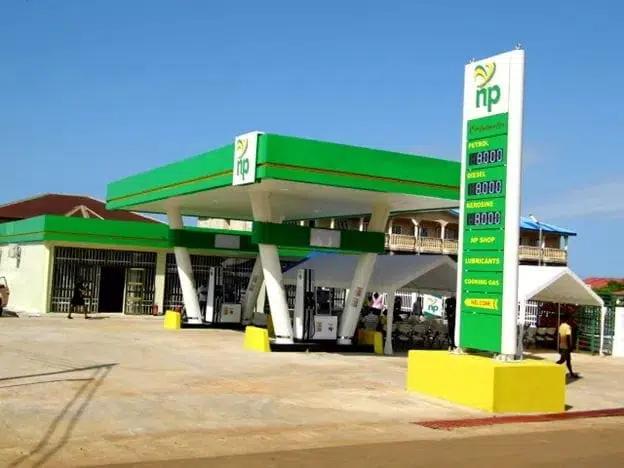
The National Petroleum –Sierra Leone Limited (NP-SL Ltd) continues to make meaningful inroads within the petroleum landscape of this country. Based on effective and efficient service delivery, the result oriented company has drawn wide-spread commendations from near and far for holding the fort for too long, weathering various storms.

The company, formed years back by certain selfless Sierra Leoneans (thirty-five of them), has grown by infusing business oriented  initiatives that have helped in transforming it into a towering company within the business landscape of this country and even in the West African sub-region where it has vibrant operational branches.

One major thing which these local investors considered very paramount that has catapulted the company is the premium placed on optimizing customer care, which, they believe, will put the company in a very good stead to widen its customers’ base. It was against such a backdrop that they decided to import and install calibrated pumping machines at the company’s various Filling Stations, which are very capable of churning out the right quantity of fuel and at the same time display the corresponding price.

The introduction of these machines was a big welcome to many, as it is constantly instilling the feeling that they are getting the right quantity of petroleum products, petrol or diesel as well as lubricants, against what is being paid for. Hitherto, the old pumping machines were not so sophisticated and created leeway through which certain unscrupulous pump attendants clandestinely cheated customers by not pumping the requisite quantity of fuel requested for. However, with the latest calibrated machines, such became a thing of the past, making petroleum transactions at the company’s Filling Stations very transparent.

NP-SL made it a laid down policy to have a whole Customer Care Department that is charged with the responsibility to address the concerns of its customers and by extension members of the public. The inputs from members of the public are, most times, taken into consideration whenever meetings are convened, out of which resolutions are adopted that are tailored to give satisfaction in terms of responding to concerns and embracing certain recommendations.

The buoyant oil marketing company is the premier and sustainable indigenous business entity in this country, as it is hundred percent owned by Sierra Leoneans. One thing that they laid emphasis on is to give preference, in terms of employment, to exclusively Sierra Leoneans instead of considering bringing foreigners on board, except in instances where local expertise could not be sourced.

This stance on the part of the company is in sync with the country’s Local Content Policy, which underpins making use of local human and material resources in the production and service delivery chain. By giving employment preference to Sierra Leoneans, the company has been positively contributing towards poverty alleviation and availing individuals the opportunities to live improved standards of living. The policy is truly in tune with fulfilling one of the pillars of the national economic agenda.

With regards rolling out its Corporate Social Responsibility, NP-SL has been doing so steadily and progressively. The company has been giving institutional support to certain institutions, as it did in the recent past when it capacitated the National Fire Force, Kissy Branch, with a state of the art water facility that is designed to provide water throughout the year.

Besides, the company sometime in the recent past joined the fray in trying to combat the spread of the coronavirus in the country when it donated the sum of one Billion Leones to the Emergency Operation Centre, as its own support in the fight against the spread of the virus. This gesture was highly appreciated and the company was commended for its timely response.

The company’s introduction of a Smart Card to purchase fuel has been widely applauded as a very good initiative. A particular customer, with money in his or her NP Smart Card, could easily put in for the quantity of petrol or diesel that he or she wants and the supply is facilitated, after which the amount of money expended is deducted from the card. It is a very convenient way of doing such transactions in a cashless manner. Its biggest advantage is that it creates room for a customer to budget for fuel purchase over time. NP Smart Card is now trending and many are presently using it, saying they prefer it than using physical cash.

Some users of NP Gas that this medium spoke with, intimated how it is a very good device which has a high speed performance and very environmentally useful and friendly. Manufactured in different cylinder shapes, it is portable and affordable. NP Gas could be secured at all the company’s major Filling Stations, where the gas to refill it could be accessed.

The company has really exhibited that it is poised to expand its operations, a determination that has been manifested in opening branches in Guinea, Liberia, Ivory Coast and The Gambia. In all those countries, those NP branches are doing extremely well in terms of service delivery and payment of taxes to the home Governments.

Indisputably, there is no way that we can talk of a very successful company, amidst challenges encumbered along the way, without mentioning NP-SL because the company is greatly contributing to the socio-economic development of nations.

Increasing Public Service Output… JJ Saffa Has A Tough Job Ahead

JJ Saffa

By Amin Kef Sesay

The civil service is the backbone of the State and can either support or undermine a country’s entire system of governance. Donors recognize this important fact and have since the end of the civil war in 2002 spent tens of millions of dollars helping the Government to reform and strengthen the civil and public services.

The unfulfilled expectations and gaps of the New Direction Government from 2018 to date and two years into elections which clearly points towards a weak civil and public service delivery capacity means critical and strategic thinking, planning, organizing and coordination for extending more opportunities are required.

Civil servants, who mostly work in MDAs, are central to effective governance in developing countries. They deliver essential services to citizens, commission large-scale infrastructure, regulate economic activities and engage in diplomacy with foreign countries – to name just few roles.

As such, the newly appointed Chief Minister, Jacob Jusu Saffa, needs the full cooperation of all Heads of MDAs, SOEs and Ambassadors to enable the Government deliver effectively and sustainably on the country’s Medium Term National Development Plan (MTNDP).

With the amount of funds stolen, wasted and misappropriated by MDAs reported annually by the Auditor General’s office shows that still, political will to change things is the greatest single challenge to an effective civil service reform.

It is generally known that what greatly hinder civil service productive, efficiency and effectiveness in service delivery are:

Negative or poor attitude to work, Bureaucracy, Political affiliation, Political interference, Duplication of offices and positions, Shortage of qualified personnel, Ineffective organization and Lack of initiative

Given this reality, if political leadership, including Parliament and the Executive do not invest in reform, then donors are unlikely to make any major headway.

Political will is so important to civil service reform because the civil service is fundamental to the political system to the extent that change cannot take place without the agreement of the most powerful players. They are essential both in terms of ensuring reforms continue over the long term and as a source of accountability.

Political patronage in this country has resulted in political appointees that see the civil service as a source of personal gain through pay, promotions and employment status.

Such interests see any reform to the civil service as a threat to these benefits. Similarly; many within the civil service benefit from being able to dole out public money, jobs, and other contracts and are unlikely to willingly give up such powers.

Civil service reform projects faced with strong patronage systems work best when they focus on specific areas. Focusing on, for example, merit-based recruitment can both improve civil service reform while at the same time chip away at the power of vested interests.

What the Audit annually implies is that systems with weak institutions lack the drive necessary to push reforms.

Furthermore; because the rule of law is weak in the country as a whole, it is weak also within the public service. This means that policies are not properly elaborated and that employees are not aware of their rights and responsibilities.

Prof. David J. Francis Woos Investors in the US

Professor David Francis, the Minister of Foreign Affairs and International Cooperation

By PEL Koroma

Professor David Francis, the Minister of Foreign Affairs and International Cooperation, in his engagement with the United States Chamber of Commerce, described the SLPP Government as a liberal, progressive and business friendly Government.

He clearly informed the United States Chamber of Commerce that he wants to move away from the old tradition of Foreign Ministers from Africa running to countries with cap in hand begging for donor support, but that he wants to present unique opportunities to partners who are interested in making profits out of their investments and at the same time making the country and people of Sierra Leone better.

Professor Francis heartily commended the problem resolving mechanism of his Government, citing the case of SL Mining Company that has been recently resolved amicably in the interest of both parties, and the unfortunate situation about the First International Bank, revealing how both have to do with investments stemming from United States.

“We support businesses as a Government because no country has developed without the private sector,” he underscored going further to quickly challenge investors that if they want to make profits on their investments they should come to Sierra Leone and explore the untapped opportunities in the extractive industry, agriculture, marine, tourism, oil and gas.

He highlighted how the Government of Sierra Leone has put in place structures and processes to facilitate a transparent and corrupt free business environment.

The Foreign Minister said his Government is aware of the excruciating financial challenges their traditional partners are going through as a result of the Global pandemic, stating that it would be very difficult to go to the same old partners that have been helping Sierra Leone since Independence.

“The narrow focus on Economic Diplomacy has now changed to the broad spectrum of Development Diplomacy,” he disclosed adding how the Pandemic has forced Sierra Leone to start doing things differently, and reinvigorated the Government to fast track in looking at other areas for development and service delivery.

He said the airborne geo- data survey Sierra Leone did should be used as a concession for development.

According to what he said the agricultural land covers 5.4 million hectares of land and the country is determined to produce rice and feed her people as rice is the staple food, and stop importing rice that costs over US$ 200 million.

In the area of Energy, Professor David Francis guaranteed a strong energy revolution in Sierra Leone, in the sense that 9 River Streams are under processes that will enable them to generate electricity power supply saying that will be supported by solar plants and the hydro services.

Prof. Francis assured the United States Chamber of Commerce of the vast corridors of investment in Sierra Leone and the possibility for value addition in the country that will create wealth, jobs, and skills for the citizens of the country. “We want to change the mentality. We can actually do it in the country, and today we have gold smelting in the country. We cannot develop our country on charity,” Prof. Francis reaffirmed and mentioned the construction of the Lungi Bridge that the Government is about to undertake in order to make the city more accessible.