
Home Blog Page 919

Human Rights Commission Conducts Monitoring Tour of Koidu Limited

By Human Right Communications

As part of its mandate to monitor and document violations of human rights in Sierra Leone pursuant to Section 7 (2) (f) of the HRCSL Act the Human Rights Commission of Sierra Leone (HRCSL) completed a two day monitoring exercise on the operations of Koidu Limited Mining Company in Kono district.

It must be noted that the monitoring of business establishments, especially mining companies, is to ascertain their level of compliance to business and human rights standards in line with the UN Guiding Principles on Business and Human Rights (UNGPs).
During the exercise, the team including the Chairperson, Patricia Narsu Ndanema, Vice-Chair, Victor I. Lansana, oversight Commissioner for Monitoring and Research, Dr. Gassan Abess, Deputy Director of Business and Human Rights, Abdulai Yollah Bangura and Moses Massaquoi, Senior Human Rights Officer, met with Representatives of the District Human Rights Committee, Affected Persons, Paramount Chief, Senior Management of Koidu Limited Company and Mining Workers Union.

According to the Human Rights Committee and Affected Persons of mining areas, the company does not keep to it promises, uphold safety measures for its workers, low employment of indigenous people and unsatisfactory relocation packages. Currently, the Affected Persons have filed a lawsuit against the company for not paying adequate compensation for properties destroyed and other environmental abuses they continue to suffer from the hands of the company

Chief Paul Saquee of Tankoro Chiefdom, the community that hosts the company said, the company to a greater extent has complied with all the provisions in the agreement relating to the resettlement of communities and sometimes he forces them to go beyond their mandate. He said the relocated communities are equipped with all facilities they had in their previous settlements. These include; buildings for clinics, community centers, religious houses, police posts and markets. He noted that for the first time in the history of mining in Kono District, the Community Development Fund paid to the central Government was given to the local authorities to implement projects within their districts.

He said currently they have undertaken projects such as building of a well-furnished community center for hosting big district events and  also invested in building markets and other facilities needed within the community.

The General Manager for Koidu Limited, Rocco Vermuelen, did a presentation on their operations ranging from human resources, safety, security, environment, Government regulations and corporate social responsibility. Based on the discussions with the Affected Persons, the Commission sought clarification especially on those issues bothering on human rights.

Mr. Vermuelen further explained that since inception, ‘they have met all the provisions in the agreement as contained  in their mining lease and sometimes go above just so they maintain a good relationship with the community.’ He facilitated the tour by members of the Commission to the mining tunnel that is 470 meters below ground level.

Commissioners were shown all safety measures in place including airways at the tunnel. The Commission also spoke to some of the workers who said they were happy on the job and all safety protocols were adhered to by the company including food and medical facilities for them and their families.

The team later inspected previous settlements and the newly relocated settlements of the Affected Persons which are still under construction by the company.

At the close of the engagement with the company, the Chairperson of HRCSL Patricia Narsu Ndanema presented a copy of the Guidelines for Monitoring Business and Human Rights to the company in order to guide their operations towards compliance to human rights standards.

Lady Patricia Kabbah & Sengbe Pieh Secondary School Benefit from AATF & Pikin Bizness Donated Radio Sets

By Amin Kef Sesay

The One Student One Radio Campaign continued on Wednesday 28 April 2021 targeting the Lady Patricia Kabbah Secondary School and the Sengbe Pieh Secondary School. 90 Students out of 700 have already started enjoying their new communication gadgets.

This is in addition to the auspicious ceremony held on the 26th April, 2021 at the St. Edwards Secondary School, Kingtom in Freetown, during the launch of the ‘One Student One Radio’ campaign.

Chairman of Pikin Bizness and Adonis Abboud Trust Fund, Dr. Adonis Abboud, said that the move by the organization is a way of complementing Government’s Free Quality Education initiative and the provision of the 700 Radios to various schools is geared towards allowing pupils to stay abreast with national as well as international events and other news, which will eventually boost their general knowledge.

More selected schools nationwide have so far benefitted from the gesture, adding that their ultimate goal is for all pupils to own such useful communication gadgets, furthering that he is of the conviction that other donors will emulate their gesture and help reach more pupils.

During the launch of the programme the Deputy Project Coordinator, while addressing the recipients, requested that on a monthly basis each should submit few lines outlining the benefits acquired. Each student received a Pikin Bizness COVID-19 Mask and a radio.

Beneficiaries have so far expressed gratitude to the Adonis Abboud Trust Fund & Pikin Bizness for the kind gesture, describing such as not only important, but a very timely intervention.

It is on record that some of them were unable to benefit from the Government Radio Teaching program, which was instituted by the Government with technical support from UNFPA as a direct response to the COVID-19 outbreak, which led to the closure of schools, because of the unavailability of radios, but the donated radios will help them greatly.

Dr. Adonis Abboud also used the opportunity to speak on the 60th Anniversary, adding that as the Sierra Leone flag flies in the wind to celebrate another independence anniversary it is indeed an auspicious time to reflect and remind ourselves that freedom is priceless. He added that this diamond jubilee becomes even more significant, when one recollects that thirty years ago Sierra Leone was in the abyss and in the throes of a brutal war that threatened its very existence, adding that the State is on the cusp of a different trajectory towards the realization of the dreams of its founding fathers and the hopes and aspirations of Sierra Leoneans.

“Amidst the celebration, we salute all our heroes, past and present, who through blood, tears and prayers, have ensured that despite our diversity, we continue to strive in unity. Indeed, this special celebration is an amazing opportunity to remind ourselves of our collective responsibility to value our nation and work towards building a future, full of patriotic love. We’ve had enough of divisive tendencies. It’s now time for a better Sierra Leone. I join you in doffing my hat to Sierra Leone at 60,” he concluded.

Seasoned Managerial Initiatives Keep NP-SL Ltd Up & Running

By Amin Kef Sesay

The National Petroleum- Sierra Leone Limited (NP-SL Ltd) is on record for having a capable and competent managerial team at the helm of affairs, which from time to time comes up with good initiatives, always ensuring that those initiatives are effusively, effectively implemented to create value for money.

It is also on record that the National Petroleum -Sierra Leone Limited apart from it being lauded as one of Sierra Leone’s biggest tax payers it is also commended for its invaluable contributions towards building the country’s economy in diverse ways.

As a petroleum business entity, NP-SL Ltd is proud of supporting Filling Stations in various parts of the country and the company is vibrantly functioning in Guinea, Liberia, Ivory Coast and The Gambia where it is transacting business in petroleum products.

This 100% indigenously-owned company has so far offered various jobs to residents in the afore-mentioned countries, thereby reducing poverty to a considerable level.

Since it was established by 35 Sierra Leoneans, who bought shares from the Government years back, the company has grown from leaps and bounds; weathering storms that would have run it down. But the resolve of its shareholders and Management to succeed has been the center-piece that has propelled NP-SL Ltd to a higher level, equal to none in the sub-region. The synergy that runs through its members of staff has also contributed to the company’s growth.

The selflessness and commitment of the shareholders have made it possible for the company to empower many Sierra Leoneans, who are partners and at the same time put it at a vantage position to continue to open more Filling Stations across the country.

NP-SL Ltd has maintained a good business relationship with its numerous customers right across the sub-region where it exists and most have confessed that they are realizing optimum satisfaction in dealing with NP. The company deals with individuals and various sectors of society, always ensuring that its various petroleum products are available and are sold at affordable prices. This keen symbiotic relationship with its customers has been paying huge dividends, always resulting in a win-win situation, making NP-SL Ltd very endearing to all and sundry.

The regulatory institution of the different petroleum companies in the country, the Petroleum Regulatory Agency (PRA), has lauded NP-SL Ltd for its efficient service delivery everywhere it is operating.

The company is also known for offering Sierra Leoneans affordable NP Gas Cookers of various sizes, which are safe and very friendly to use. NP Gas cookers could be purchased at all their filling stations across the country and the very gas is also sold to replenish those that have been used.

When we talk of the steady and effective implementation of the Local Content Policy, NP-SL Ltd stands out tall as it is truly has 100% indigenes, particularly in Sierra Leone, as workers. This is one of the factors that have made the company to be a success story.

The company’s result-oriented managerial team will definitely and sustainably continue to put NP-SL Ltd at the top.

NP-SL Ltd. is doing exceptionally well in all the countries it is functioning and indeed there are prospects for further expansion.

It can therefore be justifiably asserted that the National Petroleum Limited is the country’s reliable fuel provider as it always ensures that its stockpile is always at an appreciable level.

Various tests to determine quality and standard indicate that customers of National Petroleum-SL products say they have never had cause to grumble about the products.

It should be noted that customer care is one key element to the success of the National Petroleum Sierra Leone (NP-SL).

Another most important feature of NP-SL is its smart cards which customers can use to make transactions very easily and conveniently. A customer only needs to credit the NP Smart Card and he or she can then use it to purchase fuel without using physical cash. It is safe and convenient according to what was understood.

The public’s recognition of the invaluable contributions of the company both to its numerous customers across the country and to national development has seen it bag meritorious awards from different national and international organizations.

The company always ensured that petroleum products are always available, thereby preventing shortages that could create shocks in many quarters. The level of confidence which overseas business partners have reposed in the company has made it possible for it to enter into payment agreements thereby keeping the demand and supply chain open and running.

Indeed, it goes without saying that competent managerial prowess has indeed keep NP-SL Ltd up and running.

IG Ambrose M. Sovula Strongly Condemns Police Brutality

By Amin Kef Sesay

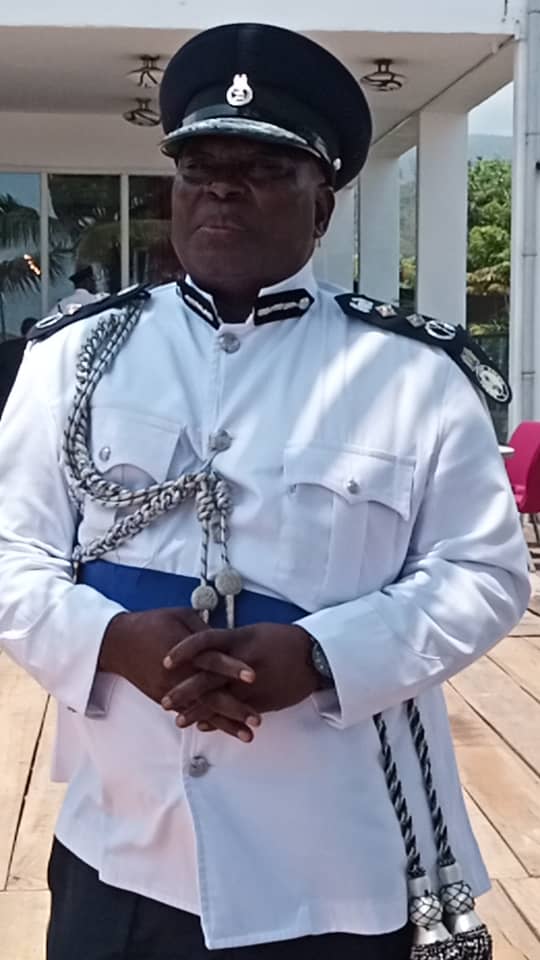
According to investigation conducted by this medium, in the wake of the recent spate of police brutality in different parts of the country, the Inspector General of Police, Ambrose M. Sovula, has strongly condemned lawlessness and  police brutality vowing that any Police Officer who is found wanting and proven guilty will face the full force of the law.

He maintained that few bad eggs in the force will not be allowed to soil the good image of the Force calling on all serving officers to do their work with professionalism.

It is on record that the current Inspector General of Police, Ambrose M. Sovula, is highly commended by many Sierra Leoneans for his pragmatism and leadership initiatives which, even before his appointment to his present position, he had been injecting in the Police Force, redeeming its battered image making the Force more relevant in terms of protecting lives and properties.

It is attested that as a result of his astute and pragmatic ways of discharging his official responsibilities as the No 1 man in the Police hierarchy there has been a drastic reduction in the crime rate right around the country as recent statistical data has so far revealed.

What is incontestable is the fact that unlike others, who as a result of status may create barriers, IG Sovula is said to be an individual who highly believes that through interactions much could be learnt and better position him to efficiently discharge his official duties. This is the more reason why he has successfully raised the profile of the Police Force high and transformed it to become a formidable force to reckon with.

With his wealth of experience in the Sierra Leone Police Force, since he joined the Force in 1980, the Inspector General rose through the ranks which speak volumes that he is more knowledgeable when it comes to issues relating to effective policing.

The new IG was transferred from the head of Traffic (National Traffic Coordinator) to the Local Unit Command at the Adonkia Police Station.

According to him, he diligently served with humility and will continue to do so with honesty and sincerity to the expectations of the President and the general public.

IG Sovula started his assignment at the Central Police Station as a “Statement Taker” previously known as an Investigator. He worked in the Registry Office at the Police Headquarters, Criminal Investigation Department, NCO in charge of Crime at the Waterloo Police Station, Crime Officer at the Lumley Police Station, Chief Trainer at the Police Training School and later elevated to become the Commandant.

He is one of the certified foundation members of the MIST – Major Incident Support Team.

As Commandant of the Police Training School, IG Sovula developed a lot of training strategies for young recruits.

He developed a gender empowerment framework that caters for young female graduates as new recruits and ten young female University graduates were recruited into the force that very year.

At that time a lot of reforms were implemented all successfully bridging the gap between junior officers and senior police officers as well as creating new Departments/Units such as FSU, Interpol, TOCU and Gender/Human Rights Offices.

His main focus is placing premium on community policing which has resulted into an enhancement between the Police Force and members   of the public resulting into a marked reduction in the crime rate countrywide.

Through his leadership style, he has succeeded in creating a synergy between the Sierra Leone Police Force and the Armed Force in order to work in synergy as sister forces and be professional in the discharge of their functions in providing the much needed security of the country.

He was appointed as Inspector General of Police by President Julius Maada Bio and approved by Parliament. In an exclusive interview, IG Sovula intimated that the behavioural pattern of every Sierra Leonean should be modified because attitude means everything.

When consideration is given to the fact that the rate at which lawlessness was gaining ascendancy posing serious threats to lives and properties juxtaposing such with the positive reforms injected by the current Inspector General of Police then there is all the more reason for members of the public to continue to give IG Ambrose Sovula the necessary support to continue to do more for the country.

IG Sovula maintained that though he was appointed by President Julius Maada Bio, however, his functions are not dictated by politics but rather nationalism and patriotism.

In a random survey undertaken by this medium what came out glaringly is the fact that many hold the current IG in high esteem for his frankness, down to earth approach in dealing with security related issues.

“If today we are sleeping in peace and heaving sighs of relief such could be attributed to sound policing and for those reasons the current Inspector General of Police must be highly commended,” a group of traders in the Central Business District informed.

Prior to his appointment, Sovula was the Local Unit Commander (LUC) of the Adonkia Police Station, Goderich, West End of Freetown, with the rank of Superintendent.

He is regarded by many as one of Sierra Leone’s award winning Police Officers and a West Africa Road Safety Organisation member who has diligently served the Sierra Leone Police for almost 40 years since 1980.

Speaker of Parliament Apologizes to the People of Sierra Leone

By Amin Kef Sesay

Hon. Dr. Abass Chernor Bundu, the Speaker of Parliament, has for the second time tendered his apology to the people of Sierra Leone over the incident that occurred at the Bintumani Conference Center, when President Bio constitutionally summoned an Emergency Sitting of Parliament.

He expressed an apology again on the 29th April 2021 at the Bintumani Conference Center to the people of Sierra Leone for the incident that occurred on the 19th April, 2021, which according to him, “should never have happened”.

He said Hon. Members of Parliament are expected by the general public of the country to conduct themselves in accordance with the law and to behave as Hon. Members.

Hon. Dr. Abass Chernor Bundu said what happened of course is not unique to Sierra Leone’s Parliament, adding some might even say, it is an incident of our democratic process.

Furthering, he said it is part and parcel of the expression of our democratic rights and obligations. Sometimes, the Speaker said, we express them within the confines of the law and on some exceptional occasions, we do so outside the strict limits or boundaries of the law.

Speaking on the need of relegating the incident to history, Dr. Bundu promised “never again to bring to their proceedings what happened on that inglorious day at the Bintumani Conference Center .

Susan’s Bay Fire Victims Appeal to Caritas and Tzu Chi Foundation for Continuation of Hot Meal Feeding Program

By Foday Moriba Conteh

As part of their compassionate support to the victims of the fire disaster at Susan’s Bay, Caritas Freetown, with support from the Tzu Chi Foundation under the Partnering to Serve Humanity, on the 27th March, 2021 commenced a hot meal feeding program as an emergency response effort to residents of the community of which this medium learnt that the aforementioned hot meal feeding program will come to an end today, Friday 30th April 2021.

It was against this backdrop that beneficiaries of the said feeding program have pleaded to Caritas Freetown and their partners for a continuation of the feeding program. This humble appeal was made during an impact assessment carried out by this medium at the Susan’s Bay Community.

Speaking to this medium, Jariatu Koroma, leader for Cooking Zone 7 (Fullah Compound) at the Susan’s Bay community expressed discouragement over the closure of the hot meal feeding program which she described as not only important but very timely in cushioning the negative impacts of the fire disaster to them as victims.

She disclosed that during the fire disaster they lost everything and they are currently challenged in securing basic necessities especially food, furthering that since the implementation of the hot meal program in the community such has helped greatly in supporting them and their families.

Jariatu Koroma noted that things are not really easy with them at the moment but said with the hot meal feeding program it is helping them greatly especially their children, adding that after the fire disaster many families do not have food to feed themselves and their children and that it was Caritas Freetown who came to their rescue.

Aminata Kamara, who also happens to be a beneficiary, expressed appreciation to Caritas Freetown and Partners for the hot meal feeding program which she said has supported them and their families during such a critical moment of their lives.

“This hot meal feeding program has supported us greatly and if Caritas brings this feeding program to an end it will negatively affect us and our children. In that regard I am pleading to Caritas and Partners to continue the hot meal feeding program and even if it ends after the month of Ramadan, we shall be grateful,” she also appealed.

On her part, one of the Councilors of the Susan’s Bay Community, Madinatu Kamara also expressed frustration over the decision by Caritas to bring to an end the hot meal feeding program which she said has helped her constituents towards enhancing their livelihood sustainability.

She noted that since the implementation of the emergency response at the Susan’s Bay community such has contributed immensely towards the wellbeing of the victims especially children whom she said find it very difficult to access food. The methodology of coming with the condiments to the community and involving the victims in the cooking process was therapeutic.

Councilor Madinatu Kamara maintained that her constituents have expressed the view that they are already traumatized because the breakfast program was ended and they are trying to come to terms with that before they heard of the stopping of the hot meal feeding program.

“I want to be frank with you all if Caritas decides to end this hot meal feeding program my people will die of hunger and starvation, so I am pleading to Caritas and partners to put hands on deck in order to continue the feeding program even if they are able to continue it till the end of the Ramadan, we will be grateful as a community,” she pleaded.

After these concerns from the residents at Susan’s Bay this medium deemed it fit to contact Caritas Freetown in order to get their take on the said issue of which this medium was able to reach the Executive Director Caritas Freetown who also happens to be a member of the Partnering to Serve Humanity consortium, Rev. Fr. Peter Konteh  who stated that they are delighted to have provided support and foster collaborative ties over the period furthering how they will remain grateful to the Office of National Security and the National Disaster Management Agency.

He noted that Caritas Freetown, with support from their partners, instituted the emergency response efforts at the Susan’s Bay Community as a true compassionate support to the victims of the fire disaster which he said was made possible with the huge support from Tzu Chi Foundation under the Partnering to Serve Humanity comprising the Healey International Relief Foundation, Tzu Chi Foundation, LANYI Foundation and Caritas Freetown, 29 days of hot meal feeding was made possible adding that additionally, they also got support from the Embassy of the Federal Republic of Germany in Freetown to cover 15 days of breakfast for the victims and they also received further support from the Catholic Relief Services to cover 5 days of breakfast and also 5 days of hot meals.

He said, however, the challenging part of the information is that they are closing the hot meal feeding program today Friday 30th April 2021.

Rev. Fr. Peter Konteh revealed that at 11:40AM on Thursday 29th April, 2021 they received a high-powered delegation of over 29 individuals in their office on Savage Street demanding to see the Management of Caritas Freetown. Unfortunately, they were out of the office but they spoke with the other staff who were around and got himself and the Programs Manager on the phone of which he said the reason for the visit was mainly to thank Caritas Freetown and Partners for the work they have been doing and pleaded for the continuation of the hot meal feeding program to continue.

Rev. Fr. Peter Konteh said that as an organization they are ready to serve humanity but said they are currently challenged in terms of continuing the hot feeding program but said if they receive support from their partners, they are ready to continue till the end of the Ramadan.

He revealed that on a daily basis they are spending Le 5,550,000 on volunteers’ stipends, plus Le 2,000,000 per zone x 7 cooking zones for condiments plus over two 50Kilogram bags of rice per zone.

The successes of Ghana’s booming agro-tech economy provides guidance for similar prosperity in Sierra Leone

By: Elizabeth M’balu Oke, Ella Nordell-Morris

Agriculture is a key source of income and a major driver for economic growth in West Africa. In countries with high demographic growth and vast farmlands, like Sierra Leone, technology innovation has become increasingly important for social and economic development.

The European Union (EU) is committed to supporting countries in their transition towards a modern, resource-efficient and competitive economy. The Agro-tech initiative recently launched in Sierra Leone aims at promoting green and circular economic growth. Similar experiences in neighbouring countries, like Ghana, have demonstrated exponential social and economic benefits and advancements.

EU agro-tech initiatives in Ghana contributed boosting Ghana’s agriculture industry by promoting new technologies and sustainable practices, aiding the nation in climbing employment and increasing the country’s GDP.

Certain technologies, such as drones, have drastically changed the agriculture industry in Ghana. Drones have been used by farmers to efficiently spray pesticides, and other inputs on crops. The Yonko Pa Association was able to experience the stunning effects of this new technology first-hand. Their production came to a halt when armyworm disease took over their farms. To quickly save their crops, drones managed to spray pesticides on 50 farms in just a few hours. Once farmers learned how to use the drones, drone technology proved to be an effective and significant way to further advance farming in Ghana.

Additionally, informational technology has also played a key role in Ghana’s agriculture productivity and advancement. The ability to access real-time information, like weather forecasts and market reports, is extremely helpful for farmers. This information aids farmers to market their commodities, and determine pricing based on changing supply and demand. All of the data collected becomes available to farmers in an instant through mobile phones with local-language voice technology.

Mobile phones are also key drivers for business transactions. According to Eurostat, in terms of mobile communication subscriptions per inhabitant, Ghana is in the top 20 list for Africa recording mobile communication penetration rates that matched the highest rates in the EU Member States. This increase in mobile communication contributed to ease business, contributing to Ghana’s agricultural successes.

Companies such as TroTro Tractor rely on mobile phones to partner with farmers. TroTro Tractor works with tractor suppliers and farmers and connects them through an SMS booking system. Farmers can easily and efficiently request, pay, and schedule tractor services while tractor suppliers are able to track their equipment. By using mobile phones, many farmers can connect to websites and businesses in a faster and more profitable way.

The just launched EU agro-tech call for proposals initiative in Sierra Leone, capitalise on these success stories and aims at boosting private sector investments in technology innovations. It is a unique competitive opportunity for Sierra Leonean organizations and SMEs seeking to develop and/or expand sustainable agro-processing and agribusiness innovation and technology. A variety of funding support aimed at enhancing green sustainable agro-industry development is available. Award amounts will range from EUR 100,000 to EUR 2,000,000. 

The EU is confident that this support will create a successful and lasting impact on Sierra Leone moving forwards its economy towards greener and circular approaches.

Applicants for the European Union Delegation to Sierra Leone’s Agro-Technology grants are strongly encouraged to attend an information session before concept note submission. The information session will take place May 5th via Zoom at 10:00am GMT.

All interested participants must register for the information session https://forms.gle/Mj7VFR9yiR9ANQrx8 in order to receive the Zoom link.

The deadline to submit a concept note in pursuit of EU grant agro-technology funding is the 1st of June 2021 at 23:00 Brussels Time.  For additional information, please contact delegation-sierra-leone-cfp@eeas.europa.eu or visit the Call for Proposal webpage at https://eeas.europa.eu/delegations/sierra-leone/96037/call-proposals-jobs-growth-agro-tech-development_en.

This publication was produced with the financial support of the European Union. Its contents are the sole responsibility of PivotPath and do not necessarily reflect the views of the European Union.


Government Reaffirms Commitment to Abolish Death Penalty

Group photo the SLBA and the AG Office; Bar President Eddinia Swallow is sitting in front with AG Anthony Brewa

By Elias Bangura Esq

On Monday 26 April 2021, the Office of the Attorney General received in audience the Executive of the Sierra Leone Bar Association (SLBA), led by its President Ms. Eddinia Swallow Esq.

At the meeting, the SLBA requested for His Excellency the President Dr. Julius Maada Bio to formally pronounce the abolition of the death penalty in Sierra Leone and for the Government to take immediate legislative steps to amend or repeal all existing legislations, which provide for death penalty in Sierra Leone.

She gave a background of the death penalty in Sierra Leone, sanctioned in Section 16 (1) of the Constitution of Sierra Leone, Act No.6 of 1991, where it states that, “No person shall be deprived of his life intentionally, except in execution of the sentence of a court in respect of a criminal offence under the laws of Sierra Leone of which he has been convicted.”

“And the criminal offences under the laws of Sierra Leone, which are punishable by death are murder (common law offence), treason and other related offences under the Treason and State Offences Act of 1963, Mutiny under the Sierra Leone Military Forces Act of 1961 and Robbery with aggravation under the Criminal Procedure (Amendment) Act of 1973.”

A further legislation sanctioning the death sentence is the Criminal Procedure Act 1965. In Section 211 it prescribes death by hanging and if the sentence is pronounced by a military court, then execution is by firing squad. However Section 215 and Section 216 forbid the death sentence to be carried out on a pregnant woman, and those under 18 years old.

Ms Eddinia said many strides have been taken towards the abolition of the death penalty in Sierra Leone, however, the Government is yet to take concrete steps towards the amendment of the Constitution, which provides the legal basis for death penalty.

“SLBA recalls that in its Final Report, the Sierra Leone Truth and Reconciliation Commission, established by the Truth and Reconciliation Commission Act 2000, made imperative recommendations, inter alia, for the abolition of the death penalty and the amendment of Section 16 (1) of the 1991 Constitution of Sierra Leone to incorporate the principle that the right to life is inviolable.

“SLBA acknowledges Sierra Leone’s acceptance of the recommendation from the UN Human Rights Council to abolish the death penalty, subject to constitutional review in 2011; and it’s committment to the UN Office of the High Commission of Human Rights to review its position on the death penalty in 2012; and the recommendation of the Justice Edmond Cowan led Constitutional Review Committee for the abolition of the death penalty.

“SLBA also notes that in 2014, Sierra Leone voted in favour of a motion calling for a universal moratorium at the UN General Assembly (UNGA).

“SLBA recognizes that during the Universal Periodic Review in 2016, Sierra Leone received 22 relevant recommendations, 13 of which specifically called for abolition of the death penalty or an official moratorium on the death penalty, and Sierra Leone accepted all the recommendations relevant to the death penalty and related issues,” said the Bar President.

In lieu of the foregoing, she stated six points that the SLBA strongly holds on the death penalty.

That the arbitrary deprivation of life constitutes cruel, inhumane, and degrading treatment, as it violates Section.20(1) of the Constitution of Sierra Leone, which states that, “No person shall be subject to any form of torture or any punishment or other treatment which is inhuman or degrading.”

Secondly that the death penalty is irreversible and has the risk of executing innocent people; thirdly that the death penalty does not serve as a deterrent to commit capital offences. There is no evidence in Sierra Leone that the existence of death penalty has deterred capital offences.

Furthermore, the death penalty can be used as a political tool to punish political opponents.

“Fifthly, the death penalty cannot be reconciled with full respect for the right to life and abolition of the death penalty is both desirable and necessary for the enhancement of human dignity and progressive development of human rights.”

Her final point was that the SLBA feels strongly about the protection of the right to life and recommends that in the interest of progress and a speedy approach, an amendment of all enabling legislations with regards the death penalty must be initiated and thereafter an amendment of Section 16 of the 1991 Constitution of Sierra Leone.

In his response, the Attorney General and Minister of Justice, Anthony Brewa, thanked the SLBA for their position paper on the death penalty

He said he knows discussions around the death penalty have been hot. However, some of the advocates against the death penalty have chosen rather to go to the radio and newspapers instead of coming to the AG’s office, to see what can be done.

“However I want to assure you that the Government is in favour of abolishing the death penalty,” said AG Brewa. “Some time ago, President Bio made a public pronouncement against the death penalty on 17 December 2020. For lawyers, that is not enough. So I have taken a step further and taken the issue to Cabinet about 3 weeks ago, and the document is now with the printers and in a week or two, it will be before Cabinet again for further discussions before we take it to Parliament,” he further revealed.

He said he had also, in a proactive way, prepared a paper on the abolition of the death penalty and sent it to the British High Commissioner, the Irish Ambassador, the European Union representative, and the German Ambassador, and invited them for discussions on it.

“When they came they spoke and appreciated the issue and I informed them what I had already done. They congratulated me. Now, Section 16 of the Constitution does not provide for the death penalty, so we can abolish the death penalty without going to the said section,” he said.

AG Brewa concluded that his doors are always open to the SLBA.

“I implore the Bar to always be the Bar. We will continue to cooperate with your office, Madam President, to ensure that things work amicably between our two entities. So rest assured that Cabinet has approved the resolution against the death penalty and now we are waiting on the printers for us to take it to Parliament.”

In the meeting were the Solicitor General, Mohamed Lamin Tarawalley, and other members of staff of the Attorney General’s office.

Abdul Karim Kamara, the Vice President of SLBA, gave the vote of thanks.

Bar President giving SLBA position paper on the death penalty to the Attorney General

Acquired Knowledge on Malaria Should be Backed with Practice   -Deputy Health Minister Cautions

Deputy Health Minister 1, Anthony Sandi Left and US Ambassador, David Reimer Right

By Ibrahim Sorie Koroma

World Malaria Day is globally celebrated on the 25th April each year to raise awareness on malaria.  The theme for this year’s celebration is “Zero Malaria – Draw the Line Against Malaria” because every malaria case is preventable and every malaria death is unacceptable.

The Honorable Deputy Minister of Health and Sanitation 1, Dr. Anthony Sandi, who gave the keynote address and launched the Sierra Leone National Malaria Elimination Strategic Plan, noted that Malaria is already a disease burden in the country and it is endemic. He continued that Malaria is the leading cause of death in Sierra Leone, especially in children under-fives and pregnant women. “All efforts to eradicate malaria cannot be taken lightly,” stressed Dr. Sandi.

The Hon. Ministry recalled that some few years ago, people in remote communities misused the utilization of treated insecticide mosquito net, but however noted that that has changed with increased awareness raising efforts by the Ministry of health and its partners.  He also stated that people used to attribute the cause of malaria to myths and misconceptions like sucking oranges, drinking beer, but was however happy for the gradual change in behavior by communities.  He advised that though there is increased knowledge on malaria, but acquired knowledge on the disease should be backed with practice to end malaria in the country.

He further stated that there have been a lot of gains already made in the fight against Malaria, but there are challenges, and the disease still claims the lives of people, especially children under-five and pregnant women. Dr. Sandi called for more efforts to combat the disease. He added that one of the best methods to combat malaria is diagnosis, treatment and prevention. Dr. Sandi appreciated the efforts of partners and called for more support and urged community stakeholders to own the fight against malaria, as it affects everyone and its effects is felt by every development sector.

According to a message of the World Health Organization Regional Director for Africa, Dr. Matshidiso Moeti, grievously writes that they in 2020 alone recorded a preventable death of 384,000 in the WHO Africa Region, Sierra Leone inclusive. He continued that despite the great progress made in malaria response, the Region accounted for 94% of both the 229 million cases and 409,000 malaria deaths reported globally in 2019. He reiterated that between 2000 and 2019, malaria incidence declined by 29% and deaths by 60%. More than 1.2 billion cases and 7.1 million deaths were averted in the region.

Countries like Cape Verde, the Gambia, Ethiopia, Ghana, Namibia, South Africa and Botswana have been certified malaria free. Sierra Leone can also achieve this with gains already made and increased support and community participation.

In his remarks, the US Ambassador to Sierra Leone, David Reimer reference the last Malaria Indicator Surrey showing a disease prevalence of 40%  among children and malaria accounts for 47% of clinic visitation  of children and responsible for 38% of all hospitalized patients, killing 18% of those hospitalized.

The US Ambassador referenced that in 2017, Sierra Leone was selected to benefit from the United States President’s Malaria Initiative (PMI), led by the US Agency for International Development (USAID) and Implementation, together with the US Centers for Diseases Prevention and Control (CDC), to which the US Government has invested $ 60 million over the past 4 years to prevent and treat malaria in the country. “During that period we have delivered more than 3 million bed nets, 2.5 million Rapid Diagnostic Tests (RDTs) and 2 million doses of fast-acting treatment for malaria” added the US Ambassador.

He assured that they were going to continue their support to the fight against malaria and they and the Ministry of Health were going to launch the Indoor Residual Spraying (IDR), which is a new malaria preventive intervention to be piloted in BO and Bombali districts.

In another development, with support from the US President’s Malaria Initiative (PMI), the Ministry of Health and Sanitation, through the National Malaria Control Programme, will embark on an Indoor Residual Spraying as a      preventive intervention for malaria in Bo and Bombali districts in May and June this year.

Sister Wan C. Lahai, Principal Public Health Sister, who doubles as the Social and Behavior Change Communication (SBCC) Focal at the National Malaria Control Programme in the Ministry of Health and Sanitation, said that Indoor Residual Spraying is one of those measures used to prevent malaria in households and communities, adding that they were going to pilot IRS in Bo and Bombali as the prevalence of malaria is higher in rural settings than in the urban.

Citizens Complain of Management lapses in the Security Sector

By Amin Kef Sesay

A video circulating on social media allegedly involving some members of the Presidential security detail, making threatening remarks against the public, has awakened the nation’s mind to what happened in Sierra Leone during the one party days from the 1970s to the 1980s at the hands of the security sector, and during the war in the 1990s, when the armed forces woefully, at the initial stages of the RUF war, failed to protect the citizens from the horrors of war.

Many citizens are concerned that with the Police Force still remaining loyal to the party in power, instead of to the State and its people, the entire security sector must be adequately educated on the need for them to remain strictly non-partisan in ensuring a durable national  democratic governance framework.

Public safety depends very much on the armed forces being at all times well trained and competent to ensure the country’s territorial integrity.

In terms of the Police, the nation should be assured that they are professionally trained to have respect for human rights, provide reliable and accountable services, equal opportunities and professionalism.

No doubt, the ability of the security sector to provide law and order is at the heart of the country’s peace, social cohesion and socio-economic development; as investors would hardly risk putting their money into a country that they think is not safe and politically stable.

A security sector apparatus that is disciplined, accountable and effective in law enforcement is paramount, because there is still widespread poverty, combined with endemic corruption that is creating despair, discontent and increasing criminality, which only the security sector, by being proactive, can control.

Furthermore, as we go into the crucial 2023 national elections, there are many unemployed and discontented young people who are potential recruits for the political elite and for increased criminal activity.

The most significant problems, from a governance perspective, lie in seeming lack of democratic oversight and control mechanisms in the security sector.

Until the security sector, especially the police see themselves as not above the law but subject to it like every other citizen, the problem of police brutality and highhandedness against citizens would not become a thing of the past.

There needs to be more active cooperation between the police and civilians in the detection and prevention of crime.

In 2001, a community security approach called Local Needs Policing (LNP) was initiated, predicated on the need to address the security gap that existed at the time and restore public trust and confidence in the police.

Through it, the Local Police Partnership Boards (LPPBs), the Chiefdom Police Partnership Committees (CPPC) and the Area Police Partnership Committees (APPC) were subsequently formed. These police-civilian relationship and cooperation bodies need rejuvenation; as without the involvement of communities in policing, crime become hard to detect and tackled by the police.

Oversight is central to discipline and control in all institutions. The question of who polices the police needs addressing if the Police Force is to become accountable and answerable for acts of misdeed by officers in the performance of their duties.