
Home Blog Page 94

Fake LS Numbers and Doctored Plans: How a Waterloo Land Dispute Unravelled

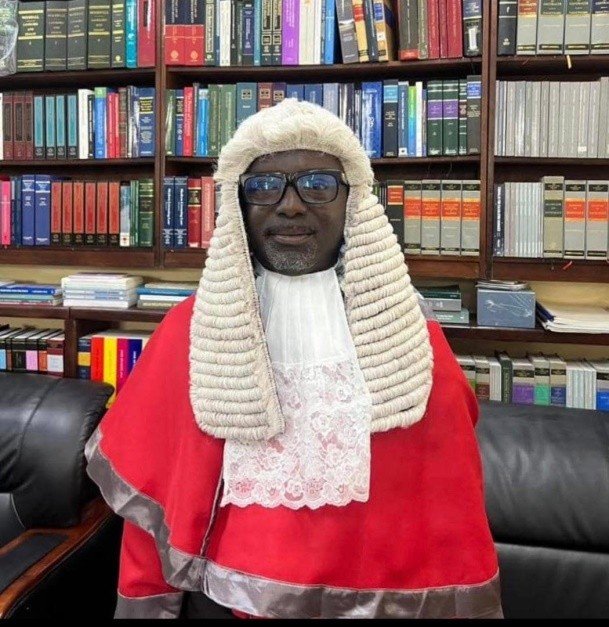
Justice Andrew Johnson

By Thaimu Thullah

A former Director of Surveys and Lands at the Ministry of Lands, Country Planning and the Environment, S. A. Luseni, has released an investigative report alleging a coordinated attempt to unlawfully take over parcels of land in Waterloo, Western Rural District, using what he describes as fake Licensed Surveyor (LS) numbers, doctored survey plans and allegedly fabricated title documents.

The report centers on lands located in Nyamba Town and Maluseni Village at Joe Town, Waterloo, which S. A. Luseni says belong to James M. Legg and his company, Jong High Peak Enterprises. The document raises concerns about the integrity of survey and title records submitted in court  and renews public scrutiny over longstanding claims of land grabbing and document falsification in the fast-growing Western Area.

According to the report, S. A. Luseni, who is also identified as a Licensed Surveyor, was invited to conduct an independent professional investigation at the request of Magistrate Hadiru K. Daboh, who presided over the case at Court No. 3, Ross Road, East End of Freetown.

The investigation, S. A. Luseni stated, was initiated after competing parties presented conflicting claims of ownership over the disputed parcels of land, prompting the court to seek technical verification of survey documentation and related records.

In his assessment, S. A. Luseni, reported that documents presented by Abdul Rahman Olu Kamara, Mohamed Davies Koroma and Abubakar Kamara, who were said to be claiming ownership of the lands, contained irregularities he described as inconsistent with standard professional and administrative practice.

The disputed documents bore two different LS numbers for the same parcels of land;

The LS numbers in question were reportedly registered on the same date and in the same year, which, according to the report, is highly irregular under normal professional standards; and

  1. A. Luseni argued that the inconsistencies undermine the credibility of the survey plans and title documents used to support the ownership claims.

The former Director concluded that the records he reviewed were “deeply flawed,” and suggested that the anomalies raised serious doubts about authenticity and due process in the creation and submission of the documents.

  1. A. Luseni’s report further alleges that the disputed survey and title documents were used in an attempt to dispossess James M. Legg and Jong High Peak Enterprises of land said to be legally owned by them. He warned that such practices, if proven, point to broader weaknesses in land administration safeguards and the potential exploitation of survey processes to advance fraudulent claims.

The dispute has reportedly resurfaced before the High Court, where it is now said to be before Justice Andrew Johnson. Observers following the case say the renewed hearing places heightened responsibility on the court to carefully scrutinize the documents and claims presented, particularly given the technical issues raised in the earlier investigation.

The report also includes an appeal for attention from senior judicial authorities, citing the public importance of protecting lawful property rights and maintaining confidence in court-supervised land dispute resolution.

Land disputes have become increasingly common in and around the Western Area as demand rises for residential, commercial and agricultural land. Legal and governance analysts warn that alleged document falsification and inconsistent survey records can fuel conflict, discourage investment and erode trust in public institutions responsible for land management.

If the allegations outlined in S. A. Luseni’s report are substantiated through court proceedings, it could prompt renewed calls for tighter verification systems, stronger sanctions for falsification and reforms to improve transparency and traceability in land documentation processes.

Lǒr Restaurant Emerges as Sierra Leone’s Benchmark for World-Class Fine Dining in 2025

Lǒr Restaurant

By Foday Moriba Conteh

As Sierra Leone closes the chapter on 2025, one name stands out in Freetown’s evolving hospitality and lifestyle narrative; Lǒr Restaurant. In just a short time, the premium dining destination along the Peninsular Highway in Juba has redefined expectations for fine dining, seamlessly blending local authenticity with international culinary excellence and positioning Freetown firmly on the global gourmet map.

Against the backdrop of a year marked by renewed optimism in tourism, investment and urban lifestyle development, Lǒr Restaurant has emerged not merely as a place to dine, but as a symbol of modern sophistication and cultural confidence. Its rise reflects a broader transformation within Sierra Leone’s service industry; one that embraces global standards while proudly celebrating local identity.

At the heart of Lǒr’s success is a menu that transcends borders. Guests are invited on a culinary journey that spans continents, from the delicate precision of Japanese sushi and sashimi, to classic Italian pastas, richly spiced Indian specialties and refined Lebanese cuisine. Interwoven within this international selection are flavors inspired by Sierra Leone’s vibrant culinary heritage, offering a balance that appeals to both adventurous diners and traditional palates.

Each dish is meticulously crafted by a team of internationally trained chefs whose attention to detail, presentation and flavor harmony has earned Lǒr a growing reputation for consistency and excellence. In a city where dining options are expanding rapidly, Lǒr has distinguished itself by maintaining uncompromising quality across every plate served.

Beyond cuisine, Lǒr Restaurant has mastered the art of atmosphere. Its contemporary architectural design, defined by floor-to-ceiling glass panels, refined interiors and ambient lighting, creates a dining environment that is both elegant and welcoming. The highlight remains its rooftop terrace, offering uninterrupted views of the Atlantic Ocean and some of the most captivating sunsets in Freetown.

Whether hosting an intimate romantic dinner, a high-level business engagement or a family celebration, Lǒr provides a setting that elevates every occasion. Over the course of 2025, the restaurant has become a preferred venue for corporate dinners, social gatherings and special celebrations, further cementing its status as a lifestyle destination.

A defining feature of Lǒr’s brand is its commitment to service excellence. The restaurant’s staffs undergo professional hospitality training, ensuring attentive, courteous and discreet service that mirrors international best practices. Guests consistently highlight the warmth, professionalism and efficiency of the team; an area where Lǒr has set itself apart in a competitive market.

Private dining options, personalized service and a guest-first philosophy have helped build a loyal clientele that includes diplomats, business executives, tourists and discerning locals.

In keeping with its global outlook, Lǒr Restaurant has embraced modern payment systems, accepting Visa and Mastercard alongside cash; an important convenience in Sierra Leone’s evolving digital economy. Ample parking and valet services further enhance accessibility, ensuring that guests enjoy a seamless experience from arrival to departure.

Operating daily from 9:00 AM to 11:00 PM on weekdays and extending service until 12:15 AM on weekends, Lǒr caters to early risers, business lunches, evening diners and late-night patrons seeking refined comfort.

As 2025 draws to a close, Lǒr Restaurant stands as more than a culinary success story. It represents a shift in how Sierra Leone presents itself to the world; confident, cosmopolitan and capable of delivering experiences that meet international expectations without losing cultural authenticity.

In a city increasingly defined by innovation, creativity and ambition, Lǒr has helped shape Freetown’s modern identity; where local flavor meets global sophistication and where dining becomes an experience worthy of the Atlantic horizon it overlooks.

Lǒr Restaurant; Where Local Flavor Meets International Standards

Peninsular Highway, Juba, Freetown

+232 90 002000

Cash, Visa, Mastercard

Italian, Japanese, Lebanese, Indian & International Cuisine

9:00 AM – 11:00 PM (Weekdays) | Until 12:15 AM (Weekends)

Looking ahead to 2026, Lǒr Restaurant stands tall as the benchmark for fine dining, hospitality excellence and Sierra Leone’s rising global appeal.

U.S. Embassy, Supreme Islamic Council Host Visa Security and Anti-Fraud Workshop for Imams

By Amin Kef (Ranger)

The United States has reaffirmed its commitment to strengthening its long-standing friendship with the people of Sierra Leone while safeguarding the integrity of its visa system and the security of American citizens.

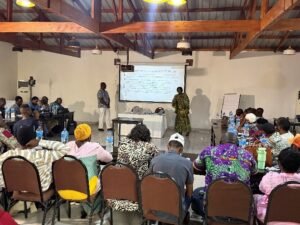
In furtherance of that objective, the U.S. Embassy in Freetown, in collaboration with the Supreme Islamic Council of Sierra Leone (SICRSL), on December 15, 2025 hosted a Visa Security and Anti-Fraud Workshop for Muslim religious leaders. The engagement brought together more than 200 imams and Muslim community leaders from across the country.

The opening ceremony featured remarks from Chargé d’Affaires Jared Yancey, Director, Ministry of Information and Civic Education, Emmanuel AB Turay and Secretary General of the Supreme Islamic Council of Sierra Leone, Sheik Ibrahim Barrie.

Addressing participants, Chargé d’Affaires Jared Yancey emphasized the importance of responsible visa use, noting that adherence to visa conditions is critical to maintaining trust and security. “Visas must be used for their intended purpose as the integrity of our system is essential to protecting American interests,” he stated.

The workshop also highlighted the range of consular services available to American citizens and underscored the vital role community leaders play in raising awareness and preventing visa fraud. Speakers stressed that partnerships with trusted institutions such as SICRSL are key to promoting lawful travel, protecting communities and preserving the credibility of international migration systems.

The U.S. Embassy expressed appreciation to the Supreme Islamic Council of Sierra Leone for its cooperation and leadership, reaffirming its commitment to continued collaboration. Both institutions pledged to work together to combat visa fraud, uphold U.S. law and advance shared values of responsibility, security and mutual respect.

ICPNC Engages Western Area Universities on Students’ Role in Peace, Social Cohesion 

By Ibrahim Sesay 

The Independent Commission for Peace and National Cohesion (ICPNC) has on Tuesday, December 16, 2025 convened a university engagement forum at the Fourah Bay College (FBC) Amphitheatre, bringing together students from Fourah Bay College, the Institute of Public Administration and Management (IPAM), Limkokwing University, Milton Margai Technical University, Freetown Polytechnic to discuss the role of students in promoting national peace and social cohesion.

The event, which was held under the theme: “Students as Catalyst for National Peace and Social Cohesion,” featured a panel discussion that explored youth inclusion in decision-making, campus governance and peaceful means of resolving conflicts within institutions of higher learning.

Opening the engagement, the Deputy Registrar of Fourah Bay College, Brima Bah, thanked ICPNC for selecting the university, describing the choice as appropriate given the diversity of students on campus. He noted that institutions of learning bring together people from different backgrounds who learn to coexist beyond the lecture rooms.

“For students to take responsibility as catalysts for peace and cohesion there cannot be a better place than an environment like this,” Brima Bah said, adding that students must become agents of peace and change in society.

Responding to a question on the extent to which young people are included in Government decision-making, Salifu Sesay, a civil engineering student at FBC, said youth participation remains limited. He highlighted that young people are often only engaged during political campaigns, with little consultation on policies that affect them afterward.

Salifu Sesay cited the recent decision to abolish class representatives on campus as an example of poor consultation, noting that students were not adequately engaged before the policy was implemented. While acknowledging that the administration may have its reasons, he emphasized the need for dialogue, urging students to pursue peace and constructive engagement rather than confrontation.

Final-year law student at FBC, Victor Samuel Bob Smart, offered a slightly different perspective by commending President Julius Maada Bio for appointing young people to key governance positions. He described the development as a step in the right direction. He called on young people to reflect on their own preparedness and contribution to governance.

“We as young people must ask ourselves what we have done to be included,” Victor Samuel Bob Smart said, encouraging students to adopt growth mindsets and move beyond partisan divisions. He also highlighted the practical challenges posed by the absence of class representatives, particularly in coordinating academic activities.

Addressing measures being put in place to ensure peace and cohesion on campus, the Acting Warden of Students, Pastor Fareed Bangura, said the administration maintains regular engagement with students beyond election periods. He dismissed claims that consultations only occur during elections, noting that he personally meets with student groups almost every month to address concerns.

On the abolition of class representatives, Pastor Fareed Bangura explained that the decision was taken at a higher administrative level, emphasizing that while students have rights, those rights can be temporarily withheld if their exercise leads to violence or actions that undermine the institution’s image.

He added that although students were not formally consulted, several attempts had been made over the past two years to conduct elections, with continuous engagements aimed at reaching consensus.

During the recommendation session, Pastor Fareed Bangura called for a review of outdated university laws and urged students to reprioritize their purpose on campus.

Salifu Sesay reiterated the need for students to utilize existing institutional structures to address grievances instead of resorting to violence.

Contributing from Milton Margai Technical University, John Bobson Massah noted that peace begins at the individual level, stating that students must first be at peace with themselves before they can promote peace within their institutions and society.

The ICPNC engagement concluded with a call on students to see themselves as key actors in fostering dialogue, tolerance and social cohesion both on campus and nationally.

Journalist and Women’s Rights Advocate Juliana Adama Vandy and Her Daughters in Hiding

Juliana Adama Vandy, a journalist and women’s rights advocate

By Ibrahim Sesay

Juliana Adama Vandy, a journalist and women’s rights advocate, along with her two daughters, is currently in hiding following escalating threats against their lives. Since July 2025, Juliana Adama Vandy has used her Facebook account to raise public awareness about cyberstalking and a recent break-in at her residence in Freetown. During the incident, a window in her daughter’s room was broken, spare keys were accessed and a valuable backpack was taken.

A female journalist, advocate, and employee of the Ministry of Information and Civic Education, Juliana Adama Vandy has been a vocal campaigner for a ban on female genital mutilation (FGM). As a survivor of the practice, her advocacy intensified after the Government failed to criminalize FGM in the recently passed Child Rights Act. “I have suffered it and thank God I survived. I will not sit by and see other young girls and women go through the same; they might not be as lucky or strong as I am,” Juliana Adama Vandy stated.

Recently, Juliana Adama Vandy was invited by a community-based, women-led organisation, the BECKMA Empowerment Initiative, to speak on harmful traditional and cultural violence, with specific focus on FGM. She delivered a public talk on November 21, 2025, during which she strongly condemned the practice and highlighted its devastating impact on women and girls.

Following her public stance, Juliana Adama Vandy began receiving threats directed at both her and her daughters. Some of the threats reportedly came from individuals identifying themselves as members of the Bondo society, including threats of physical harm to her family. On December 4, 2025, she received disturbing photographs of her residence via Facebook Messenger, accompanied by a message warning that she and her daughters would “disappear” before the end of the year.

Juliana Adama Vandy reported the threats to the Cybersecurity Unit of the Criminal Investigations Department but has expressed concern over what she perceives as a lack of significant progress in the investigation. Fearing for her safety and that of her children, she suspects that her mother, a retired Police Officer and member of the Sowei Council in Sierra Leone, may be connected to the situation. According to Juliana Adama Vandy, alarming information received from a niece in Cyprus suggests that her mother and other members of the Sowei Council may be conspiring against her.

At present, Juliana Adama Vandy and her two daughters are in hiding at an undisclosed location as they attempt to flee for their lives.

‘Goal for Safe Migration’ Tournament Kicks Off at Portee to Fight Irregular Migration, Trafficking and GBV

By Mary Kabay

A nationwide football mini-tournament themed: “Goal for Safe Migration” has officially kicked off in the Portee community in Freetown, launching a major awareness campaign aimed at combating irregular migration, human trafficking and gender-based violence (GBV) across Sierra Leone. Supported by the Government of Sweden through the International Organization for Migration (IOM), the month-long initiative runs from 1–20 December 2025 and is expected to engage thousands of young people from high-risk urban and peri-urban communities.

The opening match at Portee set an energetic tone for the tournament, drawing huge crowds as the triumphed over Peacock Farm. Sixteen teams representing 11 communities, including Lumley, Goderich, Congo Market, King Tom, Kroo Bay, Wellington, Calaba Town and Waterloo, will compete in knockout rounds leading to semi-finals on 17–18 December and a grand finale on 20 December.

Organizers say football was deliberately chosen because of its unmatched influence among Sierra Leonean youth. They emphasized that the sport’s popularity provides a powerful platform to reach vulnerable groups, counter misinformation spread by traffickers and encourage behavioral change through entertainment-driven education. With many young people vulnerable to false promises of opportunities abroad, the initiative blends recreation with critical conversations on human rights, safe migration and community protection.

Beyond the match results, each game day features a full programme of advocacy, learning and engagement. Officials from the Anti-Trafficking in Persons (ATIP) Taskforce Secretariat, the Ministry of Social Welfare, the Transnational Organized Crime Unit and IOM conduct awareness sessions to deepen public understanding of trafficking tactics, signs of exploitation and available support services. Theatre groups perform dramatized stories inspired by real cases of trafficking, while returned migrants share testimonies to help young people recognize the dangers of irregular routes.

One of the most symbolic components of the event is the “Orange the World” halftime segment held in solidarity with the global 16 Days of Activism Against Gender-Based Violence. Spectators wave orange ribbons to show unity in ending GBV, while advocates highlight how gender-based violence often intersects with trafficking and unsafe migration. After the performances, volunteers distribute information leaflets on GBV referral pathways, legal migration channels and community reporting mechanisms.

IOM Officer in Charge for Sierra Leone, Pauline Macharia, described the launch at Portee as a milestone in community-centred outreach. “Football has a unique power to unite, inspire and educate,” she said. “This tournament gives us the opportunity to directly reach young people, reduce misinformation and offer hope through safer alternatives. Seeing communities come together, both in competition and learning, reflects a true victory for awareness and prevention.”

A representative of the ATIP Secretariat also commended the initiative, urging communities to remain vigilant. “The fight against trafficking requires awareness, reporting and solidarity,” he noted. “Young people must recognize the signs of danger and seek legitimate opportunities. When communities work together, traffickers lose their influence.”

Organisers stress that the initiative also promotes positive masculinity, teamwork and discipline; values that counter harmful social norms contributing to violence and exploitation. The Sierra Leone Football Association (SLFA), a partner in the campaign, uses match-day “special message” segments to reinforce the importance of respect, unity and fair play, both on and off the field.

As the competition progresses across Freetown and Waterloo, early feedback suggests that the model is already making an impact. Community leaders report increased awareness of trafficking risks, greater understanding of GBV reporting systems and stronger connections between service providers and at-risk youth. Parents, spectators and young players say they now feel more informed about how traffickers operate and more empowered to challenge unsafe migration narratives circulating within their communities.

On Monday December 8, the Portee community set the tone with an emphatic win against Peacock Farm. The victory energized spectators and highlighted the tournament’s blend of sport and civic education. Organisers say the opening day demonstrated how football can be effectively linked with development messaging while fostering pride and solidarity among young people.

The “Goal for Safe Migration” initiative is expected to deliver lasting benefits by improving knowledge of safe migration pathways, strengthening community vigilance, expanding GBV awareness and providing healthy recreational opportunities that build resilience. Primary beneficiaries are youth aged 15–30, though parents and community leaders also play key roles in amplifying and sustaining the messages.

As the fixtures unfold, organizers hope that the momentum generated in Portee will spread across all participating communities. The tournament continues to demonstrate how football, long a unifying force in Sierra Leone, can serve as a dynamic tool for education, transformation and youth empowerment. Through collective effort and strong community engagement, the initiative aims to inspire informed choices, prevent exploitation and strengthen national efforts to protect Sierra Leone’s youth from the dangers of irregular migration, human trafficking and gender-based violence.

UBA Sierra Leone Celebrates Major Win as UBA Group Named Africa’s Bank of the Year 2025

By Amin Kef (Ranger)

United Bank for Africa (UBA) Group has once again consolidated its position as one of the continent’s most outstanding financial institutions after being crowned Africa’s Bank of the Year 2025 at the prestigious Banker Awards, hosted by The Banker magazine of the Financial Times in London.

This marks the third time in five years that UBA Group has secured the distinguished continental accolade; an achievement that underscores its innovation, resilience and unmatched leadership in Africa’s banking landscape.

UBA Sierra Leone joined the celebration with pride, earning the title: Best Bank in Sierra Leone 2025, one of nine UBA subsidiaries recognized across Africa for excellence in service, operational strength and technological advancement.

UBA subsidiaries in Benin, Chad, Congo-Brazzaville, Liberia, Mali, Mozambique, Senegal, Sierra Leone and Zambia each emerged as Best Bank in their respective countries; bringing UBA’s total awards this year to 10, more than any of its continent-wide competitors.

In its citation, The Banker highlighted UBA’s “consistent ability to punch above its weight,” noting that the group continues to outperform many larger African banking rivals through strategic innovation, strong financial performance and a rapidly expanding digital ecosystem.

The Banker praised UBA for its digital leadership, particularly advancements in Leo, the Group’s artificial intelligence chatbot, which in 2025 became the first African banking chatbot to enable cross-border payments via the Pan-African Payment and Settlement System (PAPSS).

Leo recorded 29% year-on-year growth in transaction volume in the first half of 2025.

UBA was also commended for its introduction of the Advance Top-Up, a buy-now-pay-later feature on the *919# USSD platform, expanding financial accessibility for millions.

Financially, UBA delivered robust results across all markets, with the Group posting a 46.8% growth in assets and a 6.1% rise in pre-tax profits in 2024. West Africa, UBA’s strongest region, recorded operating revenue and profit increases of 87% and 89%, respectively, in the first half of 2025.

Group Managing Director/CEO, Oliver Alawuba, described the recognition as validation of UBA’s long-term strategy, innovation drive and passion for customer-centric service.

“This honour reflects the strength of our Pan-African network, the trust of our customers and the dedication of our people. Winning Africa’s Bank of the Year for the third time in five years is a testament to disciplined execution and a deep understanding of the markets we serve.”

Managing Director/CEO of UBA Sierra Leone, Mohamed Alhajie Samoura, expressed pride in the local team’s contribution to the Group’s continental achievements.

“This award is a proud moment for UBA Sierra Leone. It reflects the trust our customers place in us and the hard work of our committed team. We remain dedicated to delivering world-class banking and driving financial inclusion across Sierra Leone.”

The awards were received in London by Deji Adeyelure, CEO of UBA UK, who represented the Group CEO, accompanied by senior executives Mark Ifashe and Shilpam Jha.

The Banker Awards remain one of the banking industry’s most respected recognitions, assessing institutions based on performance, strategy, innovation and the ability to deliver sustainable value across markets.

With 25,000 employees and over 45 million customers globally, UBA continues to expand its footprint across Africa and globally, operating in 20 African countries, the United Kingdom, United States, France and the United Arab Emirates.

As UBA Sierra Leone joins the Group in celebrating this milestone, the message remains clear:

UBA Sierra Leone ; This win is ours. Leading with impact.

January 18 Declared National Remembrance Day at Salone Civic Festival 2025

President Dr. Julius Maada Bio

By Amin Kef (Ranger)

President Dr. Julius Maada Bio has officially opened the Salone Civic Festival 2025 with a historic proclamation declaring January 18 as National Remembrance Day on Thursday, December 11, 2025 in Miatta Civic Centre, Freetown, fulfilling a key recommendation of the Truth and Reconciliation Commission (TRC) more than two decades after the end of Sierra Leone’s civil war. The announcement marked the highlight of an event designed to deepen national consciousness, strengthen democratic engagement and advance civic participation across the country.

The declaration aligns with Paragraph 202 of the TRC Report, which called for a national day dedicated to honouring the victims and survivors of the conflict and promoting reconciliation. President Bio told the audience that the designation of January 18, the day the war formally ended in 2002, was both a moral obligation and a historic responsibility.

“In fulfilment of the TRC’s recommendation, I hereby proclaim that the 18th day of January shall be commemorated as National Remembrance Day throughout the Republic of Sierra Leone,” he announced. The President added that the day would focus on civic education, community service, peacebuilding activities and remembrance ceremonies to reflect on the country’s journey from conflict to stability. The Ministry of Information and Civic Education (MICE), NaCCED and the Independent Commission for Peace and National Cohesion (ICPNC) will coordinate annual observances.

The ceremony was hosted at the newly designated Miatta Civic Centre, formerly the Miatta Conference Centre, which has been transformed into a national hub for civic engagement, creativity and digital innovation. President Bio said the venue was deliberately repurposed to give Sierra Leoneans a home for dialogue, artistic expression and public accountability.

“From this day forward, this building will be the home of a new civic culture in Sierra Leone,” he declared. “It will be a place where citizens speak truth to power, where artists create the future, where innovators experiment and where your Government connects directly with the people.”

He emphasized that the civic festival, now in its second edition, provides a platform for citizens to interact with policymakers, witness governance processes firsthand and voice concerns on national issues. For three days, Government institutions, creative industries, professionals, community leaders and young innovators will share the same civic space to inspire constructive national conversations.

President Bio used the occasion to highlight major reforms undertaken by his administration to rebuild civic values and expand access to public information. These include weekly Government press briefings, nationwide civic town hall meetings and open policy dialogues on critical governance issues.

He further announced the revival of two national information institutions:

  • The Sierra Leone Daily Mail, which returns as a modern digital public-interest press house dedicated to authoritative reporting, civic education and historical storytelling;
  • The Sierra Leone News Agency (SLENA), being reborn as a multimedia national wire service with correspondents in all districts to combat misinformation and ensure verified, timely and inclusive news distribution.

“In an age of fake news, these institutions will rebuild the backbone of Sierra Leone’s public information architecture,” the President noted.

Reflecting Sierra Leone’s push toward technology-driven governance, President Bio unveiled the GOV.SL digital platform, built by the Directorate of Science, Technology and Innovation (DSTI). He said the platform will serve as the primary gateway for all Government announcements, policies, and institutional contacts.

He also showcased the Medium-Term National Development Plan Dashboard, a tool that allows citizens to track progress on national development goals in real time. “For the first time, any citizen can track development sector by sector, district by district, target by target. This is accountability through technology,” he stated.

Three major national policy frameworks were also launched at the festival:

  • The Government Information Policy
  • The Records and Archives Policy
  • The National Film and Video Policy

According to the President, those policies will modernize communication standards, preserve national heritage and support Sierra Leone’s fast-growing creative industries.

Minister of Information and Civic Education, Chernor Bah, said the country is entering a new era of civic consciousness. He noted that within two years, the Government has significantly expanded public engagement, improved press briefings and revived civic education nationwide. He praised the President for restoring civic learning as a central pillar of national development.
UN Resident Coordinator, Fredrick Ampiah, commended the Government’s investment in civic and digital literacy, describing civic education as the backbone of nation-building. He said the second edition of the Salone Civic Festival is significantly larger in scale and influence than its inaugural edition, signaling growing public interest. The UNDP, he reaffirmed, will continue to support Sierra Leone’s civic transformation.

Guest speaker, Dr. Mavuso Walter Msimang, an 84-year-old South African liberation activist, reflected on his experiences in public accountability and drew parallels between Sierra Leone’s governance reforms and South Africa’s post-apartheid journey. He encouraged young people to embrace civic responsibility, describing them as custodians of the country’s future.

Sierra Leone’s Entertainment Ambassador, Kao Denero, underscored the festival’s importance in strengthening national values. He praised President Bio for establishing the Office of the Entertainment Ambassador, which has enabled the creative sector to align its activities with the Government’s Big Five Agenda. He stressed that entertainment must be used responsibly as a tool for national development.
The ceremony ended with President Bio touring booths and exhibitions mounted by Government Ministries, private enterprises, development partners and civil society organizations. Exhibitors showcased innovations, public service initiatives and civic education programs designed to motivate citizen participation and inspire national pride.

Declaring the festival officially open, President Bio encouraged all Sierra Leoneans to take advantage of the opportunity to engage with policymakers and support artists and innovators. “Democracy thrives not when we fight, but when citizens engage,” he said.

The 2025 Salone Civic Festival continues for three days at the Miatta Civic Centre.

1,017 New RSLAF Personnel Commissioned in Landmark Passing-Out Ceremony

By Amin Kef (Ranger)

Sierra Leone took a significant step in strengthening its democratic and security architecture on Thursday, 11 December 2025, as His Excellency President Dr. Julius Maada Bio commissioned 1,017 newly trained soldiers and officer cadets into the Republic of Sierra Leone Armed Forces (RSLAF). The ceremony, held at the Armed Forces Training Centre in Benguema Barracks, Waterloo, was described by the President as a “defining moment” for the nation and signaled what he called the permanent end of military interference in national politics.

The commissioning parade featured 89 officer cadets and 949 enlisted soldiers. Among the graduates were 212 female recruits and 15 female officer cadets; numbers President Bio hailed as historic and indicative of a military that is gradually becoming more inclusive and representative of the nation’s diversity. The graduates underwent nine months of rigorous training at the Armed Forces Training Centre and the Peace Mission Training Centre. Training officials confirmed that several candidates were dismissed for drug-related and disciplinary offences, leaving a final successful cohort of 1,017.

In his keynote address, President Bio expressed profound pride in the accomplishments of the graduates, noting that Sierra Leone “stands taller, prouder and more secure” as a new generation of disciplined and professionally trained soldiers steps forward to serve the nation. Reflecting on his personal journey from cadet to Brigadier General and later President, he described military training as a transformative process that instils discipline, resilience and patriotism. He applauded the recruits for enduring months of intense physical and mental preparation, saying their achievement reflects dedication not only to their careers but to national service.

The President extended gratitude to the Chief of Defence Staff, senior military leadership, training commandants, instructors and the support staff who dedicated their time and expertise to shaping the new recruits. He also commended the families who, he said, “carried the emotional weight” of the training period, providing the support that helped the recruits persevere. President Bio took time to honour fallen soldiers and wounded personnel, saying their sacrifices are the cornerstone of the peace and stability the country continues to enjoy.

President Bio used the occasion to highlight the growing inclusion of women within the armed forces. He described the achievements of the female graduates as a landmark in the evolution of the RSLAF and reaffirmed his administration’s commitment to increasing female participation across all levels of military service. He noted that the armed forces must reflect the spirit and aspirations of the nation and that women have demonstrated exceptional competence in various command, engineering and operational roles. He encouraged the new female officers and soldiers to break further barriers and inspire others across the country.

Touching on the modern security landscape, the President underscored the need for a highly skilled and adaptable military, capable of managing emerging threats such as terrorism, cybercrime, climate-related shocks, transnational crime and regional instability. He emphasized that professionalism, discipline, accountability and respect for human rights must guide every action of the armed forces. Sierra Leone, he said, must continue to build a military that upholds democratic values and remains aligned with international standards.

President Bio highlighted ongoing cooperation with Sierra Leone’s defence partners, including ECOWAS, the African Union, the United Nations and bilateral allies. Those relationships, he said, have enhanced training, strengthened logistics, expanded peacekeeping deployment capacity and supported the overall transformation of the RSLAF into a credible and respected institution.

The most defining moment of his speech came when President Bio firmly declared that the era of military intervention in Sierra Leone’s political affairs is permanently over. His remarks drew strong applause from soldiers, families and dignitaries present. He stressed that the country’s democratic gains are non-negotiable and reminded the graduates that their allegiance is to the Constitution and to the people of Sierra Leone. “Your duty is to defend democracy, not to participate in politics. Your uniform represents loyalty, service and the protection of national sovereignty,” he stated.

Reaffirming his Government’s dedication to the welfare of the armed forces, President Bio outlined plans to continue modernizing military equipment, improving accommodation and living standards, expanding training opportunities, both locally and internationally, and strengthening the country’s readiness for peacekeeping missions. He emphasized that the success and integrity of the RSLAF depend on the continued professionalism and ethical conduct of the new generation of officers and soldiers.

As he concluded his address, the President encouraged the graduates to wear their uniforms with pride and uphold the dignity, unity and stability of Sierra Leone. He reminded them that their commissioning marked the beginning of a lifelong journey of service to the nation. Drawing from his own experience, he said: “If a young cadet from Tihun could rise to Brigadier General and become President, then your own futures too hold limitless possibilities. Let your journey be defined by honour, discipline and unwavering commitment to Sierra Leone.”

The ceremony concluded with a grand march past by the newly commissioned officers and soldiers, signifying their readiness to assume their national duties. The event not only celebrated the achievements of the graduates but also reinforced the country’s commitment to democratic governance, security sector reform and a future in which the military remains firmly professional and apolitical.

President Dr. Julius Maada Bio

Attorney General Marks One Year in Office with Bold Justice Sector Reforms

Attorney General and Minister of Justice, Alpha Sesay Esq

One year after assuming office as Attorney General and Minister of Justice, Alpha Sesay Esq. has positioned himself as one of the most reform-focused figures within Sierra Leone’s governance landscape. His first twelve months have been marked by a determined effort to modernize legal frameworks, strengthen institutional coordination and deepen public participation in justice-sector reforms.

Alpha Sesay’s personal journey reflects the resilience of post-war Sierra Leone. Born in Kono to parents from Kailahun and raised in Kenema after the civil conflict fractured his family, his upbringing mirrors the layered history of the nation he now helps shape. A former pupil of The Bo School, St. Edward’s Secondary School and Fourah Bay College, he carries a reputation for academic discipline and a grounded understanding of Sierra Leone’s social context.

He was called to the Bar in 2004 and later earned an LL.M in International Human Rights from the University of Notre Dame Law School in the United States; an experience that broadened his global perspective and sharpened his approach to rights-based governance.

Before becoming Attorney General, Alpha Sesay served as Deputy Minister of Justice, where he distinguished himself through meticulous policy work and consistent engagement with institutional reforms. His appointment was widely seen as merit-driven, anchored in his strong legal background and years of public service.

His career has been significantly shaped by international justice work, including roles with the Special Court for Sierra Leone, the International Criminal Court, the ECOWAS Court and the African Commission and Court on Human and Peoples’ Rights. He also served as a Senior Advocacy Officer at the Open Society Foundations in Washington, DC, and later as Senior Democracy, Rights and Governance Advisor at USAID in Sierra Leone.

Alpha Sesay’s influence in the legal community extends beyond Government. He founded the Fourah Bay College Human Rights Clinic and the Sierra Leone Court Monitoring Program; initiatives that have contributed to professionalizing legal advocacy and strengthening court accountability nationwide.

In his first year as Attorney General, Alpha Sesay has prioritized foundational reforms rather than surface-level adjustments. His most consequential achievement is the repeal of the Criminal Procedure Act of 1965 and the enactment of the Criminal Procedure Act, 2024. The new law modernizes criminal justice processes, enhances due process protections, reduces lengthy trial delays and aligns Sierra Leone’s procedural standards with international norms.

Legal analysts describe it as the most important justice-sector reform in decades.

Another key intervention is the Tripartite process, designed to clarify institutional mandates and improve cooperation among critical state agencies. Under Alpha Sesay’s leadership, the initiative has reduced bureaucratic conflicts, streamlined responsibilities and strengthened accountability structures.

Perhaps the most transformative undertaking is the ongoing constitutional review process, popularly known as “The People’s Constitution.” Unlike previous elite-led reforms, this process has actively incorporated voices from across the country through consultations, civic festivals and public legal education initiatives. Its goal is to build a constitutional framework that reflects contemporary realities and advances democratic governance.

After one year, Alpha Sesay has established himself as a decisive, reform-oriented Attorney General whose approach prioritizes institutional stability, constitutional fidelity and meaningful public engagement. His tenure so far signals a shift toward a justice system that is more accessible, more efficient and more responsive to the needs of Sierra Leoneans.