
Home Blog Page 93

Abdul Kpaka Murder Trial in Turmoil as Judge Dismisses Jury Despite Supreme Court Ruling

Justice Alfred Ganda (left), Abdul Kpaka (centre), Sia Fatu Kamara (deceased)

By Foday Moriba Conteh

The ongoing murder trial of businessman Abdul Kpaka, accused of killing his girlfriend, Sia Fatu Kamara, in August 2024, has taken a dramatic legal twist, raising serious questions about judicial consistency, due process and respect for Supreme Court authority in Sierra Leone.

The case, now before Appeal Court Judge Justice Alfred Ganda, is increasingly being viewed as a major test for the country’s justice system. The death of 28-year-old Sia Fatu Kamara sparked widespread public outrage, with many demanding accountability and a fair trial.

After Abdul Kpaka was charged and brought before Magistrate Santigie Bangura on 28 August 2024, the state made an unusual move by invoking Section 136 of the (now repealed) Criminal Procedure Act of 1965, bypassing the traditional preliminary investigation and sending the matter directly to the High Court.

Although legal, the decision was made without explanation, drawing immediate protest from the defense. Despite their objections, the defense complied and proceeded to the High Court.

The trial began on 17th September 2024 before Justice Momoh Jah Stevens. Disagreements emerged quickly. The prosecution applied for a judge-alone trial, referencing Section 144(2) of the 1965 Act.

The defense countered, insisting:

  • The prosecution failed to justify why removing a jury was “in the interest of justice.”
  • A recent landmark Supreme Court ruling Ekunolaje Nicole vs The State, affirmed the importance of jury trials for serious offences.

The accused has the right to choose the mode of trial as provided under Section 44(1) of the 1965 Criminal Procedure Act. Furthermore, Section 23(1) of the 1991 Constitution of Sierra Leone guarantees the right to a fair hearing for all.”

However, Justice Momoh Jah Stevens ruled in favour of the prosecution, stating that a judge-alone trial would ensure “expeditious proceedings.” He added that the Ekunolaje ruling was merely a guide, not binding.

Concerned about bias, human rights violations and the removal of the jury, the defense escalated the matter to the Supreme Court.

In a powerful unanimous judgment, the five Supreme Court justices ruled that:

  1. Allegations of bias and human rights violations against Justice Stevens were valid, and the case must be reassigned to a different judge.
  2. The case must proceed before a judge and jury, in line with the law and the Ekunolaje decision.
  3. All prior rulings regarding protective custody and refusal of bail were squashed. Although bail was not granted, the Court advised the defense to reapply before the new trial judge.

The case was reassigned to Justice Alfred Ganda in January 2025.

With Justice Ganda presiding, jurors were empanelled and both sides prepared to restart.

But the prosecution repeatedly failed to bring witnesses to court. Across nine court appearances between January and May, not a single witness was presented. The defense and jurors attended consistently, but proceedings stalled.

In the May-September criminal session, a new jury was empanelled at the prosecution’s request. Two witnesses eventually testified, but little progress was made.

When the third session resumed in October 2025, the legal landscape had shifted: the 2024 Criminal Procedure Act, which abolishes jury trials, had come into force.

The prosecution quickly applied to dismiss the jury and proceed by judge alone.

The defense objected strongly, arguing:

  • This case is governed by a binding Supreme Court order requiring a jury trial.
  • Such an order remains valid unless overturned by the Supreme Court itself.
  • The state had nine months to prosecute the case under the old law but instead delayed.

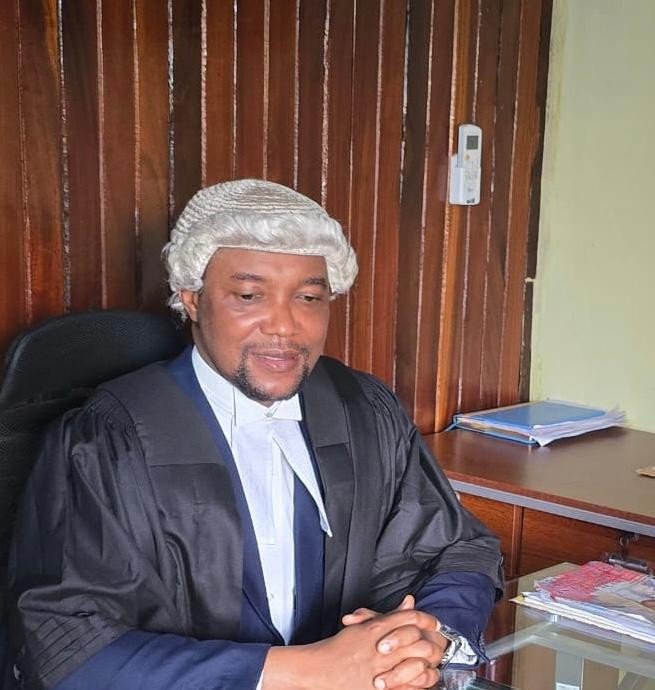
Lead Defense Counsel, E. T. Koroma, urged Justice Ganda to state a case to the Supreme Court for determination, as permitted in situations of legal conflict.

Despite reserving his ruling, Justice Ganda ultimately sided with the prosecution and dismissed the jurors in direct contrast to the Supreme Court’s previous orders.

He instructed the state to proceed with its next witness and warned against further delays. His decision has triggered intense debate about whether he has acted in contempt of the Supreme Court, and whether this sets a troubling precedent for judicial hierarchy.

Legal observers and members of the public are now asking:

  • Is Justice Ganda’s decision a violation of the Supreme Court’s binding ruling?
  • Can a trial judge override the explicit instructions of the highest court?
  • Will this trigger another round of litigation between the state and the defense?

As these questions linger, Abdul Kpaka remains in custody at the Pademba Road Maximum Correctional Centre. The matter was adjourned to today Wednesday, 19 November 2025, when the next chapter of this highly scrutinized trial will unfold.

ICPNC, NCCRM and ECOWAS Launch Roadmap to Enhance Early Warning and Crisis Response Framework

By Ibrahim Sesay

The Independent Commission for Peace and National Cohesion (ICPNC) and the National Early Warning and Response Mechanism Coordinating Centre (NCCRM), has, on Tuesday November 18, 2025 held a joint technical session with the ECOWAS Early Warning and Response (EPSG) Technical Mission Team. With support from GIZ, the meeting aimed at strengthening collaboration on peacebuilding, conflict prevention and crisis response in Sierra Leone.

Held at the ICPNC office on Tower Hill in Freetown, the meeting brought together senior officials, analysts and technical experts from both institutions to review the existing coordination structures and define areas for strengthened collaboration ahead of the country’s critical governance cycle from 2026 to 2028.

Delivering her opening remarks, Hawa Samai, Executive Secretary of the ICPNC, underscored the importance of collaboration in sustaining peace and national cohesion. She noted that the Commission’s work has always been “people-centered,” stressing that peace initiatives must be owned by citizens to be effective.

“You cannot work without the people. Our culture has been people-centered and we always ensure that people own the process,” she said. Hawa Samai added that despite financial and logistical challenges, the Commission continues to respond swiftly to early warning signals shared by partners such as GIZ and other local structures.

With major national processes ahead which includes the 2026 census, constitutional review, lower-level elections and the buildup to the 2028 general elections, she described the coming period as “a very challenging year,” emphasizing that the need for long-term collaboration is more urgent than ever.

Ruth Adwoa Frimpong, Technical Advisor for Early Warning Response under the ECOWAS EPSG Project, spelt out the mission’s objective to strengthen Sierra Leone’s early warning and early response architecture. She explained that their assessment is in line with regional priorities under the ECOWAS Peace and Security frameworks.

“This mission hinges on the project’s core objective to enhance ECOWAS’ ability to detect and respond to conflicts by strengthening NCCRM and ICPNC in their joint mandate,” she said, noting the importance of designing sustainable interventions that can outlast the project’s duration. “After the project ends, after we are all gone, what happens to the interventions? Sustainability is key.”

During the technical sessions, both institutions examined coordination gaps and opportunities within Sierra Leone’s peace infrastructure. Discussions explored how NCCRM’s data analysis could better inform ICPNC’s mediation and conflict resolution efforts and how local mediation insights could be integrated back into the national early warning system.

Francess Nyuman, Executive Director of the NCCRM, explained how the Centre gathers and validates information for its quarterly trend analysis. She emphasized that collaboration with other Government Ministries and Agencies helps ensure accuracy. “You do not do things alone; you will never succeed,” she said. She added that their continuous collaboration with key stakeholders makes it difficult for people to challenge their reports.

The meeting concluded with a joint roadmap in which partners agreed to focus on strengthening the Early Response Center’s website, developing joint peace messaging for strategic communication as well as rolling out joint training initiatives and providing technical support to the ongoing national fragility study. These key actions are expected to enhance coordination and improve the country’s overall conflict prevention framework.

In her brief closing address, ICPNC’s Executive Secretary thanked all partners for their commitment and reiterated the Commission’s readiness to work closely with the NCCRM, ECOWAS and GIZ in the coming years. She emphasized that sustained collaboration will be crucial as Sierra Leone enters a sensitive governance period.

SLPHA Dismisses Claims Linking Sierra Leone to Cocaine-Laden Container in Nigeria

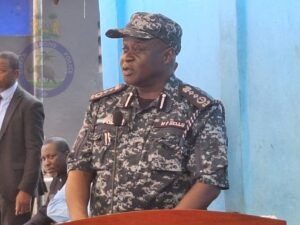
Sierra Leone Ports and Harbours Authority (SLPHA) Director General, Yakuba Bio

By Amin Kef (Ranger)

The Sierra Leone Ports and Harbours Authority (SLPHA) has issued an official statement addressing widespread media reports in Nigeria alleging that a container, identified as GCNU1332851 and purportedly linked to Sierra Leone, was discovered with cocaine at a Nigerian port.

According to the Authority, no formal communication has been received from the Nigeria Ports Authority (NPA) confirming the allegation. However, SLPHA stated that it has formally requested official information from its Nigerian counterpart and is currently awaiting a response.

In a detailed clarification, SLPHA disclosed that Grimaldi, the international shipping line responsible for the said container, has confirmed that the unit left Sierra Leone empty and was similarly received empty at the Ports and Terminal Multiservices Limited (PTML) terminal in Lagos.

To ensure transparency, SLPHA released the verified movement history of the container as recorded by both Grimaldi and the Container Terminal Operator (FTL) in Freetown:

  1. The container is a standard dry 20-foot unit.
  2. It arrived and was discharged at the Port of Freetown on 13 September 2025, onboard the vessel Grande Atlantico.
  3. It was delivered full to its consignee on 8 October 2025.
  4. The container was later returned empty to FTL on 11 October 2025.
  5. Crew of Grande Ghana 0225 inspected the container on 24 October 2025 and placed a seal before it was loaded onboard.
  6. The container weighed 2,200 kg, the standard for an empty 20-foot container.
  7. The loading report, signed by the vessel’s Chief Officer, confirmed the container’s empty
  8. It departed Freetown empty on 24 October 2025 aboard Grande Ghana 0225, en route to Lagos via Cotonou.

Further information obtained from Grimaldi’s Nigeria office confirmed:

  1. The vessel berthed in Lagos on 29 October 2025 at 23:38.
  2. Discharge operations began early on 30 October 2025 at 00:40.
  3. The container was discharged empty in Lagos on 30 October 2025 at 13:00.
  4. All operations concluded on 31 October 2025 at 19:00.
  5. The container was only flagged on 7 November 2025; eight days after being discharged.

SLPHA underscored that the timelines indicate the container was handled under standard procedures, arriving and departing Sierra Leone without any irregularities.

The Authority reaffirmed its commitment to transparent, accountable port management, assuring the public that it will continue to monitor the matter closely while awaiting official clarification from Nigerian authorities.

SLPHA concluded that it remains focused on safeguarding the integrity of Sierra Leone’s port operations and ensuring factual communication amidst growing cross-border speculation.

Health Ministry Marks World Diabetes Day 2025, Warns of Rising Cases in Sierra Leone

By Foday Moriba Conteh

Sierra Leone’s Ministry of Health, through the Directorate of Non-Communicable Diseases (NCDs) and Mental Health, has commemorated World Diabetes Day 2025 under the global theme: “Diabetes and Well-Being” and the national focus “Diabetes in the Workplace.” The event, held at the Ministry of Health Conference Hall on Youyi Building, brought together senior health officials, partners and civil society groups to raise awareness on the growing burden of diabetes in Sierra Leone.

In his welcome address, Dr. Abdul Jalloh, Director of the Directorate of Non-Communicable Diseases and Mental Health at the Ministry of Health, emphasized the Ministry’s commitment to combating diabetes nationwide, underscoring the urgency of continued awareness and prevention efforts. He noted that diabetes is affecting people across all age groups, from children to the elderly making it a national public health concern.

“This day is not only to highlight the challenges posed by diabetes, but also an opportunity to showcase the progress made and the interventions we intend to implement moving forward,” he said. Dr. Jalloh further appealed to the media to support the Ministry’s efforts by amplifying messages on prevention, early detection and healthy lifestyle choices.

He described World Diabetes Day as a moment for collective commitment from stakeholders, including Government institutions, partners and the public, to tackle the increasing prevalence of the disease.

Dr. Jalloh expressed gratitude to all attendees for honoring the Ministry’s invitation and reaffirmed the Directorate’s dedication to strengthening diabetes prevention and care services nationwide.

Michele Soci, Country Manager for Doctors with Africa (CUAMM) raised concern over the growing number of undiagnosed Type 1 diabetes cases among children and young people in the country.

He highlighted CUAMM’s ongoing support to diabetes prevention and care, particularly in the Western Area and Pujehun District. He noted that their interventions are implemented through key donors and partners, including the University of Health and Allied Sciences and the World Diabetes Foundation.

While commending the Ministry of Health for its continued collaboration, Soci stressed that despite progress made, significant challenges remain especially regarding early detection among children.

He described the growing number of undiagnosed Type 1 diabetes cases as an emerging emergency. “This form of diabetes affects mostly the younger generation, but many families do not recognize the symptoms at home,” he said. “Because of this lack of awareness, children often arrive at health facilities too late. Without timely treatment, Type 1 diabetes can rapidly become life-threatening.”

Soci called for a nationwide awareness campaign to help parents, caregivers, and communities quickly identify symptoms and seek immediate medical care for affected children.

Soci concluded by thanking the Ministry of Health and partners for their continued cooperation and urged sustained efforts to protect Sierra Leone’s young population from preventable diabetes-related deaths.

Delivering the keynote address, Dr. Alie Wurie, Deputy Medical Officer, underscored the alarming rise of diabetes globally and nationally. He noted that the World Health Organization reports a fourfold increase in global diabetes cases over the last 30 years, while the International Diabetes Federation estimates that one in every nine adults worldwide currently lives with diabetes, with the steepest rise occurring in low- and middle-income countries.

“Sierra Leone is no exception,” Dr. Wurie said. “National estimates show a dramatic increase—from about 7,000 recorded cases in 2011 to approximately 170,000 cases in 2024. In some urban areas, prevalence is as high as 6.2%. Many people living with diabetes remain undiagnosed, leaving them vulnerable to complications such as heart disease, kidney failure, stroke, blindness, and limb amputations.”

He emphasized that workplaces are crucial platforms for promoting early detection and healthier lifestyles, noting that adults spend a significant portion of their lives at work. “Healthier food options, routine screenings, and physical activity within workplaces can significantly improve well-being,” he said.

Dr. Wurie commended the Directorate of NCDs and its partners—including WHO, Partners in Health, Sanofi, PATH, and others—for expanding diabetes prevention and management nationwide. He highlighted that Sierra Leone has, for over a decade, operated a specialized diabetes team at Connaught Hospital, led by Prof. Fode, offering weekly clinics and treatment support.

He also announced ongoing reforms, including the revision of the National NCD Policy and Strategic Plan, aligning it with global best practices and strengthening diabetes care at the primary health level. “This week alone, we engaged with WHO on equipping community health units with diagnostic capacity for early diabetes detection,” he disclosed.

Calling for stronger public participation, Dr. Wurie urged employers, workers, civil society organizations, and communities to support regular screening, healthier lifestyles, and increased awareness. He also issued a warning about the excessive sugar content in many locally produced beverages and snacks.

“These products are extremely sweet, and without self-control we expose ourselves to higher diabetes risk,” he cautioned. “Let us choose healthier diets, reduce sugar intake, and increase physical activity.”

He appealed to the media to extend diabetes awareness beyond the day’s commemoration: “Let us use radio, television, newspapers, and social media to continue this campaign throughout next week and beyond. Diabetes is now a major public health crisis we are losing limbs, losing lives, and losing productivity.”

Dr. Wurie concluded by calling for collective responsibility:
“Together, we can do more. Together, we can build a healthier, more resilient Sierra Leone.”

To Prevent Cervical Cancer… Ministry of Health Announces Nationwide HPV Vaccination Drive for Girls Aged 11–18

By Foday Moriba Conteh

The Ministry of Health has announced the nationwide rollout of the National Multi-Age Cohort (MAC) HPV Vaccination Campaign, scheduled to begin today, Monday, 17th November 2025. This initiative marks a significant milestone in Sierra Leone’s ongoing efforts to eliminate cervical cancer, the second most common cancer among women of reproductive age in the country. The campaign, implemented through the Expanded Programme on Immunization (EPI), expands eligibility to girls aged 11 to 18 broadening coverage beyond the single-age cohort previously targeted.

Ahead of the official launch, the Ministry held a press briefing on Friday, 14th November 2025, at its Conference Hall in the Youyi Building, Freetown. The session aimed to equip media practitioners with accurate information to support nation-wide sensitization and public education efforts.

Deputy Medical Officer, Dr. Alie Wurie, emphasized that the engagement was intentionally scheduled before the campaign launch in order to strengthen public awareness. He acknowledged the media’s longstanding partnership in supporting public health delivery, noting that previous vaccination campaigns owed much of their success to timely and accurate reporting by journalists.

Dr. Alie Wurie explained that Sierra Leone has administered HPV vaccines for several years, with more than 168,000 girls vaccinated since the country began HPV immunization efforts in 2013. He described the HPV vaccine as one of the most effective tools in preventing cervical cancer and said that expanding the vaccination cohort represents a renewed commitment to protecting young girls.

He added that full technical details, including operational plans, vaccine delivery strategies and target population specifics would be explained by the EPI team. Dr. Alie Wurie encouraged the media to engage critically, ask questions and ensure clarity before disseminating information to the public. He praised journalists for their patience and reaffirmed the Ministry’s appreciation for their role in healthcare communication.

Representing the Ministry of Basic and Secondary School Education (MBSSE), Dr. Kuyateh delivered a statement on behalf of the Minister and Deputy Minister. He highlighted that the HPV MAC campaign chiefly targets school-going children, who constitute the largest portion of the 11–18 age bracket. Because most eligible girls are enrolled in primary, junior secondary and senior secondary schools, the MBSSE stands as the “largest stakeholder and beneficiary” of the campaign.

Dr. Kuyateh stressed that a successful vaccination campaign will lead to improvements in school enrollment, retention and academic performance. Healthy children, he said, are more likely to stay in school, achieve better results and contribute positively to society. He outlined the Ministry’s nationwide education structure, which includes Chief Education Officers, Directors, Deputy Directors, District Directors, over 380 School Quality Assurance Officers and thousands of school heads and teachers. This communication network is actively disseminating information to ensure nationwide awareness.

He assured the Ministry of Health that even the most remote communities have received information about the vaccination campaign. Dr. Kuyateh reiterated MBSSE’s readiness to collaborate fully, describing the initiative as a model of strong inter-ministerial cooperation.

Delivering a detailed overview of the campaign, Senior Public Health Sister, Margaret Kangbai, explained that cervical cancer remains a major public health concern, accounting for thousands of deaths worldwide and ranking as the second leading cause of death among women aged 15 to 45 in Sierra Leone. The HPV vaccine, she emphasized, is a critical preventive measure.

Sister Margaret Kangbai stated that the national HPV MAC campaign will run from 17th to 23rd November 2025. Unlike previous campaigns that targeted only 10-year-old girls, this year’s expanded cohort includes girls aged 11 to 18. The vaccine will be administered as a single dose for the general population, while immune compromised girls will receive two doses six months apart in coordination with HIV treatment services.

She clarified eligibility criteria: girls below 10 and above 18 will not be vaccinated; pregnant girls, those with severe illness and individuals with past allergic reactions to the vaccine are also excluded.

Operationally, the campaign will use the quadrivalent HPV vaccine providing protection against HPV types 6, 11, 16 and 18. It will be administered as a 0.5 ml intramuscular injection in the left upper arm. Delivery strategies include both school-based and community-based approaches. Schools, including primary, secondary, technical, vocational and tertiary institutions will serve as vaccination centers. Out-of-school girls will be targeted through community outreach, static health facilities, temporary fixed posts, mobile outreach sites, marketplaces, religious centers and lorry parks.

She emphasized that house-to-house vaccination will not occur due to the injectable nature of the vaccine. Vaccination teams will comprise three members: two vaccinators and one mobilizer, a model adopted based on lessons learned from previous campaigns. The activity will be supported by a four-level supervision system spanning team, district, regional and national levels to ensure compliance and efficiency.

Mop-up exercises will be conducted in districts that do not meet their targets during the seven-day campaign. Girls who miss the vaccination period will be allowed to receive the vaccine later at nearby health facilities.

Closing the briefing, Minister of Health II, Dr. Jalikatu Mustapha, reaffirmed the Government’s commitment to eliminating cervical cancer in Sierra Leone. She described the disease as highly preventable but persistently deadly, killing more than 70 percent of women diagnosed annually. She shared a personal story about losing her grandmother to cervical cancer 19 years ago, emphasizing her passion for leading the fight against the disease. She also revealed that the President has a personal connection to cervical cancer and has instructed the Ministry to intensify elimination efforts.

Dr. Jalikatu Mustapha highlighted significant progress made in HPV vaccination, screenin, and treatment. As of mid-2025, the country has achieved an 80 percent vaccination coverage rate among eligible girls. She also announced that 24 cervical cancer screening centers are now operational nationwide, with seven located in the Western Area. These centers provide same-day detection and treatment for pre-cancerous lesions, as well as surgical interventions for advanced cases.

She revealed that the upcoming MAC campaign targets about one million girls and that the Ministry has secured 1.3 million doses of the HPV vaccine to ensure full coverage. The Minister called on parents, communities and the media to help counter misinformation and encourage uptake, stressing that the vaccine is safe, effective and vital for saving lives.

She thanked Gavi and health partners for their support and officially confirmed Monday, 17th November 2025, as the launch date for what she described as an “extraordinary and life-saving campaign.”

Amnesty International Sierra Leone Trains Youth on Advocacy and Leadership

By Ibrahim Sesay

Amnesty International Sierra Leone (AISL) has launched a two-day youth empowerment and capacity-building training aimed at enhancing the advocacy and leadership skills of young people across the country. The training, which began on Thursday, November 13, 2025, at the AISL National Secretariat in Freetown, is being held under the theme: “From Knowledge to Action: Strengthening Youth Voices for Social and Environmental Change.”

In his opening address, Solomon M. Sogbandi, Executive Director of AISL, emphasized the importance of building the capacity of youth members to effectively address pressing social issues such as drug abuse, cyber security, gender equality and climate change.

“We believe that if you don’t empower your membership, they would not be able to know the issues and address them adequately,” Solomon M. Sogbandi noted. “The membership is the strength of the institution, so it’s our duty to train them to understand the issues and engage stakeholders at community, school or national levels.”

Solomon M. Sogbandi further highlighted that Amnesty International’s revised global strategy places stronger emphasis on youth engagement, describing young people as “key drivers of social transformation.” He encouraged participants to view themselves as leaders of today rather than the future, adding, “We have to look at what they can do now and how they can prepare themselves for leadership roles.”

Also speaking at the event, Jaiah Kaikai, Campaigns and Growth Officer at AISL, said the participants were selected from all regions of Sierra Leone to ensure inclusivity and representation.

“We have youth members drawn from the East, North South, and Western regions,” Jaiah Kaikai explained. “Amnesty International is a movement organization with a broad youth base and this training brings them together to strengthen their advocacy skills.”

He added that the goal of the program is to prepare participants to act as ambassadors in their respective communities, raising awareness on key national issues. “The youth constitute the bulk of this country’s population and using them as forerunners for advocacy could be the most effective approach,” he stressed.

The first day of the training featured a presentation by legal practitioner Christian M. B. Amara, who discussed the Cyber Security and Crime Act. He highlighted key components of the legislation, including legal safeguards, institutional frameworks and penalties for violations.

Participants expressed deep satisfaction with the day’s sessions, describing them as both practical and inspiring.

“I’ve learned that advocacy is not just about talking but about taking action and engaging the right stakeholders,” said Jeneba Kamara, a youth representative from the Eastern Region. “I’m now more confident to lead awareness efforts in my community, especially on drug abuse and women’s empowerment.”

Another participant, Issa Kanu, praised Amnesty International for its continued commitment to youth development, noting that such initiatives create opportunities for young leaders to influence positive change.

The training continued on Friday with sessions on Sierra Leone’s recent gender laws and related policy frameworks aimed at promoting equality and inclusion.

MCC 2026 Scorecard: Sierra Leone Records 71% in Anti-Corruption, 84% in Accountability

By Alvin Lansana Kargbo

Sierra Leone has once again demonstrated its firm commitment to integrity and good governance by maintaining an impressive performance in the Millennium Challenge Corporation (MCC) Scorecard. According to a press release issued by the Anti-Corruption Commission (ACC) on Thursday, 13th November 2025, the country scored 71 percent (71%) in the “Control of Corruption” indicator, marking its eighth consecutive year of excellence since 2018.

The latest MCC Scorecard, which was released on Wednesday, 12th November 2025, introduced a new “Government Accountability” indicator. Sierra Leone also excelled in this area, securing an outstanding 84 percent (84%); a testament to the nation’s consistent progress in strengthening transparency and institutional accountability.

A complementary press release from the Sierra Leone Compact Development Unit dated 12th November 2025 confirmed that “Sierra Leone’s $480 million Millennium Challenge Corporation (MCC) Compact remains firmly on track as the FY2026 Scorecard introduces new indicators and benchmarks to reflect evolving U.S. Government priorities.”

Commenting on the country’s stellar performance, ACC Commissioner Francis Ben Kaifala Esq. expressed immense satisfaction with Sierra Leone’s continued success:
“From a failed score of 49 percent in 2017, it is truly heartening and satisfying to see that the MCC Scorecard continues to reflect the outstanding work we have been doing for the past eight years to combat corruption. His Excellency, President Brigadier (Rtd.) Dr. Julius Maada Bio is the pioneer of these gains and I remain inspired by his strong Presidential Will in leading this national anti-corruption campaign. Our pledge is to continue working hard to instill integrity, accountability and transparency in the governance architecture of Sierra Leone, ensuring that the corrupt are held accountable.”

Regionally, Sierra Leone’s performance stands out within the Mano River Union and beyond. The country outperformed Guinea (53%) and Liberia (56%), as well as regional peers such as Nigeria (64%) and Kenya (42%) further solidifying its reputation as a leader in anti-corruption reforms in Africa.

The ACC reaffirmed its commitment to maintaining this trajectory of integrity and transparency, assuring citizens that it will remain resolute in its mission to combat corruption and uphold the public trust.

Sierra Leone Meets All 2026 Hajj Standards, Earns Commendation from Saudi Authorities

Sierra Leone has earned international commendation following its outstanding performance at the 5th Hajj Conference and Exhibition hosted by the Kingdom of Saudi Arabia’s Ministry of Hajj and Umrah Affairs under the theme: “From Makkah to the World.” The prestigious four-day event, held at the Jeddah Superdome, brought together over 150 countries, featuring 143 dialogue sessions and workshops aimed at improving the global Hajj experience through innovation and collaboration.

The annual conference served as a vital platform for policymakers, scholars and Hajj administrators to discuss emerging trends in travel management, health and safety, hospitality and digital transformation across the pilgrimage sector.

During the contracting session, Sierra Leone was recognized for meeting the 2026 Hajj operational benchmarks, securing an allocation of 3,500 pilgrim slots for the upcoming season. The Adviser to the Minister of Hajj and Umrah, Dr. Badr Muhammad Al Solami, lauded Sierra Leone’s remarkable progress, applauding the leadership and coordination of Alhaji Murtada Sesay, Chairman of the Presidential Taskforce on Hajj and His Excellency Mohammed Barrie, Sierra Leone’s Ambassador to Saudi Arabia.

Dr. Al Solami emphasized that Sierra Leone’s approach to Hajj organization exemplified excellence in planning, discipline and service delivery, urging other countries to emulate its model. His remarks drew wide applause from delegates and participants attending the high-level event.

Speaking at the closing ceremony, His Excellency Abdulfattah bin Suleiman Mashat, Saudi Arabia’s Deputy Minister of Hajj and Umrah, highlighted the achievements of the conference, including the unveiling of key initiatives aimed at improving coordination and efficiency in future Hajj operations. He also underscored the value of cross-sector collaboration in transportation, digital innovation, healthcare and hospitality management.

Sierra Leone’s recognition at this global forum underscores its unwavering commitment to improving the welfare and safety of its pilgrims while enhancing the credibility of its Hajj administration. The success also reflects the Government’s broader dedication to ensuring that Sierra Leone’s pilgrims experience a seamless and spiritually fulfilling journey to the Holy Land in 2026.

The 5th Hajj Conference and Exhibition reaffirmed Saudi Arabia’s continued leadership in coordinating the world’s largest religious gathering while highlighting Sierra Leone’s rising reputation as a well-organized and respected Hajj-participating nation.

Cyprus President Hails President Bio’s Global Leadership, Strengthens Ties with Sierra Leone

President Bio shaking hands with the President of Cyprus

His Excellency Nikos Christodoulides, President of the Republic of Cyprus, has lauded Sierra Leone’s President, His Excellency Julius Maada Bio, for his exemplary leadership at the United Nations Security Council (UNSC) and as Chairperson of the ECOWAS Authority. President Nikos Christodoulides reaffirmed his country’s commitment to strengthening bilateral and multilateral ties with Sierra Leone during a high-level meeting held on Thursday, 13th November 2025, in Nicosia, Cyprus.

The occasion marked a historic milestone the first-ever official visit of a sitting Sierra Leonean Head of State to Cyprus. President Nikos Christodoulides emphasized the shared historical legacy of both nations as former British colonies and underscored the importance of expanding cooperation into new strategic sectors.

He noted that while relations between Cyprus and Sierra Leone have remained cordial over the years, this visit signals a new era of enhanced collaboration in agriculture, fisheries, education, maritime affairs, cybersecurity and private sector investment. He also briefed President Bio on Cyprus’ upcoming six-month rotating Presidency of the Council of the European Union, beginning January 2026, pledging to leverage the position to deepen engagement between the EU, Sierra Leone and ECOWAS.

In his response, President Bio expressed gratitude for the warm hospitality accorded to him and his delegation, describing the visit as both “strategic and symbolic.” He commended the Government of Cyprus for awarding scholarships to Sierra Leonean students in 2022 and expressed hope for expanding such educational partnerships. The Sierra Leonean leader also presented his Government’s “Big Five Game Changers” agenda, outlining priority areas such as food security, human capital development, youth employment, technological advancement and public sector reform.

During the visit, three Memoranda of Understanding (MoUs) were signed between the two nations. Sierra Leone’s Minister of Foreign Affairs and International Cooperation, Alhaji Musa Timothy Kabba, and Cyprus’ Minister of Agriculture, Rural Development and Environment, Dr. Maria Panayiotou, represented their respective Governments during the signing ceremony.

President Bio later paid a courtesy visit to the Municipality of Nicosia, where he was received by Mayor Charalambos Prountzos and also visited the Cypriot House of Representatives, where he met with Ms. Annita Demetriou, the President of the House.

This landmark diplomatic engagement further cements Sierra Leone’s growing global partnerships under President Bio’s leadership and holds significant promise for enhanced cooperation between Africa and Europe, particularly as Cyprus assumes its pivotal EU Presidency role in 2026.