
Home Blog Page 944

When the microphone goes silent

Alpha Amadu Bah

By Mohamed Asmieu Bah

One of the most difficult moments in one’s life is to lose a pal and colleague with whom you had the best memories that you can ever think of. On the 10th of February 2021, SLBC lost one of its most brilliant and prolific broadcasters that the institution has ever produced. Alpha Amadu Bah also known as ‘’DJ BEST’’ epitomized what I will refer to as a gem in Sierra Leone’s media landscape.

It was on Wednesday the 10th of February in our normal production meeting around 9 am, when a colleague of mine, pulled me aside and said ‘’ I want to tell you something but please don’t tell anyone for now.” I thought he was going to tell me about a big breaking news in the country. He saw the anxiety in my eyes, there he went, ‘’BEST DONE DIE.’’

I almost fell on the floor but thank God I just reversed, took my seat and bowed my head on my desk speechless for almost three minutes. I had a feeling that I hadn’t had for a very long time, I think I only had a shock that was similar to this one when I lost my father in 2008, by then I was writing my final exam in my third year at FBC. I spoke with my father the night before he passed on; he was hale and hearty. I only came out to use the gent’s when my phone rang, and the caller on the other side of the telephone said ‘’ THE PA DON DIE.’’   The Quran says It is He) Who created death and life that He may try you- which of you is best in deeds; and He is the Mighty, the Forgiving, (67:2)

Alpha Amadu Bah’s  ailment started in Kono, it was sometime in August 2020 when he and I went to Kono in Soa Chiefdom to look at the road condition of one of the agriculturally endowed chiefdoms not only in Kono but the country as a whole. We left Freetown on Friday around 7 pm, and arrived in Koidu at 2 am and spent the night at VIP Guest House. When we woke up, he showed me his foot which had swollen; he said Asmieu ‘’ a no well me foot don swell e dae mona me ol net.’’ Our arrangement was to leave Koidu just after dawn, but he sought permission to go to Koidu Hospital and got medical attention.

On his return from the hospital he showed me a plastic bag full of pain killer drugs and antibiotics. When we arrived in Freetown, he went to the Jui Chinese Hospital to do some tests, but the situation got worse as the swollenness increased, and he started limping, the condition deteriorated to the extent that the office had to give him a few weeks sick leave.

At home, we kept communicating with him, during those weeks, he made several visits to Connaught, 34 and other private hospitals to do medical diagnostics, but to his dismay none of the hospitals was able to tell him the cause of his swollen foot and that was worrying to him. He had reported widely on the country’s health system, his experience those few weeks left him in shock as he told me. He told me how poor our health system has sunk, even at the 34 Military Hospital, he saw many odd things that he promised to report on once he was out of the sick bed. In one of my visits, he told me the hospital had less than five wheelchairs.

It was on a Thursday afternoon when he left us in the office after  he had edited the World toilet day news to the best of his ability as if he was biding goodbye to the job. and went to town to run some errands; while in town, he had an attack and was rushed to the 34 Military Hospital. Neither he nor we knew that was his last time to visit his office.   I only came to know about the incident on Friday morning when I came to the office, I called his phone and was answered by his wife who told me in a very disappointing and somber voice that her husband was at the outpatient ward waiting to do some tests.

After my production meeting, Sheku Sumaila and I  drove to the 34 Military Hospital we met him lying in one of the beds, because it was early, the officer in charge didn’t want to allow us, but when he realized it was me, he said ‘’Mr Bah please come in.’’ I looked at him, he was in agony.

He told me he had felt pain in his stomach that he had never felt before; he said he didn’t know if it was a disorder but he didn’t eat street food so he was in complete astonishment as to the cause of that severe pain. He was pokerfaced. I gave him words of consolation before I departed.

On the following day, the surgery was done, and I visited him two days later. Though he was in pain, he looked strong like a soldier, those of us who knew Best knew him to be very regimental and brave, and he never liked to act weak or to be seen as weak or vulnerable. As regimental man his sense of humor was just exceptional, he always wears a smile.

Best man was indeed a best man in all facets of life, if it were for professionalism, you will hardly find his breed at SLBC and other local media houses, because he was always meticulous, and he had the best hand writing I have ever seen.

If you see him write on paper you will mistake it for photocopied work. Even on a blank A4 Paper his lines would be straight like a muster parade or rank / file of soldiers waiting for an inspection of a guard of honor being mounted for a visiting head of state.

He took over from DJ Base the popular radio programme called Night Life when the latter left SLBC radio for AYV. DJ Base joined the SLBC after the merger between SLBS and UN Radio. When he came to SLBC he continued Night Line which was very popular during the UN radio days. When DJ Base left, Alpha Amadu took over the show and added a lot of flare, professionalism and human interest touch. He changed the face of the show and made it more human interest centered.

He visited all the districts of this country, went to communities that have never seen even their member of parliament. He went to communities in Falaba that will be cut off from the rest of the country during the rains, he visited communities that people would walk thirty to forty miles to access a community health centre.

He showed us places where during this time and age pregnant women have to be carried by young men or commercial bikes, he exposed to us places in Sierra Leone where the Guinean Franc is the legal tender for them.

He visited villages that have never seen vehicles, the only means of transportation for them is commercial bikes. He braved all odds just to bring out the sufferings of the ordinary man. I remember talking to him after one of his visits to Falaba, he said the people do not even know the name of the government that is ruling them. He was that kind of journalist who had the nose to smell where news is and how to unearth that news.

I recall in our daily production meetings, Best was known to do the hard news that no one will dare venture to do, as presenter of Morning Coffee, he will ask the hard questions and tell the story of the ordinary man even if it hurts the powers that be, he was always ready to face the music if it arises.

SLBC has indeed lost a gem, I will end with these verses from the Quran which says “Every soul shall taste death, and only on the Day of Judgment will you be paid your full recompense.”  As a Muslim I am convinced my brother and colleague is in paradise, because I can confirm that he was a pious man who like the Prophet said ‘’sorry for your fellow man and Allah will show you mercy.’’

The Messenger of Allah (S) has stated: “Death is the first stage in the stages of the hereafter and the last stage from the stages of the world.”. Till we join you one day Best, Loud Master, Chief Pikin na Chief, we shall see one day and we shall uphold what you stood for  Asmieu Bah is an Assistant Senior News Editor at SLBC and the National Secretary General of SLAJ

Gruesome Road Accident Claims the Lives of Eight Players, 1 Coach

By Foday Moriba Conteh

In an accident that occurred on the 28th February 2021 along the Makoth to Makeni Freetown highway eight players and one coach were left dead, leaving others hospitalized. The set of players were coming from Batkanu after spending two days and played a final on Sunday evening trying to find their way to Makeni.

On their way coming, their vehicle crashed into another vehicle carrying timber which resulted to the death of the nine players.

No confirmation has been announced for their burial but meanwhile sports journalists and football fans are mourning their death.

The Bombali District Football Association is yet to come out with an official statement in relation to the death of the late players.

The President of the Sierra Leone Football Association, Madam Isha Johansen, says she is deeply saddened as she sends her heartfelt condolences to the entire football family of the Northern Region Football Association (NRFA) for the death of the nine young players who lost their lives in a tragic road accident.

The SLFA Boss’ condolence message sadly stated that, “On behalf of the Sierra Leone Football Association I join you in expressing our deepest sympathies to the families and friends of the young players who died in the accident and we pray for a fast recovery of the hospitalized”.

“I hope my condolences in some way will help console you and the entire football family of the NRFA especially the families of the departed,” she added.

SLAJ & FIU Discuss Issues Related to Money Laundering

President, Sierra Leone Association of Journalists (SLAJ), Ahmed Nasralla

By Amin Kef Sesay

In his response to a statement delivered by the  Financial Intelligence Unit (FIU), the President of the Sierra Leone Association of Journalists (SLAJ), Ahmed Nasralla, has on the 1st March, 2021 during a Press Conference on the report of the 34th GIABA Technical Mission Plenary, started by thanking the Financial Intelligence Unit (FIU) for inviting him to dilate on issues bordering on money laundering and other related crimes as well as Sierra Leone’s compliance and rating with international standards in combating such.

He said the engagement goes to show that the FIU recognizes the importance of the role of the media in helping to combating money laundering and other financial crimes.

“It was also encouraging to note that two colleagues, Abibatu Kamara and Mohamed Konneh, are the Sierra Leone Media Coordinator and deputy, respectively for The Inter-Governmental Action Group against Money Laundering in West Africa (GIABA),” he continued.

GIABA, it was stated, was established by ECOWAS Authority of Heads of State and Government in 2000 as a major response and contribution of the regional body to the fight against money laundering.

The SLAJ President said it must be accepted that the importance of the media in disseminating information on the one hand, and in exposing corruption generally on the other hand, cannot be overemphasized, especially given that the region is confronted with several threats relating to transnational organized crime with its dramatic negative impact on member countries.

He said most have agreed that as media, journalists’ role in ensuring all organs of society work efficiently in peace and stability is herculean, yet, they are limited in every capacity.

According to him it is against that backdrop that such an engagement with journalists is an opportunity for the FIU to strengthen relationship with the media and improve the capability of journalists to be able to report on money laundering activities and other transnational financial crimes from an informed perspective.

The SLAJ President said to report on issues of money laundering, terrorist financing and other financial crimes and their ramifications, journalist requires not only the knowledge and the tools, but also the virtues of patience, steadfastness and honesty.

Nasralla said it is an area for serious investigative journalists maintaining that investigative journalism is a very demanding type of job.

Of most importance, he pointed out, journalists working on such matters have to cross-check and fact-check every information and document presented to them.

He averred that in this type of work, one don’t have to be in haste to break the news; as one has to take time, gather  facts, dig deeper with an open mind and a clear conscience; refrain from accusing someone or an organization wrongly.

The President also stated that it is necessary to be careful with sources and work on building trust and cooperation with potential sources. ‘Take tem kill anch so you go see e gut’, as we say in our local parlance.

He said he understands journalists from Sierra Leone have benefitted from much training to report on such matters, but training has to be continuous in light of emerging trends.

Beyond this, he said, he believes institutions like the FIU must always be forthcoming with the information whenever journalists seek it to aid their investigations.

According to him in a situation where information required by journalists cannot be provided, the FIU must be able to explain to journalists in a respectful manner why this is so. Equally, the FIU (and related anti-graft agencies like the ACC and ASSL) must support freedom of information, access and open data initiatives to help journalists do their work freely.

Moreover, he continued, there should be a comprehensive and complementary approach to the fight against money laundering.

Apart from the media, he said, the FIU also needs to promote strategic partnerships with civil society, religious leaders, youths and relevant State and non-state actors in the fight.

He said SLAJ is pleased to associate with the work of the FIU saying  his presence  is an indication that they will support their work and continue to work together to fight against the borderless menace.

The Director of the Financial Intelligence Unit, David Borbor, said his institution is responsible for coordinating national effort in the fight against money laundering and terrorist financing.

He noted that Mutual Evaluation is a peer review mechanism adopted by GIABA member States, in accordance with:  the Calendar for Mutual Evaluations and the Mutual Evaluations Process and Procedures adopted by the GIABA Ministerial Committee (GMC); the FATF 40 Recommendations; and  the FATF Methodology for Assessing Technical Compliance with the FATF Recommendations and the Effectiveness of AML/CFT Systems.

“It is a necessary process to ensure that countries are in compliance with the AML/CFT International standards”, he stated.

According to him Member States of GIABA agree to subject themselves to the assessment process in conformity with international standards for preventing money laundering and financing of terrorism as contained in Articles 12 to 14 of the GIABA Statute.

Thus, within the region, the evaluation is undertaken by the Inter-Governmental action group against Money laundering in West Africa (GIABA) – a specialized institution of ECOWAS and an the FATF -Style regional body, he revealed .

The assessment, he said,  comprises two inter-related components one dealing with technical compliance and the other on effectiveness.

The technical compliance assessment, he stated, looks at whether countries have implemented the specific requirements of the FATF Recommendations.

“It looks at detailed issues of law and regulation, and at the very specific requirements that are set out in the FATF standard while the effectiveness assess the extent to which a country achieves a defined set of outcomes that are central to a robust AML/CFT system, and the extent to which a country’s legal and institutional framework is producing the expected results,” he said.

Director of the Financial Intelligence Unit, David Borbor

NATCOM Engages Pupils on Africa Safe Internet Day

By Amin Kef Sesay

On the 27th February, 2021, the National Telecommunications Commission (NATCOM), in collaboration with the Ministry of Information and Communications and other partners, including Civil Society Organizations and child protection agencies, observed Africa Safe Internet Day 2021.

The occasion, which was held at NATCOM head office on Hill Station in Freetown, attracted a galaxy of pupils drawn from various schools, teachers, civil society actors, MIC staff, the Fourth Estate, among several others.

Speaking on behalf of the Minister of Information, Mohamed Rado Swaray who was unavoidably absent, Emmanuel Turay of the MIC spoke at length of the importance of the day which he said is basically to create awareness on the need for pupils and children using the internet to search, browse and do research for their school work maintaining  that they should be properly guided so as not to fall victims to internet bullies, child molesters and other such people using the internet to target and abuse children.

He warned parents to always monitor what their children do with the internet, adding that technology is far advanced these days and it is very easy for children to fall into the hands of people engaged in trafficking children for sex and other illicit activities.

Emmanuel encouraged the children to form groups in their various schools with the objective of reporting people engaged in using the internet to target children for the wrong reasons; citing that already NATCOM created such a platform on the internet with the help of civil society activists and child protection agencies to pick out and report anyone using the internet to target children wrongly.

He mentioned that Sierra Leone only quite recently started observing Africa Safer Internet Day with other countries but that the idea had been hatched way back in 2008. He added that this is the first time Sierra Leone is observing the day and that there is much to learn in terms of protecting oneself from people using the internet to abuse children.

Also speaking at the well-attended ceremony was Hawa C, Bah, Focal Person Child Online Protection. She narrated how Sierra Leone has over the years been working in collaboration with other players to protect children from people using the internet to abuse them. She maintained that as Focal Person for Child Online Protection, it is her business to ensure that protective measures are established that would make children safe from abusers of the internet who make children their targets as they are vulnerable and are easy prey.

She used the opportunity to prevail on school authorities and parents of children who are internet users to work with NATCOM and other players to set up internet portals for protecting children from people using internet to abuse children.

She added that the importance of protecting children from internet abusers cannot be underlined enough because it is an issue that cuts across countries and nations and every country must be seen working in sync with other countries to put a stop to child molesters on the internet.

In his own contribution, NATCOM Director General, Daniel Kaitibie welcomed the students, recalling that he too was once a student and that he has been a lecturer to a number of years which makes him feel very comfortable with children.

He used the opportunity to inform his audience that the issue of protecting children from abusers over the internet is not a new one as there had been measures put in place by the MIC in collaboration with NATCOM and other players to ensure that portals were created at various pilot schools for the purpose of monitoring who views what and who has a line to the children that could have the intention of abusing the child browsing the internet for research and other purposes.

Basically, the various speakers explained to the children that the 2021 Africa Safer Internet Day under the theme: Positioning and Partnering for Child Online Protection, the partners thought it necessary to keep the conversation going with and among young people decisions reflect their interest and needs. The various speakers informed the children that this led them to putting together a fireside chat series which was fun and attended by participants from Ghana, Nigeria and Ethiopia via zoom.

The participants responded to questions and observations on the way forward and generally the event was a grand success.

Climate change is a threat to national development – EU Ambassador Tom Vens

European Union Ambassador in Sierra Leone, Tom Vens

By Amin Kef Sesay

The European Union Ambassador in Sierra Leone, Tom Vens has said that climate change is posing serious threat to Sierra Leone’s sustainable development trajectory and called on the media to focus more attention on environmental reporting in order to educate the public about the environmental hazards and its socio-economic impact on local communities.

Ambassador Vens made this statement on Friday 26th February 2021, during the closing ceremony of the European Union funded Training on Climate Change and Environmental reporting for 15 journalists hosted at the New Brookfields Hotel in Freetown.

The five days specialised hands-on training which was launched on 22nd February 2021, as part of EU’s climate diplomacy that is aimed at not only building the capacity of journalists to understanding the science of climate change but to also stimulate their interest to regularly focus on reporting environmental issues to protect the country’s flora and fauna from its current state of depletion.

Speaking during the training, Ambassador Vens noted that Sierra Leone has been identified as the third most vulnerable country to face the severe impacts of climate change which are induced by humans and also natural causes adding that EU recognizes the critical role of the media in disseminating information for the wider public to take appropriate measures, particularly on climate change and environmental issues.

“The media does not only have a responsibility to report disasters but also to improve transparency and accountability around environmental issues, and help ensure that policies are implemented to guaranty the protection of our people their livelihoods and the safety of our environment,” Vens said.

He noted that the negative effect of Climate Change has impacted mainly the environment and its rich biodiversity including agriculture, fisheries, tourism, energy and water sectors and therefore implored the media to follow crucially on unfolding events on the environment and climate change.

He said journalists continue to provide factual and credible information to the public and policy makers about Sierra Leone preparedness to salvage related issues of Climate Change which the country will unfortunately likely to continue to face.

Minister of the Environment, Prof. Foday M. Jaward said President Bio inaugurated the inter-ministerial committee that is charged with the exceptional mandate to look into the affairs of the country’s dwelling forest, encroachment upon water catchments and the depletion of mangroves in view of the alarming problems in the sector.

He thanked the EU Ambassador for their invaluable support to the Economic Forum for conducting the training which he said is in line with EU’s policy to combat Climate Change and a manifestation to global fight in regaining the ecological functionality of ecosystems in Sierra Leone.

In 2020, Sierra Leone ranked below the regional average on the Environmental Performance Index (177/180). The country’s biodiversity, forests and fish stocks have seen significant deterioration over the past decade, and the impact on environmentally sensitive sectors such as agriculture and fisheries threatens the basis of 60% of the economy and the livelihood of 70% of people, thereby increasing conflict risks. Furthermore, it appears that the habitat destruction correlates with zoonotic diseases such as the 2014/15 Ebola Virus disease, which renders the fragmentation of Sierra Leone’s forests a global public health issue.

The EU endeavours to support the essential role that media channels play in providing the public with accurate and factual information on domestic environmental issues including on government policy and response as regards climate change and environmental degradation.

President of the Sierra Leone Association of Journalists, Ahmed Sahid Nasralla said thanked EU for the initiative  and maintained that SLAJ views the training as an effort towards helping journalists develop interest and acquire the knowledge to be able to report, comment, analyze, and influence policy decisions on the environment and climate change issues. And we thank the EU for that”.

It was five days of intense work – where the trainees learnt the science of Climate Change and its attendant challenges and impacts on Sierra Leone’s overall ecological health and also the European Union’s actions in supporting government efforts to mitigate these problems.

The field trips also exposed journalists to the stark realities of environmental degradation and the current challenges of biodiversity conservation particularly in the Western Area Peninsula National Park – with its diverse flora and fauna – serving as the main water catchment source for Freetown and its environs. Also, the vast coastline along the peninsular – famous for its pristine beaches and wetlands is similarly under severe threats due to sand mining, deforestation and other unregulated social activities. These issues were largely observed and captured in the pitched articles and stories presented by the print and electronic media practitioners on the last day of the training.

Ambassador Vens encouraged the journalists to use the networking opportunities created at the training to support the entire group and also urged them to become environmental advocates in their various communities.

Journalists pose with Ambassador Tom Vens while displaying their certificates after the training

Go Grab Your Castrol GTX & Stand to win Attractive Prizes

By Amin Kef Sesay 

The National Petroleum Sierra Leone Limited (NP-SL Ltd),as the leading petroleum marketing company in this country and beyond is really poised to continue to give its esteemed customers qualitative petroleum products.

It is record that Management of the company always ensures that timely arrangements are made in advance  in order to ensure that the supply chain is never affected that would have the potential of creating  some  form of scarcity that would stifle various facets in society.

Besides, the company, from time to time aspires to bring its  numerous customers closer to its brands of the different petroleum products that the company markets.

Out of this passion NP-SL Ltd commenced the Castrol GTX Loyalty Lucky Dip Promotion on the 15th February 2021 which will run through till the 14th March 2021, meaning it will last for four weeks as part of the company’s annual activities.

For now every time a NP-SL Ltd customer buys 5 Litre of Castrol GTX from any NP Dealer Stations, he or she automatically becomes eligible to be part of the promo and stands to win an attractive prize.

When the customer buys 5L Castrol GTX (20w50 or GTX Diesel) he or she will have the chance to have one dip and for the GTX Ultraclean product he or she has 3 dips.

There are two things to be discovered on the slip after any dip which are WINNER or Sorry! Buy More GTX.

The winner leaves his or her name and telephone number with the Station Manager of the Filling Station where the Castrol lubricant was bought and he or she will be later contacted by the Sales Supervisor.

As far as the promotion is tailored no customer goes empty handed as even losers will have some form of compensation at the end of the day.

Already there are flyers that provide information about the promotion and certain sales points have been activated in order to give the Promo wider coverage.

It must be noted that the Ultraclean 10w40 Castrol Oil is a multi-grade oil that can be used in hotter countries. GTX 20w50, though good for petrol engines, is also a  multi-purpose oil.

It has been established that the Castrol oil in the white rubber is the one that is most often used as it maintains temperature and can be used on petrol engines.

This medium learnt that, NP-SL Ltd, from time to time conducts trainings for automobile mechanics and the company’s pump attendants in order for them to know the various specifications which could help them to guide customers on the actual type of Castrol GTX that will suit them.

It was also learnt that the Ultra-clean Castrol oil is going for Le250, 000 and the others (Castrol Oil) for Le200, 000.

What is certain is that Castrol GTX is more than just an ordinary oil as it is considered to be liquid engineering.

From an in-depth investigation conducted it was discovered that the Castrol GTX is less costly in the sense that it can last longer compared to other lubricants of inferior quality meaning that when consideration is taken of the amount of money spent on changing engine oil of inferior quality in comparison to Castrol GTX, then it discerns that indeed it is one that is cheaper because unconsciously much money is spent on procuring inferior engine oil of various variety than what is spent on Castrol GTX within the period of purchase under review.

Besides lasting longer, Castrol GTX lubricant enhances the good performance and efficiency of motor engines, minimizes hazardous gaseous emission and helps to properly clean motor engines or machines that may have been clogged by particles.

The National Petroleum Sierra Leone Limited (NP-SL Ltd) is indeed one successful indigenous company which most of the citizens can boast of especially when consideration is given to the fact that this entity has stood the test of time weathering challenges that may have led to its downfall.

For such a commendable feat to be achieved during quite a long period of time now means that the company has been blessed with capable shareholders and Managerial teams that have been providing the requisite ideas and initiatives that continue to take NP from one higher level to another.

Providing its esteemed and cherished customers, right across the country, with rapt and efficient attention by always ensuring that their needs are well satisfied has been identified as one of the secrets behind the successes of the company. Management is very keen on prioritizing customer care which is why it is keen to know about their reactions as well as to listen to various concerns raised and always be in a position to address them.

Having amassed the strength and seeing the need to expand appropriately, NP-SL thought it fit to open branches in Guinea, Liberia, Ivory Coast and The Gambia and all of them are extremely functioning well to the utmost satisfaction of Governments plus its ever growing customers. In doing so, the company has been contributing towards job creation and poverty reduction more especially as it is virtually impossible for the Governments of these countries to provide all job opportunities for citizens.

When cognisance is taken of the fact that Governments need revenue to finance development projects it is important to find the sources of generating such. NP, as a company, is one of the biggest taxpayers to Government. Management always makes it as a point of duty to timely pay taxes and despite battling with existing and unforeseeable challenges there has never been an instance when it has been coerced to do so.

Many have praised NP for making available cookers popularly known as NP Gas which is safe for cooking purposes. These NP Gas cookers are sold at reasonable prices and could be procured in all their filling stations as well as from authorized dealers. At a time like this when it has been recognized that it is advisable, for health reasons, to avoid using firewood or charcoal for cooking purposes the best option could be NP Gas, which is hygienic, clean and quick.

NP Smart Card is currently trending and is a device that makes it possible to procure fuel without exchanging money. As long as the NP Smart Card holder has money in the card he or she can secure fuel based on the amount of money inside the card. It has been rated as a convenient way of purchasing fuel and is very secured.

Talking about effective implementation of Local Content Policy, NP-SL stands tall as it is truly the only 100% indigenous company that employs 100% Sierra Leoneans as workers. The company gives preference to employing Sierra Leoneans which is a clear indication that it adheres to the country’s Local Content Policy as utilizing local talents makes it possible for indigenes to acquire useful knowledge and skills through various training programs.

It is important to know that the company deals with individuals and various entities, always ensuring that its various petroleum products are available and are sold at affordable prices. There is a good business strategy in place whereby entities or customers are permitted to use chits to secure fuel and pay later. Such is very advantageous more so when those entities do not always have cash at hand to be purchasing petroleum products from time to time.  This  symbiotic relationship with its customers has been paying huge dividends making NP very endearing to all and sundry.

With regards recognition, the regulatory institution of the different petroleum companies in the country, Petroleum Directorate, has also lauded NP in recent time for its efficient service delivery in its areas of operation.

There could be no doubt to authoritatively state that NP-SL Ltd. is doing exceptionally well in all the countries it is functioning and indeed there are prospects for further expansion.

Without mincing the truth NP stands tall within the business landscape in and out of the country growing stronger and stronger as time goes by.

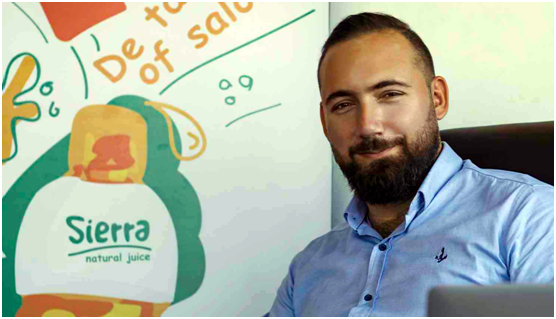
Creating a fruit juice business in Sierra Leone: The story of Sierra Juice

Hamza Hashim, co-founder and CEO at Capitol Foods, owner of Sierra Juice.
Sierra Juice is manufactured from locally-sourced fruit.

For several months a year in Sierra Leone, pineapples and mangoes fall from trees by the tonnes. But without an easy route to market or efficient storage facilities, they are often left to rot, with the growers eking out a subsistence on what little they can sell by the roadside or in local markets.

In 2013, Hamza Hashim set about creating an organic juice company as a way to reduce waste and give farmers better livelihoods. “I wanted to democratise juice,” he says.

A few years later and Sierra Juice has become one of the country’s most ubiquitous brands. With more than 5,000 farmers supplying fresh produce to the company, its drinks are sold by formal and informal vendors at virtually every traffic jam and street corner in the country.

‘Shelf-life was a major issue’

As a cacao trader in 2012, Hashim would regularly make the four-hour journey between Kenema, in the east of the country, and the capital Freetown, and saw the huge difference in price and availability of fresh fruit between the rural areas and the city.

“At Taima junction, we would buy baskets of 10 pineapples for 10,000 leones (around $2 at the time). But in Freetown, a single pineapple would cost 15,000 leones, and that’s if you could find one at all.”

Hashim and his cousin experimented by hiring a six-wheeled truck and filling it with fresh pineapples, which they took to Freetown and started selling to the market traders. By the third day produce was starting to rot. “There wasn’t any cold storage in the city – electricity was too unreliable and expensive. Shelf life was this huge issue. So I started looking at juice as a way to process and preserve the fruit.”

Lacking the capital to start processing on a large enough scale, Hashim and his cousin spent months applying for all the funding opportunities they could find. Eventually, they secured $800,000 from Africa Enterprise Challenge Fund, but couldn’t start production until mid-2016, due to difficulties getting equipment into the country because of the Ebola pandemic.

Getting the word out

“When we started, everyone told me I would fail. No-one was drinking juice in Freetown, except for a few expensive imported juices in the supermarkets. On the street, vendors were selling cheap knock-off colas at a far lower price point than we could offer.”

Initially, Sierra Natural Juice proved difficult to sell. “People were afraid of trying something new. So we started going to restaurants and retailers dropping off free crates of drinks, giving out product on credit. We lost a lot of money, because some people never paid us back, but it got our name out there. People liked it, and retailers started calling us back, asking for more.”

Hamza Hashim, co-founder and CEO at Capitol Foods, owner of Sierra Juice.

For the first couple of years, the company focused on getting the word out and building up a following. “We didn’t have a lot of capital, so we did a lot of guerilla marketing.” The company enlisted former public transport drivers as self employed distributors, providing them with branded vehicles, and they helped Sierra Juice reach every corner of the city.

The brand has always been keen to retain its connection to the bustling street-life of Freetown – sometimes quite literally, with its colourful murals around the city – and so for every new flavour Hashim and his team make sure to canvas opinion from ordinary passers-by. “We always aim to test each one with at least 500 people before we settle on the final formula.”

Creating an aspirational brand image

Hashim says he wasn’t interested in creating another juice that only catered to high-end consumers. He wanted to create a product that everyday Sierra Leoneans could afford, and be proud of.

“Sierra Juice targets the new Sierra Leonean,” he says, “she or he is proud of their heritage, and their country, but is ready to take on the world. They are trendy, young, and energetic.”

To maintain this image, the company has built up an engaged social media following, and collaborated with a number of well-known Sierra Leonean musicians to record pop songs espousing the nutritional benefits and home-grown heritage of its products, with Hashim at one point turning his small office into a makeshift recording studio for local rapper Kao Denero.

By cultivating an aspirational image, Sierra Juice has managed to roughly double revenues each year, without having to engage in a price war with cheaper soft-drinks. Inflation has meant that the retail price of a bottle of Sierra Juice has halved in dollar terms since it first launched, though the company sources its ingredients locally meant it has kept the local sales price the same since starting. “What we’ve lost in unit margins, we have more than made up for in increased volume.”

“A lot of people saw things purely in terms of price competition. But I’d worked in the hotel business, and I knew that people would be prepared to pay extra for a good product. By focusing on the brand, we’ve avoided the need to engage in price wars.”

Overcoming operational roadblocks

Whilst the first few years were about increasing awareness, the biggest difficulty for Sierra Juice since 2018 has been producing enough to keep up with demand. “Everything we make, we sell,” Hashim says.

“By far the biggest difficulty is getting enough product. There have been times when we have struggled to keep the factory operating.” Harvests are heavily seasonal and managing thousands of suppliers across the country, with poor road networks and little mechanisation, is a huge challenge.

Sierra Juice is constantly working on new flavours to help diversify, but Hashim stresses that any marketing and product decisions are first dependent on which produce is available in the market at any given time.

‘We are a 360-degree company’

Hashim stresses that operating in Sierra Leone is not straightforward. “It’s not a picnic, and we’ve had to build almost everything ourselves.”

“When we wanted to improve our packaging, we couldn’t find good quality plastic bottles in the local market, so we invested in equipment to blow our own. When we need to hire equipment operators, or improve farmers’ yields, we have to train them all ourselves. We need to provide our own water filtration, our own electricity generation. So in order to survive, we have to be a 360-degree company.”

But on the other hand he sees a “huge amount of opportunity” in the country. “Because of the difficulties in doing business, there is lower competition.” Once entrepreneurs do make it, they can reap the rewards, because the low competition means margins can be higher.

Hashim’s business philosophy is built upon patience: “There are a lot of everyday business challenges. If you try to do too much, you will fail. I’ve learnt the hard way not to try to be too clever, or take every opportunity that comes your way. My main focus is on making just one step forward every single day, and not ten at a time.”


Rokel Commercial Bank Unveils New Branch at Juba

Managing Director Rokel Commercial Bank, Dr. Walton Ekundayo Gilpin

By Foday Moriba Conteh

As part of their commitment to complement the Bank of Sierra Leone’s efforts in promoting financial inclusion and inclusive economic growth in the country, the Rokel Commercial Bank (RCB) has on Friday 26th February 2021 commissioned its newly constructed branch at Juba in the West End of Freetown.

In his statement, the Managing Director of the bank, Dr. Walton Ekundayo Gilpin noted that the commissioning of the Juba Branch demonstrates that they will continue to grow as a bank, adding that it was with determination and excellence that they constructed the new branch at Juba which he said will not only serve residents of the Juba community and its environs but the country as a whole.

He pointed out that they are determine to ensure that they can have the last laugh as in the past the Bank was seen as a laughing stock but said today the bank is seen as a manifestation of a strong institution that can show the world that Sierra Leoneans have what it takes to put footprints in the sands of time by leaving legacies behind.

The Managing Director maintained that the RCB is the People’s Bank further highlighting how residents of the Juba Community do not have sufficient service delivery from the banking system which is why they decided to bring the bank to their door steps.

He said the residents have been tired of being tired furthering that they now have the opportunity of becoming financially literate, have access to finance, adding that Rokel Commercial Bank is set to complement Government’s efforts at triggering a massive economic turnaround in the country.

Gilpin pointed out that before this time most of the bank’s customers have to endure the trouble of having to go all the way to town to conduct banking transactions and that with the commissioning of the Juba branch it is clear that financial services in that part of the country would bring about significant improvements to their lives.

Delivering a statement on behalf of the Minister of Finance, Jacob Jusu Saffa, the Deputy Director of the Public Debt Management Division of the Ministry of Finance, Charles Conteh, noted that the opening of the Juba Branch, following the branches in Kailahun and Wilkinson Road demonstrates Rokel Commercial Bank’s resolve to take banking to the doorstep of its customers. He added that the bank, having realized the rapid development taking place around the Goderich and the Peninsula axis is now positioning itself to capitalize on the opportunities these new settlements would present.

He said Government, through the support of the World Bank, is in an advanced stage in the implementation of the financial inclusion project which aims at increasing the “interoperability” of digital payments and access to financial services.

He encouraged Rokel commercial Bank and other commercial banks to take advantage of these emerging opportunities and be highly innovative, digitized, and responsive to customers’ demand for improved serviceability.

On his part, the Deputy Governor of Financial Stability of the Bank of Sierra Leone, Sheikh Alhaji Yayah Sesay, said that the opening of the Juba branch demonstrates the bank’s commitment to complement the Bank of Sierra Leone’s efforts in promoting financial inclusion and inclusive economic growth, adding that it is expected that the branch will provide an added opportunity for the people of the Juba community and its environs to benefit from banking services.

On behalf of the Governor, Board and Management of the Bank of Sierra Leone, he congratulated and commended the Board and Management of Rokel Commercial Bank (SC) Limited for taking banking services to the doorsteps of the people of Juba and its environs.

Giving a background about the financial system in Sierra Leone he maintained that the financial system is dominated by the banking sector which accounts for 80% of the total assets in the sector, adding that there are currently fourteen (14) commercial banks in the country with one hundred and twenty (120) branches nationwide, of which Rokel Commercial Bank Limited has fourteen (14) branches and four (4) outlets including this new Juba branch furthering that approximately 11.67% of the total branch network and that in addition to these branches and outlets, RCB has numerous other initiatives to provide banking and financial services for its customers.

He revealed that the Bank of Sierra Leone, on the 5th of February 2021, signed a procurement contract for the National Payment System switch, which will enhance the ability of customers to engage in digital payments and wean them off their current cash dependency. God willing, the National Payment Switch will be in place by September this year.

Sheikh Alhaji Yayah Sesay further noted that the ongoing efforts by Government and the mobile telephone companies to extend mobile phone and internet services to other parts of the country is necessary for the rural population to benefit from this new development in financial intermediation.

He ended by saying that BSL will continue to collaborate with financial institutions to increase and improve the services and products available to their customers while ensuring that depositors’ funds are protected.

Manager of the Juba Branch, Rita Macauley expressed gratitude for the trust bestowed on her to head the branch at Juba, adding that she will ensure that the Juba branch becomes the best branch with 100 percent customer service delivery.

She said with this new branch at Juba the struggles of customers in accessing banking services will definitely become a thing of the past and that they will ensure that they take banking to the doorsteps of customers.

Rita ended by assuring residents of Juba and its environs that the bank will give the very best to customers and encouraged all to open Savings and other accounts with Rokel Commercial Bank (RCB) as they are the best.

Ibrahim Conteh, a resident of the Juba community expressed appreciation to the Rokel Commercial Bank for being the first bank to open a branch in Juba and the Peninsular, adding that they were faced with a lot of challenges in order to have access to banking services in that part of the country and that some had to come all the way to town to access such services, furthering that with the commissioning of the new branch those challenges will be things of the past.

CSO Trial Monitoring Group Launched by Legal Link

By Foday Moriba Conteh

One of the foremost champions of advocacy in the country, Legal Link, in  its bid to promote constitutionalism, justice, the rule of law, accountability and transparency within the justice system in Sierra Leone, has in collaboration with other Civil Society Organizations, has on the 22nd February 2021, launched the CSO Trial Monitoring Group (TMG) for the effective monitoring of cases in the Sexual Offence Model Court and the Anti-Corruption Court at the Africell American Corner conference hall in Freetown.

Chairman of the TMG, Lawyer Rashid Dumbuya said the mandate of the Trial Monitoring Group is geared towards the monitoring of the proceedings in the two forensic courts, and to determine whether they have been done fairly and effectively in line with the purpose for which they have been established.

Lawyer Rashid said the group hoped that by the publication of a quarterly newsletter, the general public and relevant stakeholders will be better placed to understand the status of cases before those courts, the progress being made by the Judiciary to expeditiously look into sexual and corruption cases, expose inadequacies and shortcomings in the court proceedings, as well as proffer recommendations for effective reformation.

He added that corruption and sexual offence cases are the most serious problems the country is currently faced with.

He said the objective of the Trial Monitoring Group is to introduce a new paradigm shift in the trail of corruption and sexual offence cases, help promote constitutionalism through public education and information and to build confidence in the minds of the citizens.

Lawyer Rashid further stated that it is important to have an independent mechanism that will monitor the activities of the forensic courts, adding that TMG has a mandate to monitor the activities of the court and bring out recommendations because it is of public interest.

He acknowledged the Government of Sierra Leone and the Office of the Chief Justice for setting up the model courts.

In his statement, Public Relations Officer of the Judiciary of Sierra Leone, Moses Lamin Kamara, said the Judiciary is not only independent but also subjected to the Constitution.

He said the Judiciary is answerable to the people, hence they established the public relations unit through the support of UNDP in order to educate people about their work.

He said they have been embarking on public education and instituted constitutional instruments on bail policy, which, according to him ,”if you commit a crime upon which conviction will be a sentence for less than five years, upon first appearance, bail should be granted”.

He went on to say that they have seen situation presently where people or litigants’ challenge the Magistrates if he/she fails to follow the bail policy.

“We know in public education, we have to do more, we are very grateful to initiate a monitoring group that will look at the day to day activities of the Judiciary,” he said.

Representing the Anti-Corruption Commission, Sylvanus Blake, Senior Public Education Officer, said the Commission welcomes the idea of setting up a Trial Monitoring Group, adding that the Commission needed partners who will monitor their activities too.

He said the initiative will provide an opportunity for the public to know more about cases of corruption.

He called on the Trial Monitoring Group to work in the interest of the country while bringing out reports.

ACC Gives Bockarie Sheku Mattia Option to Pay Le50M or Serve 5 Years Jail Sentence

By Edward Vamboi

The High Court in Bo, Southern Sierra Leone, presided over by Justice A.T. Ganda, on the 25th February 2021, convicted Bockarie Sheku Mattia – a Supervisor on contract with Statistics Sierra Leone’s Bo office on one count of soliciting an advantage, contrary to Section 28(2) of the Anti-Corruption Commission Act No. 12 of 2008 as amended by the Anti-Corruption Act No.9 of 2019.

Justice Ganda ordered Bockarie Sheku Mattia to pay a fine of Fifty Million Leones (Le: 50,000,000) within a period of one month, effective from Thursday 25th February 2021, or serve a five-year jail term.

According to the particulars of offence presented by the ACC Prosecutor, between 1st and 3rd June 2020, in Bo, Southern Sierra Leone, Bockarie Sheku Mattia, while on a verification exercise for the World Bank supported Social Safety Net (SSN) programme, which was meant to alleviate poverty among the poorest of Sierra Leoneans, solicited the sum of One Hundred Thousand Leones from a potential beneficiary of the programme.

“The Commission wishes to further reassure the general public of its relentless commitment to controlling corruption at all levels in Sierra Leone,” says the ACC.