
Home Blog Page 961

The Omrie Golley Story – Episode 2

Omrie Golley

Episode 2

First Encounter with the RUF

By 1996, it was becoming increasingly clear that ending the war would require tacit diplomacy and a genuine desire by the Sierra Leone Government and its international allies to negotiate with the RUF. A key proponent of this theory was Rupert Davies, A Sierra Leonean career diplomat attached to the Sierra Leone High Commission in London, at the time.

In his Case Study undertaken under the ‘Extended Programme in Peace-Making and Preventive Diplomacy organized by UNITAR (United Nations Institute for Training and Research) and the International Peace Academy in New York, Davies postulated;

“The de-facto situation on the ground is that neither the Government nor the RUF can attain total victory in this senseless war against the civilian population. The War could go on forever like a swing of the pendulum, each party taking its turn to gain the upper hand.”

Davies further wrote;

“It is absolutely unrealistic and over simplistic to imagine that it is possible to achieve sustainable peace without making concessions to the RUF.”

This situation apparently brought Omrie Golley into the conflict, and events leading to the peace process during the latter part of 1995 and early 1996.

Senseless killing of civilians, torching of homes, amputations had become common features of the war with most of the country overtaken by rebel forces. Government forces could not retake swathes of territory occupied by rebel forces, even with the assistance of the British and other sympathetic governments. In fact, the situation had become so protracted and difficult,

that mercenary fighters from South Africa, Mozambique, and other countries who had no knowledge of the terrain where airlifted in to aid the war effort, with no appreciable benefits to the overall military situation on the ground.

The presence of mercenary intervention was especially galling to Golley, as it was with numerous Sierra Leoneans both in and out of the country.

Writing in the Third World Quarterly ( Vol 20 No 2, pp 319-338, 1999), a Sierra Leonean, David J Francis (now the Chief Minister in the current Julius Maada Bio’s government) wrote a powerful piece, critically assessing the involvement of private military companies like Sandline International, Executive Outcomes, and the Gurkhas in the war in Sierra Leone, arguing  that these companies, in the guise of providing national security, were merely lining their own pockets, thereby accentuating international exploitation, calling it the ‘new face of corporate neo- colonialism’.

The situation in the country at this time was desperate, with no end in sight.

Golley was in London in early November 1995 when he decided, against the wishes of his family, to form an organization called the National Convention for Reconstruction and Development ( NCRD ) to look into the causes of the war, how hostilities could be brought to a speedy conclusion, and to start to map out a new dispensation in Sierra Leone to aid the reconstruction of the country in the aftermath of War.

In order to be able to achieve the objectives of the think tank he had formed, he had to engage other Sierra Leoneans both in the diaspora, and in country, to brainstorm and work out policies to aid these objectives.

Central to the principal aim of seeking a cessation of hostilities, and an end to the military conflict, was the need to understand the motives of the RUF. It was essential to find out about this Movement, its leadership, their organizational structures, and most importantly, the reasons why they had taken up arms, with a military conflict unheard of in the history of Sierra Leone.

The next stage of the NCRD plan was to explore avenues with the RUF with a view to having a cessation of hostilities, and a more permanent plan to bringing about a lasting and sustainable peace.

In order to be properly appraised of the situation on the ground and the state of affairs generally in the country, Golley thought it necessary to consult with a number of Sierra Leoneans in the diaspora and inside the country, including journalists, politicians government officials and others. This is how he came into contact with individuals like Lans Gberie, Osman Yansaneh, Oluniyi Robbin-Coker, Abbas Bundu, Abdulai Conteh, former president Tejan Kabbah, and the Late Joseph Momoh, among many others.

Golley wanted to get the views of as many people as possible to ascertain their own views about the state of affairs in the country at this time. He also undertook a copious amount of travel engagements visiting a number of countries in the sub region including the Gambia, Guinea, Liberia and Nigeria in pursuit of this quest for knowledge.

In undertaking these tours and engaging his fellow countrymen in and out of Sierra Leone, it quickly became apparent to him that very little was known about the RUF who, by this time had taken over large swathes of the country with its guerrilla tactics and forced abductions. Very little contact had taken place with the RUF in their main strongholds. It did not take long for Golley to be convinced that one way or another he had find out about the RUF, who they were, and why they had undertaken a ferocious war against their own people.

The RUF assault on Sierra Rutile which took place in late 1995, with its forced abductions was the catalyst that made up Golley’s mind to seek the Movement and look for ways to bring about peace in the country.

BBC reports about rebel advances throughout the country and the destruction they left behind was enough to convince him of the dangerous direction the country was headed.

Golley was also particularly drawn to the writings of a UK based Sierra Leonean journalist, Ambrose Ganda.  Ganda, an indigene from Serabu in the Bo District founded or co-founded a number of Sierra Leonean newspapers including the Watchman, the New Patriot, the Sierra Leone Report and SLAM. His editorial policy resonated with a common theme: – the defence for justice and equal rights of ordinary Sierra Leoneans.

Ganda once wrote;

“The welfare and defence of the ordinary citizens of the country, and the articulation of their views as one saw them, since they themselves did not have the means to do so”

Like Golley, Ganda was also personally devastated by the escalation of the conflict and was keen on a negotiated settlement rather than violent means to end it at the expense of ordinary Sierra Leoneans.

Ganda died on 10th April 2003 after contracting meningitis.

It was clear that the Tejan Kabbah Government intended to crush the rebellion by any forceful means rather than by a peaceful negotiated settlement.

Apparently, as days, weeks, months and years progressed, it turned out that the war was not going to end through military means and a paradigm shift from a military solution to negotiations started to prevail.  This was pretty consistent with Golley’s strategy and proposition.

It came to pass that all parties to the conflict including the international community gradually succumbed  to the idea of a negotiated settlement.

Meeting the RUF with Oluniyi Robin Coker and Ambrose Ganda.

Until 1999 when the Lome Peace Accord was signed, and the subsequent return to Freetown of Corporal Foday Sankoh the Revolutionary United Front (RUF), Omrie Golley’s involvement with the RUF was limited in scope and geography to the UK, Nigeria, Togo and Ivory Coast where he had lobbied regional powers and placed himself as a Sierra Leonean, not connected with the erstwhile Government or the rebels, deeply committed to an end of the conflict.

Golley’s first physical contact with the RUF was in 1995 when he was accompanied by Oluniyi Robin Coker and Ambrose Ganda to meet four representatives of  the Movement in Danane – an Ivorian town that borders the Republic of Liberia. The meeting had been negotiated by the UK based peace building organisation, International Alert,  which had alongside the International Red Cross established contacts with the RUF since 1992.

The meeting with the RUF’s representatives at Danane,  was followed by a request from Corporal Foday Sankoh to talk to Omrie Golley through ‘bush radio’.

“I was obviously very keen to talk to him. In those days they only had bush radio which was a very limited radio communication and they came on only at a certain time and you had to go to one of their safe houses to be able to speak to the bush. I went at the appointed time and that was in early November 1995 to speak to him on the radio  for the very first time, and he greeted me very well…”

Golley further explains:

“He initiated our conversation with an unexpected question. He asked whether I was the nephew of a certain Inspector Golley, a former police officer in the Sierra Leone Police Force. I said didn’t know who this person was. He then went to tell me that at a very low ebb in his life, this Inspector Golley took him  under his wings for a number of years, fed him clothed him, and paid his school fees and that he would always remain grateful to the former police officer”

It wasn’t clear whether Sankoh thought he could make Golley easily relate with him, through this imaginary uncle or whether the reference was just one of his several tricks to test the sincerity of the young lawyer.

To this day, Omrie Golley cannot recall having a relative from his paternal side in the Sierra Leone Police Force.  In any case, that first radio conversation in Ivory Coast opened the door to the numerous subsequent engagements he had with the Movement.    

Members of the RUF delegation at the Ivory Coast meeting included Philip Palmer, Faiya Musa, Deen Jalloh and one Dr Jalloh who used to work at Sierrarutile. Deen Jalloh was the husband of Agnes Deen Jalloh. Agnes was one of the senior officials in the RUF and a sister of President Julius Maada Bio.

History teaches us that peace is more sustainable when warring parties agree to sit down and talk. From the Second World War that nearly annihilated Europe and the civil or sectarian conflicts of Asia, Africa and the Caribbean, military had never been a completely decisive factor at ending these wars.

The Second World War may have ended after the surrender of the axis powers and the subsequent suicide of Adolf Hitler in May 1945; it however did not take the global powers, Britain, United States, France and German long  to recognize the need for a permanent solution to a conflict that literally brought the world to its knees.

The August 1945 Potsdam Agreement that later became the Three Power Conference of Berlin was probably the climax of several conferences held to address the root causes of the war and to sign a deal that would lead to a permanent resolution to the conflict.

The United Nations was subsequently established the same year to expand and operationalize global peace security architecture around the world.

It wasn’t clear whether the United Nations officials deployed to Sierra Leone were oblivious of this historical perspective or had read Omrie Golly’s script. What was clear however was the fact that almost every UN official deployed to Sierra Leone during the civil conflict had tapped on, and invariably benefitted from the diplomatic and negotiation skills of Omrie Golley.

Watch out!!

Episode 3 Coming your way Soon!!


Alie Kabba Speaks on Accountability and Equitable Representation in UN Security Council

Dr. Alie Kabba, the Permanent Representative of the Sierra Leone Mission to the United Nations

By Mohamed Massaqoi

Dr. Alie Kabba, the Permanent Representative of the Sierra Leone Mission to the United Nations has again called for two Permanent seats, with all the rights and prerogatives of current members, including the right of veto, and two additional Non-Permanent seats for Africa.

He made that request on the 25th January 2021 during the general debate on agenda item 127 on the demand of equitable representation on and increase in the membership of the Security Council and other matters related to the Security Council.

Dr. Kabba noted that accountability begins with the principle of equitable representation which gives voice to the entire constituency of the UN membership.

He stressed that an institution that is equitably represented will be more accountable and transparent adding that despite the fact that Africa is opposed in principle to the Veto, however, as a matter of common justice, it should be extended to new Permanent Members so long as it continues to exist and that the selection of such representatives will be done by the regional body, the African Union.

He said the demand is predicated on ensuring equitable representation on the Security Council and to have an equal say in decision making on issues of international peace and security, in particular, matters that affect the African region, adding that correcting the issue of equitable representation is the only way to achieving a true and meaningful reform of the Security Council.

“The Common African Position, therefore, is that the composition of the Security Council should be democratized to reflect the diversity of Member States of the United Nations. Africa, accordingly, proposes an expansion in membership in both categories to a total of no less than 26, with Africa allocated no less than two Permanent seats in the Permanent Category with all its privileges and prerogatives, including the right of the veto, to redress the continent’s non-representation and two additional Non-Permanent seats to address the under-representation in that category.” He underscored the point that the move will correct the existing levels of imbalance and legitimize the authority and actions of the Security Council to make it fit for purpose.

He argues that “a veto-free Council is ideal, but, if unrealistic, the best option is the availability of the veto to new Permanent Members.”

He insisted that it is no gain saying that Africa remains largely under-represented in the Security Council which, no doubt, creates a sense of marginalization and consequential frustration. Participation or representation in the Security Council for an extended period of time provides opportunity to gain institutional knowledge and memory and better understanding of the work of the Council, but it will equally prolong frustrations for being unable to influence decisions in like manner as the P5, who continue to wield the veto power and operate as an inner club of a ‘select and privileged few’ and which, in effect, compromises the principles of democracy, transparency, and accountability.

Reconciling the interest of some States to participate for an extended period of time in the Council will, therefore, not be an easy one, given the present structure of the five Permanent Members who continue to enjoy stronger position and political leverage.

“In this regard, we remain fully committed to the General Assembly Decision 62/557 and other relevant General Assembly Decisions for a comprehensive reform of the Security Council, on all the five Clusters, considering their interconnectedness. Africa, therefore, will continue to call for a comprehensive reform of the Security Council by rejecting any interim, intermediary/intermediate approach or transitional reform models as a means of correcting the historical injustice done to Africa.”

In concluding, he stated that “as we hope to make progress in the reform agenda this year, let me end my remarks by reaffirming that we are ready to work with Member States and interest groups to correct the historical injustice done to Africa and to better reflect the geopolitical realities of our present and future world.”

Residents of King George’s Home Benefit from Donation by Mercury Charitable Foundation

Representatives of the Mercury staff Ms Dawn Cummings-John and Mr Alhaji Komba and the Chairman of Mercury International Retailers Association, Mr Ibrahim Bosto Kamara

By Amin Kef Sesay

In November of 2020 the Managing Director of Mercury International Company Limited, Martin E Michael, brought together representatives of the staff and retailers of the said company with the aim of setting up a Charitable Foundation managed and organised by the staff and retailers without interference from Management or the Board of Directors.

The idea behind the setting up of the Foundation was to create a platform for the staff and retailers to firstly learn about the importance of Corporate Social Responsibility and secondly for them to give back to their communities and to society.

The funds would be raised purely by the Foundation from commissions from sales through TPMs specifically allocated for the Foundation without any assistance from the company itself. It was decided that the name of the Foundation be MERCURY INTERNATIONAL STAFF AND RETAILERS CHARITABLE FOUNDATION. The project kicked off in December 2020 and the first donation by the Foundation was made on Thursday the 21st January 2021 by donating food items worth 10 million Leones to the King George’s Home at Grafton.

During the presentation of the items, the representatives of the Mercury staff ,Ms Dawn Cummings-John and Mr Alhaji Komba and the Chairman of Mercury International Retailers Association, Mr Ibrahim Bosto Kamara informed the beneficiaries of the setting up of the Foundation and that the King George’s Home had been chosen as the first beneficiary of the Foundation.

Miss Cummings-John told the gathering that Mercury International Company had got a long-standing relationship with King George’s Home and it was fitting that the staff and retailers Foundation would help to continue to foster that relationship.

The Welfare Manager at the King George’s Home, Mrs Brenda Forde Farmer said the home has been in existence since the 1960s and it was the only elderly home for Sierra Leoneans and has been managed by the Society for the Welfare of the Aged.

Madam Farmer also urged other organisations to follow the good work of Mercury International in supporting the Home and said that apart from foodstuff, they are also in need of other basic amenities like; Pipe-borne water, electricity, good medical facilities and more, for the well-being of the residents.

Christiana John, the Home Manager ,said they felt extremely good about the donation from the Mercury International Staff and Retailers Foundation, adding that they were not expecting such gesture at this time.

“We were not expecting this at this time considering the devastating nature of this deadly disease, but now that our company-friend is here to visit us with such food items, we are happy,” she said.

Madam John ended by praying for the company and its staff and retailers.

A resident of the Mercury International Charitable Hall at the King George’s Home, Mr Vivian Dillsworth thanked the staff and retailers for the timely consideration to the Home.

He also joked that most of the residents are customers of the company as they always play mercury products and in a sincere tone he mentioned that they have been following the company’s schools project in Moyamba and Port Loko.

The donated items included; 10 bags of rice, 5 gallons cooking oil, 5 bags of sugar, 5 cartoons Tin Tomatoes and a cartoon of milk amongst others.

The donated food items worth millions of Leones

Parliament Tours One Stop Centers at Kingharman Road Hospital, Port Loko & Kabala

By Samuel J. Kargbo

On Monday 25 January 2021 the Parliamentary Oversight Committee on Gender and Children Affairs engaged officials of the One Stop Center at the Kingharman Road Hospital in Freetown.

Chairperson of the Committee Hon.  Zainab Catherin Tarawally stated that the rationale of  holding the engagement is to critically look at the One Stop Center facility in order to know whether it is been used for the intended purpose that it was created for by the Government saying from what they will learn they will be in a better position to proffer  recommendations.

Hon. Tarawally stated that they want to specifically know about cases that were dealt with from January to June 2020 and how many of those cases were sent to Court for prosecution.

Doctor Sattu Issa of the Kingharman Road Hospital thanked members of the  Committee further highlighted some of the challenges they have been encountering also pointing out the hurdles in getting prosecution documents signed  but assured how they have  been working tirelessly to ensure that the Center is well functioning also suggesting that if there is a doctor that is ready to work in the One Stop Center he or she is welcomed disclosing how the Center  caters for  residents in the Western Urban and Rural Districts.

Ramatu Kargbo, the National Coordinator of SGBV in the Ministry of Health and Sanitation stated that the doctors need to be given comprehensive training on issues relating to SGBV so as to help prosecute perpetrators in order to ensure that children who are victimized are treated fairly.

She admitted that cases are not sent to her for prosecution adding that what was given to her by all the centers across the country are looked into before putting the legal components together.

On her part, Dr Sarah Conteh, said they have requested UNFPA to assist in the area of  providing more training for medical doctors to which consent has been giving adding that they do face financial constraints, having insufficient drugs for the treatment of survivors and experience delay in investigations because Police Officers do not have adequate vehicles revealing that only one Police Officer is attached to the One Stop Center.

Alpha Mohamed Conteh, the Police Officer attached to the One Stop Center at the Kingharman Road Hospital, agreed that investigating SGBV cases is not easy suggesting that there is need to have a legal person so as to advise and send the matters to Court maintaining that because of delay from the DPP’s Offices that is why alleged perpetrators are granted bail.

Isatu Mansaray, a mid-wife at the Kingharman Road Hospital said they are challenged by medical constraints which they do report to the Ministry of Health lamenting that responses do not come in time.

A member of the Parliamentary Committee, Hon AKK, said it is very sad to hear what have been said so far. He noted that the structure is there but not much work is been done at the center recommending that the Committee should have a joint meeting to look into some of the issues raised.

The Manager of the One Stop Center at the Kingharman Road Hospital, Hannah A. Lahai, said they have over 80 Cases and one has tested HIV positive and two are pregnant.

She said they want a medical doctor to be assigned to the Center to be exclusively dealing with Sexual and Gender Based Violence cases, as well as cases fast tracked by the DPP’s Office.

The Parliamentary Oversight Committee conducted similar tours at the One Stop Centres in Port Loko.

Chernor J. Timbo the Manager of the One Stop Center stated how they started operation in July 2020 and they have undertaken several activities as well as dealt with various cases.

He disclosed that they have conducted various radio sensitization programs for residents to know the importance of the One Stop Center in the district, adding that all the PHUs within the district send all their victims only to Lungi and fail to send victims to the Center because of the distance.

He further explained that from July to December 2020 they recorded 60 cases saying residents in Kambia are not reporting cases to the Center because of the distance.

Mabinty James Kamara, a Mid-Wife appealed for a refresher training course for more mid-wives to help make their work easy.

Hawanatu Johnson, a Police Investigator, intimated the Committee Members  that they are constrained with transportation and food for the victims disclosing how she sometimes have to go the extra mile by using her personal funds t to provide them food.

Chairman of the Port Loko Human Rights Committee, Mohammed Kamara, said some cases are reported late and there are some that are referred to the State Counsel for legal advice saying sometimes the cases die at that stage.

The next place where the Oversight Committee Members visited was the One Stop Centre in Kabala.

Chairperson of the Committee, Hon. Zainab Catherin Tarawally, pointed out to the officials at the center that they  are not there to Police them but to ensure that the right things are done for residents in that part of the country.

She said reported SGBV cases in Koinadugu are alarming especially as some family members do not treat those cases seriously.

Officials of the Center explained how they are faring on, the constraints they are facing and areas where they need support.

Executive Director of LAB Enjoins NYSC Volunteers to Give Their Best

By Edward Vamboi

Ms. Fatmata Claire Carlton-Hanciles, Executive Director of the Legal Aid Board, has urged newly recruited volunteers of the National Youth Service Corps (NYSC) to take every advantage of the opportunity the scheme is offering them.

She drew attention to the thousands of equally competent graduates who have not had such an opportunity even though they are desperately in need of one.

“Considering the unemployment rate among new graduates in the country, you should grab this opportunity with all the seriousness it deserves,” she maintained in a lecture to 522 NYC volunteers at the Hastings Police Training School on Monday, 25 January 2021.

The volunteers are in the third and final week of their training before assigning them to various institutions.

She said taking advantage of the opportunity offered by the scheme involves turning up for work on time, delivering quality work, being helpful to colleagues, taking care of office property and not engaging in corruption and activities that will undermine the institution.

“Your next permanent job will come from the institutions you will be assigned to, if you espouse these qualities,” she said.

Following a lively interaction on the meaning and essentials of love, Ms. Carlton-Hanciles said imbibing this value will ensure they do not perpetrate domestic violence.

She underlined that the Legal Aid Board has a zero tolerance to domestic violence, giving specific examples of how it has helped victims seek redress through the Police.

The Executive Director explained the mandate and operations of the Legal Aid Board. In addition, it is also among the most visible entities by virtue of the fact that it has offices in 23 towns and cities in the country including the entire 16 district headquarter towns.

She added that the Board has mediated a lot of civil and minor criminal matters as a result it has ensured that the rights of women to own and inherit property are respected as provided by law.

It has also promoted peaceful coexistence by mediating community level disputes, referring matters to the Police and ensuring the Local and Traditional Courts do not exploit and take advantage of people.

During the question and answer session, Ms. Carlton-Hanciles said co-habiting partners have rights which must be respected when such marriages breakdown.

“Men who walk out of these marriages must ensure they divorce their wives otherwise we will compel them to do just that,” she said.  She also stressed that it is an offence to pressure women to stay in violent and abusive relations.

The scheme is a project of the National Youth Commission. This is the third set of volunteers to benefit from the scheme.

EU Announces Debt Service Relief of Euro 18 M for Sierra Leone

By Amin Kef Sesay

In a Press Release dated the 25 January 2021 the Delegation of the European Union revealed that debt service relief is a key instrument for countries to manage the impact of the COVID crisis.

It furthered that the IMF in April 2020 launched an urgent fundraising effort that would enable its Catastrophe Containment and Relief Trust Fund (CCRT) to provide further debt service relief to countries most seriously affected by the COVID-19 crisis.

“Initially established in February 2015 during the Ebola outbreak, the CCRT now seeks to provide debt service relief to eligible low- income countries on debts due to the IMF for 2021/2022, starting from April 2020,” it was also revealed.

The Release continues that in response to the call of IMF, the EU on 23 November announced a €183 million contribution for 2021, making EU the largest donor to the CCRT, which so far has received over $500 million in grants from donor countries.

It stated that the EU’s contribution will fully cover the debt service of Sierra Leone to the IMF in 2021 (about 18 million EUR).

“This payment will also make a further contribution to Sierra Leone’s debt service relief until April 2022, allowing the GoSL to create fiscal space for priority public spending in sectors such as health and education… and ultimately contributing to protect the most vulnerable in Sierra Leone,” it was underscored.

The EU has been leading global efforts to do more on debt relief and debt restructuring efforts.” Josep Borrell, High Representative and Vice President for Foreign and Security Policy, said.

The Commission is determined to continue supporting its partner countries in maintaining their path toward the SDGs despite dire financial situations.” Jutta Urpilainen, European Commissioner for International Partnerships, said.

Paolo Gentiloni, Commissioner for Economy, added: “Today, Europe makes an important contribution to multilateralism and debt relief. This contribution is a further demonstration of our firm commitment to helping low-income countries deal with their debt burden.”

Kristalina Georgieva, IMF Managing Director, said: “I am very thankful to the EU and its member countries for the generous contribution of 183 million euros to the CCRT – a critical step to help the world’s most vulnerable countries provide health care and economic support to their people during the ongoing pandemic. The EU and the IMF have a strong partnership on development financing. I urge other member countries to join the EU in contributing to the CCRT. Contributions from our member countries are instrumental in helping the Fund support the most vulnerable countries.”

It was highlighted that in total, the EU has provided a contribution of EUR 388.5 million for the debt service of African Caribbean and Pacific countries in 2021/ 2022.

The Release ended by stating how the EU places particularly strong emphasis on the proper accounting, monitoring and control of the COVID-19-related expenditures adding that the ongoing EU’s dialogue with partner countries in the framework of budget support programmes reinforces the CCRT framework and its monitoring capacities.

AU Chairperson & President Bio Meet at State House

By Foday Moriba Conteh

Chairperson of the African Union, Moussa Faki Mahamat, on the 25th January 2021, called at State House to pay a courtesy call on President Dr Julius Maada Bio and commended his leadership to foster development in the country.

The AU Chief also thanked President Bio for the opportunity to visit Sierra Leone, stating that his visit is part of a tour of all member States in the African Union, adding that it is important that he sought pieces of advice from member States on the African agenda to foster development in the continent.

He noted that the continent is facing challenges to tackle the surge of the Coronavirus and therefore urged all member States to increase multilateral engagements to find ways to make available COVID-19 vaccines to the continent.

“There is every need for the continent to maximize coordination and multilateral engagements in ensuring that Coronavirus vaccines are provided for the continent,” he said.

Mr. Mahamat commended President Julius Maada Bio on his leadership in the country.

“Your Excellency, I want to commend your Government and the people for your resilience during the Ebola, mudslide and now the Coronavirus. Sierra Leone is now a stable country. I believe after the Coronavirus pandemic, Sierra Leone will be a better place,” he concluded.

During his brief statement, President Maada Bio thanked the AU Chair for his visit and for exhibiting an excellent leadership during his tenure. He also praised him for the leadership he provided for their continental organization, noting that Adbel Fattah el–Sisi had also done a great job when he was chair of the Africa Union.

“Africa faces very difficult challenges and we have always been in this situation. We always look for strong leadership, collectively, as a continent and as individual nations if we are to move forward as a continent. I will implore you to continue to work hard because there is a sign of hope, with our collective leadership, we will be able to succeed and put behind us most of these challenges,” he assured.

President Bio further stated that his country had gone through many tough times since the war, which he said left the country’s economy and social cohesion completely devastated. He said the Ebola virus, which also had a major effect on the people, the mudslide and now the Coronavirus pandemic had also destabilised the country.

“With all of these challenges, we realised that our shared and common purpose as a nation was bigger and stronger. Thus, we were able to surmount these many challenges,” President Bio explained.

He assured that the soon-to-be-established National Cohesion and Peace Commission would be the first to pay keen attention to the fundamental grievances that could easily lead to serious conflict within the country.

“This is a specialised body of eminent people watching to detect and defuse any sign of grievance or anything that will lead to conflict and put us apart again,” he noted.

Vice President & Entourage Hold Discussions on MCC Process in Senegal

Vice President, Dr. Mohamed Juldeh Jalloh

By Esther Wright

Vice President, Dr. Mohamed Juldeh Jalloh, is heading a team of Senior Cabinet Ministers, the Financial Secretary and the Chief Executive Officer MCC to Sierra Leone to Senegal.

The delegation, which landed on Monday January 25th, 2021, is to gain an understanding of Senegal’s Compact development process including the analysis phase and consultation process. They are also to deep dive into Compact development- especially the root cause analysis which led to the prioritization of the areas in the energy sector that would be the focus of the Compact.

The study tour is expected to build cooperation and collaboration between key Government Ministries and the two Governments.

While in Dakar and to ensure targeted and structured engagements, the delegation will hold key thematic discussions on the compact development and implementation.

Thematic areas to look at are the Compact Development consultation process, high level overview of Senegal’s compact development and deep dive into project development phase.

Several discussions will be held with the various Ministries of Petroleum and Gas, Water Resources, Finance and Energy and Power. Discussions will also be held with the relevant heads of water utility services and energy utility leaders and regulators.

The Minister of Finance, Jacob Jusu Saffa, the Minister of Economic Planning and Development- Dr. Francis Kai Kai and the Chief Executive Officer, Sierra Leone’s MCC Accountability Entity- Mrs Ndeye Fatu Koroma formed part of the delegation.

The MCC program was established by the United States of America in 2004 and offers targeted assistance to poor countries that have a record of good governance and are also considered solid prospects for economic growth. Those who meet the conditions are rewarded with multimillion-dollar investment packages. Recipient countries are encouraged to work with the MCC and in consultation with their own citizens in order to generate plans for spending the money.

Senegal has been consistently qualifying for the MCC compact and

in September 2009,they signed a $540 million Compact aimed at reducing poverty and increase economic growth. In 2018, Senegal also signed a compact agreement with the MCC designed to increase reliability and access to electricity, support economic growth and reduce poverty.

Timber Export Upsurge Deforesting Salone At An Alarming Rate

By Amin Kef Sesay

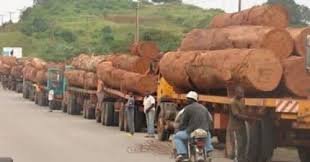
Monitoring Social Media, The Calabash came across this post from a concerned citizen about the alarming rate at which Koinadugu district is been decimated off a particular specie of wood. The post reads:

“There is something very alarming about the rate at which “gbeni” trees are being transported out of Koinadugu because à certain Chinese tycoon wants them badly for expensive furniture in China.

“According to check point sources at Panlap (near Makeni) and Gbere Junction, some 40 trucks/trailers leave Koinadugu on a daily basis laden with “gbeni” logs for Freetown.

“Does anyone in Government care about this broad daylight plunder of the vegetation that makes Koinadugu’s weather à very pleasant one?

“Are the sons and daughters of Koinadugu not worried about the desertification of our district?

“Where is the Environment Protection Agency in all of this?  Please save our forests in Koinadugu…

Few would argue that tropical forests are not important; as they offer a wide range of ecosystem services, including carbon sequestration, moderation of air and water quality, provisioning services and cultural services, as well as acting as biodiversity hotspots.

The dominant narrative is that once Sierra Leone was almost completely covered in forest and that the deforestation has been rapid and extreme – especially in the last ten years when the Government opened the floodgate to the export of raw, unprocessed timber to China and Europe.

Research shows that the greatest loss of forest is that of the Tonkolili Forest which has almost entirely disappeared.

All forests are under threat, with the northern Area forests under severe pressure from uncontrolled logging.

Luckily, in the south-east, the Gola Forest has legal protection backed up by serious inflow of funds from outside the country and more recently from payments from REDD+(Reducing Emissions from Deforestation and Forest Degradation).

The Loma Forest is to some extent protected by the poor road infrastructure and inhospitable terrain making commercial exploitation uneconomic.

With the country reported to have less than 5% forest cover left, the last national forest inventory was in 1975. A great deal of this could be done with remote sensing.

A new national forest inventory will first need to determine:

What decisions are expected to be made using the data (for example,  allocation of land for industrial scale plantations, above ground biomass for compliance with REDD+, examining policies to improve resilience to rapid climate change,  biodiversity condition assessment of protected areas, etc.)

Deforestation which is the permanent destruction of forests in order to utilize the land or trees should become a priority development issue for the central Government, local councils and paramount chiefs. Typically, deforestation is clearing a lot of trees without the intention of establishing future growth.

In Canada and America, all areas harvested must be reforested either by replanting or through natural regeneration.

Regenerating forests should become part of the country’s agricultural development plan; given that forestry (including planting of economic fruit trees, charcoal trees, etc.,) holds the potential to bring hundreds of millions of dollars into the economy; as well as provide thousands of new jobs.

Forests are vital to our Earth. Trees purify our air, filter our water, prevent erosion, and act as a buffer against climate change. They offer a home to plant and animal species while also providing natural resources such as medicine, food, timber, and fuel. Millions of rural dwellers live in forests.

In terms of Climate Change, forests are essentially the lungs of our planet. All plants take in carbon dioxide and release oxygen. Trees are able to convert more carbon dioxide than a regular plant.

Thus, when a forest is cut down, the humidity levels decrease and causes the remaining plants to dry out, as well as increased greenhouse gas emissions.

Removing trees thins the forest canopy which is meant to block sun rays during the day and holds in the heat at night. This damaging disruption leads to extreme temperature swings that are harmful to plants and animals. Many animals, insects, and plants lose their habitats and become endangered and even go extinct.

Hence the argument is that Government in the short, medium and long term has to put together a comprehensive national afforestation plan that should be fully funded in order to not only protect the remaining forest cover but to grow new ones in mitigating against climate change.

Since Independence… Kailahun District Gets First Sitting Judge

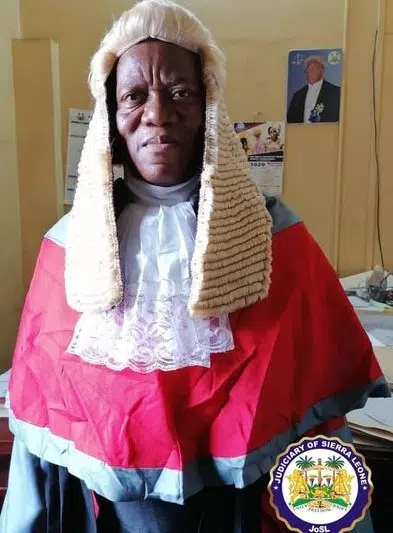
High Court Judge, Justice Francis Banks-Kamara

By Elkass Sannoh

Supreme Court Justice, Sengu Koroma, on behalf of the Chief Justice, His Lordship Justice Desmond Babatunde Edwards on the 23rd January 2021, presented the first Resident High Court Judge, Justice Francis Banks-Kamara, to stakeholders at the  Kailahun District Council Hall.

The Paramount Chief of Luawa Chiefdom, Hon. PC Mohamed Sama Kailondo Banya IV, said it is a memorable day and the commencement of true freedom for the people of Kailahun. He described the day as, “a day for an equitable Justice, one we have been deprived of for decades.”

He said Justice has indeed been brought to Kailahun with the appointment of the first Resident Judge since independence.

He used the occasion to thank His Excellency President Julius Maada Bio for being prudent in appointing ‘the best Chief Justice in the history of the Judiciary.’

The Grand President, Bo-Kenema Grand Commandery Knights of St John International, Dominic Jimmy Amara, called on the people of Kailahun District to support and cooperate with the newly appointed Resident Judge.

According to him, there was no justice in Kailahun District and therefore now is the time to support Justice Banks-Kamara to succeed.

Presenting the Resident Judge on behalf of the Chief Justice, Hon. Justice Sengu Koroma JSC said this is the first time a Resident Judge for Kailahun District has been appointed.

“This is a great honour for us as a District,” he said, adding that Kailahun District has now become a force to reckon with in the administration of justice.

As a proud son of Kailahun District, Justice Sengu Koroma said the District has produced principal actors who have contributed in quality justice delivery in Sierra Leone.

The Local Unit Commander (LUC) Kailahun Division, Superintendent Sao Vandy pledged commitment on behalf of the Inspector General of Police to support justice delivery.

Until his appointment, Justice Francis Banks-Kamara J, was the acting Master and Registrar, Judiciary of Sierra Leone. He is a British trained Sierra Leonean Lawyer. He holds a Master of Law in International and Comparative Business Law from the London Guildhall University. His thirst for quality education compelled him to gain admission into the Lumumba University, Moscow former USSR where he obtained his Diploma in International Law.

The ceremony brought together fifteen (15) Paramount Chiefs from the District.