
By Alvin Lansana Kargbo
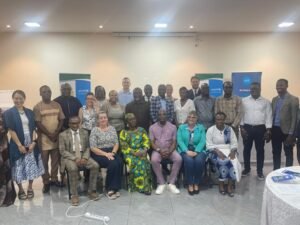
UNICEF, in partnership with the Government of Sierra Leone and the Global Partnership for Education (GPE), on Thursday 25th June, 2026, opened a two day Strategic Workshop on Blended and Innovative Financing for Education at the New Brookfields Hotel in Freetown, bringing together senior Government officials, Parliamentarians, development partners, Civil Society Organisations and education stakeholders to explore sustainable financing solutions for the country’s education sector.
The workshop, which concludes today, Friday 26th June, forms part of efforts to strengthen education financing reforms by identifying innovative funding mechanisms, improving domestic resource mobilization and ensuring equitable access to quality education for every child.
Opening the workshop, the Minister of Basic and Senior Secondary Education, Conrad Sackey, called for a fundamental shift in the way education is financed in Sierra Leone, arguing that traditional funding models can no longer adequately support the country’s growing educational needs.
He said Sierra Leone is confronting increasing fiscal pressures at a time when global development assistance is declining while demand for quality education continues to rise. According to the Minister, relying primarily on external support is no longer sustainable and requires Government, development partners, the private sector and Civil Society to embrace shared responsibility for financing education.
Conrad Sackey said education financing should no longer be viewed as the sole responsibility of development partners but as a national obligation requiring stronger domestic revenue mobilization, improved public budgeting, greater private sector participation and sustained collaboration with international partners.
He described blended financing as a practical approach rooted in the African tradition of collective responsibility, noting that resources are more likely to be protected and managed efficiently when all stakeholders contribute towards a common goal.
The Minister urged Sierra Leone to diversify its education financing through innovative mechanisms such as targeted levies, public private partnerships, diaspora bonds, results based financing and more efficient utilization of domestic resources instead of waiting for large external grants.
Acknowledging public concerns about policy workshops that fail to produce tangible results, Conrad Sackey stressed that the meeting should deliver practical commitments supported by measurable actions, implementation timelines and dedicated financial allocations. He called on participants to ensure that every recommendation identifies responsible institutions and realistic implementation plans.
The Minister reaffirmed the Government’s commitment to providing every child with access to safe schools, qualified teachers and quality education, emphasizing that the vision can only be realized through sound financial planning and effective partnerships.
Speaking also at the workshop, the Acting Minister of Finance, Jenneh Jabati, reaffirmed the Government’s commitment to strengthening fiscal reforms and expanding sustainable financing for education despite prevailing economic challenges.
Delivering a statement on behalf of the Minister of Finance, Sheku Ahmed Fantamadi Bangura, she said education remains central to Sierra Leone’s national development agenda and continues to receive priority in public spending.
She noted that successive national budgets have consistently allocated about 20 percent or more of the discretionary domestic budget to education in line with the Uhuru Declaration and that Government remains committed to increasing education expenditure to between three and five percent of Gross Domestic Product by 2030.
Jenneh Jabati acknowledged that Sierra Leone continues to face serious fiscal constraints, including domestic revenue mobilization below the Sub Saharan African average and significant debt servicing obligations that limit available resources for education and other development priorities.
She said Government is implementing comprehensive tax reforms and public financial management measures aimed at increasing domestic revenue, improving expenditure efficiency and safeguarding investments in education and other social sectors.
Among the reforms, she highlighted expansion of the Minimum Alternate Tax, increased corporate income tax rates, strengthened digital tax administration, enhanced governance within the National Revenue Authority, improved customs operations and ongoing public financial management reforms designed to improve fiscal discipline and accountability.
The Acting Minister said Government is also pursuing innovative education financing mechanisms, including performance based financing, blended finance, concessional financing and carefully regulated public private partnerships to complement domestic revenue mobilization.
She reaffirmed Government’s continued support for the Free Quality School Education Programme, foundational learning, girls’ education, disability inclusion, school feeding and improved teacher welfare.
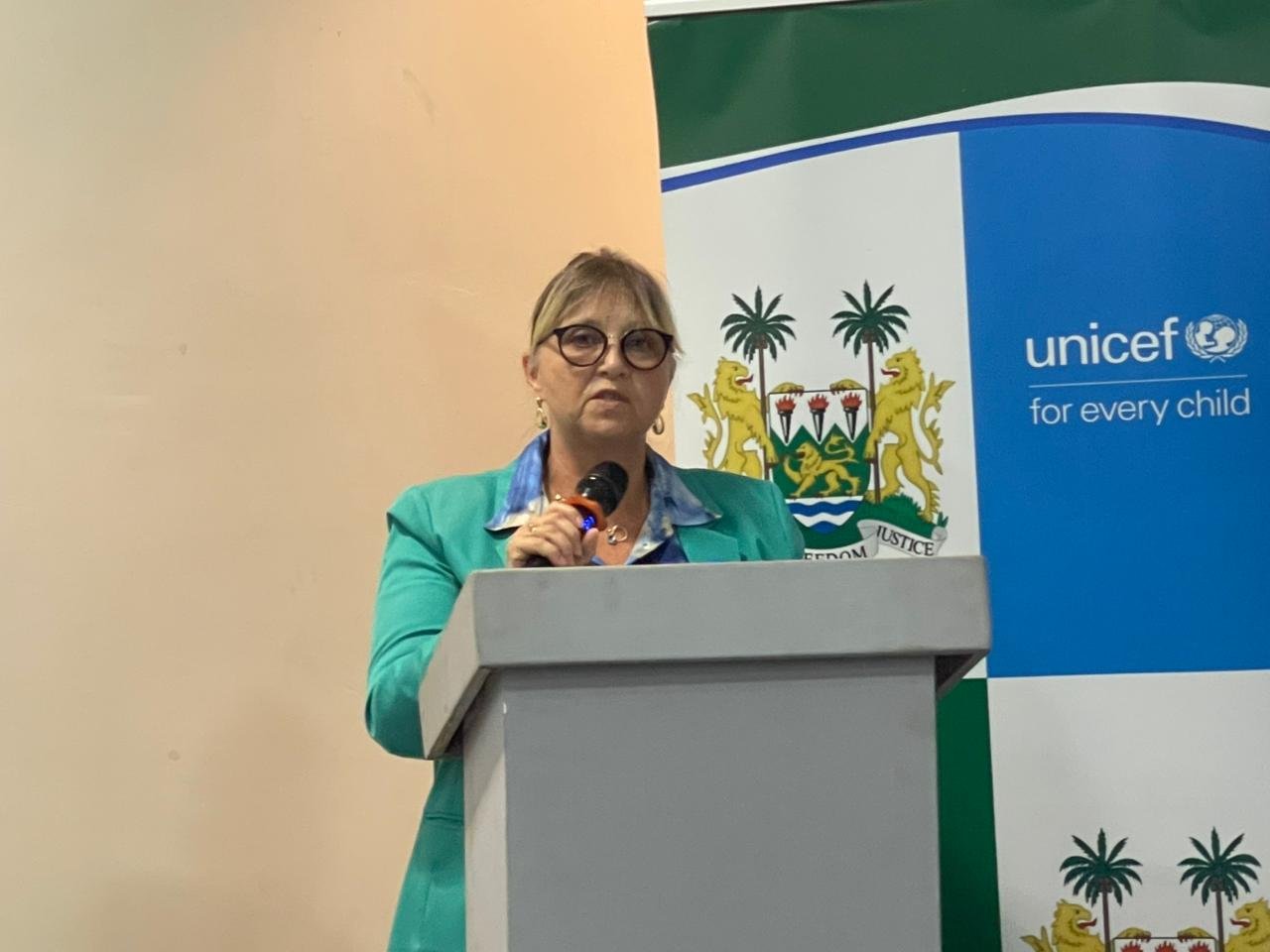
UNICEF Deputy Representative, Liv Elin Indreiten, described investment in children as one of Sierra Leone’s most important national priorities and reaffirmed UNICEF’s commitment to supporting sustainable, equitable and resilient education financing.
She commended the Government’s leadership in implementing the Free Quality School Education Programme and the Education Sector Plan 2022 to 2026, noting that the country’s commitment to education spending places it above many international benchmarks.
However, she cautioned that Sierra Leone continues to face significant financing gaps, delays in fund disbursement and limited fiscal space, all of which constrain investment in school infrastructure, foundational learning, education services for children in remote communities and climate resilient education systems.
Liv Elin Indreiten observed that debt servicing is projected to consume nearly one third of the national budget in 2026, more than twice the size of the education budget, significantly restricting Government’s ability to increase investments in education.
She said the workshop provides an important opportunity to identify practical solutions capable of making education financing more adequate, efficient, equitable and resilient.
According to her, participants will examine innovative financing options including blended finance, diaspora engagement, domestic resource mobilization and public private partnerships while recognizing that those mechanisms can only succeed alongside transparent and equitable public financing systems.
Liv Elin Indreiten stressed that discussions should produce realistic financing strategies capable of strengthening foundational learning, expanding opportunities for disadvantaged children and building education systems that can withstand future shocks, including those associated with climate change.
She reaffirmed UNICEF’s commitment to working alongside the Government and development partners to strengthen sustainable education financing, emphasizing that every investment in education protects children’s rights, strengthens resilience and contributes to Sierra Leone’s long term national development.
The workshop is expected to conclude with a set of practical recommendations aimed at strengthening Sierra Leone’s education financing framework through enhanced domestic resource mobilization, stronger public financial management and innovative financing partnerships.
Participants are also expected to develop actionable commitments to support the implementation of sustainable financing solutions that will improve learning outcomes, expand equitable access to quality education and reinforce the resilience of the country’s education system for future generations.