
By Foday Moriba Conteh
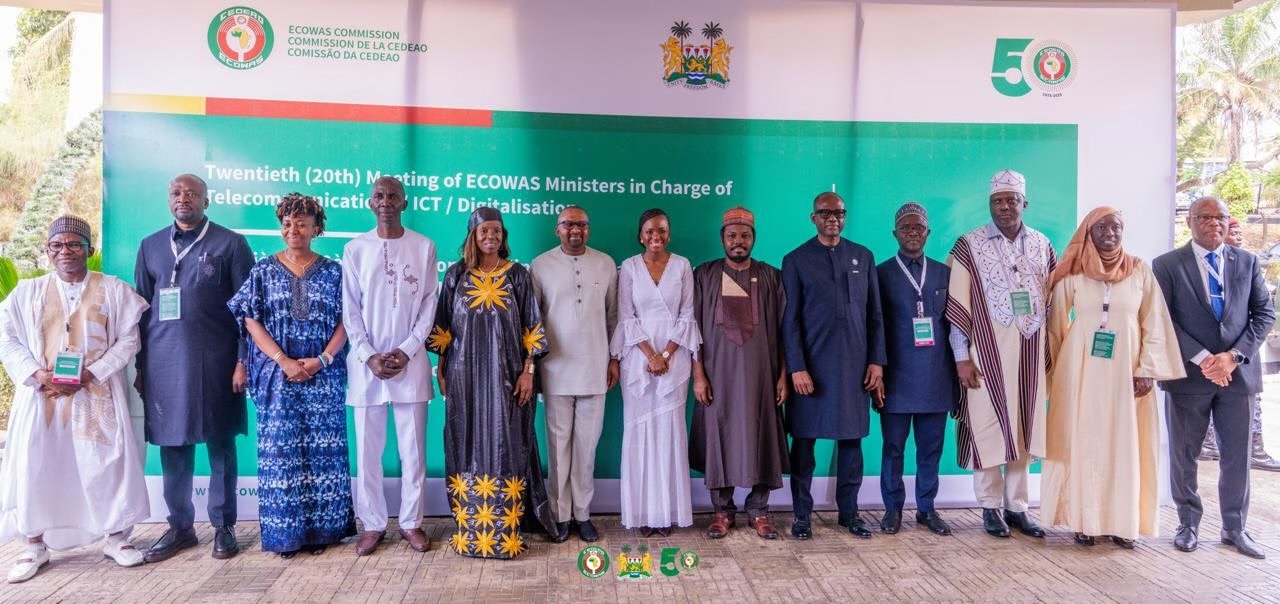
Ministers responsible for Telecommunications, Information and Communication Technologies (ICT) and Digitalization from across the Economic Community of West African States converged in Freetown on Friday, March 27, 2026, for the 20th ECOWAS Ministerial Meeting, in what has been widely described as a pivotal moment for advancing regional digital transformation and integration in West Africa.
Hosted by the Government of Sierra Leone, the high-level meeting brought together policymakers, technical experts, development partners and private sector stakeholders in a hybrid format, allowing participation both physically in Freetown and virtually. The gathering underscored a shared commitment among ECOWAS member states to harness digital technologies as a catalyst for economic growth, innovation and inclusive development.
The meeting followed four days of intensive technical deliberations by experts from member states, whose recommendations formed the basis of ministerial discussions. Those preparatory engagements highlighted the increasing recognition across the sub-region that digitalization is central to unlocking productivity, enhancing governance and expanding opportunities for citizens.
Proceedings commenced with an opening session marked by high-level statements from key officials, including Sierra Leone’s Minister of Planning and Economic Development, Madam Kenyeh Barlay, ECOWAS Commissioner for Infrastructure, Energy and Digitalization, Sediko Douka, and other regional stakeholders. The session was formally opened by Sierra Leone’s Minister of Communication, Technology and Innovation, Madam Salima Monorma Bah, who also chaired the meeting.
In her remarks, Madam Kenyeh Barlay emphasized the transformative potential of digital investments, noting that strengthening digital infrastructure and services is essential for improving public service delivery and stimulating economic growth. She highlighted Sierra Leone’s leadership within ECOWAS under President Julius Maada Bio, stressing that digital transformation aligns with one of his administration’s key priorities; unlocking economic integration within the region.
“A harmonized digital market allows our youth, entrepreneurs and SMEs to trade across borders as easily as they do within their own communities,” she stated, reinforcing the vision of an “ECOWAS of People.”
Delivering a keynote address, Vice President of Sierra Leone, Dr. Mohamed Juldeh Jalloh, underscored the urgency of deepening regional cooperation to build a unified digital market. He emphasized that such a market would reduce the cost of doing business, enable cross-border trade and create tangible opportunities for citizens across West Africa.
He further noted that under the leadership of Julius Maada Bio as Chair of the ECOWAS Authority of Heads of State and Government, there is a need to prioritize interoperable digital infrastructure built on inclusivity, accessibility and strong governance frameworks. Officially opening the ministerial discussions, the Vice President called for practical and forward-looking decisions that would translate policy commitments into real benefits for citizens, stressing the importance of expanding access, strengthening digital trust and ensuring no one is left behind.
Adding a regional perspective, Lacina Konè, Director General and CEO of Smart Africa, highlighted the importance of policy harmonization, coordinated implementation and shared infrastructure in achieving successful digital transformation. He referenced the Cotonou Declaration as a key milestone in strengthening regional cooperation and sustaining momentum toward a unified digital future.
Similarly, ECOWAS Commissioner for Internal Services, Habib Yaya Bappah, commended Sierra Leone for hosting the meeting and acknowledged the growing role of ICT in driving regional development. He pointed to significant progress made across the region, including the operationalization of Cyber/ICT Confidence Building Measures, the establishment of an Information Sharing and Analysis Centre, bilateral roaming agreements and the consolidation of common positions for international spectrum negotiations.
He further highlighted institutional advancements such as the creation of Digital Forensics Laboratories, strengthened national Computer Security Incident Response Teams (CSIRTs), regional hackathons and the development of a harmonized e-government strategy. Those efforts, he noted, are critical to building a resilient and secure digital ecosystem in West Africa.
Madam Salima Monorma Bah, in her statement, stressed the need for deeper integration across digital platforms in the region. She pointed out that while countries have made strides in developing innovative systems, the real challenge lies in ensuring interoperability across borders.
“By aligning our policies on data protection and cybersecurity, and collectively tackling the growing threat of disinformation, we are not just connecting technologies; we are securing a resilient and inclusive digital economy for every citizen in the ECOWAS region,” she said.
Central to the ministerial discussions was a comprehensive suite of policy and regulatory instruments aimed at harmonizing the digital landscape across member states. Key among those was the Revised Supplementary Act on Personal Data Protection, designed to safeguard citizens’ information and build trust in digital systems.
Ministers also reviewed updated cybersecurity frameworks, a Regional E-Government Strategy to modernize public service delivery and initiatives to harmonize electronic communication regulations. The continued implementation of regional roaming frameworks, as well as collaborative work on open data and cybercrime, featured prominently in discussions.
The meeting progressed through structured sessions, including the presentation of the Experts’ Meeting report, deliberations on its recommendations and the eventual adoption of both the report and its accompanying policy directions. Ministers also addressed emerging issues affecting the ICT sector, fostering dialogue on challenges and opportunities within the rapidly evolving digital landscape.
Throughout the deliberations, there was a strong emphasis on translating policy into action. Ministers focused on practical measures to expand broadband access, strengthen regulatory frameworks, build human capacity and support innovation ecosystems capable of sustaining long-term growth.
The meeting concluded with the adoption of a final report prepared by the ECOWAS Commission Secretariat, which is expected to guide future policy implementation and collaborative initiatives across member states. Closing remarks from participating Ministers reaffirmed a shared commitment to sustained cooperation and collective action in achieving the region’s digital transformation goals.
With the session coming to an end, a clear consensus emerged: West Africa’s digital transformation is gaining momentum. Strengthened regional cooperation, harmonized policies and a shared vision are pointers that ECOWAS member states are positioning themselves to fully harness the opportunities of the digital age, paving the way for improved connectivity, enhanced service delivery and inclusive economic growth across the region.