
By Amin Kef (Ranger)
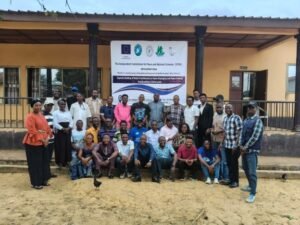
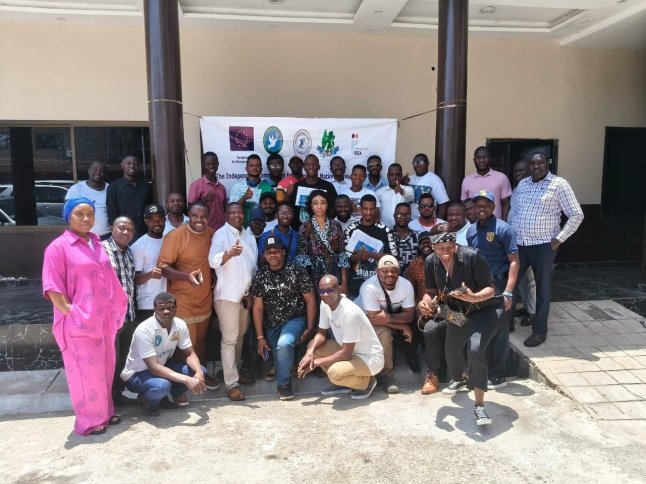
The Independent Commission for Peace and National Cohesion (ICPNC), in collaboration with the Independent Media Commission (IMC), International IDEA and with funding support from the European Union Strengthening Democracy Programme, has successfully concluded a nationwide capacity-building training aimed at strengthening peace messaging and peace-centred broadcasting among journalists, bloggers and digital media actors across Sierra Leone.
The intensive nationwide initiative, held under the theme: “Responsible Voices, Peaceful Nation,” commenced on 23rd March 2026 in Kenema and climaxed on 31st March 2026 in Freetown, after successfully covering the Southern, Northern, North-Western and Western regions. The programme formed part of sustained efforts to promote conflict-sensitive reporting, ethical political communication and responsible broadcasting as Sierra Leone gradually approaches the 2028 General Elections.
The training tour took facilitators and participants through Kenema, Bo, Makeni, Port Loko and Freetown, bringing together journalists from both public and private media houses, bloggers, station managers, radio programme heads, social media influencers and other digital communicators in a coordinated national effort to strengthen the role of the media in peacebuilding and democratic stability.
According to organizers, the intervention was necessitated by growing concerns over the tone of political discourse across media platforms, particularly during live political programmes, phone-in discussions and online debates where misinformation, disinformation, hate speech and inflammatory rhetoric have increasingly threatened national cohesion.
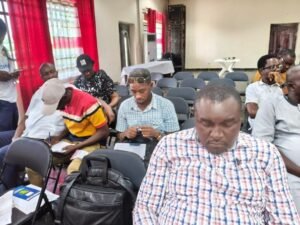
The first phase of the programme was held in Kenema City, where journalists, bloggers and radio executives gathered at the KDC Hall on Nyandeyama Road for a full-day engagement focused on reshaping journalistic practice toward ethical, developmental and solution-driven reporting.
Delivering remarks during the opening session, Khalil Kallon, Executive Secretary of the IMC, stressed the importance of credible journalism in safeguarding democracy.
He noted that Sierra Leone is currently in a politically active period that demands professionalism and responsibility from media practitioners.
He explained that the core objective of the training was to equip journalists with the knowledge and tools needed to undertake credible, factual, ethical and reliable reporting, especially as the country prepares for the 2028 elections.
Throughout the sessions, facilitators guided participants through key modules on peace journalism, responsible reporting, fact-checking, live programme moderation, editorial policy development, studio guest management, broadcast and digital media ethics, content production and the identification of early warning signs of incitement and divisive narratives.
Participants were also exposed to practical techniques in production and presentation skills, newsroom accountability and the development of internal editorial guidelines capable of managing politically sensitive content.
A strong component of the training also focused on gender-sensitive reporting and balanced representation, with facilitators emphasizing the need for inclusive media narratives that reflect diverse voices and strengthen social trust.
From Kenema, the programme moved to Bo in the Southern Region, where participants further explored how journalism can serve as a force for peace by strengthening dialogue, promoting national unity and advancing constructive storytelling.
The nationwide training later proceeded to Makeni on 26th March, where journalists and bloggers from the Northern Region deepened their understanding of peace messaging and peace-centred broadcasting through another robust workshop.
The North-Western regional phase was hosted in Port Loko on 27th March, ensuring that practitioners from that region also benefitted from the strategic intervention before the programme concluded with a final session in Freetown, bringing together media actors from the Western Area.
Throughout the nationwide engagements, senior peacebuilding experts and media regulators consistently underscored the enormous power of the media in shaping public attitudes, influencing national conversations and either reducing or escalating tensions.
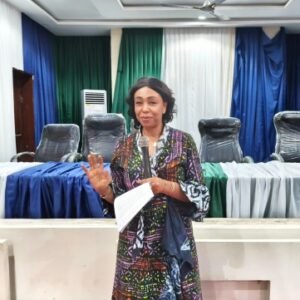
Hawa Sally Samai, Executive Secretary of ICPNC, reminded journalists that the profession carries a significant nation-building responsibility.
She emphasized that media practitioners occupy a strategic position in society and should prioritize the dissemination of messages that promote social cohesion, unity and love.
She further called on participants to place Sierra Leone’s national welfare above personal interests, stressing that when diverse voices are responsibly amplified in the national interest, the result is a stronger and more united country.
Also speaking, Dr. Mamoud Tarawally, Head of Programmes at International IDEA, warned that while the media remains a powerful tool for development, bias and unethical reporting can easily fuel violence and destruction.
He stressed that the responsibility of the media goes beyond simply presenting both sides of a story, noting that journalism must also actively contribute to bringing the country together.
According to him, media pluralism and responsible journalism remain key pillars of Sierra Leone’s democratic growth, as diverse voices help build a stronger national consensus.
In a further contribution, Salia Kpaka, Director of Conflict Prevention at ICPNC, highlighted the pivotal role of responsible communication, especially during electoral cycles.
He noted that the media can either cultivate peace or fuel discord, making responsible communication essential for societal stability and cohesion.
Salia Kpaka also encouraged stronger collaboration among journalists, bloggers and peacebuilding stakeholders to promote impactful storytelling that captures the human side of peacebuilding efforts.
Adding another perspective, Christopher A. Teh, Public Sector Expert at the Tripartite Secretariat, observed that the media plays a critical role in educating citizens on the Tripartite Recommendations, helping to counter misinformation and reduce avoidable political tensions.
A major outcome of the programme was the development of practical frameworks to help media houses strengthen risk assessment systems, structured guest management protocols and newsroom moderation standards, all aimed at reducing harmful broadcasts and improving professionalism.
By the conclusion of the nationwide exercise, organizers commended the commitment shown by participants across all regions, describing the programme as a major milestone in efforts to build a more informed, peaceful and united Sierra Leone.
The ICPNC, IMC, International IDEA and their development partners reaffirmed their commitment to continue empowering journalists, bloggers and digital influencers with the ethics, skills and professional tools needed to use journalism as a force for peace, unity, accountability and democratic development.
With political activities expected to intensify in the coming months and years ahead of 2028, stakeholders expressed optimism that the intervention will significantly reduce hate speech, improve media professionalism and deepen public trust in both traditional and digital media platforms across Sierra Leone.