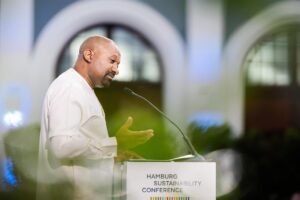

Sierra Leone’s Vice President, Dr. Mohamed Juldeh Jalloh, has concluded a successful participation at the 2026 Hamburg Sustainability Conference (HSC) on Tuesday July 1, 2026 in Germany, where he joined world leaders, policymakers and development partners in addressing some of the most pressing global challenges, including sustainable development, economic resilience and geopolitical instability.
Reflecting on the two-day conference, the Vice President described the engagements as productive and valuable, noting that the forum provided an important opportunity to exchange ideas, strengthen partnerships and promote practical solutions for a more sustainable future.
“I leave Hamburg encouraged by the shared commitment to practical solutions and stronger international cooperation. Sierra Leone will continue to be an active voice in shaping a more resilient and equitable future for countries in the Global South,” Dr. Juldeh Jalloh said.
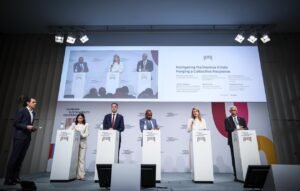
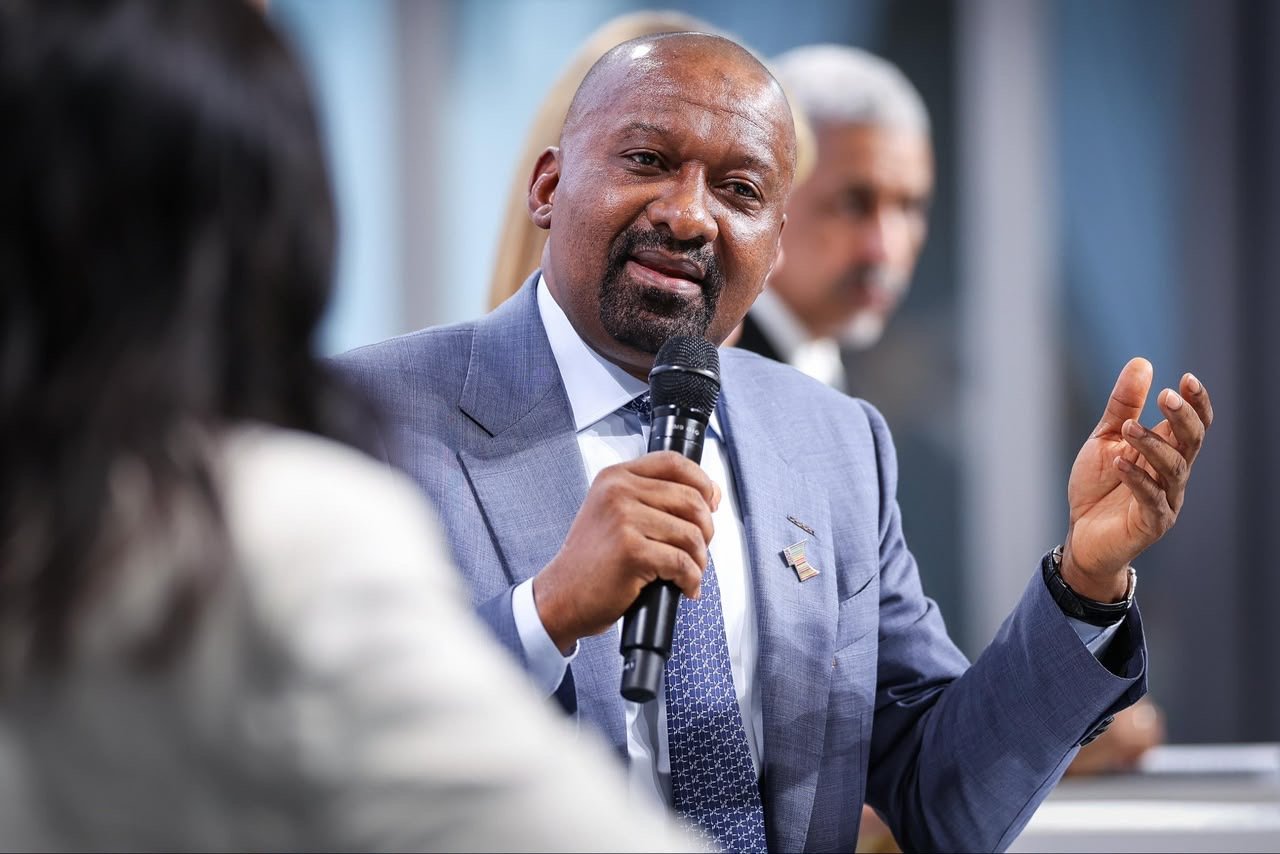
The Vice President contributed to two high-level discussions during the conference. One focused on advancing child nutrition during the critical first 1,000 days of life, while the other examined the global implications of the Strait of Hormuz crisis. During the latter session, he highlighted the disproportionate impact of geopolitical conflicts on small, import-dependent economies such as Sierra Leone and emphasized the need for more flexible financing mechanisms to help vulnerable countries withstand global economic shocks.
Held in Hamburg, Germany, the conference brought together heads of state, senior government officials, multilateral development bank presidents and United Nations leaders to discuss issues ranging from climate resilience and sustainable development financing to economic stability and international cooperation.
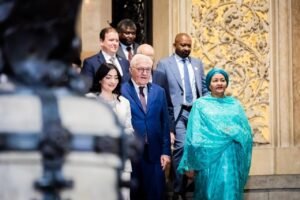
The Vice President participated alongside distinguished global leaders, including German President Frank-Walter Steinmeier, World Trade Organization Director-General Dr. Ngozi Okonjo-Iweala, United Nations Deputy Secretary-General Amina J. Mohammed, Asian Development Bank President Masato Kanda and President of the African Development Bank Group Dr. Sidi Ould Tah, among others.
A key moment of his participation came during the high-level panel titled “Navigating the Hormuz Crisis: Forging a Collective Response.” Drawing on his experience as a former United Nations governance and security expert for West Africa and the Sahel, Dr. Juldeh Jalloh warned that disruptions to strategic shipping routes have far-reaching consequences for developing nations.
“For the Global South, an oil shock is never just an oil shock. It becomes a food shock, a fiscal shock and ultimately a human development shock,” he stated.
The Vice President called on global financial institutions, including the African Development Bank and the World Bank, to establish a Global South Shock Absorption Facility capable of providing rapid and flexible financing to countries affected by geopolitical crises before they escalate into humanitarian emergencies.
He stressed that the international community must move beyond financing recovery after disasters and instead invest in preventive resilience that protects critical sectors such as health, education, agriculture and infrastructure.
Observers noted that Dr. Juldeh Jalloh’s interventions elevated Sierra Leone’s profile at the conference, positioning the country as a constructive contributor to global policy discussions. His engagements with international leaders and development partners further reinforced Sierra Leone’s growing diplomatic influence and commitment to advancing equitable growth, stronger multilateral cooperation and sustainable development across the Global South.