
By Amin Kef (Ranger)
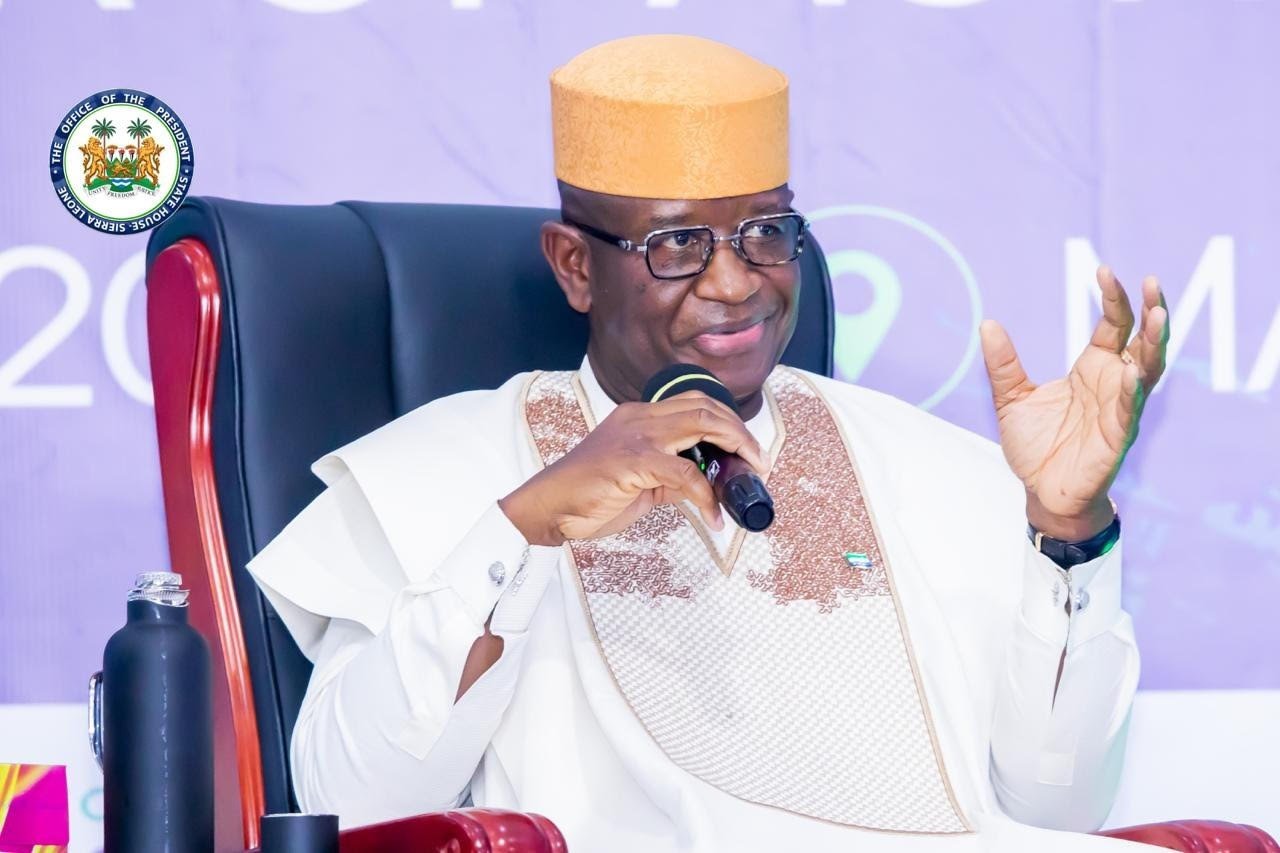
President Dr. Julius Maada Bio has reaffirmed his Government’s commitment to constitutional reform, national unity, economic transformation and human capital development during the Fourth Presidential Town Hall Meeting 2026, held under the theme: “Year of Action” at the University of Makeni (UNIMAK) Hall, on Tuesday, 30 June 2026. The interactive forum, chaired by the Minister of Information and Civic Education, Chernor Bah, brought together Cabinet Ministers, the Mayor of Makeni, members of the Makeni City Council and Bombali District Council, Paramount Chiefs, traditional leaders, Civil Society Organisations, students, youth groups, development partners and residents from diverse backgrounds. The meeting provided an opportunity for citizens to engage the President directly on key national issues through an open question-and-answer session, during which he stressed that development, rather than tribal or regional division, must remain the common language that unites Sierra Leoneans and drives national progress.
Responding to a question on the constitutional review process, President Dr. Julius Maada Bio categorically rejected claims that the review is intended to extend his tenure in office. He explained that the constitutional review process began under previous administrations and that his Government is committed to completing it because every constitution must be reviewed periodically to remain relevant to the changing needs and aspirations of the people. He informed the audience that the proposed constitutional review document is currently before Parliament, where Members of Parliament will consider its provisions and recommend any necessary amendments before its adoption.
On the delayed national population and housing census, President Dr. Julius Maada Bio confirmed that the exercise will be conducted later this year, explaining that it was postponed because the necessary conditions to ensure a credible, transparent and acceptable process had not been fully established. He encouraged every Sierra Leonean to participate, describing the census as a vital national exercise whose data will guide planning, policy formulation, equitable resource allocation and economic development. He cautioned against attempts to undermine the importance of the census, stating that every responsible citizen has a duty to support the process because national development depends on reliable population data.
Addressing concerns over national unity, President Dr. Julius Maada Bio said Sierra Leone’s diversity should never be viewed as a source of division but rather as one of the country’s greatest strengths. He maintained that politicians without meaningful development agendas often magnify ethnic and regional differences for political advantage, insisting that development remains the only language capable of uniting all Sierra Leoneans. “I have demonstrated to you that I am a President for everyone in Sierra Leone,” he declared, adding that his Government reflects regional inclusivity because appointments are based on competence rather than ethnicity or place of origin. He noted that even before becoming President, members of his personal staff, including his cook and security personnel, came from the northern region, while all his vice-presidential running mates have also hailed from the North.
The President further disclosed that his administration has implemented many of the recommendations of the Truth and Reconciliation Commission aimed at fostering reconciliation, national healing and lasting peace. He appealed to politicians, adults and young people to reject tribalism and regionalism, reminding citizens that Sierra Leone remains one of the most religiously tolerant countries in the world. “There is one language in the world that everybody understands, and that language is development,” he said, urging Sierra Leoneans to bridge ethnic and regional divides through a shared commitment to national progress.
Responding to questions on the economy and the persistent challenges in electricity supply, President Dr. Julius Maada Bio acknowledged that the country’s energy sector faces longstanding structural problems resulting from decades of underinvestment in electricity generation, transmission and distribution. He said the challenges cannot be resolved overnight but assured citizens that Government has undertaken major investments through development projects and international partnerships to improve electricity generation and expand transmission infrastructure. The President disclosed plans to increase electricity production from the Bumbuna Hydroelectric Project by an additional 50 megawatts while identifying vandalism of electricity infrastructure and widespread electricity theft as significant factors undermining progress. He called on citizens to work collectively with Government to protect national infrastructure, noting that reliable electricity remains essential for economic growth and industrial development.
Speaking on the Government’s flagship Feed Salone initiative, President Dr. Julius Maada Bio reaffirmed his administration’s commitment to transforming agriculture into a productive and commercially viable sector capable of achieving food security and generating export earnings. He explained that Government’s responsibility is to create an enabling environment through improved access to agricultural inputs, mechanization, infrastructure and scientific research. He highlighted the important role being played by the Sierra Leone Agricultural Research Institute (SLARI), particularly its research facilities at Mile 91, in developing improved farming methods capable of increasing agricultural productivity. He further stated that improving feeder roads and providing subsidies remain essential for making large-scale farming profitable and attractive to farmers.
On youth empowerment, President Dr. Julius Maada Bio said creating opportunities for young people begins with quality education. He noted that the introduction of the Free Quality Education Programme during his first term has equipped thousands of young Sierra Leoneans with the knowledge and skills needed to compete successfully in the future. The President explained that while Government provides only a limited number of jobs, sustainable employment depends largely on private sector growth and investment. He therefore encouraged entrepreneurship and reaffirmed his administration’s determination to make Sierra Leone an attractive destination for investors capable of creating employment opportunities for young people.
Addressing the education sector, President Dr. Julius Maada Bio said Government has significantly expanded access to primary and secondary education through the provision of free tuition, textbooks and other teaching and learning materials. He urged parents to report any school demanding illegal payments, stressing that such practices undermine the objectives of the Free Quality Education Programme. He also highlighted investments in teacher recruitment and training, as well as measures aimed at eliminating examination malpractice and improving the quality of education. The President disclosed that Government is considering legislation that would make the Free Quality Education Programme a permanent national policy binding on future administrations.
On healthcare, President Dr. Julius Maada Bio assured participants that stringent surveillance and screening measures have been introduced at all official entry points to prevent the Ebola outbreak currently affecting parts of the region from entering Sierra Leone. He added that Government remains vigilant and continues to strengthen disease prevention and emergency preparedness systems. Highlighting achievements in the health sector, the President disclosed that maternal mortality has declined by 78 percent, infant mortality by 55 percent, while life expectancy has improved significantly. He also pointed to the construction of additional hospitals, the recruitment and training of more healthcare professionals and the establishment of Sierra Leone’s first specialist medical training centre for doctors as evidence of continued investment in the country’s healthcare system.
Turning to the fight against drug trafficking and substance abuse, President Dr. Julius Maada Bio said his Government has intensified efforts to combat the growing menace through stronger legislation, improved law enforcement and closer cooperation with international partners. He revealed that strengthened laws and expedited prosecution have resulted in more than 120 convictions in drug-related cases, while five rehabilitation centres have been established across the country to support the treatment and recovery of drug users. He further disclosed that Government is working with international partners to prevent the importation of high-dose tramadol exceeding 50 milligrams and is awaiting a comprehensive report on Sierra Leone’s maritime domain to strengthen efforts aimed at intercepting illicit drugs entering the country through its territorial waters.
Emphasizing that Government’s substantial investment in human capital development would not be allowed to be undermined by narcotics, the President urged Sierra Leoneans to reject attempts to portray the country as a narcotic state, warning that such narratives damage the country’s international reputation and discourage investment.
Concluding the engagement, President Dr. Julius Maada Bio called on Sierra Leoneans, particularly young people, to reject tribalism, regionalism and every form of divisive politics. He encouraged them to embrace one another as compatriots and work collectively towards building a peaceful, united and prosperous nation. Reiterating that development is the universal language understood by all people, he challenged citizens to break the barriers of ethnicity and regionalism and become active partners in advancing Sierra Leone’s development.
The Fourth Presidential Town Hall Meeting once again underscored the Government’s commitment to transparency, accountability and participatory governance by providing citizens with a platform to engage directly with the Presidency on issues shaping the country’s future.