

By Ibrahim Sesay
The leadership of the Sierra Leone Immigration Department (SLID) has presented a draft Cabinet Policy Proposal to the Minister of Internal Affairs, Rtd. AIG Morie Lengor, seeking Government approval to transform the Department into a semi-autonomous regimental service.
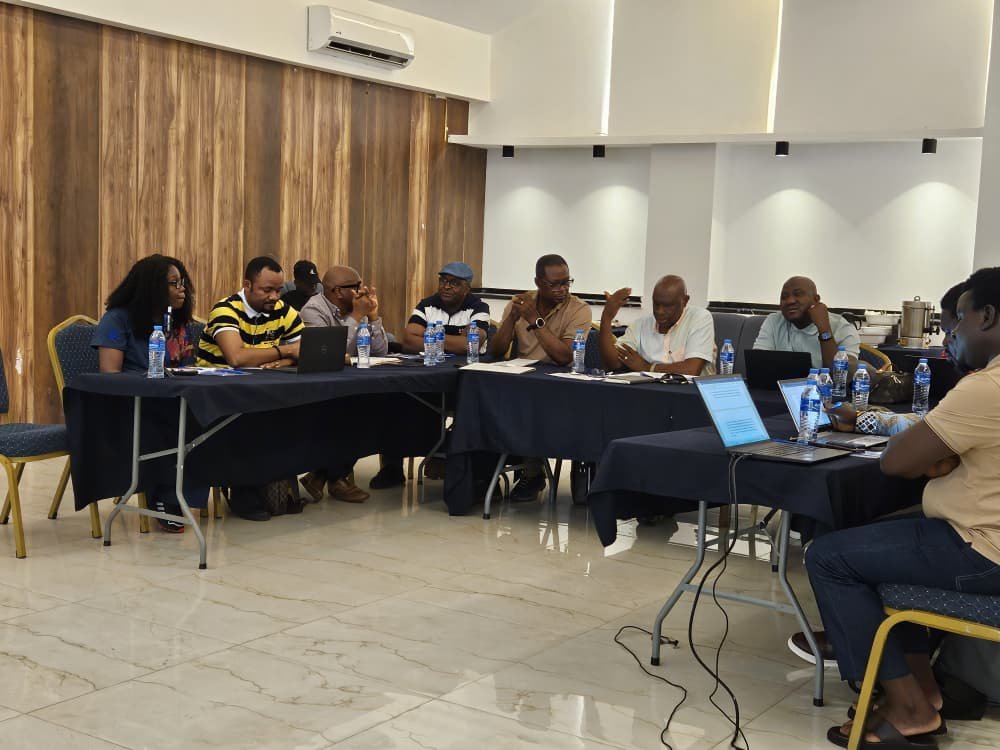
The presentation took place on Saturday, July 27, 2026, at the Country Lodge Conference Hall, where the Chief Immigration Officer, Dr. Moses Tiffa Baio Esq., led a cross-section of the Department’s senior leadership in outlining the proposed institutional reforms. Present at the meeting were the Minister of Internal Affairs, the Deputy Minister, the Permanent Secretary, and the Director of Research and Policy.
The proposal is designed to reposition the Sierra Leone Immigration Department to better address modern migration challenges, strengthen border security, enhance operational efficiency and improve service delivery in line with international best practices.
During the meeting, Minister Morie Lengor and his team conducted a comprehensive review of the draft policy, providing strategic recommendations to strengthen the document before its submission to Cabinet. Discussions focused on the proposal’s purpose, rationale, institutional framework, expected outcomes and implementation roadmap.
According to the policy paper, the primary objective of the reform is to secure Cabinet approval for restructuring the Sierra Leone Immigration Department into a semi-autonomous service operating under the supervision of the Ministry of Internal Affairs. The proposed model aims to grant the institution greater operational and administrative autonomy while maintaining ministerial oversight on policy matters.
The policy argues that the current institutional arrangement limits the Department’s ability to respond effectively to emerging migration trends, border security threats and transnational organized crime. It further states that adopting a regimental structure would strengthen command systems, enhance discipline, improve accountability and create a more professional immigration service.
Another key aspect of the proposal is the transition in institutional terminology. The policy recommends replacing the designation “agency” with “service” and adopting the term “regimental” instead of “paramilitary” to more accurately reflect the Department’s mandate, operational responsibilities and institutional values.
The proposed governance structure would establish a disciplined regimental command system capable of supporting rapid deployment, operational effectiveness and enhanced professionalism while remaining accountable to the Ministry of Internal Affairs through established regulatory frameworks.
If approved, the reform is expected to deliver stronger border management, improved migration control, enhanced institutional professionalism, clearer coordination among Government agencies and increased public confidence through greater efficiency, transparency and accountability.
The policy also emphasizes the importance of avoiding duplication of functions across Government institutions. Officials noted that the draft has been carefully reviewed to clearly define the Immigration Department’s responsibilities while strengthening collaboration with other Ministries, departments and agencies involved in national security and border management.
As part of the implementation process, the Department plans to revise the draft policy by incorporating the recommendations made during the consultation with the Minister and his team. The final policy paper will then be submitted to Cabinet for consideration and approval.
Upon Cabinet approval, Government will initiate the necessary legislative and administrative processes required to operationalize the proposed semi-autonomous regimental service.
The Sierra Leone Immigration Department believes the proposed reforms will modernize the institution and position it to effectively respond to the country’s evolving security, migration and border management needs. Officials maintain that the transformation will create a more efficient, disciplined and accountable service capable of meeting 21st-century challenges while remaining fully accountable to the Government of Sierra Leone.