
By James Tamba Lebbie
At a high-level international forum on Africa’s future held in Brussels, a United States-based Catholic leader has called on global policymakers to recognize the critical role of faith in shaping the continent’s development trajectory.
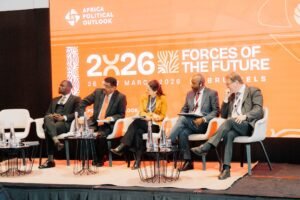
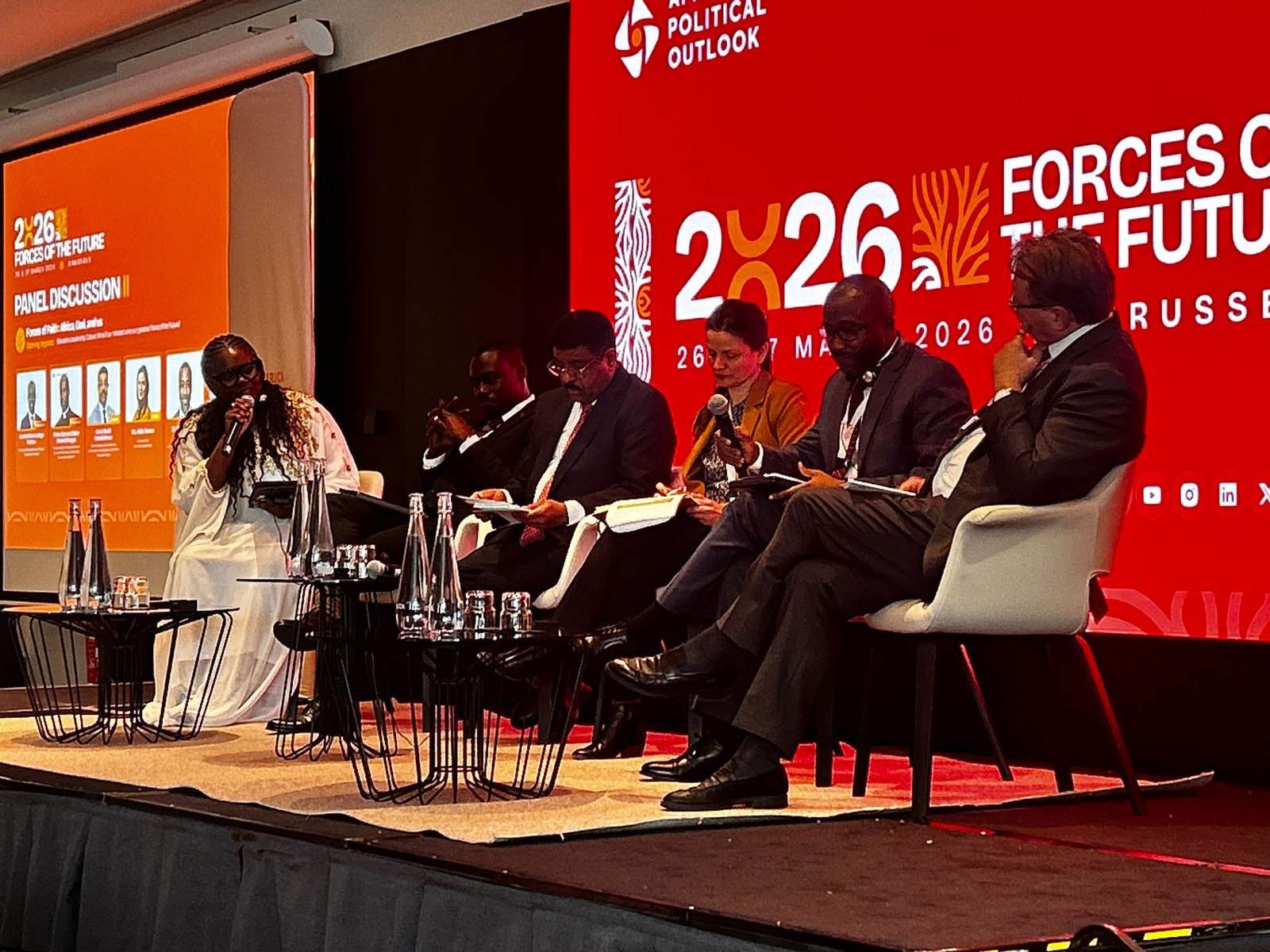
The Africa Political Outlook Conference, held from March 26–27 under the theme: “Forces of the Future,” brought together heads of state, policymakers, civil society actors and international partners to deliberate on key issues including economic sovereignty, security and governance. However, during a panel discussion titled: “Forces of Faith: Africa, God and Us,” Dr. Steven Nabieu Rogers, Executive Director of the Africa Faith and Justice Network, urged participants to look beyond conventional policy frameworks.
“Africa’s future will not be built by policy alone—it will be built by values,” he stated, emphasizing the need to integrate moral and ethical considerations into governance and development strategies.
Dr. Steven Nabieu Rogers highlighted that faith remains a central pillar across African societies, influencing how communities organize, respond to hardship and sustain hope in difficult circumstances. According to him, faith-based institutions continue to play indispensable roles in delivering essential services, particularly in underserved areas.
“These institutions are present where the state is absent. They educate where systems are weak, heal where infrastructure is lacking and advocate where voices are silenced,” he noted, referencing the contributions of religious organizations in sectors such as education, healthcare and humanitarian support. He further cited interfaith collaboration in post-conflict contexts like Sierra Leone as a key factor in promoting reconciliation and lasting peace.
While acknowledging the conference’s focus on economic growth and investment, Dr. Rogers stressed that sustainable development must be anchored in ethics, accountability and human dignity. He warned that without strong moral foundations, governance systems risk being undermined by corruption, declining public trust and weak leadership.
“A society cannot thrive if corruption is normalized, if public trust erodes, or if leadership lacks moral grounding,” he cautioned, adding that religious leaders often play vital roles in mediating conflicts and stabilizing communities during crises.
Addressing emerging global concerns, Dr. Rogers also warned against the politicization of religion, citing Nigeria as an example where complex security challenges are sometimes oversimplified through religious narratives. He argued that such interpretations risk inflaming tensions and diverting attention from underlying issues such as governance failures, criminality and competition over resources.
“Reducing such a complex crisis to a binary religious narrative does more than oversimplify—it risks inflaming tensions and obscuring the real drivers of insecurity,” he said, urging a more nuanced understanding of conflict dynamics.
In a reflective tone, Dr. Rogers challenged faith-based organizations themselves to maintain integrity and independence in their advocacy roles. He called for greater accountability, urging such institutions to amplify grassroots voices and address systemic injustices rather than merely responding to surface-level challenges.
“Are we still speaking truth to power, or have we become too closely aligned with it?” he asked, stressing the importance of credibility in advancing justice and social change.
A key takeaway from his address was the need for deeper collaboration between policymakers and faith communities. He advocated for an inclusive approach that integrates ethical leadership with policy design, positioning faith actors as strategic partners rather than symbolic participants in governance processes.
As discussions at the Brussels summit concluded, Dr. Rogers reiterated that Africa’s future transcends political and economic considerations, describing it as fundamentally a moral undertaking.
“Africa stands at a defining moment. Our greatest strength may lie in something less visible—yet deeply powerful: our moral imagination,” he concluded.