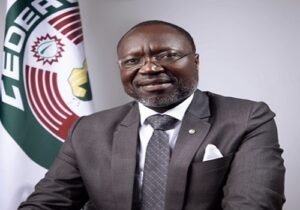

The President of the Economic Community of West African States Commission, Omar Alieu Touray, has lauded the “remarkable leadership” of Sierra Leone’s Chief Justice, Komba Kamanda, stating that his stewardship has significantly shaped the transformation of the ECOWAS Community Court of Justice into a credible and respected regional institution.
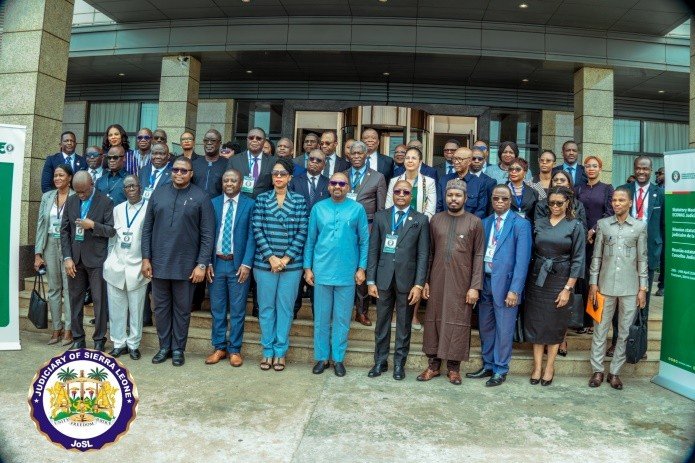
The commendation was delivered during the statutory meeting of the ECOWAS Judicial Council held on Sunday, April 26, 2026, at the Atlantic Hotel on Lumley Beach Road in Freetown. President Omar Alieu Touray’s message was read on his behalf by the Commissioner for Internal Services, Dr. Habibu Yaya Bappah.
In his statement, President Omar Alieu Touray praised Chief Justice Komba Kamanda, who also serves as Chairman of the ECOWAS Judicial Council, for his strategic direction and unwavering commitment to strengthening the regional judicial system. He emphasized that Komba Kamanda’s leadership has been instrumental in guiding the evolution of the Community Court of Justice into a respected institution within the international legal landscape.
“Your continued guidance and oversight have been instrumental in shaping the evolution of the Community Court of Justice into a respected and credible institution within the regional international legal framework,” the statement noted.
On behalf of the Commission, the ECOWAS President reaffirmed strong institutional support for the Judicial Council, underscoring its vital role in promoting justice, accountability and adherence to the rule of law across Member States. He highlighted that under Chief Justice Komba Kamanda’s leadership, the ECOWAS judicial framework has witnessed notable progress in both structure and effectiveness.
President Omar Alieu Touray further pointed to the expanding influence of the Court, particularly its accessibility to individuals and corporate bodies. This inclusiveness, he said, has widened access to justice across West Africa, enabling citizens to seek redress beyond their national jurisdictions. The Court’s growing body of jurisprudence continues to play a critical role in advancing human rights and strengthening democratic governance within the sub-region.
Describing the Court as a “beacon of hope,” he noted that increasing confidence from Governments, institutions and citizens reflects its independence and professionalism. Those gains, he said, are largely attributable to the dedication of the Court’s judges and the effective oversight provided by the Judicial Council.
Despite the progress recorded, President Omar Alieu Touray acknowledged several challenges facing the Court, including limited resources, a rising caseload and difficulties in enforcing judgments within Member States. He also stressed the importance of enhancing public awareness about the Court’s mandate and accessibility to ensure broader utilization of its services.
In a significant development, the ECOWAS Commission confirmed the successful conclusion of the recruitment process for a new cohort of judges who will serve from 2026 to 2030. The move is expected to strengthen the Court’s capacity to effectively manage its growing responsibilities.
Deliberations at the meeting also focused on the proposed establishment of an Appeals Chamber, a reform initiative seen as critical to reinforcing the Court’s authority and improving its efficiency.
Reaffirming the Commission’s commitment, President Omar Alieu Touray emphasized that a strong and independent judiciary remains central to regional integration, economic development and sustainable peace within ECOWAS.
He concluded by expressing appreciation to Julius Maada Bio and the people of Sierra Leone for their hospitality, while also commending Chief Justice Komba Kamanda for providing an enabling environment for the Council’s work.
The Freetown session is expected to produce key decisions aimed at enhancing the effectiveness and impact of the ECOWAS Community Court of Justice across the sub-region.