

By Ibrahim Sesay
The Government of Sierra Leone has renewed its commitment to strengthening budget transparency, accountability, and citizen participation in public financial management following the launch of the 2025 Open Budget Survey (OBS) Report in Freetown.
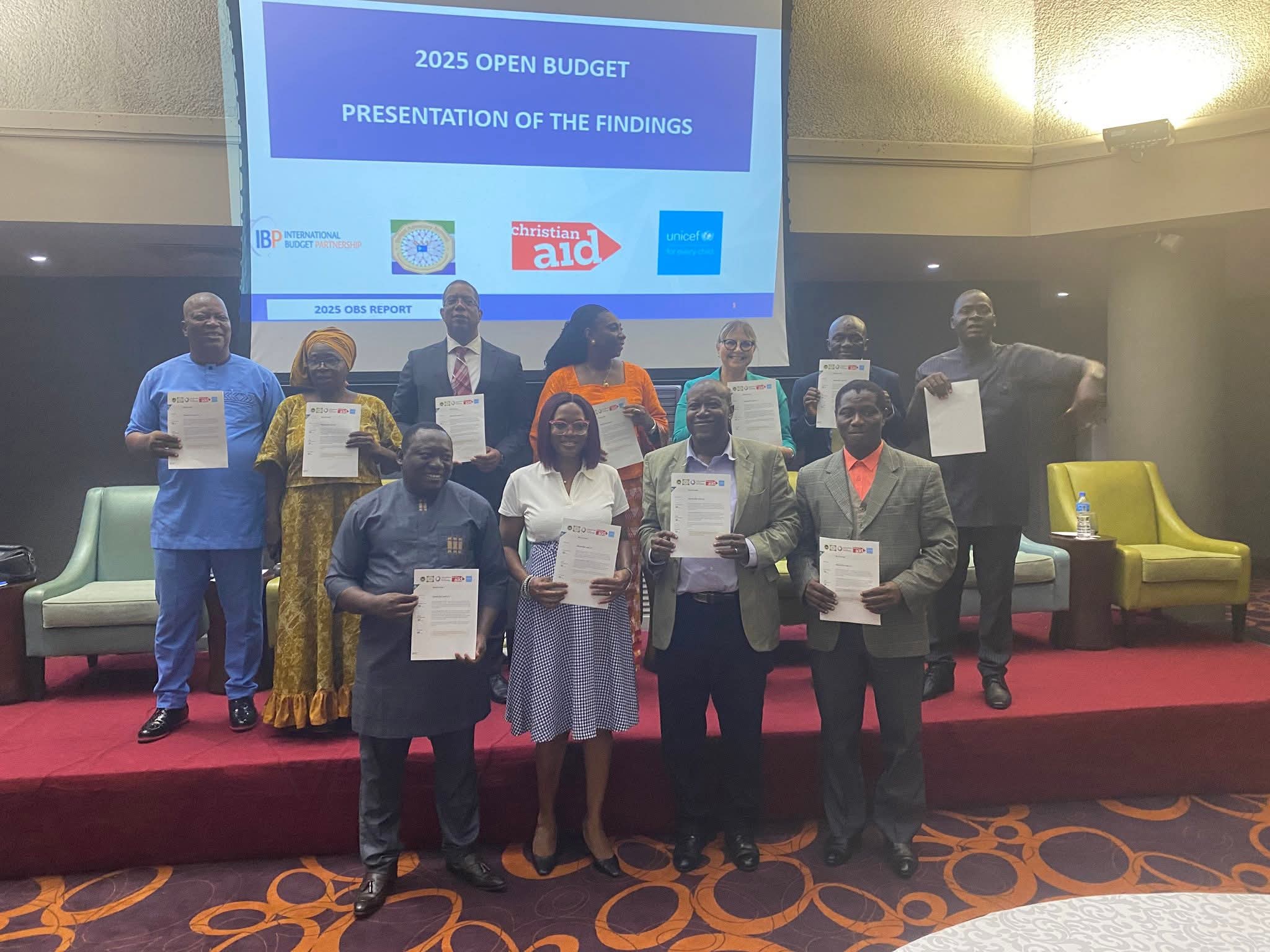
The event, organized by the Budget Advocacy Network (BAN) and its partners at the Radisson Blu Hotel, brought together government officials, development partners, Members of Parliament, civil society organizations, media representatives, and citizens to review the country’s progress in fiscal transparency and discuss reforms aimed at improving public financial management.
Delivering the keynote address on behalf of the Ministry of Finance, the Acting Director of Budget, Dr. Ilara Mahdi, described the Open Budget Survey as an important independent assessment of how governments account for and disclose the use of public resources.
He emphasized that, for the Ministry of Finance, the survey represents far more than a performance measurement tool.
“The Open Budget Survey is a mirror reflecting our commitment to the people of Sierra Leone. It reveals how effectively we are opening our financial processes to those whose lives are most impacted by our fiscal decisions,” Dr. Mahdi stated.
He highlighted several milestones achieved by the Government in recent years, including the publication of key budget documents, the production of Citizens’ Budgets, the development of budget briefs that simplify complex fiscal information, and strengthened collaboration with civil society organizations and the media.
According to Dr. Mahdi, the Government has also strengthened parliamentary oversight and enhanced the role of Audit Service Sierra Leone in promoting accountability and transparency in the management of public resources.
Despite the progress recorded, he acknowledged that challenges remain, particularly regarding the timeliness and comprehensiveness of budget information and the need to make public participation more meaningful and accessible to ordinary citizens.
“Our goal is to ensure that no citizen feels left in the dark regarding how public resources are utilized,” he said.
Reaffirming the Ministry’s commitment to reform, Dr. Mahdi outlined key priorities that will guide future efforts. These include ensuring all budget documents are comprehensive and published on time, creating structured platforms for dialogue between government and citizens, and leveraging digital technology to make budget data more interactive and user-friendly.
He noted that the Government has invested significantly in digitizing processes across ministries, departments, and agencies and intends to use technology to improve public access to financial information.
Dr. Mahdi further stressed the importance of restoring and strengthening public trust in government institutions, describing trust as a critical pillar of sustainable national development.
“Transparency and accountability are not our final destination. Rather, they are the pathways through which we ensure that resources reach the people and that every citizen feels a sense of ownership over national progress,” he said.
Earlier, governance expert and development practitioner Aminata Samuella Ruth Kelly-Lamin described the Open Budget Survey as a call to action for government institutions, Parliament, oversight bodies, civil society organizations, development partners, and citizens to work collectively toward greater accountability.
UNICEF Officer-in-Charge, Liv Elin Indreiten, commended Sierra Leone for improvements in public participation and oversight, noting that the country now performs comparatively well within the West African region. However, she called for more inclusive participation, particularly for women, young people, persons with disabilities, and other vulnerable groups.
The International Monetary Fund (IMF) Representative, Wayne Mithchel, emphasized that transparency must be accompanied by budget credibility. He warned that revenue shortfalls, expenditure overruns, weak controls, and procurement inefficiencies can undermine development outcomes and public confidence in government institutions.
Participants at the launch agreed that while Sierra Leone has made notable gains in budget transparency and oversight, additional reforms are needed to strengthen citizen engagement, improve budget credibility, enforce audit recommendations, and protect spending in critical social sectors.
The 2025 Open Budget Survey was ultimately described as both an assessment of Sierra Leone’s current performance and a roadmap for future reforms aimed at building public trust, strengthening institutions, and improving service delivery across the country.