
By Foday Moriba Conteh
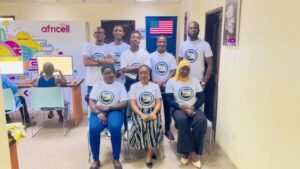
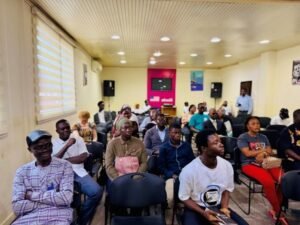
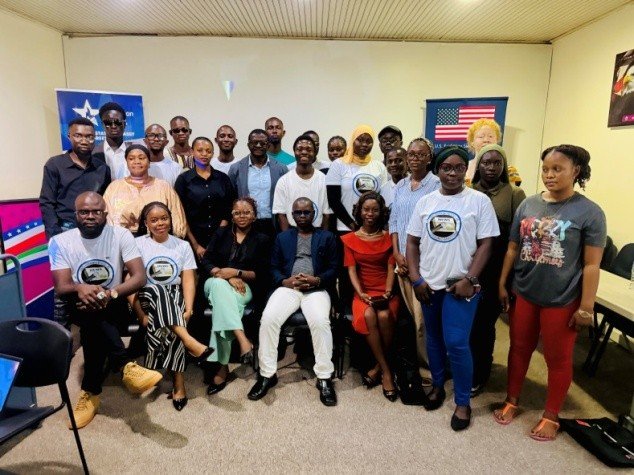
Media Advocacy Network-SL on Wednesday, May 6, 2026, concluded a one-day conference organized to commemorate World Press Freedom Day 2026 at the Africell American Corner on Bathurst Street in Freetown. The event was held under the theme: “Shaping a Future at Peace: Promoting Press Freedom for Human Rights, Development, and Security.”
In her welcome remarks, Amb. Mariama S. Tarawally, Deputy Coordinator of Media Advocacy Network-SL, highlighted the important role journalists play in safeguarding democracy, defending human rights, and ensuring accountability in society. She noted that a free and independent press remains essential for promoting transparency and enabling citizens to make informed decisions.
According to her, World Press Freedom Day serves not only as a moment of celebration but also as an opportunity to reflect on the challenges confronting journalists and media practitioners around the world.
She expressed concern that press freedom continues to face threats, with journalists often subjected to intimidation, harassment, and attacks while carrying out their professional duties. She further noted that the rise of misinformation, disinformation, and rapidly evolving technologies, including Artificial Intelligence (AI), continue to reshape the media landscape and create new challenges for journalists.
Tarawally emphasized the need for collective efforts to strengthen independent and ethical journalism while fostering a media environment that supports truth, accountability, and public trust. She also commended journalists and media practitioners who continue to stand on the frontlines in pursuit of truth and public interest despite growing challenges.
In his statement, Amb. Mohamed Tejan Barrie, Executive Director of Media Advocacy Network-SL, called on authorities and stakeholders to take concrete actions to promote and protect press freedom in Sierra Leone.
He emphasized the importance of a free, independent, and professional media in safeguarding democracy, accountability, and the public interest. According to him, while Sierra Leone has made significant progress in expanding civic space and media plurality, those gains remain fragile.
Reflecting on this year’s theme, Amb. Barrie highlighted the growing intersection between journalism, technology, including Artificial Intelligence (AI), and human rights, stressing the need to strengthen information ecosystems that are truthful, inclusive, and resilient against manipulation.
“It is deeply concerning that journalists in Sierra Leone continue to face intimidation, harassment, and at times physical assault, particularly while covering political events and public demonstrations,” he stated.
He further condemned reports of rogue police officers allegedly targeting journalists, noting that such actions undermine constitutional guarantees on freedom of expression and media independence.
“Journalists are not adversaries of the state; they are essential actors in informing citizens and holding power to account,” he said, adding that attempts to silence the press through force or coercion pose a serious threat to democratic governance.
Amb. Barrie urged leaders to move beyond rhetoric by enforcing accountability within security agencies, strengthening legal protections for journalists, and promoting respect for media practitioners across the political divide.
He also called for increased investment in media literacy and ethical journalism while encouraging the responsible use of technology to combat misinformation and disinformation.
“A free press is not a privilege granted by those in power; it is a right that must be actively defended,” he concluded, calling for the creation of an environment where journalists can operate without fear and where truth continues to serve as the foundation of democracy.
The statements were followed by presentations from several speakers on issues relating to media, technology, storytelling, and press freedom.
John Koroma, Executive Director of Stop IT Newspaper, delivered a presentation on “The Importance of Newspaper in the Social Media Age,” where he underscored the enduring relevance of newspapers despite the rapid growth of social media platforms. According to him, while social media provides instant access to information, newspapers remain important sources of verified and in-depth reporting capable of combating misinformation and promoting informed public discourse.
Esther Yealie Kamara, Co-Founder of Youth Initiative for Climate Action (YICA), used her presentation to emphasize the importance of storytelling in driving social change and raising awareness on critical environmental issues. She noted that telling authentic and impactful stories helps communities better understand the realities of climate change, environmental degradation, and the challenges affecting vulnerable populations. According to her, storytelling remains a powerful tool for advocacy, education, and inspiring action, particularly among young people. She encouraged journalists, content creators, and activists to use their platforms responsibly to amplify voices, promote environmental awareness, and influence positive change within society.
Cecilia Alice Sesay, a journalist with Sierra Leone Broadcasting Corporation (SLBC), spoke on “The Importance of Press Freedom on the Internet,” stressing that digital platforms have become critical spaces for freedom of expression, access to information, and citizen engagement. She noted that protecting online press freedom is essential in ensuring transparency, accountability, and democratic participation in the digital age. Ms. Sesay also raised concerns about online harassment, misinformation, censorship, and cyber threats faced by journalists and media practitioners, calling for policies that safeguard digital rights and promote responsible online journalism.
The conference brought together journalists, civil society actors, media practitioners, and other stakeholders to discuss issues relating to press freedom, human rights, development, and national security in Sierra Leone. The event also featured interactive discussions following each presentation, during which attendees had the opportunity to ask questions and contribute to the conversations.