
Home Blog Page 10

TOES-SL Hosts Youth Roundtable Discussion on Empowering Sierra Leone Youths for National Development

Group of 12 people posing for a photo at a conference, seated in front row with banners in the background and an American flag banner on the right.

By Ibrahim John Sesay

The Orphan Empowerment Society Sierra Leone (TOES-SL) on Friday, April 24, 2026, hosted a youth roundtable discussion aimed at promoting youth participation in national development, bringing together a broad cross-section of young people, private sector representatives, Civil Society leaders and development stakeholders at the Africell-American Corner in Freetown. The event, held under the theme: “Empowering Sierra Leone Youths for National Development,” created a platform for meaningful dialogue on the future of young people in the country, with a focus on encouraging policy conversations, innovative thinking and collaborative solutions to enhance youth inclusion and leadership.

Deliberations during the engagement centered on strengthening the role of young people in governance, entrepreneurship, education and economic growth, as participants exchanged ideas on education, employment and leadership while underscoring the need to address existing imbalances and promote active citizenship.

Speaking at the opening session, the National Coordinator of TOES-SL, Ambassador Alie Conteh, welcomed participants and emphasized the importance of sustained investment in young people, noting that they remain central to Sierra Leone’s human resource development and national transformation. Ambassador Alie Conteh stressed that young people should not be seen only as future leaders but as active contributors to the country’s present development, while calling for stronger partnerships between Government institutions, private sector actors and Civil Society Organizations to effectively address challenges facing the youth population.

The Media, Communication and Public Relations Officer at Air Sierra Leone, Rashidatu Umarr, encouraged participants to pursue excellence, build confidence and take advantage of available opportunities in education and career development, reaffirming the institution’s commitment to empowering young people for national development and urging them to remain focused and prepared for future opportunities.

In a similar vein, the Executive Assistant of KID-AFAN Company Limited, Tommy Thomas, highlighted the need for increased support for entrepreneurship and practical skills training, stressing that equipping young people with business knowledge and access to resources would contribute significantly to reducing unemployment and creating sustainable livelihoods across the country.

Also contributing to the discussion, the Media and Communication Officer of TP Group SL, Chuwetta Alditha Cream-Wright, outlined her organization’s efforts to support school-going pupils who face challenges in passing the National Primary School Examination, the Basic Education Certificate Examination and the West African Senior School Certificate Examination, explaining that the company has developed a digital learning application known as TP Learning, which provides access to past examination questions to enhance academic performance. Chuwetta Alditha Cream-Wright emphasized that innovation and creativity remain essential tools for young people seeking to succeed in an increasingly competitive environment.

The first roundtable session, moderated by Ambassador Alie Conteh, was held under the theme: “Bridging Policy, Practice and Opportunity for Youth Empowerment” and featured panelists including Kade G. Sow of United for Salone, Alusine Kargbo, Chairman of Susan’s Bay Community, Rashidatu Umarr of Air Sierra Leone and Kenneth G. Campbell, an alumnus of the Young African Leaders Initiative. Discussions during the session focused on youth inclusion in governance and policy-making processes, employment opportunities, entrepreneurship and skills development, with panelists also examining the importance of transparency, accountability, innovation and public-private partnerships in advancing youth development.

The second phase of the engagement expanded the conversation to include youth employment, education, innovation, civic engagement, digital transformation and climate-related opportunities, with contributions from Chuwetta Alditha Cream-Wright of TP Group, President of the Sierra Leone Youth Association Junisa Kallon, Tommy Thomas of KID-AFAN Company Limited and Chief Executive Officer of Alphatek Global, Swahho Kanneh. The discussions highlighted the need for coordinated efforts among stakeholders to create an enabling environment for young people to thrive and contribute meaningfully to national development.

The event concluded with an interactive networking session during which participants exchanged ideas, built new connections and reaffirmed their collective commitment to shaping a better future for young people in Sierra Leone, reflecting a shared determination to translate dialogue into practical action for sustainable youth empowerment.

World Bank Executive Directors Commend Sierra Leone’s Reforms, Pledge Continued Partnership

Three formally dressed men stand side by side in a government setting, with a flag behind them and an official seal in the foreground.

A high-level delegation from the World Bank has reaffirmed its strong commitment to Sierra Leone’s development agenda following a courtesy visit to President Julius Maada Bio at State House in Freetown on Friday, April 24, 2026.

The delegation, led by Executive Director, Dr. Zarau Kibwe, comprised six Executive Directors and three Alternate Executive Directors representing a constituency of 67 countries. The visit forms part of an assessment mission aimed at evaluating the impact of World Bank-supported programs in Sierra Leone while strengthening ongoing collaboration across key sectors of the economy.

Speaking during the engagement, Minister of Finance, Ahmed Sheku Fantamadi Bangura, explained that the visit is part of a broader three-day mission involving consultations with Government institutions, private sector actors, Civil Society Organizations and the media. He noted that the courtesy call underscores the World Bank’s sustained interest in deepening its partnership with Sierra Leone, particularly at a time when global economic pressures continue to affect developing economies.

Dr. Zarau Kibwe commended President Bio’s leadership and reform-oriented governance, stating that Sierra Leone has made notable progress in stabilizing its macroeconomic framework. According to her, those efforts have strengthened the country’s standing within the Bank’s constituency and positioned it for enhanced support. She emphasized that the delegation’s visit is not only to review ongoing projects but also to identify priority areas where additional assistance can accelerate national development.

On behalf of the delegation, Zainab Ahmed described Sierra Leone as a strategic partner, reaffirming the institution’s readiness to continue supporting Government initiatives. She highlighted education, energy and women’s empowerment as central pillars of cooperation, noting that sustained investment in those sectors is critical to inclusive growth and long-term resilience.

Other Executive Directors, including Matteo Bugamelli, Velavan Gnanendran, Arnaud Buissé and Jiandi Ye, commended Sierra Leone’s national development plan for its alignment with global priorities. They pointed to progress in sectors such as education, energy, mining and digital transformation as evidence of the Government’s commitment to sustainable development.

In his response, President Bio warmly welcomed the delegation and expressed appreciation for the World Bank’s longstanding support to Sierra Leone. He acknowledged the institution’s contributions to key sectors, including agriculture, infrastructure and human capital development, describing the partnership as vital to the country’s progress.

“The World Bank’s support has been instrumental in our development journey, especially in agriculture, infrastructure and human capital,” President Bio stated.

The President reiterated his Government’s commitment to advancing digital transformation, strengthening infrastructure and expanding flagship initiatives in agriculture and the blue economy. He emphasized that continued collaboration with the World Bank will be essential in achieving those priorities and driving sustainable economic growth.

President Bio also praised the Bank’s timely interventions during global crises, including the COVID-19 pandemic, noting that such support helped cushion the country’s economy during difficult periods. He reaffirmed Sierra Leone’s focus on building a skilled and competitive workforce through quality education and capacity development, positioning the nation for future opportunities in an increasingly digital and interconnected world.

The visit marks another significant step in reinforcing the partnership between Sierra Leone and the World Bank, with both sides expressing optimism about deepening cooperation to deliver tangible development outcomes for the people.

$55 Million Fishing Port Initiative Unveiled, Signals New Era for Sierra Leone’s Maritime Development

Group of officials and workers standing in front of a banner for the Julius Maada Bio Industrial Fishing Port at a port site.

President Dr. Julius Maada Bio has officially launched the construction of Sierra Leone’s first industrial fishing port, describing the Black Johnson project as a transformative milestone for the country’s fisheries sector and a major step toward advancing the Blue Economy. The sod-turning ceremony took place on Thursday, April 23, 2026, at Black Johnson Village in the Western Area Rural District.

Delivering his keynote address, President Bio emphasized Sierra Leone’s identity as a maritime nation, noting that the country’s vast coastal resources have long remained underutilized due to inadequate infrastructure. He highlighted that Sierra Leone boasts over 570 kilometers of coastline and is endowed with some of the world’s richest marine ecosystems, yet lacks the systems needed to fully harness those assets for national development.

The President pointed out that although the country has an estimated sustainable fish stock of 450,000 metric tons annually, only a small portion is effectively utilized. He attributed that gap to longstanding weaknesses in harvesting, preservation, processing and regulatory frameworks within the fisheries sector.

“For decades, the absence of proper port infrastructure has allowed foreign fleets to extract value from our waters, while our local fishing communities continue to face significant post-harvest losses,” President Bio stated. “This is not a failure of effort, but a failure of infrastructure, investment and national prioritization. Today, we begin to correct it.”

Reflecting on his early experiences, the President recounted witnessing the struggles of local fishermen whose hard work often yielded limited economic returns due to systemic challenges. He noted that the new industrial fishing port is designed to address theoe constraints by providing a modern, integrated facility capable of supporting the full fisheries value chain.

According to President Bio, the port will function as a comprehensive hub for fisheries operations, offering services such as vessel berthing, unloading, fuel supply, maintenance, transshipment, fish handling, processing and distribution to both domestic and international markets. He added that the facility will adhere to global fisheries governance standards, including port state measures aimed at combating illegal, unreported and unregulated fishing.

“This is not just a local project; it is Sierra Leone taking its rightful place in the global ocean economy,” he affirmed.

President Bio also referenced his longstanding involvement in the development of Sierra Leone’s maritime framework, recalling his role in the ratification of the United Nations Convention on the Law of the Sea in 1994 during his tenure as the country’s first Minister of Fisheries and Marine Resources.

The President expressed gratitude to the Government and people of China for providing a $55 million grant to support the project, and extended special appreciation to Chinese President Xi Jinping for the partnership.

“This partnership is responsive, respectful and results-driven. On behalf of every Sierra Leonean who will benefit, I say thank you,” he said.

The Black Johnson Industrial Fishing Port is expected to significantly boost fisheries productivity, reduce post-harvest losses, generate employment opportunities, enhance export capacity and strengthen Sierra Leone’s position within the global fisheries value chain.

Officials and community members at a groundbreaking ceremony, surrounding a sand mound with shovels and a Chinese-character marker. Dignitaries outdoors greet with a handshake; a man in a brown shirt and hat shakes hands with a suited official, while others look on with mountains in the background.

Mines Ministry Leads High-Level Talks to Shape 2026–2031 Critical Minerals Roadmap

Two officials sign documents at a conference table with a banner for Sierra Leone's National Strategy for Critical Minerals in the background.

Sierra Leone has taken a decisive step toward transforming its mining sector, as the Ministry of Mines and Mineral Resources (MMMR) convened a high-level consultation to shape a new national strategy on critical minerals for the period 2026 to 2031.

The engagement, hosted on April 23, 2026 at the New Brookfields Hotel, assembled a diverse cross-section of stakeholders drawn from Government institutions, private sector operators, academic institutions, Civil Society groups and international development partners. The meeting was presided over by Permanent Secretary, Charles T. Kamanda, who emphasized the need for broad-based input to ensure the strategy reflects national aspirations.

Setting the tone for deliberations, Deputy Minister, Umaru N. Kamara, called on participants to rigorously interrogate the draft document and contribute practical recommendations. He noted that the consultation process is central to building a credible and implementable framework capable of delivering long-term benefits to the country.

Contributors at the opening session, including the Director General of the National Minerals Agency, Ing. Hadji Dabo, alongside members of the Minerals Advisory Board and Parliament’s oversight committee, welcomed the initiative. They urged stakeholders to prioritize transparency, accountability and national interest throughout the review process.

Ing. Hadji Dabo described the initiative as a timely intervention aligned with the Government’s flagship development agenda, noting that the country stands at a critical juncture in redefining how it manages and benefits from its mineral resources. He stressed that the strategy signals a shift toward more intentional and value-driven exploitation of critical minerals.

In his keynote address, Minister of Mines and Mineral Resources, Julius Daniel Mattai highlighted persistent structural weaknesses in the sector, particularly the continued export of raw minerals with minimal local value addition. He warned that such practices limit economic gains and undermine national development.

According to the Minister, the new strategy places strong emphasis on beneficiation, local processing, industrial linkages and innovation, with the broader aim of strengthening domestic capacity and ensuring that mineral wealth contributes more meaningfully to economic growth and job creation.

He further pointed out that global competition for critical minerals is increasingly influenced by geopolitical interests, cautioning that countries without clear strategies risk losing out in the evolving energy transition landscape. He described the framework as a necessary blueprint to safeguard Sierra Leone’s interests and maximize returns from its natural resources.

A technical presentation by Dr. John D. Cooper outlined the core structure of the draft, which is anchored on four strategic pillars: transformation of the sector, responsible resource management, shared economic benefits and strategic international partnerships.

Dr. John D. Cooper indicated that the strategy is designed to deliver tangible outcomes, including increased state revenues, expanded export earnings, job creation, improved infrastructure and greater inclusion of women and artisanal miners in the formal economy. He also highlighted projections tied to the global surge in demand for minerals used in renewable energy technologies, noting that Sierra Leone is well positioned to capitalize on these trends.

Estimates within the draft suggest the potential to generate about US$300 million in Government revenue and US$1.5 billion in exports, while creating up to 45,000 jobs and building a skilled workforce of approximately 15,000 individuals. He emphasized that attracting sustained investment will be critical to achieving those targets.

The strategy, he added, is aligned with national development priorities and envisions Sierra Leone emerging by 2031 as a responsible and competitive player in the global critical minerals market, supported by improved infrastructure and stronger mining communities.

Following the presentations, participants engaged in breakout sessions to examine specific aspects of the draft and propose refinements aimed at strengthening policy coherence and implementation mechanisms.

Bringing the session to a close, Minister Julius Daniel Mattai commended both the Ministry and the National Minerals Agency for steering the process and thanked stakeholders for their active participation. He reaffirmed the Government’s commitment to finalizing a strategy that is inclusive, practical and capable of unlocking sustainable value from the country’s mineral resources.

President Bio Commissions Major Roads and Bridge in Pujehun, Launches Gbondapi Project

Man wearing a hat and sunglasses speaks into a microphone at an outdoor event under a pink canopy.
President Dr. Julius Maada Bio

President Dr. Julius Maada Bio has commissioned a series of landmark infrastructure projects in Pujehun District, including the 25-kilometre Bandajuma–Pujehun Road, the Julius Maada Bio Bridge and the newly completed Gobaru Monument, while also officially launching construction of the Pujehun–Gbondapi Road.

The ceremony, held on Saturday, April 25, 2026, at Kpanga Krim Chiefdom, marked a major milestone in the district’s transformation agenda and underscored the Government’s commitment to infrastructure development and food security.

Addressing a large gathering of residents, traditional authorities and Government officials, Julius Maada Bio described the projects as “pathways to dignity,” emphasizing their importance in improving access to essential services such as healthcare, education and markets, while unlocking economic opportunities for local communities.

“Pujehun District has suffered historical injustice for many years and we are correcting that now,” President Bio stated. “It should not be acceptable to have a district headquarters town without a paved road.”

He highlighted the significant impact of the newly completed Bandajuma–Pujehun Road, noting that travel time between Bo and Pujehun has been reduced to approximately one hour, compared to several hours previously. According to him, that improvement is already transforming trade, mobility and social connectivity within the region.

The President also outlined plans for an integrated energy solution for Pujehun, combining solar and fossil fuel systems to ensure reliable electricity supply. He disclosed that ongoing efforts include the installation of generators and expansion of power distribution networks across the district.

Reaffirming his administration’s commitment to agricultural development, President Bio said the planned Pujehun–Gbondapi Road would play a critical role in supporting the Government’s flagship Feed Salone initiative by enhancing access to farming communities and facilitating the movement of agricultural produce.

He commended First Tricon Limited for the successful execution of the projects and called for continued unity among citizens as the country looks ahead to the 2028 general elections.

Chief Minister, David Moinina Sengeh, praised the President’s leadership, describing the developments as transformative for Pujehun District. He noted that the improved road network has significantly eased transportation challenges and enhanced access to vital services.

Dr. David Moinina Sengeh disclosed that 41 kilometres of feeder roads have been completed in the district, while the Gobaru Monument, delivered with support from Africell, now stands as a symbol of modernization and civic pride.

He further highlighted progress under the Feed Salone programme, including the cultivation of 10,000 hectares of crops and the consumption of 13,000 bags of locally produced rice. In addition, he reported notable improvements in the health and education sectors, citing the recruitment of 200 health workers, the construction of four peripheral health units, ongoing work on a 100-bed hospital and a growing number of students advancing to tertiary institutions.

Minister of Works and Public Assets, Dr. Denis Sandy, stated that the President has directed the accelerated completion of all outstanding road and bridge projects nationwide. He added that the current administration has delivered more infrastructure in the sector than any previous Government.

First Lady Fatima Maada Bio reflected on the past challenges of accessing Pujehun, noting that the new road infrastructure has dramatically improved mobility and livelihoods for residents.

Director General of the Sierra Leone Roads Authority, Ing. Alfred Jalil Momodu, described the intervention as unprecedented, revealing that three major road-related projects had been implemented simultaneously in one district for the first time in the country’s history. He disclosed that over the past six years, 140 kilometres of roads and eight bridges have been constructed in Pujehun.

He also underscored the significance of the Julius Maada Bio Bridge, noting that it addresses a long-standing infrastructure gap that had remained unresolved for more than 90 years.

Chairman of the Pujehun District Council, Foday Rogers, welcomed the developments, stating that improved infrastructure has enhanced access to markets, schools and healthcare facilities, thereby boosting local economic activity.

Political Leader, Hon. Sidi Mohamed Tunis, also commended the President for appointing more indigenes of Pujehun into key Government positions, describing the projects as historic achievements delivered despite limited national resources.

The commissioning of the Bandajuma–Pujehun Road, the Julius Maada Bio Bridge and the Gobaru Monument marks a defining moment in Pujehun District’s development journey, signaling a new era of connectivity, economic growth and renewed civic identity.

An official in a light gray suit hands a folded blue striped blanket to an elderly woman in a bright yellow dress under a blue canopy, with onlookers nearby. Newly inaugurated bridge decorated with blue and white bunting and balloons for a ceremonial opening; official seal in foreground. Crowd at a political rally watches as an official hands a ceremonial item to another man, with the presidential seal visible in the corner.

ECOWAS Commission President Hails Chief Justice Komba Kamanda’s Leadership in Strengthening Regional Court

Large group of professionally dressed men and women posing for a group photo on the building steps, with banners and the Judiciary of Sierra Leone seal visible.

The President of the Economic Community of West African States Commission, Omar Alieu Touray, has lauded the “remarkable leadership” of Sierra Leone’s Chief Justice, Komba Kamanda, stating that his stewardship has significantly shaped the transformation of the ECOWAS Community Court of Justice into a credible and respected regional institution.

The commendation was delivered during the statutory meeting of the ECOWAS Judicial Council held on Sunday, April 26, 2026, at the Atlantic Hotel on Lumley Beach Road in Freetown. President Omar Alieu Touray’s message was read on his behalf by the Commissioner for Internal Services, Dr. Habibu Yaya Bappah.

In his statement, President Omar Alieu Touray praised Chief Justice Komba Kamanda, who also serves as Chairman of the ECOWAS Judicial Council, for his strategic direction and unwavering commitment to strengthening the regional judicial system. He emphasized that Komba Kamanda’s leadership has been instrumental in guiding the evolution of the Community Court of Justice into a respected institution within the international legal landscape.

“Your continued guidance and oversight have been instrumental in shaping the evolution of the Community Court of Justice into a respected and credible institution within the regional international legal framework,” the statement noted.

On behalf of the Commission, the ECOWAS President reaffirmed strong institutional support for the Judicial Council, underscoring its vital role in promoting justice, accountability and adherence to the rule of law across Member States. He highlighted that under Chief Justice Komba Kamanda’s leadership, the ECOWAS judicial framework has witnessed notable progress in both structure and effectiveness.

President Omar Alieu Touray further pointed to the expanding influence of the Court, particularly its accessibility to individuals and corporate bodies. This inclusiveness, he said, has widened access to justice across West Africa, enabling citizens to seek redress beyond their national jurisdictions. The Court’s growing body of jurisprudence continues to play a critical role in advancing human rights and strengthening democratic governance within the sub-region.

Describing the Court as a “beacon of hope,” he noted that increasing confidence from Governments, institutions and citizens reflects its independence and professionalism. Those gains, he said, are largely attributable to the dedication of the Court’s judges and the effective oversight provided by the Judicial Council.

Despite the progress recorded, President Omar Alieu Touray acknowledged several challenges facing the Court, including limited resources, a rising caseload and difficulties in enforcing judgments within Member States. He also stressed the importance of enhancing public awareness about the Court’s mandate and accessibility to ensure broader utilization of its services.

In a significant development, the ECOWAS Commission confirmed the successful conclusion of the recruitment process for a new cohort of judges who will serve from 2026 to 2030. The move is expected to strengthen the Court’s capacity to effectively manage its growing responsibilities.

Deliberations at the meeting also focused on the proposed establishment of an Appeals Chamber, a reform initiative seen as critical to reinforcing the Court’s authority and improving its efficiency.

Reaffirming the Commission’s commitment, President Omar Alieu Touray emphasized that a strong and independent judiciary remains central to regional integration, economic development and sustainable peace within ECOWAS.

He concluded by expressing appreciation to Julius Maada Bio and the people of Sierra Leone for their hospitality, while also commending Chief Justice Komba Kamanda for providing an enabling environment for the Council’s work.

The Freetown session is expected to produce key decisions aimed at enhancing the effectiveness and impact of the ECOWAS Community Court of Justice across the sub-region.

Sierra Leone’s Chief Justice, Komba Kamanda

SLPHA Reviews Progress on Major Berth Rehabilitation Project at Queen Elizabeth II Quay

Diverse team of professionals in a conference room, discussing around a long wooden table with laptops and water bottles.

The Sierra Leone Ports and Harbours Authority (SLPHA) has intensified efforts to modernize the country’s maritime infrastructure, convening a high-level Supervisory Committee meeting to assess ongoing rehabilitation works on berths 3, 4, 5 and 6 at the Queen Elizabeth II Quay in Freetown.

The strategic meeting, held in the conference room of the Director General, brought together senior management of the Authority alongside key project stakeholders, including Director General Yankuba Askia Bio, Company Secretary Martin Maada George Esq., Director of Finance Andrew Tamba Kpulun and representatives of the project contractor, Class Diving.

Deliberations centered on evaluating the current pace of work, reviewing technical specifications and ensuring that implementation aligns with agreed timelines and industry standards. Participants underscored the critical importance of maintaining quality control while accelerating progress to meet delivery targets.

Committee members highlighted the significance of the rehabilitation project in strengthening port operations, noting that the upgraded berths will enhance cargo handling capacity, improve safety conditions and position the port to better serve growing trade demands.

During the session, representatives from Class Diving provided a comprehensive update on the project’s status, detailing completed milestones and outlining the next phases of execution. The contractor reaffirmed its commitment to delivering the works in strict compliance with contractual obligations and technical requirements.

The rehabilitation initiative, which is being funded by Freetown Terminal Limited (FTL) under its concession agreement, is scheduled to span 36 months. It forms a key component of SLPHA’s broader modernization drive aimed at transforming port infrastructure, boosting efficiency and supporting Sierra Leone’s economic growth.

Authorities expressed confidence that, upon completion, the upgraded berths will significantly enhance the operational capacity of the Queen Elizabeth II Quay and reinforce its role as a vital gateway for international trade.

Government Partners with Vickie Remoe to Host Sierra Leone Diaspora Investment Conference 2026

Portrait of Vickie Remoe, Founder & Curator of the Sierra Leone Diaspora Investment Conference, smiling in a bright blue blazer with arms crossed.
Vickie Remoe

By Amin Kef (Ranger)

The Government of Sierra Leone, through the National Investment Board, has entered into a strategic partnership with media entrepreneur and marketing strategist, Vickie Remoe, to host the Sierra Leone Diaspora Investment Conference 2026, in a significant effort to attract diaspora capital and expertise for national development.

The initiative has received support from the Office of the Vice President, led by Dr. Mohamed Juldeh Jalloh, alongside the Executive Director of the National Investment Board, Dr. Hinga Sandy.

According to Vickie Remoe, the partnership represents a major milestone in strengthening connections between Sierra Leone and its global citizens. She emphasized that the collaboration is designed to create structured and practical pathways for channeling diaspora financial and intellectual resources into the country’s development priorities.

“As Founder and Chair of the Sierra Leone Diaspora Investment Conference, I am deeply grateful for this collaboration, which will enhance our efforts to create clear, actionable pathways to channel the financial and intellectual capital of our global citizens directly into national development,” she stated.

The Sierra Leone Diaspora Investment Conference 2026 is expected to serve as a high-level platform, bringing together diaspora entrepreneurs, institutional investors, development partners and G overnment representatives to explore investment opportunities and policy reforms.

Scheduled to take place over two days in London, the conference will focus on mobilizing capital, fostering partnerships and showcasing investment-ready sectors of the economy. Organizers have confirmed that registration is now open, with interested participants encouraged to sign up through the official platform, MakeSierraLeoneFamous.com.

Stakeholders believe the conference will play a pivotal role in advancing Sierra Leone’s economic transformation agenda by strengthening diaspora engagement and facilitating impactful investment deals, with London set to host key discussions aimed at unlocking new opportunities for growth.

SLCAA DG Calls for Structural Reforms to Boost Women’s Leadership

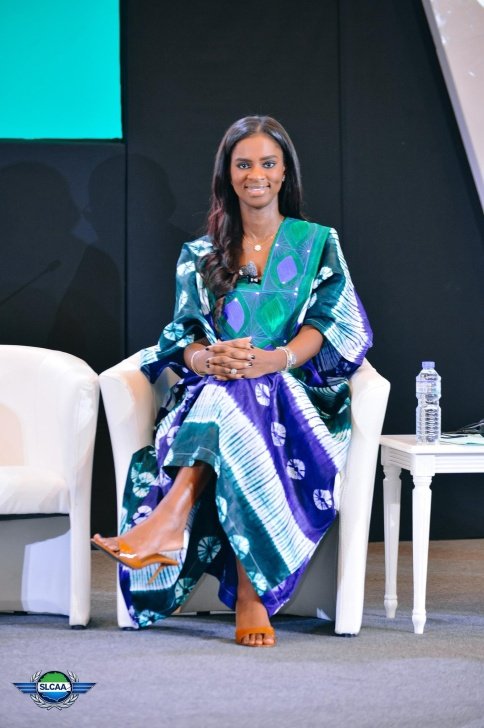
Professional woman in a blue blazer speaks into a handheld microphone during a panel discussion at a conference, seated at a table with water bottles and a logo in view.
Director General of the Sierra Leone Civil Aviation Authority (SLCAA), Musayeroh Barrie

By Amin Kef (Ranger)

The Director General of the Sierra Leone Civil Aviation Authority (SLCAA), Musayeroh Barrie, has called for deliberate structural reforms and strengthened support systems to enhance women’s participation in leadership, particularly within the aviation sector.

She made the statement while addressing delegates at the African Women Leadership Conference 2026, held from April 20 to 21 at the Miatta Conference Centre. The conference, themed: “Redefining Leadership: Women Shaping Africa’s Future,” brought together women leaders and stakeholders to discuss inclusive leadership and national development.

In her remarks, Madam Musayeroh Barrie highlighted the persistent gender imbalance within the aviation industry, noting that critical roles such as piloting, engineering and air traffic control remain largely male-dominated. She emphasized that the disparity is not due to a lack of competence among women, but rather a combination of structural barriers, societal expectations and the demanding nature of the profession.

She described her participation at the conference as an opportunity to amplify the need for systemic change, stressing that breaking barriers requires resilience, courage and purposeful leadership. She also acknowledged the role of Government in promoting inclusion, commending President Julius Maada Bio for policies aimed at increasing women’s representation in leadership.

Madam Musayeroh Barrie cited her own career trajectory as an example of what is possible through determination and opportunity. She noted that she is the first female Director General in Sierra Leone’s civil aviation history, the first in West Africa and among a limited number of women globally to hold such a position.

Despite those achievements, she cautioned against viewing individual milestones as sufficient progress. She stressed that many capable women remain underrepresented due to limited access to mentorship, encouragement and institutional support, calling for more inclusive policies to address those gaps.

Reflecting on her early career, Madam Musayeroh Barrie recounted returning to Sierra Leone in 2010 at the age of 23, where she faced challenges integrating into a system without established networks. She began her career in 2013 as an office assistant despite holding a university degree, later advancing into business development and operations roles. By 2017, she had risen to the position of Country Director, eventually leading to her appointment as Director General.

She emphasized the importance of professionalism, consistency and preparedness, noting that opportunities often arise unexpectedly and must be met with readiness.

On the issue of work-life balance, Madam Musayeroh Barrie underscored the importance of time management and strong support systems, encouraging women to seek assistance where necessary in order to effectively navigate both professional and personal responsibilities.

She also addressed societal attitudes toward women, challenging norms that justify disrespect based on appearance or gender stereotypes. She maintained that responsibility for fostering respectful and inclusive environments lies with all stakeholders, particularly men in leadership positions.

Concluding her address, Madam Musayeroh Barrie highlighted perseverance as a key driver of success, noting that women in leadership often face significant challenges but must remain resilient in pursuit of their goals.

Her remarks reinforced the conference’s central message that advancing women’s leadership in Africa requires intentional reforms, cultural change and sustained investment in empowerment across all sectors.

APC Calls for Accountability, Warns Against Democratic Backsliding in Sierra Leone

Professional headshot of a man wearing a light blue dress shirt and red striped tie, facing the camera.
National Secretary General of the APC, Lansana Dumbuya Esq.

By Foday Moriba Conteh

The All Peoples Congress (APC) has issued a strong Independence Day statement calling for democratic accountability, full implementation of electoral reforms and urgent action to address the rising economic hardships facing Sierra Leoneans.

In a message released on April 27, 2026 and signed by its National Secretary General, Lansana Dumbuya Esq., the party reflected on the significance of Sierra Leone’s independence, describing it as a hard-earned achievement built on sacrifice, courage and a collective belief in self-determination.

Addressing citizens, the APC emphasized that independence represents more than the end of colonial rule, but a continuing commitment to democratic governance, justice and accountability. The party noted that Sierra Leone has, over the years, demonstrated resilience through peaceful political transitions since the restoration of multi-party democracy in 1996, a milestone it said strengthened the nation’s democratic credentials.

However, the APC expressed concern over what it described as a “serious departure” from democratic norms during the 2023 elections, citing irregularities and a breakdown of public trust. According to the party, those developments placed the country at a critical juncture, prompting it to engage in dialogue rather than escalate tensions.

The statement highlighted the APC’s participation in negotiations that led to the Agreement for National Unity, including engagements held at Bintumani Hotel in Freetown. The party described the agreement as a “rescue mission” aimed at restoring democratic order and creating a pathway for reforms.

Central to those reforms is the Tripartite Committee, which produced over 80 recommendations intended to address shortcomings in the electoral process and safeguard future elections. The APC acknowledged the role of international partners, including ECOWAS, the United Nations Office for West Africa and the Sahel and the Commonwealth Secretariat, collectively referred to as International Moral Guarantors, in facilitating dialogue between political stakeholders.

Despite those efforts, the party expressed concern over delays and what it described as a lack of full compliance with agreed positions. It warned that contradictory statements from some Government officials risk undermining the progress achieved and eroding public confidence.

“Compliance is now the test of leadership,” the APC stated, urging the Government to fully implement both the Tripartite Committee recommendations and the outcomes of the recent dialogue process.

Beyond governance issues, the APC raised alarm over worsening economic conditions, noting sharp increases in the cost of living since 2018. The statement cited significant rises in fuel prices, transportation costs and essential commodities such as rice and cooking oil, while wages have largely remained stagnant. The party argued that those conditions fall short of the aspirations of Sierra Leone’s founding generation.

The APC also voiced reservations about the proposed National Security Bill, cautioning that while national security is important, it should not come at the expense of fundamental freedoms. The party called for broad national consultations before the bill is enacted, warning against any measures that could restrict democratic space or suppress dissent.

In its closing remarks, the APC urged its supporters and the wider public to remain calm, vigilant and actively engaged in safeguarding democracy. It reaffirmed its commitment to peaceful political engagement while signaling readiness to take further action if agreed reforms are not implemented.

“As we celebrate Independence Day, let us remember that independence is not a ceremony; it is a continuous responsibility,” the statement concluded, reiterating the party’s pledge to defend democracy and uphold the will of the people.