
Home Blog Page 1048

Quarterly Distribution of Free Healthcare Commodities Continues

Minister of Health & Sanitation, Professor Alpha Wurie officially launches a Quarterly distribution Run

By Theresa Kef Sesay

The National Medical Supplies Agency (NMSA) has commenced its quarterly nationwide distribution of free healthcare drugs and medical supplies across the country. It was understood that the distribution exercise which started in the western area on Wednesday, the 22nd of July 2020 is expected to last for over 6 weeks. It will be followed by the 3rd quarter distribution of Global Fund supported commodities to aid in the fight against HIV/AIDS, TB/Leprosy and Malaria.

Despite its focus on the COVID-19 response as the medical logistics pillar lead, the Agency commenced its routine nationwide distribution of drugs and medical supplies in a bid to continue the New Direction Government’s fight towards improving maternal and child health care indicators in the country.

Speaking to newsmen over the weekend, the Managing Director of NMSA, Dr. Lawrence A. Sandi said that it is the belief of his team at the Agency that they can multi-task the two important Government priorities – fighting the COVID-19 global pandemic on one hand, and providing routine drug and medical supply chain services across the country on the other.

Dr. Sandi intimated the Press that a variety of drugs, medical supplies and nutritional products are being distributed in this cycle; and these include drugs, consumables and other related commodities for key beneficiary groups of the Government’s Free Health Care (FHC) Initiative – pregnant women, lactating mothers, children under 5 years old, persons with disability and Ebola survivors. The team, he maintained, will initially distribute these products across all sixteen administrative districts in its first mile phase, and later target over one thousand, three hundred (1300) peripheral health units (PHUs) in chiefdoms, towns and villages across the country in its last mile distribution phase.

The Agency re-affirmed its commitment to the quarterly distribution of drugs and medical supplies, while also ensuring that their systems and processes will remain transparent and cost-effective. Dr. Sandi emphasized the agency’s zero-tolerance stance against any fraudulent activities aimed at diverting the much-needed commodities for the intended beneficiaries. He therefore urged all civil society organizations, community groups and individuals to remain alert to any reported acts of pilferage of these essential life-saving commodities.

It can be recalled that the New Direction Bio-led administration has made significant strides in enhancing the viability of the Free Health Care initiative; when in 2018 it began contributing funds for procurement of Free Health Care drugs and medical supplies. The initiative, prior to 2018, was solely funded by the UK’s Department for International Development (DFID).

Established by an Act of Parliament in 2017, the National Medical Supplies Agency was created by an Act of parliament with the exclusive responsibility of procuring, storing and distributing drugs and medical supplies in a transparent and cost-effective manner for and on behalf of all public institutions throughout Sierra Leone. The agency was operationalized in September 2018 with the appointment of the Managing Director and his deputy.

Having gone through the different stages of its transition process, there is an emerging view that the drugs and medical supply chain landscape is beginning to witness innovative changes with broader participation of stakeholder groups, increased transparency and the regular distribution of drugs and medical supplies across the country.
Big Idea of the Week… Flying High While Keeping Risks Low

SLAJ and NACOVERC Big Idea of the week

By Amin Kef Sesay

SLAJ and NACOVERC Big Idea of the week, starting from the 26th July to the 1st August 2020 is focusing on “Flying High While Keeping the Risks Low.” Indeed, when the coronavirus break out one of the sectors that was badly hit is the aviation sector.

Travelling restrictions made it quite impossible for normal flights to continue simply because it became a must in order to break the chain of transmission. It impacted negatively on the economies of countries that were severally affected, evident in the loss of revenue as well as in job losses.

To be very frank, it was welcome news when as a result of the dwindling figures of confirmed cases and deaths, the Government and other relevant stakeholders decided to re-open the Lungi International Airport on the 22nd July 2020.

However, the reopening of the Lungi International Airport was done with certain conditionalities out of the realization that the coronavirus is still in our midst globally and country-wise and a vaccine has not yet been discovered by medical practitioners and scientists. Indeed, adherence to restrictive measures is deemed very necessary if only we are to Stay Safe and Save Lives.

It is against this backdrop that SLAJ and NACOVERC Big Idea of the week, starting from the 26th July to the 1st August 2020 is focusing on “Flying High While Keeping the Risks Low.”

Agreed upon was that people flying into Sierra Leone will be tested again after they land and two tests must be done by  the Government one which is a rapid test to get a result right away, and the other type of test is to confirm the first result but which takes more time.

Travelers who have a negative test result with the rapid test can continue on their way, but must take all actions to prevent the spread of coronavirus to others. These actions include wearing a cloth mask, keeping a safe distance of at least one meter from others, washing their hands with soap and water frequently, and calling 117 if they have fever, tiredness, and cough.

Travelers who test positive for coronavirus with the rapid test will be taken to an isolation center for follow up.

If they have fever, tiredness and cough travelers must call 117 right away and make sure to tell 117 if you or someone you know has traveled from another country in the last 14 days.

Already, the Government of Sierra Leone through the Ministry of Transport and Aviation in collaboration with the Ministry of Health and Sanitation, Sierra Leone Civil Aviation Authority, Sierra Leone Airports Authority and the National COVID-19 Emergency Response Centre (NACOVERC) put safety and public health guidelines which shall be strictly adhered to by all arriving and departing passengers at/from the Freetown International Airport.

All passengers shall go through a walk-through disinfectant channel/Infrared temperature scanner at the entrance of the arrival hall. Also, all passengers with machine-readable passports shall go through the Immigration E-gate system. Passengers with Emergency Travel Certificates or non-machine-readable passports shall go through the Immigration booth.

At the Baggage Reclaim section passengers shall maintain social distancing and observe all public health protocols, including proper use of face mask at all times.

Departing the country, all passengers are subjected to a mandatory Polymerase Chain Reaction (PCR) COVID-19 test with a negative result issued no longer than 72hrs before departure at the Freetown International Airport. Cost for this test will be borne by the passenger.

Passengers will use the Government of Sierra Leone Travel Portal to request their pre-departure test, to pay for the test, and for scheduling sample collection.

Also, passengers with negative PCR results will receive e-confirmation and certificates ahead of travel. Physical copies can be collected at the airport at a designated desk.

Passengers with positive PCR results will not be permitted to travel and must follow public health protocols for isolation and contact tracing. They will be re-tested after seven days.

Passengers who have entered Sierra Leone within five days shall be exempted from the mandatory additional test on departure.

All children under 2 years shall be exempted from PCR test requirements.

To ensure that individuals going and out of the country adhere to the safe guidelines, SLAJ and NACOVERC are working hand in glove to disseminate significant information far and wide in order to create the desired effect. From 26th July to the 1st August 2020 the focus will be “Flying High While Keeping the Risks Low”.

NP (SL) Continues to Ascend the Slippery Ladder within the Business Landscape

National Petroleum Sierra Leone Limited, NP (SL-Ltd).

By Amin Kef Sesay

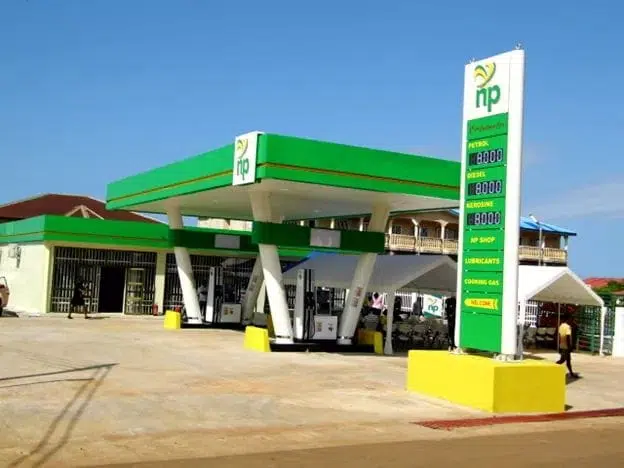
It is incontestable that the National Petroleum Sierra Leone Limited (NP-SL Ltd) is a very successful petroleum selling entity that assiduously continues to ascend the slippery ladder within the economic landscape of this country

NP’s meteoric rise of should not come as any big surprise to anyone as it epitomizes the crystallization of determination, hard work and sheer entrepreneurial skills on the part of Sierra Leoneans who formed the company and the capable managerial teams that have been steering the affairs of a 100% indigenously owned outfit. Its continuous ascendancy is indeed a clear manifestation of dogged commitment by all those who are associated with it to succeed.

If there is one outstanding feature which makes the company quickly identified then that could be its innate passion to give maximum care and attention to its numerous customers. The company’s shareholders and management do not joke with Customer Care as it is prioritized in all the company’s transactions.

This could sound very simplistic when looked at from the face value but for NP, its thorough and cautious implementation is very close to their heart and indeed such is paying fruitful dividends. Of course it really makes sense that availing customers with qualitative petroleum products, dealing with them respectfully, negotiating win-win deals will all contribute in retaining customers as well as wooing new ones.

With all amount of certainty it could be safely concluded that NP has mastered that business technique, deepening it and is working well to which many have attested.

It has been established by development specialists that proper implementation of the Local Content Policy is indeed a very important cog that should be in the wheel of the engine to thrust growth. One business entity that is strictly adhering to enhance the Local Content Policy in this country is NP.

The shareholders and Management of the company have made it a matter of policy to get in its employ indigenes and even in cases where expatriates are engaged, local members of staff are given the opportunity to understudy them so that at the end of the day they will imbibe the necessary skills to take over.

This is very advantageous in the sense that it helps in providing jobs and to develop a crop of competent individuals which the country needs in its development interventions.

Cooking is an inevitable aspect of human life, whether for domestic and commercial purposes. Man depends on food for survival, individuals invest in food businesses and the like.

Very mindful of the hazardous effects of depleting the environment, using traditional means of cooking, here specifically talking about making use of wood, charcoal, the company deemed it prudent to introduce NP-Gas which is very fast to ignite, quick to perform, safe and highly convenient. NP Gas, which is in different sizable cylinders could be accessed at the company’s filling stations and authorized dealers.

The company has high profiled customers with tight schedules who may have limited time to always wait in queues in order to purchase petroleum products. Besides, some people are not used to have huge cash in their possession but prefer using smart cards.

For these reasons the company went the extra mile to introduce NP Smart Card which customers, those who can afford it, could use to purchase petroleum products. From what was so far gathered all the customers who are using NP Smart Card are well satisfied doing so saying it is very convenient further praising NP for rolling out that initiative.

The viability of NP could be measured by its expansionist achievements both within the country and in the West African sub-region as is evident with the opening of branches in Guinea, Liberia, Ivory Coast and The Gambia. For a hundred percent indigenously owned company to go to such a level of spreading its tentacles is actually commendable and worthy of praise. As far as we know the branches in all those countries are doing extremely well although there are inevitable challenges which it has been surmounting.

One thing which cannot be challenged is the fact that NP, not only here in Sierra Leone but in other places where it is functioning, is greatly contributing to revenue accumulation when we think of its timely payment of taxes which Governments are using to fund various development projects.

Regardless, of all the teething challenges that stand in the way of NP, one of which is the depreciation of the Leone to the Dollar, as the company purchases petroleum products in dollars, yet still the company is navigating its way through murky economic waters.

Without mincing the truth, NP’s ascendancy is really breath-taking and highly impressive.

ACC Schools NaCSA Staff on Corruption Control Measures

By Foday Moriba Conteh

The Anti-Corruption Commission (ACC) on Tuesday 21st July 2020 heightened the knowledge of senior management and staff of  the National Commission for Social Action (NaCSA) on corruption prevention safeguards.

In her statement at the Commission’s Conference Hall, Mena Hill in Makeni, ACC Regional Manager North-East, Mariama Navo underscored the significance of the engagement, noting that it provides a platform for both institutions to reflect on certain bad practices that have the tendency to undermine the delivery of social services to poor and vulnerable groups.

She reminded staff of NaCSA of their sacred responsibilities to the people of this country, by providing social and economic opportunities, embarking on capacity building for local Government workers and providing humanitarian assistance. The Manager affirmed the ACC’s commitment to working with NaCSA to eliminate fraud in the social safety net program, promote best practices in the delivery of social services to deprived and remote communities, encourage frontline workers to imbibe integrity in the implementation of all programs and forestall mismanagement of donor/public funds and properties, as this will help maintain the trust and confidence of beneficiaries and donor partners.

In his submission ACC Prosecutor, Timothy P.M. Sowa Esq. asserted that corruption is one of the barriers to the successful implementation of social safety programs. He dilated on a number of offences in the Anti-Corruption Act 2008 as amended in 2019 such as; misappropriation of public funds/property, misappropriation of donor funds/property, abuse of office, abuse of position and gifts. He disclosed that, upon conviction on the aforementioned offences, the penalty is a fine not less than fifty million Leones or imprisonment of not less than five years or both such fine and imprisonment.

The Northern Regional Coordinator of NaCSA, Brian Smart Kanu, acknowledged the numerous challenges that seem to have not only adversely affected NaCSA’s operations but also tend to dent the reputation of the institution. Mr. Kanu assured that, NaCSA will continue to institute its corruption prevention measures in all of their programs in a bid to keep their operations corrupt-free.

The meeting was chaired by ACC Public Education Officer Abdulai Saccoh who implored the participants to adhere to policy and procedures guiding their work as the law does not romance with offenders.

Sierra Leone Seems To Be Losing The War Against Lawlessness and Indiscipline

Julius Maada Bio

By Amin Kef Sesay

It can be recalled that in his bid to put the country back on a firm law and order footing, His Excellency President Bio on assumption of office in April 2018 vowed to wage war against corruption, lawlessness and indiscipline.

Whilst considerable headway has been made in the fight against corruption with the ACC, the Auditor General, Ministry of Finance, NRA, NPPA with the full support of Parliament leading the crusade; on the other hand, given the daily reports of lawlessness, indiscipline and violence here and there across the country, many people are of the opinion that the President and the security forces seem to be losing this particular war; especially when quite recently in anger, frustration  and disgust the President dared to point fingers at the main opposition APC as terrorists fomenting trouble, lawlessness, violence and anarchy for the State and its people.

It brings us to the point where we want to ask several questions relating to obeying the law; starting with: Why should people obey the law?

Firstly, law is rule made by local or national Government. In democratic societies, Governments and those in power are subject to the law of the land. Power changes hands democratically according to the rules of the country’s constitution, not as the result of force or war.

Thus, people have a general duty to obey the law because it is democratically decided. As such, we have a legal duty to obey the obligations put upon us by the law. We also have a moral responsibility based on what we know is right and wrong.

The next question is why is it important to obey the laws of the land? Obeying the law sets a societal standard that if laws are made, citizens and Government will generally respect them. If nobody obeys the law, then they are meaningless and it results in lawlessness.

Why are we obligated to obey laws?

To disobey the law would be to mistreat or disrespect our fellow citizens. So a general obligation to obey the law is grounded in the principle of fair play – doing your part to sustain a community you benefit from by others doing theirs.

Should we obey unjust laws?

The general idea in favor of a moral obligation to obey the law is that in most cases we should assume that because law is generally good, we should follow individual laws unless they are particularly unjust or there are special moral circumstances for breaching it.

As such, citizens are justified in disobeying the law if and only if their disobedience to the law is supported by reasons which outweigh, all things considered, the reasons in favor of obedience to the law in question.

What does it mean to obey the laws of the land?

Bible instructs followers to obey the Government. Romans 13:1-2 says: “Obey the Government, for God is the One who has put it there. There is no Government anywhere that God has not placed in power. So those who refuse to obey the law of the land are refusing to obey God, and punishment will follow.

Why do we obey?

In everyday situations, people obey orders because they want to get rewards, because they want to avoid the negative consequences of disobeying, and because they believe an authority is legitimate.

Is civil disobedience a felony?

Civil disobedience occasionally occurs as an effect and while protest is legal, disobedience isn’t legal. Breaking the law is definitely a crime, no matter whether a person breaks it deliberately or unintentionally. It’s important to keep this in mind in case you decide to protest a law.

Bathurst Community Sees Light after 200 Years of Darkness

By Austine Luseni

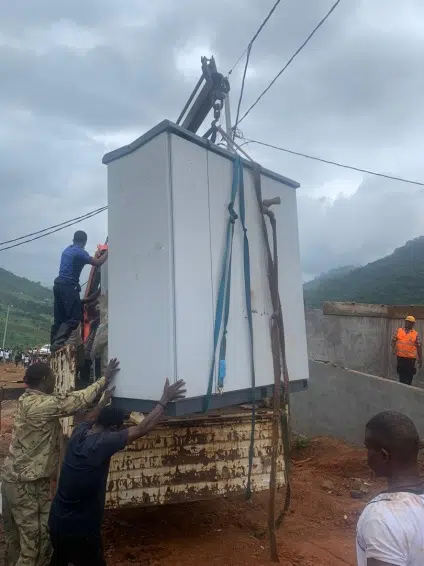
Alhaji Kanja Sesay, Minister of Energy on Monday July 27, 2020, has on his return to the Bathurst community in the Western Rural District, fulfilled President Bio’s promise of electrifying the community by presenting two brand new transformers. On Saturday 13th June 2020, the Minister was at Bathurst to relay the promise of President Bio to the people and to assure them that before the expiration of July this year, he as the messenger of such a promise would make good on it.

While receiving the delegation amidst a collective feeling of frenzied joy and an assuring sense of relief, the Village Head for Bathurst Community, Theophilus Johnson, described the occasion as an historic and a red lettered day in the history of the community. He noted with umbrage and disillusionment the fact that the community had gone for over 200 years without electricity, adding that President Bio is a trailblazing President.

Speaking at the ceremony, the Minister of Energy, Alhaji Kanja Sesay, described himself as a ‘Messenger of President Bio for Energy’, adding that the President was never happy when he learnt that Bathurst Community had gone for over 200 years without electricity. He reaffirmed the President’s commitment to fulfil promises as well as his genuine quest to ensure that this 2020 is a year of outstanding delivery.

The Minister stated that the last time he visited the community he made three promises which include the preparation of the sites for the installation of the transformers, the presentation of two transformers and the subsequent lighting up of the community. He went further to say that since the sites had been prepared already, he was there to deliver the two brand new transformers with the capacities of 1000kva and 100kva respectively. He stressed that since his appointment as Minister of Energy, the 1000kva he is presenting to Bathurst is the biggest he had ever delivered to any community.

He assured the community of quality and sustainable electricity, noting that the engineers would spend some days doing the necessary connections, but that once those connections were done, he would make a dramatic and satisfying return to turn on the transformers for the supply of electricity in the community. He praised the Ministry of Finance for the support given to the project while also extolling the contributions of Presidential Adviser, Madam Kona Koroma and the Gender and Children’s Affairs Minister, Madam Manty Tarawally.

Kanja Sesay concluded by making a clarion call to the community to own and protect the transformers while narrating some bitter tales he had heard of the deliberate destruction of transformers by mischief makers and anti-establishmentarians in certain communities.

The Minister was accompanied by the Deputy Minister of Energy, Dr. Eldred Taylor, Presidential Adviser Madam Kona Koroma, Minister of Gender Manty Tarawally, Director-General EDSA Dr. Joe Lahai and the Board Chairman of EDSA Ing. Alhajie Sidi.

The Bathurst Community is now relishing the prospects of enjoying sustainable and quality electricity supply, and such an expectation is not unrealistic as the Energy Minister has established himself as a gentleman who never renege on promises.

Africell Empowers 23 Female Subscribers

By Amin Kef Sesay

Out of the passion to continue to add value to the lives of its numerous and esteemed subscribers, the country’s leading telecommunications in the country, Africell Sierra Leone, has within the last couple of weeks offered well-furnished kiosks, smart phones with one year free internet of 100MB a month along with One Million Leones to twenty three female subscribers in different parts of the country.

The distribution of the kiosks to different female subscribers was in fulfilment of the commitment made during a promotion organized by the Company on International Women’s Day.

“We designed the kiosks and handed it over to each female subscriber that won during the promotion. Each winner received a well-furnished kiosk, one year free internet of 100MB a month along with One Million Leones. They can use the kiosks to sell Africell top up and other items to enhance their economic wellbeing,” a senior official confided in this medium.

He said the Company did a promotion specifically for women subscribers during the International Women’s Day celebration with the objective to empower them.

The beneficiaries extended their gratitude to the company for the distribution and lauded Africell for keeping its promise in the midst of COVID-19.

Nancy Aruna from Kailahun, Sata Ngegba from Bo and Hawa Kanneh who served as proxy also commended Africell for going the extra mile to travel across the country in order to deliver the kiosks and other items.

That, they said, will definitely empower them and enhance their livelihoods.

Article 19 Calls for Investigation of the Makeni Fracas

Fatou Senghore, Regional Director of Article 19, West Africa

By Foday Moriba Conteh

Responding to the bloody repression of a protest in Makeni, which resulted in the killing of five protesters and injuring of a dozen on 18 July, Fatou Senghore, Regional Director of Article 19, West Africa said:

“What happened in Makeni this weekend is troubling. People were out in the street to exercise their right to protest. But the security forces responded with deadly force. We strongly condemn these unnecessary killings and attack against the freedom of expression and right to protest. We call on the Government to immediately investigate and bring to justice those suspected to be involved in the deadly repression”.

According to hospital and international media sources, at least five persons, including a 15-years-old teenager, were killed and a dozen injured. An unconfirmed number of people were reportedly arrested and the authorities imposed a night curfew in the city.

Hundreds of persons, mainly youths, were gathering in the city to protest the decision of the Minister of Energy to relocate the locally based power generator to the Freetown International Airport. When some protesters began throwing stones to the local office of the governing Sierra Leone People’s Party, the police and army responded with excessive force. First, they fired live ammunition in the sky to disperse the protesters. Most ran away, but some continued to throw stones. Then the security forces fired into the crowd resulting in the deaths, which may amount to unlawful killings, and injuries.

“Sierra Leone has the duty to protect the life and physical integrity of its citizens. There was no real and uncontrollable threat to life, so the security forces should never even have used their firearms. Why did they not do enough to de-escalate and respond to those who were throwing stones? It is unlawful to shoot at protesters solely to disperse them.”

Citizens have the right to contest a decision of public interest. The security forces should have limited their intervention to lawful means to stop those who used violence against a private office. Instead, they cracked down on the people with brutal and excessive force. People should  never have to worry about their life when they go out on the streets to express contesting opinions. ” Fatou Senghore emphasized.

ARTICLE 19 strongly condemns the use of disproportionate and excessive force, the use of lethal arms against unarmed protesters and the consequent deaths and injuries in violations of African and international laws and standards on the freedom of expression and rights to freedom of association and assembly. Under its own and international law, Sierra Leone is obliged to carry out prompt, effective, independent, and impartial investigations into deaths resulting from the use of force by the security forces.

“We further urge the authorities to unconditionally release all protesters who were arrested solely for their expression. No one should be arrested for exercising the right to protest. Anyone suspected of a criminal offence should be charged to court and guaranteed a fair trial.”

Amb. Navo Recognized as One Among 100 Most Reputable Africans

By Amin Kef Seay

The charismatic, affable and result-oriented Chief Executive Officer of Africa Young Voices (AYV) and one of Sierra Leone’s most successful entrepreneurs, business magnet, philanthropist and godfather of the youths, Ambassador Anthony Navo Jr, has been internationally recognized by the Management and Staff of the Reputation Poll International, a leading global reputation-management firm, as one of the most reputable Africans among 100 personalities that were assessed. Reputation Poll International featured 57 men and 43 women from diverse sectors including, leadership, entertainment, advocacy, education and business.

The selection criteria used bordered on integrity, visibility and impact.

The 2020 list of 100 Most Reputable Africans, features Ambassador Navo, who shares the list with the likes of Her Worshipful Mayor, Yvonne Aki-Sawyerr Mayor of the Municipality of Freetown, Ethiopia’s Prime Minister Abiy Ahmed, Nigeria’s Dr. Paul Enenche, South Africa’s Prof. Wiseman L. Nkuhlu, Chancellor of the University of Pretoria and Chairman of Rothschild (SA), Guinean Economist Cellou Dalein Diallo and Cameroon’s Dr. Vera Songwe, Executive Secretary, United Nations Economic Commission for Africa, amongst others.

.Ambassador Navo joined other great Africans who are celebrated for their social impact, as well as social entrepreneurship, that are transforming businesses in Africa and affecting lives positively in the continent.

Since the disclosure the young entrepreneur has received a barrage of congratulatory messages in and out of the country.

“Energy Access Remains a Top Political Concern”   – Hon. Yumkella

Hon. Dr. Kandeh Kolleh Yumkella

By Amin Kef Sesay

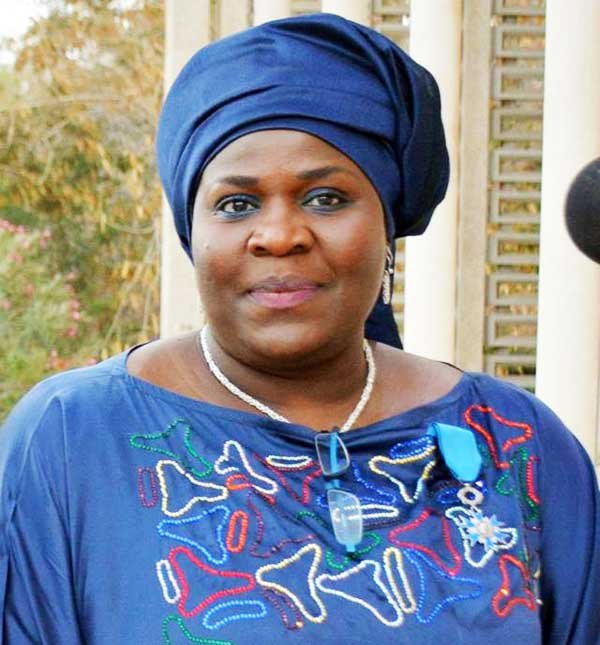
Hon. Dr. Kandeh Kolleh Yumkella on the 24th July 2020 reminded participants at a virtual conference including representatives from international organizations, public and private sectors, and civil society about the devastating consequences of COVID-19 including the off-grid sector.

“COVID-19 pandemic has exposed the fragility of the healthcare infrastructure in many countries. It has also accentuated the link between energy services and effective healthcare delivery, access to water and sanitation,” he said, in his opening keynote remarks to over a thousand participants at the two-day virtual Energy Access COVID-19 Relief Summit.

Speaking about the economic impact of COVID-19, Hon. Yumkella noted that the off-grid sector has not been spared either.

“The sector is experiencing a decrease in investments in renewable projects and poses a challenge for small and medium enterprises and energy companies – specifically their viability and profitability,” he underscored.  There is also the impact on the demand for energy services by industries and small businesses as well as the inability of customers to pay for energy services.

As participants discuss opportunities and challenges of the energy sector over the next two days, Hon. Yumkella offered a few suggestions for rebuilding a sustainable and resilient sector that he stressed must be backed by the right narrative to gain political attention from the right people. His suggestions included: Ensure practical measures to safeguard the gains we have made in achieving access over the last decade; ensure access to electricity remains a political priority in developing countries, especially in COVID-19 recovery plans and strategies; organize a strong lobby to ring-fence or increase donor funds for renewable and off-grid energy projects and programs; advocate and lobby for direct financial assistance for off-grid companies and subsidies for off-grid consumers especially in mini-grid communities and push for innovations in public policy to build back better for resilience.

Despite the challenges, Hon. Yumkella noted that he is hopeful that the sector will not be neglected as he knows different taskforces that working hard to ensure the energy sector is included in recovery plans.

Specifically, he noted the work of the IRENA – UNDP review of INDCs, the Europe-Africa Alliance in cooperation with Friends of Europe, the SEforAll Compact Summit in 2021, the One Sun-One World – One Grid – an Indian initiative under the Solar Alliance among others.

Founder of the Energy Nexus Network (TENN), Hon. Yumkella represents Constituency 062 – Samu Chiefdom in Northern Sierra Leone. Prior to his election as a Member of Parliament, he was UN Under-Secretary-General. He holds the unique distinction of being the first Special Representative of the Secretary-General for Sustainable Energy for All and founding CEO of the same organization. He served as Director-General of the UN Industrial Development Organization for two four-year terms.

The summit was organized by the Alliance for Rural Electrification (ARE) and GOGLA – the voice of the Off-Grid Solar Energy Industry with support from GET invest and in partnership with AMDA, ESMAP, GDC, SEforALL and the Clean Cooking Alliance.