
Home Blog Page 110

Vice President Commits to Implementing Outcomes of CRET 2025

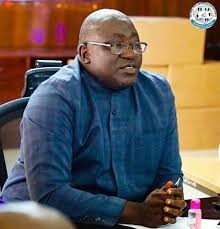
Vice President Dr. Mohamed Juldeh Jalloh

By Alvin Lansana Kargbo

Vice President Dr. Mohamed Juldeh Jalloh has, on Tuesday October 21, 2025, pledged decisive Government action to implement the recommendations emerging from the third Climate Resilience and Energy Transition Dialogue (CRET 2025), describing the event as a pivotal moment in Sierra Leone’s journey toward sustainable energy and economic transformation. Speaking at the close of the two-day dialogue in Freetown, Dr. Mohamed Juldeh Jalloh, said he would present the full set of recommendations to President Dr. Julius Maada Bio, assuring participants that a comprehensive framework would be developed to track and enforce implementation. He commended organizers, development partners and private sector stakeholders for their strong engagement, singling out Big Prep and the PPEP team for their leadership in advancing the country’s energy reform agenda.

The Vice President said the third edition of the dialogue reaffirmed his confidence that Sierra Leone’s energy transformation is well within reach.

He noted that the country now has a credible, data-driven and nationally endorsed energy plan designed to expand access through infrastructure investment, improve utility performance, boost renewable energy generation and increase private sector participation across the energy value chain. Reliable and affordable energy, he emphasized, lies at the heart of Sierra Leone’s national development strategy and is vital to achieving the targets outlined in the government’s Medium-Term National Development Plan.

Dr. Mohamed Juldeh Jalloh recalled that since 2018, the Bio administration has prioritized human capital development through free quality education and healthcare reforms, achievements that have expanded access for girls, increased female enrollment in tertiary institutions and reduced maternal and infant mortality rates.

However, he observed that those social gains have raised citizens’ expectations for job creation and economic empowerment. The Government’s second term, he explained, is focused on revitalizing the productive sectors, with agriculture at the forefront as both an engine for food security and a foundation for industrialization, job creation and export diversification.

Linking those national objectives to President Bio’s “Big Five” game changers, the Vice President reaffirmed Government’s commitment to creating 500,000 jobs for young people while aligning development policies with global efforts to reduce carbon emissions. He identified limited access to affordable and reliable energy as one of the greatest obstacles to national growth, emphasizing that modernizing infrastructure, reducing technical and commercial losses, improving the financial viability of the energy sector and scaling up renewable investments are essential steps toward overcoming this challenge.

Highlighting progress made so far, Dr. Mohamed Juldeh Jalloh reported that national energy access has risen from 16 percent in 2018 to 36 percent in 2025—nearly halfway to the Government’s target of 78 percent by 2030. He underscored that this growth must be inclusive, ensuring electricity access for both households and enterprises, particularly in rural and hard-to-reach areas. Sustainable access to energy, he said, is indispensable to translating progress in education, health and agriculture into real social equity.

Drawing from his academic and professional experience, the Vice President warned that overly centralized, state-dominated models of power generation and distribution have historically slowed development across Africa. He stressed the importance of enabling the private sector to lead in innovation, generation and distribution while the state focuses on regulation and accountability. He welcomed the dialogue’s emphasis on private sector participation as a cornerstone of Sierra Leone’s energy transition strategy, explaining that transparent governance and adherence to the rule of law are key to attracting investor confidence.

Dr. Mohamed Juldeh Jalloh also extended gratitude to international development partners, multilateral institutions and private investors for their continued collaboration and technical support. He reaffirmed that the Government remains committed to translating the recommendations from CRET 2025 into concrete policy actions that will drive inclusive growth, strengthen climate resilience and secure Sierra Leone’s clean energy future.

He concluded that the country’s progress toward sustainable energy and climate adaptation will depend on transparent governance, private sector innovation and the collective determination of all Sierra Leoneans. Through that commitment, the Vice President asserted, Sierra Leone is firmly on course to achieve its energy goals; targeting 78 percent national access, stronger private sector participation, and a greener, more resilient economy by 2030.

UNGA Resolution 2758 and the One-China Principle Brooks No Challenge

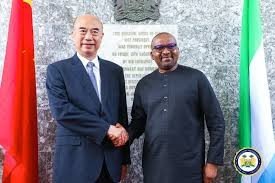
H.E. Wang Qing, Chinese Ambassador to Sierra Leone

By H.E. Wang Qing, Chinese Ambassador to Sierra Leone

The one-China principle, enshrined in the UNGA Resolution 2758, is a basic norm in international relations and a prevailing international consensus. It is where the arc of history bends and global opinion trends. However, recently some certain countries have colluded with the authorities in Taiwan, maliciously misinterpreting UNGA Resolution 2758 and spread fallacies such as ‘Taiwan’s status is undetermined’, which is a blatant challenge to the principles and purposes of the United Nations Charter and the post-WWII international order. To clarify historical facts and set the record straight, I wish to share the truths concerning the Taiwan question with our Sierra Leonean friends.

Taiwan has belonged to China since ancient times. In 1894, Japan launched a war of aggression against China and forced the Qing Dynasty to cede Taiwan to Japan, which resulting in the Japanese occupation of Taiwan for half a century. In the World War II, the Cairo Declaration issued in 1943 and Potsdam Proclamation published in 1945, both explicitly stipulated that territories stolen by Japan, including Taiwan and the Penghu Islands, should be restored to China. In September 1945, Japan signed the instrument of surrender and then China resumed the exercise of sovereignty over Taiwan. Taiwan’s restoration to China is the outcome of the victory of WWII and an integral part of the post-war international order.

On October 1, 1949, the People’s Republic of China (PRC) was founded, becoming the successor to the Republic of China (1912-1949). The new Government of PRC replaced the previous KMT regime in a situation where China, as a subject under international law, did not change. As a result of the civil war and the interference of external forces, the two sides of the Taiwan Straits have fallen into a state of protracted political confrontation. But the sovereignty and territory of China have never been divided and will never be divided and Taiwan’s status as part of China’s territory has never changed and will never be allowed to change.

In October 1971, at the 26th session of the U.N. General Assembly, UNGA Resolution 2758 was adopted, which “decides to restore all its rights to the People’s Republic of China and to recognize the representatives of its Government as the only legitimate representatives of China to the United Nations and to expel forthwith the representatives of Chiang Kai-shek from the place where they unlawfully occupy at the United Nations and in all the organizations related to it.”  Once and for all, UNGA Resolution 2758 resolved, politically, legally and procedurally, the issue of the representation of the whole of China, including Taiwan, at the UN. It also made it clear that there can only be one seat representing China at the UN. No issues exist about so-called “two Chinas” or “one China, one Taiwan”. After the adoption of UNGA Resolution 2758, all official U.N. documents referred to Taiwan as “Taiwan, Province of China.” It was clearly stated in the official legal opinions of the Office of Legal Affairs of the U.N. Secretariat that “the United Nations considers ‘Taiwan’ as a province of China with no separate status” and the “‘authorities’ in ‘Taipei’ are not considered to enjoy any form of government status.”

UNGA Resolution 2758 stands as a testament to the authority and impartiality of the United Nations and represents the prevailing international consensus on the Taiwan question. Observing the UNGA resolution and adhering to the one-China principle is the serious political commitment and obligation under international law that all UN members must follow. However, some certain countries recently have been blatantly turning back the wheel of history by deliberately distorting UNGA Resolution 2758, emboldening and supporting “Taiwan independence” separatist activities, spreading fallacies such as ‘Taiwan’s status is undetermined’, to serve its pernicious purpose of containing China. These actions undermine China’s sovereignty and territorial integrity, as well as international justice and rule of law. Their attempts will lead nowhere.

Sierra Leone is one of the co-sponsor countries of UNGA Resolution 2758 and made special contributions to its adoption. Over the 54 years since the establishment of diplomatic ties between China and Sierra Leone, the Sierra Leonean side has consistently and resolutely upheld the one-China principle and supported China in its just cause of national reunification. I would like to express great appreciation. Currently, both China and Sierra Leone serve as members of the UN Security Council, bearing important responsibilities of upholding international peace and security, as well as safeguarding the authority of United Nations and General Assembly resolutions. China stands ready to work with Sierra Leone to uphold the purposes and principles of the UN Charter, defend international equity and justice and jointly promote global peace, security and prosperity.

Peace Commission, UN Hold Dialogue on Strengthening Sierra Leone’s Peace Gains

By Ibrahim Sesay 

The Independent Commission for Peace and National Cohesion (ICPNC), in collaboration with the United Nations, on Monday, October 20, 2025, held a one-day dialogue with Civil Society Organizations to reflect on the impact of the United Nations Peacebuilding Fund (PBF) investments in Sierra Leone. The engagement, held at the ICPNC office in Freetown, brought together representatives from Government institutions, development partners and Civil Society groups to share lessons learned, celebrate success stories and identify challenges in the implementation of peacebuilding initiatives across the country.

In her opening statement, Executive Secretary of the ICPNC, Hawa Samai, emphasized that the dialogue was intended to evaluate ongoing peace efforts and strengthen collaboration among stakeholders. “We’re here to see what issues are going on in Sierra Leone in terms of peace and social cohesion and how we could work together better to complement not just our work but yours,” she said. She added that Sierra Leone could learn from the experiences of neighboring countries such as Ghana while showcasing its own achievements and identifying areas that require improvement.

Hawa Samai underscored that peacebuilding is a continuous process requiring the collective effort of all Sierra Leoneans. “Peacebuilding is an everyday issue,” she stated. “We want to move Sierra Leone from negative peace to positive peace, where citizens can sleep and wake up knowing they live in a peaceful country. That journey starts with each of us.” She also called for stronger coordination among partners to prevent duplication of efforts and ensure equitable distribution of peacebuilding resources nationwide.

The Deputy Head of the UN Peacebuilding Support Office, Awa Dabo, praised Sierra Leone’s Civil Society groups for their contribution to sustaining peace, describing them as vital partners in the country’s stability. “No matter how much the UN or Government does, the frontline actors are Civil Society. They know the communities and the issues,” she remarked. “Peacebuilding is not just about funding; it’s about partnerships and shared responsibility.” She also warned about emerging threats to peace, including misinformation, disinformation and growing youth frustrations, urging stakeholders to prioritize youth inclusion and collaboration among Government, Civil Society and the private sector.

Civil Society representatives shared notable achievements made possible through PBF-funded projects. Umu Kamara, representing the Prevention First Initiative, highlighted her organization’s work with commercial motorbike riders to transform them from “agents of violence” into “agents of peace.” “Between August and September this year alone, we trained over 1,600 bike riders across five districts,” she said, explaining that participants received training in advocacy, negotiation and conflict resolution. She added that riders learned to understand the consequences of violence and adopt peaceful methods of settling disputes.

Echoing this success, Patrick Batilo Kpaka, Public Relations Officer of the Bike Riders Union, said the training had significantly improved public perception of riders. “People used to see us as lawless and uneducated,” he noted. “But through these trainings, the narrative has changed. We now see ourselves as peace ambassadors.” He urged that the program be extended to all districts, stressing that Sierra Leone’s 1.5 million riders play a key role in maintaining community stability.

Abu Bakarr Jalloh, Head of Programs at Focus 1000, shared how community dialogues and parenting education have reduced violence in communities. “We engaged over 2,400 parents and caregivers on positive parenting,” he said. “When dialogue starts in the home, it spreads to the community.” He added that the organization also trained adolescents and facilitated dialogues between youth and the police to promote mutual understanding.

From Caritas Freetown, Eliza Sillah, Head of Programs, discussed lessons from the Youth in Politics and Peacebuilding project, which involved persons with disabilities. “We engaged over 2,000 persons with disabilities in five districts through civic education, community dialogues and skills training,” she said, noting that their participation proved their ability to contribute meaningfully to peace and development when given the opportunity. She further highlighted the need for deeper engagement of persons with disabilities in rural areas to ensure that peacebuilding efforts address their specific needs.

Participants identified several emerging risks to peace, including drug abuse, hate speech, youth unemployment, mental health challenges and delays in funding project implementation. The dialogue concluded with a strong call for sustained collaboration among Government, Civil Society and international partners to strengthen social cohesion and ensure long-term peace across Sierra Leone.

Just 4 Days Left to Vote for Your Favorite Housemates Salone Season 4 Contestant!

Housemates Salone Season 4

The clock is ticking fast and the competition is heating up as the countdown to Housemates Salone Season 4, “Clean Game”, reaches its final stretch. With only four days left before the voting closes, fans across Sierra Leone and beyond are being urged to cast their votes now and keep their favorite contestants in the race for fame, fortune and destiny.

Voting is open exclusively via Afrimoney at a cost of just NLe2 per vote. Supporters can vote by simply dialing 16111# on their mobile phones. Every second counts and every vote could determine who secures a coveted spot in the House.

“The competition is now more intense than ever,” organizers confirmed. “We are down to the final week and every single vote can make a huge difference. This is the time for fans to stand by their favorite contestants.”

The Top 42 qualifiers are currently battling for limited places in the House ahead of the official launch slated for Sunday, 26th October 2025. This year’s edition, themed: “Clean Game,” promises to be the most electrifying yet blending entertainment, creativity and youth empowerment in a way that celebrates Sierra Leone’s vibrant young talent.

The grand prize of One Billion Old Leones awaits the ultimate winner, along with life-changing opportunities, career exposure and national recognition. Since its inception, Housemates Salone has become one of the country’s most-watched and celebrated Reality Television Shows; providing a powerful platform for young Sierra Leoneans to showcase their potential, leadership and resilience.

Audiences can follow all the drama, emotion and triumphs live on AYV Television and online via the show’s official YouTube channel, ensuring fans at home and abroad stay connected to every exciting moment.

In a show of strong local partnership, Barmoi Hotel and Fabulous Hotel have joined as official hospitality sponsors for this year’s edition. The hotels will provide free accommodation for international contestants throughout their stay and during the eviction stages of the show.

Organizers expressed deep appreciation for the support, noting that such collaboration reflects the growing synergy between Sierra Leone’s private sector and creative industry in driving youth development and promoting national entertainment.

“We sincerely appreciate the support from our hospitality partners,” organizers stated. “Their contribution ensures comfort for our guests and reinforces the unity that keeps the Housemates Salone brand strong.”

As the final countdown continues, fans are reminded that time is of the essence.
Dial 16111# and vote for your favorite contestant for just NLe2 via Afrimoney ONLY.

Every vote brings your contestant closer to the spotlight and closer to the dream. The Clean Game is on and your vote could make all the difference!

The Development and Subsequent Closure of the Colonial Era National Railway

Ing. Dr. Albert Forde

By Ing. Dr. Albert Forde

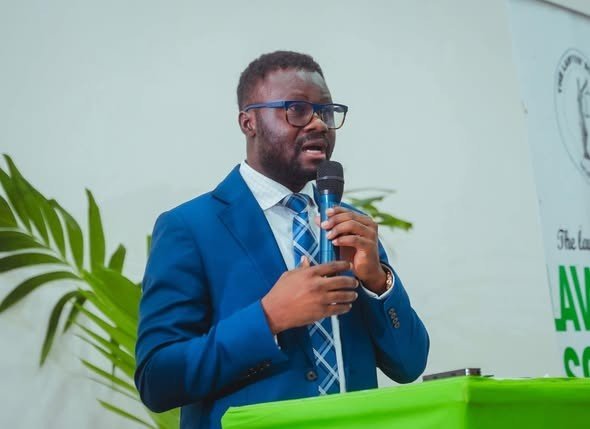
Director-General, Sierra Leone Railways Development and Regulatory Authority

In February 2025, the Government of Sierra Leone, through Parliament enacted the Sierra Leone Railways Development and Regulatory Authority Act, 2025. The Act established the Sierra Leone Railways Development and Regulatory Authority, with key mandates to develop and regulate a national railway system and cable car transport. In August, I was appointed as the Director-General by His Excellency the President and approved by Parliament on Wednesday, 15th October. To understand the rationale behind His Excellency`s vision of reintroducing a national railway system, it is important to look back on history. A booklet authored by Anthony Coulls, entitled: “Sierra Leone Railway Adventure”, which is published by Holne Publishing, provides detailed information on the planning and development of our colonial era national railway system. Extracts from that booklet are shared in this article.

According to Coulls, in the British Colonial period, there were a number of early proposals for a railway. The first of these, dated from 1872 and including a proposed trans-Sahara railway never came to fruition. However, in 1893 a proposal for a line from Freetown promoted by the Liverpool Chamber of Commerce, was accepted and work began. But the tropical climate among other obstacles, caused many difficulties which needed to be overcome before the initial surveys could be completed. Unusually for such a long length of railway, it was constructed to 2 feet 6-inch gauge and never varied from that throughout its operation. In the Railway industry, a gauge is the distance between the inner faces of the two rails of a train track, with the most common standard being 1,435 mm (or 4ft and 8.5 inches), also known as “Standard Gauge”. The gauge of 2 feet 6 inches was chosen in order to keep construction costs to an absolute minimum, limiting the need for major civil works.

Construction of the colonial era railway network commenced from Water Street (now Wallace-Johnson Street), Freetown, in 1896 and the first section of railway was opened to Wellington, seven miles away, by March 1897 with much ceremony and decorated trains. Subsequent openings, were: Waterloo, about 15 miles out in April 1898; Songo 32 miles in 1899; Rotifunk at 56 miles in1900; Bo in 103 miles out in 1903, and Baima 220 miles distant from Freetown in 1905. In 1907, the final destination of Pendembu was reached at 227 miles from Water Street and there the main line stopped, despite aspirations of carrying on over to the border into neighboring Liberia. A branch was built between 1914 and 1916 from Bauya Junction to Makeni and Kamabai, with a length of 104 miles, bringing the total route mileage to 331 miles. This was later cut back to Makeni in 1930. A comparative report showed that among the West African states, the railway in Sierra Leone was the cheapest. Some features of the railway’s construction was over 130 viaducts across rivers and gorges, with one, the Orugu bridge, outside Freetown being a steel trestle built on a curve. A further line of 5 and half miles length was built in 1903, known as the Mountain railway, connected by rail from the docks and Water Street Station, this climbed from a station at Cotton Tree, Freetown to Hill Station, at 748 ft above sea level. This line allowed Europeans to live on the more rarified air above Freetown heading towards Leicester Peak, but it was closed in 1929 as surveys in the late 20s had already shown it to be losing money against road competition. The Sierra Leone government railway settled down to a steady existence throughout the first part of the 20th century, bringing goods, minerals and produce down from upcountry to the markets of Freetown and taking other materials and imports up country from the docks of the city. There was even a travelling post office service. In 1930, the Sierra Leone Development Company (DELCO) started work on a 3ft 6 in gauge line from the coast at Pepel to the Marampa iron ore mines, a distance of 52 miles. This railway was invented for only goods traffic and never operated a passenger service. It was also geographically isolated from the Government lines and a different gauge.

The railways assumed increased importance in World War 2. Apart from moving food and resources from the interior to the coast, the railway was also important in supporting fighting in North Africa. Fighter aircrafts were transported in kit form to Pendembu, where they were assembled and flown on to Egypt. Freetown was an important deep-water harbour and bunkering station for both military and civilian ships.. Additional photos of the railway infrastructure (tracks, viaducts, stations) and rolling stock/trains are available in the Old Photos of Sierra Leone Page on Facebook. According to Coulls, an arguably misguided Government policy, allied to the conditions associated with investment by World Bank saw the staged closure of the railway from 1968 onwards with formal complete closure in 1974, although trains continued to operate on an unofficial basis so long as the tracked existed, until mid-1975. The loss of the railway had an immediate effect on the national economy given the poor condition of the road network- a poor substitute in moving people, goods and products around the country. It is interesting to note that on his retirement in 1985, the then president of Sierra Leone, Siaka Stevens declared in a BBC interview his greatest regret in office was the closure of the railway. My next article will focus on the strategic relevance and urgency, and the benefits of reintroducing a national railway system for the transport of both people and goods.

Solidaridad West Africa Wins 2025 Excellence in Service Award from SLANGO

Solidaridad West Africa has been honoured with the prestigious 2025 Award for Excellence in Service by the Sierra Leone Association of Non-Governmental Organizations (SLANGO). The recognition was presented during SLANGO’s Annual Fundraising and Awards Night held at the New Brookfields Hotel in Freetown.

According to SLANGO’s National Coordinator, Alice N. James, the award celebrates Solidaridad’s exceptional contribution to food security, agricultural productivity and rural livelihood transformation in Sierra Leone. She commended the organization for its consistent support to farmers through training in sustainable agricultural practices, market linkages and gender empowerment initiatives that target women and youth.

Alice N. James explained that Solidaridad emerged as Best NGO in Agriculture for its work under the Resilient Food and Nutrition Security (RFANS) project, implemented in partnership with the Nutrition Unit of the Ministry of Health and Sanitation. The project focuses on improving rice and vegetable production while enhancing nutrition and infant feeding among farming families, lactating mothers and caregivers of children under five.

Another major initiative acknowledged was the Boosting Agriculture and Food Security (BAFS) project, through which Solidaridad has empowered 7,818 smallholder farmers across 16 districts. The project has led to the establishment of cashew processing facilities for the Waterloo Women Cashew Processors in the Western Rural District. In addition, farmers have benefited from the cultivation of improved cashew, cocoa and coffee varieties on more than 5,182 hectares nationwide.

The organization has also supported the creation of over 200 Farmer Field Schools to enhance knowledge in farm management and 280 Village Savings and Loans Associations (VSLAs) to improve access to rural finance.

SLANGO further highlighted Solidaridad’s Responsible Agriculture Initiative (RAI) programme, implemented in partnership with the Food and Agriculture Organization (FAO), which empowers women in agriculture and promotes their participation in land governance. The initiative aims to build resilient food systems and support national agricultural policy frameworks.

“Through their efforts in Sierra Leone, Solidaridad has significantly advanced food security, improved livelihoods and promoted environmental sustainability,” SLANGO noted in its citation. “Their work goes beyond immediate agricultural support to address long-term poverty reduction and national development goals.”

Receiving the award, Andrew, Country Representative of Solidaridad Sierra Leone, expressed gratitude to SLANGO for recognizing the organization’s continued efforts to complement Government priorities in agriculture and rural development.

“On behalf of the entire Solidaridad team, I am deeply honored to receive this Award for Excellence in Service,” he said. “This recognition belongs to the smallholder farmers who adopt innovative practices, our dedicated staff working in rural communities and our partners who share our vision of inclusive and sustainable agricultural development.”

He reaffirmed Solidaridad’s commitment to empowering farmers and supporting Sierra Leone’s journey toward achieving Sustainable Development Goal 1 – No Poverty.

“Together, we will continue to cultivate a brighter, more sustainable future for Sierra Leone,” Andrew concluded.

The RFANS project is supported by the Church of Jesus Christ of Latter-day Saints, while the Developing an Inclusive and Sustainable Cashew Agroforestry Value Chain (DISCA-VC) and BAFS projects are funded by the European Union in Sierra Leone.

Other organizations recognized at the event included the Rainbow Initiative, SEND Sierra Leone and BRAC, for their outstanding contributions to national development and humanitarian service.

NP (SL) Leads Sierra Leone’s Petroleum Sector with Integrity, Technology & Vision

NP (Sierra Leone) Limited

By Amin Kef (Ranger)

NP (Sierra Leone) Limited, the nation’s leading and wholly indigenous petroleum marketing company, continues to distinguish itself as a beacon of excellence, innovation and reliability in Sierra Leone’s energy sector. Its enviable reputation for outstanding service is rooted in a strong customer-centered philosophy, strategic business planning and continuous investment in technology and human capital.

From its inception in 1996 by thirty-five visionary Sierra Leoneans, former employees of British Petroleum, NP (SL) has transformed from a modest local enterprise into a respected mini-multinational brand. Guided by a mission to dominate the petroleum market, expand regionally and provide environmentally safe products, the company has consistently demonstrated that customer satisfaction and national development can go hand in hand.

At the heart of NP’s success lies its dedication to innovation. The NP Energy Pass Card, a revolutionary cashless payment solution, embodies that spirit. Designed with safety, transparency and convenience in mind, it enables customers to purchase fuel electronically and track consumption in real time. The upgraded “FUBU” (For Us, By Us) Energy and Access Pass Card takes innovation further allowing station owners to monitor operations remotely while providing users with instant SMS transaction alerts. Those initiatives have drastically reduced cash-handling risks and enhanced accountability across the company’s operations.

Safety and professionalism also define NP’s corporate culture. Every Filling Station displays clear safety instructions such as “No Smoking,” “Switch Off Engine,” and “Avoid Naked Flame,” while fire extinguishers and trained staff ensure swift response to emergencies. This attention to detail reflects NP’s deep commitment to safeguarding customers, employees and the environment.

NP’s Corporate Social Responsibility (CSR) record stands out as one of the most robust in the private sector. By expanding into underserved areas, the company has improved fuel accessibility, created thousands of jobs and contributed to reducing transportation costs nationwide. NP’s firm adherence to Sierra Leone’s Local Content Policy ensures that Sierra Leoneans are employed at all operational levels, empowering communities and promoting local entrepreneurship.

Among NP’s growing product line, NP Gas has become a household favorite. This environmentally certified cooking gas, available in various cylinder sizes, promotes cleaner energy use and supports the Government’s drive toward sustainable development. By encouraging a shift from charcoal and firewood to gas, NP is playing a key role in reducing deforestation and protecting public health.

The company’s sustained success also stems from the selfless commitment of its Shareholders and Management team, who continue to prioritize collective growth over personal gain. Their unity of purpose and disciplined execution has kept NP resilient, even amid global supply disruptions.

NP (SL)’s operational excellence has earned it triple ISO certification, ISO 9001 for Quality Management, ISO 14001 for Environmental Management and ISO 45001 for Occupational Health and Safety, solidifying its standing as a world-class petroleum company. The company plans to further modernize operations with Vehicle Tracking Systems (VTS) and GPS technology to enhance logistics and delivery efficiency.

In every interaction at NP Filling Stations, customers encounter courtesy, professionalism and transparency; hallmarks of a brand that truly values its clientele. NP’s Management continues to integrate customer feedback into its strategic planning, ensuring that innovations directly address user needs.

Looking to the future, NP (SL) remains unwavering in its commitment to serve customers better, strengthen its regional presence and continue fueling Sierra Leone’s growth. In the company’s own words, “The customer is the heart of our business.”

Through resilience, innovation and a deep sense of national pride, NP (SL) Limited continues to prove that an indigenous company can define excellence, inspire entrepreneurship and lead the charge for progress; living up to its enduring slogan: “NP – Your Partner for Life.”

“Government Must Act Now”: Calls Mount to Tackle Kush Devastation

President Julius Maada Bio

By Amin Kef (Ranger)

The morning show on Epic Radio on October 20, 2025, focused on one of Sierra Leone’s most pressing social issues, the growing consumption of the synthetic drug Kush among the country’s youth and the recent decision by the Sierra Leone Police to deny clearance for a planned peaceful protest against the scourge.

The programme, which brought together key stakeholders, featured Alphonsus B.M. Gbanie, Executive Director of the Human Rights Defenders Network (SL); Michael Tamba Komba, Head of the Anti-Drug Abuse Initiative and Campaign; Brima Kamara, Head of Police Media; Francess Mummy Jabati, a mother of a Kush addict from Bo; and Ibrahim Samuel Dugba, Director at the National Drug Law Enforcement Agency (NDLEA).

The discussion came against the backdrop of the worsening Kush crisis that continues to devastate families and communities across Sierra Leone. Because of the drug’s destructive effects, President Julius Maada Bio on April 4, 2024, declared the situation a State of Emergency. Yet, nearly two years later, many citizens believe that little tangible progress has been made in tackling what has become a national nightmare. Although rehabilitation centres were established under the Government’s emergency response framework, those facilities remain poorly funded and are struggling to function effectively. Families of victims say they have been left to fight the crisis alone, as the number of Kush-related deaths continues to rise in both urban and rural areas.

It was in response to this growing despair that the youth-led Anti-Drug Abuse Initiative, headed by Michael Tamba Komba, announced plans for a “1,000 Youth Peaceful March” on October 24, 2025, to raise awareness about the dangers of Kush and call for stronger Government action. However, their request for police clearance was denied by Inspector General of Police, William Fayai Sellu, a move that has provoked criticism and constitutional debate.

Speaking during the radio discussion, Michael Tamba Komba said the intention of the march was purely peaceful and aimed at drawing attention to the growing devastation Kush is causing. “Our democracy guarantees the right to peaceful assembly under Section 26 of the 1991 Constitution,” he stated, expressing disappointment at the police’s decision.

Responding to the controversy, Police Media Head, Brima Kamara explained that the denial was based on concerns over public safety. “We are not confident that the organizers can maintain full control over participants,” he said. “There is a likelihood the protest could degenerate into chaos or mayhem.” He encouraged the youth group to focus instead on community sensitization activities.

Human rights advocate, Alphonsus Gbanie, sharply criticized the police’s stance, describing it as a violation of constitutional rights and a blow to the national effort against Kush. “Since President Bio declared Kush a national emergency, preventing people who want to take action means undermining the President’s own commitment,” he argued. Alphonsus Gbanie also called on the Government to create an Emergency Fund, similar to those established during the Ebola and COVID-19 crises, to raise resources for rehabilitation, awareness and enforcement.

In an emotional moment, Francess Mummy Jabati recounted how her university-graduate son’s addiction destroyed his life and family. “He was a brilliant boy,” she said tearfully. “Kush has taken everything from us. The Government must act now before it’s too late.”

NDLEA Director, Ibrahim Samuel Dugba, admitted that while his agency continues to raise awareness, it faces severe logistical and financial challenges. “We have not received our budgetary allocation for a long time from the Ministry of Finance,” he lamented. “We lack vehicles and essential tools to effectively carry out our operations.”

The discussion ended with a shared consensus among the panelists that the Kush epidemic has exposed deep weaknesses in national drug policy, governance and law enforcement. While the State of Emergency was an important first step, many warned that without urgent and coordinated action, Sierra Leone risks losing an entire generation to addiction; a tragedy that the nation’s Constitution was designed to prevent.

Commentary Justice Served: SLPTA’s Payment Marks Closure to Years of Ex-Workers Uncertainty

A Commentary By Amin Kef (Ranger)

The recent facilitation by the Sierra Leone Public Transport Authority (SLPTA) of over NLe15 million in gratuity and redundancy payments to former staff of the defunct Sierra Leone Road Transport Corporation (SLRTC) represents a major victory for workers’ rights and Government accountability. It is not just a financial transaction; it is a story of patience, reform and institutional transformation within Sierra Leone’s public transport sector.

The Government of Sierra Leone, through the Ministry of Transport and Aviation and SLPTA, has fulfilled a long-standing financial obligation to employees who were affected by the dissolution of the SLRTC. The event, held at the SLPTA Headquarters in Freetown, symbolizes the Government’s genuine effort to bring closure to years of uncertainty faced by workers who had dedicated their service to the state-owned transport corporation.

This payout, amounting to Le 15,603,705, covers backlogged salaries, gratuities and redundancy benefits for 70 permanent and 39 contract staff. It also clears institutional liabilities, including contributions owed to NASSIT and other suppliers. The meticulous record-keeping and transparency in the process reflect a notable improvement in public-sector financial management and labour relations.

The transition from SLRTC to SLPTA is a strategic realignment designed to modernize Sierra Leone’s transport system. As explained by Isaac Ken-Green, Acting Director-General of SLPTA, the reform was not merely administrative; it was structural and visionary.

Under the Public Transport Authority Act of 2023, SLPTA assumes a regulatory, rather than operational, mandate. It now oversees licensing, route regulation, policy formulation and safety standards across the national transport network. This separation of roles, service provision and regulation, is consistent with best practices across modern transport systems globally.

While this restructuring led to redundancies, the Government’s decision to clear all outstanding payments underscores its commitment to social justice and fairness. For many former employees, this marks the end of a long period of waiting and the beginning of renewed hope.

At the ceremony, representatives of the Ministries of Transport and Employment commended the resilience and patience of the former SLRTC staff. Edward Kwame Yankson, Permanent Secretary in the Transport Ministry, lauded the collaborative effort that made the payment possible, urging beneficiaries to use their compensation wisely to improve their livelihoods.

Similarly, Abdulai Conteh, Acting Deputy Director of Labour and Employment, reaffirmed that his Ministry was fully engaged in ensuring all workers received what they were lawfully owed. His remarks highlighted a growing culture of inter-ministerial cooperation aimed at protecting workers’ rights.

Civil Society also acknowledged the milestone. Alphonso Manley, National Coordinator of the Child Rights Coalition, who had long championed the cause of the ex-SLRTC workers, described the payout as “a victory for justice and workers’ welfare.”

Beyond the human dimension, this episode reflects the broader narrative of governance reform under President Julius Maada Bio’s administration. It demonstrates how institutional restructuring, when coupled with empathy and accountability can yield tangible outcomes for citizens.

By ensuring the settlement of outstanding dues, the Government has set a precedent that public-sector transformation must not come at the expense of workers’ dignity. Instead, reforms must balance efficiency with compassion; a balance that SLPTA’s leadership appears keen to uphold.

The payment of over NLe15 million to former SLRTC workers is more than a fulfilment of a financial pledge; it is a reaffirmation of Government responsibility and a beacon of hope for others affected by institutional reforms.

Sierra Leone’s ongoing pursuit of efficient and transparent governance is exemplified by this gesture from the SLPTA and the Ministry of Transport, serving as a powerful reminder that genuine reform begins with honouring commitments to those who laid the foundation of public service.

In essence, the SLRTC-to-SLPTA transformation is not an end but a new beginning; one that promises a safer, fairer and better-regulated transport future for all Sierra Leoneans.

CRET 2025: Sierra Leone Advances Toward Energy Sovereignty Through Innovation and Collaboration

2025 Climate Resilience and Energy Transition Dialogue

By Alvin Lansana Kargbo

Sierra Leone once again took a prominent place on the global stage as President Dr. Julius Maada Bio officially opened the 2025 Climate Resilience and Energy Transition Dialogue (CRET 2025) on Monday, October 20, 2025, at the Freetown International Conference Centre.

The two-day conference, themed: “Mobilizing Investments for Climate Action, Food Security, Clean Cooking and a Just Energy Transition for All,” brought together world leaders, policymakers, development partners, private investors and civil society organizations to explore strategies for building a greener and more sustainable energy future for Sierra Leone and the African continent. Vice President Dr. Mohamed Juldeh Jalloh also graced the event, reaffirming the Government’s collective commitment to accelerating the country’s green transformation agenda.

In his keynote address, President Julius Maada Bio emphasized his administration’s unwavering dedication to ensuring nationwide energy access and sustainability. He described Sierra Leone’s energy transition as a practical, deliberate and people-centered process grounded in transparency, reform and inclusivity. Reflecting on the achievements of previous editions of CRET, he pointed to tangible results from international partnerships, including a $260 million funding package from the OPEC Fund for International Development and the establishment of a Climate Finance and Energy Innovation Hub. These milestones, he noted, align with Sierra Leone’s Medium-Term National Development Plan (2024–2030) and the United Nations Sustainable Development Goals.

“CRET 2025 consolidates those gains to operationalize our Just Energy Transition and Green Growth Plan,” President Bio stated. “It brings together national and international stakeholders to accelerate Sierra Leone’s energy transformation.”

A major highlight of the dialogue was Mission 300, an ambitious Africa-led initiative aimed at connecting 300 million people to electricity by 2030. President Bio revealed that Sierra Leone’s contribution targets an increase in electricity access from 36 percent to nearly 78 percent by 2030, translating into over 720,000 new household connections through grid expansion, off-grid solutions and renewable mini-grids. He cited ongoing projects such as the 40MW Scatec Solar Plant in Kamakwie, the 40MW RESPITE Solar Project in Newton and Lungi and the 50MW Africa50 Power Project in Kono as key examples of the nation’s determination to achieve energy sovereignty. “Our goal is to ensure that as we expand access to energy, no one is left behind,” he affirmed.

President Bio praised the leadership of Hon. Dr. Kandeh Kolleh Yumkella, Chairman of the Presidential Initiative on Climate Change, Renewable Energy and Food Security (PI-CREF), whose strategic coordination has been pivotal in steering national energy reforms and fostering partnerships. “Dr. Yumkella’s stewardship has been instrumental in fast-tracking our transition agenda,” he remarked.

Hon. Dr. Kandeh Kolleh Yumkella, in his remarks, highlighted the importance of continuity and collaboration in sustaining progress. Demonstrating inclusive leadership, he invited his predecessor, former Energy Minister Alhaji Kanja Sesay, to participate in the dialogue; an act widely applauded as a gesture of unity and respect for institutional legacy. “To reach energy sovereignty, we must continue to build upon the successes of those who came before us,” he said, emphasizing that the energy transition transcends political boundaries and depends on collective national effort.

Development partners, including representatives from the World Bank, African Development Bank (AfDB), the United Nations and the Millennium Challenge Corporation (MCC), reiterated their support for Sierra Leone’s clean energy drive.

World Bank Representative, Daniel James, described CRET 2025 as “a testament to Sierra Leone’s strong commitment to sustainable economic growth through energy transformation.”

AfDB Country Manager, Dr. Dymphana Van der Lans, commended the Government’s visionary leadership, while UN Resident Coordinator, Seraphine Wakana, reaffirmed the UN’s ongoing collaboration in advancing climate resilience and energy access.

Deputy Minister of Finance I, Kadiatu Alie, noted that CRET serves as a critical platform for aligning climate financing with national investment priorities.

Chief Minister Dr. Moinina David Sengeh echoed that sentiment, urging all stakeholders to “stick to the plan and follow the leader,” as he highlighted the Government’s success in doubling electricity access from 18 percent in 2018 to 36 percent in 2025. He disclosed that Sierra Leone is investing $480 million in transmission lines under the MCC Compact, $450 million in the LNG energy plant at Kissy and over $500 million in projects funded through partnerships with British International Investment (BII), the World Bank and the private sector.

The conclusion of CRET 2025 underscored that Sierra Leone’s leadership is not merely engaging in policy discussions but driving tangible action toward a sustainable future. President Bio’s closing declaration, “Our national vision for energy security is achievable”, captured the spirit of determination shaping the nation’s development trajectory. Through steadfast governance, innovation and global collaboration, Sierra Leone is positioning itself not just as a participant but as a trailblazer in Africa’s green growth and just energy transition.

President Dr. Julius Maada Bio