
Home Blog Page 1111

Corona Wahala… Washing Hands, No Food To Eat?

By Amin Kef Sesay

One thing very admirable about the Sierra Leonean character and personality is our remarkable sense of humor even in the face of difficulty, pain, suffering, hardship and loss.

The other day, this commentator paid a visit to one of the offices where there is a veronica bucket, water and soap for washing hands – one of the coronavirus disease prevention measures prescribed worldwide. This man comes in and is told to wash his hands before entering. As he washes his hands, he remarks in Krio: “We dey wash we hands, food nor dey for eat?”

Indeed, whenever Governments in poor developing countries talk about lockdown of their countries in response to a health emergency, such as the one the entire world now faces, what comes up foremost in the minds of family heads that are unemployed or on minimal earnings, with many mouths to feed, is, what will me and my family eat during the lockdown?

We have to look at the issue fairly and squarely. Certainly, the economic indicators, vocational and basic needs, with their related challenges become exacerbated during a lockdown – given the colossal adverse impact on the economy, food and livelihoods. We weigh this against the intentions that a lockdown is supposed to achieve.

Proponents of a lockdown argue that without it, the transmission rates which showed a vertical upslope last week would exponentially increase with alarming consequences of a severe disease burden and high mortality.

Fairly, this scenario of cases spiraling upward as rapidly justifies a calibrated extended lockdown with a window to review, reconfigure and realign the future course of actions. In which regard, there are many that argue for the Government to maintain the current partial lockdown regime, which they say is bearable and manageable rather than escalate it to a full blown one.

The Government’s focus on enshrining safeguards for the vulnerable populace is praiseworthy. Fairly, people comment that it was very humane of the Government to provide for the welfare of the most vulnerable members of society during the three days lockdown.

But they call on the Government to think of what a two weeks lockdown for the entire nation implies for the welfare of a highly vulnerable population that can only survive hand-to-mouth from day to day.

 Whilst the Dental and Medical Association fully support the imposition of a 14 days lockdown, there is another school of thought within the profession that believes that the isolation of infective cases and quarantine of exposed (at risk) cases focused around hotspots should result in high intervention efficacy with a significant reduction of the Covid-19 transmission rates.

This, they argue gives the Government and its intervention partners ample space to reconfigure planning targets and strategies to address the economic downturn, supply chain impediments, unemployment and address basic needs of the poor, through course corrections, as also to prevent our healthcare systems from being overwhelmed.

Fair enough, in light of the recent rising trend, it is fair to assume that a substantial number of infected people may not have been identified, as yet.

Hence, innovative tracking mechanisms of the suspect and infected cases may have to be developed to check community spread around hotspots, slums and clusters.

The extended, though conditional extended, lockdown will succeed only if strengthened by aggressive early testing of larger numbers, enhanced tracing of contacts, quarantining of the vulnerable elderly and isolation of the infected. These measures will prevent rampant transmission from undetected infective cases, along with systemic investments in social distancing.

With the hope of the success of the multidimensional strategies put in place to minimize transmission, going by Sweden’s example, the current stratified partial lockdown (given that critically, we are entering into the planting season and the implication it has for food supply), should convince our Government, the security apparatus, health services, epidemiologists, and us citizens, that it is the most reliable mechanism; through effective community containment to save, as President Bio critically stated, lives and livelihoods.

However, the decision lies with the Government which bears the burden and is better placed to know the best way forward.

Workers’ Groups Call for Implementation of Reviewed Minimum Wage

Kobi Walker

By Amin Kef  Sesay

As the country continues to record increasing cases of coronavirus economic dislocations are taking place with specific categories of workers adversely affected, with some of them having to lose their jobs.

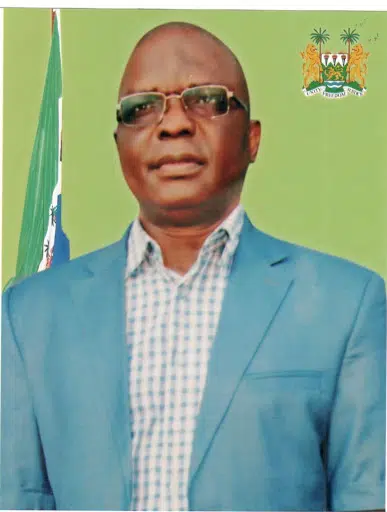
Against this bleak backdrop, Kobi Walker, Chairman of the Sierra Leone Employers Federation and Jennings Wright President of the Sierra Leone Labour Congress have been working tirelessly with other relevant stakeholders  to proffer recommendations as to how to cushion the debilitating effects of the spread of the virus and the tool it is having on workers

In a Press Release both organizations stated that as umbrella bodies responsible for the welfare and concerns of employers and workers alike, the Sierra Leone Employer’s Federation and the Sierra Leone Labour Congress have held consultative meetings to ascertain how Government, employers and workers can collaborate in minimizing the negative impact of the pandemic on the economy, employers, workers and the society at large.

The two umbrella bodies therefore stated the following for the immediate consideration and action of Government and all related parties: That Government should set up a National Level Committee comprising private sector representatives along with other key stakeholders such as trade unions, academics, scientists and community groups along with related Ministries to deal with the economic and social fallout of the COVID-19 pandemic.

They also mentioned that Government must encourage the production of Personal Protective Equipment (PPEs) locally, ensure the safety and provide incentives for COVID-19 frontline workers.

A recommendation was also made for Mobile Companies to introduce affordable packages to aid communication and reduce physical human interaction in respect of payment of goods and services as well as money transfer.

Another recommendation made was that Government must provide supplementary funds for State Owned Enterprises severely hit by COVID-19 especially in the traveling and tourism sectors.

They stated that the reviewed Minimum Wage of Le600, 000 should be put into effect on 1st July 2020, that employers of struggling businesses may grant temporary leave to workers with an agreed fixed monthly payment until recovery from COVID-19. It was also maintained that Employers should however, in such circumstances pay the Employer as well as Employee NASSIT monthly contributions in full.

“We recommend that Government orders NASSIT and NRA not to impose penalties on defaulters payments and also to waive interest on defaulters during this period,” it continued.

The Sierra Leone Employers’ Federation and Sierra Leone Labour Congress further suggested that Government should engage banks and other financial institutions to suspend the collection of business loans and repayment during this crisis period.

They added how Government must provide tax waiver on custom duties for essential goods, avail foreign currency to facilitate importation of essential goods and services, consider waiving electricity and water charges for consumers for a specified period and discourage face-to-face meetings and replace with video links and teleconferencing.

According to both organizations, the above should be given serious consideration and reviewed regularly to determine expediency. The two bodies ended up by profusely thanking the Government of Sierra Leone for the proactive measures deployed to combat the COVID – 19 virus.

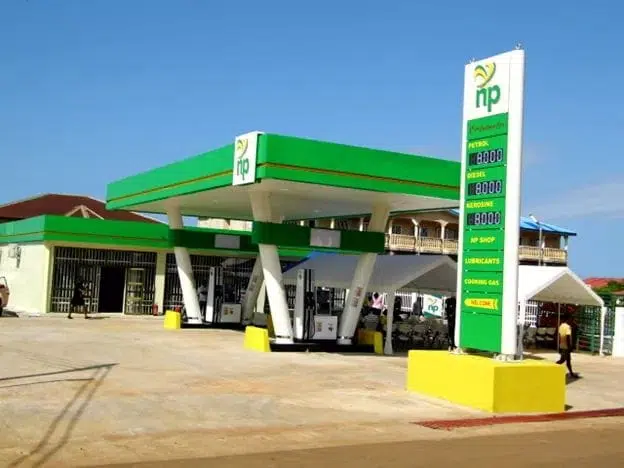
‘NP Sierra Leone Limited is Here to Stay’

National Petroleum Sierra Leone Limited, NP (SL-Ltd).

By Amin Kef Sesay

In an exclusive interview with the Chief Executive Director of the National Petroleum Sierra Leone Limited, Kobi Walker on how sustainably will the company continue to operate, he categorically made it clear that the company is doggedly positioned to support the petroleum needs of its esteemed customers.

He stated that because of the selflessness and commitment of those who opted to establish the company when the Government decided to sell it 23 years ago, they have been able to empower more than 350,000 Sierra Leoneans, build 38 stations countrywide and establish relationships with 180 other Sierra Leonean stations.

From what was gathered it was determined that exceptionally, Management of the company has been very focused in prioritizing customer care bordering in quick responses to major concerns raised. With prudent managerial initiatives and seeing the need to expand appropriately, NP-SL thought it fit to open branches in Guinea, Liberia, Ivory Coast and The Gambia and all of them are extremely functioning well to the utmost satisfaction of host Governments plus its ever growing customers.

In doing so, the company has been contributing towards job creation and poverty reduction more especially as it is virtually impossible for the Governments of these countries to provide all job opportunities for citizens.

When cognisance is taken of the fact that Governments need revenue to finance development projects it is important to find the sources of generating such. NP, as a company, is one of the biggest taxpayers to Government. Management always makes it as a point of duty to timely pay taxes and despite battling with existing and unforeseeable challenges there has never been an instance when it has been coerced to do so.

Many have praised NP for making available cookers popularly known as NP Gas which is safe for cooking purposes. These NP Gas cookers are sold at reasonable prices and could be procured in all their filling stations as well as from authorized dealers. At a time like this when it has been recognized that it is advisable, for health reasons, to avoid using firewood or charcoal for cooking purposes the best option could be NP Gas, which is hygienic, clean and quick.

Talking about effective implementation of the company’s  Local Content Policy, NP-SL stands tall as it is truly the only 100% indigenous company that employs 100% Sierra Leoneans as workers. The company gives preference to employing Sierra Leoneans which is a clear indication that it adheres to the country’s Local Content Policy as utilizing local talents makes it possible for indigenes to acquire useful knowledge and skills through various training programs.

It is important to know that the company deals with individuals and various entities, always ensuring that its various imported petroleum products are available and are sold at affordable prices.

There is a good business strategy in place whereby entities or customers are permitted to use chits to secure fuel and pay later. Such is very advantageous more so when those entities do not always have readily available cash at hand to be purchasing petroleum products from time to time.  This symbiotic relationship with its customers has been paying huge dividends making NP very endearing to all and sundry.

With regards recognition, the regulatory institution of the different petroleum companies in the country, Petroleum Regulatory Agency, has also lauded NP in recent times for its efficient service delivery in its areas of operation.

There could be no doubt to authoritatively state that NP-SL Ltd. is doing exceptionally well not only here where it is rooted but in the aforementioned countries where it has vibrant branches.


As Fight Against COVID-19 Intensifies…   Conditions of Workers Highlighted by Employers’ Federation & Labour Congress

By Amin Kef Sesay

Kobi Walker, Chairman of the Sierra Leone Employers Federation and Jennings Wright President of the Sierra Leone Labour Congress together with other Executive members of both organizations have highlighted the plight and conditions of workers in Sierra Leone during this crucial period when the coronavirus is causing serious economic dislocations amidst rising prices. Championing the interests of workers in the co untry, both organizations have proffered certain recommendations and other development partners as to certain measures to be instituted in order to cushion the daunting effects of the outbreak of the virus in the country.

It could be recalled that on the 11th March 2020 the World Health Organization (WHO) declared the COVID 19 as a pandemic that transcends from China to the rest of the world. The latest estimates of people infected all over the world continues to be very alarming.

In addition, the virus has also brought life to a standstill across many countries the world over.

A large number of countries have closed their air space, land and sea borders and have also put measures in place to lockdown their countries thereby introducing restrictions on movements, work and other outdoor activities. This is one aspect that the Government, Employers’ and Workers’ organizations are focusing on and especially how businesses should adapt work practices to comply with health protocols, measures and etiquettes.

Most importantly however, is how all parties, Government, employers and workers can work together to minimize the impacts of this pandemic on the economy, employers, workers and the society at large.

Developed countries have set aside substantial amounts to support employers and workers who will be adversely affected as a result of the pandemic on the one hand and the lockdown imposed by their Governments on the other.

Some African countries such as Ethiopia, Ghana, Rwanda, Guinea, etc have put measures in place to lessen the impact of the COVID-19 outbreak on businesses and workers. Emerging markets are experiencing a contraction as necessary containment measures take their toll, and there is reduced global demand for their exports, tourism, commodities and manufactured goods – that provide critical streams of foreign exchange.

In light of this new phenomenon, the Sierra Leone Employers Federation and the Sierra Leone Labour Congress requested the Government to set up a national-level committee comprising private sector representatives along with other key stakeholders such as trade unions, academics, scientists and community groups along with related Ministries including the Ministry of Labour and Social Security to deal with the economic and social fallout of the COVID-19 pandemic.

Through collaboration between the Government, workers and employers organizations on finding ways to mitigate the negative impact of the pandemic, the two labour organizations strongly believe that the economic and social crises created by COVID-19 can be overcome.

Both umbrella bodies are aware that Government has already set up a committee to respond to the adverse effects of the outbreak of COVID-19. They, however, recommended that it be expanded to include the additional Entities/Organizations mentioned above.

They further recommended that Government takes the following under mentioned measures; some of which it has taken already:

Support the import and export of medical equipment and medicines and request that Government encourages manufacturers to produce Personal Protective Equipment (PPEs) locally provided they meet international standards. In that regard, G. Shankerdas & Sons is already exploring the production of Hand Sanitizers using local materials.

They suggested that Government should encourage Companies and Enterprises to release staff that have the technical know-how and are willing to be volunteers to assist in contact tracing or otherwise measures should be taken to ensure essential workers especially those in the health sector and other frontline sectors to work during periods of restrictions on movement.

That Government should provide appropriate PPEs to Health Care Providers particularly frontline workers as well provide incentives which will serve as motivation for the frontline workers. They highlighted that Companies and Enterprises can support and reinforce public health measures such as, reviewing safety precautions for workers continuing to work in light of social distancing measures.

According to them ,the Ministry of Labour and Social Security and the Ministry of Health and Sanitation should collaborate in promoting the safety and health of workers during the outbreak and that Government should also intensify sensitization of the general populace with a view of curtailing the spread of the virus.

With regards measures to support workers they suggested that Companies and Enterprises should ensure that guidance on social distancing measures must be enhanced to help avoid unnecessary gatherings, while preserving the delivery of essential services and supply chains, discourage face-to-face meetings and replacing it with video links, teleconferencing, reduce the sitting capacities in staff canteens and scheduling staff to have their meals.

The Sierra Leone Employers Federation and the Ministry of Labour and Social Security further suggested that the Ministry of Labour and Social Security should be supported to carry out Labour inspections at workplaces to ensure adherence to the COVID-19 measures.

They added that Government should provide supplementary funds for State Owned Enterprises (SOEs) severely hit by the COVID-19 such as Sierra Leone Airport Authority, as a result of the ban on all passenger flights and SALPOST whose main source of revenue has been courier services, in order to meet their operational cost, such as workers’ salaries.

Additionally, special national ‘COVID-19 Fund” needs to be established to enable contributions from development partners, donors, philanthropists, the private sector and private citizens to support the above measures.

They also stated how Government through the Ministry of Labour and Social Security should work collaboratively with Employers and Workers Organisation in order to ensure that workers maintain their jobs.

Indeed, so far both the Employers’ Federation and Labour Congress have been working assiduously and engaging relevant stakeholders to ensure that the disadvantageous plight of workers caused by the outbreak of the coronavirus be properly addressed in order to cushion the dire effects and dislocations that continue to materialize.


9 PM Curfew Causing Poor Commuters Extreme Strain

Julius Maada Bio

By Amin Kef Sesay

So far, so good, Sierra Leoneans – both the duty bearers and us citizens – have done well and continue to do well in observing the restrictions placed on our Freedom of Movement by the Government due to the corona virus disease.

Generally, we can pat ourselves on the back that we are bearing up admirably and courageously to the hardships imposed on us by the health emergency that confronts us.

We cannot however help but express grave dismay at our brothers and sisters who call themselves traders that have taken the current hardship that we face as a very good excuse to inflate the prices of the commodities with no sympathy or pity for the plight of the majority poor that constitute the bulk of our population.

However, we should not be surprised. Traders generally thrive on calamity to make excess profit; whether as the Bible and Qur’an say they will face judgment for the wickedness to their poor suffering brothers and sisters next world, is an open question.

It is not easy for the average ordinary Sierra Leonean living under the present economic climate by any stretch of the imagination when we recall the untold hardship that we went through in 2014 and 2015 during the Ebola outbreak period.

We can recall how President Koroma’s immense and timely efforts in containing the Ebola outbreak was widely appreciated in the country as many lives were saved, although, as we recall then, the curfew order placed extreme strain to especially Freetown commuters living in the peri-urban areas such as Waterloo, Goderich and other places to rush home in the evening hours.

Given that transportation is very hard to find during the evening rush hours, many people living in the outskirts of the city are calling on the Government to consider lifting the start of the curfew from 9pm to 10pm.

Citizens however do not quarrel with the Government’s order for commercial bus owners and drivers to reduce the number of passengers that they carry, given that before the emergency, they used to cram us into their tight vehicles like herrings in a basket.

Many are praying that even after the emergency, the SLRSA considers making the present sitting arrangement in poda-podas the standard norm; only that many observe that restricting the front passenger seat which is meant for two passengers to only one passenger is not fair.

Vehicle owners and their drivers enjoyed this illegitimate right to carry excess passengers because they were licensed by SLRSA. Going forward, there must be extensive sensitization exercises by SLRSA to enlighten drivers that cramming passengers in vehicles is uncomfortable and dangerous.

Palo’s Daughter Cries Foul Over Her Father’s Continued Detention

Altilda Conteh, the daughter of Alfred Palo Conteh

By Amin Kef Sesay

Altilda Conteh, the daughter of Alfred Palo Conteh, both British/American citizens has raised concern over the arrest and detention of her father. She stated that on Friday, 20 March 2020, her father was detained by the Sierra Leone Government without any valid reason.

According to her, Alfred Palo Conteh was questioned by security personnel of the Criminal Investigation Department at State House on Thursday 19th (the day the alleged incident occurred), and told to go home.

She added that her father was invited for further questioning on Friday 20th March 2020 but  was detained and in less than 48 hours later he was transferred to the Pademba Road Correctional Service, which she said is one of Sierra Leone’s most notorious and dangerous prisons. Altilda Conteh stated that there were no charges of a crime, but he was accused of “wanting to assassinate the current President of Sierra Leone,”which she underscored is a baseless accusation.

In a very sentimental mood she highlighted how her father has served Sierra Leone faithfully and is a member of the main opposition APC party. She pointed out that he was in the Sierra Leone Army from 1976 until 1992, during which he was Officer Commanding the Military Police and attained the rank of a Major.

“He later served as the Minister of Defense for Sierra Leone in 2007, when the previous President Ernest B Koroma was Head of State. He later went on to be the Ebola Czar in 2014 when the epidemic hit our beautiful land of Sierra Leone during 2014-2016. Later, he was appointed as the Minister of Internal Affairs, by the President, in 2016, until the elections in spring of 2017,” she narrated.

She maintained the position that her father’s arrest is highly political. Altilda says this is the second time within fifteen months that the current Government has arrested and detained her father adding how this is the first time he has been taken to prison.

“Both times he was arrested without being charged, but only to be harassed, degraded, embarrassed, and inconvenienced in an attempt to intimidate him. My father has sacrificed to serve the country he loves, for ten consecutive years and does not deserve such continuous harassment,” she vented anger.

She revealed that on Monday, 16th March 2020, which was the date of the first meeting, due to his expertise and execution of duties whilst he was the Ebola Czar, her father was asked by President Bio to join them in their fight against the current Coronavirus (CONVID-19) pandemic. She said without hesitation, her father unwaveringly pledged his support for the good of the country, ensuring thousands of lives would again be saved during these tough times.

“Even though this political administration has been on a witch hunt to defame and assassinate his character her father freely volunteered to work with them to instill some sense of harmony and possible cross-party relationship,” she continued adding how on Tuesday, 17th March 2020, her father, the current Minister of Health, and other SLPP party members went to Lungi Airport.

She narrated that later that same week on Thursday 19th (second meeting) her father went to the State House to meet President Bio and further discuss matters.

“Upon arrival, he specifically told security personnel he had a loaded gun in his bag with all the adequate licenses. Even though my father asked the security men to hold his bag, because he is aware of the State House protocols, they refused to take his bag with the pistol in it. He was told it was fine for him to keep his bag,” she narrated.

She emphatically stated that her dad refused to take his bag into the meeting with the President and left his gun and bag at the security entrance.

Altilda said after waiting 45 minutes the head of the security went to the waiting room and asked for the owner of the bag to which her father replied that it belongs to him. She said he was questioned by CID personnel that exact day (Thursday 19th of March) and he went home and slept, ate…

From her account, on Friday 20th March 2020, the following day her father was invited to CID for more questioning and upon arrival he was arrested but was NOT told why he was being detained. According to her he has still NOT been released!

Altilda strongly registered that this is a violation of the Laws of Sierra Leone as stated in the Information Pack for British Prisoners in Sierra Leone. “This is yet another ploy to dehumanize an opposing political party member that has been imprisoned for nearly two weeks without any charges,” she lamented.

Based on what she said on 30th March 2020 the Sierra Leone Government charged her father for treason on a total of 15 counts. “Many of the charges are contradictory. My father is currently in solitary confinement and being denied access to clothing, books, proper food, all basic necessities and denied family visitation,” she further bemoaned.

“I am writing this petition because I’m concerned about the safety of my father’s life and I would like you to please do all legally possible to have my father released. I love my father. This man has saved thousands of lives in Sierra Leone, defended many that had no voice whilst practicing law in the UK, improved the quality of life and life expectancy of those he has served. My father is my super hero and a hero to many. He is also my first love, pillar of my family and the community,” she disclosed her feelings.

According to her, Alfred Palo Conteh is an asset to not just our society but to the world saying he is a well-educated man that would never jeopardize his legacy, future endeavors and all he has worked hard to obtain as well as to hurt or harm anyone.

“He also has an eight year old son who is an American citizen, who resides in Sierra Leone with my father’s wife, and I am unsure how safe they are. Please help me and my family to ensure his release and safe return to his family,” she ended up appealing.


Six Companies Battle for Offshore Exploration

By Foday Moriba Conteh

Six companies submitted bids for offshore exploration concessions in Sierra Leone’s recent bid round. A public ceremony was held in late March for the Fourth Petroleum Licensing Round. The process began in January 2018, Sierra Leone’s Petroleum Directorate Director General Timothy Kabba said at the event.

Kabba expressed delight at receiving six applications, which were described as meaningful for Sierra Leone’s exploration business. A statement from the agency said it was appreciative of the participation. The round is supported by London-listed Getech, through its ERCL subsidiary.

The Petroleum Directorate aims to deliver the results as soon as possible, it said. The agency assured its stakeholders that it would deliver an “impartial and fast-tracked evaluation that can yield outcomes that will stand the test of time”. At the opening ceremony, all of the bids were checked to make sure they complied with statutory bid requirements.

The Fourth Licensing Round was launched at the beginning of 2018, with the expectation that it would close in June that year. In May 2018, closing was pushed back to September in response to the protracted electoral process.

Kabba took over as the head of the Petroleum Directorate in August that year and opted to suspend the licensing round. This was to provide scope for the country to hold talks with those in industry.

These talks led the country to change its licensing round plans, opening up its water for exploration and moving to a more flexible framework for blocks. Five areas had been marked out for bids, but the new system allows companies to apply for areas made up of contiguous blocks, each of which covers 1,360 square km.

It also opened the way for direct applications for areas which were largely in water depths of more than 2,500 metres, in recognition that the number of companies able to operate in such areas was limited. Furthermore, there are no minimum work specifications required in the first exploration phase.

The round was reopened in May 2019 and closing was again pushed back, in September that year, until the end of February 2020.

EOC Operations Pillar Issues Guidelines for Movement of Essential Goods & Services

Head of National COVID-19 Response Team, (Rtd) Brig Gen. Hassan Kellie Conteh

By Amin Kef Sesay

The Operations Pillar of the COVID-19 Emergency Operations Centre (EOC) has issued the undermentioned guidelines for the movement of essential goods and services during the 14-Days partial lock down period.

Essential Goods in this context refers to food item, fuel tankers and construction materials. It says all vehicles carrying essential goods must be allowed access through all Inter-District boundary check points on to their final destination.

The Operations Pillar furthered that all check point commanders are to implement the following guide lines: Vehicles with Inter-District Pass are allow to move during curfew hours across Inter-District boundaries, all ambulances are authorized to travel during curfew hours without pass.

It also stated that Health Care Workers with vehicle and body passes are authorized to move during curfew hours, that vehicles moving essential goods without vehicle pass are not authorized to travel during curfew hours.

Moreover, all boats carrying essential food items should be allowed to berth at various wharfs with no more than 4 persons, all cargo vehicles must include the driver and 2 apprentices only and all other vehicles with Inter-District pass must only carry the authorized capacity of persons as indicated on their license documents.

Please execute these guidelines to ensure smooth coordination and implantation of the 14- Days partial lockdown.

Lebanese & Indian Communities Donate Food Items Towards COVID-19 Fight

By Foday Moriba Conteh

As part of their support towards the fight against the coronavirus in the country, the Indian and Lebanese Communities have on Wednesday 15th April, 2020 donated essential food items to the Government of Sierra Leone through the Covid-19 Response Team which includes: 1,000 Bags of Rice, 1,000 Gallons of Oil, 1,000 Packet of Sugar, 100 Cartons of Sardine, 100 Soap and 70 Cartons of Milk. The donation took place at the Forecourt of the Emergency Operation Centre at Cockerill in Freetown.

Present at the ceremony were Chief of Staff of  the COVID-19 Response Team Solomon Caulker, Deputy Minister of Defence, Col. Rtd. Muana Brima Massaguio, President of the Lebanese Community Samir Hassanyeh, the Consul of Indian, Harish Agnani, Pressmen, members of both Communities and Staff of the EOC.

Presenting the items on behalf of Indian & Lebanese Communities, President of the Lebanese Community, Samir Hassanyeh, revealed that they were extremely humbled to donate these essential food items to the Government and People of Sierra Leone to support the strides the Government is taking in order to curtail the spread of the Coronavirus COVID 19 in the country.

He said that COVID-19 is no respecter of race, status, wealth, gender or whether a State is economically developed or under developed. “It is an equal opportunity enemy that is a harbinger of tragedy and chaos wherever it goes and in that regard we decided to come to the aid of the Government,” he underscored.

He assured the Government of their continuous support towards the fight against the coronavirus in the country saying they will continue to respond to the call for assistance to Sierra Leone.

The Indian Consul, Harish Agnani, expressed appreciation to the Government for their tireless efforts in trying to curtail the spread of the coronavirus in the county.

He also noted that on behalf of the two Communities they are humbled to donate the following items which are 1000 Bags of Rice, 1000 Gallons of Oil, 1000 Packet of Sugar, 100 Cartons of Sardine, 100 Soap and 70 Cartons of Milk to the Government of Sierra Leone through the Covid-19 Response Team as their support towards the fight against COVID-19 in the country.

Receiving the items on behalf of the Government, Chief of Staff of the COVID-19 Response Team, Solomon Caulker, expressed gratitude to the Indian and Lebanese Communities for the food items which he said is very timely.

He assured them that the COVID-19 Response Team will make good use of the donated items and ensure they reach the right beneficiaries further adding that food items are really necessary for those who are under quarantine.

He admonished citizens to adhere to all the preventive measures put out by the Government of Sierra Leone and its health partners in order to combat the deadly virus.

Corruption is Receiving Heavy Punches Under Pres.Bio

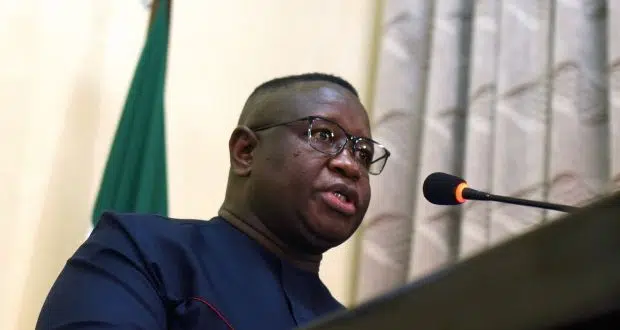
President Julius Maada Bio

Amin Kef Sesay

For decades, Sierra Leone has languished at the bottom of international corruption rankings. Despite detailed anti-corruption legislation that has been on the books since 2000, millions of aid dollars in technical assistance and repeated promises by politicians, corruption has persisted, even flourished.

More recently, however, this has started to change under President Julius Maada Bio. Transparency International ranked Sierra Leone 119th out of 180 countries in its Corruption Perceptions Index last year, up 10 places from 2018. The Millennium Challenge Corporation, an independent U.S. foreign assistance agency, also recorded a jump for Sierra Leone in its annual anti-corruption scorecard, from 0.06 in 2016 to 0.36 in 2019.

It’s not just foreign donors and NGOs; Sierra Leoneans are also reporting improvements in the Government’s fight against corruption. In a survey published by Afrobarometer in 2019, 66 percent of respondents believed the Government was doing a good job tackling corruption—the second-most positive response in Africa. In 2015, only 15 percent of Sierra Leoneans viewed the Government’s efforts favourably.

While far from graft-free, the country’s progress is notable, particularly in light of Sierra Leone’s long history with both petty and grand corruption. Its success is due to a series of policy decisions by Bio’s administration to target the social and political roots of corruption.

For nearly a decade after its creation, Sierra Leone’s Anti-Corruption Commission was little more than a paper tiger. Despite the rhetorical support it received from successive governments, it had a limited mandate and lacked the ability to prosecute those suspected of graft. But in 2008, Sierra Leone’s Parliament passed the Anti-Corruption Act, which contained several important changes that strengthened the commission. First, the law expanded the scope of what constitutes corruption in the country.

Until 2008, Sierra Leone had based its anti-corruption policy on the United Nations Convention Against Corruption, which it joined in in 2004. One former Anti-Corruption Commission official told me that the convention did not cover many of the offenses most prevalent in Sierra Leone. For example, while the U.N.’s convention devotes little attention to political corruption, Sierra Leone’s 2008 legislation included detailed provisions defining abuse of office and the use of bribery to influence public officers. The legislation also identifies misappropriation of donor funds and public contract interference as instances of corruption.

In another major change, the 2008 law granted prosecutorial powers to the Anti-Corruption Commission, which had previously been totally dependent on Government prosecutors to bring cases to court. As part of the law, the commission also gained more independence, taking control over staff appointments and salaries. In 2013, the government gave its fight against corruption a new, public face with its “Pay No Bribe.” campaign. Funded by the British Government, the program set up a reporting platform where individuals could anonymously report bribes, either by calling a toll-free number, utilizing a data-free mobile app or using the Pay No Bribe website.

While these innovations were important in strengthening the Anti-Corruption Commission, they did not immediately bring about tangible benefits for Sierra Leoneans. But since taking office in 2018, Bio and his anti-corruption commissioner, Ben Kaifala, have pushed through legislative and institutional changes that breathed new life into the fight against graft. Like other presidential contenders, Bio campaigned on fighting corruption. But unlike his predecessors, Bio has acted on his promises.

The success of Sierra Leone’s new approach in fighting corruption offers several lessons for other countries, in West Africa and beyond.

He has done so by recognizing the structural obstacles to fighting corruption in Sierra Leone, including a troubling tendency for public officials accused and convicted of corruption to be reinstated in their positions. The country’s overburdened and inefficient judiciary was also unable to process the large caseload brought by the Anti-Corruption Commission. Finally, an entrenched culture of impunity for both petty and grand corruption led many to believe that corruption was just a part of life. Recognizing these challenges, the administration has pursued a multipronged strategy for fighting corruption, beginning with legislative reform.

In 2019, Kaifala introduced a new amendment to the 2008 Anti-Corruption Act that was quickly passed by Parliament. It built on the 2008 reforms in several important ways, including by giving the Anti-Corruption Commission new authority to take preventative steps to fight corruption in procurement contracts. Under the new rules, the commission can intervene in contract negotiations that it believes to be against the public interest. To prevent repeat offenses by public officials, the 2019 amendment also raised the penalty for corruption: Officials who are found criminally liable for corruption face financial penalties and jail time. The minimum sentence for serious corruption has been increased from three to five years. Even without a criminal conviction, if an official is found to be corrupt in a civil court, they are subject to a three-year minimum ban on holding office.

To fast-track corruption cases, the government established a special Anti-Corruption Division within the High Court of Sierra Leone, with specialized procedures, technology and staff. This new division is designed to bring expertise and efficiency to prosecuting corruption. At the same time, the Anti-Corruption Commission is devoting more resources to recovering embezzled state funds. Following a change initiated by Kaifala upon assuming office, it now has the authority to begin the process of recovering stolen assets while cases move through the court system by pursuing both civil and criminal forfeiture.

Since adopting this new approach in 2018, the commission has returned roughly $2 million to public coffers—more than the total of funds recovered during the first 18 years of the commission’s existence. This approach does not substitute for criminal action; rather, it gives the government an avenue to recover much-needed embezzled funds while courts process cases against the accused. Unlike criminal cases, which are brought against the suspected individual, civil forfeiture cases are brought against the assets in question, and are usually settled out of court. Thus, if the commission can prove that the funds in question are tainted, it can force the individual to surrender them even if the state cannot prove that the individual is guilty beyond a reasonable doubt.

Finally, the Anti-Corruption Commission has pursued a vigorous public education campaign to combat perceptions of impunity and inform the public of their options. Across the capital, Freetown, signs now warn against asking for bribes and provide information about forms of recourse.

Sierra Leone has a long way to go in the fight against corruption. Petty corruption, particularly among traffic police, remains rampant. Officials continue to award lucrative contracts to friends and political allies. Still, expectations are changing. The former Anti-Corruption Commission official noted that perceptions of impunity have begun to shift, and that law enforcement officers are less likely to request bribes in the street. Convictions against those who do are increasingly common.

The success of Sierra Leone’s new approach offers several lessons for other countries trying to fight corruption, in West Africa and beyond. First, to be effective, anti-corruption strategies must be tailored to the realities of each country. With regard to recovering stolen assets, the likelihood of being able to track them down diminishes over time. So for states with limited capacity to process corruption cases in a timely manner, a pre-conviction asset recovery approach like Sierra Leone’s may present the best chance of success.

Preventative strategies like those adopted by Sierra Leone last year in the amended Anti-Corruption Act may help to ensure that funds are not lost in the first place. Finally, public outreach can help change the culture surrounding corruption. Awareness that the government is taking meaningful action may contribute to an important shift in perceptions about what constitutes appropriate behavior by public officials.