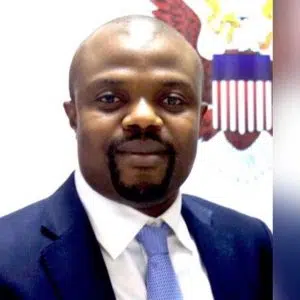
I hereby tender a sincere apology to the Honourable Justice Miatta Samba of the Appeals Court of the Republic of Sierra Leone for the negative effect my publication titled “Justice Redefined by Miatta Samba” caused on her person.
I sincerely regret my action and am not under any duress to tender the said apology. I would like to genuinely distance myself from a publication from www.theorganiser.net in Google, in which the unidentified author said I was forced to apologise to the Honourable Justice Miatta Samba. Let me categorically state that the author of the said article never consulted my person nor did he discuss with me before he went to press. The action of the author is unprofessional and failed to meet to established principles of modern day journalism.
The whole truth of the matter was I misunderstood the judgement of her Lady Miatta Samba’s reasoning on the said article before I published it.
Therefore, I sincerely apologise to the Honourable Justice Miatta Samba and her family and the entire Judiciary including members of the Fourth Estate.
From a well-coordinated country-wide survey mounted by this medium to really know which business companies are doing well in terms of socio-economic advancement; the one that kept coming up or was most times mentioned is the Sierra Leone Brewery Limited (SLBL).
Since its establishment in 1961 the country’s premier brewer of alcoholic and non-alcoholic drinks has been growing from strength to strength providing many attendant benefits to the nation.
Ideally situated within the Wellington Industrial Estate, in the East End of Freetown, the company is vibrantly functioning and timely offering its numerous esteemed customers both within and out of the country to the admiration of all and sundry.
A very impressive aspect of the company is the seriousness its shareholders and competent managerial teams have been attaching in rolling out its Corporate Social Responsibility on various fronts that are positively impacting lives meaningfully and by extension contributing to overall national development.
The company is on record for ameliorating the acute water shortage within and out of its area of operations. With support from its partners the Sierra Leone Brewery Limited has championed the construction of state of the art water wells in communities that were previously bedevilled with water supply living in its wake serious social implications including unwanted pregnancies and drug abuse.
Residents are now at vantage positions to access clean and pure water supply which was hitherto difficult to get.
In its production chain SLBL is making use of sorghum which is grown locally. The number of sorghum farmers is increasing exponentially and presently stands at over 25,000. The symbiotic relationship between Brewery and the farmers is watertight with the latter benefitting financially thereby putting them in positions to take care of major responsibilities.
Making proper use of the Local Content Policy has placed the company in a good stead as one that is empowering Sierra Leonean farmers. As a matter of fact the company has been undertaking intermittent tours in the provinces on missions geared towards encouraging people to cultivate sorghum. Through radio talks and face to face engagements the awareness has been spread that sorghum is an important product required by the company.
The Sierra Leone Brewery Limited is helping in the area of providing job opportunities both formally and informally. The company has in its employ workers who are working at its production but there are other individuals who are self -employed, dealing in the products produced by the Brewery. These offered opportunities are helping in terms of poverty alleviation.
As it continues to produce favourite drinks cherished by many, it goes without saying that SLBL is really a very relevant entity in this country and it is indeed indisputably right on top of situation.
The resolve of shareholders and management of National Petroleum Sierra Leone is responsible for the indigenous company’s success and has been the centrepiece that what has propelled NP to a higher level, making it equal to none in the sub-region.
NP – the country’s leading petroleum business entity has become a household name as it continues to offer qualitative products to its numerous customers. It cannot be swept under the carpet that the company is a major source of inspiration to many Sierra Leoneans who are ambitious of establishing business entities that will grow to the magnitude of NP.
It is on record that the National Petroleum (NP) Sierra Leone Limited apart from it being lauded for being one of Sierra Leone’s biggest tax payers is also being held in high esteem for its invaluable contributions towards building the country’s economy.
The company has worked hard over the years evident in the opening of filling stations in various parts of the country and it is vibrantly functioning in Guinea, Liberia, Ivory Coast and The Gambia.
This 100% indigenously-owned company has so far offered various jobs to residents in the afore-mentioned countries, thereby reducing poverty to a considerable level.
Without mincing the truth, NP has a capable and competent managerial team at the helm of affairs, which from time to time comes up with good initiatives, always ensuring that those ideas are effusively, effectively implemented to create value for money.
Since it was established by 35 Sierra Leoneans, who bought shares from the Government years back, the company has grown from leaps and bounds; weathering storms that would have run it down.
The synergy that runs through its members of staff has also contributed to the company’s growth.
Asking those who really know NP, the feedback you get indicate that around its commitment to customer care, NP strongly believes that it must be prioritized to give total satisfaction.
The selflessness and commitment of the shareholders have made it possible for the company to empower many Sierra Leoneans and at the same time put it at a vantage position to continue to open more filling stations across the country.
NP has cordially maintained a good business relationship with its numerous customers’ right across the sub-region where it exists and most have confessed that they are realizing optimum satisfaction in dealing with NP.
The company deals with individuals and various sectors of society, always ensuring that its various petroleum products are available and are sold at affordable prices. This keen symbiotic relationship with its customers has been paying huge dividends, always resulting in a win-win situation, making NP very endearing to all and sundry.
The regulatory institution of the different petroleum companies in the country, Petroleum Directorate, has lauded NP for its efficient service delivery wherever it is operating.
The company is also known for offering Sierra Leoneans affordable NP Gas cookers of various sizes, which are safe and very friendly to use. NP Gas cookers could be purchased at all their filling stations across the country and the very gas is also sold to replenish those that have been used.
When we talk of the steady and effective implementation of the Local Content Policy, NP stands out tall as it is truly 100% indigenous, particularly in Sierra Leone. This is one of the factors that have made the company to be a success story.
The company’s result-oriented managerial team will definitely and sustainably continue to put NP at the top.
NP-SL Ltd. is doing exceptionally well in all the countries it is functioning and indeed there are prospects for further expansion.
It can therefore be justifiably asserted that the National Petroleum Limited is the country’s reliable fuel provider as it always ensures that its stockpile is always at an appreciable level.
Lately, NP received many awards; the latest being: “Best Company of the Year during the National Business Award 2018/2019 that was held at the prestigious Bintumani Hotel.
Various tests to determine quality and standard indicate that customers of National Petroleum-SL products say they have never had cause to grumble about the products.
It should be noted that customer care is one key element to the success of the National Petroleum Sierra Leone (NP-SL).
Another most important feature of NP-SL is its smart cards which customers can use to make transactions very easily and conveniently.
The public’s recognition of the invaluable contributions of NP both to its numerous customers across the country and to national development has seen it bag meritorious awards from different national and international organizations.
The company always ensures that petroleum products are always available, thereby preventing shortages that could create shocks in many quarters. The level of confidence which overseas business partners have reposed in the company has made it possible for it to enter into payment agreements thereby keeping the demand and supply chain open and running.
NP-SL by giving preference to employing Sierra Leoneans is a clear indication that it adheres to the country’s Local Content Policy. Utilizing local talents make it possible for indigenes to acquire useful knowledge and skills through training courses that could be applicable in other places.
In addition, the company sells the best cooking gas that is available in hundreds of outlets across the country, thereby contributing to creating cleaner environments, thus aiding the work of EPA.
From what was understood the company is inspiring many to invest, grow indigenously, become sustainable and succeed.
Africell and UNICEF on Monday 23rd September, 2019 signed a Memorandum of Understanding (MoU) to utilise mobile technology platform, U-Report to support the on-going review of the National Youth Policy.
Over the next two years, Africell will make an in-kind donation of removing any charges for all on-net SMS traffic on the 2080 U-Report short-code. This is a build up from the earlier support of reduced rate for bulk SMS messaging for the U-Report platform.
The Minister of Youth Affairs, Mohamed Bangura, who witnessed the signing welcomed the use of U-Report to provide a desirable connection with youths and create an enabling environment for more young people to have a voice in the consultation process of reviewing the policy.
“The introduction of the U-Report platform to review the National Youth Policy will ensure that more young people get the opportunity to provide their insights, aspirations and priorities to shape the youth agenda in Sierra Leone,” said Mohamed Bangura.
The U-Report is a ground-breaking, social messaging tool that enables and empowers people, particularly youths, to speak out and provide their perspectives on a wide range of important issues in their communities. Regular polls and alerts are used to collect real-time responses from an active base of U-Reporters from across the country. More than 145,000 people – mostly youths – are currently registered on the platform and actively participating in communicating challenges and being part of solutions in their communities.
“Since 2014, U-Report has become an innovative and strategic way for UNICEF to engage and solicit the voice of people in finding sustainable solutions for children and young people demonstrating measurable outcomes for UNICEF programming and youth beneficiaries,” said Dr. Hamid El-Bashir Ibrahim, UNICEF Representative.
Thanks to the rapid growth of cell phone connectivity and the availability of mobile phone devices, many young people in Sierra Leone can now easily communicate and network without geographic boundary restrictions.
This new in-kind contribution from Africell will help in the scale-up of U-Report by amplifying the voices of many and reaching more people including marginalised groups and vulnerable communities. “Africell regards this investment as a strategic contribution to building a healthy, informed and productive generation, which will contribute to economic growth and social inclusion.” said Africell Chief Executive Officer, Mr. Shadi Al-Gerjawi.
Young people are encouraged to actively participate in the review of the National Youth Policy by signing up to U-Report through texting the word “JOIN” to 2080. It’s free to join and participate in the platform providing an important opportunity for young people to inform and shape discussions on a new youth policy for Sierra Leone.
In his speech, Africell Chief Corporate Affairs Officer, Joe Abass Bangura said among other things that the signing of a Memorandum of Understanding with the United Nations Children Emergency Fund (UNICEF) is on the basis both organisations support to the Ministry of Youth Affairs that will enable the inclusive development of a National Youth Policy in Sierra Leone by engaging the youth who will act as reporters (U-Reporters) on the issues that will be considered in the development of the policy.
He said the youth population represents the biggest demography in the country and that to adequately plan for the full development and deployment of their potentials, would first of all require the development of the appropriate policies. This project could thus not have come at a more opportune time, he said.
He informed his audience that as part of the MoU, Africell will make an in-kind donation to UNICEF to support the U-Report platform through the removal of charges for all on-net SMS traffic to the platform through the assigned short code, 2080. It is estimated that the project will generate a traffic of 2,000,000 per month.
In addition, Africell will be sending targeted SMS broadcasts to drive the U-Report registration right through the period of the campaign
This will ensure that the young people play an integral role in developing the policies that are going to be used in planning and driving their development.
He maintained that Africell has been a leading proponent of all things youth in the country; supporting the government in the area of Sports, Education, Health etc.
‘Our continuing expanding business is the source of direct and indirect employment for young people who make up the bulk of our staff, outsourced business support service providers, recharge sellers and Mobile money Agents,’ he added.
Government, he went on can continue to count on Africell as a key partner in the development of our nation.
‘On behalf of the Management and staff of Africell, I wish to commend MOYA for this bold and innovative initiative; making full use to technology to ensure that no youth is left behind in this exercise. We also thank the leadership of the UNICEF country office in Sierra Leone for this privilege to commence a partnership that we expect will extend to other areas of cooperation,’ Joe Abass Bangura told his audience.
Minister of Youth Affairs, Mohamed Bangura, who witnessed the signing, welcomed the use of U-Report to provide a desirable connection with youths and create an enabling environment for more young people to have a voice in the consultation process of reviewing the policy.
“The introduction of the U-Report platform to review the National Youth Policy will ensure that more young people get the opportunity to provide their insights, aspirations and priorities to shape the youth agenda in Sierra Leone,” said Hon. Mohamed Bangura.
He noted that with the rapid growth of cell phone connectivity and the availability of mobile phone devices, many young people in Sierra Leone can now easily communicate and network without geographic boundary restrictions.
He said that this new in-kind contribution from Africell will help in the scale-up of U-Report by amplifying the voices of many and reaching more people including marginalized groups and vulnerable communities.
Between 13 to 14 June 2018 three senior staff members of the Bank of Sierra Leone were queried by the bank for making unauthorized payment to some well-known government contractors.
On 20th June 2018, after a hurriedly convened board meeting, the bank forwarded the outcome of the findings of their disciplinary committee to the CID Headquarters in Freetown for further investigation, and if possible, to proffer criminal charges against the accused persons.
However, in the middle of the investigations mounted by the CID, the bank hurriedly went ahead and summarily dismissed the three directors. The Bank erroneously quoted Article 9.1 of the Bank of Sierra Leone Staff Handbook as the basis for the dismissal of the three Directors.
Article 9.5 of the same Bank Staff Handbook states that, a disciplinary measure may be imposed only after an accused staff member has been officially notified of the charges against him and had been given an opportunity to reply to the charges. All the accused Directors were not given the opportunity to reply to the charges or allegations made against them, according to our investigations.
It would seem that the Bank knowingly violated Article 9.6 of the Staff Handbook because the matter was never discussed by the management of the Bank as required.
The Bank’s key claim was that the Directors made unauthorized payment to contractors but this has been found by CID investigators to be false. The three directors after through investigations were described by the Director of Prosecution (DPP) ‘advising that the case and enquiry file (CID HQ C/R no. 236/2018 had been perused and no criminal liability had been observed against the three directors and that therefore they should be released immediately.
Our investigations further reveal that it is a well-known fact that, these so called unauthorized payments were legitimate claims drawn on cheques that were prepared, authenticated, signed and forwarded to the Bank of Sierra Leone for payment by the Ministry of Finance.
A senior retired Banker told this press that, cheques signed and forwarded to the bank for payment should be authorized by the drawer, as long as all material details of the cheque are in place.
It is sad that the Bank has consistently and deliberately ignored the legal advice given to them by the Director of Public Prosecutions in the Law Officers Department. The DPP advised that no further action should be taken against the accused persons. His legal advice is based on evidences sent to the CID by the Bank itself for investigation.
Unfortunately, it appears that the Bank has been led to believe that they can rely on their outdated Staff Handbook to argue their case in court.
The DPP has concluded that the payment made to the contractors were arguably in the public interest. It is very important to also point out that the Bank did not lose a single cent in the so-called unauthorized payment transaction. The payment made to one of the contractors, Pavi Fort were part of existing payment owed by the government of Sierra Leone to the contractors.
A spokesman for the Ministry of Finance told this press that she was aware of the matter but would not comment on any advice that the ministry has given to the bank and prayed for common sense to prevail.
A senior official at the Bank of Sierra Leone told this press that the bank was aware of the DPP’s legal advice but was seeking further clarification.
Two of the Directors affected by the Bank’s decision have threatened to sue the bank for unlawful dismissal and are seeking for compensation running into billions of tax payer’s money.
A human rights activist who has been following this matter told this press that the decision by the bank to summarily dismiss the three Directors was a violation of their human rights. He described the Bank’s decision as outrageous and totally unacceptable.
It must be stated that this matter occurred before the new Bank Governor, Prof. Kelfala Murana Kallon who was appointed by President Julius Maada Bio.
Hon. Chernor Maju Bah, otherwise known as Chericoco
By Samuel J. Kargbo
Sources close to the leader of the main opposition party, the APC, in Parliament, Hon. Chernor Maju Bah, otherwise known as Chericoco, say the Honourable Member did not in any way endorse the choice of Hon. Sidi M. Tunis for the position of Speaker of ECOWAS Parliament. They further disclosed that both Hon. Sidi M. Tunis and Chericoco are vying for the same position.
In their view Chericoco is better qualified to hold that position for several reasons, namely: He has more experience in parliament and about parliamentary procedures more than Hon. Tunis, as he had served in Parliament for three consecutive terms of five years each, whilst his rival for the position had only served for two terms (the first being during the Late President Kabbah’s tenure in office and the second being, during the second term of former President Koroma’s tenure).
Furthermore, it was disclosed that Hon. Chernor Maju Bah had served as Deputy Speaker of the House of the Sierra Leone Parliament during the last term of the former President’s tenure in office and during that period, he was a member of the ECOWAS Parliament before the 2018 elections. Many people are of the opinion that Hon. Chericoco should automatically be chosen for that position by virtue of his experience in both the Sierra Leone Parliament and the ECOWAS one, in which he is a member and therefore familiar with the goings-on in that sector.
Political analysts say that Hon. Chericoco’s legal background puts him in better stead to hold the position of Speaker of the ECOWAS Parliament. They further stressed that whilst legal background is not a prerequisite for the said position, but it gives him a much greater advantage as the making of Laws is an integral part of the Parliament. In their view, laws binding the community demand a person with the necessary legal background to be able to navigate through the legal waters and look at such laws with the lens of a legal mind.
It should be noted that the ECOWAS Parliament is an international body and not a national one, with various experts in various fields and Sierra Leone now has the opportunity to showcase her prowess and stamp her name in the annals of history as an important player in that Parliament. It is a matter of putting round pegs in round holes and square pegs in square holes, in other words; putting the right man in the right place.
The Deputy Vice-Chancellor and Principal of the Institute of Public Administration and Management (IPAM), University of Sierra Leone, Professor Samuel E.B Nonie over the weekend revealed to the people of the Northern region via Radio Hope F.M 93.3 in Makeni that the institution is very much concern about the massive failure in the last West African Senior School Certificate Examination (WASSCE); more especially the poor performances in Maths and Language Arts.
“As a forward-looking institution we have decided to implement a new programme to address the massive failure in Maths and Language Arts exams,” he pointed out. He said that their focus is to fulfil President Bio’s agenda to achieve quality education in the country.
He disclosed that they have done a survey on the WASSCE and seen the need for their timely intervention.
The pro-active Professor disclosed that they are on course in rolling out massive developmental activities in all IPAM campuses; Bo, Kenema, Kono and Makeni, mainly to address the issue of examination failures in the WASSCE. He said they will recruit the most qualified and experienced teachers in English and Maths to prepare WASSCE students.
The Professor intimated how they are introducing the programme for those that have passed most of their subjects but did not do well in both Maths and English.
“We are taking education to your door steps which is one of the pillars in our administration,”, he underscored.
Professor Nonie further disclosed that the mass failure is a big concern to IPAM’s administration adding how a problem in one area or one sector of the country is a problem for all.
“We as parents need to help our children to have better education so that they can in the future contribute to the development of the country,” he said assuring that IPAM will continue in that direction. Professor Nonie asserted that the programme is not just like a syndicate but will focus on areas where students have problems in.
“The programme will focus on those that have attempted the WASSCE and not for those that have not yet attempted it,” he emphasized furthering that they will treat the program with the utmost seriousness its deserves.
He said they will bring teachers from Freetown to help the already experienced and dedicated lecturers in the provinces.
He emphasised that this new IPAM model will focus on IPAM provincial campuses because pupils in Freetown have the advantage of accessing several good syndicates which the provinces do not have. Professor Nonie noted that IPAM will help to cater for the provinces because they want to take quality education to all the districts in the country.
At the end of the program residents from various walks of life expressed thanks and appreciation to Professor Nonie and team for coming up with such a learning model that will benefit residents of Makeni.
One of the key stakeholders, Abdul Rahman Sesay, maintained that this is the biggest intervention IPAM has decided to implement in that part of the country as a way to help parents develop their children’s learning abilities at such a time when parents are really frustrated with the recent deplorable results.
Section Chief, Pa Alimamy Osman of Masorie Town, expressed their happiness for such a model to commence in the Northern region.
“We will always be grateful to IPAM for this,” said Pa Alimamy adding how they have been having problems with sending their children to relatives in Freetown to seat to the private WASSCE.
Director of Strategic Planning and Quality Assurance, University of Sierra Leone, Mr.David Gbao, revealed that not only in Sierra Leone but in Africa at large, most times quality services and products provide optimal customer satisfaction.
“Our office is here to support what the Professor is doing to ensure quality assurance with regards high value academic content which the University is delivering,” he said.
Margret Sheriff Bangura, Coordinator for IPAM in Makeni, assured the people of Makeni about their preparedness to deliver quality education during the next academic year.
The delegation which was headed by the Vice Chancellor of IPAM after the radio programme went on a conducted tour to see the new facilities of IPAM in Makeni.
Recent proposal by the regulatory body of the media (Independent Media Commission – IMC) to increase the current registration, licence and renewal fees for newspapers, radio and television stations, and Direct to Home Services (DTH), met with disapproval by the whole media landscape in the country and on the 18th September 2019, the Executive of the Sierra Leone Association of Journalists (SLAJ) engaged the management of the IMC on that issue and other related matters to register their disapproval and chart the way forward.
During that meeting the Chairman of the Commission, Mr. George S. Khoryama, formally welcomed the new executive to the IMC and congratulated them on their election.
The meeting discussed pertinent issues relating to the work of both institutions. They included the review of the current registration, licence and renewal fees for newspapers, radio and television stations, and Direct to Home Services (DTH). During the meeting, discussions were held on the need for effective collaboration and cooperation between IMC and SLAJ, and proposals to celebrate, document and publish a book on the various steps taken for the repeal of the Criminal and Seditious laws contained in Part V of the 1965 Public Order Act which, among other things, criminalises libel.
On the review of the registration, licence and renewal fees, the Commission said that it is in compliance with Section 38 (1) and (2) of the IMC Act of 2000 as amended, that they decided to engage SLAJ on the matter. Mr. George S. Khoryama said that the sub-sections, among other things, provides that the Commission shall only make regulation on conditions to media licence or registration after due consultation with SLAJ and the meeting is in fulfilment of this requirement.
The President of the Sierra Leone Association of Journalists (SLAJ), Mr. Ahmed Sahid Nasralla, appreciated the approach of the Commission to engage with SLAJ on the review of the licence and registration fees. He, however, pointed out that while SLAJ would further consult its membership; their initial response is that the executive, media owners and managers are not ready for any increment considering the current economic situation in the country and the fact that it is challenging times for the media.
The SLAJ President noted that SLAJ would rather work with the IMC to engage the government to provide the necessary support for the effective and efficient operations of the Commission.
At the end of the meeting, IMC and SLAJ released a joint communique on the following agreements reached:
1. The Commission will put on hold the proposed increment on the registration, licence and renewal fees, while it continues to work with SLAJ on the way forward.
2. The Sierra Leone Association of Journalists (SLAJ) will support the Commission’s intention to call on the government for increased budgetary allocation. SLAJ noted that the IMC is a statutory institution that should be fully funded by the Government. SLAJ further noted that in the build up to and after the repeal of the Criminal Libel Law, the Commission will have increased responsibilities to regulate the media within democratic contexts countrywide. The tasks ahead require adequate support from the Government. SLAJ argued that the Commission cannot rely on fees and fines from the media institutions for its operation. SLAJ noted that the media houses are largely performing a public interest function and are guided by ethical and professional standards; they are not truly speaking profit making institutions like other businesses.
3. SLAJ will set up a Committee comprising relevant stakeholders to continue with engagement on various issues relating to the post repeal era. This will include plans to celebrate, document and publish a book on the various steps taken to repeal the criminal and seditious libel law.
The two institutions stressed the need for responsible media practice particularly after the repeal of the criminal libel law and pledged to continue to work together in the interest of promoting media rights, freedoms and responsibilities.
The habit of some people, be they civil servants or not, doing clandestine acts in sequencing and syphoning two or more monthly salaries from the consolidated fund was and is bizarre and uncalled for. The dire need and efforts put out by the past government and the current one in trying to curb this strangely unconventional style of corrupt behaviour by those unpatriotic folks/ghost workers was timely and meaningful.
Government, in curbing these practices, undertook a nation-wide civil servants verification exercise in concomitant with the National Civil Registration Authority (NCRA) the previous year, to clean the government wage bill.
It is however a truism that a lot of abnormalities were discovered during the weeks long verification of government workers, culminating in the withholding of salaries of over 9000 civil servants since May 2019, to date.
On July 2019, the government, through NCRA, undertook another rigid reverification exercise to accordingly rectify all abnormalities discovered in order to restore these workers into the government wage bill permanently. These affected civil servants cut across the Sierra Leone Police, the Army, Prison, Teachers, Nurses and other public sectors.
Unfortunately for these civil servants, who had spent over millions to get all necessary documentations to be re-verified by NCRA and for their salaries to continue running and backlogs to be paid, the situation remains the same.
Disappointedly, the hopes of these workers have submerged and there are no certainties as to whether they are going to receive September’s salaries and are currently facing serious financial challenges and hiccups to provide the basic meals for their families.
As the days pass by the plight of these workers is aggravated with the absence of any sign of any solution in sight.
It is apparent that things get worrisome, especially with the re-opening of schools and the absence of any assurance of their children being able to attend school this academic year, due to the financial challenges of their parents and guardians and their inability to shoulder the bills of buying bags, uniforms, books, shoes and to attend to other pressing home needs.
In lieu to this, they’re calling on His Excellency, President Julius Maada Bio and the Minister of Finance, Mr. Jacob Jusu Saffa and the government to come to their aid and ameliorate their suffering, as they are currently going through difficult times trying to make ends meet, especially when the living conditions of Sierra Leoneans is extremely tough and the current economic hardship is posing serious threat to the employed not to talk of the unemployed.
The development of sound budgetary institutions in countries such as France, the U.K. and the U.S. has taken a very long time―200 years or more―and is still evolving.
What is Budgeting? Budgeting is the process of creating a plan to spend your money. This spending plan is called a budget. Creating this spending plan allows you to determine in advance whether you will have enough money to do the things you need to do or would like to do.
It is an important planning and forecasting process to help you manage your money by balancing your expenses with your income. Thus, budgeting is simply balancing your expenses with your income. If they don’t balance and you spend more than you make, you will have a problem. Many people don’t realize that they spend more than they earn and slowly sink deeper into debt every year.
If you don’t have enough money to do everything you would like to do, you use this planning process to prioritize your spending and focus your money on the things that are most important to you.
Why is Budgeting so Important? Since budgeting allows you to create a spending plan for your money, it ensures that you will always have enough money for the things you need and the things that are important to you. Following a budget or spending plan will also keep you out of debt or help you work your way out of debt if you are currently in debt.
Once you create your budget, begin to use it and get a good feel for how it can keep your finances on track, you may want to map out your spending plan or budget for 6 months to a year down the road. By doing this, you can easily forecast which months your finances may be tight and which ones you’ll have extra money. You can then look for ways to even out the highs and lows in your finances so that things can be more manageable and pleasant.
Extending your budget out into the future also allows you to forecast how much money you will be able to save for important things like your vacation, a new vehicle, your first home or home renovations, an emergency savings account or your retirement.
Using a realistic budget to forecast your spending for the year can really help you with your long term financial planning. You can then make realistic assumptions about your annual income and expense and plan for long term financial goals like starting your own business, buying an investment or recreation property or retiring.
The same applies to the national budget planning process, which includes the currently fashionable emphasis on complex, multi-annual PFM reform strategies, strongly promoted by the donor community that advocates a simpler approach grounded on the important economic principle of “getting the basics right.”
What this government with the IMF is doing to get better value for money is strengthening budgetary institutions and public financial management (PFM).
This involves employing a stream of reforms that includes the latest techniques of fiscal rules, fiscal risk analysis, expenditure ceilings, medium-term fiscal frameworks, performance-related budgeting, accrual accounting and budgeting, and expenditure review.