
Home Blog Page 131

Health Alert Urges Greater Government Funding for Vaccination and Primary Health Care

By Foday Moriba Conteh

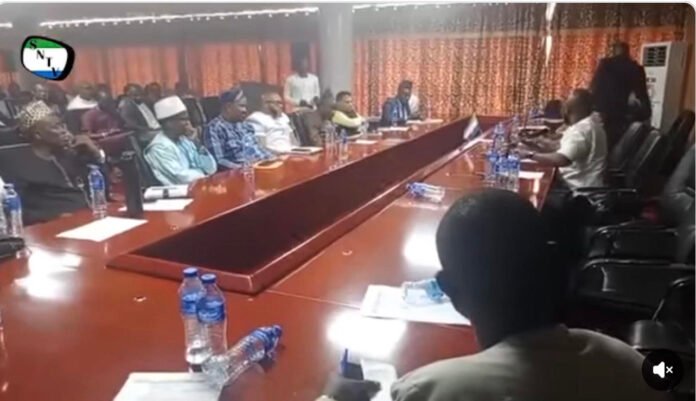
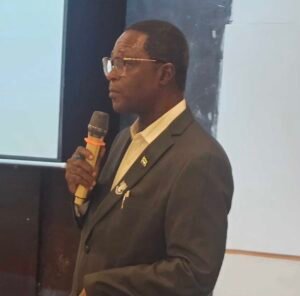
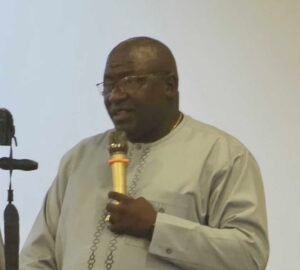
Victor Lansana Koroma, Executive Director of Health Alert, has made a passionate appeal for greater Government funding toward vaccination programs and primary health care services. His call came during the ongoing bilateral budget discussions hosted by the Ministry of Finance, following the Ministry of Health’s presentation of its Fiscal Year 2026 budget.

The Executive Director emphasized that sustained investment in those critical areas is essential to strengthening Sierra Leone’s health system, improving access to care and safeguarding vulnerable populations, especially children and rural communities. He urged policymakers to prioritize preventative health measures and community-level interventions, warning that underfunding could undermine national health outcomes and reverse hard-won progress.

While commending the Ministry of Health for its achievements in reducing maternal mortality and expanding services, Victor Lansana Koroma raised serious concerns about the Government’s commitment to health financing. He stressed that Sierra Leone is still falling short of the Abuja Declaration target, which calls for at least 15% of national budgets to be allocated to health and pointed out that despite allocations, actual disbursements remain low, with only about 30% of approved funds released in the last budget cycle. “If you allocate and do not disburse, then what’s the point?” he asked, describing the gap as a major obstacle to effective service delivery.

Victor Lansana Koroma further highlighted challenges in meeting co-financing obligations for immunization, nutrition and family planning, warning that Sierra Leone’s contribution to the Gavi immunization program covers less than 40% of projected needs. He cautioned that this shortfall could cause vaccine procurement delays.

On primary health care, Victor Lansana Koroma acknowledged the ongoing devolution to local councils but insisted that ultimate responsibility rests with the Ministry of Health. He called for stronger monitoring systems, recalling that unannounced facility inspections by senior officials once kept staff accountable.

He appealed to both the Ministry of Finance and Parliament to approve and adequately fund the health budget, stressing that “no sector can thrive without health.”

On his part, Dr. Charles Senessie, Minister of Health I, outlined the Ministry’s 2026 health plan, which adopts a holistic, life-stage approach from conception to old age. He said the strategy focuses on four key pillars: infrastructure development, human resource management, drugs and supply chain and diagnostics.

Highlighting progress, Dr. Charles Senessie noted that maternal mortality, once among the highest globally, has been reduced by nearly 79% since 2015. He expressed optimism that, with innovative digital tools now tracking thousands of pregnancies, Sierra Leone could achieve zero preventable maternal deaths by 2030.

He also stressed that 80% of investments are being directed at the community level to strengthen disease prevention and treatment closer to citizens, citing the expansion of mobile clinics, ambulances and referral systems.

Other priorities outlined in the presentation include:

  • Expanding renewable energy and digital infrastructure in hospitals for real-time data management.
  • Recruiting over 3,000 new health workers and strengthening postgraduate training.
  • Enhancing accountability in drug distribution through the new “End Supply” app.
  • Reducing reliance on overseas medical referrals by upgrading diagnostic facilities locally.

Dr. Charles Senessie concluded by stressing that Sierra Leone now has a home-grown health plan aligned with national priorities. “Any country without its own health plan risks adopting plans from others. We now have a clear vision to build a stronger, more resilient and equitable healthcare system for all Sierra Leoneans,” he affirmed.

CHASL Marks Five Decades of Faith-Driven Healthcare Across Sierra Leone

By Foday Moriba Conteh

During a well-attended ceremony held on Thursday 18th September, 2025 at CHASL’s Secretariat on Kingharman Road in Freetown, the Christian Health Association of Sierra Leone (CHASL) has officially launched its 50th Anniversary celebrations on the theme: “Celebrating 50 years of compassionate care and community impacts”, marking five decades of faith-driven healthcare delivery, compassion and community service across the country.

Established in 1975 by a coalition of faith-based health facilities, CHASL has grown into Sierra Leone’s second-largest health provider, currently delivering nearly 30 percent of the nation’s healthcare services. The network now comprises 43 health facilities across 13 districts, supported by 10 Christian denominations and remains particularly focused on serving rural and hard-to-reach communities.

Welcoming the gathering, Gifty Florence Massaquoi, Executive Director, Christian Health Association of Sierra Leone (CHASL), emphasized the significance of the milestone. “This is more than a celebration; it is a testament to the lives touched and the hope restored,” she said.

She called for continued unity, networking and the strengthening of an enduring, community-based health system to ensure sustainable healthcare delivery across the nation. Founded in 1975 through the collective efforts of faith-based health facilities, CHASL has grown from a handful of clinics into Sierra Leone’s second-largest healthcare provider, delivering nearly 30% of the country’s health services.

Speaking at the launch, Rev. Dr. Joseph Samuel Fornah, Chairperson of the Proprietors Council of CHASL, said the milestone reflects the vision, sacrifice and commitment of the Association’s founders and health workers who have built a strong legacy of service since 1975.

“CHASL stands on the shoulders of giants, visionary proprietors, coordinators and health workers who built this legacy of faith and service. For fifty years, CHASL has been a beacon of hope, ensuring healthcare reaches even the most forgotten corners of Sierra Leone,” he said.

Since its founding, CHASL has grown into the second-largest healthcare provider in Sierra Leone, delivering nearly 30 percent of national healthcare services. The Association now operates a network of 43 health facilities across 13 districts, supported by 10 Christian denominations, with a focus on rural and hard-to-reach communities.

He mentioned that over the decades, CHASL has:

  • Expanded from small local clinics into a national network of hospitals and health centres.
  • Trained and equipped generations of health workers.
  • Partnered globally while shaping national health policy.
  • Played a frontline role in tackling epidemics such as Ebola, COVID-19 and Mpox.

Despite challenges with financing, workforce retention, and infrastructure,  Rev. Dr. Joseph Samuel Fornah said the organization remains anchored by its core values of Christ-centeredness, integrity, accountability, transparency, partnership and equity.

Looking ahead, CHASL is committed to strengthening unity across its network, improving quality of care, building institutional capacity and advancing evidence-based advocacy.

The Golden Jubilee celebrations are being observed under the theme: “Compassionate Care and Community Impact.”

Rev. Dr. Joseph Samuel Fornah called on the Government of Sierra Leone, Proprietors and member facilities to strengthen collaboration in order to deliver better, more equitable and more compassionate healthcare services for all Sierra Leoneans.

“Together, we will build, innovate and heal for today’s Sierra Leone and for generations to come,” he concluded.

In his keynote address, Senior Permanent Secretary at the Ministry of Health, Andrew Sorie, praised CHASL for its unwavering commitment to the health and well-being of Sierra Leoneans. He disclosed that CHASL aligns closely with the Ministry’s goals of collaboration, support and accountability.

“CHASL continually demonstrates love, peace, care and empathy, offering hope and strength to those in need,” Andrew Sorie remarked “What CHASL does in the health sector directly influences Sierra Leone’s productivity and development.”

He also commended the organization for providing services many of which are free or heavily subsidized in underserved communities.

SLBL Rewards Sorghum Farmers with Keke and Motorbikes at 2025 Local Sourcing Awards

By Foday Moriba Conteh

Sierra Leone Brewery Limited (SLBL) has recognized the outstanding contributions of local farmers to the country’s agricultural sector during its 2025 Local Sourcing Awards ceremony, held on Friday 12th September, 2025 at the company’s headquarters in Wellington, Freetown.

Top-performing sorghum farmers were celebrated for their role in supporting SLBL’s local sourcing initiative. The awards included a tricycle (Keke), three motorbikes and cash prizes aimed at improving farmers’ productivity and livelihoods.

Speaking at the event, SLBL’s Acting Corporate Affairs Manager, Unisa Conteh, reaffirmed the company decade’s commitment to integrating local resources, particularly sorghum, into its production processes. He explained that the initiative not only strengthens Sierra Leone’s agricultural base but also aligns with President Julius Maada Bio’s FEED Salone initiative and the United Nations’ Sustainable Development Goal 2 on zero hunger.

Unisa Conteh outlined the brewery’s support to farmers, which includes free seed distribution, agronomist consultations, flexible prepayment options and three-day turnaround payments for sorghum delivery. He also highlighted incentive schemes and ongoing research into locally grown materials such as barley.

“This program creates jobs, empowers youth, reduces foreign exchange demand and builds resilience in Sierra Leone’s economy,” he said, while thanking the Government for its continued support of local sourcing initiatives.

Representing the awardees, Lamrana Bundu who won first place and received a Keke alongside a cash prize expressed gratitude to SLBL for recognizing the efforts of farmers.

“This award reflects not only my dedication but also the hard work of countless sorghum farmers across Sierra Leone. The support we’ve received has strengthened our farming practices and livelihoods and this prize will help me expand my work to support other farmers as well,” Lamrana Bundu said.

She pledged to continue contributing towards the 2026 production targets, describing the partnership with SLBL as “invaluable” for building a more self-reliant Sierra Leone.

The ceremony concluded with the presentation of the prizes, reaffirming SLBL’s commitment to empowering farmers and strengthening agricultural sustainability as part shared vision for national development.

At WATAF Assembly… Vice President Juldeh Jalloh Urges West Africa to Prioritize Domestic Revenue for Development

Dr. Mohamed Juldeh Jalloh

By Amin kef (Ranger)

Sierra Leone’s Vice President, Dr. Mohamed Juldeh Jalloh, has urged West African nations to boost domestic revenue mobilization as a critical pathway to sustainable development. He delivered the call on Tuesday September 16, 2025 during the opening of the 7th High-Level Policy Dialogue and the 21st General Assembly of the West African Tax Administration Forum (WATAF), held at the Foreign Service Academy in Freetown.

Welcoming tax administrators, policymakers and international partners,  Dr. Mohamed Juldeh Jalloh said Sierra Leone was “deeply honoured” to host the landmark event, which comes at a time of mounting fiscal pressures across the region. He noted that multiple global shocks, from the COVID-19 pandemic and the Russia-Ukraine war to declining international aid and growing insecurity in the Sahel, had severely weakened national budgets.

“We have faced multiple crises in recent years, all putting enormous stress on West African economies,” he stated. “There is no better time than today for low-income countries to prioritize domestic revenue mobilization. Strong revenues equal strong capacity; without them, states cannot deliver development.”

The Vice President pointed out that achieving the United Nations Sustainable Development Goals (SDGs) by 2030 will require nearly $4 trillion annually, far beyond what external financing can provide. He emphasized that countries like Sierra Leone must look inward, reforming tax systems, broadening the tax base and investing in accountability and transparency.

“Our Government is committed to pursue an efficient, transparent and equitable tax system to boost national revenue,” Dr. Mohamed Juldeh Jalloh stressed. He added that Sierra Leone’s reforms, particularly the digitization of tax administration, are aimed at increasing compliance and ensuring fairness across the system.

Highlighting regional disparities, he noted: “In Senegal, the revenue-to-GDP ratio stood at about 21 percent in 2020, while Sierra Leone’s remains under 10 percent. This shows the opportunity to learn from and adopt best practices across the region.”

Finance Minister, Sheku Fantamadi Bangura, echoed those sentiments, describing taxation as a vital driver of national development. “Taxes are not to punish you. Taxes also make sure that the Government collects what belongs to Government,” he said. He underscored the importance of simple and clear legislation to foster compliance and improve taxpayer understanding.

The forum also emphasized the role of tax governance and enforcement. Dr. Mohamed Juldeh Jalloh called for stronger mechanisms to curb leakages, reduce evasion and strengthen legal frameworks, including the role of tax courts. He further linked effective tax systems to broader economic reforms, noting that improving the ease of doing business and attracting foreign direct investment are critical to expanding revenue capacity.

The overarching message of the dialogue was clear: with declining international aid and heightened global uncertainty, West African countries must rely more on domestic resources to finance growth. Participants reaffirmed the need for regional cooperation, innovation and the modernization of tax systems to strengthen fiscal resilience.

By hosting the gathering, Sierra Leone has placed itself at the forefront of the regional push for fiscal reform, signaling a strong commitment to building robust and transparent systems capable of driving development in the years ahead.

From 12 to 6,800 Students: COMAHS Celebrates Milestone With President Bio

President Dr. Julius Maada Bio

President Dr. Julius Maada Bio has reaffirmed his Government’s dedication to education and healthcare after inspecting the ongoing construction of a multipurpose skills-laboratory and administrative complex and unveiling a state-of-the-art Anatomage digital facility at the College of Medicine and Allied Health Sciences (COMAHS), on Monday, September 15, 2025 at COMAHS Campus, Kossoh Town, in Jui.

Addressing President Bio during the visit, Deputy Vice Chancellor Professor Mohamed Samai recounted the tremendous strides the institution has made over nearly four decades. Founded in 1988 with just 12 pioneering students, COMAHS now enrolls over 6,800 learners, 70 percent of whom are women.

Professor Mohamed Samai stressed that this growth reflects not only an increase in student numbers but also a transformation in research, training and innovation. Under his leadership, COMAHS established a Research and Innovation Support Office to strengthen academic work, helping faculty members secure international grants and partnerships. Those grants, he explained, have spurred job creation and strengthened Sierra Leone’s healthcare sector by supporting research-driven solutions.

He also revealed that with backing from development partners working through the Ministry of Health, the construction of the Basic Medical Sciences complex at Kossoh Town will be completed in time for the next academic year. The facility, he said, will host lecture halls, laboratories and administrative offices, significantly expanding the institution’s training capacity.

A key highlight of the President’s visit was his tour of the Anatomage laboratory, a cutting-edge digital platform that has redefined the teaching of human anatomy.

Dr. Isaac Olufemi Smalle, Head of the Anatomy Department, described the technology as a “revolutionary leap” for medical education in Sierra Leone. Unlike traditional methods, Anatomage allows students to virtually dissect and explore the human body in three dimensions, providing a richer and more interactive learning experience.

“This is the kind of innovation that ensures our graduates are equipped with global-standard training,”Dr. Isaac Olufemi Smalle said. “It not only enhances learning but also elevates COMAHS’s reputation as a modern medical institution.”

Speaking after his tour, President Bio expressed delight at the progress made by COMAHS and the adoption of technologies that align with his Human Capital Development agenda. He said the Anatomage facility demonstrates how Sierra Leone can embrace innovation to uplift its education system.

“With this state-of-the-art technology, our students will gain skills that prepare them to compete with their peers anywhere in the world,” President Bio remarked. “This is not just about education it is about giving Sierra Leoneans the tools to build a stronger and healthier nation.”

He reiterated his Government’s commitment to expanding access to quality education across the country. The President emphasized that his Human Capital Development policy is designed to ensure inclusivity, giving every citizen the chance to thrive regardless of geography or social status.

The President also took time to acknowledge the critical role of nurses and other healthcare professionals in the country’s health sector. He described them as the backbone of healthcare delivery, noting that they are often the ones who provide care when citizens are at their most vulnerable.

“My Government will continue to support the training and welfare of nurses because they are essential to building a resilient health system,” he assured.

In closing, President Bio extended appreciation to Sierra Leone’s development partners for their consistent support. He reaffirmed his administration’s commitment to strengthening cooperation with international and local partners to advance education, research and healthcare delivery.

He also appealed to citizens to embrace collective responsibility in building the nation. “Transformation requires unity,” the President said. “If we work together and support one another, Sierra Leone will achieve lasting progress.”

The President’s tour of COMAHS highlighted both the achievements and the promise of the institution as a hub of medical training in Sierra Leone. With the Anatomage facility already changing how students learn and the new Basic Medical Sciences complex nearing completion, COMAHS is poised to produce a new generation of medical professionals ready to meet the country’s healthcare challenges.

For students, faculty and the wider health sector, the developments represent a milestone; one that reflects Sierra Leone’s determination to modernize education, strengthen healthcare and invest in the future of its people.

Religious Leaders Reaffirm Religious Values Amid Viral Same-Sex Marriage Reports

By Alvin Lansana Kargbo

The Inter-Religious Council of Sierra Leone (IRCSL) has issued a strong condemnation following reports of a same-sex marriage ceremony between two women that recently circulated widely on social media.

In its official statement, the Council expressed deep concern and dismay, stressing that such an incident contradicts the spiritual, moral and cultural values of the nation. The IRCSL emphasized that Sierra Leone, founded on strong cultural, religious and moral principles, does not recognize or condone same-sex marriages.

Highlighting the shared position of both Christianity and Islam, the two dominant faiths in the country, the Council reiterated that marriage is upheld as a sacred union exclusively between a man and a woman. It said that the reported ceremony stood in direct opposition to the moral standards and religious teachings that underpin peace and harmony in Sierra Leone.

While noting that the Council promotes tolerance and peaceful coexistence among citizens, the statement underscored that no action should openly disregard the nation’s laws, doctrines and traditions. The IRCSL further revealed that it had mounted an independent investigation into the matter and found no evidence linking any of its recognized Imams to the reported event.

The Council called on the relevant authorities to thoroughly investigate the incident and take appropriate action in line with national laws. It also reminded the public that not all actions attributed to religious leaders reflect the views of the IRCSL membership, urging religious leaders to remain faithful to its guiding principles.

General Secretary of the IRCSL, Rev. Dr. Usman Jesse Fornah, reaffirmed the Council’s commitment to working closely with Government, Civil Society and communities to safeguard the spiritual and moral integrity of Sierra Leone.

NP (SL) Champions Safety, Sustainability and Customer Care Across Sierra Leone

By Amin Kef (Ranger)

NP Sierra Leone Limited (NP-SL Ltd), the country’s premier indigenous petroleum marketing company, continues to demonstrate why it stands as a trusted leader in the petroleum industry. With a firm commitment to quality, efficiency and customer satisfaction, NP has not only transformed fuel marketing in Sierra Leone but also set a strong example of corporate responsibility across West Africa.

From its humble beginnings as a local initiative, NP has grown into a formidable regional player with active operations in Liberia, Guinea, Ivory Coast and The Gambia. Its success has been built on a foundation of delivering the highest quality petroleum products, a standard upheld through rigorous testing by the Sierra Leone Standards Bureau and the Petroleum Regulatory Agency to ensure all fuels meet required vehicle specifications.

One of NP (SL)’s landmark achievements has been the introduction of the Energy Pass Card, a cashless fuel payment system that has revolutionized the customer experience. The card provides motorists with instant receipts and detailed transaction records, offering security, convenience and transparency. Corporate entities with large fleets have also embraced the card as an efficient tool to monitor fuel usage and minimize wastage, proving NP’s foresight in aligning technology with practical needs.

Building on this, NP has also introduced the NP Wallet E-Chit service, a mobile-based solution that allows customers to send electronic chits to recipients via phone. This innovation saves time, reduces reliance on cash  and enhances accountability in fuel distribution. Together, the Energy Pass and E-Chit have placed NP at the forefront of Sierra Leone’s transition toward digital and cashless transactions.

Another milestone is the company’s investment in NP Gas, a cleaner alternative to wood and charcoal. Available in different cylinder sizes, NP Gas promotes safer cooking methods while addressing environmental concerns such as deforestation and indoor smoke pollution. Families and businesses alike have welcomed the solution, reflecting NP’s ability to deliver affordable, practical energy services that improve lives and protect the environment.

Beyond its commercial activities, NP (SL) has consistently prioritized safety and social responsibility. The company’s facilities are built to exceed safety standards, while its support to national institutions like the Sierra Leone National Fire Force, through boreholes and backup generators, highlights its role in strengthening national resilience.

NP (SL) has also invested heavily in education and healthcare. It established a burns unit at Connaught Hospital, renovated the Kingtom Police Primary School and supported youth sports. Recently, the company upgraded the Government Independence Memorial Secondary School in Kissy with a solar-powered borehole, modern classrooms, disability-friendly facilities and 200 new desks and chairs. These initiatives reflect NP’s belief that true customer service extends beyond the fuel pump to uplifting entire communities.

Unlike many foreign competitors, NP (SL)’s strength lies in its Sierra Leonean identity. Its workforce is predominantly local, from pump attendants to senior managers and the company invests in staff training and development to ensure competence and career growth. Local suppliers are also prioritized in procurement, ensuring NP’s growth directly benefits the national economy.

NP (SL) recently outlined six corporate objectives to consolidate its leadership: customer satisfaction, environmental responsibility, health and safety, legal and regulatory compliance, staff competence and resource provision and continuous improvement. Those objectives reflect its broader vision of being more than a petroleum dealer but a responsible corporate citizen dedicated to innovation and sustainability.

The company also supplies premium petroleum products such as Castrol lubricants, ensuring vehicle performance with the tagline, “It’s more than just oil, it’s liquid engineering.”

As Sierra Leone’s leading indigenous petroleum company, NP (SL) has created thousands of direct and indirect jobs while maintaining a reliable supply chain that supports critical national sectors such as transportation, industry and commerce. Its blend of innovation, local empowerment, and community investment has made NP more than just a petroleum supplier; it has become a symbol of resilience and national pride.

Looking ahead, NP remains determined to meet the evolving demands of Sierra Leone’s growing economy by continuing to deliver innovative energy solutions, uphold safety and environmental standards and champion local development. In doing so, NP (SL) Limited reaffirms its position as not only a market leader but also a true partner in Sierra Leone’s journey toward progress.

Ambassador Amara Sowa Markets Sierra Leone as Gateway for U.S. Investment

Ambassador Amara Sowa

By Amin Kef (Ranger)

Sierra Leone’s diplomatic presence in the United States has entered a new phase with the appointment of Ambassador Amara Sowa, who is spearheading efforts to deepen bilateral relations and expand investment opportunities for the West African nation. His appointment by President Julius Maada Bio comes at a moment when Sierra Leone’s international profile is rising, following the country’s qualification for a $480 million Millennium Challenge Corporation compact aimed at strengthening electricity supply.

The United States has signaled strong interest in intensifying commercial diplomacy with Sierra Leone, citing the Government’s commitment to good governance, respect for human rights, gender equality, anti-corruption reforms and inclusive politics. President Bio’s administration has highlighted the country’s economic potential, attracting renewed investor confidence in key sectors such as mining, banking, infrastructure and manufacturing. Already, the U.S. Development Finance Corporation (DFC) has committed $412 million toward a new power plant and previously extended $150 million to support the modernization of Freetown International Airport. An additional memorandum of understanding signed with American company Acrow for the construction of the Lungi Bridge further underscores U.S. interest.

Since assuming office in Washington, Ambassador Sowa has moved swiftly to advance Sierra Leone’s interests. He has held consultations with officials at the U.S. State Department, particularly concerning visa restrictions currently under review, and has opened dialogue with congressional staffers, think tanks, and policymakers. In one congressional engagement, President Bio was described as a “dynamic leader” and “changemaker,” remarks that Ambassador Amara Sowa says reflect growing recognition of Sierra Leone’s reform agenda.

The Ambassador has also extended Sierra Leone’s voice to the International Monetary Fund, leveraging his bilingual skills in French and English to build influence within the institution. His approach, which he describes as acting as Sierra Leone’s “Chief Marketing Officer,” is focused on presenting the nation as a viable and profitable destination for foreign investment. At a recent Sierra Leone diaspora investment conference in Maryland, he spotlighted the country’s untapped natural resources and favorable business climate, calling on entrepreneurs to seize opportunities in the energy, infrastructure and agriculture sectors.

In keeping with President Bio’s vision of national unity, Ambassador Amara Sowa has made a point of engaging both ruling and opposition party members in the United States. He has hosted executives of the All People’s Congress (APC) and participated in events organized by Sierra Leone’s diaspora communities, including dinners, cultural events and town hall meetings. His message has remained consistent: that the Embassy of Sierra Leone in Washington serves all Sierra Leoneans regardless of political affiliation.

Religious tolerance has also been a recurring theme in his outreach. Ambassador Amara Sowa has visited Sierra Leonean churches and mosques across Washington, Virginia and Maryland, encouraging peace and harmony among diaspora communities. He has likewise engaged alumni associations and civic groups, using those platforms to share updates on Sierra Leone’s development progress and to rally support for the Government’s agenda.

Ambassador Amara Sowa has not limited his engagements to U.S. officials alone. He has held courtesy visits with African Union and ECOWAS Ambassadors in Washington to reinforce regional solidarity and amplify Sierra Leone’s leadership role, especially as President Bio currently chairs the ECOWAS Authority of Heads of State and Government.

By branding himself as a “chief marketer” for Sierra Leone, Ambassador Amara Sowa is reshaping the country’s diplomatic strategy in the United States. His efforts aim not only to unlock fresh investment but also to strengthen people-to-people connections among Sierra Leoneans abroad. Through his multifaceted engagements, from lobbying Congress to attending diaspora events, Ambassador Amara Sowa is projecting Sierra Leone as a nation open for business, committed to reform and ready to partner with the world.

Chairman Sorie Fofana Assures Sierra Leoneans of Expanded Registration Access Nationwide

Sorie Fofana

By Amin Kef (Ranger)

Chairman of the Board of Authority of the National Civil Registration Authority (NCRA), Sorie Fofana, has come under strong calls from registration officers and community stakeholders across Sierra Leone to accelerate the decentralization of the Authority’s services, in order to make them more accessible to citizens in rural and hard-to-reach areas.

During his visit to Kono District on Tuesday, September 16, 2025, Sorie Fofana held discussions with the District Registration Officer, Daniel Matturi, who emphasized the urgent need for additional mobile teams and service outlets in chiefdoms where access remains limited. He noted that the shortage of staff and mobility constraints were hampering service delivery and making it difficult for residents in remote areas to secure essential registration and identification documents.

Similar appeals were echoed by Regional Registration Officers in the East, Northeast and Northwestern regions, who pointed out that decentralizing services would reduce the cost and stress citizens incur traveling to district headquarters or even Freetown for simple corrections such as typographical errors, name mismatches and spelling amendments. Community leaders also pressed for services to be available at chiefdom levels, stressing that decentralization was critical for inclusion and effective national identity management.

Responding to the concerns, Chairman Sorie Fofana assured staff and community stakeholders that the Board and senior Management of NCRA would carefully examine the issues raised and adopt measures to address them. He described the matters highlighted as “low-hanging fruits” that could be acted upon swiftly. He also commended the resilience and dedication of NCRA staff, many of whom continue to operate in difficult circumstances to keep services running.

The Chairman stressed that improving staff welfare remains a top priority for the Board and Management, noting that mobile teams deserve special recognition for their commitment and selfless contribution to national service. He reaffirmed that decentralization is at the core of NCRA’s mission and pledged that every Sierra Leonean and non-national resident should be able to benefit from registration and identification services, regardless of location.

It will be recalled that Sorie Fofana embarked on a nationwide inspection tour of NCRA district offices on Monday, September 15, 2025. His tour has already taken him to Bo, Kenema and Kailahun, with Bombali and other districts also on his schedule. The purpose of the tour is to assess operations, strengthen service delivery and identify opportunities for expansion.

In his engagements in the southern and eastern regions, he underscored the growing demand for civil registration and national identification services, describing valid National and Non-National ID cards as gateways for citizens and residents to access vital social and economic services. He also disclosed that the Authority has recently rolled out new service outlets in remote areas, including one at Mile 91 in Tonkolili District, with another nearing completion in Lungi, Port Loko District.

The NCRA Chairman further revealed that the Authority has been engaging the Council of Paramount Chiefs to ensure that decentralization strategies include services at chiefdom levels. He lauded the chiefs for their cooperation and expressed confidence that the structured rollout would significantly ease citizens’ access to registration services.

Regional Registration Officers in the South and East, along with the District Registration Officer in Kailahun, provided updates on their operations and outlined the challenges they face. In response, Sorie Fofana reiterated the Board’s and Management’s commitment to addressing those challenges while ensuring that the Authority delivers on its mandate of providing efficient, reliable and inclusive registration services to all.

By deepening decentralization, NCRA aims not only to bring services closer to the people but also to enhance national planning and strengthen identity management systems that are vital for governance, security and socio-economic development.

Attorney General Reaffirms Citizens’ Role in Sierra Leone’s Constitutional Review Process in Makeni

Alpha Sesay

The Attorney General and Minister of Justice, Alpha Sesay, has taken the Government’s justice reform agenda to Makeni City, where he met with citizens of Bombali District to discuss the newly enacted Criminal Procedure Act 2024, the ongoing Constitutional Review Process and broader reforms within the justice sector. The engagement formed part of the Ministry of Information and Civic Education’s Civic Day Series held on Tuesday, 16 September 2025 at the University of Makeni (Unimak) Hall, Makeni.

In his address, the Attorney General highlighted the significance of the Criminal Procedure Act 2024, which has officially come into force, replacing the outdated law that had guided criminal proceedings for over thirty years. He explained that the new law introduces modernized procedures aimed at ensuring fair, speedy and accessible trials nationwide, including in provincial areas, thereby strengthening justice delivery across Sierra Leone.

Referencing recent criminal cases, including robberies in Bo and the murder of a Reverend Father in Kenema, Alpha Sesay reassured the public that such matters will now be prosecuted under the framework of the new Act, which guarantees timely and just trials in line with the law.

Turning to constitutional reforms, the Attorney General reminded citizens that the review process began in the aftermath of the Lomé Peace Agreement of 1999. He paid tribute to the late Justice Edmond Cowan, who led the first Constitutional Review Committee and oversaw extensive consultations with more than 10,000 Sierra Leoneans. Alpha Sesay emphasized that the process reflects a commitment carried across three successive Governments and reaffirmed the current administration’s determination to conclude it in an inclusive and transparent manner.

He revealed that the revised Constitution will strengthen governance by entrenching fundamental human rights, protecting key reforms and guaranteeing the continuation of policies such as free quality education. He also disclosed that a new governance chapter is being drafted, with the technical review currently underway. Once complete, the proposed Constitution will be tabled before Parliament and subsequently put to the people of Sierra Leone for their approval.

The Attorney General assured residents of Makeni and the wider district that public participation will remain central to the process until a new Constitution is formally adopted. He reaffirmed Government’s commitment to ensuring that reforms in the justice sector continue to reflect the voices, concerns and aspirations of citizens across the country.