Home Blog Page 132

AHF Sounds Alarm on HIV Funding Crisis, Calls for Urgent Domestic Resource Mobilization

In response to escalating global health funding reductions, the AIDS Healthcare Foundation Sierra Leone (AHF-SL) has issued a strong appeal for strengthened domestic health financing. The call was made during a high-level strategic engagement with Civil Society Organizations and partners on Wednesday September 17, 2025 in Freetown.

An AHF representative highlighted that the Africa Health Strategy 2016–2030 underscores the importance of sustainable health financing for achieving Universal Health Coverage (UHC). She recalled the 2019 African Union Leadership Meeting on Investing in Health, which produced the Addis Ababa Commitment, popularly known as the ALM Declaration. The Declaration emphasized three key commitments: boosting domestic resources for health, sustaining dialogue between health and Finance Ministries and aligning external support with African priorities.

The representative stressed that health financing is not only about money but about forging alliances. She urged Governments to honor the Abuja Declaration commitment of allocating at least 15% of national budgets to health, describing it as critical for building fair and functional systems.

UNAIDS Program Manager, Semion A.T. Saffa-Turay, described the meeting’s theme, “Strengthening Health Financing with Emphasis on HIV and AIDS,” as both timely and essential. He warned that global funding cuts in 2025 had created systemic shocks to HIV responses, particularly in Africa. Many treatment and prevention programs, he said, were severely disrupted, putting vulnerable populations at risk.

Despite those challenges, Semion A.T. Saffa-Turay noted progress. Low- and middle-income countries now provide 59% of funding for their HIV responses, with 25 nations working with UNAIDS to increase domestic HIV financing for 2026. Still, he cautioned that those efforts remain insufficient to replace declining donor aid. He called for bold new approaches, pointing to South Africa where 80% of HIV response funding is domestically sourced.

Semion A.T. Saffa-Turay also welcomed efforts made at the Sevilla Financing for Development Conference to address Global South debt and curb tax avoidance, describing them as essential for freeing fiscal space for health spending.

On treatment innovation, he referenced a new HIV prevention drug, approved by the FDA that offers near-100% efficacy when administered twice yearly. However, he raised alarm over its prohibitive price tag of $28,000 per year, compared to an estimated $25 production cost. He called for international pressure on manufacturer Gilead to license generics, stressing that affordability is crucial for scaling access.

From the Ministry of Health, Dr. Abdul Jibril Njai, Senior Health Financing Specialist, explained that domestic resource mobilization must ensure financial protection, equitable access and quality services. He listed Government revenue, donor contributions, out-of-pocket spending, private sector input and community financing as the traditional pillars of health funding.

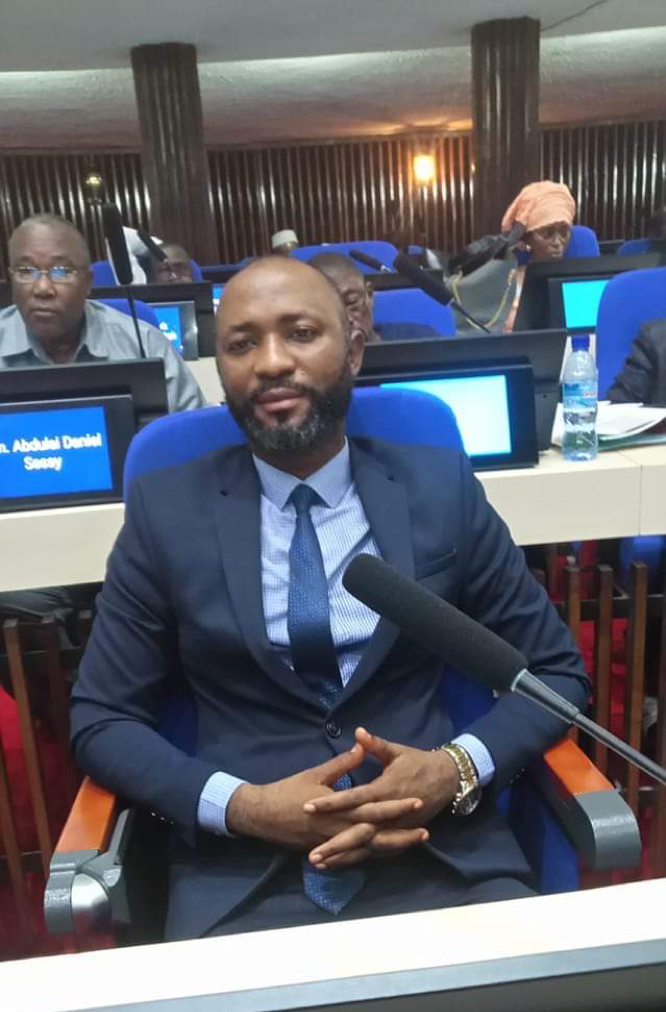
National AIDS Secretariat Director General, Abdul Raman Sesay, praised AHF’s initiative, describing it as a step in the right direction. He called for enhanced collaboration, better coordination and the review of identified gaps in health financing.

The event also featured a panel discussion with AHF Regional Policy Advocacy Manager, Dina Tibesigwa, Members of Parliament, Civil Society leaders and local Government representatives. The discussion covered the legislative role in health financing, the responsibilities of local councils and the importance of grassroots advocacy.

The engagement concluded with a shared understanding that Sierra Leone’s fight against HIV and broader health challenges requires more than donor aid. Strong domestic investment, strategic partnerships and policy reforms were identified as central to sustaining health services and safeguarding vulnerable populations.

U.S. Ambassador Bryan D. Hunt Resigns, Chargé d’Affaires Jared Yancey Leads Embassy

By Amin Kef (Ranger)

The United States Embassy in Freetown has on September 18, 2025 announced the resignation of U.S. Ambassador to Sierra Leone Bryan D. Hunt, effective September 17, 2025. Embassy officials said Ambassador Bryan D. Hunt submitted his resignation to the White House, citing personal reasons related to family medical consideration and will not be returning to Freetown. Chargé d’Affaires Jared Yancey will continue to lead the mission pending further guidance from Washington.

Ambassador Bryan D. Hunt served for two years in Sierra Leone, during which he focused on deepening bilateral cooperation in public health, security sector partnerships and economic growth initiatives. Embassy staff credited his tenure with helping to advance shared priorities between the two countries, noting his active engagement with Government institutions, civil society and development partners.

In a message to Embassy personnel, Ambassador Bryan D.Hunt expressed gratitude for the opportunity to serve: “I have loved every moment of my time in Sierra Leone and deeply admire the work you all do to advance the U.S.-Sierra Leone relationship.”

The Embassy emphasized that the United States remains committed to its partnership with Sierra Leone and will continue collaborative work with the Government and people of Sierra Leone to build on recent gains. Day-to-day operations and diplomatic engagement will be overseen by the Chargé d’Affaires while normal procedures for leadership transition proceed.

QNET Vows to Put Criminals Out of Business

By Chernor Jalloh

The Chief Communications Officer of QI Group, Rayma Chandrasekaran, has vowed that QNET will not allow criminals to tarnish its reputation or exploit unsuspecting members of the public under the guise of its brand.

Speaking in an exclusive interview, she disclosed that the company currently offers more than 30 brands through its worldwide network of distributors, but lamented that its greatest challenge in Africa is the misuse of QNET’s name by fraudsters. She described the company as resilient and determined, stressing that it will “fight the good fight against hoodlums” seeking to exploit its image.

According to her, some criminals, particularly desperate youths in parts of Africa, have been deceiving people by falsely claiming that QNET recruits individuals for jobs or studies abroad with promises of lucrative salaries. She described this as the saddest part of the scam, noting that many victims fail to conduct basic due diligence, such as cross-checking with QNET or relevant authorities.

Rayma Chandrasekaran made it clear that QNET does not charge money to recruit or send people abroad for employment or education. She therefore warned the public against falling prey to such fraudulent schemes, which she described as “salivating but fake promises.”

“We have launched public awareness campaigns in the media as well as training programs for our distributors and law enforcement agencies to ensure they know exactly what services we provide,” she emphasized. “QNET is not engaged in human trafficking or any other criminal activity.”

She further explained that QNET has been proactive in fighting fraud by rolling out awareness drives, erecting billboards and leveraging social and traditional media platforms. The company has also funded the repatriation of individuals who were wrongfully lured abroad by scammers misusing its name.

While she admitted uncertainty about when or where criminals first began misusing the QNET brand for fraudulent purposes, she stressed that the company’s efforts to inform and protect the public will continue. “The awareness campaign cannot change things overnight, but gradually people will know the truth,” she said. She also appealed to the public to utilize QNET’s compliance hotline for verification, reiterating that the company has nothing to do with such criminal enterprises.

Rayma Chandrasekaran concluded by reaffirming QNET’s commitment to its core business: offering products in health, wellness, nutrition and lifestyle through its e-commerce platform. She highlighted that customers earn commissions by marketing genuine products, including water filtration systems and reiterated that QNET is a legitimate global direct-selling company determined to put criminals out of business.

Agriculture Ministry Presents 2026–2028 Budget Prioritizing Youth Empowerment, Technology & Food Security

By Ibrahim Sesay 

‎The Ministry of Agriculture and Food Security (MAFS) has, on Thursday September 18, presented its Medium-Term Expenditure Framework (MTEF) for 2026 to 2028 at the Ministry of Finance Conference Hall, bringing together Government officials, development partners and Civil Society groups to review plans aimed at transforming Sierra Leone’s agricultural sector.

‎Delivering the keynote address, Deputy Minister of Agriculture 1, Dr. Theresa Tenneh Dick, outlined the Ministry’s proposed budget, describing it as a forward-looking strategy centered on productivity, youth engagement and modernization. She stressed that agriculture remains the backbone of the economy and called for more investment, modern infrastructure and innovative approaches to ensure food security and inclusive growth.

‎Dr. Theresa Tenneh Dick praised the resilience of farmers and agricultural workers, noting their crucial role in sustaining livelihoods despite challenges. “We must move agriculture beyond subsistence to a thriving economic sector that attracts our young people,” she said.

‎The Chief Agriculture Officer, Professor Abdulai Jalloh, presented the key deliverables for 2026 under the Feed Salone Strategic Objectives. He explained that the Ministry’s roadmap is built on six main pillars, each tied to a specific deliverable.

‎Under mechanization and irrigation, the Ministry plans to mechanically plough 35,000 hectares of land, including 30,000 hectares of riverine and boli land and 5,000 hectares of inland valley swamps for rice cultivation. In the area of seeds and input systems, 3,375 cocoa seedlings will be raised to establish 3,000 hectares of cocoa farms.

‎On aggregation, processing and marketing linkages, the Ministry intends to rehabilitate 420 feeder roads and farm tracks to ease the transportation of farm produce. With regard to agricultural finance, plans are underway to support the establishment of an Agricultural Development Bank that will provide access to credit for enterprising farmers across scales.

‎Professor Abdulai Jalloh added that the Ministry will also push forward agricultural technology and climate-smart agriculture by developing and promoting 100 hectares of integrated land management systems that will allow year-round farming. Equally important, the empowerment of women and youth remains a cross-cutting goal, with programs designed to strengthen their participation and improve productivity.

‎The Chief Agriculture Officer also drew attention to the challenges confronting the Ministry, which include late disbursement of funds, delays in recruiting staff to support field activities and a shortage of logistics such as vehicles and motorbikes.

‎To address those issues, he recommended timely release of funds since agricultural activities are time-bound, closer coordination with the Human Resource Management Office to speed up staff recruitment and greater Government support to provide the logistics needed for effective field delivery.

‎Collaboration was also emphasized as a crucial factor for success. Dr. Dr. Theresa Tenneh Dick called on Government institutions, the private sector and farming communities to support the Ministry’s agenda, assuring stakeholders of MAFS’s commitment to provide technical guidance, policy leadership and institutional backing for effective implementation.

‎The session ended with Dr. Theresa Tenneh Dick encouraging open dialogue on the proposed budget, inviting contributions from stakeholders to strengthen the final document. She thanked the Ministry of Finance, development partners and other actors for their continued support, reiterating that agriculture is not just a Government priority but a shared national responsibility.

President Bio’s Working Visit to Burkina Faso Marks First ECOWAS–AES Engagement

By Amin Kef (Ranger)

His Excellency Julius Maada Bio, President of Sierra Leone and Chairman of the ECOWAS Authority of Heads of State and Government, was warmly received in Ouagadougou by Burkina Faso’s Head of State, Captain Ibrahim Traoré, during a one-day working visit on Tuesday, 16 September 2025. The visit attracted regional attention, as President Julius Maada Bio became the first ECOWAS Chair to pay an official visit to a member country of the Alliance of Sahel States (AES) since its formation, a move widely seen as a deliberate effort to promote dialogue, cooperation and mutual understanding at a critical juncture in West Africa’s political and security landscape.

During the visit, President Julius Maada Bio and Captain Ibrahim Traoré held a bilateral meeting in which they reviewed relations between ECOWAS and AES countries. Their discussions focused on opportunities for collaboration to address shared security threats, strengthen political ties and expand avenues for economic partnership. Diplomatic observers noted that the talks also reaffirmed Sierra Leone’s bilateral friendship with Burkina Faso and encouraged more open engagement between the two regional blocs.

President Julius Maada Bio’s leadership as ECOWAS Chair has often been associated with efforts to build consensus on difficult regional issues and his presence in Burkina Faso reinforced that approach. His visit followed closely on the heels of an earlier mission in August 2025, when, as President of the United Nations Security Council, he travelled to Burkina Faso to assess its security environment. That visit provided him with first-hand insight into the country’s ongoing challenges, including terrorism, insurgency and humanitarian pressures affecting the wider Sahel. By returning in his ECOWAS capacity, President Julius Maada Bio demonstrated continuity in his commitment to regional stability and showed readiness to translate high-level consultations into practical cooperation.

Regional analysts described the Ouagadougou meeting as a diplomatic milestone that could open a new chapter in relations between ECOWAS and the AES. With Burkina Faso, Mali and Niger asserting new regional alignments, the initiative taken by President Julius Maada Bio was viewed as a constructive step to keep dialogue alive while exploring avenues for collaboration that could strengthen peace and security across West Africa. His leadership style is praised as inclusive and pragmatic, with many noting that the symbolism of the visit was as significant as the concrete outcomes it produced.

At the conclusion of the working visit, a joint communiqué was issued, outlining areas of agreement and a shared commitment to address security and development challenges. Both countries reaffirmed their determination to deepen bilateral ties and to maintain open lines of communication within the broader regional framework.

For Sierra Leone, the visit reinforced its growing reputation as an active and respected diplomatic voice in Africa. For Burkina Faso, it represented recognition from ECOWAS and an opportunity to engage constructively with the regional bloc despite recent political shifts. As West Africa continues to grapple with some of its most complex challenges in recent history, the outreach of President Julius Maada Bio in Ouagadougou carried a clear message: that unity, dialogue and cooperation remain indispensable tools for building a peaceful and stable sub-region.

Fatima Bio Inaugurates Olive B. Academy as Beacon of Girls’ Education

By Alvin Lansana Kargbo 

Her Excellency Dr. Fatima Maada Bio, First Lady of the Republic of Sierra Leone, has officially inaugurated Olive B. Academy, an all-girls boarding school located on Olive B. Drive in Kerry Town, Western Rural District, during a ceremony on Monday, 16 September 2025. The event was attended by senior Government officials, education stakeholders, community leaders and the school’s first cohort of pupils, marking what many described as a milestone in the country’s drive to expand quality education for girls.

Co-founder, Olive Favor Baimba, welcomed guests and explained that the establishment of Olive B. Academy represents the first step in a broader vision to affirm and develop Sierra Leonean talent. She described the school as occupying 15 acres of fenced land, with additional space beyond the perimeter to allow for future growth and said it was deliberately designed to provide a serene and modern learning environment. Olive Favor Baimba outlined the facilities, which include 18 fully furnished classrooms, science laboratories, a design and technology laboratory, a robotics laboratory, a computer science hall and a smart room equipped for virtual instruction and mentoring.

She said every pupil will receive a personal laptop for use in the smart classroom and announced that instructors in Mandarin and Spanish are being recruited to teach remotely. She also highlighted teacher development as a core priority, noting that each semester staff will undergo a week-long training led by expert educators. Sustainability has also been built into the campus, with a 75 KVA solar system supported by a 75 KVA backup generator to ensure uninterrupted power supply, a water filtration system to provide purified drinking water and reduce plastic waste, the planting of over 500 trees and the construction of 14 staff quarters to allow teachers to live on campus and dedicate more time to lesson preparation and student mentoring.

Minister of Basic and Senior Secondary Education, Conrad Sackey, commended the project, describing it as a valuable national investment in human capital. He praised President Julius Maada Bio’s continued prioritization of education and lauded Her Excellency Dr. Fatima Maada Bio’s role in safeguarding children’s right to learn. Minister Conrad Sackey said Olive B. Academy demonstrates that “excellence in education is more than an ambition; it is a responsibility,” predicting that its positive impact would be felt not only by pupils but also by families, communities and the nation as a whole.

Delivering the keynote address, Her Excellency Dr. Fatima Maada Bio conveyed warm greetings on behalf of President Julius Maada Bio and described the inauguration as “a sacred moment.” She thanked Olive Favor Baimba and her team for entrusting her with the ribbon-cutting and characterized Olive B. Academy as more than a school, calling it “a sanctuary of learning, a safe space for empowerment and a beacon of progress.” She affirmed that the Academy is a declaration that “daughters matter,” stressing that it will help protect girls from early marriage, gender-based violence and exploitation. Quoting Nobel Laureate, Malala Yousafzai, she reminded the audience that “one child, one teacher, one book and one pen can change the world,” and said Olive B. Academy stands as living proof of that message.

Her Excellency Dr. Fatima Maada Bio described the school as STEM-focused, solar-powered, inclusive by design and a local alternative to families who might otherwise seek education for their daughters abroad. She praised teachers as “nation-builders,” urged parents to continue serving as the strongest supporters of their daughters and encouraged the pupils to pursue their dreams without limitation. She told the girls to aspire to become doctors, engineers, artists, scientists and entrepreneurs, and warned them never to allow anyone to silence or restrict their ambitions. Acknowledging that education requires sacrifice, she said that investing in excellence at home will reduce dependence on opportunities overseas. Reflecting on her own experiences, she spoke as both a mother and an advocate, urging the girls to hold fast to their dreams and to reject anything that threatens to derail them.

The First Lady also noted that Olive B. Academy complements the Government’s Free Quality Education programme and her Hands of Our Girls campaign, both designed to strengthen opportunities for girls across Sierra Leone. She paid tribute to the Kerry Town community for hosting the institution and called on residents to protect and nurture the school as a national asset.

The inauguration of Olive B. Academy is widely seen as a significant step for girls’ education in Sierra Leone. With its modern STEM-focused facilities, commitment to teacher development, renewable energy systems and environmental stewardship, the Academy sets a new standard for private-sector investment in education that supports Government policy.

With the first intake of pupils now beginning their journey many are watching closely to see how the Academy translates its promise into measurable outcomes for pupils, families and the wider community.

Cities’ Message to World Leaders: Unlock Direct Climate Finance for Africa’s Urban Future

Yvonne Aki-Sawyerr OBE

By Dada Morero, Executive Mayor of Johannesburg, Nasiphi Moya, Executive Mayor of Tshwane and Yvonne Aki-Sawyerr OBE, Mayor of Freetown and C40 Cities Co-chair

Last weekend, the Urban20 (U20) made history by bringing global city leaders together on African soil for the first time. This was our moment to send a powerful message to the G20, which will arrive in South Africa later this year. With Africa’s urban population set to nearly triple to 1.5 billion by 2050, cities are not passive observers of global challenges; we are the frontline, pioneering solutions. Nowhere is this leadership more critical than in confronting the climate emergency.

As the tier of Government closest to our communities, we are uniquely placed to translate global climate pledges into local action and tangible benefits. We are already leading this charge: by cleaning our air and water, restoring green spaces and building sustainable, affordable public transport systems.

As Mayors of Johannesburg, Freetown and Tshwane and as members of C40 Cities, a network of nearly 100 of the world’s most influential cities dedicated to tackling the climate emergency we’re setting an example for other cities and nations to follow. Collectively, over three-quarters of C40 cities are cutting per capita emissions faster than our national Governments.

Yet, despite our leadership, cities remain on the frontlines of the climate crisis.  Our cities have been battered by heatwaves, floods and water supply challenges as rapid urbanization collides with a changing climate.  African cities are among the least responsible for global emissions, yet we bear the worst impacts.  We are the economic powerhouses of the continent, generating up to 70% of Africa’s GDP, but we are also home to those vulnerable to climate shocks.

For our communities to thrive, climate justice must go hand-in-hand with social justice. City-led action is the key to achieving both, but we cannot deliver without funding. The scale of the finance gap is staggering: African cities alone need an estimated $155 billion annually for climate action. The current trickle of finance is not only inadequate; it represents a failure to invest in a just transition that creates green jobs, affordable housing and resilient local economies.

This funding shortfall is not due to a lack of bankable and viable projects. It is the result of systemic barriers that block finance from flowing directly to where it can be most effective. Mayors are often left fighting to be properly supported by national Governments, while global markets overlook our unique potential.

At the U20, our message to G20 leaders was therefore clear and urgent: Unlock direct climate finance for our cities. We have already launched a powerful call, backed by over 40 African Mayors, urging our Ministers of Finance to embed urban needs into national budgets, create pathways for private sector investment and empower us with the financial mandate to deliver solutions our people deserve.

In a year marked by significant milestones, including the first G20 Summit in Africa, C40 Cities’ 20th anniversary of unwavering climate leadership, the 10th anniversary of the Paris Agreement and the critical COP30 in Brazil, we have a unique opportunity for global renewal. The choice is clear: we can continue with the failed models of the past or we can empower the cities that are already building a safer, greener and more prosperous future for all. The time for action is now!

The Teachers’ Strike Should Strengthen, Not Question, Free Quality School Education

By Mohamed Jaward Nyallay

At 10 a.m. on a Tuesday, the children in my building are racing up and down the stairs. My neighbour sighs—she had hoped for some quiet after schools reopened. Instead, classes were delayed by a week when the Sierra Leone Teachers Union (SLTU) announced a nationwide strike on the eve of the new school year.

The strike brought important issues to the surface: delayed school subsidy payments and the status of teachers affected by a payroll verification exercise by the Teaching Service Commission. Over the past week, the Government has acted decisively. It cleared subsidy arrears and reinstated thousands of teachers while continuing the verification process to protect the system’s integrity.

This exercise is not about punishment but protection. Every Leone saved by closing payroll loopholes is reinvested into improving teacher welfare and strengthening the education system itself.

Unfortunately, what should have been a moment of collective problem-solving became politicized. Some commentators framed the strike as a referendum on President Julius Maada Bio’s flagship Free Quality School Education (FQSE) programme; the boldest and most transformative social investment Sierra Leone has undertaken since independence. This framing is misplaced.

A Bold Vision That Delivered

When President Bio declared in 2018 that every child in Sierra Leone would have access to free quality school education, many dismissed it as overly ambitious. Yet, just months later, the programme was launched. Today, seven years on, the results are undeniable.

Over one million new children have entered our classrooms. More girls are completing school than at any point in our history. National exam pass rates are improving and dropout rates are declining. Sierra Leone now consistently performs better across global education indicators.

The very success of FQSE has created new demands: more classrooms, more trained teachers and greater capacity in higher education to accommodate ambitious graduates. These are not signs of failure. They are the growing pains of progress, reflecting how far we’ve come and how much more we can achieve as a nation.

Investing in Teachers, Investing in the Future
At the heart of FQSE are teachers; the dedicated professionals who bring classrooms to life. Since 2018, the Government has prioritized teacher welfare and professional growth like never before:

– Salary Improvements: Teachers have received multiple salary increments, including a 30% increase between 2018 and 2021 and a staged 45% increase beginning in 2023, alongside the introduction of an additional 10% allowance.

– Recruitment: Over 10,000 new teachers were employed between 2018 and 2021 and another 2,000 teachers are scheduled for recruitment in 2025, directly addressing the growing demand for quality teaching.

– Promotions: Thousands of teachers have been reassessed and promoted to their correct salary scales, with 3,043 more teachers scheduled for promotion in 2025.

– Training and Recognition: The Government has significantly invested in teacher training while introducing the Presidential National Best Teacher Award to celebrate excellence and motivate educators nationwide.

These investments demonstrate a clear and sustained commitment: Sierra Leone is building a teaching workforce that is empowered, respected and equipped to drive our country’s development.

A New Conversation About Education

As the Minister of Information and Civic Education, Chernor Bah, recently observed, Sierra Leone’s education conversation has fundamentally shifted.

“A decade ago, teachers would go for months without salaries,” he said.
“Today, we are debating how to build on progress, not how to fix neglect.”

This shift is profound. Our national dialogue has moved from one of survival and neglect to one of growth and ambition. The challenges we face today, managing rapid expansion, improving facilities and supporting teachers are challenges born out of success, not failure.

Commitment Backed by Numbers

National priorities are best measured in budgets. Since 2018, Sierra Leone has consistently allocated around 22% of its national budget to education; one of the highest per capita investments in Africa.

While many nations are cutting back on education spending, Sierra Leone continues to expand its financial commitment year after year. Whether you support or criticize President Bio, those numbers are undeniable: his commitment to education is rock solid.

This commitment has also reshaped public expectations. At a recent Civic Day Series event in Kambia, parents and students passionately pressed for FQSE to be enshrined as a constitutional right. Across the country, the message is clear: Sierra Leoneans want FQSE to stay.

The Road Ahead

No programme is without challenges. As FQSE continues to grow, there will be ongoing demands for better infrastructure, more learning materials and stronger support systems for teachers. Those challenges are a natural part of building something transformative.

Each obstacle we overcome is an investment in the future; a future where every child, regardless of background, has access to quality education and the tools to succeed.

When schools are open and teachers are supported, children like those in my building will be in class, learning and dreaming, while my neighbour finally enjoys her quiet mornings.

About the Author:
Mohamed Jaward Nyallay is a member of the Strategic Communications Unit at the Ministry of Information and Civic Education.

Ambassador Dr. Alhaji Sarjoh Bah: Africa’s Strategic Voice in Beijing

In a defining moment for Africa’s global diplomacy, Ambassador Dr. Alhaji Sarjoh Bah has officially assumed duty as the Permanent Representative of the African Union (AU) to the People’s Republic of China. His appointment signals a renewed commitment to strengthening Africa–China relations at a time of heightened strategic importance.

A proud Sierra Leonean, Ambassador Dr. Alhaji Sarjoh Bah has built a career that blends academic excellence with decades of service to the African Union. He holds a Ph.D. in Political Studies from Queen’s University in Canada, a Master of Public Administration from the University of Cape Town and a Bachelor of Arts from Fourah Bay College, University of Sierra Leone.

His scholarly contributions have influenced policy debates on regional integration, peacebuilding and Africa’s evolving security architecture, positioning him as both a thought leader and a practitioner in global diplomacy.

Ambassador Dr. Alhaji Sarjoh Bah’s posting comes at a critical juncture in Africa–China relations. China, now Africa’s largest trading partner and a central development ally, is engaging with the continent through multiple channels, including the Forum on China–Africa Cooperation (FOCAC).

In his early engagements, Ambassador Dr. Alhaji Sarjoh Bah has begun aligning the AU’s priorities with the ten Partnership Actions announced by President Xi Jinping during the 2024 FOCAC Summit. These include collaboration in industrial development, digital transformation, green growth, healthcare, trade, infrastructure and human capital development; areas vital to advancing Africa’s Agenda 2063.

With over two decades at the AU Commission, Ambassador Dr. Alhaji Sarjoh Bah has held several pivotal positions, including Director of Conflict Management, Head of the Crisis Management and Post-Conflict Reconstruction Division and Chief Advisor on Peace, Security and Governance at the AU Mission to the United Nations.

He has been instrumental in developing mediation frameworks, post-conflict recovery strategies and strengthening African-led peace operations. His record underscores a career dedicated to advancing resilience, governance and African agency in global decision-making.

As the AU’s chief diplomat in Beijing, Ambassador Dr. Alhaji Sarjoh Bah is not only tasked with strengthening AU–China cooperation but also with coordinating the African Group of Ambassadors to ensure Africa speaks with a unified voice. His vision emphasizes transparency, mutual respect and partnerships that prioritize African needs and aspirations.

“China is a key partner, but our engagement must be strategic, coordinated and anchored in Africa’s development blueprint,” he has often stressed in policy forums.

Ambassador Dr. Alhaji Sarjoh Bah’s distinguished service was recognized by His Excellency Brigadier (Retired) Julius Maada Bio, President of Sierra Leone, who conferred on him the rank of Ambassador. This honour reflects both his national contributions and his impact on continental diplomacy.

As Africa positions itself on the global stage, Ambassador Dr. Alhaji Sarjoh Bah’s appointment represents continuity and renewal. His blend of intellectual depth, diplomatic experience and Pan-African commitment makes him a strategic voice for the continent in Beijing.

With his leadership, the AU is set to chart a new era of principled, African-led diplomacy ensuring that partnerships with China foster equitable growth, shared prosperity and sustainable transformation.