Home Blog Page 15

WFP Sets 2026–2030 Roadmap to Transform Food Security & Strengthen Human Capital in Sierra Leone

Officials unveil a poster titled Sierra Leone Country Strategic Plan 2026–2030 at a World Food Programme event.

The Government of Sierra Leone, in partnership with the World Food Programme, has officially launched the WFP Country Strategic Plan 2026–2030, outlining a comprehensive roadmap aimed at strengthening food systems, improving nutrition and building resilience across the country.

The launch, held in Freetown, brought together senior Government officials, United Nations Heads of Agencies, development partners and representatives of Civil Society, underscoring food security as a central pillar of Sierra Leone’s national development agenda. The new plan aligns with the Medium-Term National Development Plan, the Feed Salone strategy and the United Nations Sustainable Development Cooperation Framework, reinforcing a coordinated approach to tackling food insecurity.

The Country Strategic Plan signals a shift from short-term food assistance to long-term systems strengthening, with a focus on three key outcomes: improved shock preparedness and response, increased access to safe, diverse and locally produced nutritious food, particularly for schoolchildren and vulnerable groups, and the development of resilient livelihoods supported by stronger local value chains.

Central to the plan is the expansion of home-grown school feeding, which integrates education, nutrition and local agricultural production. By sourcing food locally, the programme is expected to enhance learning outcomes while creating reliable markets for smallholder farmers, particularly women and young people. Speakers at the event emphasized that school feeding should be viewed not only as a social intervention but also as a strategic investment in human capital and economic growth.

Country Director of the World Food Programme, Andrew Odero, said the new strategic plan reflects lessons learned from previous programmes and responds to evolving realities. He noted that while food security indicators have improved in recent years, significant nutrition challenges persist, especially among children and rural households. He explained that the plan seeks to transform the trajectory of food security in Sierra Leone by linking nutrition, education, agriculture and livelihoods in a more integrated and sustainable manner.

Deputy Minister I of the Ministry of Basic and Senior Secondary Education, Emily Gogra, highlighted the importance of school feeding in supporting learning outcomes under the Free Quality School Education programme. She observed that although the programme has expanded access to education, hunger remains a major barrier to attendance, concentration and completion, stressing the need for sustained investment in school feeding initiatives.

The Ministry of Agriculture, represented by its Deputy Minister II, outlined progress made in promoting home-grown school feeding and local procurement, noting that an increasing share of food used in school meals is now sourced from Sierra Leonean farmers. Investments in aggregation systems, rice milling and value chain development are helping smallholder farmers, particularly women and youth, to access structured markets and improve their livelihoods. Officials described these developments as early but significant indicators that the country’s food systems are gradually becoming more predictable and sustainable.

United Nations Resident Coordinator, Seraphine Wakana, placed the Country Strategic Plan within a broader global and national context, noting that Sierra Leone continues to face climate shocks, economic pressures and global supply disruptions. She stressed that addressing these challenges requires stronger and more integrated systems rather than isolated interventions, adding that the plan reflects a wider shift within the United Nations system towards long-term resilience and coordinated action. She emphasized that national ownership remains central, with the United Nations playing a supportive and catalytic role.

Minister of Planning and Economic Development, Kenyeh Barlay, welcomed the plan as an important tool for aligning partners, mobilizing smarter financing and delivering measurable results. She noted that the success of the initiative will ultimately depend on effective implementation, particularly in ensuring that farmers can access markets, children receive nutritious meals consistently and communities become more resilient.

Looking ahead to 2030, the World Food Programme Country Strategic Plan 2026–2030 sets out a vision that goes beyond reducing hunger, aiming to build sustainable food systems that support education, livelihoods, resilience and inclusive economic growth for future generations.

Health Alert, WASHNet Commend Government Over GAVI Co-Financing Approval

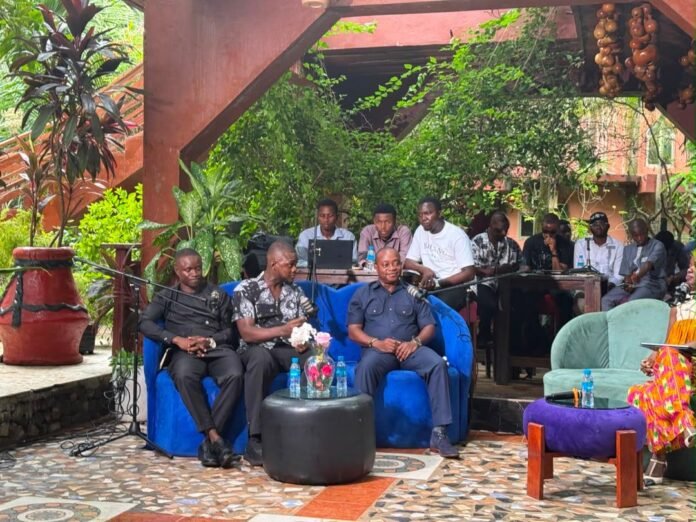
Man in a dark suit and glasses sits at a desk, speaking with animated hand gestures during a meeting.

By Foday Moriba Conteh

The Executive Director of Health Alert Sierra Leone, Dr. Victor Lansana Koroma, has commended the Government of Sierra Leone for the timely approval of its 2026 GAVI co-financing commitment for vaccines and immunization.

Dr. Koroma made the statement on Friday, April 17, 2026, during a press conference organized by Health Alert Sierra Leone at its office on Blackhall Road in the East End of Freetown. The event brought together stakeholders from the health sector, including representatives of WASHNet and the Parliamentary Caucus on Immunization and Primary Healthcare.

In a joint statement, Health Alert Sierra Leone, WASHNet and the Parliamentary Caucus commended the Ministry of Finance for approving the co-financing commitment ahead of schedule, describing the move as a critical step in sustaining immunization programmes and strengthening the country’s health system.

The organizations disclosed that as part of ongoing advocacy efforts to promote increased domestic financing for healthcare, a high-level engagement was held on April 8, 2026, at the Ministry of Finance headquarters on George Street in Freetown. During the meeting, Dr. Koroma underscored the importance of sustained advocacy to ensure government meets its co-financing obligations under the GAVI framework.

Responding to the concerns raised, Deputy Principal Financial Secretary, Samuel E. B. Momoh, confirmed that the payment had been approved ahead of the deadline. He noted that the timely action would contribute significantly to improving health outcomes and maintaining momentum in immunization coverage across the country.

Despite the progress, the organizations called on the Ministry of Health, through the Extended Programme on Immunization (EPI), to expedite the submission of required PET forms as requested by the Ministry of Finance. They emphasized that prompt submission would facilitate swift disbursement of funds and prevent unnecessary delays in implementation.

Health Alert Sierra Leone and WASHNet further reaffirmed their commitment to closely monitor the process, including the release and utilization of funds through the EPI, to ensure that Sierra Leone continues to sustain gains in vaccines, immunization and overall healthcare delivery.

The stakeholders stressed that sustained collaboration between government institutions and civil society remains key to achieving long-term improvements in public health and safeguarding immunization programmes nationwide.

As Feed Salone Records Major Boost… President Bio Inspects Pee Cee Agriculture’s Large-Scale Onion Farm and Modern Processing Facility in Lungi

By Amin Kef-Ranger

His Excellency President Julius Maada Bio on Thursday, 16 April 2026, undertook an inspection visit to the rapidly expanding Pee Cee Agriculture Limited, a subsidiary of Pee Cee Holdings Ltd onion farm and the company’s new state-of-the-art processing house in Mathene, Lokomasama Chiefdom, Lungi, Port Loko District, further underscoring Government’s commitment to boosting local food production under the Feed Salone initiative. The high-level visit formed part of broader efforts to assess large-scale private sector investments that are driving agricultural transformation, reducing dependence on imported onions and strengthening Sierra Leone’s food security agenda.

The visit enabled President Julius Maada Bio to personally assess the progress of the company’s onion cultivation project, its expanding storage capacity, employment impact and wider contribution to Sierra Leone’s agricultural self-sufficiency drive before concluding with an inspection of the company’s new state-of-the-art processing house. Residents, stakeholders and development observers described the visit as another strong demonstration of Government’s resolve to promote private sector-led agricultural growth, industrial value addition and sustainable economic expansion through strategic collaborations with local investors.

President Julius Maada Bio was accompanied by the Minister of Trade and Industry, Alpha Ibrahim Sesay, the Minister of Labour and Social Security, Mohamed Rahman Swaray, the Minister of Agriculture and Food Security, Dr. Henry Musa Kpaka, the Minister of Gender and Children’s Affairs, Dr. Isata Mahoi, as well as Presidential Spokesman Alpha Kanu. Also present were the Chairman of Pee Cee Holdings Ltd and Head of the Agricultural Project, Mahesh Nandwani, senior management officials, technical experts facilitating the onion cultivation programme, community stakeholders, traditional authorities and residents from nearby villages.

The programme commenced with prayers, after which an honourable son of the soil, Mohamed, formally welcomed President Julius Maada Bio and his entourage to the chiefdom. In introducing the dignitaries, Mohamed described Chairman Mahesh Nandwani as an exceptionally visionary and enterprising businessman whose decision to invest in large-scale onion production is already reshaping local livelihoods through job creation, food production and agro-industrial processing.

Speaking on behalf of the company, Chairman Mahesh Nandwani said the occasion symbolized productivity, innovation and confidence in Sierra Leone’s agricultural future. He expressed profound gratitude to President Julius Maada Bio for creating what he described as a conducive investment climate that inspired the company’s expansion into large-scale farming and agro-processing. Recounting his entrepreneurial journey from humble beginnings as a trader at age 16, Mahesh Nandwani described agriculture as one of the most strategic pathways for Sierra Leone’s economic transformation and long-term stability.

In his remarks, the Minister of Agriculture and Food Security, Dr. Henry Musa Kpaka, said the project has grown from a modest beginning into one of Sierra Leone’s most significant onion production hubs. He noted that the impact is already visible nationwide, with onions becoming more available and affordable on the local market. Dr. Henry Musa Kpaka emphasized that the Feed Salone initiative was deliberately designed with the private sector at the forefront, citing Pee Cee Agriculture’s shift from major importer to major local producer as a clear example of the transformation Government seeks to replicate.

Addressing the gathering, President Julius Maada Bio consolidated his key message around food sufficiency, private sector leadership and community inclusion. He said he deliberately chose to inspect the farm because of its strategic importance to Sierra Leone’s food security and economic diversification agenda. Describing Pee Cee Agriculture Limited as an outstanding example of a successful public-private enterprise, he noted that investments in large-scale farming are drastically reducing the country’s dependence on imported onions while creating vital employment opportunities for surrounding communities.

President Julius Maada Bio emphasized that the Feed Salone programme is gaining momentum nationwide, with increased private sector participation playing a decisive role in driving productivity and strengthening food security. “We are scaling up rapidly and remain committed to partnering with more private sector actors to feed Salone,” he stated, adding that the initiative is already revolutionizing farming across Sierra Leone. He said his firsthand observation of the bustling Pee Cee Agriculture onion farm demonstrates how strategic partnerships with the private sector are transforming agriculture and stimulating rural livelihoods.

He further commended the community, especially the women, for embracing the enterprise and recalled that during his previous visit he had allocated 30 percent participation to them because of their active involvement. In a move that drew loud applause, President Julius Maada Bio announced an additional 30 percent allocation, reaffirming Government’s commitment to inclusive agricultural growth and women’s empowerment within productive sectors.

President Julius Maada Bio stressed that it is the private sector, not Government alone, that must actively drive agricultural and food production. He explained that the success of the initiative can serve as leverage for Sierra Leone to attract more international funding and support for similar investments. He also disclosed that his Government is promoting a “One Pot” vision in which products from various regions contribute to the national food basket, while citing his own involvement in fish, chicken and egg production as a practical example of the productive mindset he continues to encourage nationwide.

He further noted that in times of global uncertainty, including external shocks affecting fuel and commodity supply, national productivity remains the surest safeguard. According to President Julius Maada Bio, what may once have seemed impossible is now becoming possible, as Sierra Leone continues on a path of transformation marked by visible progress in agriculture, livestock and food systems resilience.

Earlier, Presidential Spokesman Alpha Kanu said the project is situated on his ancestral land and noted that the area has significantly opened up through strategic investment and development. He praised President Julius Maada Bio’s inclusive governance philosophy and thanked Chief Executive Officer Mahesh Nandwani for taking the bold step to invest in the locality, assuring him that additional land would be made available whenever expansion becomes necessary.

Providing operational evidence from the field, Deputy Farm Manager John Lahai Alieu disclosed that the project’s growth over the past four years has been transformational. He revealed that the storage facilities can now accommodate up to 2,000 tons of onions, significantly improving post-harvest preservation and market supply. From an initial pilot phase of five hectares, the farm has expanded to 70 hectares this year, with yields projected at 35 tons per hectare and future targets of 60 to 70 tons per hectare.

John Lahai Alieu further disclosed that after overcoming major soil and irrigation challenges through targeted investment, including an 80 million litre water reservoir, the company has significantly boosted productivity. He added that the project currently employs 250 workers, with the workforce rising to about 400 during peak periods, while the estimated value of machinery, structures and farm implements now stands at approximately US$2 million.

The visit climaxed with a field tour during which President Julius Maada Bio rode through sections of the onion farm on a tractor alongside the Minister of Agriculture and Food Security, Dr. Henry Musa Kpaka, closely observing the scale of cultivation, irrigation systems and storage infrastructure before proceeding to inspect the company’s new state-of-the-art processing house. The visit ended on a highly optimistic note, with Government officials, residents and company executives expressing confidence that Pee Cee Agriculture Limited will continue to stand as a national model for private sector-driven agriculture, industrial value addition, employment creation and long-term food self-sufficiency in Sierra Leone.

Bio Receives Credentials from Five Ambassadors, Strengthens Sierra Leone’s Global Diplomatic Ties

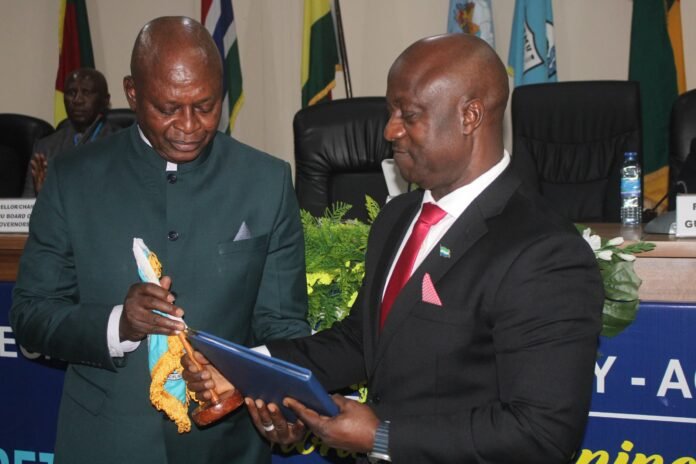
President Julius Maada Bio on Tuesday, 14 April 2026, received letters of credence from five newly accredited envoys at State House in Freetown, in a significant diplomatic ceremony underscoring Sierra Leone’s commitment to strengthening bilateral and economic relations with key international partners.

The ambassadors, representing the Russia, Iran, Saudi Arabia, Pakistan and Mexico, were formally presented to the President by Timothy Musa Kabba, Minister of Foreign Affairs and International Cooperation, during the ceremony held at State House.

In his remarks on behalf of the Russian Federation, Ambassador Andrei Stolyarov described Sierra Leone and Russia as longstanding partners and commended the Government’s notable progress in key sectors, including education, infrastructure, healthcare and agriculture. He reaffirmed his country’s readiness to deepen bilateral cooperation and further consolidate diplomatic ties.

Speaking for Iran, Ambassador Javad Deghan Haghighi Lotfabadi expressed strong support for the Government’s flagship Feed Salone initiative, while also commending President Bio’s leadership within ECOWAS, particularly his efforts toward promoting regional peace and security.

Representing Saudi Arabia, Ambassador Saud Mushabab Al Musaed praised the swift establishment of his country’s diplomatic presence in Freetown and reiterated a firm commitment to expanding cooperation grounded in mutual respect and shared benefits.

High Commissioner Mahmood Akhtar Mahmood of Pakistan highlighted the enduring historical ties between Sierra Leone and Pakistan, pointing to ongoing academic and technical exchanges as evidence of the growing partnership. He also lauded President Bio’s influential leadership role within the sub-region.

Also presenting her credentials, Ambassador Norma Ang Sanchez of Mexico reaffirmed her country’s commitment to strengthening South-South cooperation and broadening bilateral engagement with Sierra Leone.

Responding, President Bio warmly welcomed the five envoys and formally accepted their credentials, reaffirming Sierra Leone’s longstanding and cordial relations with their respective countries. He stressed that stronger international partnerships remain essential to advancing the country’s national development priorities, boosting economic growth and promoting shared prosperity.

The credential ceremony marks another important milestone in Sierra Leone’s expanding diplomatic outreach and reflects the Government’s continued commitment to international cooperation, mutual respect and sustainable development.

APC Signals Next Strategic Move After Frank Talks with International Peace Guarantors

By Foday Moriba Conteh

The All Peoples Congress (APC) has described its latest high-level engagement with the International Moral Guarantors as a substantive and significant step forward in the party’s continued pursuit of justice, transparency and democratic integrity in Sierra Leone.

In an official statement issued on 14 April 2026, the opposition party said the meeting provided an important platform to firmly present its position on what it called the continued failure to fully implement the Agreement for National Unity (ANU), the Tripartite Committee Recommendations and broader concerns surrounding electoral credibility, constitutional governance and the rule of law in the country.

According to the APC, its delegation laid out detailed legal, political and evidentiary arguments before the International Moral Guarantors and other international partners, stressing that the issues raised were grounded in facts and rigorous analysis. The party maintained that its concerns were fully acknowledged during the engagement, which it said reinforced the seriousness of the matters under discussion.

The statement also raised concern over the sentencing of Zainab Sheriff, which the APC said took place on the same day the dialogue on justice, governance and national reconciliation was being held. The party described the development as politically sensitive and poorly timed, arguing that it undermined confidence in the spirit of dialogue and the wider reconciliation process.

APC officials stated that the development sends what they called a dangerous signal regarding the Government’s commitment to fairness, justice and democratic accountability, both domestically and in the eyes of the international community. The party further noted that it intends to escalate its position through what it described as all appropriate national, regional and international mechanisms.

Describing the engagement as a “critical turning point,” the APC said it has now clearly defined the issues at stake and placed the concerns of Sierra Leoneans at the centre of ongoing consultations with the Moral Guarantors.

The opposition party further acknowledged growing public sentiment surrounding recent political developments, including the appointment of Edmond Sylvester Alpha and recent remarks made by the leadership of the Sierra Leone People’s Party (SLPP) concerning the APC and its members.

It said following the engagement, the party is consolidating its position and will soon announce its next course of action within the framework of the law, strategic responsibility and national interest.

Reaffirming its commitment to justice, democracy and the rule of law, the APC said it remains prepared to take all lawful and necessary actions, including possible mass mobilization if required, to safeguard what it called Sierra Leone’s democratic future.

The statement concluded with a call for calm, discipline, unity and vigilance among party members and supporters across the country and in the diaspora, assuring them that the party remains focused and ready to provide further directives as the process moves into its next phase.

Sir Jimmy Batilo Songa Hosts Unprecedented Multi-Party Meeting at SLPP Headquarters

In what has been described as an unprecedented moment in Sierra Leone’s democratic history, the National Chairman of the Sierra Leone People’s Party (SLPP), Sir Jimmy Batilo Songa, on Wednesday 15 April 2026, hosted leaders of 14 registered political parties at the party’s headquarters, Unity House, in Freetown.

The high-level delegation was led by the National Chairman of the People’s Democratic Party (PDP) and Chairman of the All Political Parties Association (APPA), Harold Turay. They were formally received by Sir Jimmy Batilo Songa alongside the SLPP Deputy National Chairman, Robert K. Kargbo.

Speaking during the engagement, Sir Jimmy Batilo Songa described the visit as a historic first, noting that it marked the first time leaders of 14 registered political parties had paid a collective visit to the SLPP headquarters.

He expressed profound appreciation to the visiting leaders for what he described as their patriotic support for the President’s nominee for the position of Chief Electoral Commissioner, as well as their shared resolve to defend the Constitution and strengthen democracy in Sierra Leone.

Sir Jimmy Batilo Songa further reminded the delegation that the SLPP was founded on enduring principles of cohesion, dignity and service to all Sierra Leoneans. He stressed that the party’s leader, President Julius Maada Bio, remains firmly committed to democratic governance, constitutional order and national unity, citing his leadership role in the signing of the National Unity Agreement as evidence of that commitment.

He called on all political leaders across the country to continue working collectively in the interest of safeguarding Sierra Leone’s growing democracy and preserving national cohesion.

Also addressing the gathering, the Leader of Government Business, Hon. Matthew Sahr Nyuma, encouraged the political leaders to remain unwavering in their support for democracy, peace and national development. He commended the various political parties for their continued contributions toward sustaining peace and strengthening social cohesion, noting that their collective efforts remain vital to the stability and democratic progress of Sierra Leone.

On behalf of the visiting delegation, Harold Turay reaffirmed that their support for the Chief Electoral Commissioner nominee was based squarely on competence, experience and national interest. He also urged the All People’s Congress (APC) to respect the rule of law and the constitutional powers vested in the President.

The National Chairman of the National Democratic Alliance (NDA) and Chairman of the Inter-Party Dialogue Committee (IPDC),  Sheriff Barrie, also underscored the shared democratic values that informed the formation of APPA and the SLPP, particularly respect for the rule of law, national cohesion and the emancipation of Sierra Leoneans.

He encouraged political stakeholders to see one another as partners in nation-building, stressing that Sierra Leone remains the only common home for all citizens regardless of political affiliation. Sheriff Barrie further highlighted the importance of sustained dialogue as a pathway to peace, unity and mutual understanding among political actors.

In the same vein, the National Secretary General of the Citizens Democratic Party (CDP) and APPA, Ibrahim S. Sesay, briefed the meeting on the delegation’s earlier engagement with development partners. He emphasized the importance of broadening the National Unity Agreement to include other political parties beyond the APC and the SLPP-led Government, describing such inclusiveness as essential to deepening national consensus and democratic legitimacy.

The meeting ended on a cordial and symbolic note, with participants sharing traditional Sierra Leonean food and refreshments, further reinforcing the spirit of unity, dialogue and democratic solidarity that defined the engagement.

The gathering brought together representatives from the CDP, PMDC, UDM, RUFP, RENIP, UNPP, ADP, NURP, PLP, PDP, NDA and the SLPP, underscoring a collective national resolve to place Sierra Leone’s peace, constitutional order and democratic future above partisan interests.

Together, the leaders pledged to move the nation forward through unity, dialogue and democratic strength.

How DG Yankuba Askia Bio Turned SLPHA into Sierra Leone’s Top Revenue-Performing Agency

Director General of the Sierra Leone Ports and Harbour Authority (SLPHA), Yankuba Askia Bio

Since assuming office as Director General of the Sierra Leone Ports and Harbour Authority (SLPHA), Yankuba Askia Bio has continued to distinguish himself through strategic leadership, institutional reforms and strong financial performance that have repositioned the Authority as one of Sierra Leone’s leading state institutions.

His success at the helm of the Authority is widely attributed to his extensive professional background as a logistics and maritime specialist, coupled with his five-year tenure as Deputy General Manager of the then Sierra Leone Ports Authority before his appointment by President Julius Maada Bio.

Under his stewardship, the SLPHA has recorded remarkable progress in structural reforms, operational efficiency and infrastructure modernization. The Authority has increasingly become a high-performing Government agency, driven by improved revenue generation and prudent financial management.

A major highlight of his administration is the consistent transfer of substantial equity dividends to the Government of Sierra Leone. Over a three-year period beginning in 2023, the Authority remitted a total of US$19 million, comprising US$4 million in 2023, US$7 million in 2024 and US$8 million in 2025, underscoring the institution’s growing financial strength and contribution to national development.

In the area of maritime security and operational efficiency, the Authority has achieved 89 percent International Ship and Port Facility Security (ISPS) compliance, while vessel turnaround time has been reduced to less than 48 hours, a major boost for trade facilitation and port competitiveness.

DG Yankuba Askia Bio has also led the modernization of critical port equipment, the upgrading of logistics systems and the successful rehabilitation of the Freetown Port exit road, significantly easing traffic congestion and improving cargo movement around the port corridor.

Staff welfare has equally remained a central pillar of his leadership. His administration has delivered 100 percent medical coverage for staff, settled longstanding staff benefits amounting to over Le25 billion and facilitated overseas training opportunities aimed at strengthening workforce capacity and professional development within the Authority.

Observers note that his sound financial controls and deliberate efforts to reduce revenue leakages have contributed immensely to the sharp rise in internally generated revenue, further cementing the SLPHA’s role as a strategic pillar of Sierra Leone’s economic growth agenda.

The Authority’s performance has also earned it repeated national recognition. For the past three years, SLPHA has emerged as the top-performing agency under the Ministry of Transport and Aviation’s rating of Ministries, Departments and Agencies (MDAs). That recognition reflects sustained excellence in efficiency, productivity and revenue contribution.

In the 2024 MDA assessment, the Authority secured a Grade B with a 63 percent score, before improving significantly to a Grade A with 70.1 percent in the 2025 rating, a testament to the transformative reforms championed by DG Yankuba Askia Bio.

The steady gains recorded under his leadership continue to reinforce confidence in the Authority’s ability to serve as a critical driver of trade, logistics and economic transformation in Sierra Leone.

ILRAJ Raises Alarm Over School Safety, Urges Urgent Nationwide Reforms

By Ibrahim Sesay

The Institute for Legal Research and Advocacy for Justice (ILRAJ) has issued a strong position paper calling for urgent nationwide reforms to improve school safety in Sierra Leone, following two tragic incidents that exposed serious weaknesses in child protection and school supervision systems.

In its April 2025 paper titled: “Addressing Issues Relating to School Safety in Sierra Leone,” ILRAJ said the safety and well-being of children in schools remain under serious threat, warning that weak enforcement of existing laws and poor oversight continue to place pupils at risk.

The organization referenced the tragic death of Khadija Jalloh, an 8-year-old class three pupil in Freetown, who died on November 8, 2024, after allegedly being sexually abused by her teacher. According to the paper, Khadija Jalloh reportedly identified her teacher as the perpetrator before succumbing to her injuries, raising grave concerns over teacher vetting and institutional accountability.

ILRAJ also highlighted the March 18, 2025 Fort Street tragedy at the National Pentecostal School in Freetown, where three children reportedly went missing within the school compound. Hours later, two boys were found dead inside a parked vehicle on the premises, while a four-year-old girl was discovered in critical condition. Although medical findings later attributed the deaths to suffocation, the incident sparked public outrage and renewed scrutiny of school safety protocols.

The legal advocacy body said both cases reflect broader systemic failures, including inadequate screening of school proprietors and teachers, poor fencing and security arrangements, weak reporting systems and delayed responses to critical incidents.

Citing the Basic and Senior Secondary Education Act 2023, the Comprehensive School Safety Policy 2023 and the Teaching Service Commission Act 2011, ILRAJ noted that Sierra Leone already has a robust legal and policy framework to safeguard children but stressed that implementation remains inconsistent and often ineffective.

Among the key challenges identified were the failure to rigorously screen school proprietors and educators, unfenced school compounds, absence of trained security personnel, fear of stigma among victims and families, and slow institutional responses that undermine justice and public trust.

To address those concerns, ILRAJ urged the Government of Sierra Leone to take immediate and decisive measures, including mandatory criminal and financial background checks for school proprietors and teachers, strict enforcement of the teachers’ code of conduct, fencing and gating of all school compounds, installation of surveillance cameras and regular unannounced inspections by School Quality Assurance Officers.

The institute further recommended the establishment of a confidential nationwide reporting mechanism for abuse and violence in schools, increased public awareness campaigns, stronger parental involvement in school safety planning, strict identification protocols for child pickups and accelerated investigations into school-related abuses and fatalities.

ILRAJ concluded that the deaths of Khadija Jalloh and the children involved in the Fort Street incident must not be treated as isolated tragedies, but as urgent warnings of a wider failure to prioritize child safety in educational institutions.

“The time for action is now; our children’s lives depend on it,” the paper emphasized.

The organization reaffirmed its readiness to support Government and education stakeholders through continued research, advocacy and collaboration aimed at ensuring schools become safe sanctuaries of learning rather than sites of preventable tragedy.

ILRAJ Raises Constitutional Red Flags Over Presidential Probe into Sierra Leone Law School

By Amin Kef (Ranger)

The Institute for Legal Research and Advocacy for Justice (ILRAJ) has raised serious constitutional and legal concerns over the Independent Investigation Committee established by President Julius Maada Bio to investigate the Sierra Leone Law School.

In a Legal Policy Brief released on Tuesday, 15 April 2026, ILRAJ questioned the legal foundation of the committee announced by State House on 7 April, arguing that no constitutional or statutory authority was cited for its establishment.

According to the policy institute, the Commissions of Inquiry Act (Cap. 54) was not invoked, nor was any constitutional instrument gazetted to validate the committee’s mandate. ILRAJ emphasized that the Sierra Leone Law School falls under the governance of the Council of Legal Education, chaired by the Chief Justice under the Council of Legal Education Act, 1989, as amended in 2021 and is not an executive institution.

The organization therefore contends that the presidential intervention raises concerns over the constitutional principle of separation of powers, as enshrined in Sierra Leone’s 1991 Constitution.

ILRAJ also expressed concern over the reported suspension of the Anti-Corruption Commission’s ongoing criminal investigation into the Law School matter. The institute noted that such a move could undermine the statutory independence of the ACC under Section 9 of the Anti-Corruption Act, 2008, which states that the Commission shall not be subject to the direction or control of any person or authority.

Further concerns were raised over the appointment of the committee’s Chair, Dr. Priscilla Schwartz, with ILRAJ pointing to her previous involvement in Law School matters during her tenure as Attorney-General in 2019. The brief also noted that the Council of Legal Education had already taken decisive administrative action before the presidential committee was announced.

As part of its findings, ILRAJ referenced the case of former Acting Director Pamela Davies, whose 2022 dismissal was later ruled unlawful by the High Court in June 2024. The institute said the case illustrates longstanding governance failures within the institution that require structural legal reforms rather than ad hoc executive measures.

To address the crisis, ILRAJ put forward eleven recommendations, including reconstituting the committee under proper legal authority, immediately allowing the ACC investigation to resume, reviewing the Council of Legal Education Act, introducing statutory protections for Law School staff and considering broader reforms to legal education governance, including lessons from Ghana and Kenya.

In a strongly worded conclusion, ILRAJ stated that the solution to institutional failures lies in adherence to the rule of law, warning that replacing one authority with another lacking clear legal basis risks concentrating power rather than promoting accountability.

The full policy brief has been made publicly available by ILRAJ on its official platform.

Tripartite Agreement Back in Focus as ECSL, NCRA and Parliament Face Moral Guarantors

By Amin Kef (Ranger)

A high-level delegation of International Moral Guarantors on Wednesday, 15 April 2026, deepened ongoing efforts to sustain political dialogue and electoral reforms in Sierra Leone, holding strategic engagements with the Electoral Commission for Sierra Leone (ECSL), the National Civil Registration Authority (NCRA) and Members of Parliament from both the ruling and opposition benches.

The delegation, led by former Gambian Vice President, Fatoumata Jallow-Tambajang, included senior representatives from the United Nations, ECOWAS, the Commonwealth and other international bodies serving as guarantors of the 2023 Agreement for National Unity between the Government of Sierra Leone and the main opposition All People’s Congress (APC).

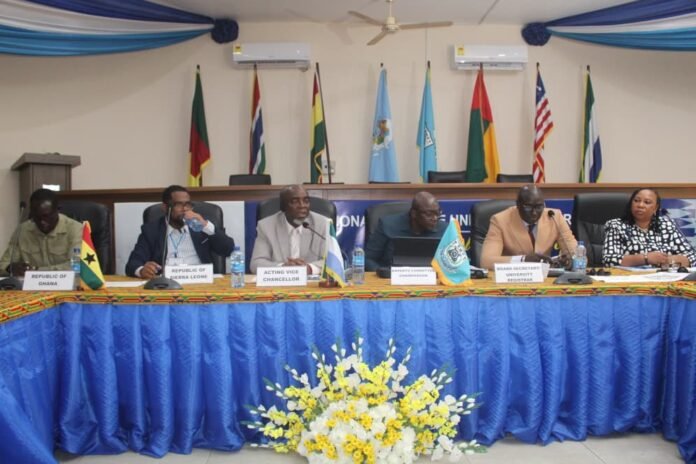
At the ECSL headquarters, the visiting team met with Chief Electoral Commissioner and Chairman, Edmond Sylvester Alpha, alongside fellow Commissioners, in a session focused on the progress of electoral governance reforms and preparations toward the 2028 general elections. Also present at the meeting was the Director General of the National Civil Registration Authority, Mohamed M. Massaquoi, whose institution remains central to voter registration and national identity management.

The meeting formed part of broader consultations by the Moral Guarantors aimed at assessing the implementation of the Tripartite Committee recommendations and the wider National Unity framework intended to strengthen trust in Sierra Leone’s democratic institutions.

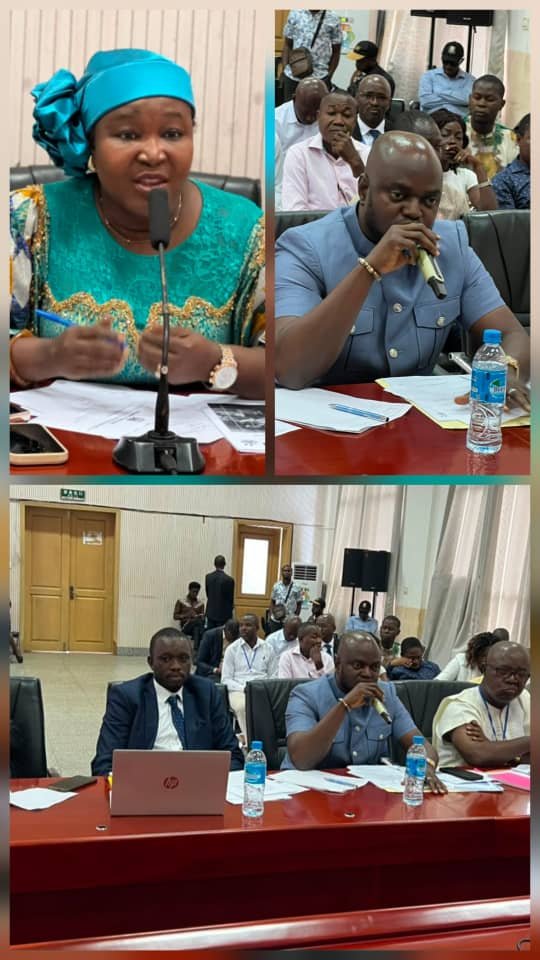
In a parallel engagement at Parliament, the International Moral Guarantors met Members of Parliament from both the Government and Opposition benches, where discussions centered on the continued boycott of parliamentary proceedings by some opposition lawmakers and the implications for democratic governance.

The delegation commended Rt. Hon. Speaker Segepoh Solomon Thomas for what they described as his proactive mediation efforts in encouraging opposition MPs to return to Parliament and resume legislative business.

Speaking during the engagement, Madam Fatoumata Jallow-Tambajang described the visit as a continuation of previous consultations with Sierra Leone’s Parliament, noting that the delegation’s mission was to evaluate progress made on the implementation of the National Unity Agreement and to examine Parliament’s oversight role in advancing the peace process.

She emphasized that the team was equally interested in identifying any obstacles hindering the effective execution of the Agreement and ensuring that the spirit of compromise remains alive among all political stakeholders.

In his response, Speaker Segepoh Solomon Thomas welcomed the delegation and reaffirmed his support for the peace process, while clarifying that the National Unity Agreement had not yet been formally laid before Parliament, a development he said constrained the House from taking direct legislative action on it.

The Speaker stressed that Parliament, as an independent arm of Government, should not become entangled in disputes between the Executive and any political party. He revealed that he had already held two separate meetings with opposition MPs in a bid to facilitate their return, underscoring that Parliament remains the most appropriate platform for lawmakers to articulate concerns and hold the Executive to account.

He reminded Members that while they belong to political parties, their foremost responsibility is to represent the interests of their constituents.

Opposition Leader, Hon. Abdul Kargbo, praised the Speaker’s mediation initiatives, describing the engagements so far as productive. He explained that the opposition’s primary concern relates to the Constitutional Amendment Bill, alleging that some previously agreed positions between the two major political parties had been altered in the version currently before Parliament.

Hon. Abdul Kargbo, however, reiterated the opposition’s support for constitutional reform in principle, particularly welcoming the inclusion of a fixed election date in the proposed legislation. He called for strict adherence to the Tripartite Recommendations and renewed calls for the Agreement on National Unity and its recommendations to be formally tabled before Parliament to grant them full legal force.

He also urged the formal establishment of the Committee on Electoral Management Bodies, describing it as essential to rebuilding public confidence ahead of the 2028 elections.

On the Government side, Majority Leader and Leader of Government Business Hon. Mathew Nyuma said Parliament remains the supreme law-making institution and noted that all bills before the House, including the Constitutional Amendment Bill, remain open to amendments through parliamentary debate.

He maintained that elections should serve to consolidate democracy rather than deepen divisions, while cautioning that external political interference often complicates the smooth functioning of Parliament.

Hon. Mathew Nyuma further assured the delegation that Parliament has not acted in any way to undermine the Tripartite Agreement and joined calls for opposition MPs to end the boycott and return to legislative work.

In her closing remarks, Madam Fatoumata Jallow-Tambajang urged the opposition to embrace constructive engagement, stressing that meaningful representation often requires compromise. She warned that continued absence from Parliament would weaken the opposition’s ability to influence national decisions and effectively hold the Executive accountable.

The delegation also raised concerns over the pace of electoral preparations ahead of the 2028 polls, particularly regarding pending constitutional and security sector reforms.

Responding, Speaker Segepoh Solomon Thomas said progress was ongoing, pointing to both the Constitutional Bill and the Security Bill currently before Parliament. He noted, however, that the opposition’s absence had slowed inclusive deliberations on these key pieces of legislation.

He disclosed that President Julius Maada Bio had been kept informed of his engagements with the opposition and remained supportive of continued dialogue in the interest of peace, national cohesion and democratic stability.

The latest round of consultations underscores renewed international commitment to ensuring that Sierra Leone’s political actors remain engaged in dialogue, with the ultimate goal of safeguarding reforms, strengthening institutions and fostering consensus ahead of the next electoral cycle.